
 By
By  January 6, 2024


Damp Repairs: Why Property Age and Structure Can’t Be Ignored
Wall damp isn’t random—solutions that last are always defined by the property’s lineage and material reality. Whether you’re safeguarding a Victorian home or preparing a modern apartment for sale, the strategy for fixing a damp wall must be tailored around specific construction clues and regulatory context. Skipping this step often means wasted money and future survey failures.
Building Age, Materials, and Damp Risks
Every house tells its own technical story:
- Pre-1910s: Absence of Damp Proof Courses (DPCs), solid wall brickwork, and lime mortar. Risk factors: “rising damp,” chronic salt migration, blockages from historic fill material.
- Interwar-1970s: Early bitumen/plastic DPCs, more cavity walls. Risk factors: DPC bridging from poor insulation or exterior groundwork, failed membranes.
- Contemporary Builds: Cavity insulation, dense blockwork, sealed characteristics. Risk factors: Condensation from airtightness, thermal bridging, defect-prone modern details.
- Listed/Heritage Properties: Regulatory constraints on materials (lime required, impermeable banned), risk of irreversible damage from generic repair.
Timeline of Damp Risk Events by Era
| Build Era | Common Risk | Permitted Solutions | Regulatory Notes |
|---|---|---|---|
| Victorian/Edwardian | Rising damp, salt bloom | Breathable, lime-based, DPC | Heritage consent/lime only |
| 1930-70s | DPC failure, bridging | Cavity DPC, insulation check | Cavity clearance required |
| 1980s-modern | Condensation, cold bridge | Improved ventilation, targeted DPC | Energy efficiency key |
Why Tailoring Fixes Matters
Applying a universal method produces a cycle of recurring damp, escalating cost, and unresolved compliance. Sussex Damp Experts root recommendations in wall-by-wall assessment, translating diagnostic findings into solutions specific to your property’s historic and technical fingerprint. If your last contractor skipped this stage, your wall’s story isn’t finished—and neither are your expenses.
Effective repairs start with the right question: ‘What is this wall really made of—and how has time changed it?’
Move forward with certainty that your property is being preserved, not patched.
Decoding Every Source of Damp: Beyond Surface Symptoms
External Wall Damp Checker
- 1 Wall Type
- 2 Signs
- 3 Timing
- 4 Results
- Cracks in render (hairline or wide)
- Missing or crumbling mortar in pointing
- Blown render (sounds hollow when tapped)
- Damp patches on INSIDE walls after rain
- Green algae or moss growth on walls
- White salt stains (efflorescence) on brickwork
- Paint peeling on external walls
- Render pulling away from wall
- Cracks around windows or doors
- Previous patch repairs visible
- Damp is worse after rain
- Damp on one specific wall only
- Damp mainly at ground level
- Damp everywhere, all year round
- Only in winter months
Most Likely External Cause
—
—
—
Recommended Repairs
Check These First
External wall problems rarely fix themselves. Our surveyors use moisture mapping to pinpoint the exact entry point before recommending repairs.
Book an External Wall Survey →Treating a “damp patch” without forensics leads to repetition, not resolution. Damp shows up, but its causes—rising moisture, external penetration, condensation microclimates, or salt pull—differ by structure and occupant realities. For every property manager, landlord, or new buyer, the first win is distinguishing what you see from what’s really attacking your walls.
Damp Types and Their Telltale Clues
- Rising Damp: Most common in unprotected solid walls; often worsens after DIY or cosmetic refits.
- Penetrating Damp: Linked to external defects (gutters, render faults), cavity blockages, ground level problems—presents at any wall height.
- Condensation: Internal environment, modern glazing, poor airflow; particularly affects new or thermally upgraded housing stock.
- Hygroscopic or Salt Damp: Deep-rooted historical salts draw moisture from even dry air, fooling metres and masking the true path.
How Pros Separate Signal from Noise
PROPERTY DIAGNOSIS CHECKLIST:
- Moisture metre and salt testing (avoid “surface-only” readings).
- Cross-examine external ground, render, and point of ingress.
- Track repairs against regulatory checklists (BS6576; PAS2035 for heritage).
- Assess impact of ground changes, repointing, or previous refits.
Perspective shift: treating what you “see” is rarely enough. Only multi-modal diagnosis reconnects symptom to source.
Your Walls’ Anatomy: Mapping Repairs to Structure

Every wall is a system, not just a surface—and its anatomy limits or enables every damp solution. When correct product and method selection matches structure, repairs last.
Material, Construction, and Method Grid
| Wall Type | Suitable Damp Proofing | Methods to Avoid |
|---|---|---|
| Solid Brick | Lime plaster, breathable DPC | Cement renders, tanking, generic DPC injections |
| Cavity Wall | Cavity DPC, insulation | Blocked cavities, unventilated spaces |
| Stone/Timber Frame | Heritage lime-based, specialist systems | Bitumen/cement, non-breathable membranes |
Why Compatibility Trumps Convenience
- Modern tanking traps moisture in lime-built walls; only breathability stops internal decay.
- Unventilated insulation in a post-war cavity house—hardly a “quick fix”—often amplifies damp.
- Heritage overlays or mixed-period extensions demand step-sequenced, product-neutral strategies.
When Sussex Damp Experts advise, they drill down to wall age, substrate, prior repairs, and expected load, guiding you toward methods that extend the lifespan of your investment and pass every compliance hurdle.
From Guess-Work to Diagnosis: Best Practice Steps for Lasting Damp Solutions

Complacency and “one-size-fits-all” drive up long-term cost more than any premium system. Your goal isn’t a patch, it’s certified peace of mind. This requires both expertise and tools.
Steps to Old-and-New Compliance
- Full property, wall, and historical mapping.
- Calibrated survey (moisture, salt, thermal, airflow).
- Check for DPC, bridging, or incompatible prior repairs.
- Regulatory compliance reference (e.g., BS6576, PAS2035 adherence).
- Photographic and reporting evidence for insurer/mortgage sign-off.
What Sets Sussex Damp Experts Apart
- Independence from product sales bias.
- Surveyor-grade documentation (meets lender/auctioneer/insurance needs).
- Forensic investigation—documented, evidence-driven, and future-ready for transfer-of-title or tenancy changes.
- Transparent, homeowner-facing summaries and plans—no technical jargon left unexplained.
By owning the diagnosis, you guarantee tickets to fewer disputes and seamless transactions.
The Real Cost of “Standard” Fixes: Why Method Mismatch Hurts

Quick wins create slow bleed. Whether you oversee a property portfolio or one beloved home, ignoring wall context means paying twice—or being told to pay again when the next surveyor arrives. Proprietary tanking or off-the-shelf chemical DPCs are strictly controlled for good reason: quick fixes in the wrong setting often simply mask deeper problems, or generate new ones.
Failures from Incompatibility You Can’t Afford
- Rapid return of damp after “lifetime” repairs.
- Salt explosions, blisters, and surface crumbling that void warranty.
- Survey failures scuttling sales, lender refusals, or insurance nullification.
| Method | Resilient In… | Destabilises In… |
|---|---|---|
| Chemical DPC | Modern, stable cavity walls | Heritage, soft/lime substrates |
| Tanking | Dry, non-porous constructed basements | Breathable or mixed-period walls |
| Breather membranes | Heritage or listed with consent | Impermeable internal applications |
| Cavity inspection | All modern or converted properties | – |
Successful projects avoid one-hit “treatments.” Sussex Damp Experts employ multi-phase, hybrid approaches, matching every repair to wall status, risk profile, and your ownership goal.
When method and history disagree, the future always sides with the wall.
Ensuring Every Repair Survives the Regulators
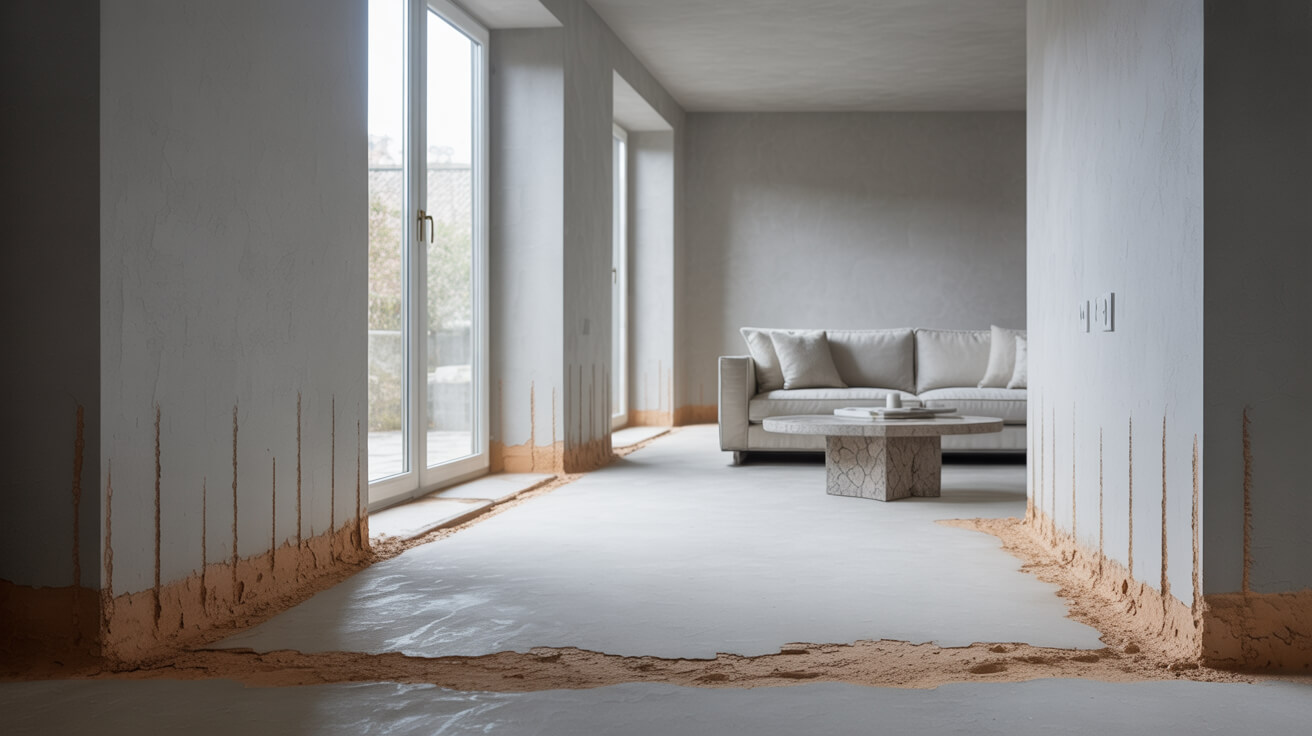
Documentation and evidence are not just bureaucratic hurdles—they’re vital insurance for your property’s downstream liquidity. Local authorities, housing associations, buyers, or portfolio managers all demand not just proof of works but clear links between symptom, diagnosis, compliance, and final value. This is especially true for heritage or listed properties, where inappropriate changes can spell legal trouble for owners and contractors alike.
Regulatory Excellence Delivered
- Heritage listed: Lime, breathability, photographic timeline of every proofing-action.
- Block managers: Per-unit reporting, warranty chain, tenant evidence packs.
- Owners/Sellers: Mortgage-accepted repair logs, insurance compatibility, minimum-disruption planning.
- Landlords: HHSRS compliance, maintenance logs, tenant letters, annual checks.
Let Sussex Damp Experts act as your compliance partner—so ownership transitions, insurance adjustments, or council inspections become opportunities for proof, not points of stress.
Preserving Your Investment: Maintenance, Monitoring, and Lasting Guarantees
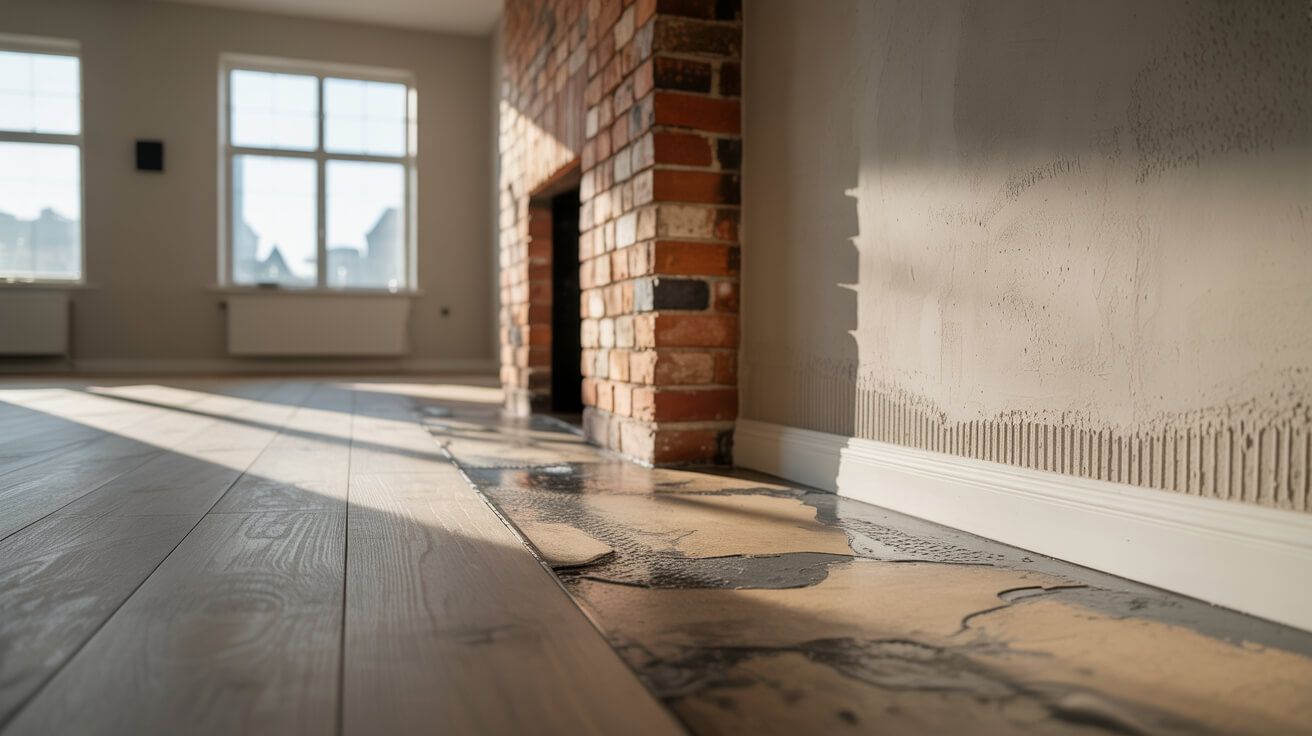
Even after expert repair, properties require systematic maintenance to deter new damp events. Passive compliance becomes active stewardship—protecting your known investment from known and emerging threats. Our aftercare isn’t insurance—it’s insurance you can audit.
Guaranteeing the Solution
- Sensor-backed wall monitoring for years post-repair.
- Automatic, homeowner/manager reminders for annual review.
- Guarantee activation assistance for property transfer or re-inspection.
- Rapid response protocols for warranty activation or repair.
Maintenance isn’t costly—it’s the only way to keep the value you’ve paid for. Sussex Damp Experts provide full lifecycle asset protection, not just a patch in the wall.
The best repairs are the ones you forget about—because they never need repeating.
Take Charge: Precision Damp Assessment and Asset Protection
If you want your next transaction, tenant move-in, or council check to go smoothly, your walls need more than guesswork or off-the-shelf “solutions.” They need system-tailored protection, evidence for auditors, and assurances that outlast your current project. Every Sussex Damp Experts assessment starts with a blank page and ends with bespoke documentation, asset-sustaining repairs, and identity reinforcement for every owner or manager.
For property owners serious about lasting value, compliance, and stress-free ownership, a bespoke damp evaluation is the only viable path forward. Book your survey, request your tailored report, and join the growing list of homes and buildings where wall moisture is finally made predictable.
Frequently Asked Questions
Why Does Property Age and Construction Dictate the Right Damp Proofing Approach?
A property’s physical makeup is the deciding factor in any lasting moisture control strategy. Brickwork laid before the introduction of standardised DPCs (Damp Proof Courses), lime mortars, cavity walls, or unconventional extensions all present their own technical traps for the unwary. Time turns what was once a reliable barrier into a hidden failure—vulnerable to bridging, capillarity, internal debris, or simply the march of humidity through incompatible materials. When you rely on one-size-fits-all repairs, you aren’t saving time; you’re resigning your building to repeat disruption and future cost.
The Crucial Matrix: How Construction Era Alters Damp Risk
| Era/Type | Common Risks | Compatible Approaches |
|---|---|---|
| Pre-1910 Solid Wall | Absence/failing DPC, salt bloom | Lime-based microsystems, breathable renders, periodic inspection |
| Mid-20th Cavity | Bridging, insulation traps | Cavity clearance, tailored DPC/insulation, targeted airflow solution |
| Modern Blockwork | Condensation, cold bridges | Advanced ventilation, hygroscopic sensor suites, insurance-recognised DPC |
| Listed/Heritage | Regulatory conflict, decay | Conservation protocols, council consent, detailed reporting, lime systems |
Retrofitting a chemical DPC into a heritage wall may create hidden reservoirs of trapped moisture, unseen until the wall crumbles. Tanking a solid brick structure can force vapour into timber joists or behind insulation. Sussex Damp Experts begin every project by reading the building’s story in detail, matching diagnostics and repair precisely to wall origin, building era, and historical adaptation. This approach is not just professional responsibility—it’s insurance against regret.
Every invisible shortcut builds its own audit trail—visible only after the problem returns.
Your heritage, investment, or portfolio deserves repair methods as resilient and unique as the property itself. Choose a survey that anticipates future compliance and value, not just immediate dryness.
What Actually Causes Damp—and How Can You Tell Which Type Threatens Your Walls?
Every damp outbreak is the endpoint of a hidden process. Moisture isn’t simply present: it travels. Rising damp traces a path up from ground level where DPCs have failed, been bridged, or never existed. Penetrating damp exploits gaps in external surfaces or absent maintenance, entering laterally or overhead. Condensation takes advantage of thermal differentials, poor ventilation, and behavioural habits, masquerading as rising damp but demanding completely different responses. Hygroscopic salts amplify all risks by drawing water vapour, manifesting patches and crumbling faces even in otherwise dry walls.
Recognising Your Real Damp Enemy
- Rising Damp: Seepage from ground through masonry; common in older homes.
- Penetrating Damp: Water ingress via defects in exterior fabric or roof.
- Condensation: Results from internal humidity and inadequate airflow.
- Hygroscopic Damp: Salt-driven; secondary consequence, not a root cause.
Visual symptoms overlap and mislead. Mould in the corner might signal condensation in a modern apartment but mark catastrophic rising damp in a Victorian cellar. The smart path is calibrated diagnosis—moisture metres, thermal imaging, independent salt analysis, and a linkage review of your building’s evolution.
A hasty repair is the enemy of certainty. Sussex Damp Experts prioritise full-path investigation, ensuring what you fix today stays fixed next year. If you believe your damp was “solved” last year and it’s back, keep in mind: water, salts, and air don’t respect checklists—they follow physics until the root’s removed.
Why Do Some Damp Repairs Fail—Even When Recommendations Are Followed?
Most failed repairs begin with a dangerous assumption: the visible issue is all there is. Yet beneath every superficial patch lurk the ghosts of historical missteps—botched tanking, new insulation bridging a cavity, or cement-based plasters masking a lime wall’s breathability. The real cost hides in compounding labour, cosmetic blunders, and surveyor penalties during valuation, letting, or sale.
Failure Modes That Cost You Most
- Tanking without confirming substrate moisture pushes problems into floors or joins.
- DPC injection skipping plaster or ground bypass simply redirects moisture.
- Cavity walls filled too casually become moisture traps after insulation upgrades.
- Regulatory miss: works completed with no paperwork or post-checks invalidate warranties.
Your best asset is a project history—a chain of proofs—not another invoice. Sussex Damp Experts combine technological diagnostics (moisture maps, airflow surveying) with staged remediation. Only after identifying the least invasive, regulation-aligned fix do you proceed. Not because it’s slower or costlier, but because it stops the history from repeating itself.
You don’t need another patch. You need a wall with a memory—a record that proves its value and resilience.
When the next surveyor asks for evidence and method, your answer should always be plain—no last-minute file hunts, no guesswork, no nervous negotiation.
How Do Regulations, Compliance, and Surveyor Demands Impact Your Damp Projects?
Behind every fix is a chain that ends with sign-off—by mortgage lender, insurer, housing authority, or conservation officer. Miss any bureaucratic step and all your diligence collapses in a single audit. Every compliance regime—from BS6576 for diagnosis, PAS2035 for heritage or retrofit, to HHSRS for tenancy—acts as a sieve, catching careless upgrades, absent documentation, or incompatible techniques.
Core Compliance Triggers
- Heritage/Listed: Full documentation, conservation-friendly methods, officer engagement.
- Landlord/Block: Inspection-ready reports, tenant paperwork, annual reviews.
- Sale/Let: Mortgage-recognised survey, chain-of-proof from survey to sign-off.
If you see compliance as a side-task, you’re inviting forced reversals, uninsured claims, or prolonged property downtime. Sussex Damp Experts integrate reporting, method justification, stakeholder hand-off, and handover packs that make surveyor queries frictionless. This is a compliance-first design: the property is always ready for scrutiny, today or at the next ownership change.
Preparation is the opposite of luck. Surveys reward the evidence, not intention.
Your outcome isn’t determined by how much you spent last year—but by whether your repairs were always ready for the next level of question.
What Aftercare and Guarantee Protocols Maximise the Value of Your Damp Repairs?
After a wall is repaired, the temptation is to move on and forget—but time, elemental shifts, and occupancy patterns can all conspire against your investment. Without formal aftercare, even best-in-class repairs may fail undetected, leaving you exposed just as you need a guarantee honoured—or when a new tenant moves in.
Keys to Maintenance-Driven Longevity
- Regular Audits: Set annual or bi-annual reviews for high-risk walls.
- Moisture and Salt Logging: Use remote loggers or in-wall sensors for objective monitoring.
- Documentation: Retain every stage—diagnosis, consent, treatment, confirmation—in one packet.
- Warranty Activation: Confirm the start and terms of every guarantee; don’t delay registration.
Landlords and managers: see this as portfolio health, not admin. Heritage owners: this is stewardship, proven by the file you hand over to planners or buyers. Sussex Damp Experts provide ongoing maintenance frameworks, flagging risks before they develop and delivering proactive solution frameworks for unexpected events.
A guarantee is only as solid as your willingness to keep the story up to date.
Let your repair proof be living—never a footnote lost to paperwork.
How Do Specialist Damp Surveys and Repairs Surpass Quick Fixes or Free Inspections?
Selling certainty demands more than a free quote and two minutes on-site. Where generic surveys rush to deliver a single product, a specialist investigation illuminates failure points that would otherwise cost thousands in rework or dampen your property’s valuation at the worst moment.
Key Distinctions
- Independence: Surveyor-grade, compliance-first, with no allegiance to a specific solution.
- Evidence: Detailed mapping, moisture trajectories, stakeholder visuals.
- Action Plan: Stage-by-stage, with built-in compliance and reporting.
- Legacy Resilience: Plans and handover resources for future managers or buyers.
A quick fix is attractive—until you read the fine print and realise it’s only a stopgap. Sussex Damp Experts deliver strategic certainty—proof built for auditors, lenders, and anyone who cares about the fabric, future, and function of a property. When you’re the one holding the handover file or facing a compliance check, being able to trace every repair from symptom to sign-off is authority—the property’s, and your own.
The legacy of any property is measured in how well short-term oversights were avoided.
Be the stakeholder who never leaves questions unanswered—insist on strategy and documentation from the first contact.

