
 By
By  August 26, 2025


Why Does Damp and Mould Create Compliance Risks Under the Health and Safety at Work Act?
Damp and mould break more than just cosmetic lines—they quietly breach your legal duty under the Health and Safety at Work etc Act 1974. If you hold responsibility for staff, tenants, or anyone in a building, you must make certain their environment is not hazardous. Damp and mould, by their very nature, are a hazard—both medically and legally—placing anyone responsible for a property squarely in the regulator’s sights.
What you miss behind paintwork and cavity space won’t save you when the law comes knocking.
Regulators don’t mince words: the NHS recognises mould as a trigger for asthma, respiratory issues, and allergies (NHS, 2024). COSHH 2002 defines mould spores as hazardous, and the HSE expects active identification, assessment, and control—not just hope and air freshener. Ignoring these risks can unlock a landslide: enforcement notices, insurance complications, voided warranties, collapsed property values, and the nightmare scenario—forced closure by local authorities (HSE Guidance, 2024).
The channel from “minor leak” to regulatory breach is steep: musty odours, visible stains, or complaints spark council inspections, often escalating under the Environmental Protection Act 1990 or HHSRS protocols. Once you have an inspection, action is no longer optional. The safest route? Proactive, robust assessment by a team that understands property science, practical fixes, and legal duty.
What Makes a Damp and Mould Risk Assessment Legally Defensible?

A legally sound risk assessment is not just a casual walk-around or a check-box exercise—it’s a shield designed to withstand regulatory, insurance, and even courtroom scrutiny. The question isn’t whether you filled out a report, but whether that report stands up to a challenge and proves you have done everything “reasonably practicable” to prevent harm.
When the stakes rise, only hard evidence and process can carry the day.
A defensible assessment must demonstrate:
- Comprehensive surveying: Techniques like forensic moisture mapping, salt testing, and thermal imaging surface hidden issues—paper-thin surveys won’t pass.
- Diagnosis of underlying cause: Every site is unique—rising damp, condensation, failed tanking, or botched repairs. Identifying the *actual* cause is vital.
- Independent evidence: High-resolution images, metre readings, mapped data—all disclosed, time-stamped, and tagged.
- Exposure matrices: Who is at risk, where, and when. Staff, visitors, tenants—no one can be left out.
- Continuous audit trail: Findings, decisions, remediation actions, and periodic reviews—all logged and ready for the inevitable review.
- Specialty compliance pathways: Heritage buildings or conservation-listed sites require heritage-sensitive, documentation-rich protocols to avoid fines and local authority battles.
A Sussex Damp Experts risk assessment doesn’t merely fill a file. It becomes your protector: evidence in the face of penalty notices, insurance reviews, and council audits. Rushed, unsigned, or template-based “surveys” fail when it counts.
How Do Damp and Mould Jeopardise Workforce Wellbeing and Business Continuity?

The corrosive effects of damp and mould creep in slowly—they dampen workforce health, morale, and ultimately the business bottom line. NHS studies link mould with an increased risk of asthma, respiratory issues, and allergy complaints (NHS, 2024). More than a health note, it’s a business and compliance liability.
Every unenforced week lets this silent threat dig deeper—into your people and your profits.
Absenteeism due to respiratory complaints, high staff turnover, and even legal claims multiply when environments are allowed to rot unchecked. In cases flagged by the HSE, remediation pays itself back: after addressing damp, businesses see up to 12% fewer sick days and improved productivity (CBERK data, 2024). The insurance industry is joining the dots, often excluding cover where pre-existing damp risks are not documented (ABI Claims Guidance, 2024).
Damp is not just an irritation—it is a systemic risk to continuity. Closure for repairs, rental voids, or a run-in with regulators can upend forecasts, stretch budgets, and push organisations to the brink. Proactive assessment and swift intervention aren’t just “good practice”—they’re commercial and legal musts.
What Kind of Documentation Protects You Against Regulatory or Insurance Scrutiny?

The only paperwork worth a penny is the kind that stands up to cross-examination—be it a regulator, council, insurance assessor, or court. Thin, generic, or copy-paste “damp reports” are little more than a wet tissue in defence; only robust, timestamped, and independently verifiable records offer true protection.
Your file isn’t a burden—it’s your barricade when challenges arrive.
For genuine protection, documentation must include:
- Digital risk registers: Logging zone-by-zone damp risks backed by detailed images, mapped hot-spots, and severity grades.
- RAMS and method statements: For every risk, clear records of the mitigation route and safety instructions for all exposed individuals.
- Briefing and induction logs: Proof that everyone—staff, contractors, tenants—has received information, understood risks, and knows site-specific protocol.
- Actively managed review schedules: With periodic and after-event reviews, showing issues are tracked, not swept under carpet.
- Relevant heritage or insurance protocol packs: Ensuring your response meets planning, insurance, and statutory constraints, especially for listed or conservation-rated properties.
This level of traceability is standard in reports from Sussex Damp Experts—covering council licencing, insurance underwriting, or business audit. No “assembly line” survey will save you from regulatory action, but a full evidence chain, properly constructed, absolutely can.
How Do Sussex Damp Experts Secure Your Compliance—and Peace of Mind?
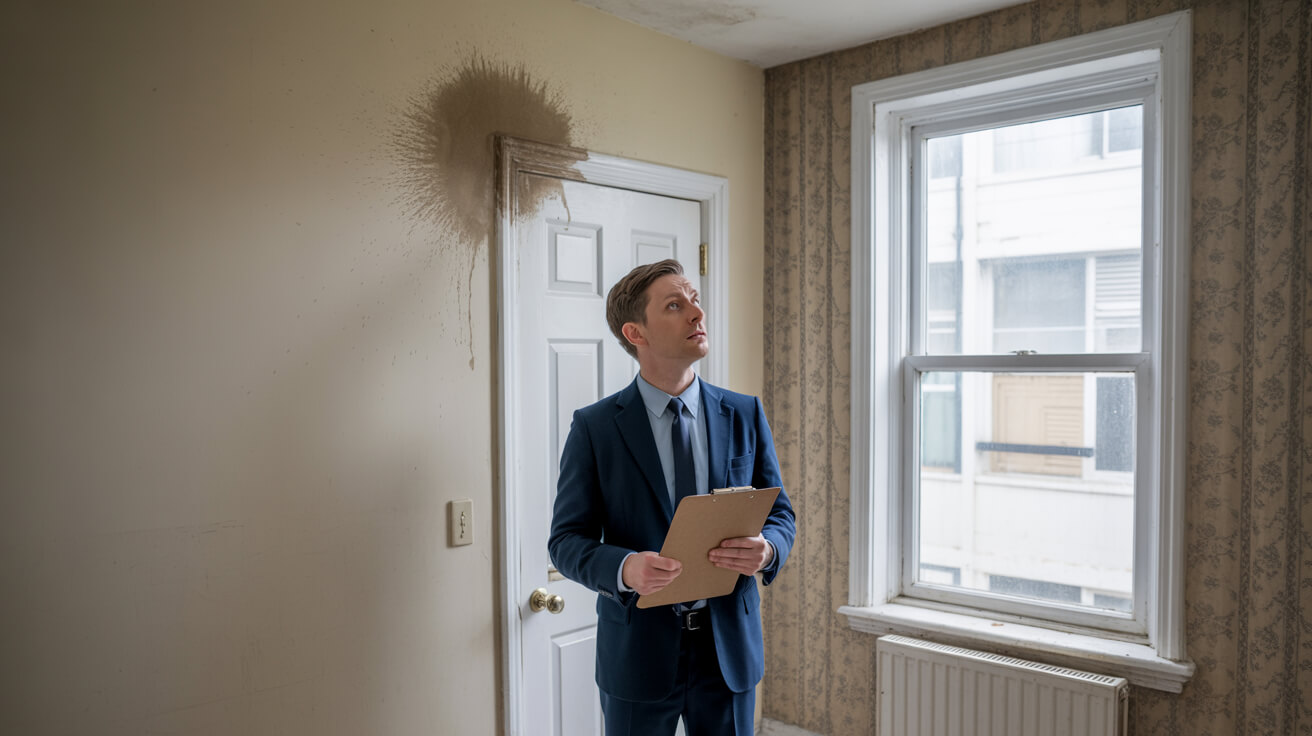
Where typical property assessors dab at the symptoms, Sussex Damp Experts dismantles the underlying problems and rebuilds your compliance structure from the ground up. Our accredited team’s process is built for scrutiny, using systems and documentation trusted by courts, insurers, architects, and sector regulators.
Most tick lists break under pressure—we build compliance frameworks that stand when the weather turns rough.
Working to BS 6576, BS 8102, and PAS 2035, Sussex Damp Experts delivers:
- Total property analysis: Using high-sensitivity moisture metres, thermal cameras, and air assessment, no risk is left to chance.
- Pinpoint diagnosis: Every damp type, from historical rising damp to modern condensation or failed tanking, mapped and documented.
- Audit-grade documentation: Every finding geo-tagged, time-stamped, and linked in your compliance file.
- Risk and health exposure mapping: Evaluating every user category and space for risk level, from staff desks to storage rooms and communal corridors.
- Multi-stage aftercare: Annual reviews, hands-on aftercare, and ready support in the event of council queries.
Our compliance bundles, fit for listed buildings, commercial estates, and residential portfolios alike, put you far ahead of property standards—ready for sudden inspection, insurance renewal, or regulatory overhaul.
What Step-by-Step Process Does Sussex Damp Experts Use for Damp and Mould Risk Assessment?

Robust compliance is not a one-off task but a lifecycle. Sussex Damp Experts deploys a chain of evidence and execution that leaves no risk unexamined or unmanaged.
Evidence capture isn’t a paperwork job—it secures your value, reputation, and operational freedom.
1. Site Survey and Multi-Modal Evidence Gathering
We inspect with advanced metres, thermal imaging, and targeted humidity checks, logging every vulnerability across interior and exterior regions.
2. Cause-and-Effect Analysis
Moisture points are reviewed not in isolation, but with root cause analysis—whether that’s groundwater, failed DPC, ventilation inadequacy, or external leaks.
3. Severity, Zone Grading, and Urgency Mapping
We build a risk matrix, highlighting high-priority failure points and secondary risks for board review, lender files, or landlord defence.
4. Solution Engineering
Clear plans—damp proofing, tanking, mechanical ventilation, heritage-appropriate systems—laid out in a regulation-aligned, pragmatic schedule.
5. Action, Execution, and Real-Time Logging
On green light, our engineers carry out works. Every step—treatment, system installation, re-testing—is photographed and instantly logged.
6. Monitoring and Compliance Review
Beyond the fix, our job isn’t done. Ongoing monitoring, scheduled reviews, and aftercare reports ensure legal security and working condition into the future.
7. Legal and Regulatory Ready Dossier
You receive a full portfolio, ready for council, court, or insurance panel—evidence of good faith, smart action, and best-in-class execution.
This process closes the circle—turning invisible, incremental property risk into controlled, certified, and lasting compliance.
When Do Duty-Holders Need To Act to Maintain Compliance?
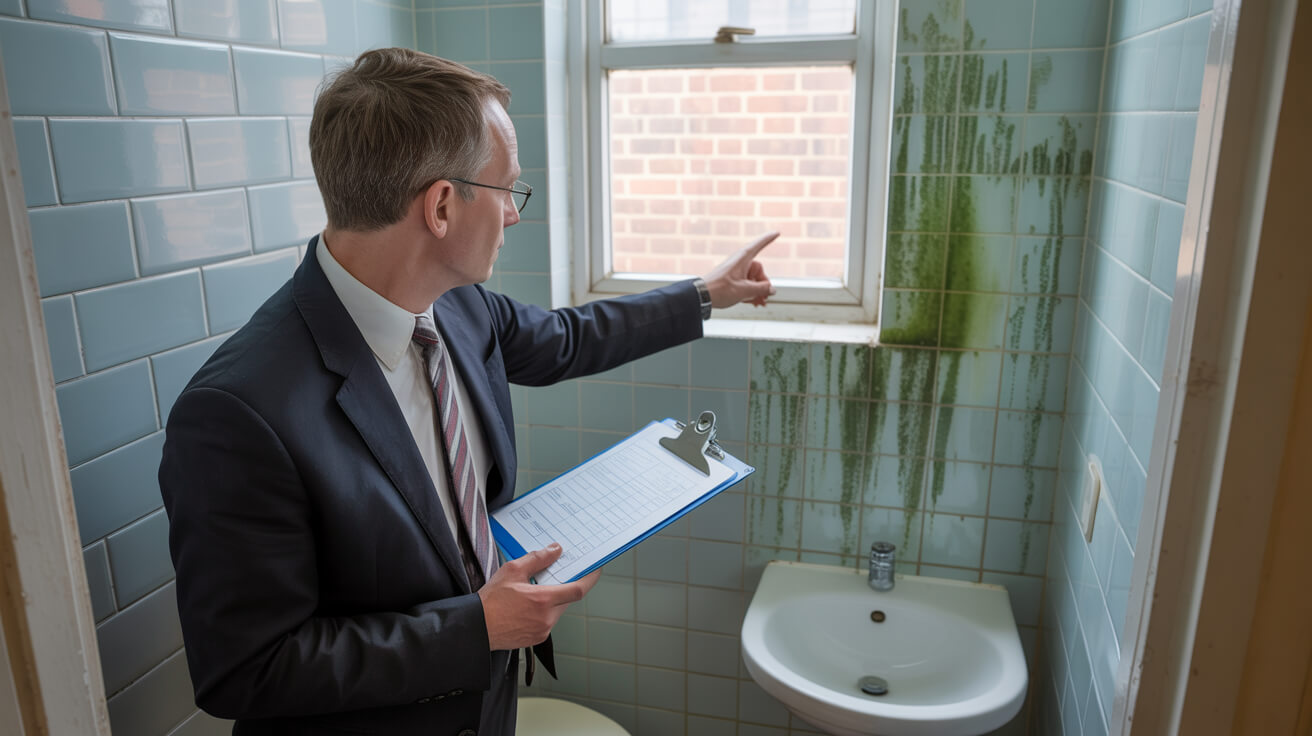
Delay is the most common exposure killer. UK law’s “reasonably practicable” standard expects action not when you’re in trouble, but immediately upon risk surfacing. There’s no grace period for waiting if:
- Complaints arise from occupants—staff, tenants, or contractors—regarding air quality, odours, or visible water spots.
- Any major work takes place—refurbishments, usage changes, expansion, or increased footfall.
- Tenancy starts, ends, or is renewed—lenders or insurers check for up-to-date, actionable documentation.
- Special property contexts—listed, conservation, or commercial sites require bespoke, timing-sensitive compliance.
- Official requests arrive—for compliance evidence, council visits, or insurance/finance auditing. Wait and you face forced access loss or punitive cost.
Compliance is not a task for tomorrow—it’s a necessity at the first sign of risk or change in property use.
The cost of ignoring these triggers compounds: invalid insurance, fines, voided contracts, litigation, and unrecoverable damage. Professional, timely compliance action is the difference between seamless operation and expensive, reputation-burning interventions.
Why Choose Sussex Damp Experts for Damp and Mould Compliance Risk Management?
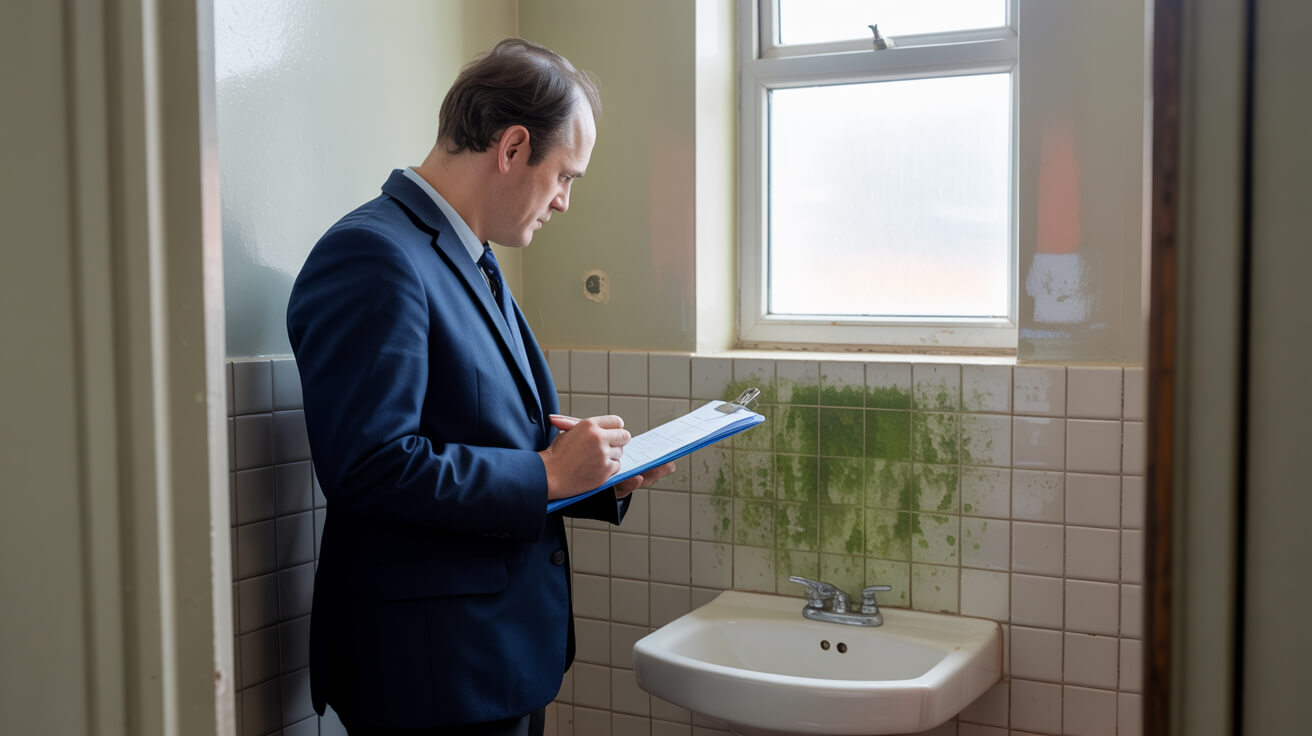
Letting a small leak or patch of mould slide might look harmless—but behind each is a risk that grows by the week. Sussex Damp Experts is the silent partner trusted by headteachers, landlords, facilities managers, and developers to prevent small problems from becoming legal nightmares.
Assurance means more than a clean survey—it’s the guarantee you can sleep at night, no matter who inspects.
Our team doesn’t only “treat damp”—we engineer property resilience. Using traceable diagnostics, clear evidence, transparent pricing, and regulation-grade remediation, we anchor sites in compliance and eliminate uncertainty. Clients get detailed reports, certified plans, and full logbooks—so when the letter or email lands from council, insurer, or court, every answer is at your fingertips.
Our transparent fixed rates and annual aftercare mean no spiralling costs, and our work covers the spectrum, from heritage homes to NHS sites, and every type of modern or period property in between. The risk isn’t just damp—it’s delay, guesswork, or incomplete documentation. Secure your estate, business, portfolio, or reputation with Sussex Damp Experts and know your compliance is locked down and futureproof.
Frequently Asked Questions
Why do legal duties for workplace damp extend far beyond routine maintenance?
The law expects you to control workplace damp and mould not just for appearances, but to protect everyone in the building—and regulators now expect documented, proactive action. Under the Health and Safety at Work Act 1974, COSHH, and Workplace Regulations, employers and property owners must prevent, monitor, and mitigate moisture risk at its source, including “hidden” defects like high humidity and sealed-in leaks. This goes beyond basic repair responsibilities: delays, incomplete logs, or ignored complaints can quickly lead to fines, work orders, and potentially voided insurance, with listed or communal properties facing even closer scrutiny. The focus is now on anticipated risk, not just visible symptoms—a shift driven by recent HHSRS and insurer updates.
What is routinely misunderstood about legal duty of care on workplace damp?
- Liability exists *before* mould appears—latent or ambient moisture is actionable if left unmanaged
- Legal “reasonableness” requires not just repair, but prompt investigation, risk logging, and tenant/staff communication
- Attribution is not enough: a pattern of ignored complaints is now grounds for direct enforcement
How does the latest legal thinking affect offices and commercial premises?
- Local authorities are ramping up unannounced spot checks and demand for audit-ready documentation
- Insurance underwriters request digital evidence before renewal, especially in multi-occupied or historic buildings
- Failing to adapt processes to pre-empt latent damp leaves you exposed to cost recovery actions by insurers and councils
The cost of waiting isn’t just repairs—it’s exposure, reputation, and compliance gone in a flash.
What defines a genuinely defensible workplace damp and mould survey in 2024?
To withstand an insurance claim or council visit, your workplace damp survey must deliver more than a visual once-over: it needs to be forensically mapped, zone-specific, and built to withstand scrutiny. Insurers and councils expect PCA-accredited, BS 6576/8102-linked surveys, including detailed moisture mapping, photographic logs, root-cause analysis, and chain-of-repair documentation. A “tick-box” sheet won’t cut it. Missing or incomplete documentation can mean remediation at your cost, coverage refusal, or even rental agreements delayed or voided.
What should a robust survey contain?
- Digital, timestamped moisture readings mapped to all occupied and risk-prone zones
- Photograph series of initial findings, ongoing works, and completed repairs—each image should be tied to a location and date
- Commentary on cause—capturing issues from salt blooming, to substrate failure, to external drainage
- Cross-referenced repairs and aftercare logs (not just generic statements)
Why can’t internal audits or “DIY” surveys provide credible defence?
- Regulatory and insurance bodies only accept third-party, accredited survey documentation
- Handyman repairs or incomplete internal logs often miss root causes, leaving issues to recur
- Absence of mapped aftercare can lead to retrospective fault-finding, especially after a claim or tenancy review
True proof isn’t what you remember—it’s what survives under a microscope, in someone else’s file.
How do unaddressed damp and mould disrupt workplace health, operations, and value?
Ignored or repeatedly “patched” workplace damp causes far-reaching, measurable harm. Beyond musty odours or unsightly walls, damp leads directly to increased staff sickness, complaints, and asset loss. Absence rates can rise by 10–15% (NHS, CIEH), while lingering damp tarnishes property reputation—causing tenancy voids, recruitment challenges, and higher insurance costs. Unchecked, a hidden leak or reservoir of condensation can shut down trading floors, clinics, or communal spaces, often in the wake of a council or insurer audit.
What business impacts result from avoiding early action?
- Staff absenteeism: persistent damp and mould elevate respiratory complaints and allergic reactions, heightening HR risk
- Emergency callouts: late reporting often triggers more expensive, urgent remedial work
- Loss of tenant or client trust: reputational damage accumulates quickly with repeated complaints
- Asset depreciation: neglected sites often attract lower rental values and can be flagged by surveyors during sales or refinancing
What evidence highlights the urgency of tackling workplace damp?
- HSE data shows that indoor air complaints have doubled nationally since 2022, with survey-triggered interventions now routine
- Many local authorities use environmental health powers to serve remediation notices based on staff or tenant reports alone
A single overlooked complaint often signals weeks of silent risk—act at the first warning, not the last.
Which damp and mould documents truly satisfy scrutiny from auditors, councils, or insurers?
Only traceable, signed, and zone-specific documentation satisfies today’s scrutiny—not piecemeal logs or “after-the-fact” memos. Every inspection, repair, and aftercare step should be clearly recorded, date-stamped, and linked to both risk maps and building consent if applicable. Seven years’ retention is the new minimum, per modern property, insurance, and safety standards. Lenders, councils, and insurers increasingly cross-compare files—gaps or inconsistencies routinely stall or void renewals and tenancy approvals.
What are auditors and insurers actually looking for?
- Valid, PCA-accredited surveyor reports with digital mapping and photographic evidence
- RAMS packs (risk and method) stored for every event, not just annual reviews
- Staff and tenant briefing logs: formal evidence that users understand damp hazards and reporting channels
- Special consents for heritage sites—not a “side note,” but a central compliance requirement
Why do so many workplace damp logs fail at audit?
- Missing signatures or “catch-up” entries break the chain of evidence, undermining the file
- Gaps in aftercare or maintenance logs signal mismanagement, often resulting in higher risk scores and enforcement
A flawless memory is worthless if the file is missing. Only records can speak for you when you’re not in the room.
How does working with Sussex Damp Experts transform your audit, insurance, or council outcome?
Choosing Sussex Damp Experts means every aspect of compliance—from the first inspection to post-repair aftercare—is traceable, insurer-accepted, and mapped to both British Standards and your building’s context. Our accredited technicians deliver zone-specific surveys with digital logs, annotated images, consents (where required), and aftercare plans that keep your work premises ahead of any audit or claim. For complex sites, including heritage or listed buildings, we coordinate all specialist planning and documentation, ensuring you’re never caught by an unexpected consent or insurance clause. This isn’t just “tick-box” service—your compliance file becomes a live asset, not a scramble for missing paperwork.
What assurance does our end-to-end process deliver?
- PCA-accredited survey, mapped to every zone and risk area—no generic findings or hidden non-compliance
- Complete digital and physical file—images, logs, consent, and aftercare, all ready for immediate scrutiny
- Ongoing review triggers—built-in reminders and post-incident surveys so your record never goes stale
- Full multi-trade integration for complex projects—inclusive of conservation, mechanical, and fabric teams as needed
Why does this matter for decision-makers and property leaders?
- Uninterrupted compliance improves your standing with lenders, insurers, and regulators
- Demonstrating preparedness projects professionalism and trust to business partners, tenants, and staff
True leadership is proven not by evading audits, but by meeting them with evidence already in hand.
What immediate signals should prompt urgent workplace damp assessment before legal or insurance exposure escalates?
Don’t wait for puddles or visible mould—insurers and councils respond just as often to vague health complaints, stale odours, leaks, or site changes. Any incident, from a post-flood repair to a tenancy switch or council query, resets the compliance clock. For heritage or communal sites, expect tight requirements for consent and method, each step logged and matched to planning conditions. Every unfiled or delayed record increases “reasonably foreseeable” risk—a key legal threshold and a favourite of insurance disputes.
When does a risk become an urgent trigger for action?
- Any new complaint or health record, even if “just a smell” or non-specific illness
- Post-work, flood, or major repairs—especially if touching party walls or fabric
- All tenancy, insurance, or lender rollover dates
- Missing or outdated logs, even if repairs “look fine” on inspection
What can you expect if you delay documentation or response?
- Council or insurer reviews initiated by anonymous reports or minor symptoms
- Missing chain-of-evidence leads to policy exclusions or mandatory works funded at your expense
- For heritage, unlogged steps risk planning enforcement and conservation penalties
One missed entry can cost you months of argument—get every event on the record the moment it happens.
How can you secure a fully compliant, audit-proof workplace survey—without disrupting your business or facing surprises?
Sussex Damp Experts deliver an unobtrusive, comprehensive survey process: expert assessment, digital moisture mapping, annotated reports, photographic logs, and accredited sign-off—all ready for council, lender, or insurer review. For multi-use, complex, or heritage properties, our team orchestrates necessary consents and coordinates with all relevant trades—streamlining compliance under a single point of contact. You receive an instantly usable compliance pack, complete with maintenance plans, review triggers, and consents—ending last-minute paperwork hunts for good. Automated reminders and support ensure annual, post-incident, or risk-driven rechecks are handled without client stress.
How do you make compliance trouble-free and future-ready?
- Book a detailed, zone-mapped PCA-accredited survey tailored to your risk profile—actionable, not generic
- Receive a full compliance file: all images, logs, certificates, consents, and long-term monitoring plans, digital and paper-ready
- Rely on built-in aftercare: automatic reminders for maintenance and documentation, so renewal or audit is never reactive
- Protect your team, property, and leadership standing—with compliance and asset value secured
Secure your workplace’s health, reputation, and value now—be the building owners, managers, or leaders who set the pace for safety and accountability, not the ones forced to apologise after the fact.

