
 By
By  August 26, 2025

Are You Legally Responsible for Fixing Damp and Mould as a Landlord?
Damp and mould are more than a patch of paint and a promise—they’re your legal problem from the moment you let a property to a secure tenant. The UK’s Secure Tenants (Right to Repair) Regulations 1994, Landlord & Tenant Act 1985, and the Homes (Fitness for Human Habitation) Act 2018 all converge on a simple truth: you must keep the home dry, safe, and healthy. If any part of the building falls below this standard, you—not your tenant—are accountable for putting it right. The legislation is explicit: tenants have the right to a habitable home, and landlords have a duty to fix what threatens it.
Damp and mould don’t just violate the peace—they breach the law, draining landlords of time, money, and trust.
Your responsibilities run from the footings to the roof. You’re on the hook for the building’s structure, damp proofing, external envelope, heating, ventilation, and all the little seams and junctions where water loves to sneak in. Relying on a quick “paint and pray” fix only delays the inevitable and deepens your liability. Each year, councils and courts see cases where landlords ignored, delayed, or bodged repairs. Good intentions count for nothing if you lack the documentation and proof to show you acted, diagnosed, and truly resolved the underlying cause.
Landlords sometimes misjudge what actually counts as a repair versus tenant “damage,” or believe that advising tenants to ventilate more is enough. Legally, if the damp or mould puts a tenant’s health, comfort, or leasehold value at risk, you’re expected to address it—completely, and with records to back you up. Ignoring emerging problems turns your property into a magnet for fines, improvement notices, and sometimes even prosecution.
What Counts as a ‘Right to Repair’ Damp Issue—And How Is It Triggered?

Not every bit of condensation triggers your legal duties, but anything that qualifies under the Secure Tenants (Right to Repair) Regulations 1994 puts you squarely in the firing line. The regime applies to repairs costing up to £250 where the damp or mould threatens health, safety, or comfort—often starting small, fast becoming a legal flashpoint. The defects include:
- Leaks from pipes, windows, or the roof
- Black mould patches on walls, sills, tiles, or ceilings
- Bubbling paint, blistered plaster, or salt deposits from hidden moisture
- Non-functional extractor fans (especially in kitchens and bathrooms)
- Clear evidence of rising damp, water ingress, persistent musty smells
The earlier you spot and respond to these symptoms, the less trouble you inherit.
Triggering the formal repair process is simple: a tenant submits written notice identifying the problem—what, where, and when. Many landlords stumble by waiting too long, dismissing early warnings as minor or just scrubbing the surface clean. Real compliance means locating and eliminating the root cause. If you skip this and only treat the symptoms, you risk escalation—repeat calls, mounting evidence, and enforcement by the local council.
Prompt action, solid evidence, and specialist advice prevent small moisture problems from blooming into legal and financial headaches.
How Should Tenants Report Damp and Build Legal Proof—and What’s Your Defence?
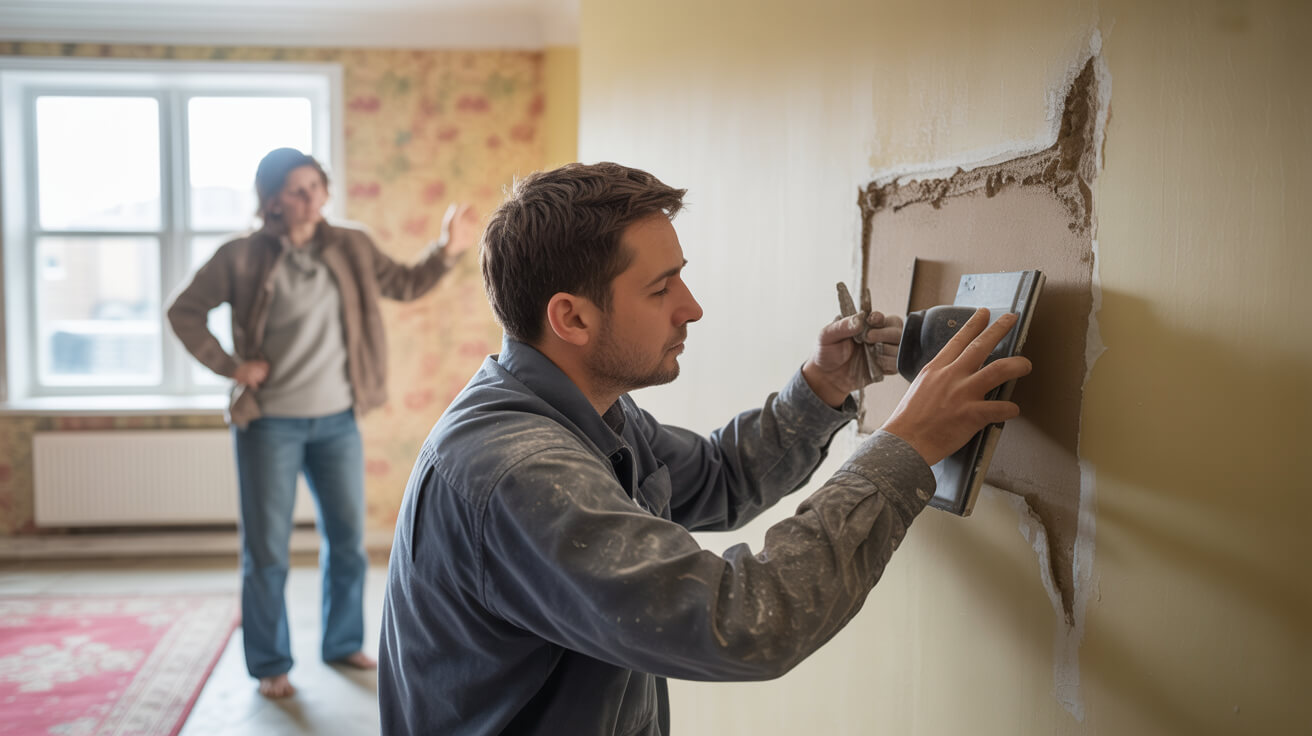
For complaints to drive the legal machinery, tenants should always send a written notification—email or letter—detailing the damp signs, affected rooms, dates noticed, and any previous efforts at cleaning or airing. As a landlord, treat this as your “strike clock”. Written reports are not red tape; they’re your shield, too. Missing them, or failing to acknowledge and document your next steps, can leave you exposed if things escalate.
A written record is your first and best firewall against disputes, claims, and costly confusion.
After that notification lands, your legal timer starts. Keep every bit of related correspondence—emails, letters, tenant WhatsApps, contractor dockets, and surveyor reports—in a single folder. If the case goes before Environmental Health, the Housing Ombudsman, or a judge, it’s your documented timeline and transparency that will sway the result, not your intentions.
A common pitfall is “verbal only” updates—conversations fade, but a dated trail of reports and responses stands up under scrutiny. If you want to truly protect your interests, reply to every written complaint within 14 days, log inspections and fixes, and—when work is done—get the tenant to confirm satisfaction in writing. This completeness stops a spiral of challenge letters and legal claims before it starts.
What Are the Legal Deadlines for Repairs—And What if You Miss Them?

Repair regulations don’t leave much wiggle room. Once written notice arrives:
- Acknowledge in 14 days: Confirm you’ve received the report, and outline planned action.
- Emergency repairs (e.g., leaks, dangerous mould, severe heating loss): 24–72 hours: to initiate
- All other damp/mould repairs: 28 days: is the window for full resolution—inspection, diagnosis, repair, and written confirmation
Miss these deadlines, and you open the gates to a formal complaint. The tenant can:
- Call in Environmental Health—inspectors can serve improvement notices and even hire contractors directly, billed back to you
- Claim compensation via Rent Repayment Orders
- Escalate to the Housing Ombudsman or county court for breach of contract
Delayed responses turn small repairs into fines, councils’ directives, and lasting stains on your landlord record.
Landlords often forget that completing work is only half the battle—the rest is in retaining robust evidence that you met timelines and hired reputable, accredited trades. The farther you stray from these standards, the harder your defence becomes if a claim lands in your inbox.
Why Is Fixing the Source—Not Just the Surface—Crucial for Compliance?

Courts and councils only care about root causes, not window dressing. Wiping away the visible mould or repainting over damage is classified as a “temporary patch”—legally insufficient and likely to backfire. True compliance means forensic diagnosis:
- Moisture metres and professional damp surveys that distinguish between rising damp, condensation, or penetrating water
- Treatments in line with BS 6576 (for rising damp), BS 8102 (for below-ground structures), or PAS 2035 (for energy efficiency and retrofits)
- Ventilation and extractor systems set to at least Building Regulations Part F standards, properly working and able to remove excess humidity
- Documentation of the site context—whether it’s a Victorian terrace, listed building, or newbuild flats, specifying why the chosen materials and methods are suited
- Clear tenant guidance on how to keep the home healthy after the works—simple aftercare instructions, not generic pamphlets
The easy way out just leads to the way back in—always start with proven cause, not symptom.
Consider each damp problem a forensic challenge: prove the diagnosis, document the remedy, and show the solution fits both the structure and legal codes.
What Documentation Protects You—And Protects Your Investment?

Most landlord disputes unravel on missing paperwork, not missing fixes. Protection calls for active information management:
- Every work order: log inspection dates, trades called, and who attended
- Photos at every stage: before, during, and after repairs
- Contractor and supplier invoices: use PCA- or TrustMark-accredited professionals by preference
- Tenant sign-off forms: ask for written confirmation once the tenant is satisfied
- Survey or warranty certificates: attach any damp guarantee or insurance and keep for the life of the tenancy plus at least six years after
- Humidity and temperature logs when fitting sensors: shows an ongoing record if disputes arise
Meticulous records are your best insurance policy—defensible in front of lenders, inspectors, and tenants alike.
Property inspections are becoming more data-driven. Councils are spot-checking damp reports, mortgage lenders are more cautious with flagged properties, and tenants are better informed. Without a robust document trail, you could win the repair, yet lose the argument in the event of challenge. Landlords serious about risk management make documentation the core of their compliance.
What Happens If You Don’t Respond—Enforcement, Fines, and Your Reputation

Ignoring or dodging damp repairs brings consequences that stack fast. When you miss a complaint or drag your feet:
- Tenants apply pressure: Prompt escalation to local authorities, pestering with evidence, and pushing for “improvement notices”
- Councils enforce: They can issue fines, instruct emergency works, push the costs onto your account, and mark you on public registers
- Legal doors close: Persistent offenders lose the right to issue Section 21 notices (so-called “no-fault” evictions) and risk rent repayment orders up to 12 months’ value
- Property value erodes: Ongoing damp/mould claims trash reputation, depress asset value, and make sales or refinancing a headache
Delay is defeat—every ignored report eats into cash flow, legal options, and market standing.
Landlords who see compliance as “just administration” are the first pulled up short. Modern risk isn’t just about property repairs, it’s about insurance audits, tenancy rights, online reviews, and regulations that tighten each year. Swift, documented action wins every time—while hoping no one notices simply isn’t a plan.
Why Professional Damp Audits Protect Landlords—And Make Compliance Bulletproof

Quick fixes? They’re a time bomb. Independent, accredited damp audits not only spot the problems councils and lenders care most about—they construct a legal bulwark for you. Sussex Damp Experts, with full PCA and TrustMark credentials, arm landlords with:
- Root-cause diagnostics: Using calibrated metres, salt analysis, and BS-standard reporting to expose the true source—never just a guess
- Evidence packs: You’ll get images, logs, treatment statements, and warranty records ready for council review, mortgage queries, and future tenants
- Preventive templates: Custom aftercare checklists and compliance instructions for every repair—no generic handouts, just property- and legal-grade solutions
Playing defence is easier when the facts are on your side—full audits end arguments before they start.
A robust damp audit doesn’t just protect against today’s complaint—it positions your investment, documentation, and compliance for whatever the next owner, renter, or regulator demands. Partnering with recognised experts brings peace of mind and closes every gap in the compliance chain.
Book Legally-Compliant Damp Surveys with Sussex Damp Experts Today
Landlord risk has no shortcuts. Choosing not to act—or acting without proof—invites penalties, legal follow-up, and headaches that ripple into lost tenancies and reputational damage. Sussex Damp Experts deliver a surveyor-grade service calibrated to suit the full meshwork of legal obligations you face:
- Detailed diagnosis and repairs aligned to BS 6576, BS 8102, and PAS 2035
- Streamlined documentation, ready for any council, lender, or ombudsman review
- Evidence-rich reports, robust warranties, and practical aftercare so you own every step, from investigation to successful tenancy renewal
- Peace of mind across over 1,000 properties in Sussex and growing, with the know-how to keep your assets—and your legal standing—safe
Don’t wait for trouble to become enforcement. Act now with a comprehensive, legally secure survey and documentation pack from Sussex Damp Experts, and keep complaints from ever getting a legal foothold.
The only defences that matter in property law? Fast fixes, clear evidence, and compliance backed by real expertise.
Frequently Asked Questions
Which legal rules decide who pays for damp and mould repairs in rented property?
When damp or mould ruins a letting, liability isn’t guesswork—UK law prescribes who pays. If disrepair or system faults underlie the damage (per Landlord & Tenant Act 1985 and Fitness for Human Habitation Act 2018), you, as landlord, carry both the burden and the bill. Even so-called “lifestyle condensation” may revert to landlord liability if the property lacks adequate heating, insulation, or ventilation. Cosmetic fixes, like painting over black spots or running a dehumidifier, won’t satisfy legal demands if underlying defects still lurk.
It isn’t neglect when the problem can be traced to the bones of the building.
How is blame split in real disputes?
- Landlords must fix issues arising from leaking pipes, failed damp courses, crumbling mortar, or poor ventilation.
- Tenants are only responsible for avoidable surface mould from neglect (e.g., blocking vents, failing to heat rooms)—but even then, you’ll need robust evidence.
- Local authority Environmental Health and the HHSRS scorecard will side with whoever presents the clearest factual chain.
- Neutral, accredited surveyor reports often settle disputes by separating source, symptom, and blame.
If the cause isn’t obvious, deploy a PCA-certified surveyor; documentation from that inspection forms the core of your defence or claim. In Sussex, our team routinely resolves landlord–tenant standoffs before tempers or legal fees rise.
Landlord vs. tenant—liability at a glance
| Damp cause | Legal responsibility |
|---|---|
| Rising damp/faulty DPC | Landlord |
| Penetrating damp from structure | Landlord |
| Condensation (no adequate vents) | Landlord |
| Tenant lifestyle (windows sealed) | Tenant (if proven) |
A single missed root cause can swing liability, spark council action, or end up in the Housing Ombudsman’s court—precision saves cash and reputation alike.
When must a landlord fix a damp or mould issue before risking fines or enforcement?
Statutory time limits fire off the moment written notice lands. If the repair relates to severe damp or visible mould—especially when health is at risk—you often get just 24–72 hours to initiate action under the Right to Repair rules. Routine, non-critical damp repairs are generally expected within 28 days. Letting these windows slip opens a legal tripwire: Environmental Health can issue notices and fines, or complete repairs themselves and charge them back via “works in default.”
You don’t start the clock—council protocol and tenant evidence do.
What counts as a “prompt” response in practice?
- Emergencies: leaks, widespread mould, heating failure—24 to 72 hours
- Intermediate: spreading damp, recurring condensation—up to 28 days
- Confirmation of receipt: Return written acknowledgement to the tenant within 14 days
- All action is judged from the date the written complaint was received—not when the landlord first noticed
Failing to prove reasonable progress within these targets leads directly to formal enforcement, repair bills, and rapidly eroding goodwill with both tenants and authorities.
Legal benchmarks for damp repair action
| Urgency type | Expected time to act |
|---|---|
| Emergency/heath risk | 24–72 hours |
| Non-urgent | 28 days |
| Written reply | 14 days |
Applying a timestamped process—ideally with surveyor input and clear logs—protects your risk position no matter how complex your property portfolio.
What documentation do landlords and tenants need to meet damp repair rules?
For landlords and tenants alike, winning a damp dispute is less about eloquence and more about well-organised evidence. Written complaints (with time and date), clear photographs showing problem progression, and formal logbooks of every visit, contractor callout, and remedying step—these form the backbone of compliance. Surveyor or PCA-accredited damp reports provide heavyweight proof, especially for disputed source, impact on health, or insurance assessment. Both parties should keep a running record: photos before, during, and after repairs; emails or letters exchanged; and, for landlords, invoices from accredited, specification-matched repairs.
Show your process—not just your promises—and legal scrutiny becomes much less daunting.
Robust evidence pack essentials
- Tenant: date-stamped written complaint, symptom photos, timeline of reporting and replies
- Landlord: repair logs, appointment records, contractor and surveyor reports matched to BS6576 or BS8102
- Both sides: preservation of all communications—including texts if used for notifications
Disputes are settled or lost on records, not rhetoric. In Sussex, our digital documentation packs consistently pass council, tribunal, and mortgage lender review.
How do you make sure repairs meet “at source” standards—not just cover symptoms?
Surface-level repairs—a dollop of paint here, a silicone bead there—neither satisfy British Standards nor pass regulatory inspection. Only documented fixes targeting the root cause (e.g., chemical DPC where the old course failed, or bespoke breathable systems for heritage walls) will count when compliance is checked. Inspection logs should show moisture readings before and after, product/model numbers for any materials used, and, if relevant, a method statement that proves the original defect, not the visible effect, was repaired.
Pay for proof now, or pay for enforcement later.
At-source compliance: what real proof looks like
- Moisture metre logs and thermal imaging before/after all works
- Specification sheets matching installation (e.g., BS6576 or PAS2035 adherence)
- Contractor invoices confirming TrustMark, PCA, or similar credentials
- Written surveyor sign-off, especially for basements, heritage, or listed properties
For clients across East Sussex, our compliance-centred diagnosis and reporting stack is designed to satisfy even the toughest environmental and lender scrutiny.
What happens if damp or mould repairs are delayed, denied, or ignored?
Neglecting damp repairs doesn’t press pause on problems—it multiplies them. Unsatisfied tenants escalate first to the landlord, then straight to local authority Environmental Health. Their officers can inspect, issue improvement notices, fine, and trigger “works in default” orders. Cases that spiral further can land in court for rent repayment, compensation, or punitive action. Insurance claims may get denied, property values can slip, and reputations take a battering—not just among tenants but also with mortgage lenders, estate agents, and future buyers.
Hidden mould leads to visible costs—if it can’t be ignored, it will be enforced.
How a typical escalation unfolds
- Written complaint triggers statutory timeframes for repair
- If ignored, tenants alert Environmental Health—officers inspect and formally notify the landlord
- Persistent delay? Council orders repairs, recovers costs; court or tribunal can award compensation
- Mortgage and insurance roadblocks emerge if records are incomplete
Proactive, documented action almost always wins in audits and disputes. For every “regret letter” we see from self-representing landlords, five clients secure a clean bill of health with a proper audit trail.
Which organisations step in to enforce or resolve landlord–tenant damp disputes?
When property standards are ignored or the evidence chain breaks down, a network of agencies wades in. Local authority Environmental Health comes first, with the power to inspect, enforce, and even complete repairs at your expense. If you operate with housing associations or rent to social tenants, the Housing Ombudsman offers a path to redress. County courts and the First-tier Tribunal can compel repairs and award significant damages to tenants, while advice bodies—Shelter, Citizens Advice, legal aid clinics—help occupiers navigate the maze.
Once the paperwork leaves your desk, the outcome is often decided by who owns the clearest evidence trail.
Key agencies and support channels for resolving or enforcing damp repairs
- Environmental Health teams—inspection, legal notices, works in default
- Housing Ombudsman—social/assured tenancy disputes
- Courts and tribunals—formal dispute or compensation action
- Support networks—Shelter, CAB, and local legal aid
If disputes seem complicated, let our reporting, documentation, and compliance-ready service act as your peacekeeper; for every client defended, three more find their problem resolved long before agencies get involved.
Sussex Damp Experts deliver legal-grade damp diagnosis and repairs throughout East Sussex, keeping your property compliant, your evidence submission airtight, and your risk of costly intervention to a minimum. Don’t gamble with your asset—restore order with the team who makes damp disputes evaporate.

