
 By
By  June 15, 2023

How to Identify Woodworms: Protect Your Structure With Expert Precision
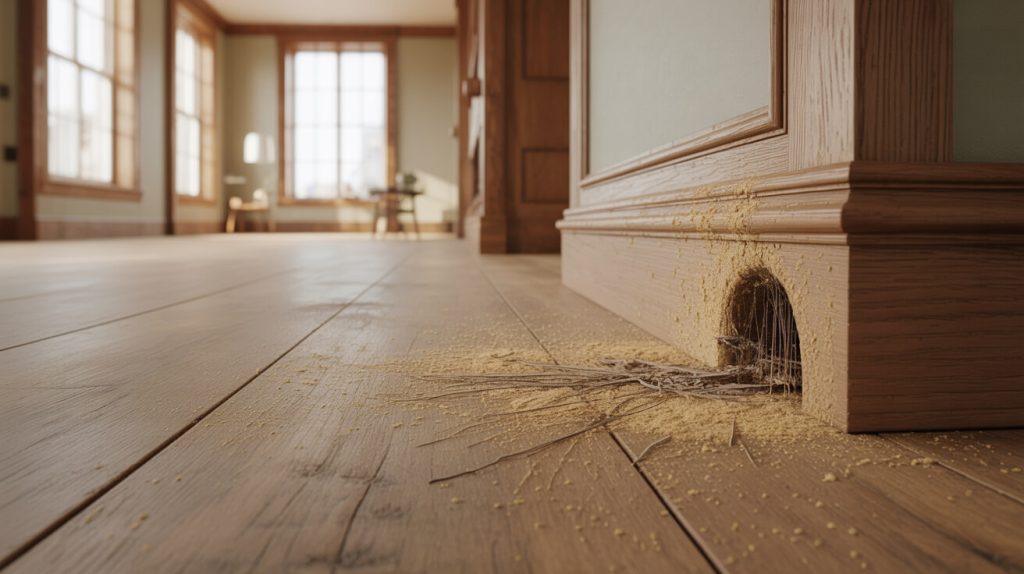
Discovering small, round holes or fine powdery dust on timber can signal more than cosmetic wear—these can be the clearest indicators that destructive wood-boring beetles have made your building their home. Early identification is the line between simple preservation and expensive, legacy-threatening deterioration. Knowing how to spot the signs isn’t about academic interest; it’s a form of ownership, stewardship, and protection for your property, whether you’re ensuring family safety, securing a property transaction, or maintaining a managed asset.
What Is Woodworm—and How Does It Threaten Your Property?
Woodworm is a generic term for the larvae of several beetle species (e.g., Anobium punctatum, Deathwatch Beetle) that attack untreated or damp timber. Larvae tunnel unseen within beams, joists, floors, and furniture—compromising strength and triggering repair costs that spiral when misdiagnosed or ignored.
- Key diagnostic signs:
- Crisp-edged 1–2mm exit holes—often clustered, sometimes accompanied by faint powder (frass)
- Timber that feels soft under pressure, or which crumbles when prodded
- Dust/fine powder collecting below beams, on sills, or along skirting boards
- Sightings of adult beetles (summer, typically night) near windows or sills
| Evidence Type | Active Infestation? | Next Step |
|---|---|---|
| Crisp, pale-edged holes | Likely Active | Book survey, do not seal or cover |
| Fine pale frass | Very Likely Active | Isolate & escalate for expert diagnosis |
| Old, filled, no frass | Usually Inactive | Monitor; annual professional check advised |
| Spongy/tunnelling wood | Structural Risk | Escalate—may require invasive inspection |
Delaying a survey doesn’t freeze the threat; it lets it burrow deeper.
Why Surface Checks Aren’t Enough
Many infestations go unnoticed—paint, furniture, or flooring can obscure years of hidden damage. Without targeted inspection, underlying issues aren’t just missed—they often accelerate, undermining the building’s value and exposing owners to reputational and legal risk.
If you suspect even one of these signs, don’t treat it as ‘normal age.’ Sussex Damp Experts offer diagnostic surveys that distinguish active from historic damage, saving you unnecessary treatment and future expense.
—
What Environmental Conditions Trigger Woodworm Attacks?
Timber Pest Identifier
- 1 Location
- 2 Holes
- 3 Frass
- 4 Other Signs
- 5 Results
Most Likely Timber Pest
—
—
—
What the Damage Looks Like
Exit holes: —
Frass: —
Structural Risk Assessment
—
Treatment Method
—
Typical Cost Range
—
Can I DIY This?
—
Lifecycle & Behaviour
—
Confidence Breakdown
UK Timber Pest Comparison
| Pest | Hole Size | Frass | Risk | Cost Range |
|---|
This quiz provides general guidance only. A professional timber and damp survey will identify the exact pest, confirm whether the infestation is active, and recommend the right treatment.
Book a Timber & Damp Survey →Woodworm risk is engineered by the interaction between timber condition, environmental factors, and maintenance routines. You may control your building’s design, but sustained vigilance is needed to manage the subtle shifts that let infestations take root.
Which Properties Are Most Susceptible—And Why?
Whether you own a Victorian terrace, listed property, or brand-new extension, the risk matrix remains defined by these factors:
- Persistent damp: Leaky roofs, condensation-prone rooms, unventilated lofts/basements
- Historic repairs: Use of inappropriate finishes, lack of treatment on replacement timbers
- Heritage timbers: Untreated beams; insufficient access for modern coatings/treatments
- Vacant or seasonally heated buildings: Gaps in use allow larvae to thrive
Key Environmental Drivers:
- Relative humidity consistently over 60%
- Lack of airflow—blocked vents or draught-proofing
- Use of reclaimed or “untraceable” timber
- Building works that introduce untested timber into an established envelope
| Environment Factor | Impact | Prevention Action |
|---|---|---|
| High humidity | High risk | Improve ventilation; address leaks |
| Unventilated attics | Medium | Annual inspection; clear voids |
| Reclaimed wood, untreated | Very High | Only source from certified suppliers |
| Heritage constraints | High | Require bespoke survey & treatment plan |
If your property falls into even one of these categories, annual professional inspection should be non-negotiable. Sussex Damp Experts design maintenance and monitoring plans calibrated for each risk profile, reducing recurrence and ensuring every corner of your building is protected.
—
What Does Real Woodworm Damage Look Like?
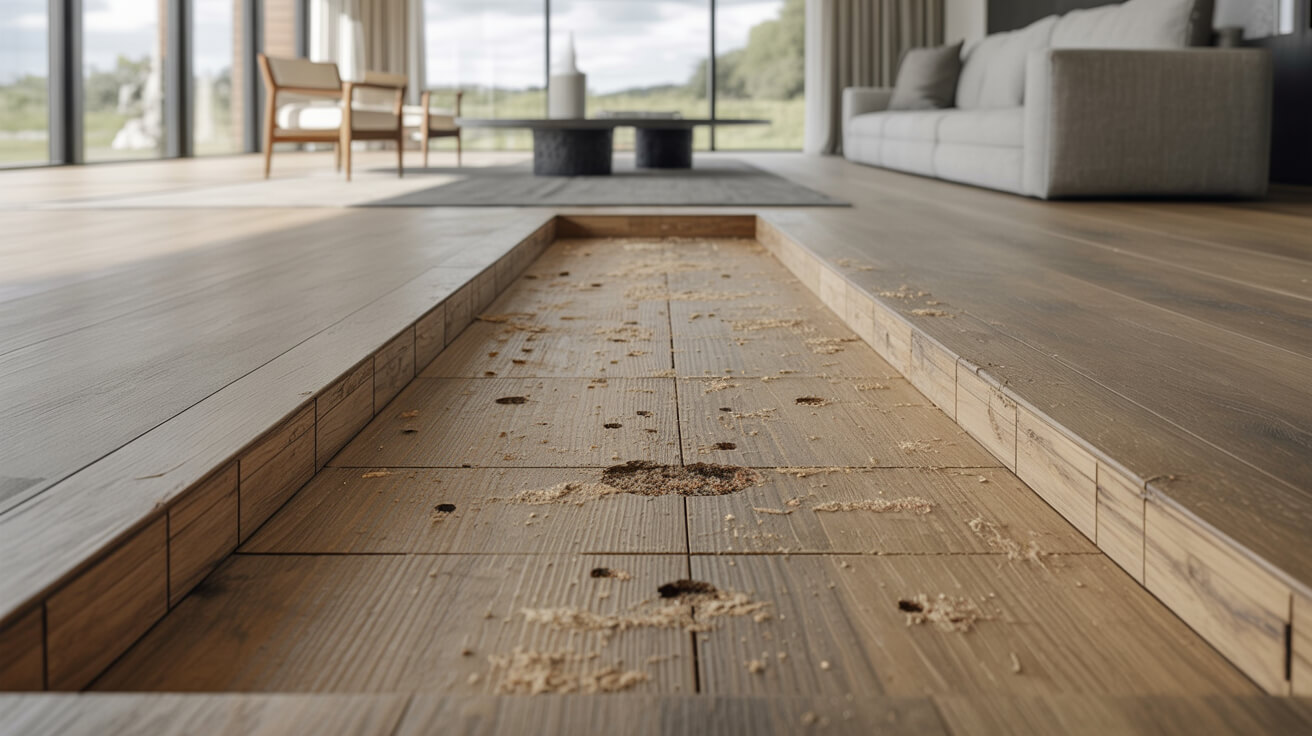
Superficial symptoms never tell the whole story; true assessment requires a nuanced, scenario-driven approach that decodes what’s old, what’s active, and what’s dangerous.
How Can You Tell New from Old—and Cosmetic from Dangerous?
Fresh woodworm damage is crisp—a mosaic of pale holes, new dust, and a slight give under pressure. Old infestations (inactive) will show darkened, sometimes filled holes, no fresh dust, and firm, inert wood.
- Sight lines: Clusters of exit holes are often found on less frequently disturbed beams, the back of furniture, attic joists, or along skirting.
- Tactile probe: Softness, or a ‘give’ beneath painted or sealed surfaces, indicates larvae may be actively feeding.
- Frass analysis: Fresh, pale, powdery frass = urgent; old, grainy, or missing = lower risk.
Damage Marker Indicates Escalation New holes + frass Active Book inspection Old filled holes Inactive Monitor only Spongy timber Structural Prioritise repair Isolated holes Case-by-case Targeted check Scenarios:
- A landlord spots exit holes and powder in a seldom-used storeroom—calls for a PCA-accredited survey.
- Listed church beams show dark holes, no frass, and firm grain—scheduled for next annual review.
Act on evidence, not assumption. Sussex Damp Experts guarantee clean differentiation using advanced testing—eliminating false positives, saving cost, and ensuring surveyors, insurers, or buyers trust your documentation.
—
Why Is Prompt Diagnosis and Accurate Reporting Essential?
Mortgage delays, insurance denials, or tenant escalation all trace, ultimately, to failures in risk identification or certification. In the real world, your ability to defend decisions depends on your documentation and the accuracy of your assessment.
What Counts as a “Report-Ready” Diagnosis?
Regulators, lenders, and authority figures demand:
- PCA/Trustmark-accredited documentation
- Digital photo logs of all affected zones
- Moisture readings and substrate profiles
- Actionable timelines for remedy/aftercare
Stakeholder Certification Required Common Pitfall Proactive Action Insurer PCA, BS 6576, photo doc Vague builder’s note Get expert report Mortgage Lender PCA, date-stamped assessment No warranty/plan for treatment Complete compliance Local Authority HHSRS standard, logged action Missed documentation Digital reporting Regulators won’t accept good intentions or generic receipts. They act when you’ve proven your due diligence.
Fast action with Sussex Damp Experts safeguards asset value and future options—delivering multi-use, regulatory-compliant audits and remedy plans for your records.
—
Where Are the Most Vulnerable Timber Areas to Inspect?
Timber risk doesn’t respect floorplans—it follows moisture, structural complexity, and historic oversight. The most frequently missed sites are those you don’t regularly see or feel.
Which Areas Are Hidden Threats—and How Do You Find Them?
- Attic and loft beams, especially above insulation
- Floor voids—old pipe runs, dead-ends, or retrofits
- Under stairs, in built-in wardrobes/cupboards
- Bay window frames and sills
- Joists in bathrooms/kitchens (high humidity)
- Behind panelling or near fireplaces
Example Inspection Pattern:
- Attic joists (look for dust on insulation)
- Voids beside or below pipe runs
- Skirting boards/architraves near external doors
- Old floorboards—test for bounce, powder beneath
Area Inspection Frequency Risk Level Action Attic beams Annual High Visual/tap Floor voids Every 1–2 years Medium–High Probe/test dust Bathrooms/kitchens Annual Medium Moisture metre Exterior timber Pre-winter/annual Medium Surface check Your diligence now prevents future budget emergencies, warranty voiding, or portfolio devaluation. Sussex Damp Experts can map and document every risk zone for audit or estate planning, locking in compliance and peace of mind.
—
Which DIY and Professional Methods Detect Woodworm Most Effectively?
DIY detection can give peace of mind—and, with the right process, catch developing problems before structural compromise or regulatory risk sets in.
What DIY Tools and Steps Are Viable—and When Must You Escalate?
- Bright torch: illuminate holes, look for powdery dust
- Small probe/awl: test for soft grain
- Visual gallery: photo-compare with verified woodworm damage
- Diary log: track new/changed marks or dust over seasons
- Monitor ambient moisture and keep records for surveyor escalation
Professional detection steps (suspect evidence or high-value asset):
- Moisture mapping and thermographic profiling (PCA-standard)
- Borescope inspection for voids, beams, or floor packs
- Frass and larvae analysis in-situ (heritage/commercial)
- Digital/document camera for surveyor and compliance upload
Detection Step Best For DIY or Pro? Key Outcome Torch, probe Early signs DIY Triage Moisture mapping Uncertain/large Pro Targeted remedy Borescope Void/beams, value Pro Photo-proof Diary log Ongoing risk DIY Early escalation If you hit even a single question mark, escalate—timely intervention will always outperform after-the-fact repairs. Sussex Damp Experts provide diagnosis and documentation that pre-empt compliance disputes and fast-track remedy.
—
How Can You Prevent Future Woodworm Infestations Permanently?
The strongest defence is predictable, disciplined intervention—one-off fixes lapse, but a systematic plan removes luck from risk and puts control back in your hands (or on your organisation’s audit dashboard).
What Steps Build Permanent Structural Defence?
Treat new and repair timber using certified, proven preservatives
Maintain strict, scheduled ventilation and humidity control in all hidden or historic areas
Document every inspection, upgrade, or treatment and secure the trails for regulator, insurer, or buyer review
Implement specialist aftercare and monitoring (heritage/commercial)
Train property management or facilities teams to check every zone at set intervals



| Step | Asset Type | Timeline | Authority Compliance |
|---|---|---|---|
| Certified timber | All | Instal only | PCA, BS 6576 |
| Scheduled reviews | All | Annual | PCA, insurer |
| Heritage plan | Listed/period | Annual | Trustmark, council |
| Aftercare monitor | Commercial | Every 6 mo | Insurer, landlord |
Proactive records are the insurance regulators and future buyers trust most. Don’t settle for solos—plan, document, and monitor.
Our team configures monitoring and intervention schedules that fit your building’s realities—from first professional check to annual sign-off. With Sussex Damp Experts, every audit is a formality—not a scramble.
—
Book Your Free Consultation With Sussex Damp Experts Today
You set the rhythm for your asset’s future—not woodworm, not “too late,” and not the surveyor’s next report.
Your diligence—the checks you make, the evidence you hold, the calls you place—translates directly into preserved value, asset longevity, risk protection, and tenant or buyer peace of mind.
Choose the proactive path. Protect your long-term legacy and property value with evidence, not hope. Sussex Damp Experts provides accredited assessment, tiered monitoring, and solution documentation, ensuring every action you take today unlocks options, not costs, in the future.
Frequently Asked Questions
How can you tell if woodworm is active, historic, or just harmless marks in your property?
Detecting active woodworm means looking beyond surface clues—it’s about identifying live threats, not overlooking silent vulnerabilities or mistaking legacy marks for safety. Active infestations betray themselves through woodworm signals-holes: clusters of pale-edged, 1–2mm holes paired with loose, pale frass—a fine powder dusted beneath beams, skirting, or furniture. These marks feel recent, and the timber may flex or sound hollow when tapped. You might notice tiny beetles during late spring or summer; their emergence is often the last visible warning.
By contrast, historic woodworm is typically signalled by filled or darkened woodworm signals-holes, a lack of fresh dust, and solid, unyielding timber. Aged marks rarely coincide with new powder, and seasonal shifts reveal no further beetle activity. Cosmetic surface marks, knots, and even furniture wear can mislead: what matters are recent changes and tactile cues.
- Quick visual grid:
| Sign | Active | Historic/Harmless |
|---|---|---|
| Fresh pale holes | Yes | Rare |
| Pale frass present | Yes | No |
| Beetles (spring/summer) | Sometimes | Never |
| Timber is soft/hollow | Often | No |
| Holes dark/filled | Rare | Yes |
When it comes to protecting your structure or investment, guesswork is the main risk. Skilled inspection—by a surveyor using moisture metres, boroscopes, or Salt testing—halts anxiety and secures your next move, whether you’re fighting off lender queries or avoiding disruptive, unnecessary treatments. Sussex Damp Experts can provide certified, comprehensive reports so that you never face questions without evidence or face repairs without recourse.
What environmental factors or mistakes allow woodworm to thrive in homes, listed buildings, or commercial properties?
Woodworm thrives where damp, stagnant air, and neglected timber combine—conditions that often develop out of sight and well before you notice warning signs. Damp cellars, unventilated attics, and poorly heated outbuildings routinely play host to wood-boring beetle larvae, especially where old or untreated timber has been deployed. Modern mistakes—blocking air bricks, using impervious coatings on timbers, or failing to repair leaks—contribute directly to outbreaks, sometimes within months of building or renovation.
Historic properties are uniquely vulnerable: original beams and carved joinery, often soft or lime-washed, store hidden damp and allow larvae to escape most surface fixes. In commercial settings, storage rooms, panelling, and hidden joist spaces attract both larvae and risk. For landlords, long tenancies or vacancies breed opportunity for missed infestations, giving rise to disputes and failed compliance inspections later.
Behavioural triggers:
- Retailers or tenants who dry washing indoors risk sudden outbreaks.
- Owners of restored cottages who skip modern moisture controls—beams suffer for generations.
- Local authorities know: vacant units or communal voids are woodworm honeytraps.
Crowd-tested aftercare from a compliant, regionally-rooted team like Sussex Damp Experts exposes these blind spots and fits prevention routines to your asset makeup—avoiding the common cycle of treat, relax, repeat, regret.
Why does woodworm return after treatment—is DIY ever truly enough?
Woodworm reappears because the root triggers—hidden damp, unventilated voids, or incomplete aftercare—go unchecked. Surface-only sprays, nervous retreatments, or badly documented fixes may mask the habit for a season, but larvae exploit the smallest oversight. Even licenced chemicals, when applied to cold, damp, or sealed beams, cannot penetrate deep enough to disrupt the lifecycle; when environmental correction is skipped, eggs and larvae persist.
There’s a hard truth in the insurance and compliance world: only thorough, evidence-driven process creates lasting peace of mind. DIY action is a solid starting point—probe, check, log, and act at first signs—but specialist oversight is the only guarantee. Insurers crave audit trails; mortgage lenders demand certification; tenants and buyers respond to measurable, photographable proof.
Precision aftercare means:
- Embedded digital logging and moisture monitoring
- Scheduled reviews (ideally at handover, end-of-tenancy, or before property sale)
- Regionally relevant guarantees with succession and compliance built in
- A routine where vigilance is baked in, not a reaction after recurrence
A service partner like Sussex Damp Experts integrates aftercare with legal and lender demands—shaping your compliance posture and hardening your reputation as an owner who anticipates, not chases, risk.
Where should you actually look to spot woodworm risks before they cause hidden or structural damage?
Woodworm targets the hidden, damp, or least-disturbed timber in your property—whether it’s a subfloor, an attic joist, panelled wall, or the back of fitted wardrobes. Ignoring these blindspots is how asset value, compliance, and tenant trust slip away. Your annual check—torch in hand, camera ready—should prioritise:
- Attics and lofts (especially above insulation, near old repairs)
- Floor voids, under stairs, and behind bath/kitchen boxing
- Skirting boards and architraves, especially near outside walls
- Period joinery, decorative panels, and reclaimed beams
- Outbuildings, sheds, or rarely used garages
| Inspection Area | Common Risk | Typical Overlooked Fault |
|---|---|---|
| Attic/Loft | Legacy infestation | Missed behind insulation |
| Floor voids | Active spread | Inaccessible pipe runs |
| Joinery/panels | Hidden tunnels | Cosmetic filler masking |
| Outbuildings | New introductions | Poorly stored lumber |
Imagine arriving at a sale, let, or compliance check with a full photo log and status-by-status breakdown—not just “looked fine to me.” Your diligence goes from liability protection to tangible proof of professionalism. When you need a depth survey or forensic mapping, Sussex Damp Experts uncovers unseen risks, mapping and reporting to standards buyers, councils, and insurers trust.
Can a homeowner, manager, or agent reliably diagnose woodworm—or is professional certification always required?
You can and should scan for classic woodworm signals—holes, frass, seasonal beetles, and timber condition—using DIY tools and guides, but regulatory, insurance, and sales demands make professional, certified diagnosis the only safe final step. The “gap” lies in documentation: what you report for your own knowledge rarely meets the standard for claims, mortgage, tenancy, or building guarantee purposes.
DIY checklists give you:
- Peace of mind for symptom-free assets
- Early warnings and confidence to escalate when needed
- An operational rhythm for annual, tenanted, or pre-sale reviews
Certified inspection delivers:
- Detailed, timestamped, geo-tagged proof
- Digital imaging and analysis with full moisture, salt, and void data
- Guarantees and transferability for compliance, lender, or insurer use
- Automated scheduling for aftercare and new tenancies
Professional surveyors (PCA, CSRT, or heritage-accredited) interpret data without bias, issue reports with legal standing, and spot risks beyond the range of basic probes and visuals. When you elevate your property to that standard, you send a message—not just “we fixed it,” but “here’s the proof we expect you to test.”
What makes aftercare and support from Sussex Damp Experts fundamentally better than most routine providers or contractors?
Aftercare is more than a calendar reminder or a phone number on an invoice—with Sussex Damp Experts, aftercare fuses technical rigour, compliance locks, and operational transparency to deliver a support structure built for property owners and managers who value asset performance as much as audit readiness.** We offer a digital logbook for every client, proactive annual or scheduled reviews, and immediate response for emerging symptoms or compliance-triggered checks.
Our service protocols include:
- Moisture and risk trend tracking delivered via secure client portal
- Compliance-aligned reporting tailored to BS 6576, insurance, and council requirements
- Regionally specific guidance on treatment options and aftercare intervals
- Mobile surveying and photo-certified logs for transferability
| Feature | Sussex Damp Experts | Most Contractors |
|---|---|---|
| Digital inspection log | Yes | Rare or unavailable |
| Regulatory alignment | Yes (lender/insurer/council) | Uncertain/DIY |
| Asset transferability | Yes (warranty follows sale/let) | Usually not |
| Escalation priority | Yes (client-first) | No or slow |
If your property, professional standing, or family’s peace of mind ever matters in a buyer, tenant, or stakeholder conversation, those are the differentiators you can rely on. Choose aftercare that amplifies your identity as the owner who expects proof, and delivers compliance as a baseline, not an afterthought.

