
 By
By  August 26, 2025


What Makes a Damp & Mould Compensation Claim Succeed—And Why Most Landlords Hope You Never Find Out
Damp and mould claims don’t simply haunt plaster and paint—they quietly erode property value, trigger health issues, and can upend the legal footing of even the best-run tenancies. While most people dismiss these problems as minor, the smarter ones realise: the battle lines are drawn in silence long before anyone sets foot in court. Truth is, the system was stacked in favour of landlords for years. But that’s changing, fast. Landlords fear one thing—tenants, buyers, or agents who see through the fog and come armed with forensic evidence and independent expertise.
Miss the right evidence and your case is wallpaper—keep a sharp record, and the judge can’t ignore you.
The days of winging it, shouting loudest, or hoping a polite email will yield results are gone. Damages aren’t won by luck or aggression, but by step-by-step precision: bulletproof documentation, airtight surveyor reports, and a process that makes it impossible for the court to look away. Sussex Damp Experts open the door on how compensation is truly calculated, why evidence is the ultimate leverage, and how you (not your landlord) take back control—if you’re systematic from day one.
What Legal Duties Govern Damp & Mould—And When Are Landlords Actually Liable?
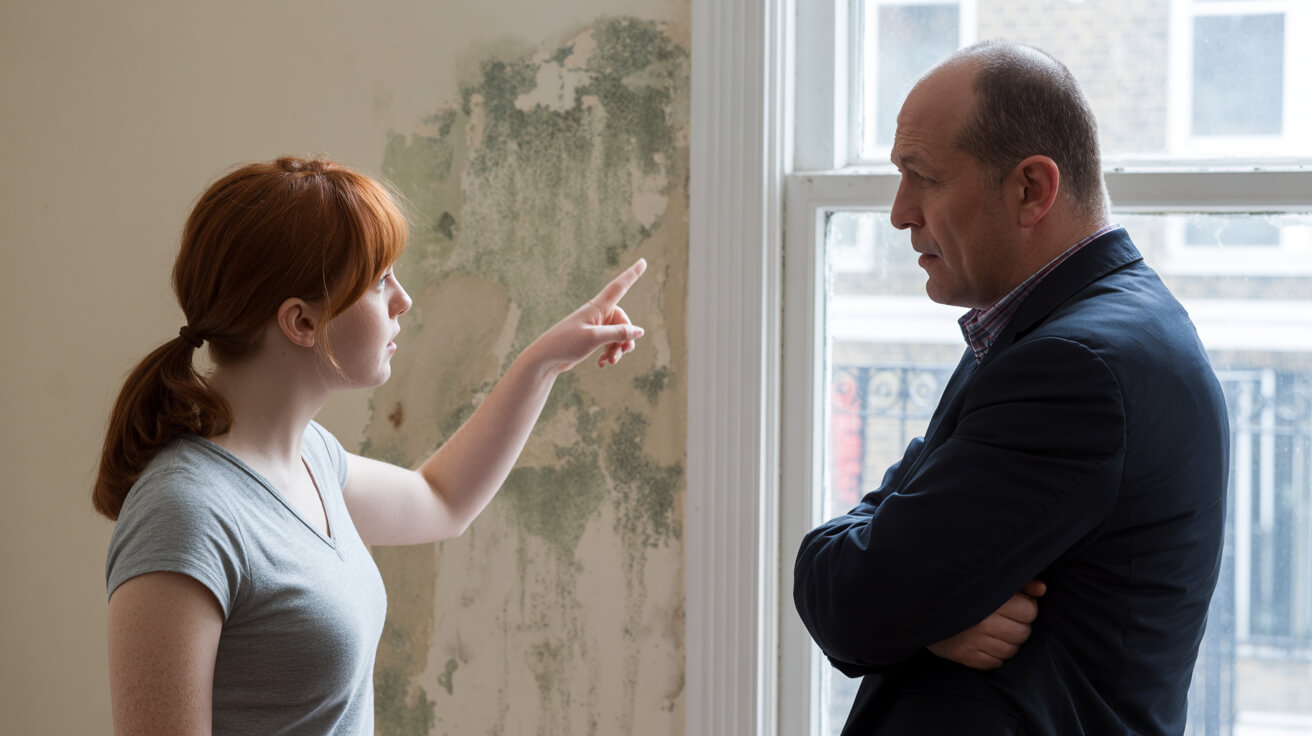
Landlords love to shift the blame. They’ll say your windows were shut, your showers were too hot, your laundry hung on radiators. English and Welsh law makes their duty clear—Section 11 of the Landlord and Tenant Act 1985 is blunt: landlords are on the hook for the property’s structure, exterior, plumbing, and any water ingress. Once you tell them about damp or mould—by phone, text, letter, or even a scribbled note—the legal timer starts.
Courts cut through the “he said, she said.” Here’s what they check:
- Did you report the problem (and can you prove it)?
- How long did the landlord wait before trying to fix it?
- Did they send trades multiple times but never tackle the core issue—like a failed DPC, a chiming roof leak, or blocked gutter?
- Is there evidence of a fix, or just another patch-over?
Savvy landlords hope you’ll stay quiet, or that you’ll stop chasing after a couple of ignored messages. But the law rewards precision and persistence. The more robust your notification trail, the harder it is for any landlord or letting agent to wriggle out of liability.
Which Evidence Makes or Breaks Your Claim?

Winning a damp or mould compensation claim isn’t about tugging at heartstrings, but about dragging cold, hard proof into the spotlight. Your strongest weapon is a tidy, timestamped bundle of documents and images—a collection that leaves no space for the opposition to cast doubt.
Essential Evidential Steps
- Date-stamped photos—snap at discovery and as the problem progresses or is (supposedly) fixed.
- Saved correspondence—keep every text, email, or letter, whether it’s reporting the issue, chasing up, or responding to any repair attempt.
- Logs of impact—track things like ruined furniture, extra heating costs, dehumidifier rentals, health complaints, or times when a bedroom became unusable.
- Medical evidence—if coughs, asthma, or rashes crop up, get written proof from your GP linking symptoms to property conditions.
A running “damp diary” (recording each note, photo, and event) transforms your situation from a mere complaint to an unassailable record.
If you skip the photo, lose the receipt, or stay silent, the judge hears a story, not a case.
Regular documentation frustrates the classic landlord playbook of denial and delay. Courts reward those who turn their lived experience into evidence—not anecdotes.
Why a Surveyor’s Forensic Report Is the Courtroom Ace
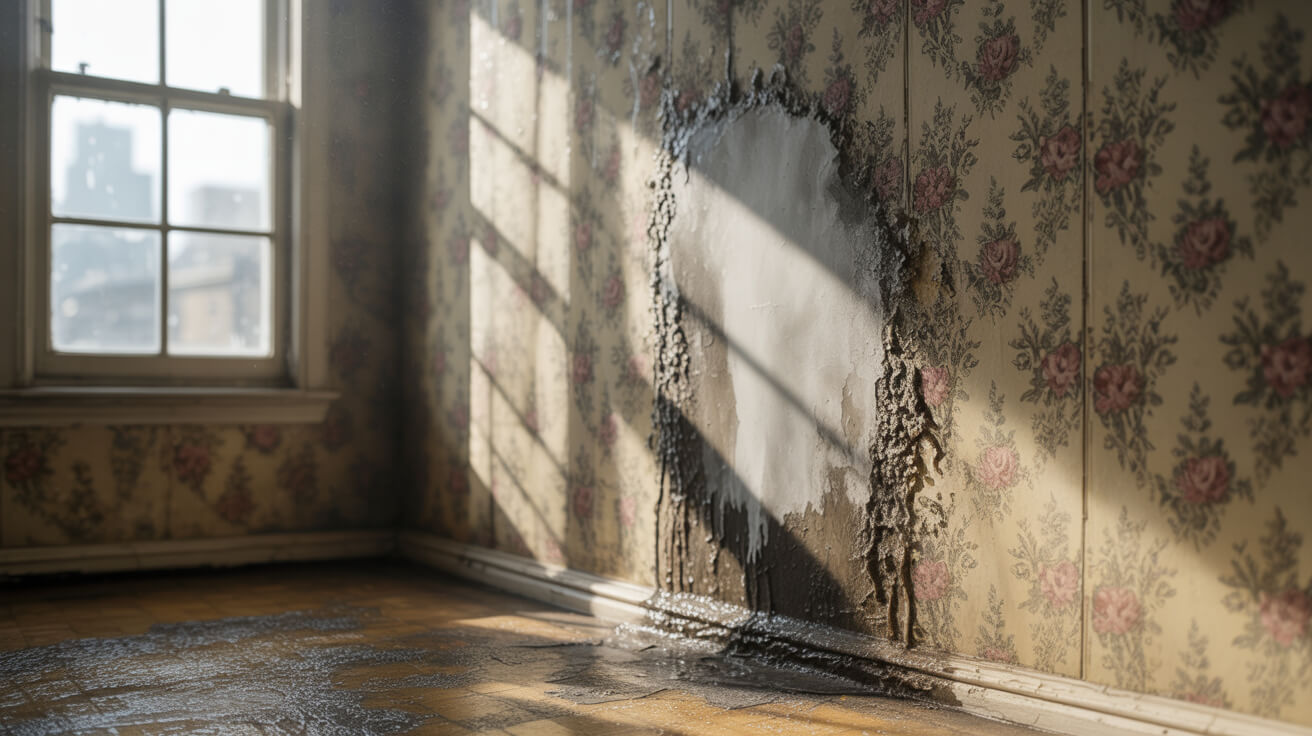
Courts take the science, not the side. That’s why an independent, standard-aligned surveyor report is a pressure point landlords can’t evade. When Sussex Damp Experts (and similar PCA, RICS, or CSRT-accredited specialists) file a report, it does more than describe the visible mould—it maps the cause, the building standards at play, and who’s responsible.
- Diagnosis goes deep: Is it rising damp, condensation, or lateral penetration?
- Instrument readings: Moisture, salts, thermal patterns—these are the forensic “DNA” the court wants.
- Root cause: The best reports point to structure, system, or historic negligence, not lifestyle alone.
- Standards cited: Solid reports reference BS 6576 and BS 8102, checking against contract and legal requirements.
Landlords might supply a builder’s scribbled note or an unaccredited “survey”—these rarely hold up when challenged. Judges know the difference, and show more weight for robust, independently produced evidence.
What Losses Do Courts Actually Award—And How Are They Proven?

Courts don’t throw around windfalls—they expect claimants to itemise and evidence each loss. Here’s how successful claims are typically structured:
Personal Property Losses
Furniture, carpets, bedding, electronics or clothing damaged by damp or mould? Snap clear, date-stamped photos, and attach proof of purchase. Courts go “like for like,” minus a fair deduction if the items weren’t brand new.
Health Impact
GP or NHS records linking health impacts (especially respiratory or dermatological) to property conditions are pivotal. The clearer your doctor is, the better the payout. Minor symptoms may return a few hundred pounds; chronic or severe cases, especially for vulnerable claimants, sometimes escalate into the thousands (HJA, 2023).
Loss of Amenity
If a room becomes unlivable, the court can rebate rent—often 25–50% of what you paid, for the affected period. Keep a log of how long, what rooms, and the impact on daily life.
Extra Expenses
Receipts for dehumidifiers, laundry, extra heating, or specialist cleaning can be claimed. Courts want receipts, not ballpark guesses.
If you can match each pound claimed to proof, expect to recover it. Guesswork or ‘estimates’ rarely result in full payout.
The more granular and cross-checked your loss log, the higher your success rate.
How Are Damp & Mould Damages Calculated—With Real-World Figures

Judges like arithmetic. Claims get dissected into simple equations, not stories. See how the maths falls:
- Personal Items: Courts cover fair replacement for ruined goods, subtracting “wear and tear” (e.g., a £400 bed, three years old, might return £200 to £300).
- Rent Rebates: Lose the use of a full room for six months? A judge might order a rent refund on that room’s portion (often a third) for the affected period.
- Health Damages: Minor health inconvenience might yield £100–£300; chronic, well-documented health impacts can command £1,000–£8,000.
- General Damages (“Pain & Suffering”): Only in proven cases of gross neglect, with ironclad evidence.
No “rounding up.” Courts reject vague costs or emotion-led asks. Match every item to documentation—don’t pad the bundle.
Direct Snippet: Damp and mould damages are calculated by adding proven costs—item replacement (minus wear), rent rebates for lost amenity, medical expenses, and evidenced extras.
Consistency and transparency are what judges look for; bluff and guesswork sink fast.
How Landlords Tend to Defend, and How the Best Claimants Win

Expect pushback—the oldest trick is blaming you. “Didn’t open windows.” “Never used the fan.” Or, “We were never told!” The defence sequence is predictable, but so is the winning counter-strategy.
Landlord Defences:
- “It’s your lifestyle.”
- “You didn’t report it.”
- “We tried—couldn’t get access.”
- “Our own contractor checked it—case closed.”
Winning Counters:
- Keep logs and photos proving you ventilated, cleaned, and heated the property.
- Archive every notification—calls, messages, emails.
- Provide an accredited surveyor’s report directly teasing out property faults, failed repairs, or ignored maintenance.
- Log every date you granted access for inspection or repair.
Judges are not fooled by finger-pointing—precision logs and surveyor science win the day.
If your bundle is chronologically tight and professionally sourced, the landlord’s story falls apart.
The Step-By-Step Path to Compensation (And the Pitfalls to Avoid)

Winning isn’t random—it’s the outcome of ten small, disciplined steps. Most failures? Poor record-keeping, and letting landlords or agents fill the gaps.
Your Winning Sequence
- Document everything from day one: photos, notes, impact logs.
- Notify the landlord, formally and in writing. Keep it neutral; stick to facts.
- Catalogue your side: every action taken to ventilate or fix, all expenses or losses.
- Commission an accredited, independent survey—free builder notes don’t sway judges.
- Build your evidence file—grouped by damage, health, and cost category.
- Submit the claim or begin proceedings if there’s no suitable response.
Top Pitfalls
- Missing dates or incomplete “diaries”
- Failing to save receipts or correspondence
- Trusting the landlord’s quick fix or their own contractor’s summary
- Neglecting post-repair follow-ups and not pushing for a proper guarantee
Skimping on documentation shuts cases down, fast.
Why Most Claims Fail (And How To Be the Exception)
Most claims die on the battlefield of missing proof or passive follow-through. Even a textbook legal case will flop if left to phone calls and lost emails.
- Weak audit trail—no photo proof, no saved messages, no date-stamped diary.
- Letting the landlord’s chosen contractors’ word override independent experts.
- Failing to screenshot or print every communication.
- Letting “patch” repairs act as a full close—without all issues fixed and warranted.
The legal system’s on your side—if you treat your claim as a project. That means disciplined evidence, surveyor input, and never backing down until repairs are up to standard and guaranteed.
Compensation is not a bonus for complaining—it’s the product of clinical, consistent action and documentation.
Own the process and courts respond.
Contact Sussex Damp Experts—Turn Evidence Into Results
Compensation for damp or mould is never a lucky dip or sympathy prize. It’s won through documentation, independent science, and relentless follow-through. Sussex Damp Experts are the standard-setters for East Sussex: we combine BS 6576 and PCA credentials with a reputation for forensic, court-ready surveys and honest, practical reporting. Our expertise doesn’t just impress judges—it holds up for insurers, mortgage providers, and housing authorities, giving your claim a backbone that won’t bend.
Don’t sit on problems, and don’t accept quick fob-offs. Every delay gives away evidence and power. Let us:
- Accurately diagnose and document every source of moisture, from rising damp and lateral ingress to condensation and leak-driven stacks
- Provide aftercare guidance and long-form warranties, ensuring your repairs hold up
- Close every proof gap, building solver’s bundles for legal, insurance, or council review
Sussex Damp Experts—delivering rigorous survey diagnostics, unbreakable legal reports, and proven success in damp and mould claims so your property wins, the first time.
Frequently Asked Questions
What distinguishes landlord liability from tenant “lifestyle” in UK damp and mould disputes?
Landlord liability comes into effect when inspection uncovers a structural defect or building shortfall, not just routine tenant activities.
Landlords are explicitly responsible under UK housing law—including the Landlord and Tenant Act 1985 and the Homes (Fitness for Human Habitation) Act 2018—if mould or damp stems from failed damp proof courses, leaks, poor ventilation, or similar faults. Everyday habits, like drying clothes indoors or keeping windows shut, only shift blame if all property systems are sound and tenants repeatedly ignore clear guidance to ventilate. Courts demand real evidence—not just landlord assertions—before dismissing tenant claims as “lifestyle-caused.”
Written notice is your strongest tool—silence from landlords often signals a looming duty to repair or compensate.
How does liability get proven or disproven in practice?
- Provide formal written notice: use a traceable channel (email, letter, text) for every incident.
- Commission an independent surveyor, accredited by the PCA or CSRT, to confirm whether a fault is structural or behaviour-based.
- Log photos, complaints, and any repair attempts on a dated timeline for easy reference.
A clear, continuous record—from defect detection to professional diagnosis—locks liability where it belongs. Tenants without such a trail are more likely to have claims disputed, even if the problem is obvious.
When and why would a claim flop due to “lifestyle”?
If the only root cause is tenant practice (for example, closed windows, drying clothes extensively without using available ventilation, or disregarding landlord advice), and this is backed by expert report and written guidance history, courts may rule for the landlord. But this rarely happens without robust, independent evidence.
If you want repairs, not excuses, document your actions and let an accredited professional set the record straight.
What forms of evidence decisively win UK damp and mould disputes?
Effective legal claims for damp or mould demand a robust documentary chain—dated logs, surveyor reports, clear photographs, and medical evidence when relevant.
Start by creating a written complaint trail the moment you spot damp; use email, text, or even recorded delivery. Photographs with dates are crucial at every stage—not just after “tidying up.” Engage an accredited, standards-referenced surveyor (PCA/CSRT/RICS) for diagnosis. For health complaints, add medical correspondence from a doctor or hospital; courts and councils expect genuine documentation, not assumption.
Any break in the record—missing messages or undated photos—opens the door for landlords to contest your claim.
What should your evidence set include?
- Communication trail: every complaint, update, or response, all in writing.
- Surveyor’s report: only from a suitably qualified, independent specialist referencing UK damp standards.
- Sequential photos: capture damage progression, repair attempts, and outcomes.
- Health evidence: GP or hospital notes if illness is part of the claim.
- Receipts or quotes: covering replacement of damaged items, extra heating costs, or alternative accommodation.
One missing piece—a verbal complaint, a lost receipt—often lets insurers or landlords sidestep responsibility. Consistent, dated evidence is the difference between fast repair and endless frustration.
How do courts in England and Wales calculate and split compensation for damp-related claims?
Compensation for damp, mould, and disruption is divided into specific, evidence-driven categories: property damage, health impacts, and loss of enjoyment of the home.
Damaged belongings are valued on a replacement-cost-minus-depreciation basis, requiring photos and purchase details. Medical claims are scaled to the severity and duration of symptoms, needing doctor’s letters or prescription proof. Rent reductions are awarded in proportion to the “unusable” proportion of the living space—severely affected kitchens, bedrooms, or bathrooms may entitle tenants to a partial refund for the period in question. Expenses such as heating or hotel stays are only reimbursed if accompanied by receipts.
| Claim Type | Proof Needed | Usual Court Calculation |
|---|---|---|
| Damaged possessions | Photos, receipts | Replacement less fair wear/tear |
| Health / illness effects | Doctor’s documentation | Judicial guideline percentages |
| Loss of amenity | Rent records, survey | % rent based on unliveable rooms |
| Out-of-pocket expenses | Receipts, bills | Direct cost reimbursement |
Judges follow the evidence, not estimates—every item or disadvantage must be proven and precise.
Break claims into these buckets, keep your proofs tight, and a just result typically follows. The more gaps or guesswork, the less you recover.
Why do courts and insurers trust independent damp surveyor reports over landlord “findings”?
Surveyor reports from PCA, CSRT, or CSSW-accredited professionals offer the standard of proof UK courts and insurers require, eclipsing landlord letters or in-house “checklists.”
Surveyors conduct tool-based, standard-referenced diagnosis—using calibrated moisture metres, salt analysis, borescopes, and thermal cameras—to map both cause and spread. Reports are cross-referenced to UK standards like BS 6576 and PAS 2035, supporting every conclusion with annotated photos and chain-of-custody documentation. Conversely, landlord letters often skip exact cause mapping, ignore substrate or context, or blame tenant life by default—none of which stands up well in legal disputes.
A rock-solid surveyor’s report cuts through argument and sets the compensation baseline.
What makes a surveyor report bulletproof?
- Calibrated instruments and evidence photos
- Mapping of root cause (rising, penetrating, condensation, etc.), building substrate, airflow, and external contributors
- Explicit reference to legal and technical standards
- Separation of building defects from tenant habits
- Signed chain-of-custody: ensuring ownership of data and findings throughout
If you want your claim to bite, make accredited surveyor evidence the core—not an option.
What defensive tactics do landlords and agents use to deflect damp or mould claims, and how can tenants counter them?
Rebuffs like “condensation blame” or “unreported damage” are common, but disciplined record-keeping and independent proof can wipe away most landlord defences before they gain traction.
Expect these defences:
• “We weren’t notified”—unless you have emails, texts, or letters to the contrary.
• “It’s all lifestyle”—unless your own actions clearly ignored provided advice (and there’s proof you were given it).
• “You blocked repairs”—unless you can demonstrate willingness via clear communication records.
• “We fixed it once”—when records show the issue returned or that repairs were cosmetic.
Every email, text, and surveyor report is a brick in your legal foundation; miss one, and liability often leaks away.
How to systematically sidestep blame and delay
- Log every communication, including repair booking attempts and their outcomes.
- Demonstrate you followed guidance (ventilate, heat rooms, use extractor fans as instructed).
- Document any access issues—note dates and alternative offers.
- Demand a surveyor investigation when disputes arise; don’t accept only in-house reports.
- Escalate early—especially if landlords drag their feet, consult local council environmental health.
Combining rigorous record-keeping with standards-based surveyor evidence leaves landlords with few places to hide in court or mediation.
Which practical expert steps most often turn standoffs into fair compensation in damp and mould disputes?
Success in damp disputes comes from systematic logs, accredited inspection, and immediate escalation when repairs stall or blame games begin.
Begin a “damp log” from the very first sign—record every incident, communication, and attempted solution. Commission a standards-linked, professional survey as soon as the problem returns or remains unaddressed. Store every receipt for costs linked to the damage, whether it’s ruined furniture, replacement bedding, extra heating, or alternative accommodation. Should landlords delay or blame shift, escalate to council or legal support promptly.
Engaging an independent professional (such as Sussex Damp Experts) delivers survey evidence that unlocks compensation and often speeds up both court and insurer settlement decisions. Leading with written evidence and expert-grade technical proof produces results—healthy compensation and a habitable property.
In the end, proof beats persistence—systematic records and accredited surveys turn compensation from a battle to a basic right.
Essential steps to ensure prompt, full compensation
- Keep every complaint and repair log in writing, no gaps.
- Secure a survey by an independent, standards-driven professional.
- Collect and store receipts for every loss or added expense.
- Escalate quickly if landlords or agents stall—council intervention works.
These steps don’t just protect your interests—they position you to reclaim your home’s health and your financial peace of mind.

