
 By
By  August 26, 2025

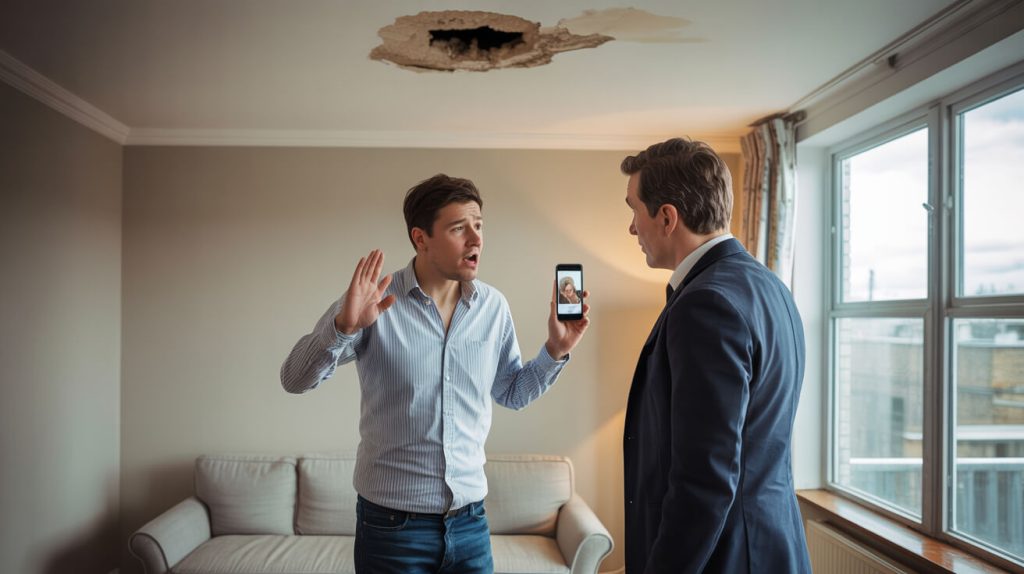
Why Is Damp and Mould No Longer a Cosmetic Issue in Let Homes?
Damp and mould, once dismissed as “old house quirks” or a quick brush-up before viewings, now cut much deeper for landlords, property managers, and agents across the UK. The law no longer treats them as surface-level grievances; persistent moisture, black spots, and musty smells have teeth. Under the Homes (Fitness for Human Habitation) Act 2018, a patch of damp left unchecked can see a home declared legally “unfit”, triggering improvement notices, fines, and, for repeat failures, a ban from letting altogether.
A stray mark on the wall is one thing; an official letter through the door is another.
Letting property in the twenty-first century means facing a fundamental shift: local councils, surveyors, and—most importantly—tenants are backed by statutory powers that turn damp from an aesthetic defect into a core health and compliance hazard. Surveyors’ pens, not decorator’s brushes, now decide your asset’s status. Mortgage approvals, insurance renewal, and even sale prospects may grind to a halt when “Damp and Mould” rear their heads in an official report.
Neglecting a dark patch above a skirting board no longer draws a sigh and a lick of emulsion. It draws scrutiny, legal deadlines, and follow-up checks. Every musty whiff or flaking paint chip is a potential regulatory tripwire, which means a new question for landlords and managers: Is your property defensible on paper, not just presentable on picture day?
How Does the Law Grade Damp and Mould Hazards in Your Property?

No matter how spruced up the living room, the Housing Health and Safety Rating System (HHSRS) now calls the shots. When damp, condensation, or mould linger in a property—especially one let to the elderly, children, or anyone with breathing issues—the HHSRS doesn’t ask “who caused it?” It asks, “Who is at risk?” Should a council inspector record evidence of damp or mould, the home is graded for risk, not blame. If a “Category 1 hazard” appears—immediate action isn’t just likely; it’s mandatory by law.
One path of black mould on a cold outside wall can tip risk from ‘minor’ to ‘urgent’ quicker than price reductions at a winter auction.
What Sets Off the Council and the HHSRS?
Landlords might be surprised at how little it takes to put a property on the authorities’ radar. Persistent patches of black mould or water ingress, especially if recurring after repairs, spell trouble. If a tenant complains of aggravated asthma or a GP notes respiratory distress, the evidence stacks fast. HHSRS checklists don’t forget silent culprits: condensation behind wardrobes, leaks from poorly maintained gutters, or even sections where previous “touch-ups” haven’t lasted.
Major Enforcement Triggers:
| Hazard Trigger | Common Location | Why the Council Acts |
|---|---|---|
| Black mould recurring | Bedrooms, lounges | Signals ongoing health risk |
| Repeat leaks/ingress | Ceilings, exterior walls | Indicates failed or superficial repairs |
| No/poor ventilation | Cold surfaces, bathrooms | Raises risk of persistent condensation |
| Reported health impact | Any, but especially beds | Medical link puts hazard on record |
Landlords are responsible for waterproofing, surface integrity, and maintaining proper ventilation systems. While resident “lifestyle” (like drying laundry indoors) may play a minor role, actual enforcement pivots on proven risk—not perfect usage.
Blaming tenants for condensation is like blaming the wind for rain—if the building can’t handle it, the owner answers for the storm.
When Does Damp or Mould Make a Property “Unfit for Human Habitation”?

The days of dismissing damp as a fix for later are gone. For a building to be “fit for human habitation,” it must be free from any moisture ingress, recurring condensation, or mould that puts occupants’ health or safety in doubt. The threshold requires no catastrophic flood or house-wide rot—just enough chronic or recurring damp to breach comfort, hygiene, or medical safety for residents. Even one stubborn patch, if linked to skin, eye, or breathing symptoms, can fail the test.
A home once labelled as ‘just needs some airing out’ is now liable for improvement orders or worse.
What Triggers a Formal “Unfit” Ruling?
- Repeated or widespread outbreaks of visible mould—even after remedial attempts
- Damp or stale odours flagged in inspection notes, often “hidden” behind furniture or beneath carpet
- Moisture metre readings showing elevated levels over several rooms
- Official health documentation: GP letters, asthma flare-ups, council or environmental health complaints
All it takes to set enforcement rolling is one credible inspection report or medical finding that connects damp with slip, trip, health, or habitability risks. Cosmetic fixes or pointing to tenant behaviour rarely shifts the legal burden.
What Are Landlord and Tenant Responsibilities with Damp Disputes?

Current UK housing law is blunt: landlords are the primary agents for eliminating damp-related hazards. That means fixing leaks, controlling ground or rainwater entry, maintaining heating and ventilation systems, and resolving any internal flaws or material failures—on their own schedule, not just when pressed by tenants. Tenants are required to act reasonably—reporting issues and using heating and ventilation where provided. But when push comes to shove, the onus sits with the side holding control of the repair budget.
It never pays to get into a blame-shuffle—inspectors look for facts, not finger-pointing.
What Must Landlords Do to Keep Legal Risk Low?
- Meticulous documentation: Save all inspection notes, receipts, quotes, and photographic evidence with clear dates.
- Speed over excuse: Attend to any damp or mould within days—not weeks—or risk accusations of neglect.
- Educate, but never deflect: It’s smart to explain proper ventilation or heating usage, but the law won’t accept that in lieu of actual repairs or upgrades.
- Maintain continuity: Especially on properties with history; a single unresolved “spot” or tenant letter from the past often becomes Exhibit A for the council.
A wise landlord prepares property inspection logs, repair histories, and tenant warnings in advance—patchwork excuses and casual DIY fixes register as neglect.
Why Is Scrupulous Proof the Difference Between Winning or Losing a Damp Dispute?

When a damp or mould complaint escalates to court or the local authority, it’s not enough to claim good intentions or prior efforts. The entire outcome rests on demonstrable, standards-based proof: calibrated readings, independent surveyor reports, and a clean sequence from diagnosis to signed-off remediation. Patchy, incomplete, or missing records often mean instant defeat—regardless of remedial good will.
In the end, it’s not how quickly you repainted—it’s what’s on paper and in the readings that counts.
The Proof That Keeps You Safe
- Moisture and humidity readings tagged by site, date, and tool—regularly updated
- Borescope photos, salt test results, or thermal images cross-referenced to British Standards (BS6576, PAS2035)
- Stepwise detail—who did what, when, and with what outcome? From quote to guarantee
- Surveyor or specialist reports, attached full with diagrams and explicit references to compliance documents
- Dialogue records—exact dates and wording for all communications with tenants or agents
A ‘spot check’ file is worth more than any good faith claim—enforcement officers aren’t mind readers, they hunt for hard evidence.
How Does Enforcement Escalate and What’s at Stake for Non-Compliance?

Enforcement is a one-way escalator: the further things slip, the more acute the cost and lost control. The council usually begins with a complaint—often from a tenant, sometimes from a professional. If evidence of a Category 1 hazard is confirmed, the law compels the authority to issue a formal improvement notice, giving a tight timeline for fixes (often seven to 28 days). Ignore this, and next comes direct intervention—the council contracts the works at your cost, with extra charges, and can even reclaim rental income already paid.
| Enforcement Stage | What Happens | Main Risk to Landlord |
|---|---|---|
| Improvement notice | Written order, 1–4 weeks to fix | Neglect charge, legal bond |
| Works in default | Council hires contractor, invoices | Premium cost, no control |
| Rent repayment order | Tenant claims for months of rent | Financial loss, legal mark |
| Debarment/blacklisting | Blocked from letting, flagged in db | Lost future revenue |
| Loan/insurance refused | Mortgage/cover at risk | Asset devaluation |
You only get one invitation to fix—ignore it, and the council pulls the levers (often at three times your budget).
Fast Facts
- Over 790 landlords faced fines in 2023 for failing to resolve damp-related hazards (Local Authority Data 2024).
- Lenders withdrew or amended mortgage offers in record numbers last year due to flagged damp or mould (PropertyMark 2024).
Neglecting initial complaints isn’t delaying the storm—it’s turning a drizzle into a flood, with costs and consequences spiralling at every delayed stage.
How Do You Get “Survey-Ready” and Protect Both Value and Compliance?

To thrive in today’s let or sale market, a property needs a compliance-grade paper trail—a proof bundle, not just a cosmetic touch-up. This package includes surveyor-level reports (citing BS6576, PAS2035, and HHSRS), mapped moisture diagnostics, photographic logs, and formal warranty cover for any remedial work. When a letting agent, lender, or buyer’s solicitor sees this, doubts vanish and offers stick—while the competition’s deals sink under “subject to damp” flags.
A property that ‘might need works’ gets hammered at offer, or left behind when compliance documents are thin.
Key Ingredients in a Survey-Ready Dossier
- Full surveyor diagnostics, referencing British Standards and any enforcement action
- Rich photographic chronology—“before,” “during,” and “after” for every repair or inspection
- Certificate and warranty documents, covering method, substrate, and aftercare conditions
- Training and maintenance logs for tenants or agents, showing care after the work is done
- Copies of all communications—issues, repairs, and inspection access notes
A file like this not only speeds up sales and rental onboarding—it forms a rock-solid defence against legal challenges and underpins lasting asset value.
Why Cosmetic “Fixes” Fail and How Proper Damp Remediation Shields You Legally

Surface-level “cures” don’t hold up against modern compliance or survey scrutiny. Quick paint jobs, dehumidifier loans, or blaming tenants for “forgetting to ventilate” won’t stand when council inspectors or solicitors dig deeper. Lasting protection comes strictly from establishing—and closing—the actual moisture route, following up with regulated repair, then tracking aftercare and compliance.
What Real, Lasting Damp Remediation Looks Like
- Forensic diagnosis: Use calibrated moisture metres, borescopes, and salt analysis to identify rising damp, penetrations, or condensation
- Standards-first fixes: Methods prescribed by BS6576, PAS2035 (for retrofitting), and robust ventilation fixes for internal climate issues
- Complete documentation: Record every stage—readings, who attended, all material and methods used, plus follow-up assessments
- Building user support: Provide clear guidance to all occupants on aftercare, ventilation, warranty, and documentation retention
A painted-over patch doesn’t fool anyone—it leaves you open to a repeat complaint (and bill). Only regulated repair, done right, lets you sleep at night.
Shortcuts stack trouble for the future owner, manager, and tenant alike. Professional, documented, and standards-referenced action shields asset value and future peace of mind.
The Sussex Damp Experts Way: Compliance That Safeguards Your Investment
From Brighton’s Regency terraces to a new block in Eastbourne, Sussex Damp Experts have been on every side of the “damp drama.” Our approach pairs British-Standards diagnostics (BS6576, PAS2035, and HHSRS) with real-world aftercare. Our certified teams don’t rely on paint or apologies—they offer actionable diagnosis, regulated repair, and a complete documentation suite that makes “may need remedial works” a phrase of the past.
A single soft spot missed by the eye can torpedo your sale, your let, and your insurance—one expert visit makes it go away.
With Sussex Damp Experts, you:
- Secure ironclad surveyor-suitable reports—making mortgage refusals and legal misses obsolete
- Receive warranty-backed repairs and full compliance support for updates to building regulations and occupational health laws
- Get ongoing aftercare, annual inspections, and live advice to keep your property asset (and your peace of mind) secure
Your property’s health and value are defended on paper, in the documentation, and with ongoing support—not just “decorated” over. Don’t risk “cosmetic cures” when the legal and financial climate demands lasting, standards-based solutions.
Act before a single phone call turns into a council file. For robust damp survey, repair, and compliance documentation—from a Sussex specialist team with a reputation for permanent fixes—get in touch today. Let Sussex Damp Experts stop the rot at the root and help you sleep dry.
Frequently Asked Questions
Why do legal duties for damp in rented homes frequently catch landlords off guard?
Landlords often underestimate their legal duties to tackle damp because UK tenancy law aims to eliminate ambiguity: property owners are held accountable as soon as moisture endangers health or the building itself, regardless of cause. If the source is the masonry, the roof, drainage, or persistent condensation, it’s the landlord who must resolve structural and environmental factors. Legislation like the Landlord and Tenant Act 1985 and Fitness for Human Habitation Act 2018 emphasise “suitability for living,” not just superficial repairs. Tenants only shoulder responsibility if they’ve deliberately caused the problem or denied access for proper fixes.
Legal obligations don’t pause for building age, tenancy type or patchwork solutions—compliance means acting before small problems escalate.
How are roles sliced in practice?
- Landlords: Maintain all structural elements—damp-proof courses, roofs, exterior walls, sub-floor vents, and instal/maintain heating and ventilation. Swift action after complaints is expected, and independent damp surveys are often essential.
- Tenants: Keep up heating and ventilation, alert landlords early, grant survey/building access, and avoid moisture-building behaviour (like blocking vents or air bricks).
Maintaining a clear log—photos, survey appointments, maintenance bills—can prove who acted responsibly if official scrutiny arrives. Sussex Damp Experts produce court-ready, standard-aligned documentation that shifts ambiguity into certainty when legal questions arise.
What about cases of “shared blame”?
Landlord liability only eases when tenant actions are the clear source (e.g., disabling extraction fans). Ambiguity benefits nobody—so trusted, independent diagnosis will always carry weight with environmental health teams and in court.
When can you expect councils or the courts to intervene on reported damp?
Enforcement begins as soon as council inspectors, environmental health officers, or courts decide conditions risk health or property safety—not only when complaints pile up. The Housing Health and Safety Rating System (HHSRS) means issues such as persistent mould, high metre readings, or credible health reports (asthma, allergies) activate Category 1 or 2 hazard protocols. At that point, written improvement notices, council-arranged works, or even legal costs become a real risk—whether or not the property presents as “tidy.”
Enforcement follows evidence: the jump from minor issue to compliance order can be one damp survey away.
What is the usual enforcement journey?
- Complaint: Written report from a tenant or third party initiates a council assessment.
- Inspection: Council schedules a survey and identifies hazards, referencing HHSRS.
- Remediation notice: Written improvement order sets a remediation timeframe (often 14–28 days).
- Non-compliance: Leads to remedial works at council-arranged rates, rent repayment orders, letting bans or court involvement.
Damp enforcement freezes the smooth operation of your portfolio—putting tenancies, renewals, and resale plans at risk. Independent surveyor evidence from Sussex Damp Experts gets ahead of enforcement, demonstrating due diligence and protecting your asset record with proof, not just promises.
What threshold makes damp or mould a legal hazard for property owners?
Damp turns from maintenance matter to legal hazard the moment it produces a “material risk” to occupant health or to the property’s fitness for continued use—even if the appearance of damage is minor. Legal thresholds don’t wait for dramatic decay: sustained high metre readings (16–20%+ on masonry), recurring mould patches, persistent musty smells, or written health complaints from tenants compel action. Environmental health teams or courts need only one robust piece of survey evidence (official metre log, doctor’s note, or repeat photographic proof) to issue an improvement order.
One metre reading, as much as a crumbling wall, can stop a sale, freeze your letting, or fast-track enforcement.
What measurements and symptoms matter most?
- Persistent black mould, especially in living/bedroom spaces
- Odours in carpets, behind furniture, or under skirting
- Documented medical effects exacerbated by home dampness
- Damp metre logs consistently in “high” or “critical” bands, confirmed by a certified surveyor
Sussex Damp Experts’ reports are calibrated to BS6576 (rising damp), PAS2035, and HHSRS, making your evidence enforceable, credible, and sale- or rent-ready no matter who’s reviewing it.
How can landlords and tenants create a dispute-proof handling of damp from day one?
Dispute-proof handling begins with clear, written records, not hurried fixes. The first step for tenants is to log any damp—photos, dates, detailed room references—and send notifications by traceable means (email, letter). Landlords must then instruct an accredited damp surveyor, using precise metre readings and root cause mapping to move beyond guesswork. Both parties should maintain a running file of all correspondence, repair reports, and site visits—turning every action into a timeline that settles disputes long before they become costly legal standoffs.
What you document today outlives every memory or claim—good paperwork keeps you out of court.
Day-to-day checklist for airtight compliance
- Tenants: Record issues visually, share promptly with your landlord, document all replies, and obey warranty-relevant instructions (like not blocking vents).
- Landlords: Arrange professional surveys, keep surveyor and repair receipts, remedy the full cause—not just freshen up affected paint.
- Both parties: Keep all workflows date-stamped in one place—digital or printed—so nothing slips through the cracks.
Sussex Damp Experts furnish expert diagnosis and transparent reporting, equipping every client to handle escalations to councils, insurers, or buyers without fear of missing evidence.
Which evidence types actually resolve disputes about damp and mould fastest?
Disputes are ended by records, not debate. The gold standard is triangulation: calibrated metre logs in affected rooms (with dates and signatures), before-and-after photo sequences, and surveyor-certified reports referencing national standards (BS6576, PAS2035). Add to these any correspondence about the issue—emails, letters, landlord notifications—and supporting medical letters or environmental health findings where health is a concern. The stronger your audit trail, the harder it is for claims to turn to legal showdowns.
In the world of damp disputes, paper and photos outweigh passion every time.
Table: Which reports carry most legal force?
| Evidence Source | What It Proves | Admissible by Council/Court |
|---|---|---|
| Metre logs (dated) | Objective, room-by-room moisture | ✓ |
| Photo documentation | Visual, time-stamped changes | ✓ |
| Surveyor’s report | Root cause and remedy, standards | ✓ |
| Health practitioner | Impact on occupant wellbeing | ✓ |
| Repair receipts | Completion and timing of works | ✓ |
Sussex Damp Experts deliver this chain for every client—one file handles insurance, sales, tenancy, and any council audit, making disputes rare and settlements rapid.
What specific penalties and market risks threaten landlords who ignore damp or mould issues?
Penalties for ignoring damp are stiffer, scarier, and more permanent than the initial repair bill: missing a compliance deadline allows councils to commission works “in default” at steep rates (often much higher than the open market), which are then passed on as a direct charge. Rent repayment orders can trigger repayment of up to a year’s rent per affected tenancy; letting bans can wipe out income and freeze your ability to re-let for years. Add to this public register listings, which torpedo resale value and block remortgaging, plus insurers and lenders who can withdraw cover or hike premiums instantly when non-compliance is discovered.
Ignore damp for a month, risk your rental profits for a year—sometimes for good.
Snapshot: The real costs of non-compliance
| Penalty/Risk | Typical Impact or Cost |
|---|---|
| Council-commissioned repairs | Owner charged, often 20–40% above market |
| Rent repayment order | Repay up to 12 months’ rent |
| Letting licence lost | Immediate loss of legal letting rights |
| Name on public register | Frozen resale, tenant shortage, asset drop |
| Lender/insurer action | Policy cancellations, higher rates |
Evidence-driven compliance with Sussex Damp Experts means you don’t just avoid penalties—you gain a reputation for putting building health and tenant safety first, which is the new standard for sustainable, profitable letting in the UK.
Join property owners who lead with transparency, safety, and lasting value—let your track record make you council-proof, market-proof, and loss-proof. Book an accredited damp survey or compliance audit with Sussex Damp Experts and future-proof your investments from hidden risks to public trust.

