
 By
By  August 26, 2025

Are You Ignoring the Silent Threat of Damp and Mould? How Hidden Pollution Impacts Health and Law in the UK
Damp and mould aren’t just signs of a house in trouble—they’re an attack on your health, wallet, and legal standing. While it might look like a harmless stain or a “typical British home problem,” the reality bites much deeper. The UK Environmental Protection Act 1990 spells it out: persistent damp and mould qualify as pollution, not just poor upkeep. If left to fester, they could turn your property from a family haven into a breeding ground for health complaints—and bring council inspectors or costly legal orders straight to your door.
If your walls are sweating, your lungs might be too—long before you notice the damage.
Damp isn’t just about looks; it changes the very air you breathe. The worst threats creep in quietly, with mould spores that travel far from their source—triggering chronic coughs and choking off property value as fast as new wallpaper peels. Regulators are clear: treat it like a hazard, or risk it spiralling into a statutory nuisance. The air inside your home is meant to protect, not poison.
What Are the Real Health Risks—And Why Is Mould Now Labelled Indoor Pollution?

The trouble with “just leaving it” is that everyday exposure sneaks up on the healthiest of us. Official bodies now warn: even seemingly minor patches of damp can drive a spiral of doctor’s visits, sleepless nights, and property headaches. And that’s not just hearsay—public health guidance has caught up with what GPs and surveyors have flagged for years.
Who Is Most at Risk When Damp Is Left Unchecked?
Children, the elderly, and anyone with lung trouble draw the shortest straw, but the net spreads wider than you’d think.
- Children: Developing lungs mean they’re hit hardest, most often with spike in asthma attacks, persistent wheezing, and repeat hospital trips *(NHS, 2023)*.
- Older adults: Chest infections, bronchitis, and lingering fatigue follow older tenants who think “that smell” is par for the course.
- Anyone with weak immunity: COPD, diabetes, or just bad luck? These groups battle not just with mould but with infections that grab hold and keep returning.
- Tenants, home workers, the housebound: Allergies, poor sleep, and chronic tiredness dog those who can’t “simply go somewhere else”.
| Group | Typical Health Risks | Supporting Evidence |
|---|---|---|
| Children | Asthma, bronchitis, coughs | NHS, UKHSA, ONS |
| Elderly | Chest infections, fatigue | British Lung Foundation |
| Health-compromised | Severe lung/sinus illness | British Lung Foundation |
| General Population | Sleep issues, allergies | Public Health England |
UK statistics are blunt: 1 in 5 English homes face “actionable” damp or mould, with tenants and those in older housing suffering even more (UKHSA, 2022; ONS reports).
You can’t scrub away pollution with a paintbrush. It takes action rooted in science—and law.
A patch on the wall marks the surface; the real damage is invisible, and it’s your airways and energy that pay.
Why Does British Law Treat Damp and Mould as Pollution, Not Just a Cosmetic Issue?
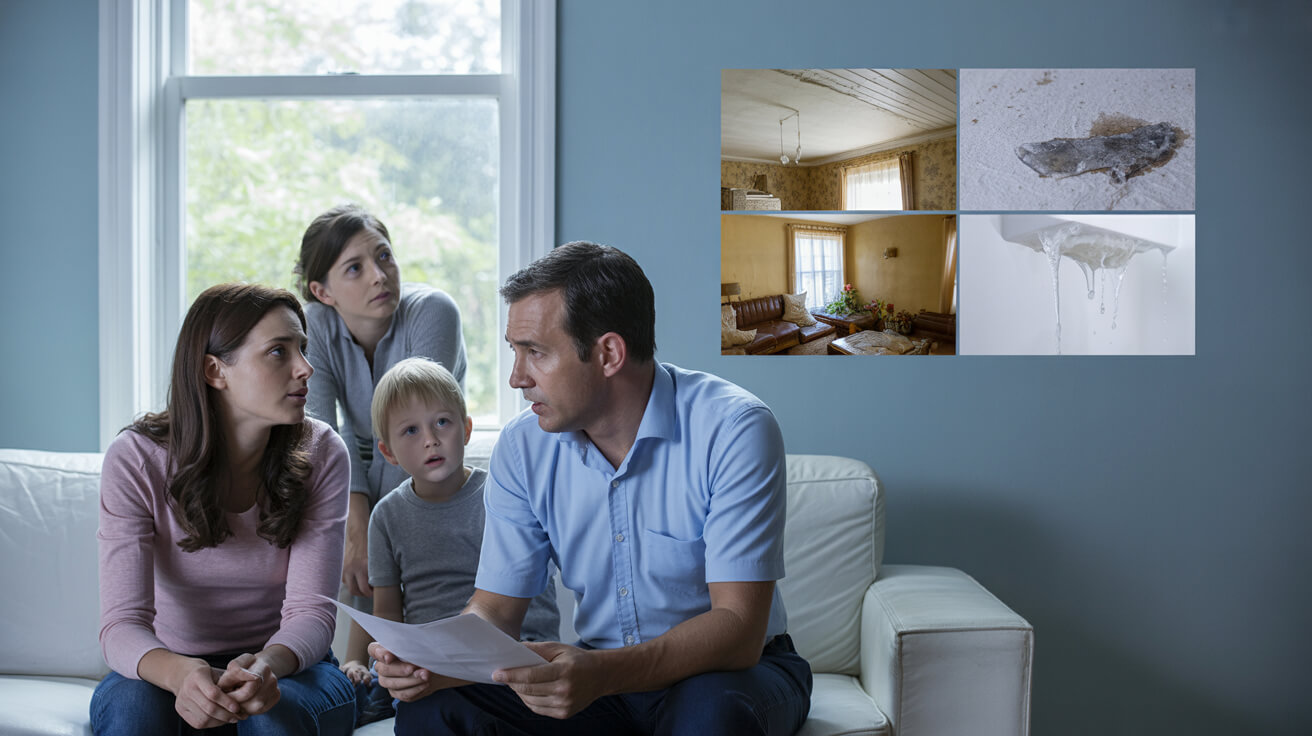
What most owners, landlords, and property managers miss is that the law sees persistent damp and mould as public enemies—not private woes. If ignored, they cross a line: from eyesore to enforceable pollution.
How the Environmental Protection Act 1990 Changes the Story
Under Section 79 of the EPA 1990, if your home environment is “prejudicial to health or a nuisance,” councils must treat this as statutory pollution. This means:
- Abatement notices: Councils can hit owners with formal orders to fix damp-based health risks. No half-baked repairs allowed—cosmetic cover-ups are rejected.
- Stiff penalties: Fail to comply and you could face starting fines of £5,000. Delay, and the clock ticks—remediation costs and reputational damage only climb *(EPA 1990, Section 80)*.
Once flagged, the process is out of your hands. Your only real choice is whether to act first—or scramble once the council steps in.
The Role of the Housing Health and Safety Rating System (HHSRS)
Damp and mould now sit in Category 1—the most severe hazard slot—under the HHSRS. When a council sees evidence, the law gives them teeth: they’re compelled to force corrective action, with no interest in your excuses or how much DIY you’ve done.
Neglect isn’t just lazy—it’s illegal when it puts health on the line.
Authority sees what most of us would rather avoid. Ignore it, and you don’t just risk health—you tangle with a legal machine that rarely forgets.
What Evidence Do You Need to Prove Damp and Secure Council Action?

Hearsay won’t win. “Bit of damp” stories evaporate in council inboxes, but robust, cross-checked evidence cuts through. If you want council action—or leverage with a stubborn agent—it’s not what you feel but what you can prove that counts.
The Evidence That Compels Action
- Date-stamped photos: Track the spread of visible mould or damp across seasons; it proves recurrence isn’t “just a wet week”.
- Doctor’s letters or NHS notes: If a medical professional links symptoms to your living conditions, the impact on council urgency is huge.
- Surveyor or specialist’s diagnosis: Reports referencing BS 6576, Environmental Protection Act, and HHSRS protocols trigger action.
- Humidity and moisture sensor logs: Repeated high values over days reinforce environmental risk.
- Salt or water ingress mapping: Moisture metres or lab salt tests clarifying the route water takes into a property.
| Evidence Type | Legal Value |
|---|---|
| Medical documentation | High |
| Surveyor’s report | Very high |
| Time-stamped photo records | High |
| Moisture/humidity log | High |
| Witness testimony | Moderate |
A coordinated timeline wins trust and action, while scattershot evidence lets cases drift or die. The trick isn’t quantity; it’s covering all bases in a logical, surveyor-grade sequence.
A mould patch backed by a year’s evidence leaves officials with nowhere to hide.
What Practical Steps Should You Take if Your Home or Let Property Is Impacted by Damp?
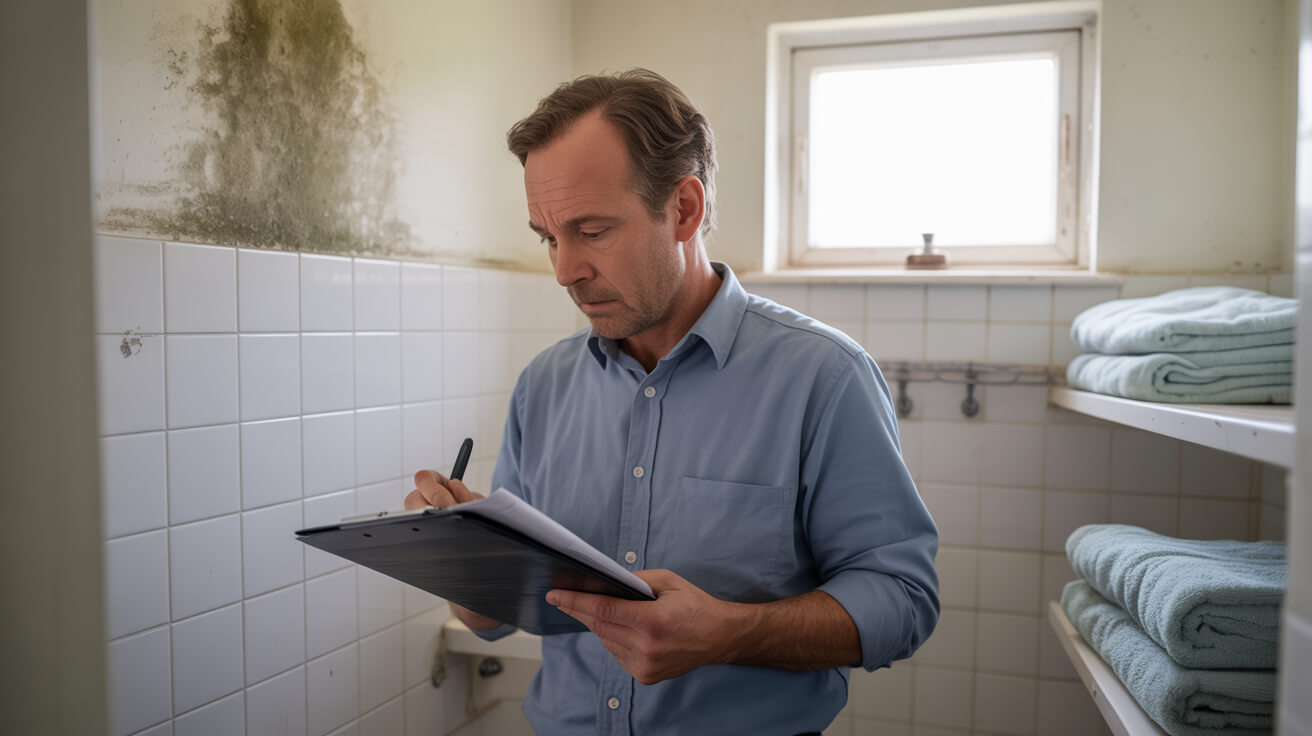
No landlord, buyer, or tenant sets out to play legal ping-pong. Yet more disputes arise from process breakdowns than technical failures. The best fix is a method with muscle—a process that steers you from doubt to documented action.
The Step-by-Step Playbook
- Track everything: Don’t trust memory. Log every patch, smell, or cough with photos, dates, and locations.
- Put repairs in writing: Complain by letter or email. CC agents, keep a copy—calls vanish.
- Request formal inspection: When a landlord or agent doesn’t act, reference the EPA or HHSRS and demand environmental health involvement.
- Commission a competent diagnosis: Bring in a surveyor or recognised specialist. Reports written in legal-standard language accelerate the process.
- Push for council action: If evidence stacks up, councils are forced to treat it as pollution and can issue abatement orders.
- Escalate if repairs stall: When “repairs” are rushed or superficial, escalation to court may be necessary—armed with your evidence, timelines, and any breached orders.
A phone call is forgotten. A written log with matching photos and reports forces action—every time.
Clarity beats chaos. Evidence, timing, and legal language turn you from frustrated bystander into a prepared stakeholder.
Where Cases Go Wrong: Common Pitfalls That Derail Damp and Mould Claims

The biggest culprit behind failed complaints? It’s not bad luck or council indifference—it’s weak documentation or optimistic DIY that lets the core problem fester.
Five Mistakes That Sink Legal Claims
- Verbal-only complaints: If it’s not in writing, it never happened.
- Poor diagnosis: Misreading condensation for rising damp triggers failed treatments, more expense, and zero progress.
- Headline cosmetic fixes: Painting or wallpapering over symptoms never fools trained eyes, but it blocks true diagnosis.
- No professional assessment: Surveys, lender reports, or insurance claims hinge on independent surveyor evidence—not a “mate’s opinion”.
- Dropping the follow-up: Many give up or stop tracking, letting deadlines pass and losing legal momentum.
Avoiding these traps isn’t just best practice—it’s how you get your property fixed, your rights upheld, and your money working for you, not against you.
Most failures aren’t from bad luck—they’re from weak evidence, superficial fixes, or lost complaint logs.
How Sussex Damp Experts Bring Your Home Back Into Legal and Healthy Shape
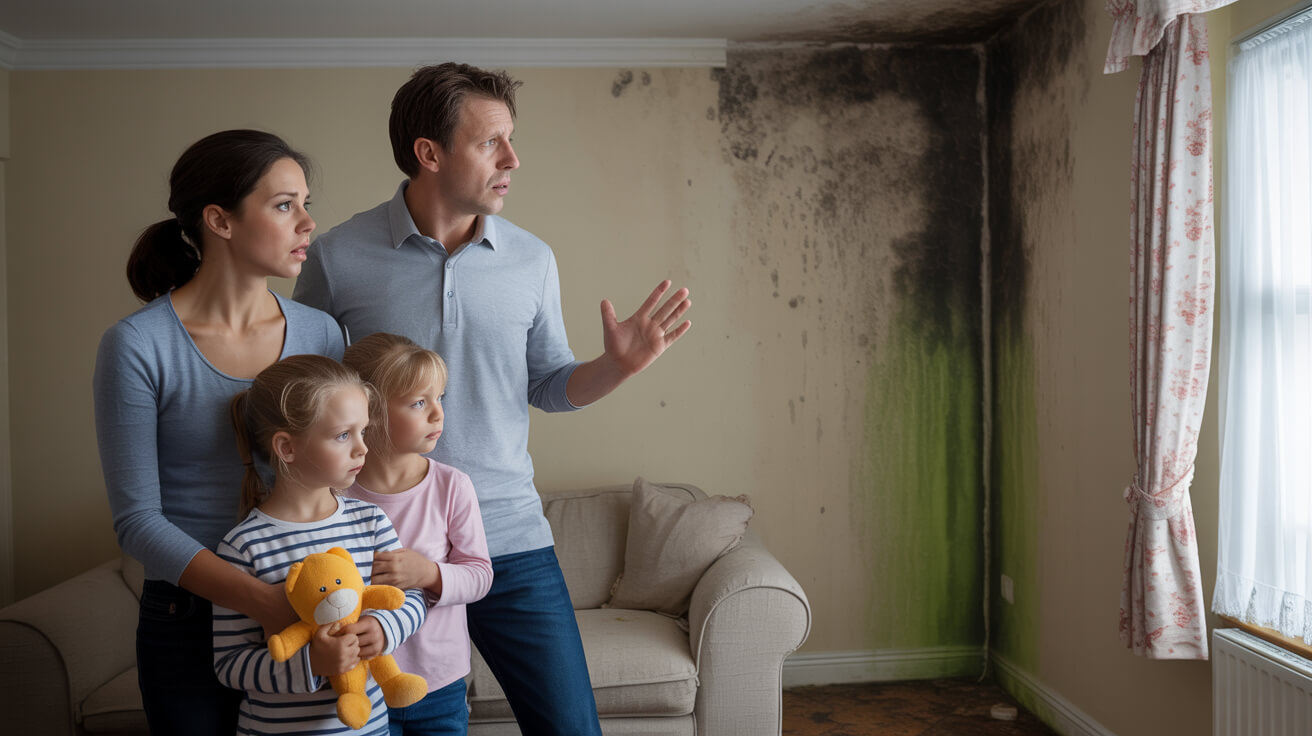
When the law and building science dance together, you get real solutions—not a temporary mask or loop of council letters. Sussex Damp Experts offer both: ironclad diagnostics and air-tight compliance that protect your health, property, and legal standing.
Our Approach—Forensic to Futureproof
- Diagnosis that stands up in council: Moisture mapping, salt and humidity tracing, and thermal imaging applied to BS 6576, Environmental Protection Act, and HHSRS standards.
- Council-grade documentation: Reports written with legal-speak in mind, backing up every diagnosis and remedy with technical clarity—so officers act, not question.
- Resilience beyond repair: Warranty and aftercare that survive lender scrutiny, insurance queries, and another British winter.
- Bespoke repair, from Brighton Victorian to high-rise block: Systems built to fit your property type and budget—but always to a legal and diagnostic standard.
The result? Not just dry walls, but security—against health problems, lost property value, and legal dead-ends.
Health isn’t a maybe—for you or for the law. Our job is to prove risk, fix root causes, and arm you with evidence when you need it most.
Speak to Sussex Damp Experts Today to Safeguard Your Health and Legal Security

No home or owner should be caught between mystery symptoms and unclear law. Sussex Damp Experts bridge the gap, giving you clear science-backed answers, formal documentation ready for council or lenders, and long-haul support that doesn’t quit once the walls look dry.
If your rooms feel musty or your tenants keep coughing, don’t let tomorrow’s dispute steal today’s peace of mind. The first move is easy: secure your air, your paper trail, and your property’s value before the council ever knocks. You, your buyers, and your family can breathe with certainty—when you bring in proven support that fixes the issue for good.
You breathe easier once the science, law, and evidence work for you, not against you.
Frequently Asked Questions
What hidden symptoms could reveal that your property is harbouring damp or mould pollution?
Minute shifts in well-being—such as a cough that nags, itchy skin, or sleepless nights—can quietly trace back to unseen damp or mould, even if your home “looks” sound.
Often, irritation that fades outdoors or stubborn congestion after wet spells points to more than seasonal colds. UK Health Security Agency bulletins now confirm that recurring “blocked nose” or chest tightness, when limited to the home, are classic signals of indoor pollution—especially where little ones, older adults, or anyone with asthma reside. NHS data recognises a pattern: children under five, people above sixty, and those with sensitive airways see symptoms spike when damp drifts unchecked—even in modern builds that seem dry or “well insulated.”
The first sign of mould is often written in your skin, not on your wall.
What are classic real-world warning signs?
- A cough that disappears on holiday or long weekends out
- Sinus blockage or sore throats recurring only in certain rooms
- Skin itching, eczema or dermatitis that seems triggered by humidity or heating cycles
- Fatigue or mood swings linked to time spent indoors
Who is most at risk?
- Anyone with immune sensitivities, seasonal allergies, or newly developed chest issues
- Home workers, infants, and those spending prolonged periods in the same room
- Families noticing a “musty” smell yet no visible mould
If these patterns sound familiar, a survey from Sussex Damp Experts gives you written, standards-based evidence—supporting everything from GP appointments to landlord negotiations or insurance claims.
Why is damp classed as a statutory pollution hazard—rather than just a property defect—in UK law?
UK statutes treat persistent damp and mould as statutory pollution because their impact runs deeper than mere appearance or basic property care.
Under the Environmental Protection Act 1990, long-term tenants, council enforcers, and legal advisers all regard damp as a “public health issue”—akin to unsafe air, excessive noise, or toxic materials. Once classified as “prejudicial to health,” damp problems trigger enforcement powers: councils must act, legal teams can intervene, and non-compliance can escalate quickly to court orders or fines. HHSRS guidelines bind every landlord or agent to minimum safety standards; ignoring them moves a damp case from cosmetic concern to legal risk in a heartbeat.
Damp doesn’t have to be visible to tip the legal scales against a property owner.
Who faces the real consequences of non-compliance?
- Landlords and managing agents delaying repairs risk fines (£5,000 and upwards) and statutory notices
- Professional sellers encountering damp “red flags” on pre-sale surveys may lose buyers or face mortgage blocks
- Properties with long-term unresolved damp could be flagged on local authority databases, complicating future insurance or tenancy approvals
To prevent headaches, Sussex Damp Experts design every diagnosis and report to hit the mark for council, lender, and insurer—so homeowners and managers avoid the domino effect of regulatory scrutiny.
How can the Environmental Protection Act force a landlord or owner to repair damp and mould for good?
The EPA 1990 serves as a “legal crowbar” for tenants and leaseholders whose repair requests have hit a wall or gone in circles for months.
By formally logging a complaint that references Section 79 of the Act, and pairs photographic and medical proof, you compel the local council’s environmental health team to investigate. Once evidence mounts and a “statutory nuisance” is established, the council issues an abatement notice—these orders are binding, not optional. Owners who ignore them face not just “reminder letters,” but actual enforcement work done at their expense, plus fines. According to a 2023 Brighton & Hove Council report, over 80% of abatement notices issued for mould/damp led to major repairs inside 60 days.
A council’s legal notice is the repair solution that outlasts excuses and landlord delays.
Which forms of evidence trigger fastest action?
- Sharp, date-specific photos showing change over time (e.g., stain growth, new paint blistering)
- Letters from medical professionals linking home air quality to ongoing symptoms
- Surveyor reports from BS 6576-certified teams such as Sussex Damp Experts
- Detailed logs documenting complaint attempts and outcomes
Once classed as a statutory nuisance, inertia breaks. Owners lose the option to “wait it out,” and families gain the right to live free from preventable harm.
What if a landlord, council, or agent ignores repeated complaints about health-harming damp or mould?
Persistence pays—so long as every contact and symptom is evidenced in writing, not just phone chats or texts.
Build a time-stamped record of every ignored email, unsolved issue, and repeat damp episode. Couple these with fresh photos and, where possible, comments from your GP or local nurse noting environment-linked symptoms. If delays stack, cite both the Environmental Protection Act and current HHSRS rules in your escalation. At this point, the council’s environmental health team moves from “adviser” to “enforcement officer,” especially if you’re vulnerable or have children at risk.
How do health-linked complaints turn into enforceable repairs?
- Circulate your documentation chain to all involved: agent, landlord, and council
- Use legal language—“statutory nuisance” and “Section 79 EPA 1990”—in your requests
- Reach out to tenant support or medical advocacy groups if your situation is urgent
A strong evidence chain cracks bureaucratic inertia faster than any promise on the phone.
Who strengthens your position?
- BS 6576-compliant surveyors with a track record of accepted submissions
- NHS or council-directed housing support, particularly for families, older adults, or those with asthma
- The Housing Ombudsman for deadlocks, where property or council stalls continue
With Sussex Damp Experts, every survey and report is designed to be “council-proof”—endorsed, documented, and trusted across regulatory and legal forums.
What proof most reliably tips a damp or mould complaint into successful council enforcement?
Councils move quickest when you combine clear timelines, medical evidence, and forensic property diagnostics.
Industry data shows that the majority of “successful” interventions—where enforceable repairs are ordered—leverage photographic progressions, humidity or air quality readings, and surveyor reports mapped directly to legal standards (BS 6576, PAS2035). A 2022 Chartered Institute of Environmental Health survey found that cases with at least 3 types of evidence and a two-week “timed log” were over 85% more likely to resolve in favour of occupiers.
What documentation consistently unlocks council action?
- Date-stamped visual records (not just “before and after”)
- Explicit doctor’s notes referencing property conditions, not just general symptoms
- Moisture metre readings, annotated by surveyors in official reports
- Surveyor findings written to BS 6576 with reference to statutory protection law
How does contested evidence stand up?
- Recurrence and escalation: Repairs that fail or damp that returns strengthen your statutory claim
- Regulation-driven narrative: Citing law and regulation codes in every contact nudges teams toward compliance
Real-world complaints succeed when the evidence is relentless—every missed repair becomes the council’s next red flag.
Sussex Damp Experts create the legal-technical link: the proof package that councils, insurers, and legal teams demand before major intervention—a shield for you, exposure for stonewalling landlords.
Why do so many damp complaints stall—and how can you avoid becoming just another statistic?
Complaints collapse where documentation is piecemeal, poorly timed, or purely verbal.
Landlords and agents sidestep with vague promises, superficial repairs, or requests for “more proof,” while problems stew behind sealed paint or unnoticed gaps. Complaints that don’t reference law or standards, or lean only on phone calls and faded photos, are quickly deprioritised. According to the UK Ombudsman, more than half of failed damp cases lack written surveyor reports or do not connect medical symptoms to the home environment.
Which mistakes erase your leverage?
- No written timeline or log—oral complaints quickly lose weight
- Hazy, blurry, or sporadic photo “evidence”
- Accepting cosmetic fixes (painting, temporary sealants) without root-cause correction
- Submitting ‘DIY’ reports instead of professionally credentialed surveys
If the paper trail’s weak, so is your protection—and the damp wins every time.
What turns frustrated claims into proven, council-ordered action?
- Document every episode, every step, and every reply—never delete or skip steps
- Commission surveys and reports referencing BS 6576 and legal clauses specifically
- Pair medical endorsements with property evidence to close the “proof gap”
Sussex Damp Experts specialise in full-spectrum, code-referenced documentation—ensuring your claim isn’t just seen, but acted upon. For repairs that resolve for good and records that outlast disputes, partner with those whose files council teams already trust.
For council-grade evidence and property diagnostics trusted by health authorities, surveyors, and legal reviewers, turn to Sussex Damp Experts and reclaim the health, value, and peace of mind your home deserves.

