
 By
By  August 26, 2025

Is Your Damp Emergency Under Awaab’s Law? What Every Property Decision-Maker Risks Now
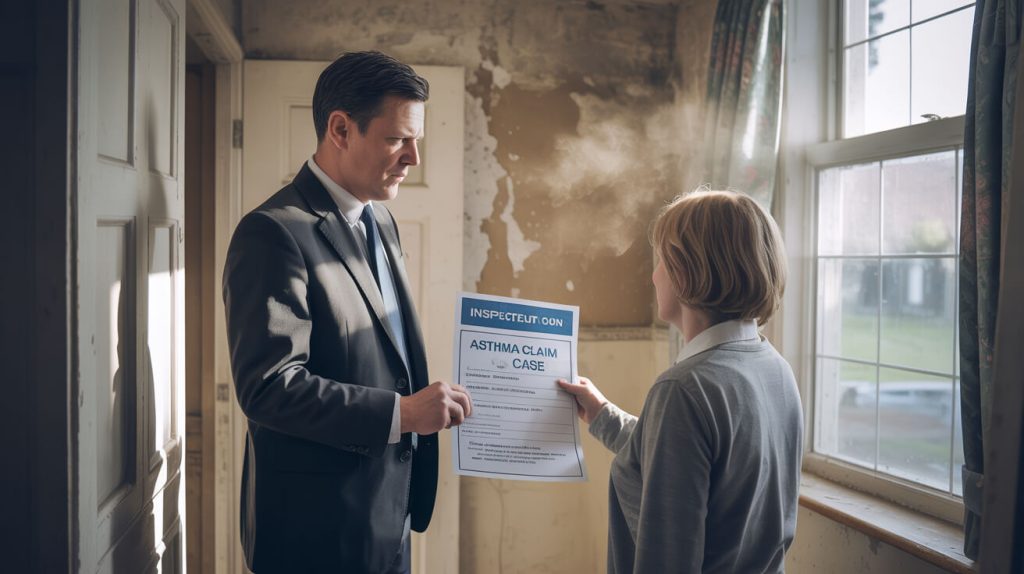
Awaab’s Law resets the entire calculus for anyone running or managing property in England. The myth that you can pass off a bit of black mould or a suspicious patch as a “concern for next quarter”—that’s been eradicated. From October 2025, damp and mould tied to health are not “maintenance issues”; they are full-scale statutory emergencies, with every move under the regulator’s lens. If a complaint lands, or someone in your building is at risk—child, pensioner, anyone with asthma—that triggers a legal clock. Miss a deadline, fudge a record, or lean on old ways and the costs mushroom, in ways that stain portfolios and reputations for years.
Damp is now a statutory emergency—risk is judged by health, not by size or appearance.
A missed patch, a slow contractor, a half-documented call—any of these can spiral into fines, a public blacklist, or loss of letting rights. It is no longer just about a single flat. Every complaint, every delayed email, even the definition of ‘minor’ is now dictated by law and the regulator, not your manager’s diary.
All this power now sits with tenants, council inspectors, and the ombudsmen. The era of politely declining action, tacking up some paint, or blaming tenants’ “lifestyle” is over. Inaction, delay, or “wait and see”—these are now legal liabilities. So, what happens when a bit of moisture puts you on the wrong side of this line?
Has Awaab’s Law Changed the Emergency Threshold for Damp Hazards?

Absolutely. Awaab’s Law force-multiplies even the smallest complaint, by granting it the potential to become a statutory event. The legal system now demands that landlords, agents, and portfolio managers treat every credible report of damp or mould as an emergency until proven otherwise.
- You must investigate all complaints within 14 days, regardless of perceived severity.:
- Category 1 hazards—meaning any plausible threat to health—trigger a legal duty to act within 7 days.:
- You must notify tenants and regulators immediately if there’s an emergency.:
Gone are the days of arguing scale or intent. The Housing Health and Safety Rating System (HHSRS) now calls the shots. If an assessor, council, or even a tenant’s GP says the risk is real, it is categorically a “health-first” situation. The regulator and council set your timetable. Your historical approach is now irrelevant.
*A musty boxroom with no visible stains can trigger statutory action if a health link is present.*
Repeated minor failures get flagged. Missed responses, lazy logs, or slow fixes show up in audits and open the whole register of properties to external scrutiny—dragging even unconnected sites into enforcement.
Why “Just Monitor It” Is Gone
Awaab’s Law outlaws the “minimise and delay” dance. It’s not just malicious neglect at risk—good intentions won’t save you if your documentation and action fall short of the statute. Enforcement bypasses anyone who can’t prove readiness, so systems not already calibrated for this new world are already exposed.
What Makes Damp or Mould a Category 1 Emergency—Fact, Not Guesswork

A Category 1 hazard is now any proven or plausible risk to health from damp or mould—no matter the patch size, room, or historic trivialisation. The test is not “how big,” but “can it hurt?”
- If symptoms like wheezing, skin rash, recurring cough, or asthma flareups can reasonably be linked to a damp or mould site, you’re in legal emergency mode.
- Backed by a GP note, social worker, or health visitor? That’s enough to escalate the complaint and start the penalty clock.:
- No space is outside the law—bedrooms, boxrooms, lounges, and even storerooms get the same scrutiny if someone’s health is affected.
Risk is judged by outcome, not by surface appearance, so vulnerable tenants (children, elderly, immunity risks) are weighted more harshly. If a single credible connection to symptoms is made, your duty moves from “helpful” to “absolutely mandatory.”
A small stain or periodic cough can demand statutory response, supported by the newest regulatory guidance. *(gov.uk; NHS, 2023)*
Why Old-School Visual Surveying Now Fails
You can’t just look, guess, or dab with a cloth. Surface-only fixes and handy-man assessments are now weaknesses, not solutions. Unless your records prove cause, confirm remedy, and document every step, you’re at risk of enforcement and payout demands that outstrip any savings from being “informal.”
What Are the Legal Deadlines and Paper Trails Demanded by Awaab’s Law?
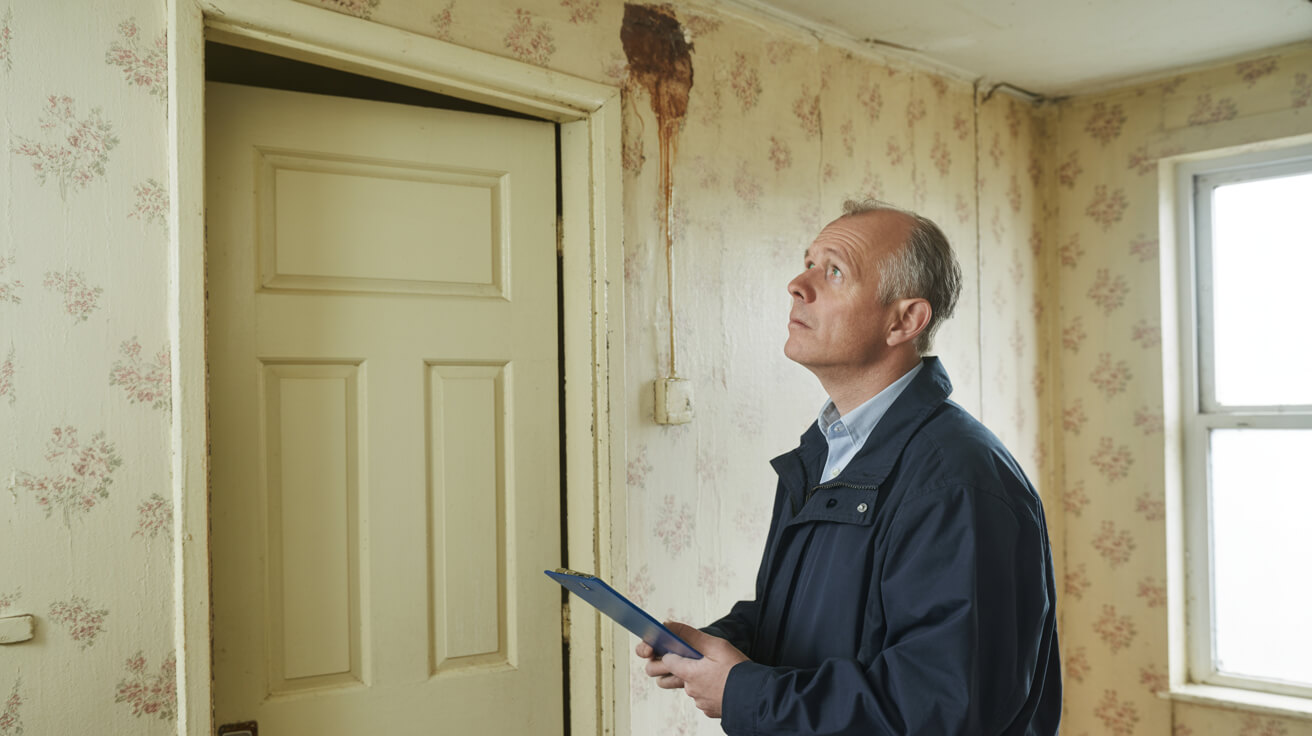
From October 2025, the old window to respond is closed. Your diary now runs on statutory timetables:
- Within 14 days: Every complaint must be investigated by a qualified professional—no exceptions.
- Within 48 hours: If it’s a Category 1 (emergency), you notify tenant and regulator.
- Within 7 days: Start remedial work on every significant hazard.
Intent, effort, or casual conversations don’t count. Your defence is only as good as the timestamped, third-party-validated evidence you keep.
- Fines start at £5,000 and escalate for repeated or portfolio-wide breaches.:
- Councils can issue improvement notices, suspend licences, or contract out emergency repairs at your expense.:
- Non-compliance, missed logs, or vanished emails put you on public registers and result in insurer and lender scrutiny.:
Relying on paper records, email trails, or friendly calls is no longer enough. Digital, properly stored, verifiable records are now the default expectation.
Even one missed log entry or non-digital file can unravel your compliance in an audit.
Why “We’ll Sort This Next Week” Isn’t Enough
Regardless of how sympathetic your delay might be, without rock-solid proof you met statutory deadlines, the system counts it as a breach. Your paper trail is now your reputation—and your lifeline—under audit.
How Can a Small Complaint or Patch Threaten an Entire Portfolio?
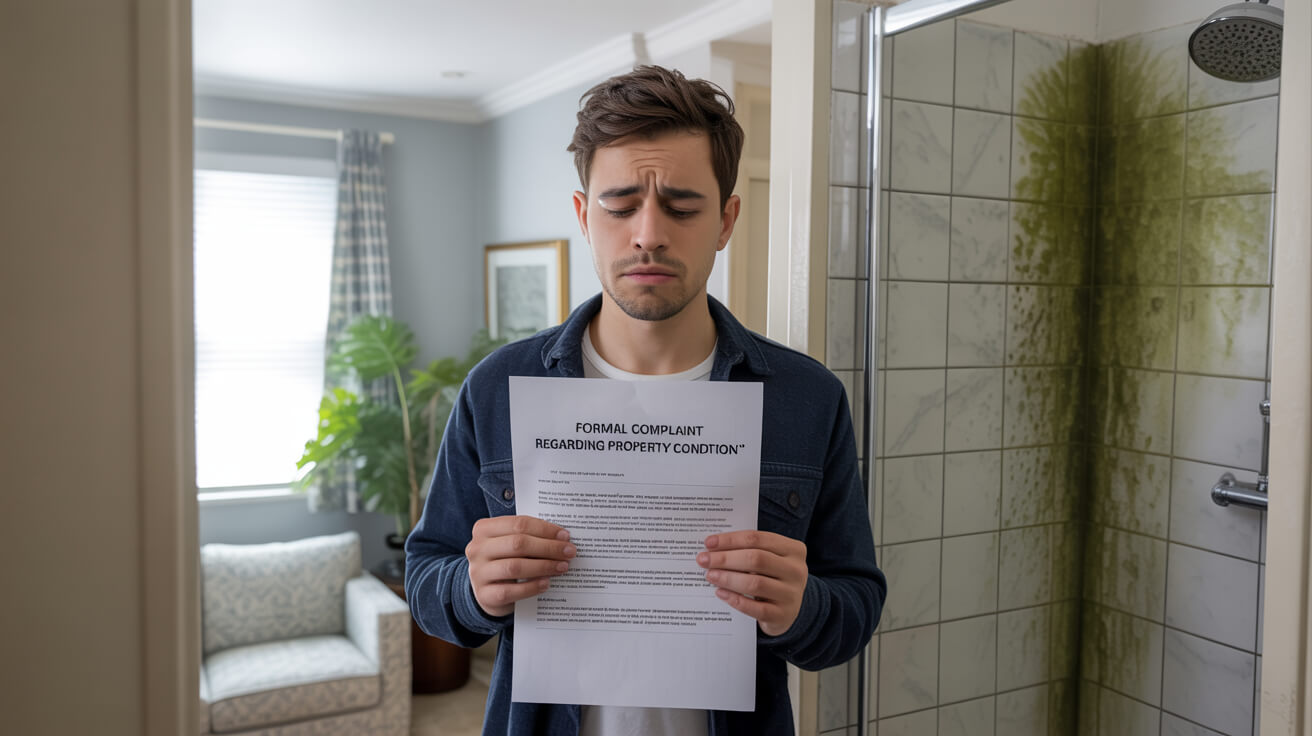
Awaab’s Law wipes out any distinction between “small” and “large” complaints once health is at stake. One overlooked repair or missed audit can lead to full-scale investigation across all your holdings.
- Regulators may audit every property you control after a single unresolved incident.:
- An incomplete digital record or missing document can lead to full portfolio exposure—resulting in costly, compounded risks.:
- Peer and regulatory trust is now forensic: the more you’ve documented and followed process, the more defensible your approach; the less you rely on robust records, the harder insurers and councils bite.:
The consequence matrix is no longer localised. Let one property slip and you expose the rest to reviews and fines that snowball, raising real stakes for insurance, lending, and licencing.
One overlooked repair, or failure to digitally log action, can snowball into a multi-property compliance storm.
The Chain-Reaction Risk
Lazy logging or “we’ll remember it” documentation may have worked in past audits. From 2025, it’s a fast lane to portfolio-wide compliance reviews, higher risk ratings with lenders, or even restricted market access.
How Will Inspectors and Councils Identify and Confirm Category 1 Damp Hazards?

Diagnostics are no longer a paint-and-go exercise. Enforcement relies on modern tools and expert evidence to prove every link between damp, mould, and health risk:
- Moisture metres, thermal imaging, salt mapping, and air quality monitors: reveal hidden sources with a precision that side-steps visual guesswork.
- Photo and video logs: —date-stamped and mapped—form your defence (and sometimes your prosecution).
- Third-party, PCA-accredited inspectors: are the legal standard. Self-logged fixes won’t stand against an ombudsman’s review.
- Health indicators count: tie-ins with GP reports, council records, and repeat complaints signal to regulators that your portfolio deserves a deeper look.
Your “trusted local builder” won’t cut it unless backed up by industry-standard, time-stamped, and independently verified data. Record everything as if you’ll need it in court—because you just might.
Why Quick Fixes and DIY Logging Are No Longer Safe
Rely too much on internal checklists or afterthought fixes and you’re open to an immediate penalty. Omit third-party specialists and you lose credibility; omit records and you lose your defence entirely. The new law is built to weed out improvisers.
What Are the Real Penalties for Deadline Slips and Record Gaps? Risk Is Now Existential
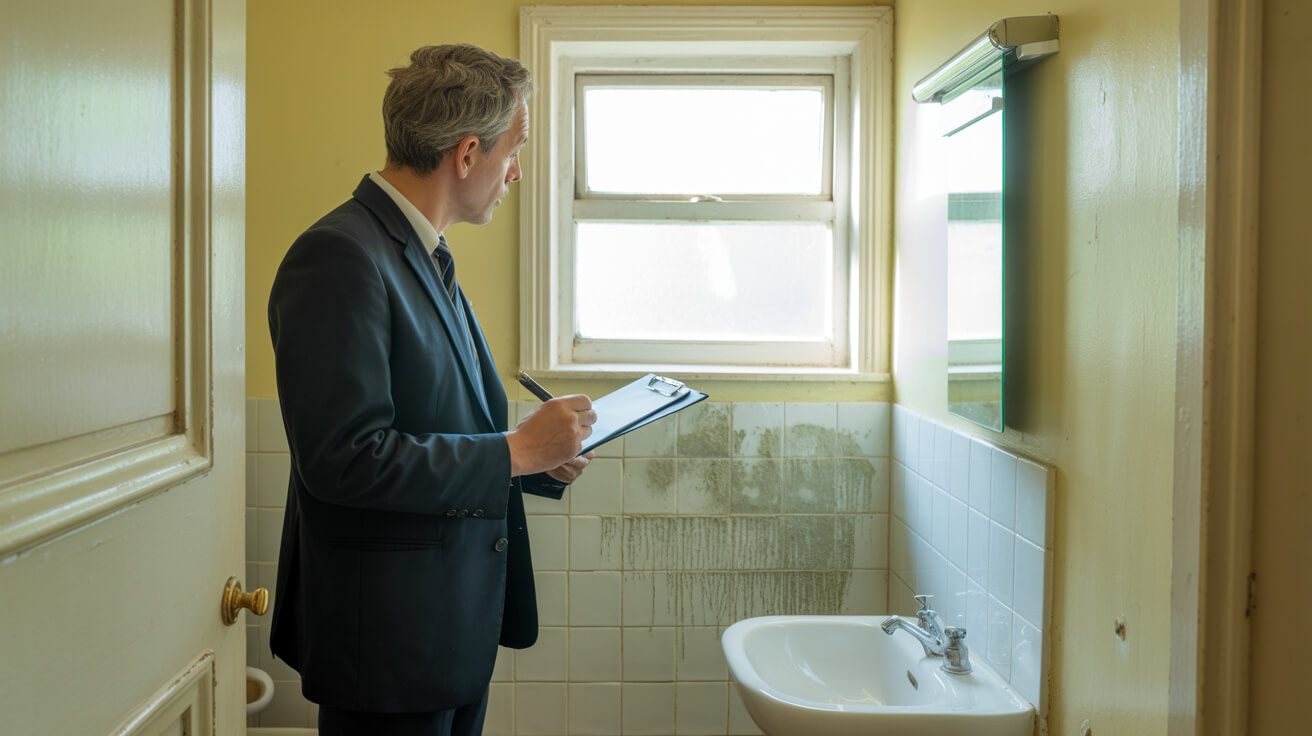
Under Awaab’s Law, missing deadlines or running with weak records courts a suite of existential risks:
- Fines of £5,000 or more, per property.:
- Forced repairs—councils take over, charge premium, and bill you.:
- Licence suspension for repeated failures—blocking rent and new tenancies.:
- Public blacklisting with councils and insurers: harder loans, higher insurance, slower lets.:
Every mistake is now “social” and public. Regulatory failings never really go away—they live in audit trails, lending reviews, and insurance risk profiles for years.
Compliance evidence isn’t a backup; it is your only shield when the auditor arrives unannounced.
How “Just This Once” Can Sink Years of Business
Fail on one property and councils assume exposure is portfolio-wide until you prove otherwise. The days of excused paperwork are over. Agencies, insurance brokers, and mortgage lenders will all treat you based on your worst-documented moment.
What Does “Surveyor-Grade” Compliance Now Involve for Landlords and Agents?
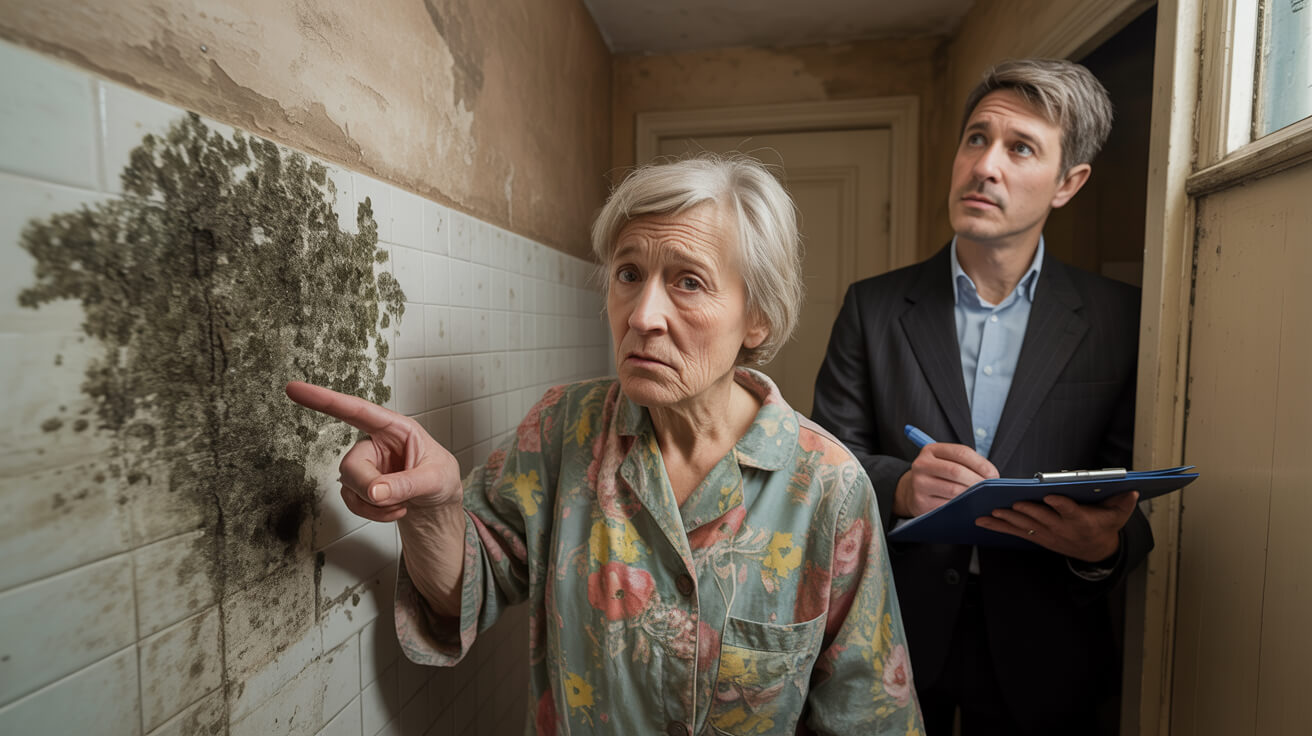
Meeting the Awaab’s Law compliance bar requires documentation and inspection at a level previously expected only for court battles or premium insurance:
- A mapped, dated, and serialised history of every complaint, work order, and post-treatment check.:
- Full diagnostic and monitoring logs—moisture, temperature, photo and video records, all tied to the relevant property and tenant.:
- Signed, third-party, PCA-accredited surveyor reports with an independent “chain of custody”.:
- A digital timeline from the first complaint to the confirmed resolution—instantly shareable, cloud-stored, and encrypted.:
- Tie-in of all health risk documentation with each possible incident, including GP notes, health visitor links, and tenant statements.:
Every hole—an unsigned report, a lag between completion and documentation, an unclear sequence—invites regulator scrutiny and weakens your legal defence. “We did our best” has been replaced with “prove you met or exceeded every legal and evidentiary step.”
Surveyor-grade reports are your line of defence, not just a tick-box. Provide them or risk being overruled by the regulator.
Why Minimum Standards Won’t Stop the Regulator
Going above statutory minimums is now risk management, not window dressing. The more robust your systems and the more resolute your documentation, the less likely you will face successful challenge. Treat every property and process as if a high-stakes inspection is imminent—because it very well may be.
Be Statutory-Ready: Sussex Damp Experts Is Your Compliance Shield
Statutory compliance is no longer optional; it is the new currency of reputational and financial survival. With Awaab’s Law in force, the smart move is to future-proof your portfolio now. Sussex Damp Experts arms you with PCA-accredited diagnostics, forensic moisture mapping, and independent, case-ready reporting—so every file holds up to insurance, regulatory, and ombudsman scrutiny without fail. Our approach is systematic from first complaint to final survey—with digital timelines, layered evidence, and real-life expertise built to stand up in any audit or legal setting.
Don’t let one oversight or outdated practice knock years off your reputation and asset value. Book a statutory-grade damp survey with Sussex Damp Experts—and stay ahead of compliance before compliance leaves you behind.
Frequently Asked Questions
What legal events and evidence now trigger an “emergency” damp response, and who sets the bar under Awaab’s Law?
Once health is clearly at stake—persistent coughs, breathing trouble, visible mould in sleeping areas, or the presence of vulnerable people like young children or the elderly—a property legally crosses into “emergency” territory under Awaab’s Law. The first decision usually sits with you as a landlord or managing agent, but local authorities or accredited surveyors can override if action stalls or evidence appears. Digital photos, dated health complaints, and survey logs now matter more than verbal reassurance. If a child’s health is flagged, black mould spreads, or any clear risk emerges, the law expects rapid escalation whatever anyone’s initial view. Council environmental health teams use Housing Health and Safety Rating System (HHSRS) criteria, and independent medical or surveyor opinions often decide disputes.
How do “emergency” cases differ from serious but non-urgent damp or mould?
- Emergency: Evidence of health harm, rapid mould spread, vulnerable occupants—requires response to begin within 24 hours.
- Significant hazard: Multiple rooms or repeated issues, but no acute health triggers—10 working days to begin investigation, 5 more for repairs.
A visible patch might sound minor until health or vulnerability tips the balance. The working assumption is simple: when in doubt, act like it’s an emergency first, and document any decision not to, with evidence and timings.
If you hesitate, the law doesn’t. Failing to act quickly moves risk onto your plate overnight.
Who can escalate a situation to the emergency level?
Local authorities, council surveyors, and health professionals can issue emergency reclassification even if the landlord or agent disagrees. Any credible complaint backed by evidence can trigger legal deadlines and remove discretion over next steps. A dated log of actions and evidence is your only defence if regulators intervene.
Which health impacts and proof will force a legally mandated emergency damp response after October 2025?
You’re now required to act as soon as certain lines are crossed:
- Visible damp or mould in any room regularly used by children, elderly, or those with health conditions.
- New or worsening symptoms: coughs, eczema, breathing difficulties, or a GP/consultant linking illness to property dampness.
- Active leaks, persistent high readings on moisture metres or evidence that previous treatments have failed, especially if those issues occur in vulnerable spaces.
Digital images, health notes mentioning the property, and expert surveyor reports take priority in signposting emergencies.
What circumstances do not meet the threshold—yet?
If a minor spot appears in a well-ventilated spare room, with no sustained complaint or vulnerable residents, you may have more time—unless a new risk appears or repeated issues are logged. The “grey area” between minor and major gets smaller every time a health professional is involved or another record joins the file.
It takes just one more email, photo, or doctor’s note to shift your obligation straight to 24-hour action.
Why does meticulous proof now trump everything else?
Verbal updates or undocumented visits now count for little. Property risk law has shifted to “seen, stamped, and securely logged” evidence—dates and images over memories or phone calls. Sussex Damp Experts’ survey reports and ongoing logs are engineered for council and legal scrutiny, giving you process insulation and audit resilience.
What are the precise legal deadlines—and what if you miss a step on an emergency damp case?
Under October 2025 rules, once a damp emergency is identified:
- Immediate investigation and initial mitigating work must start within 24 hours: —no excuses for “waiting on quotes” or “finding contractor slots.”
- Remaining significant (but not life-threatening) issues trigger a 10-working-day investigation and a five-day repair window.
Missed these steps? Expect escalating penalties: fines reaching £30,000 per issue, forced repairs at council-set rates, and mandatory audits spanning your whole property portfolio if negligent patterns appear.
Why is a digital record of every action now your legal shield?
Every complaint, visit, assessment, or repair—from tenant-uploaded photos to accredited surveyor logs—must be time-stamped and retrievable if the council or court requests it. Delayed, missing, or paper-only records put you on the defensive. Digitally managed evidence by Sussex Damp Experts will withstand council audits and serve as your insurance if procedures are questioned.
If it isn’t clearly timed, documented and accessible, it’s legally invisible—and you’re assumed non-compliant.
What is the actual financial and legal risk if you breach emergency damp compliance timelines?
Penalties bite hard and fast:
- Civil fines: up to £30,000 per affected property, compounded for repeated or poorly documented cases.
- Council repairs ordered at your expense: —typically well above normal contractor rates, deducted from rents if needed.
- Withdrawal of letting or HMO licences: , often halting business until systems are overhauled to meet standards.
- Name-and-shame listings: Your organisation listed publicly by ombudsman or council, potentially affecting brand, insurance, and refinancing.
- Tenant legal actions: Claims for ill-health, property loss, or distress can escalate quickly, especially when backed by health or legal advocates.
Does this extend beyond social landlords?
Absolutely. The mechanisms—Health and Safety Rating System (HHSRS) and Fitness for Human Habitation—apply as much to private landlords, agents, or portfolio investors as any council organisation. With social housing in the spotlight, enforcement on privates is rising, especially regarding children or health-linked cases.
A single failure can trigger wider audits across your entire portfolio—prevention is always the best bargain.
How can rigorous compliance processes protect your business?
Building processes that integrate accredited diagnosis, live digital tracking, and verifiable repairs reduces penalties and reputational damage. Sussex Damp Experts offer end-to-end compliance: rapid-response surveys, forensic logs, and regulatory documentation, all ready for scrutiny or escalation.
What surveyor tools and verification processes now define legal emergency damp compliance?
Compliance rests almost entirely on how evidence is gathered and logged:
- Gradient moisture metres: Penetrate deeper into walls and floors to trace rising damp, bridging or hidden leaks.
- Thermal imaging and humidity mapping: Reveal unseen thermal bridges or trapped condensation, not just surface readings.
- Salt and substrate tests: Distinguish between sources—rising damp, leaks, condensation—required for correct legal fixes.
- Digital logs linking photos, health issues, and work orders, all time-stamped: Only these full chains are counted under new standards.
- Health data integration: Even a single GP note directly referencing property dampness rocks the case.
What characterises a “regulator-proof” evidence protocol?
- Secure, shareable digital systems to collate all reports, timelines, and communications.
- Transparent, ongoing updates to residents, property owners, and council officials.
- Closure reports signed off by PCA-accredited experts, with all related files held for at least six years.
A mish-mash of emails and unlabelled photos breaks under audit pressure—full-chain evidence is your insurance policy.
Which end-to-end compliance methods and expert supports create true protection—and what’s unique about Sussex Damp Experts’ approach?
A safe, audit-proof property business is built on these pillars:
- First-response triage: All inbound complaints assessed, with health and risk factors identified within hours.
- Independent surveys and ongoing digital logs: PCA-accredited and council-accepted reporting, audit-ready at any point.
- Evidence that works for you: Exportable documentation for every inspection, repair, or dispute, ready to hand—proactive, not just reactive.
- Warranted and traceable work: Only guaranteed, fully signed-off repairs count as legal defences.
- Proactive aftercare: Scheduled annual or quarterly monitoring, ventilation and dry-down audits, and immediate documentation of any recurrence—no blindspots.
With Sussex Damp Experts, you’re not just patching symptoms; you’re constructing a legally resilient compliance envelope, where every stage of repair is logged, evidence is instantly recallable, and escalation channels are direct. Landlords and agents in East Sussex (and beyond) benefit from systems designed not only for prevention, but for audit confidence, risk reduction, and brand-strength retention.
True leaders solve the issue before the law knocks on the door—future-proof your compliance before the clock starts.
Secure your full-spectrum, audit-grade damp compliance and property health audit today with Sussex Damp Experts—before a minor symptom becomes a business-wide emergency.

