
 By
By  April 1, 2023


Expert Guide to Waterproofing Foundation Walls for Complete Structural Security
Every property faces an unavoidable test from groundwater, rain, and unpredictable weather events. The condition of your foundation walls silently determines the lifespan, safety, and legal compliance of your building. Homeowners, buyers, and commercial stewards alike are realising that secure, warrantied waterproofing isn’t just a loss-prevention tactic—it’s central to safeguarding investments, protecting families, and remaining eligible for finance or resale.
Structural Integrity: Factoring in More Than Surface Damage
Defects in foundation waterproofing rarely announce themselves until small issues—paint bubbles, musty odours, warped timbers—multiply into systemic problems. As mortgage lenders and insurers tighten policies, financial exposure increases for anyone ignoring invisible failure points.
- Regulatory changes such as BS8102:2009 now set the minimum baseline for legal and insurable defence.
- Most property devaluations after surveys are triggered by undiagnosed or dismissed damp symptoms.
Building Regulations: What Do Modern Owners and Managers Owe?
Failures here aren’t a headache for tomorrow; they’re a compliance and value loss waiting to compound. Properties failing waterproofing surveys attract not only expensive remedial works but often ongoing challenges with mortgage release, tenant retention, or insurance renewal. You owe your property—residential or commercial—rigorous due diligence.
| Risk | Regulatory trigger | Value impact |
|---|---|---|
| Missed damp | BS8102 non-compliance | Surveyor devaluation, insurance denial |
| DIY fix | Lack of warranty/certification | Mortgage block, legal risk |
| Shortcut | Planning/building regs breach | Costly rework, tenant attrition |
Property Value Preservation Through Preventive Action
Treating foundation walls is a future-proofing decision. Most post-failure cases—whether in homes or large-scale assets—trace back not to material, but to missing or misapplied specification, unverified finish, or non-certified instal. If you haven’t commissioned an accredited risk survey on your property, the question isn’t “should you?” but, “how much do you risk by waiting?”
What Are the Leading Causes of Foundation Water Ingress and Damp?
Waterproofing System Selector
- 1 Location
- 2 Water
- 3 Use
- 4 Results
Recommended System
—
—
System Details
Every waterproofing project is unique. Book a specialist survey for a system recommendation tailored to your property.
Book a Waterproofing Survey →Relying on surface appearance is the most common shortcut that leads to foundation failure. True causes of ingress hide in the mix of environment, material, and historic intervention.
Capillary Action and Hydrostatic Pressure: Why Damp Moves Up and In
Water almost never stays put. Foundation walls—especially in UK building stock—draw moisture by capillary action from below ground, while hydrostatic pressure pushes moisture laterally into wall cores, behind finishes, and into floor joints.
- Urban properties and rural homes with high water tables, minimally-graded sites, or poor external drainage almost always develop pressure breaches over time.
- Groundwater doesn’t discriminate between new builds and period homes; missed DPCs or sub-spec membranes are as risky as old sand-lime mixes.
Site Drainage: How External Works Sabotage Internal Security
Defective rainwater goods, raised garden beds, or botched landscaping can render even a professionally installed system useless. The risk isn’t always heritage or build age—it’s integration of site elements.
- Period properties compound risk when incompatible repairs (cement over lime, bitumen over brick) lock in non-breathable layers or bridge paths for moisture.
- Commercial assets often suffer from hard landscaping that drives more water toward below-ground elevations.
Recognising the Pattern—and What Follows It
Common indicators:
- Persistent earthy or musty smells
- Efflorescence or salt bloom at wall/floor level
- Isolated cold or sweating patches, especially after rain
- Recurring blistering paint or eroded surface finishes
Taking a “wait and see” stance is the most expensive choice. If any of these symptoms are present, your property is broadcasting its weakness—and inviting value loss.
Why Is a BS8102:2009-Compliant Professional Foundation Waterproofing Survey Essential?
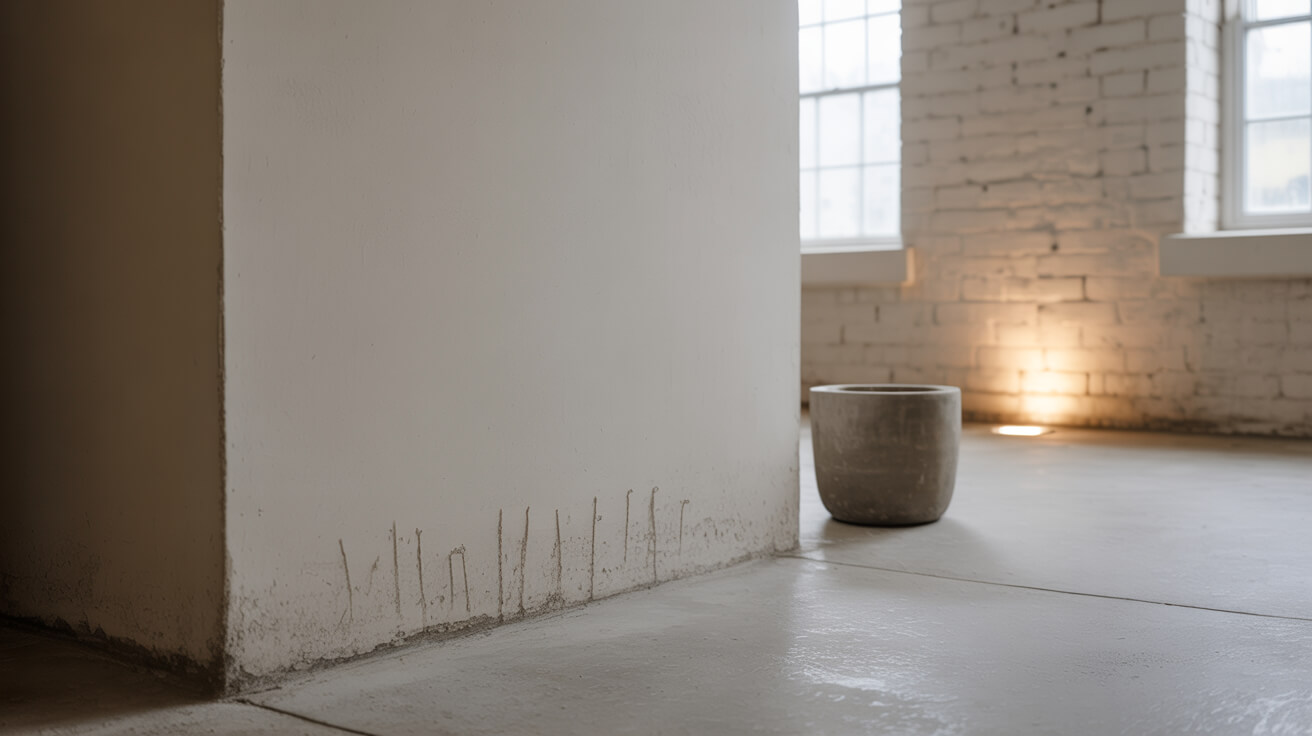
No owner, manager, or heritage steward can afford guesswork when regulatory, insurance, and warranty standards define eligibility and long-term protection. Sussex Damp Experts employ BS8102:2009 as the non-negotiable starting point for every assessment—ensuring every risk is mapped, not speculated.
Accredited Surveys: What’s Actually Delivered?
A compliant survey delivers:
- Layered moisture mapping with state-of-the-art tools (hygrometers, thermal imaging, borescopes).
- Cross-referenced salt and substrate analysis.
- Clear separation between condensation, rising damp, and lateral ingress (this matters for specifying legal solutions).
- Heritage and conservation approach for listed or period properties, in compliance with PAS2035.
Tables and high-quality survey visuals become not only your diagnostic proof but your defence in any legal, mortgage, or insurance scenario.
| Survey Feature | Why It Matters | Who Requires It |
|---|---|---|
| Moisture profile | Targeted, not shotgun solutions | Installer, warranty |
| Heritage mapping | Avoids irreversible interventions | Conservation officer |
| Insurance-grade doc | Guarantees claim validity | Insurer/lender |
Reporting Standards: Documentation as Asset Protection
A Sussex Damp Experts report formats every risk for buyer/seller conveyance, landlord compliance, or portfolio due diligence. Informal inspections leave you exposed; only an accredited, written survey puts you beyond challenge from regulators, buyers, or insurance.
What Foundation Waterproofing Systems Satisfy UK Standards for Different Structures?

No “universal” solution works for every property or compliance scenario. The right system matches your foundation profile, environmental pressures, usage, and legal context—integrating both prevention and proof.
Type A, B, and C Explained: Matching System to Property
- Type A (Barrier/Tanking): Seals surface with internal/external membranes. Suits unconverted basements, compatible heritage applications, and sites where external access is possible.
- Type B (Integral): In-built resistance using waterproofed concrete. Only viable in new projects or major refurbishments.
- Type C (Cavity Drainage): Channels water to controlled evacuation via membranes and sump/pump systems. Often essential for conversions, high water table sites, or buildings with complex layouts.
| System Type | Core Advantage | Main Limitation |
|---|---|---|
| Type A | Immediate prevention, cost-effective | Susceptible to bridging/failure; must be continuous |
| Type B | Longevity, design-integrated | Not retrofittable |
| Type C | Suitable for high-risk or heritage works | Ongoing maintenance needed |
Materials Guide: What’s Non-Negotiable for Compliance and Performance
BS8102:2009 opens with system, performance, and material standards—no project should accept less. Sussex Damp Experts only specify and instal certified, proven materials with full traceability, from membranes and tanking slurries to approved pumps and drainage interfaces.
System Suitability: Avoiding Regret and Rework
Heritage or listed buildings are particularly dependent on careful material compatibility, reversibility, and consent. Professional-grade cavity membrane or breathable tanking systems, not generic solutions, keep your compliance and value future-proof.
How Can Common Foundation Waterproofing Failures Be Avoided?

Failures in waterproofing are rarely the fault of a product—they’re almost always errors in system design, installation, integration, or neglected aftercare.
Bridging and Maintenance Intervals: Preventable Causes, Permanent Damage
- Skipped internal cutbacks or re-plastering, insufficient ventilation or monitoring, or missed drainage cleaning—each opens a door for water.
- Blocked sumps or gutters don’t announce themselves; only routine scheduled checks (with logged readings) maintain protection.
- Mixing system types or ignoring substrate compatibility (lime, stone, concrete) consistently appears in failure audits. Every heritage remediation denied by council stems from insufficient consent or non-reversible methods.*
| Frequent Failure | Underlying Cause | Prevention/Resolution |
|---|---|---|
| Bridged tanking | Missed substrate prep | Detailed system survey, checklists |
| Blocked sumps | Neglected maintenance | Active service contract, sensors |
| Incompatible fix | Wrong material/method | Expertise in substrate and consent |
Prevention Tips: Sustainable, Scalable Solutions
- Schedule a post-instal handover and setup, including a custom aftercare plan.
- Invest in monitoring technology and service contracts where required—never accept a one-and-done fix.
- Insist on full documentation, especially for any asset with resale or third-party oversight.
Failure is not a gamble on luck—it’s a measurable risk you can lock down with diligence and expert support.
When Must Heritage and Conservation Guidelines Shape Waterproofing Approaches?

Maintaining value in period and listed properties means more than keeping out water—it means respecting legal, material, and historical boundaries.
Listed Building Compliance: When Is Consent Required for Foundation Works?
- Any intervention that changes substrate breathability, reversibility, or visibly alters protected fabric needs consent.
- Installing cement-based or non-breathable systems in lime/masonry settings risks compulsory removal and fines.
- Handover documentation for conservation projects always includes both method statement and regulatory evidence.
PAS2035 and Heritage Adaptation: Modern Standards for Historic Value
- PAS2035 applies to energy and damp retrofit works, demanding “whole building” assessment and risk-path mapping.
- Sussex Damp Experts’ heritage division tailors all recommendations to satisfy both regulatory scrutiny and the physical needs of older buildings.
- Breathable, reversible solutions—paired with detailed risk mapping—offer you peace of mind, council acceptance, and guaranteed insurability.
Reversibility: A Non-Negotiable for the Asset Owner
The smartest heritage owners treat every improvement as a temporary “steward’s mark,” not a permanent change—future value depends on what you leave as much as what you fix.
Where to Find Trusted, Accredited Waterproofing Contractors and Surveyors
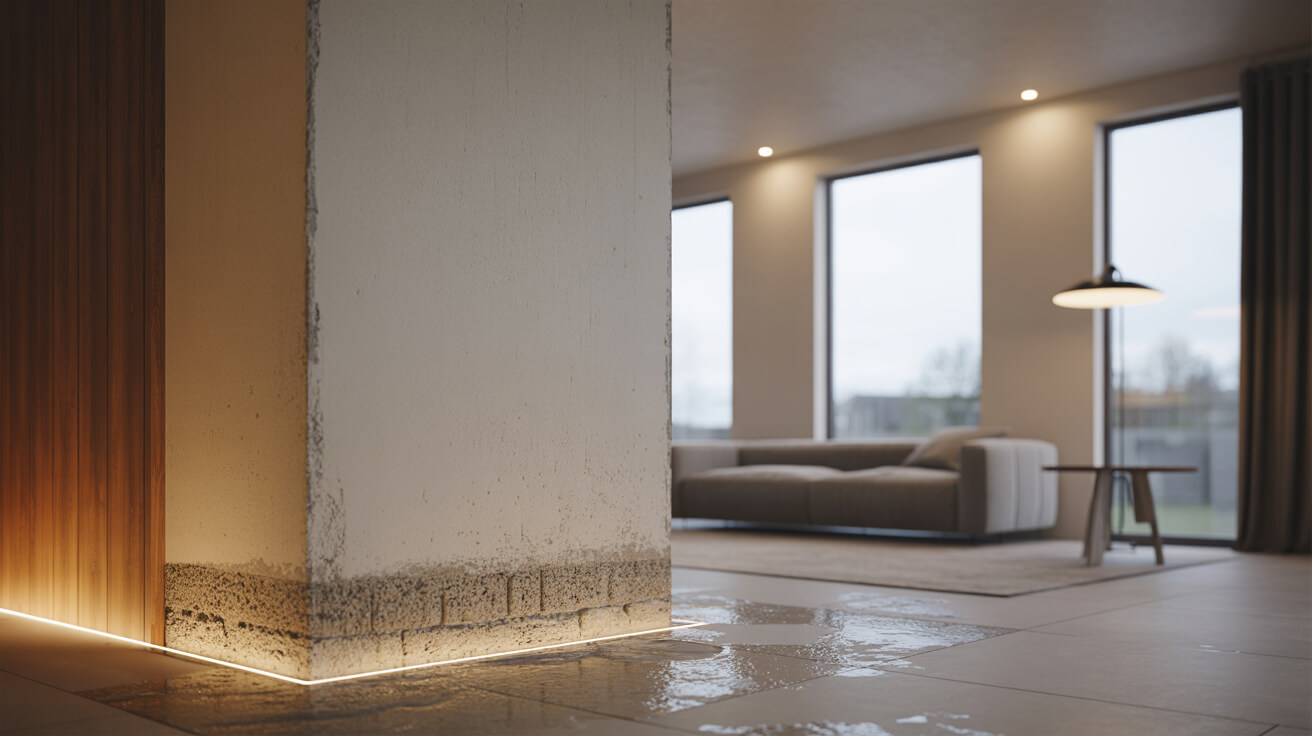
Your property’s future relies on the expertise of those you entrust it to—credentials, insurance, and compliance record matter more than price tags.
PCA / Trustmark: Who’s Actually Qualified?
- Only choose firms accredited by the Property Care Association (PCA), TrustMark, or with independent third-party certifications.
- Suspect any provider that hesitates to provide:
- Warranty-backed documentation
- Insurance proof
- Case studies or past compliance records
| Checklist Item | Why It Matters |
|---|---|
| PCA/TrustMark Certificate | Regulatory proof |
| Insurance coverage | Financial security |
| BS8102:2009 survey | Compliance |
| Previous projects | Trusted process |
Insurance and References: Hidden Layers of Trust
- Are insurance and warranty policies up to date and offered in your name?
- Can references be independently verified?
- Does every system come with scheduled aftercare or just a builder’s number?
“Trust isn’t what’s promised—it’s what’s proved, year after year, when every claim is checked and the asset remains yours.”
Book Your Free BS8102-Compliant Consultation With Sussex Damp Experts
Foundation waterproofing may be invisible after installation, but its impact echoes in every survey result, tenancy renewal, and resale value calculation. Our experts analyse every site for visible and hidden risk, deliver compliance-ready reports, and instal tailored systems using only certified materials. Every project you commission with us receives aftercare planning, regulatory documentation, and the seasoned attention of experts committed to the integrity of your building and your reputation.
- Risk mapping and compliance review free for all clients:
- End-to-end support: from survey and consent to instal and warranty:
- All documentation ready for lender, regulator, or new owner scrutiny:
Advantage belongs to those who act before the headlines write themselves. Step above risk—join a network of owners who treat their property as the legacy it is.
Frequently Asked Questions
What are the real stakes if you don’t waterproof your foundation walls?
Water carving silent passageways through foundation walls is rarely dramatic—until it destabilises the unit that holds your entire asset together. Left unchecked, small pockets of moisture erode load-bearing strength, ferment hidden mould, trigger voids in insurance, and transform minor repairs into multi-phase, indefinite projects.
Threats Beyond the Obvious
- Surveyor Red Flags: Mortgage lenders, buyers, and insurers are trained to see beneath cosmetic fixes. When evidence of below-ground moisture appears, your property’s value can nosedive—sometimes overnight.
- Health Collateral: Mould in basements doesn’t stay in basements. Spores circulate, stress immune systems, and expose families and tenants to chronic risk.
- Structural Domino Effect: Damp expands, undermining floors, brickwork, and finishes from the lowest layer up.
Deferring action never makes water wait. The calls from surveyors, insurers, or tenants arrive on their schedule—not yours.
Sussex Damp Experts specialise in pre-emptive survey and tailored remediation. You protect not just bricks, but everything those walls support—family health, professional reputation, rental income, or resale certainty.
What hidden forces push water through your foundation, and how do you spot the signs before it’s too late?
Contrary to surface myth, water doesn’t need an obvious gap to invade. Foundation walls, whether stone, brick, or concrete, are engaged in constant battle with capillary action, hydrostatic pressure, and local geology. Landscaping, faulty drains, or legacy “fixes” using cement or bitumen can amplify ingress and entomb moisture for years.
Early Indicators Most Miss
- Out-of-Season Mustiness: That lingering damp odour after a dry spell isn’t character—it’s a molecular preview of structural distress.
- Isolated Cold Patches: These often signal lateral movement, not just a “cold spot.”
- Salt-Bloom or Flaking Paint: Visual proof that internal vapour is migrating via routes you can’t see.
Ignoring these whispers elevates future intervention from a targeted repair to a full-scale overhaul. When water can rise through capillary attraction or be driven sideways by a blocked French drain, your foundation’s story can be told long before a builder ever arrives.
Your property’s risk profile is unique: only a forensic, whole-building assessment prevents you from paying for short-term “solutions” that mask deeper problems.
Why is a professional, BS8102:2009-compliant survey non-negotiable before installing or upgrading foundation waterproofing?
A compliant survey is more than a box-tick; it’s the basis of all regulatory, warranty, and mortgage assurance. Councils, insurers, and mortgage lenders recognise only professional documentation that forensically maps the true vectors of risk, substrate, and water entry.
The Power—and Limit—of Evidence
- Sussex Damp Experts begin with substrate analysis, humidity mapping, and heritage/consent review. This preempts surprises, bid inflation, and repeated disruption.
- Homeowners and asset managers gain a document that not only enables proper solution selection but also satisfies any third-party scrutiny.
- For heritage and listed sites, this is not elective—it’s a precondition for future upgrades, insurance, and maintenance grants.
Operating on hunches or “what worked at my neighbour’s” is a liability magnet. The difference is simple: action with evidence earns you lender trust, lock-solid warranty, and future buyers who see pre-emptive stewardship.
Which waterproofing systems actually meet UK standards, and how do you recognise the right (or wrong) fit for your building?
Solution mismatch is the number one driver of recurring damp ruin. UK standards—from BS8102 to heritage officer mandates—classify waterproofing into three primary systems, each suited to distinct risk/properties:
Core Systems, Compared
| System Type | Key Function | Pros | Cons | Suitability |
|---|---|---|---|---|
| Type A | Barrier/Tanking | Simple instal, effective for many modern basements | Susceptible to bridging, incompatible with some heritage substrates | Unconverted, modern or “clean” basements |
| Type B | Integral | Built-in, highly durable | Only suitable for new builds | New construction, major extension |
| Type C | Cavity Drain | Manages ongoing movement, reversible | Needs maintenance, periodic servicing | Heritage, listed, complex substrates |
Hybrid approaches—combining Type C drainage with targeted barrier strategies—are essential for many period properties and conversion sites.
The wrong choice, however aesthetic or “cost-cutting” up front, multiplies both cost and disruption. Sussex Damp Experts consult directly against your structure’s historical and operational context. Each system is benchmarked for local authority, insurer, or mortgage acceptance and comes with explicit documentation to future-proof every decision.
A system that’s wrong for your wall is right for repeat liability. When in doubt, benchmark your decision with those who stand behind it—and stake their name on its warranty.
What are the real-world reasons foundation waterproofing fails, and how do proactive owners or managers future-proof against repeat problems?
Beneath every failed floor or recurring tenant complaint, there’s a timeline—one marked by skipped checks, ignored alerts, or aftercare dismissed as “optional.” Failures are almost always the result of integration errors: blocked drain/weep holes, incompatible finishes, missed substrate prep, or lapses in annual system checks.
Bulletproofing Your Investment
- Bridging Risk: If new finishes or membranes touch old, untreated surfaces, water will bypass your best defences.
- Aftercare Deficit: Most warranty voids stem not from product failure, but from “out of sight, out of mind” maintenance neglect—especially where drainage, pumps, or monitoring devices are involved.
- Consent Breach: Heritage or listed environments demand reversible, breathable protection—with full documentation to satisfy conservation rules.
Smart ownership means not just installing for today but documenting, servicing, and upgrading precisely. Our ongoing support, maintenance, and compliance review are designed to reduce lifecycle risk and arm you with proof at every renewal or transfer.
The strongest foundation is less about brute force and more about the scheduled, transparent governance of your built environment. This is where seasoned partners—not just installers—make their mark.
Where can you verify and select truly accredited waterproofing professionals—and what is the cost of settling for less?
The difference between a trusted partner and a generic contractor is measured in record, documentation, and third-party recognition. Sussex Damp Experts operate with PCA and TrustMark accreditation, full insurance, and mandatory annual upskilling—each credential open to audit, reference, and challenge.
The High Cost of Low Credentials
- Missed Insurance Payments: Insurers are increasingly ruthless about technical compliance. Many demand FeRFA, CHAS, and ISO-aligned documentation—missed paperwork means missed claims.
- Tenant or Buyer Disputes: No “verbal” warranty or email invoice will defend your interests when claims are challenged during re-sale, mortgage assessment, or asset disposal.
- Heritage Scenarios: Compliance is more than a flexible mindset; it’s a binding chain of proof running backward through all interventions for inspection and grant eligibility.
Demand a candidate’s PCA/TrustMark status and insurance proof. Request a sample report or case study for your property type before agreeing to a quote. Book your next inspection on the expectation of lifelong asset stewardship.
Resilience and compliance don’t begin at handover—they begin at the first question you ask your provider.

