
 By
By  August 26, 2025


What Warning Signs Mean Damp or Mould Works Are Unsafe—And Why CDM 2015 Makes This Urgent
Damp and mould aren’t minor irritations—they are warning shots that someone, somewhere, hasn’t done their job. If a newly “repaired” wall quickly redevelops black mould, produces a musty stench, or draws water on your fingertip, it isn’t bad luck. It’s your building signalling unfinished business and missing legal safeguards. In fact, under the Construction (Design and Management) Regulations 2015 (CDM 2015), poorly handled damp or mould isn’t just a technicality—it’s a compliance breach that can leave owners, managers, landlords, contractors, and even tenants exposed to consequences that only grow with time and neglect.
If a damp patch returns after works, you’re not unlucky—your property’s protection has failed.
Too often, the surface is patched but the system beneath remains vulnerable. Jobs that leave lingering odours, persistent cold spots, or that see stains and fuzzy growth cockle up weeks later signal a lack of professional diagnosis, poor adherence to British Standards, or disregard for the law. These warning signs don’t simply reduce home value—they quietly fuel health hazards and set the groundwork for disputes.
CDM 2015 places a legal obligation on everyone involved—from managing agents and contractors right through to frontline “damp proofers.” They must not just act; they have to prove the job is safe, risk-assessed, and future-proofed. Skipping risk assessment, ignoring root causes, or using the wrong products is more than short-sighted—it legally pins liability to your door.
Hidden Hazards: What Unsafe Damp or Mould Jobs Unleash
The real risks aren’t always visible on day one:
- Health jeopardy: Active mould releases spores that trigger asthma, worsen lung conditions, and threaten anyone with allergies, immune issues, or fragile health—children and older adults in particular.
- Property damage: Left unchecked, moisture will creep through timbers, corrode fixings, peel paint, and destabilise plaster, sapping both property value and build integrity.
- Legal and compliance risk: Cover-ups or slapdash repairs that flout BS 6576, BS 8102, or use unqualified labour risk enforcement action, fines, and compensation claims ([CDM 2015](https://www.legislation.gov.uk/uksi/2015/51/made)).
- Mortgage and insurance traps: Persistent damp gets flagged on surveys and can cause lenders to withdraw, insurers to reject claims, or sales to stall—sometimes for years.
Every time a damp fault appears or repeats, look beyond the cosmetic. It’s a live warning that task accountability, legal compliance, and your property’s safety net are each on borrowed time.
Who Carries Legal Responsibility—And What Rights Do You Have Under CDM 2015?
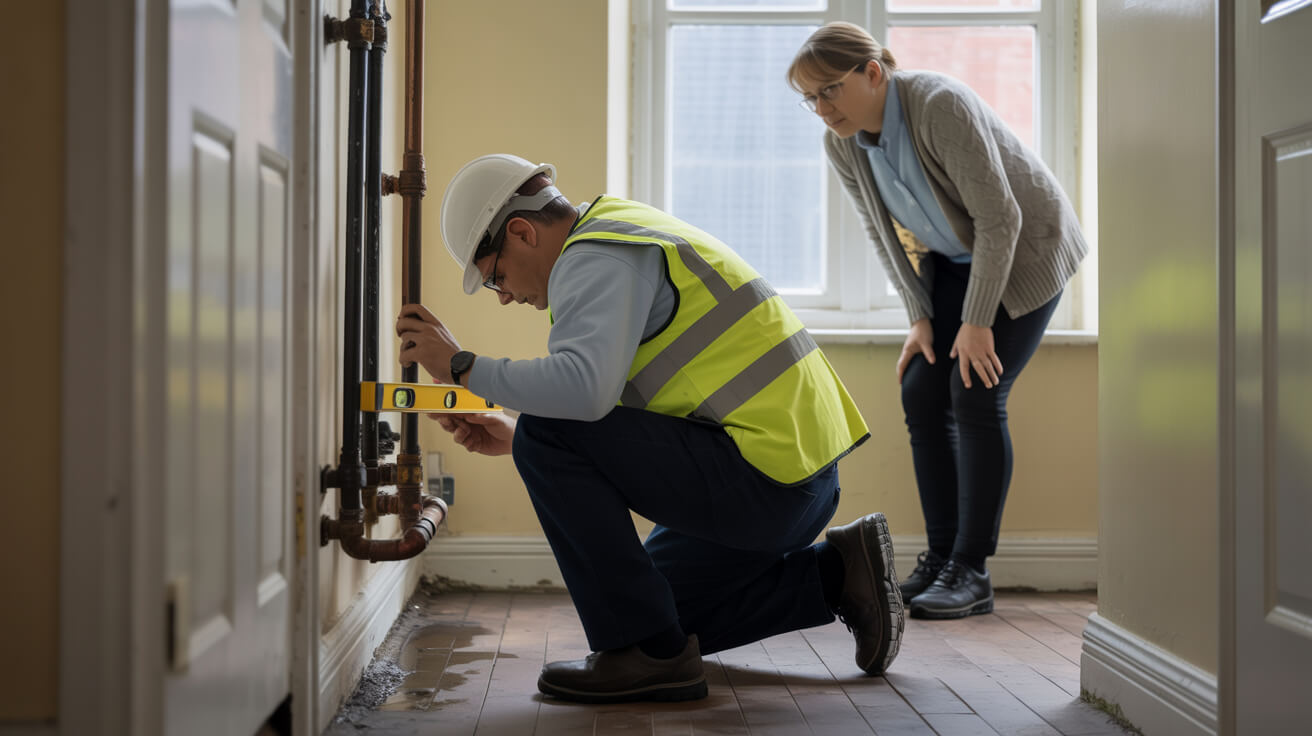
Damp and mould responsibility is not a grey area. The law, including CDM 2015, the Landlord and Tenant Act, and the Homes (Fitness for Human Habitation) Act 2018, defines clear, actionable duties. Whether you’re a homeowner, landlord, agent, contractor, or tenant, knowing who must step up—and how to enforce it—makes all the difference.
Proper fixes come with names, dated evidence, and legal bite. If the basics are missing, your rights are too.
- Landlords & Freeholders: You are obligated to maintain homes fit for habitation—addressing damp and mould swiftly and professionally. Failure risks the council stepping in, fines, or “Rent Repayment Orders” that force compensation.
- Contractors & Agents: Under CDM 2015, works must be risk-assessed, results documented, and British Standards followed. Assigning the job to a “handyman” or skipping paperwork is a compliance breach.
- Tenants: You have the right to safe accommodation. If reports are ignored, escalate to your council or the Housing Ombudsman—both have the power to enforce repairs and compensation ([Housing Ombudsman](https://www.housing-ombudsman.org.uk/centre-for-learning/key-topics/damp-and-mould/?utm_source=openai)).
- Home Buyers & Sellers: If a contractor refuses written guarantees or walks away from certification, you retain the right to demand remediation—backed by local authorities and, if necessary, the courts.
Real compliance is rooted in documentation. Names, dates, standards referenced, and step-by-step actions serve as a protective shield—supporting future repairs, insurance claims, resale, or legal defence.
Table: Who Owes What—And What Happens If They Fail
Every property type and party carries bespoke responsibilities. Here’s a snapshot.
| Role | Core Duty | Penalty for Failure |
|---|---|---|
| Landlord/Freeholder | Fit for habitation, respond swiftly | Fines, legal orders, rent clawback |
| Contractor | Follow BS 6576, certify works | Breach noted, claims, enforcement |
| Tenant | Report, enable access | Loss of rights or compensation |
| Managing Agent | Oversee, document fixes | Professional liability, lost fees |
| Buyer/Seller | Disclose, fix damp before transfer | Price drop, sale collapse, claims |
Missing compliance steps or cutting paperwork corners nearly always creates a longer, sharper fallout for those closest to the property.
Which Evidence Gives Your Unsafe Damp or Mould Complaint Real Power?

Strong complaints arrest attention and force timely action. Regulatory bodies, insurance, lenders, and courts investigate hard data—not frustration or emotion. The more rigorous your evidence, the faster your complaint finds resolution.
- Photographic timeline: Date-stamped images of every fault and flaw, both close-up and in context, beat days of verbal dispute when deadlines loom.
- Impact diary: Log every incident—leaks, odours, new outbreaks—along with symptoms (health, structural, or practical) and failed interventions.
- Accredited surveys: A PCA member, TrustMark-accredited, or BS 6576-compliant report sharply tilts decisions in your favour, especially with lenders or public authorities.
- Full document stack: Hold receipts, guarantees, all correspondence, and job specs in a single folder—this proves causation, sequence, and who did (or didn’t) act.
- Medical links: GP or Environmental Health notes tying conditions to the property are crucial for urgent escalations.
Well-documented, unimpeachable evidence tips the balance with regulators—emotion alone almost never does.
Barrier to access? The law supports you. Solicitors can win “access orders” if neighbours, landlords, or managing agents obstruct essential work (Legal Access Guidance).
Checklist: What To Gather Before You Escalate
- At least two rounds of date-stamped photos (before and after any work)
- Independent survey report, referencing British Standards
- Copies of all contracts, quotes, and guarantees
- Diary or log with dates, symptoms, and all communications
- Any medical or Environmental Health assessments
- Written request or complaint, confirming non-compliance or outstanding issues
Strong documentation at every turn isn’t just insurance—it’s leverage.
How Do You Lodge a Formal Damp and Mould Complaint Under CDM 2015?

A complaint shouted down the phone won’t move the needle—a written, evidence-based complaint does. To make your concern official, draught a written complaint that clearly names the regulation breached, details the problem with supporting proof, and nails down a timescale for remedy.
A wall of paperwork beats hollow promises every time. Document, don’t debate.
- Specify the regulation: Cite CDM 2015, BS 6576 / BS 8102, and any relevant warranty obligations up front.
- Be precise: Describe each failing (e.g., untreated sub-floor, lack of DPC proof, improper tanking sequence) and support with photo/survey evidence.
- Record the ask: State actions required, expected schedule, and the responsible party.
- Demand written response: Insist on documentation, not calls or hallway chats; file all emails for your record.
- Track obstacles: Add detail if anyone blocks access, disputes the cause, or avoids official remedy. Consistent obstruction only builds your eventual claim.
If the company, contractor, or agent ignores you, escalate. Delays rarely minimise cost—they multiply it, and legal limits tick closer every week.
Template: Example Written Complaint for Unsafe Damp Treatment
*Subject:* Formal Complaint—Unsafe Damp Remediation at [Property] *Dear [Company/Person],* *I am formally raising concerns regarding unsafe and incomplete damp/mould remedial works undertaken at [address], in breach of CDM 2015 and British Standard [number]. Please see attached photos, survey report, and evidence log.* *The following issues remain unaddressed:* • [List each failing, e.g., Persistent mould on lower wall, No proof of DPC by accredited surveyor] *I require confirmation of corrective action, along with supporting certification, within [X days] to avoid escalation.* *Regards,* [Name]
When Should You Escalate Damp or Mould Safety Complaints—and How?
If emails go unanswered or works are refused, act fast: passing another winter hoping for a better outcome only raises costs, damages health, and increases liability. Each week lost is another chance for a lender, buyer, tenant, or regulator to find what remains hidden.
Most property disputes fester in silence, then erupt—escalation brings focus and timeline.
Where and how to escalate:
- HSE (Health & Safety Executive): For safety failings on active worksites. Use their online complaint service and submit your evidence ([HSE Guidance](https://www.hse.gov.uk/contact/concerns.htm)).
- Local Environmental Health: For damp or mould in private rented homes, your council’s Environmental Health team can order urgent repairs, issue fines, or appoint contractors—costs recovered from landlords ([Council Example](https://www.cornwall.gov.uk/housing/private-housing/complaints-about-housing-conditions/?utm_source=openai)).
- Housing Ombudsman/Regulator: In social housing, raise complaints through the Housing Ombudsman; they can issue binding decisions on repair and compensation.
- Legal Access Orders: If denied access by neighbours, landlords, or managing agents, your solicitor can apply for an Order to access the property and complete works ([Legal Access Guidance](https://clarkslegal.com/insights/articles/can-i-have-access-to-a-neighbours-land-to-carry-out-works-to-my-property/?utm_source=openai)).
Persistence pays off; well-organised evidence paired with the right pathway compels results, frequently with timelines set by statute.
What Can You Expect Regulators to Do Once You Escalate Your Damp or Mould Complaint?

Escalation under CDM 2015 and related housing law isn’t a soft nudge—it’s a call to action with real teeth. Once a formal complaint with evidence is raised through an official body (HSE, local council, ombudsman), the process shifts out of your hands and into a regulated, enforceable sequence.
- Statutory work orders: HSE or a council officer can legally require contractors or landlords to remedy unsafe or incomplete works by a deadline, referencing British Standards.
- Repairs by default: If a landlord fails to comply, councils appoint their own trusted experts, fix the fault, and invoice the absentee party—often with extra penalties.
- Compensation and recourse: Tenants in social or private rental may see rent reductions, compensation or “Rent Repayment Orders” issued if proper standards are unenforced.
- Legal access: The courts can grant orders to access and repair, overruling neighbours, agents, or contractors who obstruct work.
Proper evidence and prompt escalation turn stonewalling into mandatory repair and restorable value.
You should expect: strict deadlines for action, oversight of works, follow-up inspections, and (where needed) visible certificates for completion—your property file’s new backbone.
How Do You Lock in Lasting Protection After a Damp or Mould Complaint?

Lasting safety and value for your asset mean going further than patch repairs. CDM 2015 isn’t a one-off checklist, and damp control is best seen as routine system care, not just a fix.
- Build the record: Collect and store all completion certs, damp-proof guarantees, and inspection paperwork tied to every work phase.
- Enable aftercare: Instal calibrated moisture metres and schedule routine checks, especially in vulnerable or previously affected areas. These spot relapses before resale or letting risk grows.
- File for the future: Archive every document, invoice, report, and regulatory response. Buyers, lenders, auditors, and insurers trust what’s proved—never what’s hoped.
- Book periodic inspections: For older, heritage, and complex buildings, schedule professional surveys (BS 6576/PCA) annually or after known leaks or flooding events.
- Leverage your rights: If problems persist or return, you can re-activate complaint avenues at any time—armed with a paper trail that sharpens accountability.
The upshot is more than just dry walls: you gain legally robust property files, fewer disputes, and a well-defended market value.
Table: Locking In Safety—Key Steps & Payoffs
| Step | Best Practice | Long-term Benefit |
|---|---|---|
| Documentation | Certs, reports, photos | Ironclad insurance/sale |
| Aftercare log | Moisture & ventilation checks | Fewer relapses, fast fixes |
| Compliance archive | All correspondence, all parties | Proof for future claims |
| Annual survey | BS 6576/PCA inspector | Early risk detection |
| Escalation holdback | Evidence ready for reuse | Fast track future needs |
Prevention isn’t just easier—it’s tighter, smarter, and pounds cheaper than repeated fixes or formal complaints.
Why Sussex Damp Experts Set the Standard for Compliance, Evidence and Guaranteed Results

Sussex Damp Experts have built a reputation that outlasts routine repairs. Insurers, lenders, buyers and councils turn to evidence-based, standards-focused damp professionals because they know: personal opinions don’t win disputes—proven compliance does.
Every survey, fix and follow-up is calibrated for scrutiny—from lender checklists to resale, insurance, and the worst-case legal challenge.
Here’s why the difference holds for years:
- Accredited, independent inspection: We lead with full diagnostic rigour—every report references BS 6576, BS 8102, and PCA best practice, meaning works that stick.
- Turnkey documentation: Clients never hunt for missing receipts or vague guarantees. All works align with legal, insurance, and lending needs—and you’re handed a digital and hard-copy record.
- Aftercare and education: Scheduled, proactive checks and honest advice stop “repeat syndrome.” Your repairs remain valid, and your future risk drops each season.
- Trusted by professionals: Agents, surveyors, councils and property managers repeatedly refer to us when the standard must hold under any pressure.
When you want results that protect your property on day one and day three thousand—this is how you lock in buy-in from every future stakeholder.
Resolve Your Damp or Mould Complaint—Contact Sussex Damp Experts Today
Damp and mould don’t disappear with crossed fingers or casual cover-ups. Missed paperwork, skipped inspections, or shoddy works create only festering cost and liability. The route to a safe, saleable, dispute-proof property always runs through evidence, accredited standards, and ongoing aftercare.
Your next step is simple: build your evidence file, demand accountable works, and enlist accredited experts who clear the damp—not just the mess but the underlying risk. Sussex Damp Experts delivers the fix and the file so your asset stands up to any regulator, buyer, insurer or auditor.
Book your survey or ask for confidential help today—compliance and confidence are yours to claim.
Frequently Asked Questions
Why do authorities open formal investigations into unsafe damp proofing or mould control under CDM 2015?
A formal probe starts when there’s evidence that damp or mould works endanger health, safety, or building stability—whether through toxic chemical exposure, failed barriers, or botched remediation that lets problems return. The Health and Safety Executive (HSE) leads supervision on live sites under CDM 2015, focusing on unsafe methods or lack of protection for workers and the public. In lived-in properties, local Environmental Health acts—responding wherever persistent damp, hidden mould, or recurring water ingress threatens occupants.
Risk lingers in silence—problems ignored today can become tomorrow’s headline hazard.
Who responds—and how does the situation dictate which authority acts?
- Active construction or refurbishment sites: HSE acts fast if worker or passer-by safety is threatened, such as improper tanking, uncontained chemicals, or undocumented work.
- Existing homes, rentals, or social accommodation: Council Environmental Health responds to complaints over failed repairs, renewed mould, or tenants exposed to hazards.
- Ongoing or unresolved hazards: Issues left unaddressed can escalate to the Housing Ombudsman or drive legal proceedings.
- Access denied for repairs: Councils may enforce entry or contract repairs when landlords or agents refuse to act.
The trigger is always evidence that risk to life or building value is real—not just theoretical.
How does someone escalate unsafe damp or mould complaints under construction law or regulations?
Begin with a dated, written complaint to the responsible party—be it principal contractor, site manager, property owner, or letting agent—backed up with photos and supporting documents. CDM 2015 demands a “golden thread” of paperwork, so each stage of reporting, correction, and follow-up must be recorded. If issues are ignored or downplayed, escalate to HSE using their online form, supplying address, full description, and all timelines. In rental or managed accommodation, Environmental Health is your next stop; repeated neglect calls for Ombudsman review, with legal action as backup if all else fails.
Evidence plus persistence leads, faster than emotion, to a door swinging open and a result on your terms.
What practical steps force agencies to act quickly?
- Address your report to the person or firm directly in charge.
- Attach time-stamped photos, medical records, and any survey findings.
- Keep a log of written submissions and responses.
- If nothing changes, submit your full dossier to the regulator or council immediately.
No complaint is too small for a paper trail—each report locks in accountability that can’t be shaken both by insurers and by future surveyors.
Who is entitled to raise concerns over unsafe damp or mould treatment—and does your status change the response?
Anyone affected or exposed—including residents, site workers, contractors, visitors, or neighbours—can initiate a formal complaint. CDM 2015 and post-Grenfell rules deliberately support broad reporting: tenancy status, ownership, or professional background doesn’t gatekeep. Tenants, leaseholders, and property managers are explicitly protected by law; workers are required to raise issues and shielded by whistleblowing protection. Even a neighbour’s concern—over tanking leaks, airborne chemicals, or unsafe scaffolding—can launch a review.
Does the system favour or respond faster to certain roles?
- Workers: Must report hazards as a legal duty, and are protected for doing so.
- Residents, managers, and letting agents: Their complaints are often the fastest route to a site visit or enforcement action.
- External professionals: Surveyors, energy assessors, or even visiting trades trigger rapid attention if evidence is credible.
- Neighbours/public: Risk isn’t contained by boundary lines, and official channels are open to anyone eyeing trouble.
Your concern will always matter more than your formal title—fielding risks from all sides forces defective works out of hiding and into remediation.
What evidence moves complaints about unsafe damp work to the top of an enforcement queue?
Layered proof is the lever: clear photos and videos, official surveyor’s breakdowns referencing BS 6576/8102/PAS 2035, documented health issues, agency or ombudsman reports, and copies of all official paperwork—guarantees, contracts, and correspondence. Time-stamped logs, site photographs that show both the macro (location) and micro (problem area) context, and a full sequence of communications build a complaint agencies can act on—fast. Medical documentation or third-party professional assessments underscore urgency.
Table: Types of evidence and their enforcement impact
Evidence that speaks for itself eliminates contestation and speeds up the remedy process.
| Evidence Type | Enforcement Effect |
|---|---|
| Time-stamped site photos/videos | Forces onsite inspection—risk can’t be denied |
| Surveyor or standards report | Defines breach—mandates urgent redress |
| Medical or health records | Prioritises safeguarding—triggers immediate action |
| Audit trail of communication | Prevents backpedalling—enforces deadlines |
| Official council/ombudsman docs | Elevates status—ushers in legal remedies |
Agencies react to pressure and clarity—vague or anecdotal complaints sit in the pile, but detailed dossiers rise to the top.
What sequence unfolds once you report dangerous damp or mould work to regulators?
The agency response unpacks as a structured chain: first, you receive acknowledgment and a unique reference number; then, your evidence is reviewed and the case triaged by urgency. On-site inspections may follow—sometimes unannounced—where officers scrutinise physical evidence and compliance paperwork. Correction is driven by regulatory notice: sometimes an improvement order, sometimes a deadline for repair, other times an emergency closure. Persistent defiance leads to fines, legal costs, or prosecution; successful remediation brings agency sign-off, updated guarantees, and repeat follow-up to catch lurking risks over time.
A strong complaint isn’t just personal leverage; it’s about raising the whole street’s standard and stopping repeat offenders in their tracks.
Four stages you can count on
- Case reference and triage: A formal record is created and urgency classified.
- Inspection and records review: Officers visit, question, and record all compliance markers.
- Mandated repairs or enforcement: Notices stipulate actions, deadlines, and who pays.
- Final review and future-proofing: Repairs are signed off, and future warranty tracking starts.
A well-documented case moves rapidly—sketchy evidence leads instead to repeated questions and slow, uncertain remedies.
How does expert input from Sussex Damp Experts tip investigations and resolution in your favour?
When a dispute turns technical—or a repair’s validity is questioned—the intervention of Sussex Damp Experts can transform outcomes. Our assessment tools and detailed, standards-driven reports are built to meet the strict acceptance and audit requirements of HSE, local authorities, ombudsmen, mortgage lenders, and insurers. Independent site photography, scheduled inspections, deep-dive compliance paperwork, and action plans are expertly assembled, shielding clients against further loss and positioning them for rapid remediation. Our team’s intervention bridges the diagnostic and documentation knowledge gap that outer-edge cases often expose. Where others paper over cracks, our approach locks in long-term integrity—closing loopholes that cause disputes to drag for months.
- All evidence is documented in surveyor-grade detail and references relevant British Standards.
- Proof chains and legal paperwork are supplied for you and for any official.
- Your situation isn’t left open: full aftercare, scheduled checks, and ongoing compliance audits protect you from further regulatory headaches.
- Our third-party input has regularly set the bar for local enforcement—making your complaint stand above routine cases.
Documentation isn’t bureaucracy—it’s barrier and shield. Let us turn confusion into action, and denied fixes into confirmed peace of mind.

