
 By
By  March 11, 2023


What Surfaces Can Dry Rot Affect? Expert Identification, Early Warning & Total Property Protection
Dry rot never limits itself to timber or old buildings. The reality is that this fungus exploits overlooked vulnerabilities in modern, period, and commercial properties alike—structural wood, hidden wall cavities, insulation, stonework, soft furnishings, even high-value furniture. Every untreated patch of damp is an open invitation for dry rot to spread or Block-Dry Rot efforts, undermining your investment, tenant health, regulatory compliance, or long-term peace of mind.
What differentiates successful property stewards? It’s not reacting to visible decay—it’s knowing where and how dry rot infiltrates, including concealed risks such as Block-Dry Rot, and how quickly insurers, buyers, and surveyors can turn invisible risk into explicit liability. The most decisive owners, landlords, and professionals map all threat surfaces before the first claim, complaint, or repair dispute derails their plans.
Invisible decay has a habit of showing up—right when you’re least ready for it.
Many believe that annual checks or “spot” treatments are enough, but lenders, local authorities, and insurance adjusters are doubling down on proof—demanding that every surface, from joist to joinery and carpet to cavity, is declared free from fungal threat. If you recognise that surface-level fixes never satisfy a due-diligence culture, then this guide makes you indispensable. Below: how the highest-performing owners use comprehensive surface diagnostics to secure property value, regulatory standing, and lasting reputation—partnered with Sussex Damp Experts for authentic proof and rapid intervention.
Timber Structures and Joinery: Rewriting the Rules of Risk for Modern and Heritage Builds

Timber risk isn’t what most property owners have been told—it’s not just old floors or “damp corners.” Today, the primary threat is that modern installation shortcuts and outdated heritage fittings can both foster rapid dry rot spread. Whether your building is a Brighton townhouse, a listed cottage, or a commercial unit, every timber component—structural, decorative, or hidden—demands forensic attention.
Where Timber Decay Begins (and Why It Goes Unchecked)
Mycelial threads start their work wherever moisture lingers: under suspended floors, inside skirting, in attic beams, beneath carpets. New-builds face cavity and substrate condensation; heritage buildings suffer from restricted repairs and compromised ventilation. Insurance policy and re-mortgage requirements now often mandate documented proof of timber safety compliant with BS 6576.
Targeted Timber Risk Table
| Timber Element | Typical Vulnerability | Best Inspection Method | Documentation Required |
|---|---|---|---|
| Floor joists | Very high in older homes | Drill/core moisture set | Surveyor’s report |
| Skirting/architrave | High (all ages) | Tap, probe, borescope | Visual + digital log |
| Roof trusses | High with poor airflow | Thermal cam, endoscopic | Ventilation record + image |
| Heritage joinery | Variable, often hidden | Non-invasive, humidity | Heritage-compliant log |
Timber Defence Strategy: From Theory to Decisive Proof
Proof of “timber soundness” requires more than a quick visual pass. Moisture maps, photo logs, and calibrated monitors show insurers and buyers exactly which risks are managed, not ignored. Just as importantly, regulators want evidence you’ve used specialist surveyors—Sussex Damp Experts merges local expertise with digital audit, ensuring each inspection stands up in negotiations and insurance disputes.
Ignoring these protocols increases repair costs and can void insurance. Judicious owners are not waiting for the next crisis; they’re booking scheduled timber diagnostics before tenants call, buyers walk, or insurers send denial letters.
A single untreated joist can trigger a chain reaction—cost is contained only by what you catch early.
Fabric, Carpets, and Upholstery: Unmasking the Spread in Soft Surfaces

Carpets don’t just hide stains—they conceal fungal expansion that challenges even expert eyes. Modern property portfolios and family homes feature soft floors and underlays that, if overlooked, become the bridge between timber risk and comprehensive spread. Dry rot’s appetite for cellulose means natural-fibre carpets and jute-based underlay are at real risk when combined with routine damp or poorly ventilated rooms.
Recognising Vulnerable Materials—And Why Mixed-Fibre Still Means Risk
- Natural fibres (wool, jute, cotton) are highly susceptible when damp persists
- Synthetic or blended underlays offer partial resistance but can still support fungal migration if dirt, organic debris, or mixed instals are present
- Inspections must go beyond a quick lift-and-look—thermal, humidity, and sub-carpet sampling now set the bar
Micro-Checklist: Where Soft Surface Risk Hides
- Afternoon mustiness or persistent “old carpet” odour
- Patchy discolouration or surface matting near skirting
- Unexpected wear patterns on frequently covered traffic zones
- Landlord/tenant disputes often escalate around “who checks beneath” and when records are taken
Why Your Prevention Plan Must Include Regular, Documented Surface Audits
Insurance exclusions grow stricter: untreated carpet or underlay dry rot often falls outside cover. Our surveyors use calibrated tools and data-logged checks to demonstrate definitive status—uniquely valuable for multi-let and short-term rentals, where transient occupancy raises the odds of undetected infection.
Resolving carpeted surface risk isn’t reactive; it’s a new expectation. The highest-integrity property managers have transitioned from “visual only” to “analyse and prove.” That’s how you win the trust—and avoid the claims disputes—every other landlord dreads.
Wall Systems and Plaster Assemblies: The Unseen Corridors of Dry Rot Migration
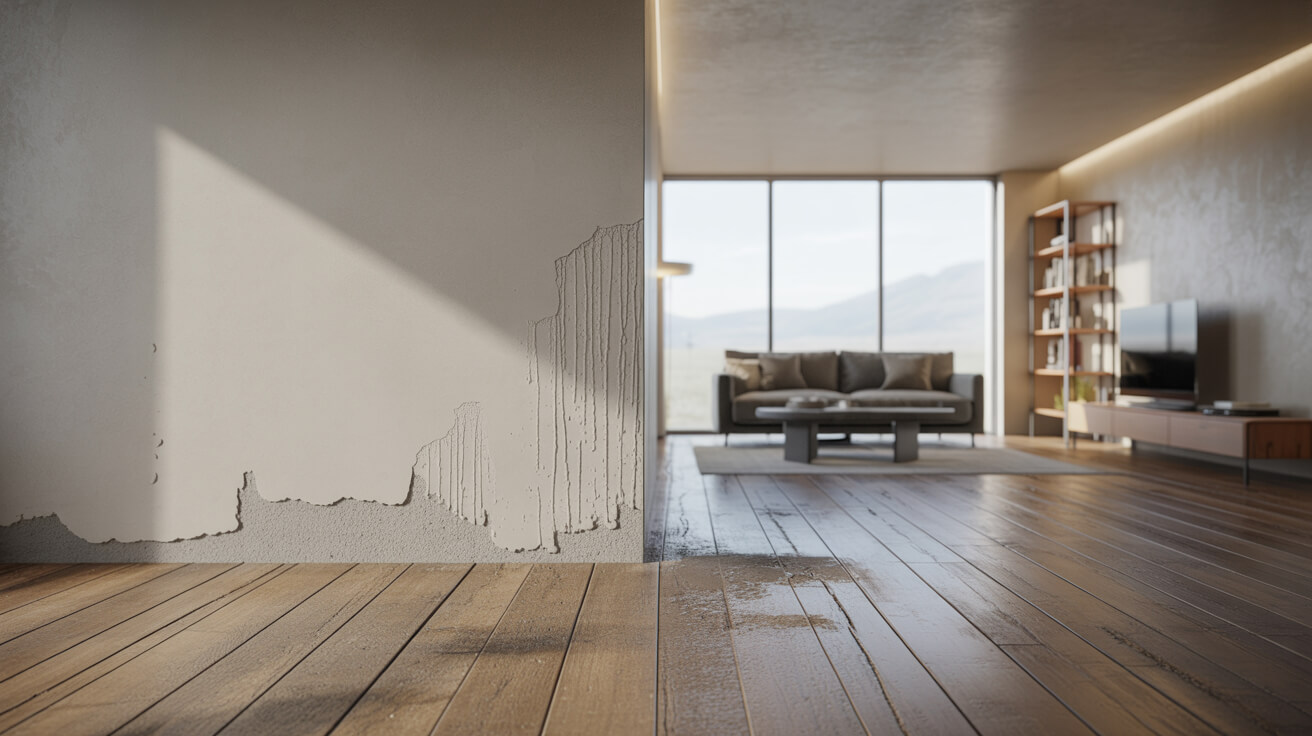
No wall system is immune, no matter the building’s age. Cavity walls, lath-and-plaster, and hybrid insulation add hidden layers that favour fungal migration. A breach in the damp course, poorly executed retrofits, or unmonitored condensation points create vectors far more dangerous than visible timber decay.
Which Wall Types Carry Most Risk—and How is it Best Tracked?
- Modern cavity: Traps hidden condensation, with dry rot mycelium exploiting unseen gaps
- Traditional lath/plaster: Historic materials allow lateral and even vertical migration, bypassing visible checks
- Energy retrofits: Added insulation or vapour barriers, if incorrectly installed, foster hidden, rapid spread
Inspection Matrix for Wall/Cavity Risk
| Wall Type | Risk Factor | Audit Protocol | Regulatory Proof |
|---|---|---|---|
| Cavity/insulated | Moisture trap/migration | Thermal, humidity, cavity probe | Digital/passport |
| Lath & plaster | Porosity/hidden void | Endoscope/min-probe | Heritage log |
| Modern drywall | Vapour barrier issues | Humidity, probe, imaging | Retro audit doc |
Avoiding ‘Hidden Spread’ Surprises During Audit, Sale, or Renovation
Insurers, buyers, heritage officers, and councils increasingly want pre-remediation mapping logs—not just what’s fixed, but what’s been checked and why. Sussex Damp Experts’ cavity-to-cavity diagnostics create the only narrative that satisfies all stakeholders: complete, evidentiary, and future-proof.
Not including wall and cavity inspection in your regular audit schedule means you’re relying on luck instead of science. Our process empowers you to evidence safety, not defend in hindsight.
Hidden migration in a cold wall cavity can rewrite what you thought you knew about ‘surface risk.’
Furniture, Fittings, and Fixtures: Extending Care Beyond the Floor

Furniture and fitted fixtures, from kitchen cabinets to panelling and wardrobes, become prime staging grounds for dry rot—particularly when in persistent contact with damp-prone walls, floors, or cold corners. Owners, landlords, and interior specifiers confront added stakes: insurance policy exclusions for “improperly maintained” interiors and, in listed properties, irreversible loss of heritage assets.
How Interiors and Fittings Fuel—or Block—Dry Rot Progress
- Close proximity to wall/structural moisture points—risk for base units, bookshelves, panelling
- Historic or period fitted joinery imposes additional responsibility—and complication—on remediation planning
- Insurance decisions increasingly hinge on proof of regular cabinet/fitting-specific inspection (policy logs/photos)
High-Risk Fixture Table
| Interior/Fitting | Typical Threat | Best Practice |
|---|---|---|
| Kitchen/bath units | Damp ingress | Perimeter sample & photo log |
| Built-in joinery | Heritage material loss | Non-invasive diagnostics |
| Freestanding | Concealed moisture | Spot checks, item log |
Preserving Asset Value: From Documentation to Effective Restoration
Professional documentation, scenario simulation (for dispute resolution), and rapid action drive restoration outcomes that reduce disputes and maximise insurance coverage. Owners working with Sussex Damp Experts receive a heritage-grade, insurer-compliant remediation schedule—defining clear action, minimising value loss, and evidencing best stewardship.
Insulation, Underfloor Layers, and Retrofit Risks: The Overlooked Soft Underbelly

Retrofitting and insulation upgrades, though essential for modern efficiency targets, introduce unseen substrate risk. Damp trapped behind foam boards, below new insulation, or within layered underfloor systems becomes a primary dry rot accelerator.
Why Insulation’s ‘Upgrade’ Can Be a Market-Ready Liability
- Organic insulation and composite underlay facilitate hidden fungal spread, with cellulose content acting as a fuel source
- Flood events, spills, or even minor leaks turn inert insulation layers into long-term threat multipliers unless remedied quickly
- Post-retrofit audits demand sample drilling, humidity schedule, and digital archiving to demonstrate ongoing property compliance
Retrofit/Insulation Audit Table
| Upgrade Type | Core Threat | Audit/Proof Needed |
|---|---|---|
| Wool/cellulose | Moisture entrapment/fungal | Moisture scan + log |
| PIR/foam board | Trapped condensation | Cavity/probe validation |
| Retrofit layering | Migration multiplier | Digital survey schematic |
Futureproofing Upgrades: Prioritise Evidence, Not Guesswork
Owners, facility managers, and renovation teams must recognise that “one-off” fixes are liabilities unless captured in property logs with ongoing monitoring. Our teams close the gap, offering insulation-specific diagnostics essential for housing associations, landlords, and insurers defending against refusals or compliance knockbacks.
Detection, Early Prevention, and Monitoring: Evidence Beats Guessing Every Time

Most dry rot headaches begin with overlooked symptoms and delayed action. The best-managed portfolios employ modular, year-round monitoring regimes: monthly checks for high-risk surfaces, digital audits each quarter, and annual specialist review that covers every nook, void, cavity, and fitted surface.
Step-by-Step Monitoring Protocols—What Sets the Leaders Apart
- Visual/physical checks using probes and thermal imaging
- Quantitative logging: date/condition/risk area for every scan
- Symptom tagging: softness, orange dust, weird odours, patchy loss of finish
- Interval reminders and photo evidence for recurring/long-term tenants
- Proven reduction in insurance claim denial when regular monitoring records are submitted
Surface-by-Surface Symptom Table
| Surface | Early Warning Sign | Required Check |
|---|---|---|
| Timber/floorboards | Sponginess, bounce | Tap/probe/thermal map |
| Carpet/underlay | Discolour, “mushroomy” smell | Underlift, inspect backing |
| Walls/plaster | Stains, cold spots | Probe, humidity cam |
| Insulation | Damp touch, invisible decay | Spot access, moisture logging |
| Fittings/furniture | Finish/colour change | Perimeter probe, surface check |
The result? Quantifiable risk reduction, faster lender sign-off, and stronger negotiating power with both tenants and buyers. Our digital monitoring solutions can be tailored for homeowners, property firms, or commercial asset managers seeking “no drama” remediation.
Book Your Full-Scope Consultation With Sussex Damp Experts
Unseen surface risk is no longer an unsolvable puzzle—it’s a map you can read, evidence, and act on. From Brighton’s heritage homes to Sussex’s most advanced commercial sites, leaders and meticulous homeowners are demonstrating the difference between ‘good enough’ and ‘proof positive.’ Our teams empower you to join that tier.
If your goal is lasting property value, minimised disputes, and a legacy of expert stewardship, the next decision is clarity itself. Our multi-surface, lender/insurance-compliant inspection starts the moment you need it—embedding audit-ready documentation, proactive insights, and hard-won expertise at every layer of your asset.
In property care, proof covers every surface—those with evidence win peace of mind and preserve reputation.
Be seen as the owner or manager who’s always ahead, who never has to scramble for compliance, and who closes the book on costly risk. Sussex Damp Experts don’t just diagnose problems—we map, document, and secure every surface, so you control the story.
Frequently Asked Questions
What surfaces in a building are genuinely vulnerable to dry rot, and why do risk boundaries keep expanding?
Virtually every organic or moisture-prone material in your property—beyond just visible timber—can fall prey to dry rot if the environment is right. What begins as a subtle infestation in a joist or skirting may, with steady humidity or recurring leaks, leap onto chipboard floors, lath-and-plaster walls, natural-fibre carpets, or even that oak cabinet you never imagined replacing. The reality: dry rot’s mycelium and spores exploit damp, dark, and overlooked junctions—feeding on cellulose in furniture feet, underlays, and the back of fitted joinery just as efficiently as on main beams.
Where Dry Rot Finds Its Foothold:
- Structural Timber: Joists, beams, roof trusses, stud walls (old and new)
- Secondary Surfaces: Door frames, skirting, built-in cabinetry, stair stringers
- Underlays & Carpets: Especially jute or wool-based, in rooms prone to condensation or slow leaks
- Plaster, Lath, and Board: Sustained damp permits hyphal advance, particularly near traditionally “cold” corners or bridging gaps
- Furnishings & Soft Fittings: Bookshelves, kitchen units, bathroom vanities positioned near moisture ingress
- Heritage Materials: Lime plaster, historic substrates, and period joinery with minimal damp-proofing
The true vulnerability emerges when overlooked surfaces allow decay to leap from visible to hidden, or from one storey to another. Most insurance, survey, and compliance failures occur not from ignoring the obvious, but the assumed “safe”—that corner under a wardrobe, the soft patch behind the stair cupboard, the void within a cavity wall.
When compliance is equated with surface checking, value loss waits in the substrate.
A thorough audit by Sussex Damp Experts uncovers not only the expected trouble spots but those one-in-a-hundred circumstances—bridging, misfitted insulation, or composition layering—few generalists even suspect. That difference between surface and system can determine whether you retain control over your asset or enter a cycle of escalating, uninsured repairs.
How do you identify dry rot before the damage turns catastrophic, especially on non-obvious surfaces?
Early dry rot is a master of disguise—rarely dramatic, almost never symmetrical. The first clues manifest as ambitionless signs: a single section of flooring grows subtly bouncy, a musty aroma lingers after rain, or your underlay refuses to “dry out,” no matter how often it’s aired. Rarer still are true sight cues; far likelier are patchy discoloration on paint near the skirting, oddly persistent cold spots in a corner, or an unexplainable run in a plastered wall.
Practical Detection Tactics:
- Probe skirtings and door frames for softness, swelling, or “give”
- Pull up a corner of carpet—inspect for orange dust, brittle or damp underlay
- Check for condensation “bleed” into joinery, especially in unheated spaces
- Scan heritage elements (e.g., carved panelling, window seats) for colour change or minor distortion
- Employ moisture metres and, for hidden cavities, a thermal camera or borescope
Most failed repairs stem from “out of sight, out of risk” thinking—yet the very places you rarely inspect are what undermine a property from within. With the right diagnostics—non-invasive when needed—the full lifecycle of decay is revealed early enough for intervention, not just remediation.
Asset integrity is built upon what the eye can’t see and inspectors rarely check.
Sussex Damp Experts calibrate every survey to scan at-risk zones before you inherit a costly legacy—shifting your experience from stressful guesswork to professional, documented assurance.
Can dry rot migrate from timber into carpets, plaster, or furniture? Where is cross-surface spread most likely?
Dry rot is opportunistic, relentless, and does not hesitate to invade any surface with enough cellulose and moisture—even soft furnishings or hybrid boards. Its reputation as just “the timber fungus” is outdated. Spores ride through air currents and settle wherever the conditions welcome them—be that a wool carpet above an infected joist, fibre underlay near a leaky radiator, or even the base of an antique sideboard sat against a cold exterior wall.
Cross-Surface Migration Triggers:
- Untreated secondary leaks saturating subfloors or underlays
- Carpets adjacent to or overlaying timber at variable heights (thresholds, stairs)
- Insufficient drying post-plastering or renovations, locking in hidden moisture
- Continuous condensation in poorly ventilated spaces, especially where furniture blocks airflows
Once established, dry rot can bridge surprising materials—chipboard, MDF, upcycled wood composites—using each as a pathway or fuel source. “Remove and replace the wood” is not enough if the real issue hides beneath carpet tack strips, behind rubber-backed vinyl, or in the back panelling of fitted wardrobes.
Policy exclusions and mortgage red flags don’t come from what you know—they come from what you missed.
True cross-surface protection requires assessment and mapping of all these risk nodes, both obvious and obscure. Sussex Damp Experts don’t theorise; our multi-surface approach means every substrate, surface, and sequence is scanned, logged, and, if required, protected.
Why do dry rot repairs so often fail, and what actually keeps recurrence at bay?
Short-term thinking breeds repeat disruption. Too many property owners, managers, or even tradespeople treat only what’s visible—patching the skirting, swapping a floorboard, repainting the walls—never addressing persistent moisture, vapour paths, or underlying substrate construction. What happens next is predictable: months later, the same telltale signs return—sometimes in the same location, sometimes in a room you thought was clear.
Underlying Causes of Recurring Dry Rot:
- Residual moisture never properly dried and tracked post-repair
- Persistent bridging—e.g., leftover debris, sub-timber interfaces unsealed
- Skipped vapour checks around insulation or liner instals
- Failure to address condensation drivers in heritage or thick-walled properties
Sustainable eradication relies on a different protocol: moisture-lifetime mapping, air quality checks, barrier specification, and monitored post-repair drying logs. Insurance and warranty backing increasingly require documented, substrate-level proof, not ad hoc “clearance letters.”
Elegance in remediation is not in clean edges—it’s in eliminating future claims.
With Sussex Damp Experts, your recovery plan includes not just repair but a ‘future attack map’ that targets recurrence at the source—so tenants, buyers, and insurers stay satisfied rather than sceptical.
Which specific materials or assemblies are naturally immune to dry rot? Where do modern constructions still falter?
Absolute immunity to dry rot is rare in the real world. Metals, ceramics, dense plastics, and properly rated synthetic insulation remain untouched—but composites, blends, or any material containing plant-origin fibres are vulnerable if saturation occurs. Even modern construction isn’t safe: laminate, chipboard, and many wall-lining boards split the difference—immune in theory, silent risk in practice once damaged by leaks or poorly managed humidity.
Modern Vulnerabilities:
- MDF and engineered wood products: quick to saturate, slow to dry
- Hybrid underlays: vulnerable if top-layer integrity fails
- Composite wall panels: risk amplifies with age or installation error
- Historic lime plasters: robust against surface fungal colonisation but can harbour deep-seated decay if chronic damp invades
Smart construction and renovation integrate robust vapour barriers, careful substrate selection, and a willingness to check even before selling or renting out—because “I didn’t know” rarely holds up to a surveyor’s probe or an insurer’s scrutiny.
Compliance, in modern assets, is not about perfection—it’s about systematic, recorded, repeatable proof.
Sussex Damp Experts enable that standard, ensuring every survey and plan is not only compliant today but defensible for years to come.
How does an expert multi-surface damp survey change your risk profile, compliance, and future peace of mind?
Comprehensive damp surveys—recognised and accepted by top insurers, lenders, housing authorities, and conservation officers—are game changers not just for property integrity, but for operational continuity. These inspections evidence you’re not rolling the dice with repairs, but acting from the top down and inside out.
What a Sophisticated Survey Delivers:
- Documented scan of all at-risk substrates, surfaces, and assemblies
- Heritage-compliant and mortgage-acceptable proof for pre-sale or claims
- If required: vapour diagrams, humidity logs, heat loss analysis
- Embedded recommendations—repair, monitoring, moisture management
Beyond safeguarding from physical loss, comprehensive reporting forestalls contract disputes, rent devaluation, tenant injury claims, and “held at survey” setbacks for sellers. A survey from Sussex Damp Experts becomes the “quiet advantage” that lets your asset lead the pack, not lose ground.
Authority is the byproduct of making certainty a habit—proof without contention is value delivered.
The best leaders, asset holders, and property managers never leave risk to chance. It’s the traceability, documentation, and operational readiness that set you apart—transforming audits and negotiations from stress to formality, and marking your property as the one everyone else tries to match.

