
 By
 March 13, 2026


Who to contact about damp and mould
Most damp and mould reports go to your local council (local authority), routed by the property’s postcode and sometimes by tenure (rented vs owner‑occupied). Depending on how your council is organised, the right team can sit under Environmental Health/Environmental Protection or under Private Sector Housing/Housing Standards.
Because councils don’t share one universal “damp phone number” (and pages change), the most reliable approach is:
1) Identify the correct council for the property postcode
2) Find the official intake route (phone/email/form)
3) Verify details on the council website or via switchboard before sharing personal information
A verified route beats a random number when time and trust matter.
Many councils use one general “enquiries and complaints” front door and route cases internally based on what you report and where the property is. Don’t get stuck on labels. Your goal is to get the issue logged with a reference (where offered) so follow‑up stays possible.
Environmental Health vs Private Sector Housing
Councils split housing-condition work differently, so the same damp complaint might land with Private Sector Housing in one area and Environmental Health in another. Confirm the route locally.
A practical starting shortcut (then confirm locally) is:
- Private renter: – Start with Private Sector Housing / Housing Standards / Housing Enforcement.
- Owner‑occupier: – Start with Environmental Health / Environmental Protection.
If you reach the wrong team, keep it moving with one question: which team logs damp and mould / housing conditions reports for your postcode, and what channel they want (form, inbox, or direct line).
Why contact details vary by council area
Councils organise services differently (team names, triage queues, “report it” systems, and form‑first vs phone‑first policies). Website redesigns also leave multiple official-looking pages live at once.
Access issues can add friction. Some tools require JavaScript, and some networks block embedded forms or “deep links.” If that happens, use the council homepage navigation or switchboard, then verify the route you’re given is current.
Examples of issues councils accept
Damp and mould reports can sit under Environmental Health, housing, or a general complaints page. Focus on reaching an official intake route that can log the report and explain next steps.
You may see damp and mould grouped with:
- Noise: complaints
- Odours: and smoke concerns
- Food safety: and hygiene reports
- Pests: and public health nuisance reports
Once you reach an official route, confirm three things: the right team for your postcode, the preferred reporting method, and whether you’ll receive a reference number.
Find the right council for your postcode

The fastest way to reach the right Environmental Health contact is to confirm which council covers the property postcode first. Border areas and similar place names create avoidable delays. Confirm the responsible council, then use that exact council name to find the damp/mould reporting route.
Use postcode tools to identify your local area
A postcode lookup tool is usually the quickest way to confirm the right local authority. You’ll often see it labelled “Area check,” “Find my area,” or “Which council am I in?” The output you want is the council name exactly as displayed (Borough, District, City, County). Use the property postcode where the damp is happening.
Step 1: Use the property postcode
Use the postcode where damp/mould is present, not a correspondence address.
Step 2: Run the council “area check” lookup
Enter the postcode (or street name if required) and note the result.
Step 3: Record the council name exactly
Copy the wording shown, including Borough/District/City/County.
Step 4: Search with the council name
Use the council name plus “damp mould,” “housing standards,” or “environmental health contact.”
That small discipline removes a common cause of delay: contacting the wrong authority.
If online tools don’t work (JavaScript, access blocks)
If a postcode tool loads but doesn’t respond, it often needs JavaScript, or it’s being blocked by browser settings, extensions, or network controls.
Try these fixes in order:
- Enable JavaScript, then refresh.
- Try another browser or a private window.
- Switch networks (mobile data often differs from workplace Wi‑Fi).
- Pause strict script blockers long enough to complete the lookup.
If a specific council page won’t open, stop hammering the same link. Start from the council homepage and navigate via menus. Some environments block search-result “deep links” while allowing the same service through normal navigation. Once you reach a working page, double‑check the council name matches your postcode result.
Using postcode-to-council datasets (advanced)
If you manage multiple properties, operate near borders, or need consistent routing at scale, a dataset approach can reduce repeat confusion. The Office for National Statistics Postcode Directory (ONSPD) is commonly used to link postcodes to local authorities and is released quarterly (see the ONS note on the UK Postcode Directory (ONSPD) and council mapping). One field often used for local-authority identification in ONSPD is OSLAUA.
This is a “which council?” tool, not a “how to report damp” tool. Use mapping to confirm responsibility, then confirm the council’s current intake route (form, inbox, or phone) because websites and team labels can change more often than boundaries.
How to find the correct Environmental Health contact
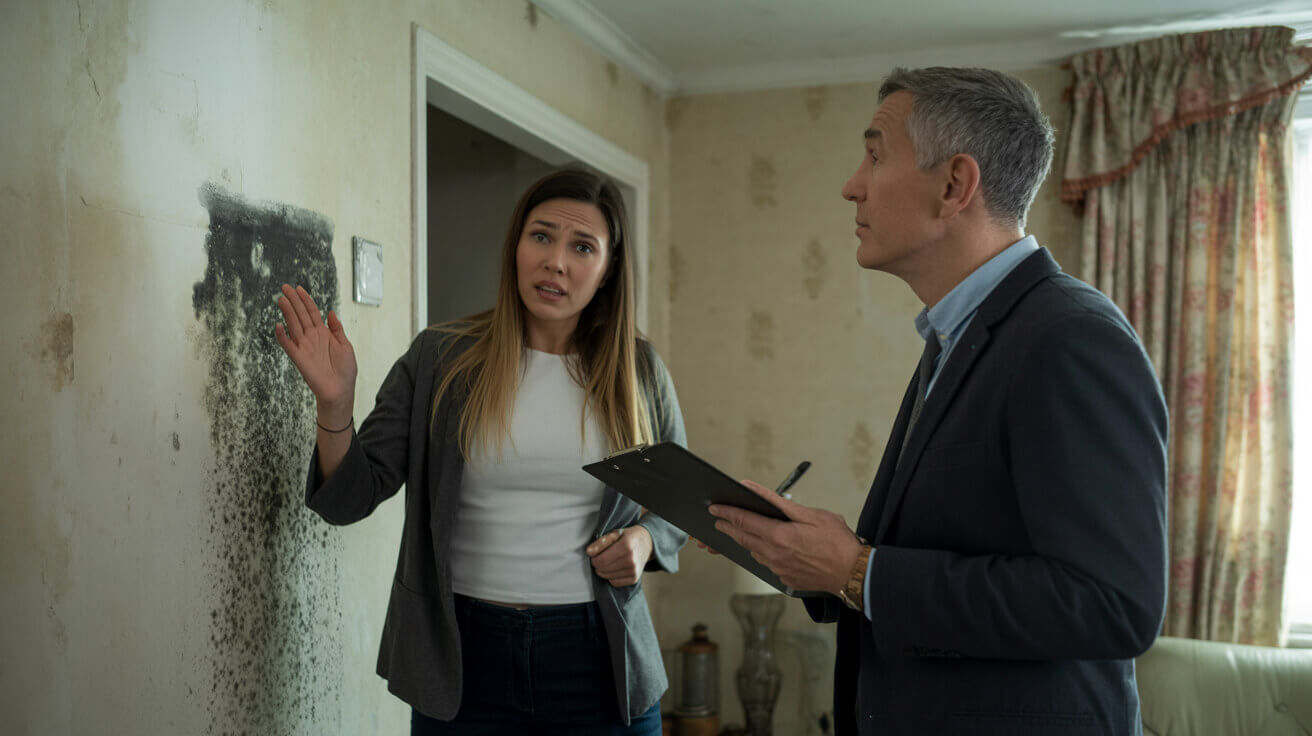
Once you know the right council, you can usually find the correct intake route in minutes by combining council-site navigation, targeted search terms, and a quick switchboard check. You’ll often find an official page listing an email, a phone number, and/or a reporting form—but duplicates happen, so verify on the council site (or via the main line) before relying on a number copied from a search preview.
When pages fail, process prevails: identify, verify, then report.
A typical listing might read: “Environmental Health enquiries and complaints: phone [number], email [inbox], online form [service].” If you only see details in a search snippet, confirm they appear on an official council page (or get confirmation via switchboard).
Search terms that usually work on council sites
Combine the council name, a likely team label, and an action word (report, complaint, contact). Try:
- “[Council name] Environmental Health enquiries and complaints”
- “[Council name] environmental protection complaint”
- “[Council name] private sector housing damp mould”
- “[Council name] housing standards report a problem”
If you find two similar-looking pages, prefer routes reachable from homepage navigation, and cross-check contact details match across official pages.
| What you have | Where to look next | What you’re confirming |
|---|---|---|
| Council name only | Council site search | Which team logs damp/mould reports |
| Search preview details | Council contact pages | Same email/number shown officially |
| Page won’t load | Homepage navigation | Alternative official route |
| Private rental issue | Housing standards pages | Correct intake/enforcement route |
| Border uncertainty | Postcode lookup | Responsible council for address |
| Two different contacts | Switchboard check | Which contact is current |
Use it as a workflow: confirm council, confirm team, confirm the route you can actually use.
Call the council switchboard and ask for the right team
If the website is hard to navigate, switchboard is often the quickest way to confirm the correct team name and intake route. You’re trying to enter the council’s logging process so your report exists in their system.
Use a triage‑friendly structure:
- Lead with the property postcode and full address.
- State whether the home is rented or owner‑occupied.
- Ask for the team that handles damp and mould / housing conditions reports.
- Confirm the official reporting route and whether you’ll receive a reference.
What ‘403 Forbidden’ or blocked pages mean
A “403 Forbidden” (or similar) can mean your device, network, or browser is being refused access. Causes vary (security settings, filtering, blocked scripts, or referral rules). It doesn’t automatically mean the service is gone.
When that happens:
- Start at the council homepage, then navigate via “Contact us” and service menus.
- Try a different device or network, then repeat your search using the council name.
- Use search previews to identify the service title, then reach it through menus.
- Confirm you’re on the official council domain before submitting details.
Also expect duplicate official paths. If one path is blocked, another official route can still work. Your safety step stays the same: verify the number or inbox on an official page (or via switchboard) before relying on it.
Example council contacts (Brighton & Hove)
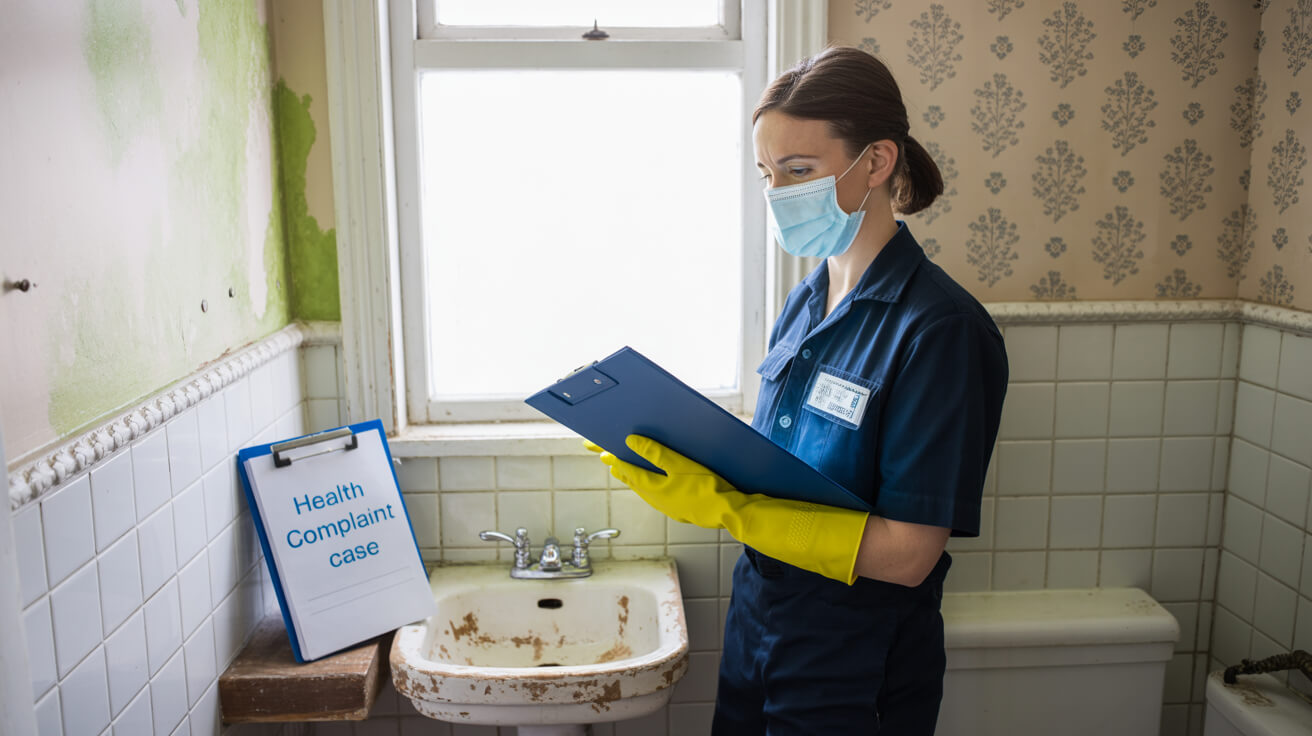
Use this section for pattern recognition: it shows the format many councils use, not a shortcut to use for other areas. Brighton & Hove City Council is a useful example of an “enquiries and complaints” route that offers both an email inbox and a phone number. Your own council area will have different details, so confirm the current route via the council website or switchboard.
These are example contacts for one council only. They will not be the right details for most postcodes.
Email contact route
Brighton & Hove City Council lists an Environmental Health enquiries/complaints email route as ehl.environmentalprotection@brighton-hove.gov.uk on its Environmental Health enquiries and complaints page. If you found an inbox via a search preview or forwarded message, confirm it appears on the official council site (or via the main line) before sending personal details.
A clean first email is:
- Address and postcode (where the issue is happening)
- Tenure (owner‑occupied, private rented, social rented)
- Rooms/locations affected
- Brief timeline + what’s already been tried
- Clear request: confirm the correct next step and route
Keep it factual and easy to triage.
Phone contact route
Brighton & Hove City Council lists an Environmental Health enquiries/complaints phone number as 01273 294 266 on the same Environmental Health enquiries and complaints page. Phone is useful to confirm whether a form is required, which team owns intake, and what happens after you report.
Have ready:
- The property postcode and full address
- A one‑sentence description of what you can see and where
- If it’s rented, the date the landlord/agent was notified
After the call, note the next step and any reference number.
Important note about verifying details
Use Brighton & Hove as an example of how councils present contacts, not as a “universal damp number.” For your area, confirm the correct phone number and inbox on your local authority website or by calling the council’s main contact route.
If you cannot load a service page, start from the homepage, try an alternative official path, and verify contact details before sharing attachments or personal information.
Northern Ireland: find your council Environmental Health email

In Northern Ireland, you can identify the right council Environmental Health email using the HSENI council contact directory. You still need to confirm the correct council area for the property before you email to avoid delays. The examples below show typical formats, but you should check the directory for the most current details for your council.
How to use the HSENI council contact directory
Match the property to the correct council area before sending your email. Misrouting causes delays, especially if you manage multiple addresses.
Use a simple routing method:
- Confirm the council area for the property address using an official lookup or reliable paperwork.
- Match that council name to the HSENI directory entry.
- Email the listed Environmental Health contact, then follow any instructions received.
If you act for someone else (landlord, agent, contractor, managing agent), state your role early alongside the property address.
Example council emails from the directory
HSENI’s directory includes council Environmental Health contacts; examples listed by HSENI include:
- Belfast City Council: envhealth@belfastcity.gov.uk
- Antrim & Newtownabbey Borough Council: envhealth@antrimandnewtownabbey.gov.uk
- Ards & North Down Borough Council: env.health@ardsandnorthdown.gov.uk
- Armagh City, Banbridge & Craigavon Borough Council: ehealth@armaghbanbridgecraigavon.gov.uk
- Causeway Coast & Glens Borough Council: environmentalhealth@causewaycoastandglens.gov.uk
- Derry City & Strabane District Council: healthandsafety@derrystrabane.com
This list is not exhaustive. Confirm the correct council area first, then check the directory for your council’s current contact details.
What to include in your email
Write it like a short case note: clear facts, dated timeline, explicit request for next steps.
Include:
- Property address and postcode
- Tenure (owner‑occupier, private rented, social rented)
- Rooms affected and what you can observe (mould growth, staining, peeling paint)
- Brief timeline and any steps already taken
- If rented, when the landlord/agent was notified and the response
Keep attachments minimal and labelled. Start with two or three clear images and offer more if requested.
What to prepare before you call or email
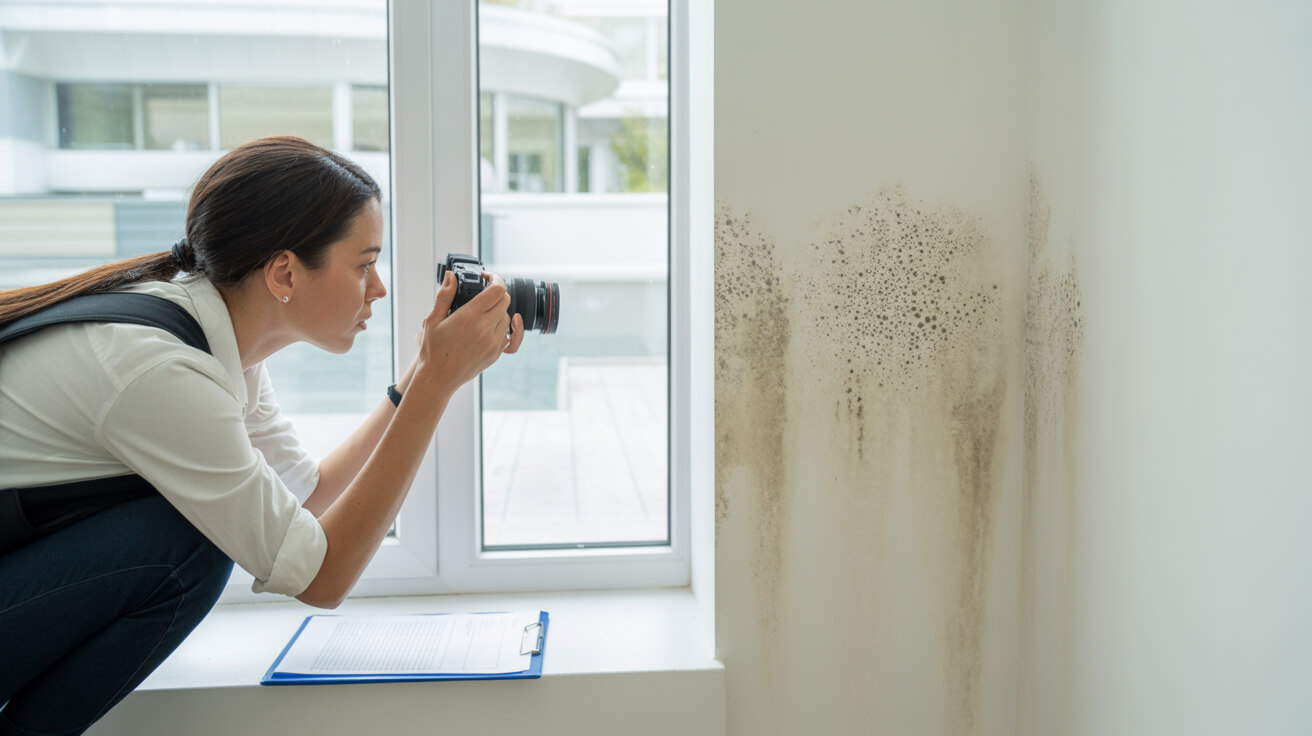
Councils handle damp faster when you arrive with clear, dated essentials they can log without back-and-forth. Have the property address, what’s affected, when it started, and what’s already been tried. If anyone feels unwell or symptoms feel severe, seek medical advice separately and keep your council report focused on the housing conditions you can observe.
Key details to have ready
Treat your first contact as a reusable “case starter pack.” The goal is clear, consistent, dated facts, not a long narrative.
Gather:
- Property address and postcode: where the issue is occurring
- What you can observe: , in plain words
- Where it’s happening: (rooms, wall/ceiling areas, around windows)
- Timeline: (first noticed, changes since, patterns)
- Steps already taken: (ventilation changes, cleaning, repairs requested)
- Tenure: and key contacts (landlord/agent details, dates notified)
How to describe the damp and mould clearly
You don’t need specialist vocabulary; you do need consistent detail. Describe what you can observe, where it is, and any patterns.
Focus on:
- What you see (spots, patches, staining, peeling paint, warped skirting)
- Where it is (room, surface, near windows or external walls)
- When it worsens (after showers/cooking, after rain, persistent daily)
- What changes it (heating pattern, ventilation, moving furniture, cleaning)
Avoid leading with a fixed diagnosis unless you have evidence. Observable language stays useful whatever the cause is.
Photos, timelines and previous messages
Photos and a simple timeline help triage. Aim for a small set of clear images: one close‑up, one wider shot. If you’re renting, keep copies of landlord/agent messages because the council may ask what steps were attempted before inspection.
A simple organisation method:
- Dated photos (close + wide) for each affected room
- One short timeline (first noticed, key changes, repairs attempted)
- Copies of landlord/agent messages, with dates and responses
Template:
Subject: Damp and mould report – (property postcode) – request for correct reporting route
- Address: (full address)
- Issue: Damp/mould in (rooms), visible at (locations)
- Timeline: First noticed (month); change since then (one sentence)
- Actions taken: (ventilation/cleaning/repairs requested)
- Tenure: (private rent/owner‑occupied/social rent); landlord/agent informed (date)
- Request: Confirm the correct team and next step (form, inspection route, or advice)
If you can’t find a damp contact number quickly

You can still get traction without a dedicated damp line by using the council’s most stable entry points and asking to be routed correctly. Some councils don’t publish a single “damp number,” and some pages won’t load on certain networks or devices. Your aim stays the same: get the report logged, then follow the preferred channel so you have a reference point for follow‑up.
Use the council’s main contact route
Start from the council’s main “Contact us” route (switchboard or general contact form). Ask for routing help rather than searching endlessly for the perfect page title.
Use a short triage statement:
- Give the property postcode and confirm it’s in their area.
- State whether it’s rented or owner‑occupied.
- Ask which team logs damp and mould / housing conditions reports.
- Confirm the official route and whether you’ll receive a reference.
If you manage multiple properties, keep an internal note per council: verified route, team name used, and the date you confirmed it.
Try alternative official pages and paths
Councils often publish similar contact content on more than one official path. If one route is blocked or broken, another official route can still work. The key is ensuring you’re on an official council website and that details are current.
Try:
- Navigating from the homepage menus (Housing or Environmental Health)
- Using council site search for “enquiries and complaints” or “housing standards contact”
- Searching “report mould” and confirming it’s an official council page
- Trying an alternate official path if one is blocked, then cross‑checking details match
If an online form won’t run, enabling JavaScript or trying a different browser can help. When in doubt, switchboard confirmation is the best tie‑breaker.
Confirm you’re using the correct council
If you keep being redirected, re-check the council for the property postcode—common in boundary areas and with similarly named councils. For one property, an area‑check tool is usually enough. For edge cases at scale, authoritative mapping methods may be needed (for example, using ONSPD’s OSLAUA identifier as a consistent internal reference).
Once the council is confirmed, keep the next step simple: use the main route, lead with the postcode, and ask for the intake channel for that address.
Book Your Consultation With Sussex Damp Experts Today
This guide is produced by Sussex Damp Experts. If you want help getting to the right council team faster, share your property postcode, the council area you believe the property sits in, and whether you’re reporting as an owner‑occupier, tenant, landlord, agent, or contractor. We will help you identify the most likely Environmental Health or Private Sector Housing intake route for damp and mould in your area, and the safest way to verify it through the relevant local authority channel.
Your two next steps are: (1) find and verify the council contact route for your postcode (phone, email, or form), and (2) prepare a concise complaint summary using the checklist and template so your report is easy to log and follow up. Keep checking details with the relevant local authority, because phone numbers, inboxes, and online forms can change.
Choose Sussex Damp Experts when you need clear, evidence-led damp reporting that supports practical next steps. If you value careful inspection and plain-English documentation, contact our team with your postcode and property type.
Frequently Asked Questions
Quick scan (jump to the question you need):
- [Who should you contact for Environmental Health contact numbers for damp in your area without being passed around?](#who-should-you-contact-for-environmental-health-contact-numbers-for-damp-in-your-area-without-being-passed-around)
- [Where can you find Environmental Health contact numbers for damp in your area if you only have a postcode?](#where-can-you-find-environmental-health-contact-numbers-for-damp-in-your-area-if-you-only-have-a-postcode)
- [When should you treat damp as urgent enough to call Environmental Health straight away?](#when-should-you-treat-damp-as-urgent-enough-to-call-environmental-health-straight-away)
- [What evidence should you gather before using Environmental Health contact numbers for damp in your area?](#what-evidence-should-you-gather-before-using-environmental-health-contact-numbers-for-damp-in-your-area)
- [How do Environmental Health and your landlord share responsibility when you report damp?](#how-do-environmental-health-and-your-landlord-share-responsibility-when-you-report-damp)
- [What happens after you call Environmental Health about damp, and how long might action take?](#what-happens-after-you-call-environmental-health-about-damp-and-how-long-might-action-take)
Who should you contact for Environmental Health contact numbers for damp in your area without being passed around?
Call your local council and ask for the team that logs damp and mould / housing conditions reports for your property postcode.
Start with the council’s main switchboard. Say you need Environmental Health or housing standards officers for a damp/mould issue in living or sleeping areas. Add whether you rent privately, rent from the council or a housing association, or own the property—it often affects routing.
What should you say first when you call?
Lead with a clear, loggable description:
- “I need to report damp and mould in a lived‑in bedroom/living room.”
- “It’s affecting a main living space / sleeping area.”
- “I’m a private tenant / council tenant / homeowner at (address/postcode).”
If relevant, mention vulnerable occupants or existing breathing conditions, but keep it factual and avoid medical conclusions.
How can you avoid being passed between wrong teams?
Stay polite, repeat the core request, and pin down the handover:
- Ask for ‘Environmental Health’ or ‘Private Sector Housing / Housing Standards’ (especially for rented homes).
- If transferred, repeat that it’s a damp/mould housing conditions report for that postcode.
- Before ending the call, ask for a case reference number (if offered) and the next step you must take.
Where can you find Environmental Health contact numbers for damp in your area if you only have a postcode?
Use the postcode to identify the correct council, then locate that council’s official damp/mould intake route (phone/email/form).
Search the postcode plus “local council” or “local authority,” pick the official council site, then look under Housing, Environmental Health, Private Sector Housing, or Housing Standards. Pages for damp, mould, or housing conditions often link to the reporting route.
How do you confirm which council covers the postcode?
Use simple checks:
- Search the postcode plus “local authority” and confirm the council name shown.
- Cross‑check via the council homepage (nearby towns/areas listed).
- If uncertain, call general enquiries and ask them to confirm coverage for your street.
What if you cannot see a clear Environmental Health phone number?
Some councils use web forms or contact centres. If that happens:
- Use any “Report damp or mould” or “Report a housing problem” form you can find.
- If only a general number is shown, call it and ask for the damp/mould housing conditions intake.
- Note any reference number generated by the form or call (if provided).
When should you treat damp as urgent enough to call Environmental Health straight away?
Treat it as urgent to report if damp or mould is affecting key living spaces, is persistent, or you have occupants who may be more vulnerable.
If bedrooms or living rooms have visible mould, peeling plaster, or persistent damp, it’s more than a minor inconvenience—especially if anyone in the home has asthma, COPD, heart disease, a weak immune system, or is under 5 or over 65. Some reporting from the English Housing Survey 2022 is often cited as suggesting about 4% of homes have serious damp or mould; definitions and thresholds vary, so focus on the severity you can observe and what the council asks for locally.
What situations count as high‑priority for Environmental Health?
High‑priority triggers often include:
- Damp or mould in sleeping areas, particularly for children or older people
- Worsening breathing symptoms alongside visible mould (report as symptoms, not a diagnosis)
- Large patches of mould or ongoing leaks not fixed after you reported them
When you contact the council, describe the impact on room use (“child’s bedroom,” “main living room”) and what you can see.
When might you try other routes before calling Environmental Health?
You may try internal routes first if:
- The damp is localised and you can reduce it while repairs are arranged
- Your landlord/agent has already booked repairs or a survey
- You want independent technical advice on causes and solutions
If promised actions don’t happen, or the problem keeps returning, escalate to the council with a clear history.
What evidence should you gather before using Environmental Health contact numbers for damp in your area?
Gather simple, clear evidence: photos, dates, and background details. It helps the council log the case and decide what to do next. You don’t need specialist equipment—just clear records.
Which details are most useful to Environmental Health officers?
Have these ready:
- Full address and postcode:
- Tenure: private rent / social rent / owner‑occupied
- How long it’s been present and which rooms are affected
- Any relevant household health context (brief and factual)
- Copies of messages to the landlord/agent showing what was reported and when
How can you record evidence over time?
A simple log is often enough:
- Dated photos every few weeks from the same angle
- Notes on patterns (after rain, after showers/cooking, persistent daily)
- One place for landlord/contractor messages and responses
How do Environmental Health and your landlord share responsibility when you report damp?
Environmental Health (or the relevant council housing team) assesses whether conditions present a hazard, while your landlord is usually responsible for repairs. The exact powers, thresholds, and processes vary by UK nation and council, so the council will tell you what they can do in your area.
What should you do first: contact the landlord or Environmental Health?
Often (especially in rented homes), councils expect you to:
- Report the problem in writing: to your landlord/agent
- Give a reasonable time to respond, unless clearly urgent
- Keep basic evidence (photos, dates, messages)
If the landlord ignores you, only does cosmetic cleaning, or the issue returns, contact the council with that history.
What if your landlord still does not act after Environmental Health gets involved?
If the council decides conditions are serious enough under the relevant framework in your area, they may:
- Issue formal notices requiring repairs within a set time
- Follow up with further action available to them under local powers and policy
- Re‑inspect or request updates until they’re satisfied
Ask the officer what enforcement steps are available locally and what the expected timeline is.
What happens after you call Environmental Health about damp, and how long might action take?
After you report it, the council logs your case, triages urgency, and may request photos or arrange an inspection. They may use a formal risk approach for housing hazards, depending on the team and jurisdiction.
What should you expect in terms of timescales?
Timescales vary between councils, but broadly:
- Urgent cases: (severe mould in children’s bedrooms, serious leaks) may be handled within days
- Less urgent cases may wait a few weeks for inspection
- If formal notices are used, repair timescales often run to weeks, depending on complexity
Ask for expected next steps and target dates, and record them.
How can you help keep your case moving?
You can:
- Respond quickly to calls or emails
- Provide requested photos or documents promptly
- Keep a short, dated diary of conditions and key events
If progress stalls, quote your reference (if you have one) and request an update through the council’s preferred channel.

