
 By
By  August 26, 2025

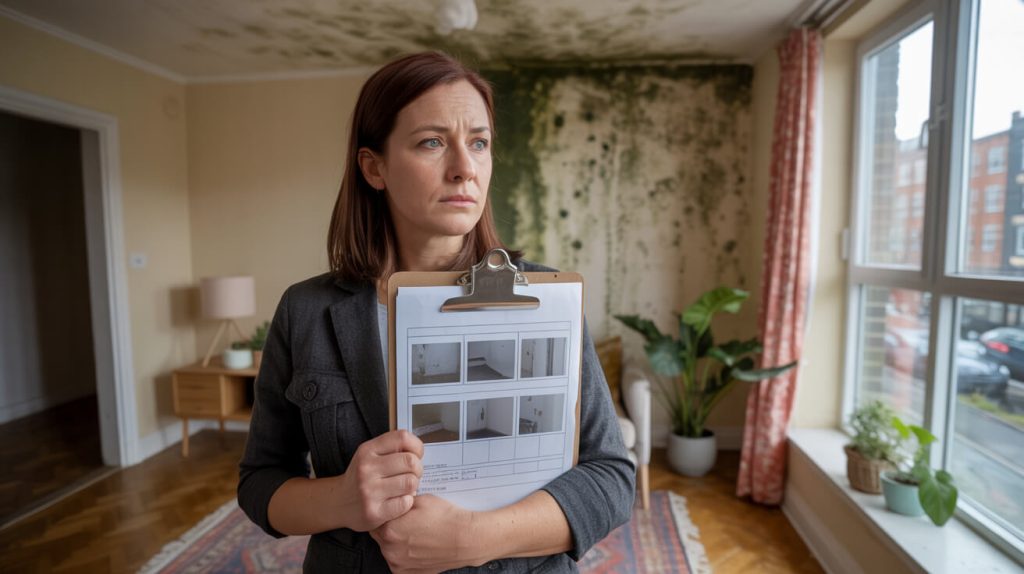
Is That Mould Spot a Nuisance, or a Warning About Your Building’s Health?
There’s no such thing as mould with no cause. A patch of black, brown, or green on your wall is your property waving a flag—sometimes quietly, sometimes with the smell of old soggy bread. That isn’t a cosmetic hassle; it’s a sign water is somewhere it shouldn’t be. Many people do the usual and think they just washed the mould off shouldnt they do more: open the cupboard under the sink, grab a cleaner, scrub away, and tell themselves it’s sorted. If the mould keeps returning after a week or a wet spell, your building’s crying out for real help, not another wipe-down.
That smudge isn’t just a mark—it’s your property asking for help long before the costs spiral.
Every repeat bout of mould should force the hard question: why does it keep coming back? Water finds its way through brick or timber, creeps upwards from the ground, or settles in after a cold night as condensation. When the paint peels, wallpaper bubbles, or a musty odour lingers, the real story is playing out under the surface. Moisture, if left hidden, can spread quietly—weakening plaster and mortar, rotting wood, and leaving you one mortgage survey away from a headache.
As frontline damp proofers, the Sussex Damp Experts team can count on one thing: most “unsolvable” mould problems start with repeated cleaning and end with us uncovering leaks, failed damp-proof courses, unvented appliances, or hidden drips. DIY has its place, but if you’re asking can i remove mould myself or do i need a professional when the same patch keeps returning, the risks to plaster, structure, and health are returning too. Dealing only with the stain is like painting flames on a broken smoke alarm: it might look better, but the real problem is still smouldering.
Will DIY Mould Cleaners Actually Solve the Problem, or Just Hide It?

Visit any hardware shop and you’ll be faced with rows of DIY “cures”: vinegar, baking soda, sprays dressed in green, and a chorus of internet ‘eco-tips’. But do any offer lasting results against hidden moisture?
Most DIY tricks only tackle the surface—leaving the real cause to fester out of sight.
Here’s what you’re really getting:
- Vinegar: Fine for glass and sealed plastics. It’ll wipe light mould, but can’t reach spores in plaster, wallboard, or painted brick.
- Baking Soda: Citric and safe, yes. But while it lifts odours, it’s nearly useless against an active colony of black mould living below paint.
- Hydrogen Peroxide: Packs more punch, but only works on what it touches. In crumbling plaster or rotten timber, its fizz can’t reach the source.
- Essential oils: Pleasant, sure. But a lavender spritz won’t halt mould’s return if the wall is damp to its bones.
- DIY “Eco” recipes: Safe on skin, harmless for the planet—but lacking the punch to break the damp-mould cycle unless you dry out the source.
The bottom line: if moisture’s creeping in from outdoors, rising through a floor, or condensing on cold corners, no off-the-shelf potion offers more than a moment’s relief. Cleaning up might buy time for a letting agent’s visit, but the underlying problem stays put.
Key takeaway: Every stain needs a cause to survive. Ignore the cause and you’ll be stuck repeating those “before and after” photos all year long.
Is Bleach the Silver Bullet for Mould, or Does It Make Things Worse?

Bleach is Britain’s most trusted “emergency scrub”. Big bottle, big promises. But in reality, bleach is as likely to mask a mould problem as it is to fix it.
Bleach fades mould stains today, but leaves the hidden threat alive for tomorrow.
What does bleach really do?
- Solid Surfaces: It wipes away surface growth on tiles or PVC. That’s about the limit of its superpowers.
- Porous Surfaces: On brick, wood, or painted plaster, bleach runs in and brings water with it. The surface may look pale and “clean” for a few weeks, but water settles deeper. Mould spores thrive on that hidden damp, waiting for your next cleaning round to boomerang back—sometimes worse than before.
- Tough on Materials, Not on Mould: Repeated bleach cleaning slowly eats away at paint and timber. Bubbling, chalky finishes, and softened wood are warning signs you’re accidentally making things easier for the enemy.
If you’re caught in a loop—scrub, wait, see the stain return—there’s the answer. Bleach hits the eye, not the root. True fix? Cut out the water, starve the mould, skip the annual paint jobs.
What Are the True Signs That You Need More Than DIY Cleaning?

Wiping up is sensible at first. Nobody wants to over-react to a minor patch. But play the waiting game too long and you risk bigger problems and bigger bills.
Red flags “DIY” can’t touch:
- Mould stains reappear after one rainy spell or sharp cold snap
- Patches bring new soft spots in plaster, or paint begins bubbling or splitting
- White powder blooms near skirting boards—efflorescence, always a clue to deep-down damp
- Musty odours linger, no matter how long you air out the space
- DIY moisture metres or surveyor reports show high readings, month after month
When new symptoms spread, your cleaning kit is officially outclassed.
For sellers and owners, these are the moments when a surveyor’s note starts a chain reaction—reduced offers, insurance cold-shoulders, refusals from mortgage lenders. Cosmetic “fixes” fool no one with a moisture metre or salt test kit. And missed warning signs can stir up legal and compliance woes, especially in rentals under the HHSRS.
What Risks Lurk Beneath: Health, Market Value, and Legal Trouble?

Long-term mould is more than a blotch on the wallpaper. Even if it looks minor, persistent damp patches trigger dominoes: first your family’s health, next your bank balance, and finally your legal standing.
The stakes:
- Health: Children, elderly, and those with asthma or allergies are hit hardest. NHS guidance is blunt: damp and mould worsen breathing problems, raise allergy risk, and open the door to infections *(NHS, 2022)*.
- Property Value: DIY wipe-downs mean nothing to surveyors or mortgage providers. Most insist on certified, expert reports proving the root cause was found and fixed—not just painted over or disguised.
- Legal Exposure: Landlords and agents face strict obligations. Under UK regulations, ignoring a damp problem—especially one affecting tenants’ health—is a shortcut to fines and possible tribunal appearances.
Try treating a chronic patch as “just a mark”, and you’re betting against all three. The sooner you chase the cause, the lower your repair cost and the smaller your risk in surveys, agent checks, or insurance reviews.
When Is It Pointless to Clean? Knowing the Call-for-Help Moment

At some point, you face the fact: more scrubbing is wasted effort. Bringing in an expert is not a defeat—it’s a pivot from guessing to solving.
- Stains linger or spread after two or more cleaning attempts—especially if the area grows
- Fresh water marks, tide lines, or “bubbly” new spots appear
- Your building is listed, historic, or under conservation rules—DIY can damage, or break compliance
- Any health symptoms or landlord/tenant concerns are brewing
- A survey, insurance renewal, or sale is approaching—timing matters
The longer you wait, the more the hidden problem grows—cost, stress, and repair complexity.
True damp specialists like Sussex Damp Experts don’t just “clean”. They trace the route: using calibrated moisture metres, borescope cameras, and salt detection to unmask leaks or failed damp barriers. Only then does a tailored fix, matched to your property, make sense. Anything less is guesswork dressed as a solution.
What Changes When You Involve Professionals Like Sussex Damp Experts?

Once a professional’s involved, the cycle ends. The problem shifts from “Will it return?” to “How do we stamp it out for good?”
Here’s the Sussex Damp Experts difference:
- Scientific Diagnosis: Using forensic tools—moisture gradient mapping, borescope inspection, and lab-backed salt analysis—to find not just the stain but the water’s sneaky pathway.
- Custom Repairs: Whether it’s condensation control, rising damp remedies, or repairs to cavity walls, every fix is tailored to your property type—Victorian terraces, modern flats, or commercial stories.
- Compliance at Every Step: Issued reports align with BS 6576/8102, PAS2035, and all UK housing duties—critical for buyers, agents, insurers, and regulators.
- Context-Driven Solutions: Historic properties receive breathable systems and lime-compatible techniques; new builds can secure warranties and robust guarantees. Detailing isn’t an afterthought, but the backbone of the fix.
- Ongoing Monitoring: After treatment, we don’t vanish. Moisture and air quality measurements, annual checks, and warranty integration become part of your property’s defensiveness.
An expert doesn’t just wipe away the surface—they force the problem out by its roots, lock it out for years, and write proof you’ll need for surveys, insurance, and future sales.
Why Waiting Costs You—And Peace of Mind Starts With One Call

“Just a little cleaning for now” is almost always the most expensive path—because the longer moisture is loose behind a plasterboard, the higher the expense later. Minor blemishes can quickly turn into health crises, mortgage refusals, or insurance red tape. The window for quick, cost-effective repairs narrows with every passing season.
Peace of mind only arrives when you fix the source, not just the face of the problem.
At Sussex Damp Experts, we blend practical know-how with surveyor-proof paperwork and honest client support. Never shaken down for unnecessary work, never bounced between phone queues—just the right plan, mapped to your building, delivered by a crew that knows its salt (literally—ask about our salt mapping).
From first diagnosis through treatment, compliance, and aftercare, each step closes both the damp loop and the stress spiral. The outcome: property that’s protected, healthy, and worry-free—regardless of whether you’re living in it, letting it out, or trying to sell.
Speak to Sussex Damp Experts Today
Give your headache—and your building—a rest from endless wipes and sprays. Every persistent patch is not bad luck but a message: something’s going on beneath the surface. Sussex Damp Experts is on hand to break the cycle with science, skill, and paperwork that stands up everywhere from the letting agent to the town hall.
Whether you’re a homeowner, landlord, buyer, property manager, developer, or professional agent, if off-the-shelf cleansers and “miracle recipes” have failed, it’s probably time for a deeper look. Reach out for a diagnosis, a repair plan, and a guarantee that holds water—literally.
You only need to clean that patch once, if you do it right.
Frequently Asked Questions
What is the real cause behind persistent mould—even after repeated cleaning?
Most visible mould on walls or ceilings is only the surface symptom of a moisture pathway hidden inside your property’s structure. Quick-fix cleaning—be it with vinegar, sprays, or endless scrubbing—wipes away the obvious, but never reaches the moisture feeding the growth behind paint, plaster, or timber. This is why black spots vanish one week, only to bloom back worse soon after. The true cause is almost always an unaddressed damp route: rising damp from the ground, penetrating leaks, condensation seeded by airflow faults, or salts drawing water deep within substrates.
It’s the unseen water in your structure—not the patch on your wall—that dictates whether mould returns.
Professionally, the first priority is tracking the moisture origin, not treating the symptom. A damp survey pinpoints the exact entry route, identifies whether you’re facing rising or penetrating damp, and checks for linked issues—like salt bloom or timber decay—that household cleaners miss. Without this step, every surface clean is just hitting the reset button. Sussex Damp Experts combine moisture mapping, substrate analysis, and practical experience to separate fleeting stains from true building risk.
Why home remedies almost always miss the root:
- Surface agents do not neutralise spores beneath the paint.
- DIY cleaning can push water and microbes deeper into permeable plaster or brick.
- Wasted effort leads to faster, stubborn regrowth.
Local evidence from Sussex properties shows untreated damp, not household habits, is the chief cause of persistent outbreaks. For lasting peace of mind, ask for a survey before attempting “just one more clean.”
How is permanent mould removal different from routine cleaning—and does it really save money?
Permanent mould removal involves a forensic process: moisture gradients are mapped, salt contamination measured, and building materials checked to select the right remedial technique. Unlike household approaches which focus on superficial success, professional removal first eliminates the moisture source, then treats affected areas with approved biocidal agents, and finally repairs the damage with substrates engineered to resist future outbreaks. Each stage is recorded for compliance and warranty.
Solving what’s behind the stain costs less over time than fighting the same patch for years.
A Sussex Damp Experts remediation is sequenced: identify moisture pathway, fix ingress, apply biocide, and breathe-proof with compatible materials. Studies show that houses where damp repairs are left until visible mould recurs face devaluation of 3–7% on the open market (UK Surveyors’ Register 2023), and risk insurability or saleability in the meantime. Professional intervention often absorbs its own cost by preventing this decay, as well as reducing maintenance and cleaning bills by over 60% across the first three years.
Permanent removal versus endless DIY:
- Custom approach based on property age, substrate, and damp type.
- Neutralises all sources—condensation, capillary rise, or leaks.
- Full regulatory compliance—no insurance loopholes or mortgage survey issues.
With proper diagnosis and restoration, “cleaning cycles” give way to lifetime asset protection.
Why do insurance and mortgage providers demand certified damp solutions instead of household fixes?
Insurers and lenders now see evidence of “surface-only” mould or repeated amateur treatment as a warning sign of deeper risk. In Sussex and the wider UK, a damp patch flagged on a mortgage survey or claims report prompts requests for certified documentation showing the root cause was identified and repaired to standards like BS 6576 or BS 8102. Shop-bought sprays, bleach marks, or a hand-written DIY log don’t meet legal scrutiny or mitigate long-term liability.
To protect your home’s value, a certificate beats a receipt for cleaning supplies—every time.
Suzanne of Haywards Heath faced a remortgage hold after three years of DIY bleach cycles, only resolving it following a Sussex Damp Experts evaluation with photo documentation and substrate readings. Legitimate damp warranties are transferable, add weight to valuation, and—critically—avoid future policy disputes if problems resurface. In rental or sale, this compliance also shifts insurance risk off your own shoulders.
What counts as a “real” fix to an underwriter?
- Formal diagnosis referencing UK standards.
- Demonstrated rectification of the moisture pathway.
- A recognised warranty, with before-and-after records.
In short: professional repairs unlock lending, insurance validity, and peace of mind.
Which common building materials make certain rooms a breeding ground for stubborn mould?
Traditional Sussex housing, like Victorian terraces or older rural stock, often features solid brick or lime plaster with no cavity or vapour control—prime territory for rising or penetrating damp. Modern schemes may use plasterboard or insulation panels, but if poorly installed, they act as “moisture sinks,” hiding but not stopping the spread. Bathrooms, kitchens, and poorly ventilated basements compound the risk; repeated condensation or leaks let moisture root beneath tiles or behind skirting boards.
The wrong material traps water—painting over it is like sticking a plaster on a cracked pipe.
Recent analysis shows that timber skirting, untreated plywood, and decorative MDF are notorious for hiding live outbreaks after superficial cleaning. Equally, window reveals, poorly timed tanking, or bridged DPCs enable water to rise and flourish out of sight, surfacing only when damage is advanced. Proper treatment means substrate-specific repair—sometimes breathable plaster, sometimes resin, always planned from the building physics up.
Which areas need closest scrutiny?
- Solid brickwork, dense old plasters, or unbacked skirtings.
- Newly insulated areas with insufficient airflow design.
- Historic or heritage zones with non-standard finishes.
Professional damp proofers know to look past the obvious—saving you from expensive, hidden escalation.
What silent legal or health risks can arise if recurring mould isn’t resolved at source?
Ongoing or hidden damp transforms from minor annoyance to legal and health hazard with startling speed. Tenancy, mortgage, and insurance contracts all increasingly enforce statutory responsibility for eradication—not just appearance—of damp and mould. Inaction risks regulatory notices issued by Sussex councils, HHSRS health flags, deposit disputes, even litigation if tenants report respiratory illness or property disrepair. Cases regularly result in orders for costly remedial works and compensation above the original repair cost.
Unresolved damp speaks louder in court or claims than any number of cleaning receipts.
From a health perspective, certain allergens and mycotoxins produced by mould become airborne and difficult to contain, especially in properties with children, older people, or anyone immunocompromised. Symptoms like persistent cough, sinusitis, or fatigue often escape notice until professional testing or repeated GP visits make the connection. As awareness grows, legal exposure and duty-of-care requirements rise.
Legal and health flashpoints:
- Notice periods on rental property shrunk or waived for recurring damp.
- Mortgage delays, policy refusals, or council warnings after surveyor reports.
- Tenant claims or injury linked to health impact, escalating quickly.
Proactive resolution is now a safeguard—it secures your property, your legality, and your peace of mind.
How does an expert damp survey transform your property’s long-term value and safety?
A professional damp survey is more than just a box on your tick-list. Trained experts combine forensic tools—like thermal imaging, calibrated moisture metres, and salt mapping—with legal and building standard compliance. This analysis uncovers causes and hidden spread zones invisible to the eye or DIY tester, ensuring you don’t waste money on the wrong “solutions.” You’re given a step-by-step remediation plan, designed to meet Sussex’s diverse property needs and legal landscape, with future-proofing in mind.
Evidence-driven repairs are the foundation for protecting both heritage and new-build value.
Every report from Sussex Damp Experts provides a detailed record for mortgage, insurance, sale, or tenant handover, including before-and-after photos, warranty documentation, and ongoing maintenance pointers. This isn’t just reactive—advice covers airflow, insulation, and monitoring, preventing issues from returning. For heritage or listed properties, solutions are tailored to legal constraints and historic fabric, ensuring compliance and lasting value. Commercial owners, landlords, and buyers reduce long-term financial risk and demonstrate credibility to any stakeholder.
Professional survey advantages:
- Unmasks causes invisible to DIY efforts.
- Guarantees repair matches latest UK standards and warranty expectations.
- Adds transferable value—buyers, lenders, insurers alike demand it.
Protect your asset, reputation, and safety—book a forensic survey and cast uncertainty aside for good.

