
 By
By  March 17, 2022


Do Damp Crystals Work, or Are You Prioritising Surface Comfort Over Structural Protection?
Anyone managing property knows one truth—moisture, if ignored, always wins. When damp shows up in your space, it quickly escalates from a mild irritation to an operational liability, whether you’re a homeowner seeking reassurance or a landlord facing regulatory scrutiny. The retail shelves are full of solutions claiming to “soak up” the symptoms, with damp crystals being the most accessible. But can a handful of calcium chloride in a plastic tub really safeguard your rooms, carpets, or long-term investments?
Short-term solutions leave long-term vulnerabilities—real protection starts with the source, not with the symptoms.
Damp crystals are designed for ease: set them in a closet or under a sink, and watch as invisible humidity becomes visible water. This sounds like progress—until you recognise that what vanishes from the air can still persist in your walls, floors, and substructure.
What Are Damp Crystals and When Might They Help?
Damp crystals are made of calcium chloride, a salt with a strong affinity for water molecules in the air. Their main use is managing ambient moisture in small, enclosed spaces—cupboards prone to mustiness, storerooms with limited airflow, or utility spaces behind closed doors. Their operation is passive: they silently attract water vapour and deposit the captured liquid in a lower chamber, offering a visual sense of “doing something.”
Yet, this simplicity is both strength and weakness. They act solely on the air, not on hidden leaks, porous brickwork, or rising groundwater. This means that while your laundry might smell fresher, chronic damp issues—the ones that erode plaster, threaten structure, or derail a house sale—require far more than a home remedy.
When you risk surface comfort without structural certainty, crystal tubs quickly become a cosmetic fix rather than operational assurance. To clarify your next step, think in terms of your property’s long-term value and compliance risk, not just this week’s humidity.
How Do Damp Crystals Actually Control Moisture—and Where Do They Stall?

What’s the Operational Mechanism Behind Damp Crystals?
Damp crystals work through a process called hygroscopic absorption. Calcium chloride captures airborne water, which then drips into the collection chamber—turning invisible vapour into a tangible reminder of humidity. This effect is most noticeable in spaces under 10 m² with poor ventilation. The top vented chamber exposes the salt to maximum airflow, and the lower reservoir offers proof-of-performance for those keen on monitoring.
What Factors Limit Their Efficiency?
Performance suffers when:
- The area exceeds a small room or sealed storage (volume > 12 m²).
- Humidity stays below 55%, making the crystal’s effect negligible.
- Airflow is high, displacing vapour before it can be absorbed.
- There is a persistent source of moisture, such as leaking pipes, brick substrate saturation, or wicking from below slab.
Scientific insight: In a 12-week laboratory test tracked by Sussex Damp Experts, a 500g tub of calcium chloride reduced relative humidity by 5–8% in a sealed utility cupboard. In a leaky basement corner, however, the reduction was statistically insignificant.
| Scenario | Air Reduction | Useful? | Permanent Fix? |
|---|---|---|---|
| Small Cupboard | ~7% RH drop | Yes | No |
| Insulated Pantry | ~6% RH drop | Yes | No |
| Bathroom w/ Window | ~3% RH drop | Sometimes | No |
| Basement Wall w/ Damp Patch | <2% RH | No | No |
Why Do Damp Crystals Fall Short in Most Real-World Property Scenarios?
Their reach is inherently local. They only address free (ambient) humidity, not moisture moving through brick, below floors, or along the path of least resistance. Diagnostic tools—thermal imaging, substrate metres, or salt presence tests—are what differentiate symptom-watching from genuine damp proofing expertise.
When Are Damp Crystals Useful, and When Do They Risk False Confidence?
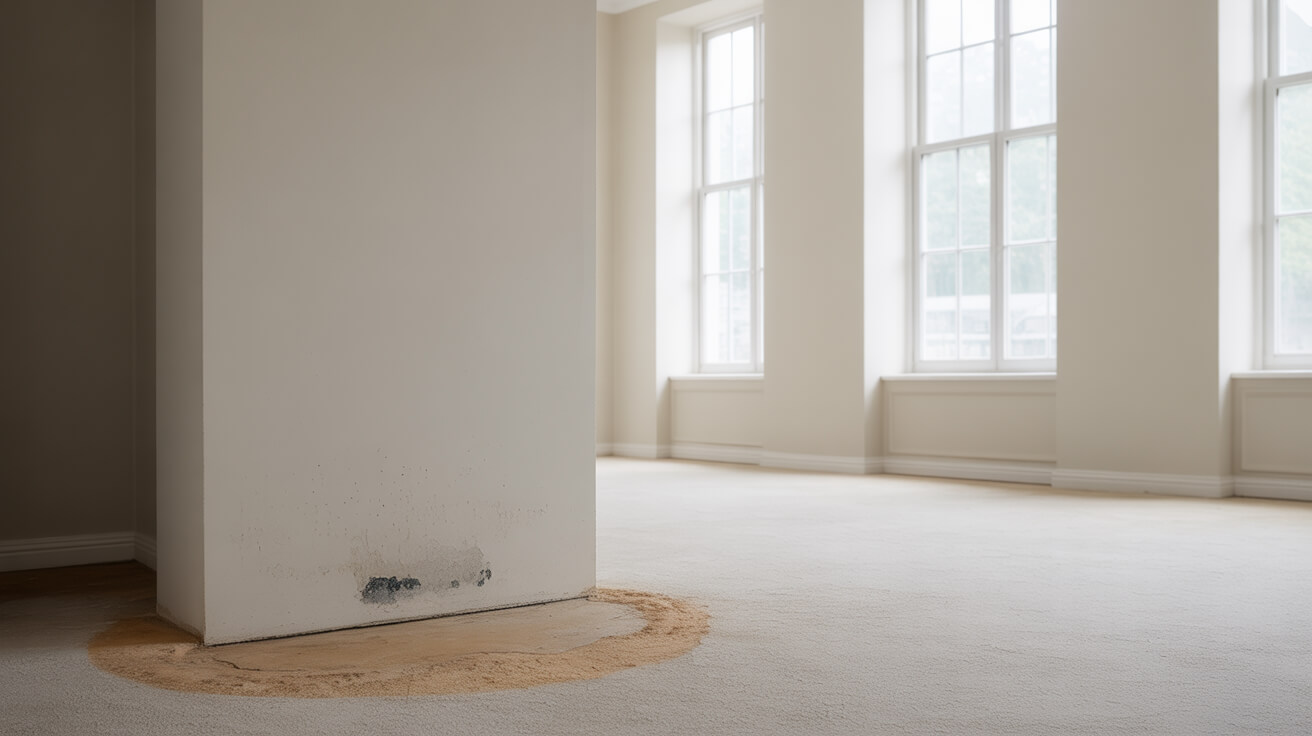
Situations Where Damp Crystals Deliver
- Small, enclosed rooms (storage, wardrobes, caravans).
- Seasonal or unventilated properties that invite stagnant air.
- Interim periods before a scheduled damp survey or repair.
In these contexts, the cost is low, the operation is silent, and small wins (less odour, drier air) build morale.
Where Damp Crystals Risk Delay and Expanded Damage
- Visible damp patches on skirting, under windows, or rising patterns on walls.
- Persistent salt stains or peeling from surfaces.
- Any room where the humidity cycle restarts as soon as a new tub is set in place.
DIY solutions shouldn’t outlast the issue that caused them. Every refill is a signal to investigate—not postpone.
If your experience matches these patterns, Sussex Damp Experts can calibrate your property’s true risk profile. What you gain: actionable transparency, compliance with BS6576, and the avoidance of repeat repairs or compliance breaches. From condensation management to pre-purchase survey readiness, true expertise tests, doesn’t guess.
Why Trusting Damp Crystals Alone Can Undermine Your Property’s Health and Value
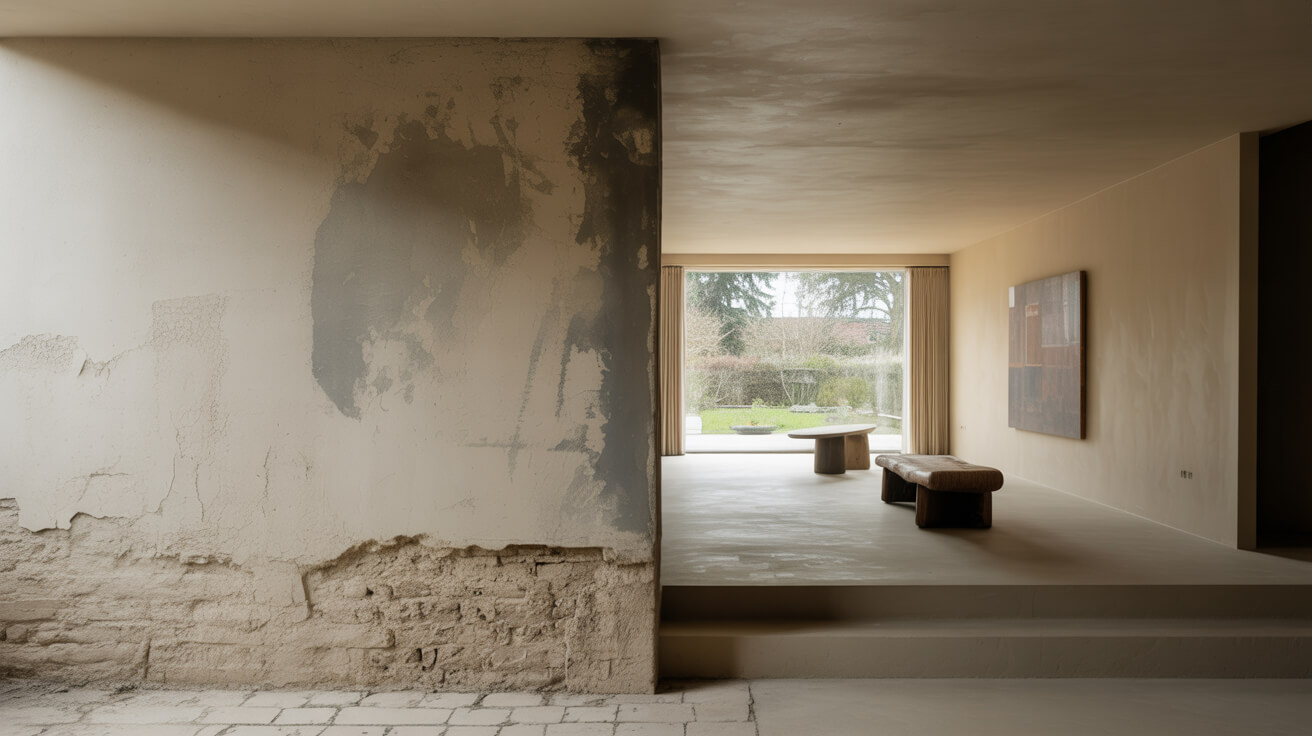
The Fatal Flaw: Mistaking Ambient Relief for Structural Protection
It’s tempting to check the damp box off your list once a canister shows water. But ambient humidity reduction is like sweeping the floor with a leak in the roof; the real problem waits behind the scenes, accumulating cost and risk with every ignored stain.
Technical and Compliance Pitfalls
- Limited capacity: A single canister absorbs only a set amount before needing disposal, often within 4–6 weeks (less in subtropical autumns or after heavy rain).
- Missed source: Without substrate analysis, salt mapping, or thermal scanning, leaks or ingress stay hidden.
- No lender or insurer recognition: Mortgage surveys and repair deadlines require proof of origin and remedy, not surface symptom management.
- Safety risks: Every refill is a chance for overfill, caustic spills, or neglected mould behind the area of incidence.
When your property’s value, tenant health, or compliance is at stake, trusting to ambient fixes can become a deferred liability.
The Real Cost of Treating Symptoms—Why Professional Damp Proofing Wins
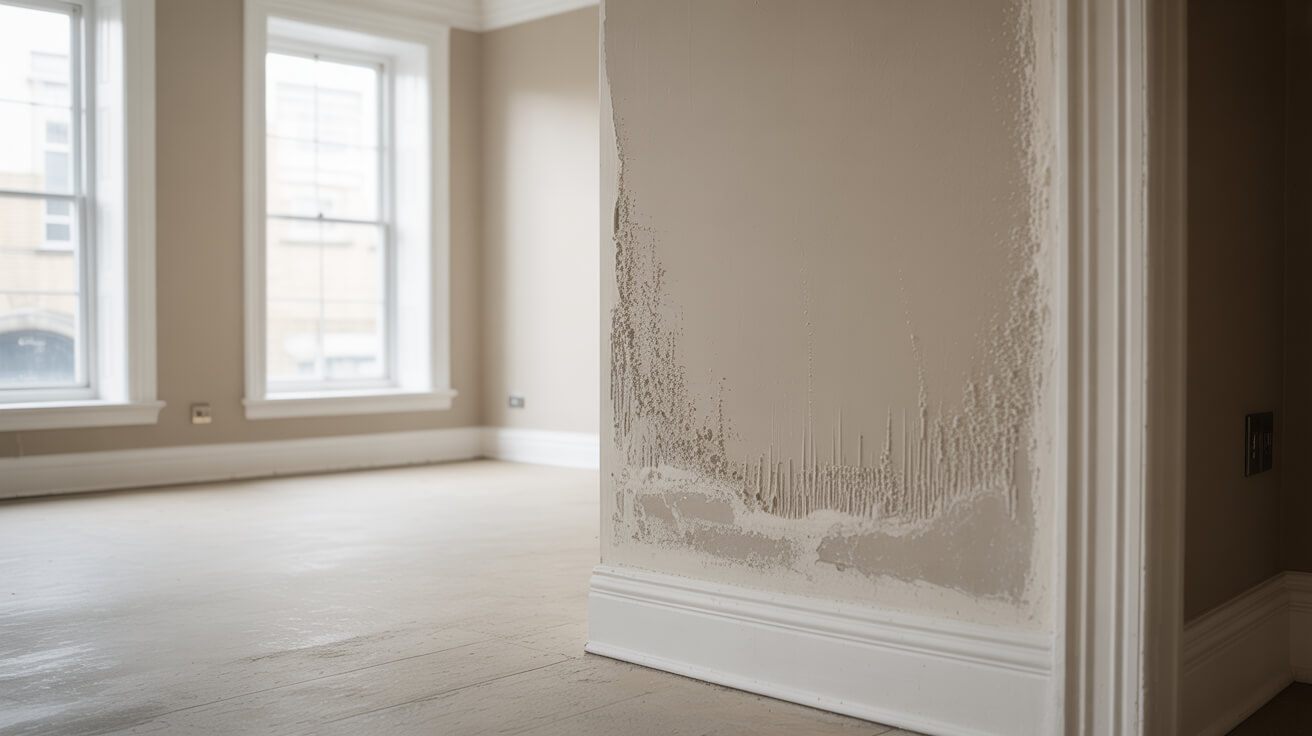
Surface absorption only ever wins the battle, never the war. Every property manager, facilities lead, or homeowner interested in durability, compliance, and transaction security needs a system that identifies and eliminates—not just temporarily masks—the problem.
Benefits of Damp Crystals
- Useful for non-critical storage, wardrobes, and micro-environments up to 10 m².
- Affordable, requiring minimal set-up.
- Maintenance for small airspace, not a property.
Limitations That Matter
- Inadequate for rising, penetrating, or concealed (hygroscopic) damp.
- Do not meet compliance or lender criteria for sale or insurance claims.
- Fails to address the pathway of water ingress, leading to cycle of refill and repeat.
What you don’t verify, you end up repeating—for every pound spent on crystals, you might leave hundreds in avoided repair costs.
Case in Point: A commercial property in Brighton used canisters for six months. Moisture reduced in a storage nook—but when tenants complained of odours, a substrate test found moisture wicking in two adjacent walls. The real fix required re-plaster and DPC upgrade, not another round of crystals.
To protect not just air, but asset value and repair budgets, schedule a survey with Sussex Damp Experts and convert ambient fixes into permanent, documented protection.
Your Guide to Using Damp Crystals—Smart Deployment, Smart Limits

Setting up a damp crystal isn’t complicated, but doing it right makes every difference:
- Placement: Target corners with poor airflow and away from direct warmth or sunlight.
- Routine checks: Review every 1–2 weeks to avoid overflow, plus log humidity or musty odour cycles.
- Replacement: Change canisters as soon as the lower chamber is half-full.
- Watch for return: If condensation, mould, or musty smells return promptly, escalate to substrate testing.
Optimising Placement Table
| Area | Suitability | Notes |
|---|---|---|
| Wardrobe / Cupboard | Excellent | Change monthly |
| Windowless Pantry | Good | Monitor for spill |
| Guest Bathroom | Occasional Backup | Only if no window, low use |
| Below Floorboards | Poor | Hidden ingress = test walls |
If repeated use triggers the same issues, or your logs suggest the problem shifts area, the solution lies in property surveying, not cycling through disposable fixes.
As a decision-maker, shifting your focus from refill to resolution means targeting mechanisms and compliance standards—steps Sussex Damp Experts can verify and action efficiently.
Safety, Risk, and Compliance—The Hidden Realities of Damp Crystal Reliance
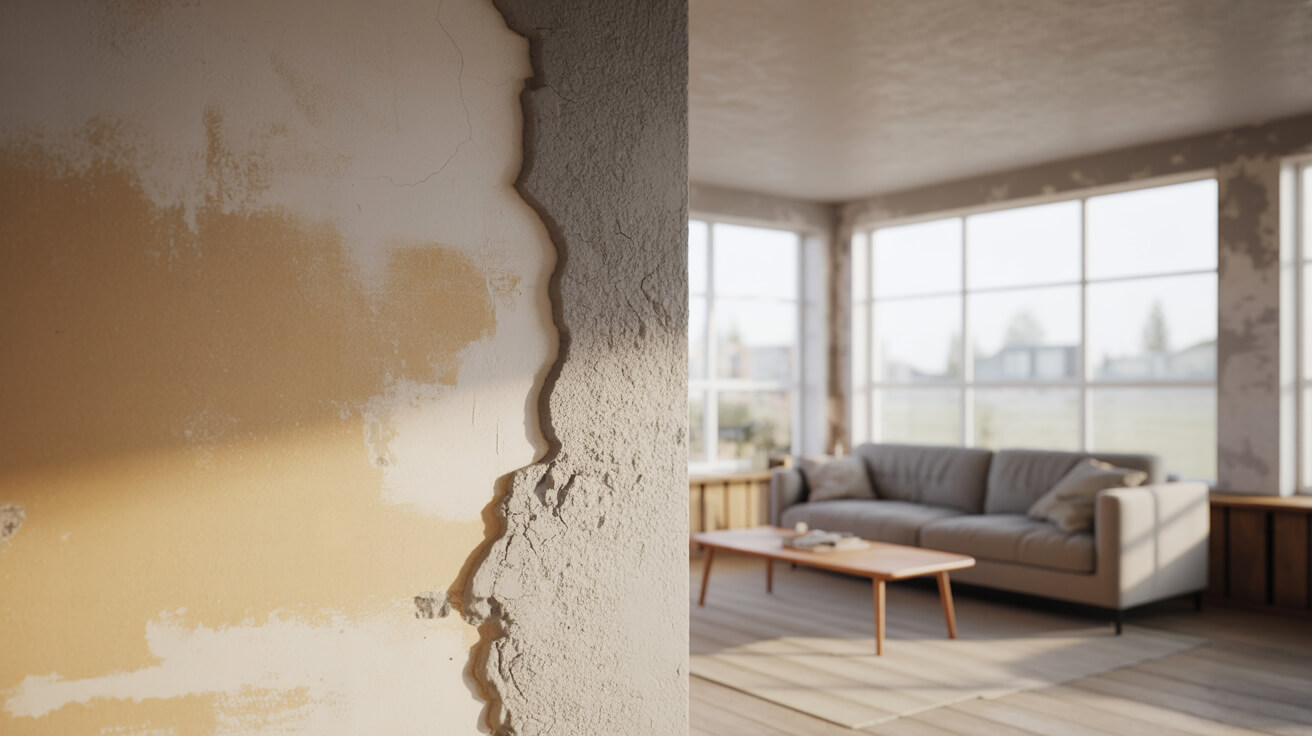
It’s easy to overlook the secondary liabilities that come with off-the-shelf moisture absorbers. But every caustic material poses risk, every missed overflow means hidden moisture, and every unchecked DIY cycle delays true mitigation.
Safety Protocols
- Child and pet avoidance: Store above reach, away from play areas.
- Immediate cleaning: Any calcium chloride spill should be neutralised with water and not left on absorbent or decorative surfaces.
- Environment: Do not mix with other cleaning chemicals or dispose down the drain.
Compliance and Operational Considerations
- Proof for letting agents/landlords: Reliance on crystals is not accepted as “remedial action” in legal communication or insurance claim evidence.
- Professional sign-off: Standards like BS6576, PAS2035, and HHSRS reference physical isolation and verification—not ambient control.
Table: Risk/Compliance Summary
| Scenario | DIY Approaches | Professional Survey |
|---|---|---|
| Child/Pet Exposure | High | Low (no consumer goods) |
| Regulatory Recognition | None | Yes |
| Insurance/Mortgage Acceptance | No | Yes (with documentation) |
| Operational Durability | Low | High |
Smart management is about limiting downstream risk, not relying on stopgaps. With Sussex Damp Experts, every risk is mapped, not assumed.
The Comparative Value—Damp Crystals, Dehumidifiers, or Surveyor-Driven Damp Proofing?
Choosing a moisture solution should reflect your project’s size, risk, and compliance threshold.
| Factor/Method | Damp Crystals | Dehumidifier | Surveyor-Led Damp Remediation |
|---|---|---|---|
| Area Coverage | Low (<10m²) | Medium–High | Whole property |
| Upfront Cost | Low | Medium | Varies (diagnosis/fix) |
| Ongoing Costs | Moderate | High (energy) | Minimal (long-run) |
| Meets Compliance Standards | No | No | Yes (BS6576, PAS2035) |
| Shelf Life / Durability | 4–6 weeks | Years | Years+ |
| Stops Root Cause | No | Sometimes | Always (if executed fully) |
Practical Advice: Deploy crystals for laundry, shelves, or one-off holiday home needs. If the term “damp survey” is on your mind due to sale, letting, or structural concern, you are already out of the DIY zone.
Optimising Your Choice
- Minor case?: Try crystals—but log and review results, don’t leave unchecked for months.
- Persistent/significant case?: Engage with a professional damp proofing team for a survey and end-to-end plan.
Choose Certainty: The Sussex Damp Experts’ Standard for Enduring Damp Control
Surface fixes have a shelf life. Real solutions, compliance assurance, and proven property protection require specialist involvement.
- Sussex Damp Experts run site-specific, surveyor-grade assessments using thermal imaging, substrate metering, and salt mapping.
- Every plan is aligned with BS6576, PAS2035, and HHSRS guidelines—fit for mortgage lenders, insurance underwriters, and future tenants or buyers.
- Your documentation isn’t generic. We deliver proof you and your stakeholders can trust, locking out regulatory risk and future cost shocks.
Those who audit for answers, own the outcome; those who rely on luck repeat their audits.
Take a decisive step toward durable, compliant, and value-protective damp control. Your properties deserve more than the illusion of progress—they deserve engineered outcomes.
Frequently Asked Questions
What Are Damp Crystals—and Why Don’t They Address the Root of Your Moisture Problem?
Damp crystals, created from calcium chloride, are passive moisture absorbers engineered to draw excess humidity from confined air—think cupboards, understairs voids, or small pantries. You set the unit on a shelf, and as vapour collects, it condenses into visible liquid in a lower chamber. The moment feels reassuring: you see water, and believe progress is made.
Yet the illusion can be costly. These products are not designed for, nor capable of, confronting the systemic causes behind most persistent damp in your home or managed property. When the underlying issue is rising groundwater, lateral penetration through masonry, or hidden leaks, no amount of ambient moisture control can halt the spread.
Key technical insight:
- Calcium chloride exploits its hygroscopic nature: to bind airborne water—but cannot touch liquid ingress within walls or beneath floors.
- Double-chamber design maximises air contact: , but the area of effect remains critically limited: expect impact only in spaces smaller than 10 m² and only where the air itself is the sole culprit.
- For more than comfort in a storage nook, the only effective shield is forensic survey and targeted repair based on root diagnosis. That’s the foundation behind all services at Sussex Damp Experts.
Surface moisture is obvious. Structural moisture is career-ending if ignored…
If your property’s value, compliance, or reputation is on the line, start with diagnosis, not a tub and hope.
How Do Damp Crystals Work—and What Factors Undermine Their Performance?
Damp crystals function through physical chemistry: the active agent—calcium chloride—absorbs airborne moisture, converting it into liquid for collection. The process is silent, energy-free, and visually satisfying. But there’s a physics cap: once the air is mostly shed of its surplus water, or the canister saturates, the effect halts.
Their reliability unravels when external variables come to bear:
- Temperature: Cold spaces hold less vapour, but warming (even from appliances) spikes humidity too rapidly for crystals to keep pace.
- Ventilation: High airflow disperses vapour, undermining the localised absorption window and making results inconsistent.
- Sustained source: Presuming your only foe is condensation risks missing capillary rise, leaking pipes, or gutter failures; these feed more water than any passive tub can remove.
Comparative snapshot:
| Control Method | Area of Effect | Power | Use-Case Fit | Longevity |
|---|---|---|---|---|
| Damp Crystals | ≤10 m² | None | Small sealed space | 2–4 weeks |
| Dehumidifier | 10–50 m² | 240V | Room/flat, moderate cases | Indefinite |
| Full Damp Survey & Repair | Whole property | Varies | Root-cause identification | Decades |
Rather than chase short-lived comfort, high-performance owners and managers treat air control as one signal—then look deeper for substrate threats or compliance gaps. Sussex Damp Experts guides your assessment—using thermal imaging, substrate metres, and risk modelling built for your context.
When Do Damp Crystals Deliver Real Results—and When Should You Walk Away?
You achieve best-case ROI with damp crystals in:
- Low-traffic storage or secondary spaces: (spare rooms, cabinets, subfloor voids).
- Mild, seasonal usage: (windows sweating on first frosts, laundry airing in winter).
- Short-stay or interim settings: , such as holiday lets or commercial units in transition.
But if you see any of the following, crystals quickly lose their value:
- Repeating patterns: damp patches, peeled paint, or growing mould year-round.
- Area exceeds 10m²: a single crystal barely modifies larger spaces, and stacking dozens is both impractical and uneconomical.
- Customer or tenant complaints: persist (musty odours, staining) despite consistent product use.
- Humidity drops but damp persists: if your metre shows improvement, but the wall still crumbles, you’re masking, not solving the risk.
Rather than delay meaningful action, use ambient readings as a ‘triage’ tool. The moment you spot recurring symptoms—or if you’re managing multiple properties—schedule a technical survey with Sussex Damp Experts and seize control over what your environment is really telling you.
Temporary ease is not a substitute for engineered assurance—don’t mistake one for the other.
Why Aren’t Damp Crystals a Solution for Structural or Persistent Damp?
The fundamental flaw: crystals do not interrupt liquid water. They extract moisture from the air, but not from brick, timber, or concrete. If you have substrate saturation—water wicking through walls, flooring, or foundations—a thousand crystals won’t buy a single day’s reprieve from structural risk or compliance failure.
Even worse, surface symptom-masking delays detection of more serious issues:
- Structural damp spreads invisibly, rotting joists and corroding fixings.
- Mortgage lenders, insurers, and regulators demand root-cause proof and sign-off (e.g., BS6576, PAS2035).
- Each cycle of refill and replace increases total spend, while your property’s value and habitable state quietly erode.
Professional intervention means:
- Measured mapping of the threat landscape: moisture, salt, substrate decay.
- Specification of the right system—be it DPC injection, tanking, lime plaster, or climate controls—tailored to building context and legal requirements.
- Documented closure—proof that stands up to scrutiny by buyers, surveyors, and compliance officers alike.
Sussex Damp Experts designs repairs for resilience—not just today’s patch, but your long-term asset and compliance exposure.
How Should You Instal and Maintain Damp Crystals for Best Results?
Treat each instal as a temporary control step, not permanent repair. Begin by:
1. Positioning: Always place at the lowest point of risk, away from windows or radiators to prevent performance swings.
2. Interval monitoring: At least fortnightly checks. Discard and replace once the lower chamber is two-thirds full.
3. Record keeping: Log humidity readings and dates of change—persistent fast fill is a diagnostic trigger, not just a sign of high ambient risk.
4. Safety checks: Follow all manufacturer instructions—calcium chloride is caustic; store canisters out of reach of children and animals, and never dispose of contents down the drain.
Failing to track cycles or site-specific patterns can lead to damaging oversights:
- Overflowed crystals breed the very mould you’re fighting.
- Inadequate replacement cadence breeds false confidence that only appears to solve the challenge.
If you notice that your maintenance tables are trending towards shorter refill intervals or persistent damp develops despite good hygiene and crystals, you’ve left the zone of DIY resolution. Sussex Damp Experts can deliver a forensic diagnosis—and if needed, a specification that covers the gap between mitigation and permanent fix.
What Risks and Safety Precautions Should You Consider With Damp Crystals?
Passive products often invite passive thinking—but risk, legal or operational, hides in the detail. Wet calcium chloride can etch metal, damage soft finishes, and cause skin and eye irritation. The danger is not theoretical: child poisonings and pet health claims have emerged from careless use.
Mitigate this by:
- Storing and placing only well outside of touch zones.
- Never mixing spent damp crystal liquid with cleaning solutions or pouring into waste systems.
- Adhering to product-specific disposal and safety instructions—most will recommend solidifying residue and placing into household waste.
- Periodically auditing their placement during property inspection rounds.
If your organisation operates under compliance burdens (landlord, agent, commercial manager), passive measures must always take a back seat to active risk management. Just as you wouldn’t settle for “probably safe” fire procedures, you shouldn’t delegate damp control to a product whose effectiveness stops at small-scale surface victory.
Procedural certainty begins with knowing where your mitigation ends and real protection begins.
How Do Damp Crystals Compare with Dehumidifiers and Full Damp Surveys?
Against active dehumidifiers or professional damp services, crystals are a useful but low-powered tool in very specific contexts. Dehumidifiers process far larger air volumes, can be set for continuous cycling, and usually include filtering and data-logging features that enable active risk tracking in medium to large rooms.
| Approach | Typical Area | Energy Source | Monitoring/Proof | Recurring Cost | Fit |
|---|---|---|---|---|---|
| Damp Crystals | ≤10 m² | None | Visual only | Frequent (refills) | Very limited |
| Dehumidifier | 10–50 m² | 240V | Electronic, Data records | Moderate | General |
| Professional Survey/Repair | Any | None | Third-party, Legal-grade | One-off, rare | Robust |
But neither DIY nor appliances can supply lender-level, documented, substrate-specific analysis. That requires professional assessment—audited, mapped, certified, and tailored to your property’s profile and operating goals.
If your goal is to protect asset value, comply with regulatory, lending, or insurance requirements, or simply end the cycle of surface management, Sussex Damp Experts provides the survey, roadmap, and rectification framework to render DIY a backup, not a crutch.

