
 By
By  August 26, 2025

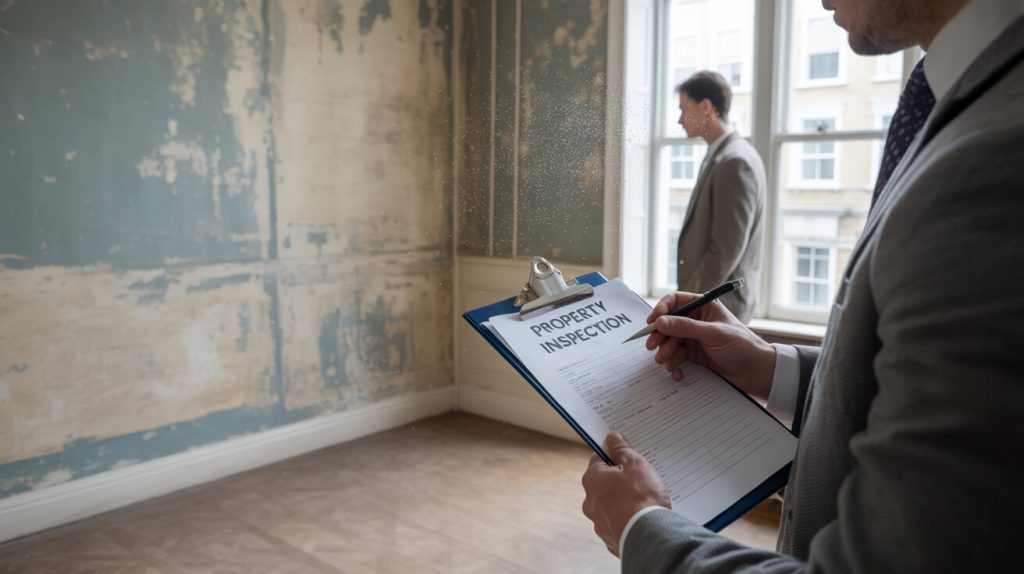
Why Choosing the Right Damp Specialist After Awaab’s Law Is Now Non-Negotiable
A new era of property compliance has arrived, and it lands squarely on your desk. After Awaab’s Law, ignoring moisture issues or picking a “cheap and cheerful” surveyor can land you in legal and financial trouble faster than a slow leak through your skirting board. Every decision-maker—whether you own, manage, let, or build—now faces direct, documentable requirements around damp and mould. Choosing the wrong “expert” could mean headline-making enforcement, rent refunds, or even public listings of your property’s failings.
One poor survey can cost you more than a repair—the repercussions echo through courtrooms, compliance files, and lending desks.
The freewheeling days of handyman fixes, fast-and-loose survey notes, and “that’ll do for now” patchwork are over. Lenders, insurers, councils, and tenants are all watching. In this regime, selecting a damp specialist is a legal strategy as much as a repair solution. Anything less than formal, standards-based expertise is like betting your whole house on a two-quid umbrella in a Sussex storm.
What Does Awaab’s Law Actually Demand of Landlords and Property Decision-Makers?

Awaab’s Law draws a legal line that’s hard enough to score stone. It gives tenants in England the right to prompt, trackable remedies for damp, mould, and condensation hazards in social housing—and the whole rental sector is sitting up to take note. The statute spells out exactly what must happen and when:
- 14 days: You must deliver a written response to any damp or mould complaint.
- 48 hours post-inspection: Supply a summary of findings and intent, also in writing.
- Prompt cure: Complete the fix by a prescribed and strictly documented deadline.
Councils, legal authorities, and lenders now expect your paperwork to hold up to audit—not just promise. If you trip over these new standards, you risk not only enforcement but also formal black marks on your letting record and mortgage blockages.
A true damp specialist—your legal ‘partner’ as much as your contractor—must be able to:
- Work and report at legal speed, with time-stamped audit trails.
- Use British Standards reporting language (not just “trade speak”) that satisfies councils, banks, and insurers.
- Back up every action and communication with defensible, compliant paperwork.
- Document not only the “what” but the “why” and “how” of each recommendation—so when questions come, your response stands.
In the eyes of the law, if it isn’t documented, it didn’t happen—and you’re the one left explaining a blank page.
What does this mean for you? Only an expert who combines technical, legal, and reporting skill can shield you from costly scrutiny.
Which Qualifications Distinguish a True Damp Specialist from Pretenders?
Credentials are your legal firewall. When postcodes are on the line, only real qualifications move the needle:
- CSTDB (Certificated Surveyor of Timber & Dampness in Buildings): —the PCA’s signature damp expert certification.
- CSSW (Certificated Surveyor in Structural Waterproofing): —for deep-structure and basement credentials.
- City & Guilds, BTEC or equivalent nationally recognised technical certificates: —evidence of up-to-date, formal training on diagnostic methods, material science, and reporting standards.
Every competent specialist should provide verifiable certification and proof of formal PCA membership—not just vague marketing. Online registers at property-care.org allow you to check ACTUAL status (not just claims) for every expert under consideration.
Quick Qualification Checklist
• Can your chosen surveyor show current CSTDB and/or CSSW proof?
• Is their PCA membership public and active—no gaps, no “between renewals”?
• Can they hand over City & Guilds or related certificates on demand?
• Will they produce sample British Standards-aligned surveys for scrutiny?
There’s no protection in hiring a cousin who’s handy with a damp metre. In the post-Awaab world, that’s an open goal for disputes, refusals, and even council orders.
Insist on credentials that mean something in a magistrate’s court, not just in a tradesman’s van.
How Can You Prove a Surveyor’s Standing, Accountability, and Audit-Readiness?
A credential is just paper without accountability. The right specialist should not only display their certificates, but link them to:
- Ongoing, visible PCA membership: (with a clean, searchable history—no suspensions or warnings).
- Clear, reproducible survey reports: that cite British Standards—including methods, diagrams, and defect-specific recommendations that anyone (auditor, lender, or council) can follow.
- Willingness to present sample documentation: —not generic “templates,” but real, redacted case files.
You should also push for detail on recent audits and complaints handled by their governing body. If a company’s track record shows lapses, unresolved warnings, or a history of vanishing after disputes, walk away—your future depends on their reputational security.
Key Evidence Points
• Can the company produce detailed, property-specific reports with date-stamped actions?
• Are their legal memberships easy to verify online?
• Do histories of dispute or audit action show a clean—or at least, accountable—trajectory?
If show me your PCA record produces a stall, a story, or a vanished phone number, you should already be making calls to someone else.
Accountability isn’t just about compliance; it’s about your ability to weather disputes, mortgage queries, and insurance events without drama.
Why Do Real-World Case Studies and Evidence Trump Claims and Promises?
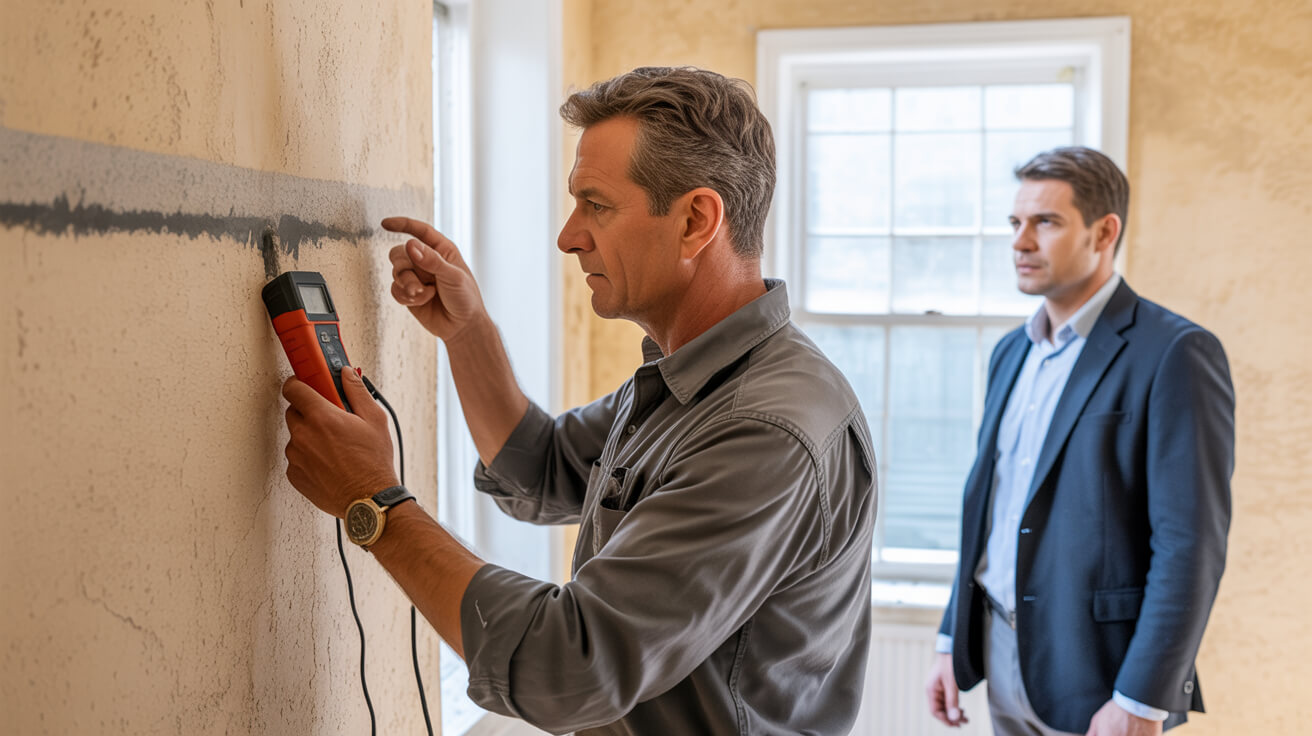
Brochures boast. Evidence proves. The only thing that counts when a lender, council, or solicitor asks questions is property-matched, time-stamped proof:
- Visual case studies: —photographs, moisture gradient maps, and salt analysis illustrating the *diagnosis-process-outcome* arc in detail.
- Before-after documentation: —showing not just that an intervention was made, but the technical and legal basis for the decision.
- Testimonials and traceable references: —including addresses, anonymised as required, but never simply “Mr. S from Brighton says…”
Push every specialist for direct demonstration: “Show me a real damp report for a property like mine. What did you find? How did you specify the fix? Where’s the aftercare protocol?” Anything less leaves you cradling empty promises when challenged by a buyer, freeholder, or claims adjuster.
Evidence isn’t an optional extra anymore. It’s the only currency accepted by regulators, lenders, and courts.
If you can’t see proof, you’re gambling on hope over compliance.
What Does a Proper Warranty and Aftercare Promise Look Like?
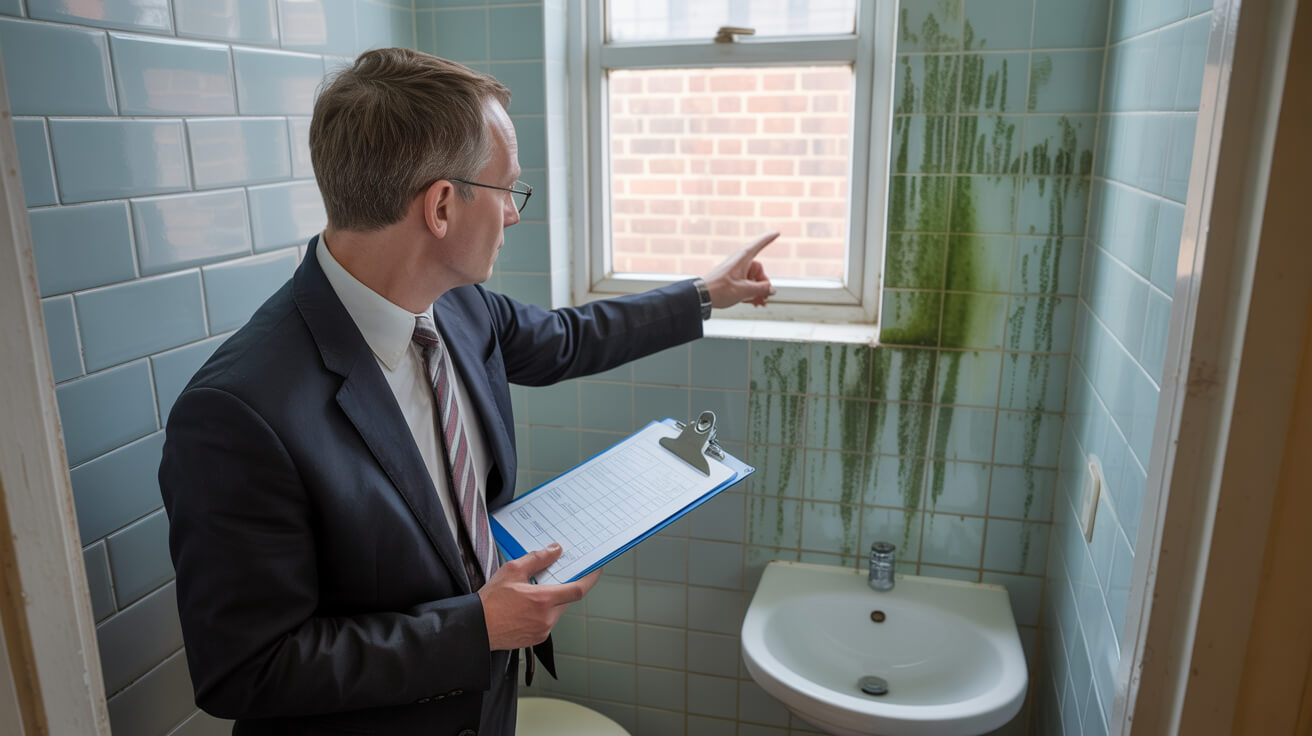
A guarantee that isn’t insurance-backed (by QANW, GPI, CGS, or another FCA-recognised underwriter) is a gamble—nothing more. In the world of property compliance, a damp warranty must:
- Clearly name the insurer and spell out coverage, exclusions, and claims process.:
- Transfer seamlessly to any new owner or mortgagee: —no wriggle-room or extra costs.
- Include a documented aftercare/inspection schedule: —preferably with annual or periodic checks, not just a note to “call if you need us.”
Accept nothing without policy numbers, underwriter details, and explicit claims instructions in writing. Any company that “forgets the details” is waving a red flag over your compliance standing and saleability.
If your guarantee can’t outlive a company director’s retirement, it’s just a scrap of paper.
Insist, in every case, on a warranty that stands up to insurance, mortgage, and re-sale scrutiny—so you never have to refight the same battle.
Does Your Specialist Think Legally as Well as Technically?
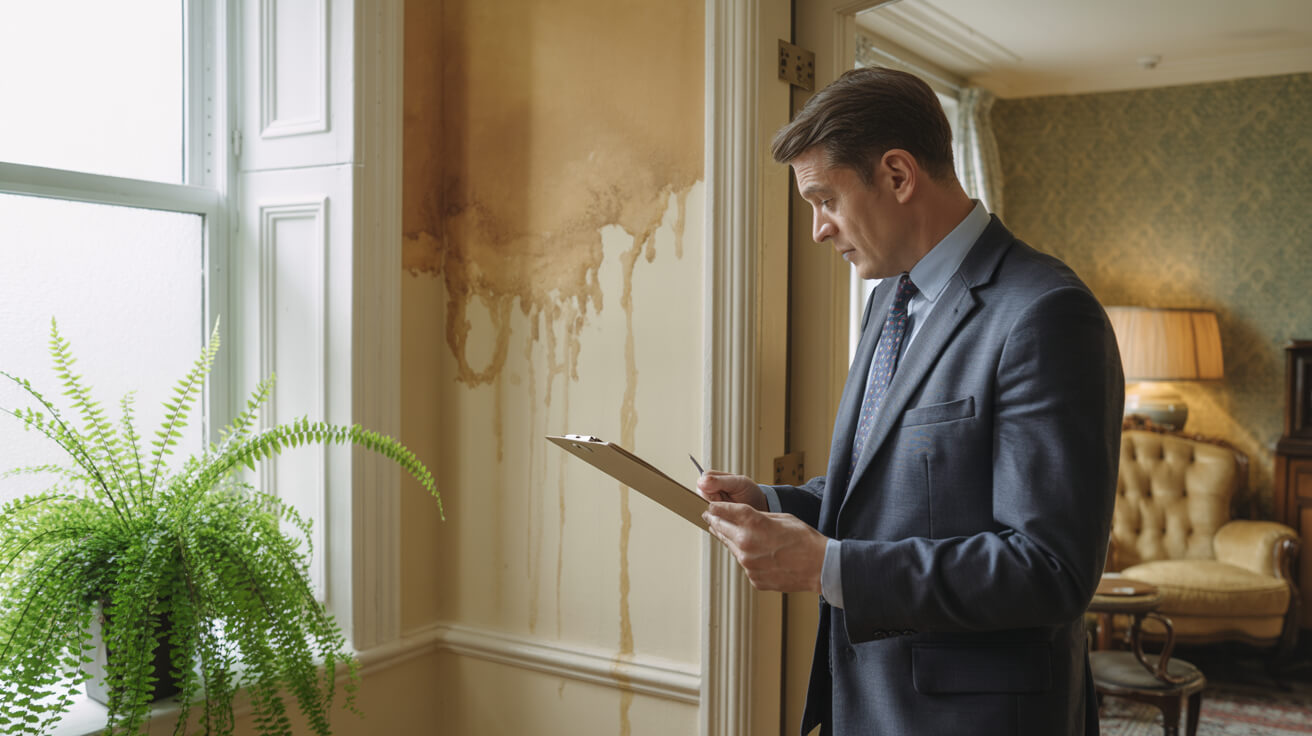
Today’s damp reports are legal artefacts as much as technical ones. If your specialist ducks the letter of the law, you might be buying a dispute, not a solution.
• Awaab’s Law: Do sample reports include direct references to the 14-day/48-hour rules? Do they specify which hazards fall under scope?
• HHSRS: Is the survey written for a local authority’s standards, with explicit hazard rating and outcome reporting?
• Building Regs: Does the report cross-reference Building Regs Part C (Damp) and Part F (Ventilation), especially if remedial works bridge multiple systems?
• Housing/Environmental Acts: If you’re a landlord or agent, is there explicit mapping to legal duties like the Landlord & Tenant Act 1985 or the Environmental Protection Act?
More than ever, your property audit is an evidence trail for compliance, funding, and sale. The right specialist should be able to quote statute, cite standards, and show template reports that satisfy courts as well as repair teams.
We always do a good job is not a legal answer when the council comes calling.
Choose a damp consultant who views each report as a legal as well as a technical shield.
How Do You Know Your Specialist Stays Up to Date with Law and Best Practice?
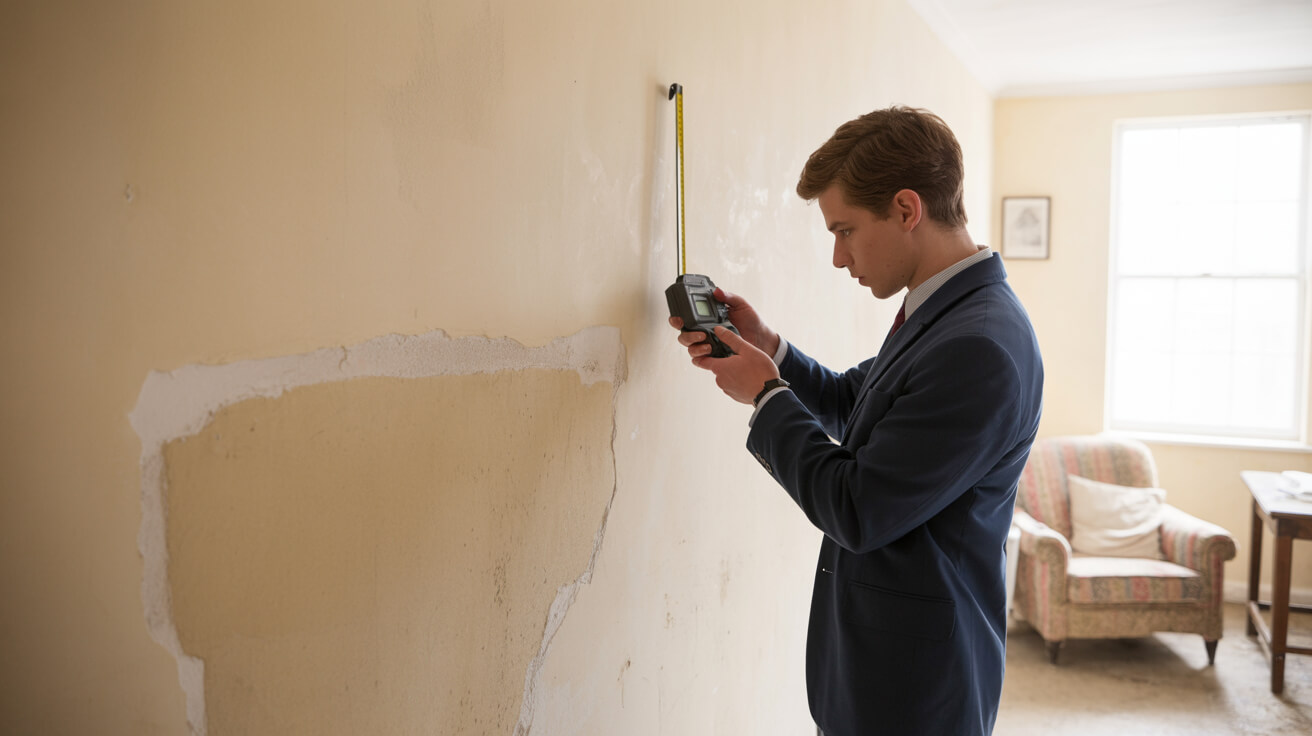
If your surveyor is running on last year’s playbook, your property is exposed. Thanks to Awaab’s Law, the rules change yearly—and new standards, insurance, and product protocols surface all the time.
- CPD documentation: Your expert must produce evidence of *recent* continuing professional development—from the PCA, CPD-UK, or equivalent industry authorities.
- Date-verified, law-focused training: Not generic building courses, but ones matched to the precise scope: Awaab’s Law, BS6576/BS8102, PAS 2035, and the present regulations framing warranties.
- Up-to-the-minute manufacturer accreditations: Especially crucial if your fix involves new membranes, hybrid systems, or advanced diagnostic techniques.
Your Renewal Shield
Ask your consultant for their last 12 months’ CPD history—no proof, no trust. “Years in the trade” is only a number if the paperwork stops in 2022.
Outdated knowledge rusts fast, but the liability doesn’t.
A true expert learns for a living—demand up-to-date records as part of your due diligence.
Move First for Legal Peace—Contact Sussex Damp Experts Today
Damp may look like a stain or a smell, but now, it’s a legal hazard and an insurance time-bomb waiting for a trigger. The professionals at Sussex Damp Experts never treat it as just “a job.” Here’s how we protect you:
- Certified PCA-registered surveyors, armed with current CSTDB and CSSW status: , prepared for anything from Regency basements to heritage refurbishments.
- Up-to-date technical and legal compliance: everything we do links to Awaab’s Law, HHSRS, Building Regs, warranty clauses, mortgage lender demands, and resale confidence.
- Insurance-backed guarantees: , with proof in writing from nationwide underwriters, and full aftercare throughout your property’s lifecycle.
- *Real, site-matched evidence*: from before-after surveys to warranty transfer paperwork—so you have tangible proof for buyers, lenders, and insurers.
Stop guessing. Prevent disputes. Document your safety and value with surveyors who lead on skill and law, not just a priced-up estimate.
Hope does not protect property. Documentation, legal awareness, and genuine evidence do.
If a legal letter or mortgage red flag could cost you, you need protection that will stand up in a court or a sale. Contact Sussex Damp Experts now—before today’s uncertainty becomes tomorrow’s headline. Protect your asset and your peace of mind, with compliant, expert support trusted across Sussex and beyond.
Frequently Asked Questions
Why is Awaab’s Law a seismic shift for damp survey credentials, and who’s most exposed?
Awaab’s Law puts a hard legal clock on every property manager and owner: proof of up-to-date PCA membership and current CSTDB or CSSW certification has gone from “best practice” to non-negotiable. Insurers, councils, and mortgage lenders now demand a traceable evidence trail—verbal assurances and faded badges are no defence. Immediately after inspection, you must supply tenants with a signed, credential-linked report; delays or soft compliance trigger audits, fines, and blocked sales. The pressure first lands on social landlords and multi-unit owners, but oversight filters down to every rented property and sales transaction in the chain.
What does the evidence trail require?
- Live PCA or TrustMark membership, cross-checked online before surveys count.
- Reports referencing BS 6576, PAS 2035 or BS 8102—loan officers and councils check these clauses directly.
- Signed inspector details with qualification numbers, matched to the public register.
- Guaranteed insurance policies naming contractor and work scope.
Not one step is left to trust—if the evidence isn’t signed, dated, and traceable, it won’t survive a council or lender audit.
Why can’t word of mouth or legacy paperwork fill the gap?
Because the law cares only for current legal links: if there’s a break in the chain—missing expiry date, ghosted insurance, or vague qualification—liability bounces back to you, not the last contractor.
How does a truly compliant damp surveyor prove their status—beyond polished logos?
Real compliance shows itself before the visit even starts: your specialist offers live PCA and TrustMark numbers, provides proof of recent CPD, and emails you sample reports with every step referenced to British Standards. At handover, you receive a full photo chain (before, during, and after readings), digital moisture metre logs, and copies of live guarantees that name you as beneficiary. Cross-check in the PCA/TrustMark registers and ensure “pending” or “renewal” are nowhere near their paperwork.
Vital red flags to spot fast:
- Expired badges, “pending” certificates, or missing TrustMark links mean documentation is dead on arrival.
- No insurance underwriter named or missing coverage dates expose repairs and claims.
- Opaque survey structure: legitimate reports break down symptoms, causes, and solutions, each locked to a code you can validate.
- Genuine specialists encourage you to challenge their credentials and will walk you through links for peace of mind.
If a surveyor side-steps your request for proof, your risk is front and centre. The real pro acts as if audit is tomorrow.
Why does this matter for property owners and managers?
You’re staking your property’s insurability, mortgageability, and legal standing on words that will be dissected by auditors, lenders, and sometimes a courtroom—don’t let guesswork into your defence.
What new financial and legal shocks follow from using an unaccredited damp contractor?
Hiring an unaccredited damp contractor now doubles every risk: fines up to £30,000 for non-compliance, insurer refusals on claims, mortgage stalls, and being flagged on “rogue landlord” watchlists. Remedial works completed by surveyors with expired or lapsed badges are dismissed outright by councils—forcing expensive redos at your cost. Insurance claims require named contractor details and proof of BS 6576/PAS 2035 compliance, or policies simply do not pay. Persistent gaps invite direct tenant litigation and drag reputational damage through databases seen by buyers, agents, and lenders.
Financial and legal aftershocks:
- Survey data from non-accredited inspectors is instantly rejected—no second chances with lenders.
- Local authorities can order compulsory works, adding their costs to your bill.
- Uninsurable repairs—missed cover periods void the guarantee, with landlords absorbing the risk.
- Sales or refinancing collapse when pre-purchase surveys don’t cite compliant remediation.
Where corners are cut, the bill is doubled in fines and lost opportunities—long before mould reappears.
Whose name ends up responsible?
Whoever holds the duty of care—owners, managing agents, even lease holders—faces the legal aftershock if credentials, action, or documentation fall short.
What has to go into a damp report now—and why is every element non-negotiable?
Every damp report issued for compliance, lending, or insurance must contain: fixed survey date/time, full inspector ID tied to PCA, CSTDB or CSSW records, annotated pre- and post-treatment images, site-specific metre readings, diagnostic narrative referring to BS 6576/BS 8102/PAS 2035, explicit links to Housing Act and Awaab’s Law, a bulletproof action plan with tracked deadlines, and appended guarantees stating issuer, work scope, and validity. Each section turns “opinion” into evidence you can defend.
Unbreakable report components:
- Inspector’s live credentials: numbers, expiry, public register links.
- Site evidence: timestamped photos, moisture metre records, and chemical test logs.
- Diagnosis: cross-referenced with legal standards, never just “damp present.”
- Health risk analysis: links to HHSRS, notes on tenant exposure or structural compromise.
- Action plan: breakdown of remedial steps, materials, and guarantee coverage period.
- Delivery proof: distribution date to all legal parties.
A valid damp report is built like a legal relay—every handover step proves your rights, not just fixes your walls.
Why so much detail?
Because mortgage companies, councils, and insurers have learned the high cost of paper-thin evidence. Weakness at any link burns future resale, lending, or warranty powers—protect your assets by demanding full compliance at every stage.
Which badges and guarantees really shield you from risk—and which are just for show?
True protection is verified through public PCA membership (with expiry), live TrustMark status, and valid CSTDB (for general work) or CSSW (for waterproofing) certificates. Insurance-backed guarantees (QANW, GPI) must name your contractor, your property, and the actual work covered—vaguely-worded “certificates” or lapsed coverage are worthless in any legal or financial test. Extra CPD or British Standards training provides bonus proof, but without renewal or direct linkage, it’s a trophy with no legal teeth.
Table: Legal shields and false promises
| Badge / Guarantee | Is It Law-Proof? | How To Check |
|---|---|---|
| PCA Membership | Yes | Match on PCA database |
| TrustMark | Yes | Search public register |
| CSTDB / CSSW | Yes | Certificate in scope |
| Insurance-backed | Yes | Name & date on policy |
| City & Guilds only | Partial | Must be renewed |
| “Pending” or expired | No | Instantly dismissed |
Legal defence isn’t built with brand logos; it’s the live numbers, dates, and paperwork behind them that survive the audit.
If the badge is missing, or claims are “pending”?
The survey’s defensibility vanishes—councils, insurers, and lenders act as if the work was never done.
How can you tell your damp surveyor evolves with law, not just “best practice”?
Examine their learning record. A compliance-driven specialist will offer PCA or British Standards CPD certificates completed in the last year, show you reports that cross-reference new clauses from Awaab’s Law, and explain the material choices or report tweaks these changes drove. Their insurance and guarantees show continuity—no coverage gap, no “to follow” promises. Ask how recent law changed their diagnosis or methods; a technician who hesitates is likely running on expired know-how.
Continuity cues for true compliance:
- CPD record less than 12 months old.
- Reports cite Awaab’s Law, British Standards, and HHSRS criteria.
- Audit trail of recent works published or independently validated.
- Live insurance and guarantee documents on tap.
Those who learn late pay twice—futureproof your property by demanding live evidence, not empty promises.
What’s the risk if you don’t check?
Legacy reports become liabilities under the new regime—a cost to warranties, to lending, and to insurance. Proactive vigilance saves architectures, investments, and reputations alike.
If you value your property’s future, treat damp compliance like a living contract. Sussex Damp Experts hold PCA and TrustMark accreditations, build every survey to BS 6576 and PAS 2035 standards, and bring live guarantees to every project—so your report withstands audit, protects your investment, and sails past future regulation. Book the kind of survey that doesn’t just fix problems—it keeps your rights and resale secure.

