
 By
By  July 11, 2025


Ultimate Guide to Tanking a Cellar for a Dry Space
A cellar is more than a neglected room below ground. If left unchecked, even minor moisture becomes a silent adversary—gradually undermining your property’s value, limiting how you use the space, and introducing avoidable legal and health risks. Tanking isn’t a “nice-to-have”—it’s the dividing line between homes (or portfolios) that consistently hold value, pass surveys, and deliver healthy returns, and those that spiral into recurring cost and hassle. Sussex Damp Experts provide certified, surveyor-led solutions that are engineered to permanently resolve your unique moisture profile with full regulatory accountability.
The cellar you ignore today is the asset at risk tomorrow.
Understanding exactly what’s required—from scientific root-cause diagnosis to compliance-led installation and skillful aftercare—gives you the leverage to make proactive, cost-effective choices. Our teams deliver tailored tanking solutions for every property type, from listed heritage sites to new-builds and rental portfolios, guided by the correct standards and proven methodologies.
What Are the Surveyor-Recognised Signs a Cellar Needs Tanking?

Before a damp problem visibly disrupts your property, early warning signs accumulate. Surveyors look for a comprehensive pattern—beyond surface stains or peeling paint.
Structural and Environmental Red Flags
- Musty or earthy odours even after cleaning
- Peeling, bubbling, or flaking paint and finishes—especially near skirting or floor junctions
- Salt residue (“efflorescence”) on bricks or concrete, indicating active moisture movement
- Recurring dark, cold, or damp wall patches
- Black mould behind storage, along skirting, or in corners—does not fully clear with cleaning
- Soft or crumbly walls, timber or skirtings
- Localised water pooling after rain or chronically high humidity in the air
When these signs repeat, appear after “quick fixes,” or show up in homebuyer and rental surveys, they indicate that surface treatments will not suffice. Mortgage lenders and rental compliance checks routinely reject homes with these markers.
Immediate Action Block
When should you act?
If you see more than one of these issues persisting for weeks, it’s time for a full, surveyor-grade damp diagnosis—it’s an investment, not just a repair.
Bulletproof diagnosis and targeted treatment prevents otherwise hidden damage, cost escalation, or deal-breaking compliance failure.
Why Do Cellars Experience Damp—And What Are the Long-Term Risks?
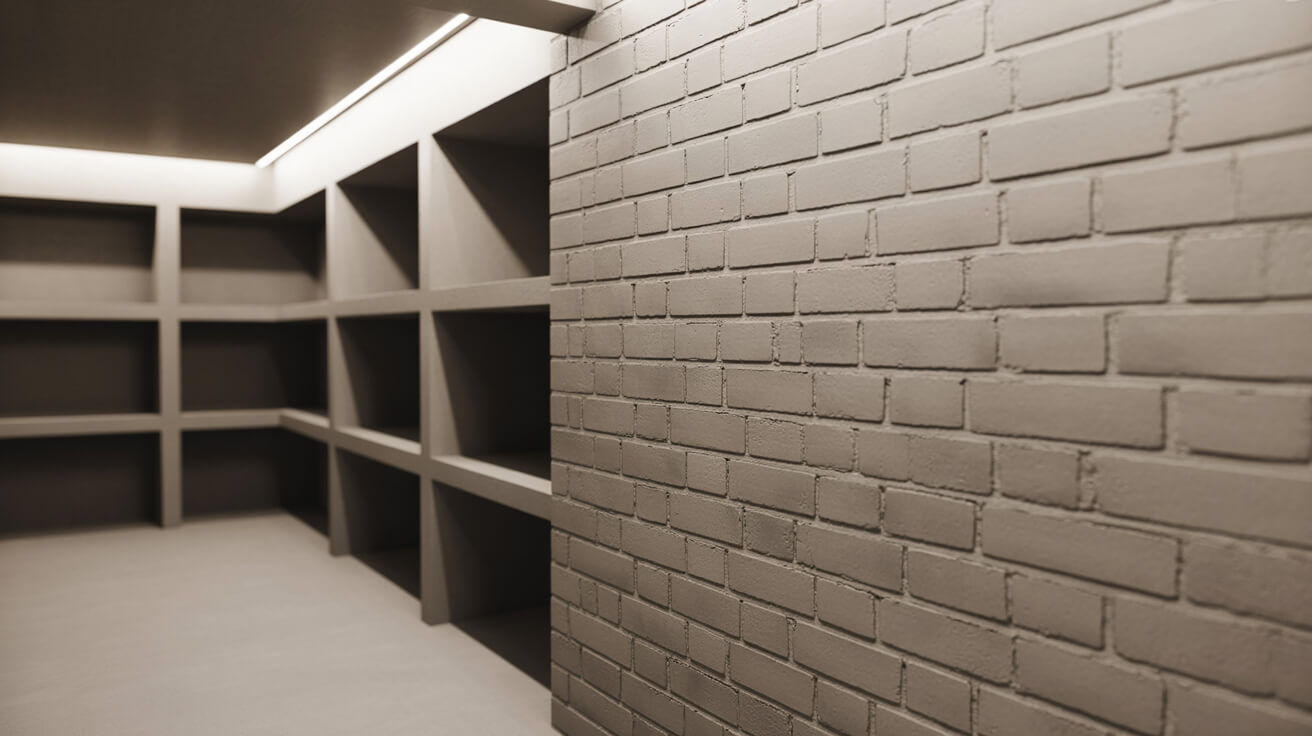
Water finds every weakness in a structure. Cellars are magnets for moisture due to a combination of environmental stress, construction design, and lifestyle changes.
Main Causes of Cellar Damp
- Lateral water ingress: from surrounding soil after rainfall or high groundwater
- Hydrostatic pressure: forcing water through bricks, mortar, or floor slabs—especially on sloping or saturated ground
- Capillary action: wicking water up through porous walls or floors (no effective DPC installed or retained)
- Ventilation failures: causing condensation buildup and persistent surface damp
- Historic or incorrect material application: —wrong render, insufficient tanking, or cement over lime in heritage builds
Risk Table
| Risk Category | Environmental Driver | Regulatory/Asset Impact | Repair Cost Impact |
|---|---|---|---|
| Hydrostatic/Lateral water | Rain, groundwater | BS8102 non-compliance | High, repeat works |
| Capillary action | Porous substrate | Surveyor/mortgage flagged | Moderate to severe |
| Poor ventilation | Modern higher occupancy | HHSRS, health standards | Health, moderate cost |
| Non-compatible materials | Upgrade over historic | Insurance undermined | Highest, reputation hit |
Regulatory and Practical Consequence
Properties that ignore or shortcut moisture control risk:
- Regularly failing surveys and mortgage approvals
- Legal enforcement on rental units (HHSRS)
- Accelerated structural decay and asset depreciation
- Health risk flagged by tenants or local authorities
Owners who address moisture when it’s invisible keep control—everyone else faces forced deadline repairs.
How Is Surveyor-Led Cellar Tanking Performed to UK Standards?

Effective cellar tanking does not start in the builder’s merchant. Success is engineered before the first material touches your wall—with scientific mapping, standardised practice, and compliance as the baseline.
Stepwise Framework for Tanking
- Comprehensive damp mapping—moisture metre readings, substrate analysis, historical context
- Full substrate and wall/floor junction prepping—all loose or organic matter removed, fillets/angle beads applied
- Specification of breathable, compliant materials (cementitious slurry, cavity membrane, or hybrid)
- Precision double (or triple) coat application—each layer allowed full cure, with environmental and substrate checks
- Optional drainage/venting integration—addressing persistent groundwater or regulatory/heritage constraints
- Final compliance assessment and proofing—inspection, documentation, owner walkthrough
Process Block
Professional tanking also includes staged documentation, insurance-linked guarantees, and robust aftercare advice. Uncertified or DIY jobs fail because they miss one or more steps—especially compliance checks and aftercare protocols.
Our services include full surveyor documentation, Surveyor Logic aligned to BS8102, and future-ready evidence packs for mortgage, insurance, and property milestones.
What UK-Approved Tanking and Waterproofing Solutions Are There?

No two cellars are identical in risk or value. That’s why certified experts never offer one-size-fits-all solutions.
Comparative Table: Major Tanking Systems
| Solution Type | Core Benefit | Best For | Regulatory / Longevity Cue |
|---|---|---|---|
| Cementitious Slurry | Strong, direct barrier | Standard brick/block cellars | Fast instal, BS8102 compliant |
| Cavity Drain Membrane | Water managed behind membrane | Flood-prone, high water tables | Removable, heritage adaptable |
| Hybrid System | Compliance/heritage, double proof | Listed and multi-issue structures | Consent intensive, future flexible |
| External Waterproof | Source barrier (rare in UK) | Full refurb, new-build | Highest cost, not retrofit friendly |
Expert recommendation: Always start with a compliance-led system matched to building age, construction, and use case. Hybrid systems offer both adaptability for heritage/listed settings and robust future-proofing.
Transition naturally into a tailored quotation or next-step diagnosis.
Where Do Most Cellar Tanking Projects Fail—And How Can You Prevent Errors?

Failures in cellar tanking always trace back to one of three things: incomplete diagnosis, poor process, or aftercare neglect. These turn a simple job into a multi-year cost spiral.
Where Projects Come Unstuck
- Prepping shortcuts—loose plaster, salts, or legacy coatings remain
- Wall/floor junctions rushed or missed completely
- “Just product” thinking over scientific compliance
- Neglecting aftercare—no inspections mean issues go undetected until damage is significant
- Non-compliance with surveyor’s findings, or lacking documentation for insurance/mortgage
Prevention Checklist
- Demand surveyor-led mapping and full documentation
- Specify remediation of all junctions and substrates
- Don’t skip aftercare routines—annual checks, remote sensors if needed
- Retain paperwork for every phase; insurance and sales depend on it
The cellar that’s only half-protected is the most expensive of all.
Our aftercare keeps your guarantee valid and your asset protected—long after the last brushstroke.
Can Tanking Be Approved for Heritage and Listed Buildings?

Listed and heritage buildings add layers of responsibility on owners and consultants alike. Cutting corners or using “standard” approaches is likely to breach regulations—and irreversible loss of value.
Adapting the Tanking Solution to Heritage Needs
- Always begin with a conservation-focused survey—respect for substrate, and original finishes
- Propose reversible, breathable tanking methods (lime-based or composite systems)
- Engage conservation officer early, provide full details/documentation
- Understand unique drainage or capillary network peculiarities in historic settings
Data shows that heritage-adapted tanking, specified and signed off with documentation, not only secures dryness but enhances resale and insurability.
Practical example: A Brighton Victorian terrace required a hybrid drainage and lime-slurry solution, logged via council and conservation channels, enabling full rental approval and peace of mind for buyers.
Book Your Free Consultation With Sussex Damp Experts Today
You’ve read the roadmap to a dry, future-proofed cellar—what’s next? Your move now determines whether your property becomes a protected, high-value asset or an ongoing liability.
Unlock the confidence that comes when your asset is cared for by certified, accredited experts who document, guarantee, and deliver every time. Arrange your surveyor-led cellar diagnosis now—with Sussex Damp Experts—so you can use, rent, or sell your space with total assurance.
Property investors don’t speculate on risk—they demand evidence.
Your cellar’s best decade starts today—make your next decision one that stands up to any test.
Frequently Asked Questions
What signals warn that your cellar needs tanking before costs and complications escalate?
Damp rarely broadcasts itself with drama, yet the warnings accumulate with steady pressure—a faint mustiness clinging to the air, streaks of efflorescence where salt has traced the wall’s secret history, or a spreading patch that shrugs off every coat of paint. Even high-value properties or heritage-listed landmarks see these indicators, because water exploits weaknesses regardless of build date or specification. You might spot black mould creeping for a comeback season, note that nothing stored in the cellar ever feels quite dry, or start to notice your heating struggling to keep the space tolerable.
Surveyor Logic: Where symptoms become actionable risk
- Visual cues: Peeling skirting, flaking plaster, or abnormal damp patches that return after superficial repairs.
- Smell or feel: Persistent musty odour, or cold/damp walls—especially during humid weather or after heavy rain.
- Physical evidence: Powdery salts (efflorescence), visible surface water, fungal blooms.
- Instrumented proof: Professional moisture metres detect what the surface hides; capillary mapping shows rising damp.
- Financial symptom: Sale or rental stalls when surveyors or mortgage lenders detect “unresolved historic damp” in reports.
Water is adaptive. It finds the tiniest breaches—where an old mortar repair cracks, where concrete and brick part ways, or where modern improvements brute-forced new paths for condensation. Your warning is getting louder each day, not softer. Only a forensic-level inspection reveals the true patterns, root causes, and risk factors.
A property’s value is directly tied to how early you pay attention to silent threats.
When these markers appear, waiting takes your agency away. By owning the diagnosis, animating the survey, and scheduling a proven remedy with Sussex Damp Experts, you step into control—making damp less a fate and more a manageable, binary choice.
Why do dry cellars become vulnerable—and what sort of losses result if you let damp evolve unchecked?
It’s tempting to treat cellar damp as a flaw of old houses, heavy rain, or quirky geography. The reality is less forgiving: even pristine, recently refurbished or high-value basements fall to advancing moisture if protective measures aren’t mapped, re-mapped, and maintained. Behind modern finishes lurk three silent engines: hydrostatic pressure (the weight of water in soil, seeking equilibrium), capillary action (water travelling upward through masonry as if it were a wick), and the modern trap of improved insulation—without proper ventilation upgrades.
From “cosmetic fix” to structural and financial spiral
- Minor surface failures lead to deeper infiltration, allowing rot and fungal decay to take hold behind walls and under floors.
- Surveyors downgrade or flag: the property, making buyers cautious, lenders strict, and insurance providers introduce new exclusions.
- For landlords, HHSRS and statutory fit-for-habitation laws escalate a failed repair into legal risk, tenant disputes, or emergency cost scenarios.
- On the sales market, unresolved cellar damp = price reductions, delayed exchange, or “cash buyer only” limitations.
The cycle feeds itself—ignored patches lead to increased humidity, which fuels more moisture, which damages structural elements and shortens the life of even the best renovations. The shift from invisible risk to active loss is quick—and reversible only with committed, surveyor-grade intervention.
It’s not the water you see, but the damage you can’t see that rewrites your risk profile.
Ensuring your cellar remains an asset—not a liability—demands that you treat damp not as a cosmetic annoyance but as a financial, regulatory, and reputation event. The time to regain control is well before an external force (council, lender, buyer) forces a hurried fix.
How does a surveyor-led tanking process ensure genuinely dry, usable space for the long-term?
Dry cellars aren’t the byproduct of generic “waterproofing”—they are the outcome of methodical, stepwise tanking that conforms to British Standards and is documented for every compliance, survey, and warranty purpose. The journey begins with forensic diagnosis, mapping every visible and hidden route of moisture with moisture metres, salt analysis, and root-cause substrate tracing.
The gold-standard tanking process flows as follows:
- Inspection, mapping, and compliance review: Identify wall, floor, substrate, ventilation and drainage status; flag regulatory or heritage consent points.
- Surface and junction preparation: Thorough clean, removal of all failed or incompatible materials, repair of cracks, and creation of angle fillets at vulnerable wall/floor and corner joints.
- Material and system selection: Match tanking slurry, cavity drain membrane, or hybrid solution to the cellar’s age, construction, environmental exposure, and future use.
- Systematic application: Instal in strict accordance with manufacturer and code guidelines, allowing for staged curing and full substrate bonding.
- Quality assurance and ongoing documentation: Each step photo-documented, compliance logged, and guarantee registered with transferability for buyers, tenants, or future projects.
- Aftercare plan: Annual or tailored re-inspection, humidity and ventilation check, and proof-of-compliance updates.
DIY or shortcut projects routinely fail at prep, curing, or junction points. The audit trail—made visible by Sussex Damp Experts—guarantees not only a dry, usable space but also a future-proofed, sale- and insurance-ready status for your property.
You gain decision certainty: what’s mapped, managed, and documented doesn’t become a future loss event.
What tanking and waterproofing methods actually pass survey, insurer, and heritage approval—and why does the detail matter?
In the world of cellar waterproofing, method is everything—especially when the approval of lenders, insurers, or conservation officers hinges on documentation as much as on performance. The three main approaches are:
- Cementitious tanking: A high-bond slurry creates a solid barrier. Best for classic brick, block, or concrete cellars, and often required for surveyor or mortgage compliance.
- Cavity drain membrane systems: Channel water out of walls/floors into drainage or sumps. Required in high-pressure sites, heritage buildings, or where reversibility is a must.
- Hybrid or conservation sets: Blend modern tanking with breathable, reversible overlays for listed or sensitive buildings. Used for heritage compliance or when council sign-off is a risk.
| System | Use Case | Regulatory Note | Typical Guarantee |
|---|---|---|---|
| Tanking Slurry | Most brick/block cellars | BS8102, PAS2035 | 10+ years |
| Cavity Membrane | Flood-prone, historic, listed | Heritage/Listed Consent | 10-20 years |
| Hybrid Solution | Heritage/complex compliance | Conservation Guide/Officer signoff | Custom |
Survey-ready waterproofing isn’t a checklist item—it’s a system-wide, compliance-attested plan. Insurers and financial institutions flag “DIY” and generic repairs; failures rarely show immediately, but when they do, exclusions kick in fast. Choose methods that build asset status, not just check a box.
When your solution is surveyor-certified and ready for the transfer of guarantee, you step into elite company: owners whose cellar value is a line item, not a negotiation.
Why do some tanking jobs—and even reputable quick fixes—unravel, and how do you avoid joining the statistic?
Failure starts long before obvious leaks: Surveyor Logic begins with challenging untested assumptions, identifying missed substrate prep, and avoiding “universal” products being thrown at specific causes. Symptoms may fade for months, even a year—until caps on surface tension, poor adhesion, or new structural movement let water breach another seam. The true cost is not simply reinstallation; it’s surveyor reclassification, insurance as a “high risk property,” or government-mandated works for landlords and large portfolio managers.
The most common failures:
- Lack of forensic substrate and junction prep: You can’t skip the dirty work. Salt, rot, or crumbling mortar guarantees adhesion failure.
- Material mismatch: Incompatible products fail to bond and void future works or insurance coverage.
- Skipped regulatory sign-off: For heritage, conservation, or rental properties, documented compliance isn’t bureaucracy: it’s transferability and peace of mind.
- Zero aftercare plan: No regular inspection, missing humidity control, or lack of basic ventilation monitoring means guarantees are just paper.
| Error | Significance | Consequence |
|---|---|---|
| Skipped prep | Surface failure | Water returns rapidly |
| Wrong material | Substrate incompatibility | Warranty voided, quick decay |
| Absent aftercare | Undetected new ingress | Guarantee not honoured |
| Ignored compliance | Regulatory, sales, or insurance void | Sale stalling, legal risk |
Quality control isn’t a close—it’s a beginning. No cellar fails suddenly; it’s engineered over time by neglect or shortcut. You choose whether to script that outcome.
Choosing diligence, scheduled aftercare, and documented installation means your property remains an asset, not a silent financial sink.
Can tanking be executed for heritage or listed buildings—without eroding compliance, value, or character?
Let’s deflate the all-too-common myth: heritage or listed buildings are not off-limits to effective basement waterproofing. They’re just off-limits to shortcuts and generic approaches. Strict rules govern materials, reversibility, and substrate breathability. A failed tanking in a listed property has consequences measured in resale value, conservation status, and statutory penalties.
The heritage solution: compliance meets craftsmanship
- Conservation-grade survey: Non-invasive diagnostics, planned alongside conservation officers and in keeping with the original structure.
- Breathable/reversible systems: Lime slurries, passive drainage, or hybrid overlays based on masonry type and council/insurer direction.
- Continuous engagement: Named officer sign-off, photo-tracking, and materials provenance at every application stage.
- Transferable documentation: Future-proofing for grant, resale, or grant opportunities.
Heritage owners should view tanking not as a “threat” from modern methods, but as a precision craft—one that requires every choice to be evidence-based, future-aligned, and regulator-proof.
A listed status doesn’t just demand proof of outcome—it rewards you for proven patience, process, and partnership with true heritage-grade providers. That’s why Sussex Damp Experts design, document, and maintain systems trusted by the sector leaders.

