
 By
By  July 11, 2025


What Are Basement Floor Membranes and Their Core Functions?
Basement floor membranes form the foundation of modern property protection—both as a technical solution and as a long-term investment in structural health. At their core, these membranes deliver a continuous moisture barrier beneath your finished floor, isolating the base slab from all sources of ground and lateral water, as well as from internal faults; Structural durability: Prevents rebar corrosion and other issues from escalating into full-blown damp problems.
How Do Basement Floor Membranes Work to Protect Your Investment?
A basement floor membrane is generally a high-density polymer or engineered composite sheet system, installed directly onto the subfloor before any finishing layer. These products are not surface coats—they are physical shields, impervious to vapour migration, capillary rise, and lateral intrusion. Their primary function is to prevent moisture from infiltrating your floor system, stopping problems like mould, structure-weakening rot, and disrupted energy performance at the source.
Key Features and Advantages:
- Designed to resist both lateral and vertical moisture movement.
- Certified to standards such as BS6576 and PAS2035 for compliance and lender acceptance.
- Compatible with humidity sensors, drainage channels, and heritage building requirements.
- Expected lifespan routinely exceeds 30 years under proper care and routine checks.
- Easy integration into both new builds and retrofit applications.
| Membrane Feature | Benefit | Compliance | Typical Lifespan |
|---|---|---|---|
| Vapour permeability | Blocks moisture | BS6576, PAS2035 | 30+ years |
| Structural integrity | Resists puncture | Surveyor-accepted | 30+ years |
| Flexibility | Adapts to uneven | Retrofit-rated | 25–30 years |
| Low thermal transfer | Aids insulation | Energy efficient | 30+ years |
Membrane installation isn’t guesswork or DIY: achieving True Protection is precision work, shaped by standards, site surveys, and product-specific specifications that must be met to deliver the protection your property deserves.
Why Does Standards Compliance Matter in Basement Waterproofing?
Adhering to BS6576 and similar standards is a mark of seriousness—most lenders, insurers, and professional surveyors will not accept less. Sussex Damp Experts only propose systems proven to pass lender scrutiny, protecting your property’s market value and minimising future liability, because damp proofing doesn’t rest once installation begins. When you integrate a membrane system built to spec, you create a long-term safeguard that future tenants, buyers, and auditors will respect.
Membrane failure is preventable with the right technical oversight.
How Do Basement Floor Membranes Operate to Deliver Unmatched Moisture Isolation?
Basement Waterproofing Cost Calculator
- 1 Basement
- 2 Details
- 3 Estimate
Estimated Total Cost
£8,500 – £12,000
Type C cavity drain membrane for 20m² floor + 40m² walls
All Systems Compared
| System | Waterproofing | Finishing | Total | Warranty |
|---|
Property Value Uplift
+£36,000
Adding 20m² of habitable space could add significant value to your property
Payback Ratio
3.2x
Every £1 spent adds £3.20 in property value
Ready to waterproof your basement? Get a professional survey with an accurate quote.
Get a Basement Survey →You need to be certain your floor isn’t vulnerable to unpredictable water events or slow-creep humidity. High-grade basement floor membranes deliver this protection with three mechanisms working in concert: a physical moisture choke-point, a chemical resistance envelope, and a precision-sealed system edge profile.
What Stops Moisture From Reaching Your Floor?
The physical core of a quality membrane presents a solid, impervious barrier—moisture molecules, salts, and vapour cannot traverse the bonded polymer grid. All seams are heat welded or sealed with proprietary tape, transforming individual sheets into a monolithic surface. Edge integration with walls and drainage, including Structural durability: Prevents rebar, means water can escape harmlessly, but never enter.
A single failed seam sets the entire floor at risk, erasing years of preventative effort.
Science and Installation: Ensuring True Protection
- Proper site assessment determines vapour pressure, water table, and egregious leaks before instal.
- All products undergo stress, chemical, and long-cycle permeability tests.
- Installers profile the substrate for level and cleanliness, diagnosing any latent salt migration.
- Edges are carried up baseboards or walls—anchored, not simply placed—removing voids and infiltration points.
Installers with Sussex Damp Experts are trained to detect the micro-issues that become years-long damp disputes. Failure to specify and execute correctly quickly exposes your structure to hidden water and silent decay.
Proof Layer: Data-Driven Performance Differences
| Failure Mode | DIY/Noncompliant | Accredited Instal |
|---|---|---|
| Edge lift risk | High | Negligible |
| Seam leakage | Frequent | Very Rare |
| Warranty validity | Rare | Standard |
Selecting qualified personnel and compliant membranes is your best defence against both hidden decay and paperwork headaches.
Why Is It Critical to Instal Basement Floor Membranes for Long-Term Property Protection?
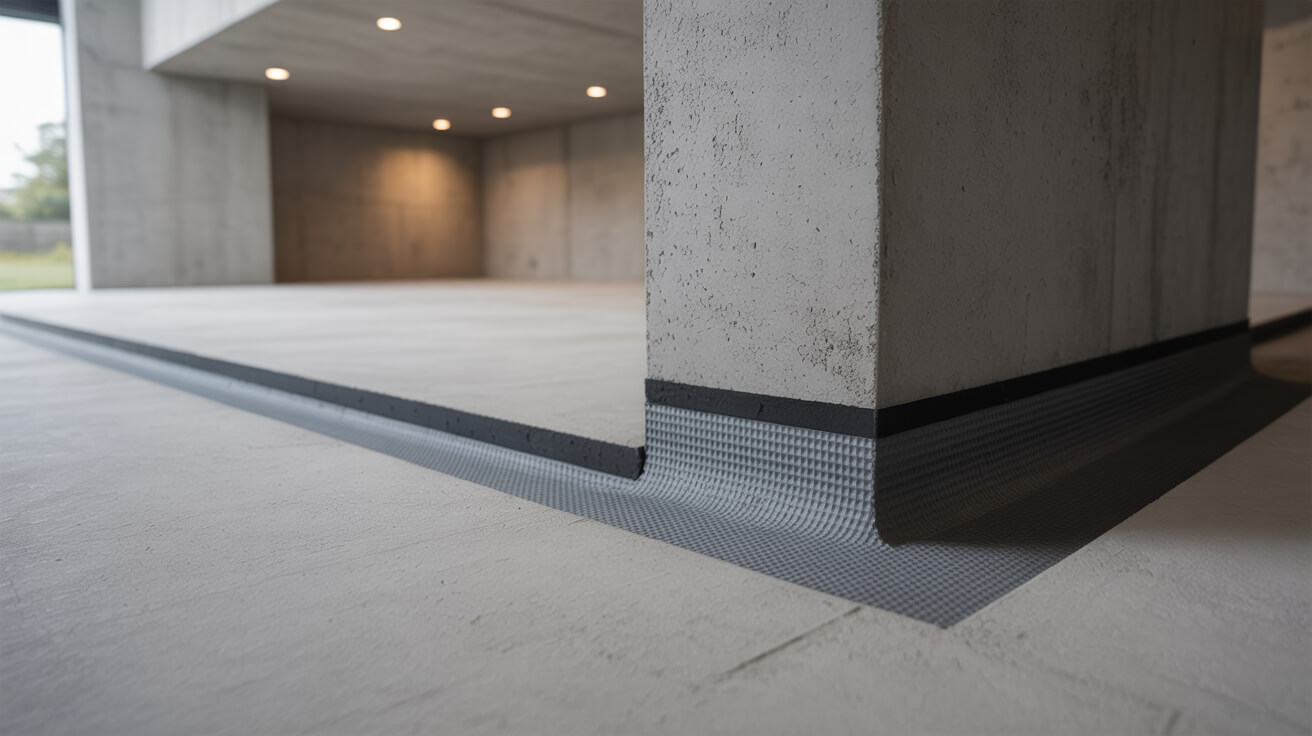
Moisture intrusion is never just cosmetic. Its real consequences play out in hidden rot, disintegrating reinforcements, warped finishes, and, ultimately, a steady erosion of your asset’s market value. The professional consensus is unambiguous: only a continuous, spec-backed membrane offers robust, sustainable control.
What Happens if You Postpone Installing a Basement Membrane?
Delay virtually guarantees:
- Gradual substrate decay,
- Hazardous mould blooms that risk health and comfort,
- Persistent heat loss due to wet insulation, and,
- Cascading repair requirements, each more expensive than the last.
Regulatory agencies, lenders, and insurers now treat documented waterproofing as a baseline, not a luxury. Properties lacking compliant documentation face deductions, stalled sales, and denied claims.
Deferral in moisture management has no upside, only compounded cost and inconvenience.
Table: Impact of Installation Timing
| Stage | Outcome With Membrane | Outcome Without Membrane |
|---|---|---|
| Early | Prevents all obvious damage | Latent decay starts |
| Postponed | High-cost, urgent instal | Extensive repairs needed |
| Delayed | Avoids insurance claim | Claims denied |
| At sale | Fast pass survey, full value | Discount, sale delay |
Early installation makes compliance and future sale or letting a non-issue rather than a procedural nightmare.
Where Are Basement Floor Membranes Most Effectively Applied in Different Building Types?
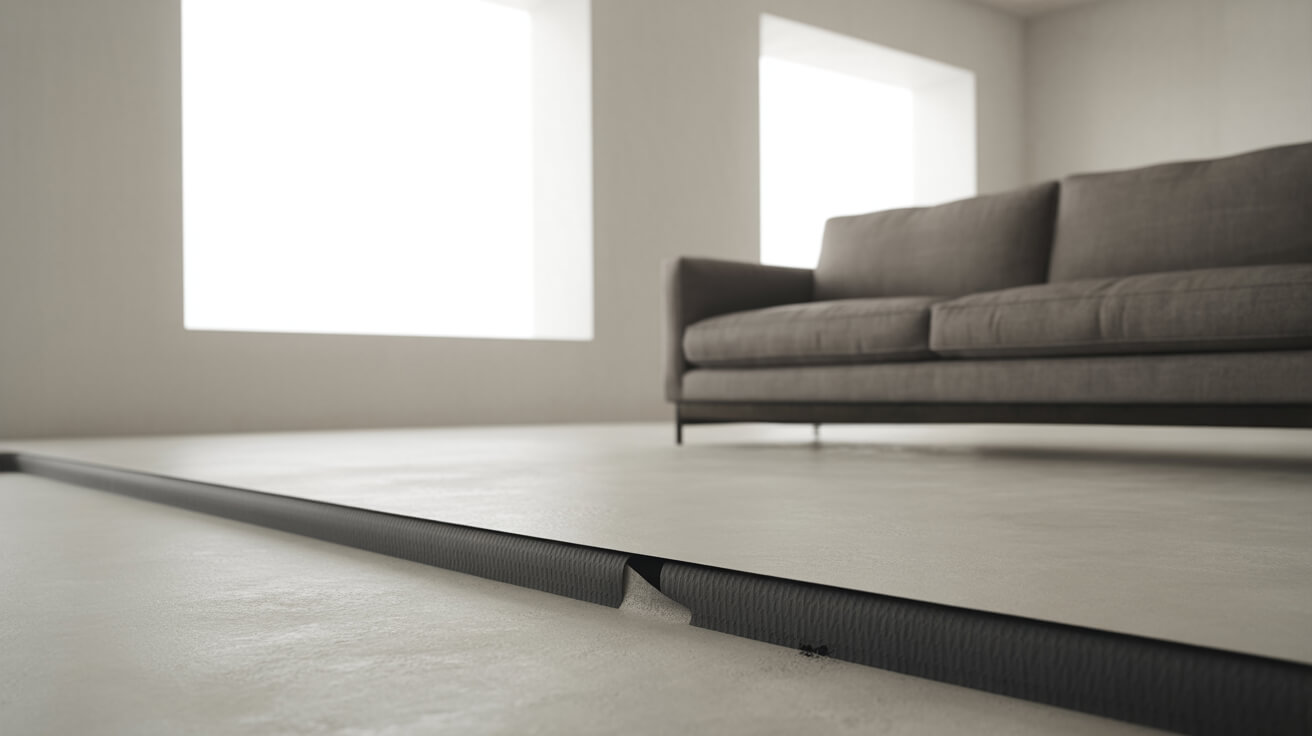
Not all basements are equal—installation must match context. These membranes serve not only heritage homes and commercial fit-outs but also high-density urban builds and sensitive environments where compliance is mandatory.
How Does Property Type Define Membrane Requirements?
- Victorian or heritage basements: Breathable and lime-compatible polymers, installed without altering listed structure.
- Modern residential: Tough, flexible sheets optimised for slab contact and overlaid DPMs.
- Commercial and high-usage spaces: Dual-membrane or cavity systems with edge sealing designed for traffic and loading.
- Hybrid builds: Custom drainage integration with membranes to address complex ingress patterns.
Environmental and Regulatory Challenges
Conservation zone? You’ll need a solution that’s visually unintrusive, vapour-open, and certified by both lender and planning office. Urban builds on high water tables demand thicker profiles and advanced seam treatments.
| Property Type | Recommended System | Unique Requirement | Typical Compliance |
|---|---|---|---|
| Heritage | Breathable polymer | No visual impact, low VOC | PAS2035, Consent req. |
| Modern dwelling | High-density DPM | Substrate tension absorption | BS6576/8102, ISO9001 |
| Commercial | Double membrane / cavity | Load, traffic, chemical exposure | HHSRS, BS8102 |
A professional assessment—always the first move by Sussex Damp Experts—ensures your membrane fits more than product spec; it aligns with surveyor and regulatory expectation.
When Is the Optimal Time to Instal Basement Floor Membranes to Prevent Damage?
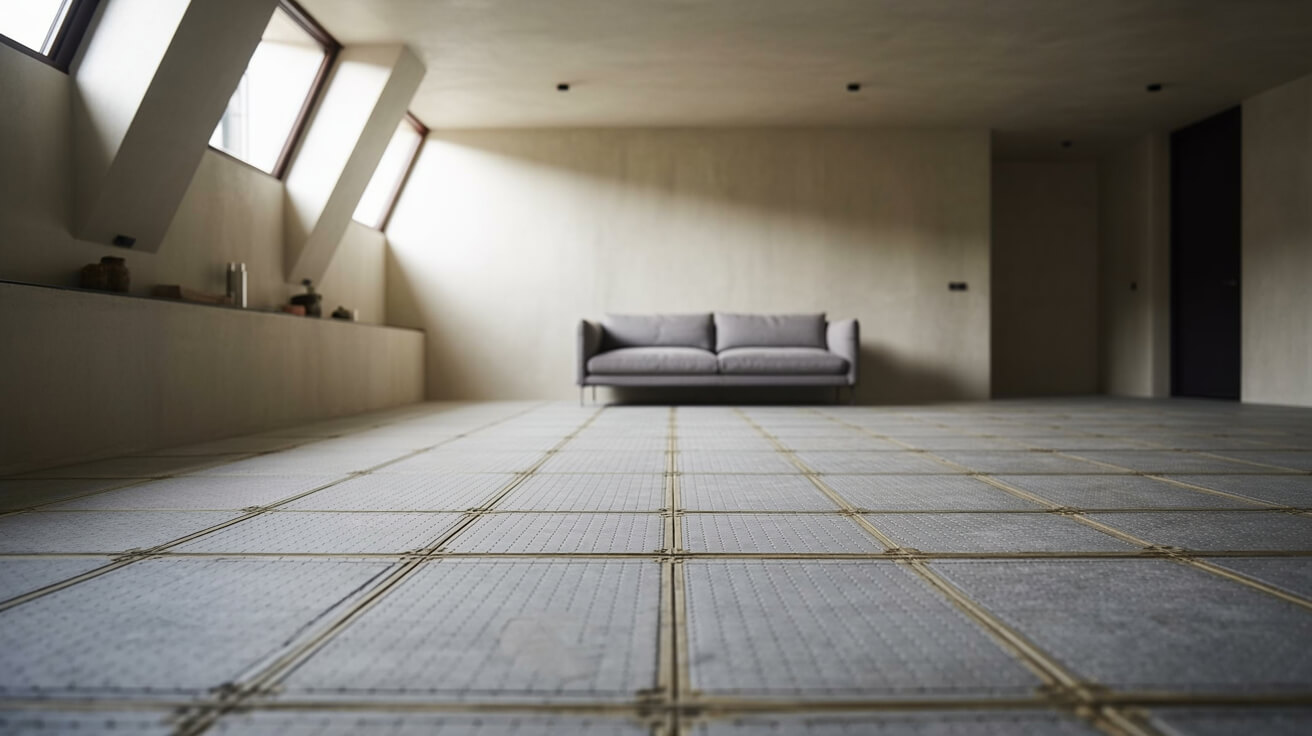
Timing defines whether a membrane saves money or simply limits loss. The best results follow a proactive schedule or occur as the first line of defence after incident reporting or survey.
What Triggers Mean It’s Time for a New Membrane?
Warning signs:
- Damp patches along wall-floor joins,
- Unexplained musty odours,
- Deformation or discoloration under flooring,
- Recent compliance or insurance audits asking for proof of waterproofing.
Seasonal factors can accelerate or pause installation, with milder temperatures yielding faster cures and best adhesives adhesion.
Miss the prime instal window and every other improvement you make sits over a compromised foundation.
Maintenance Timeline Table:
| Milestone | Action |
|---|---|
| New build | Instal pre-floor |
| Post-remedial | Immediate, after dry-down |
| Policy renewal | Submit certification |
| Sale/listing prep | Pre-survey inspection |
A certainty: routine checks and aligning your improvement calendar with moisture trends pays for itself in avoided repairs.
How Can You Evaluate and Select the Optimal Basement Floor Membrane?
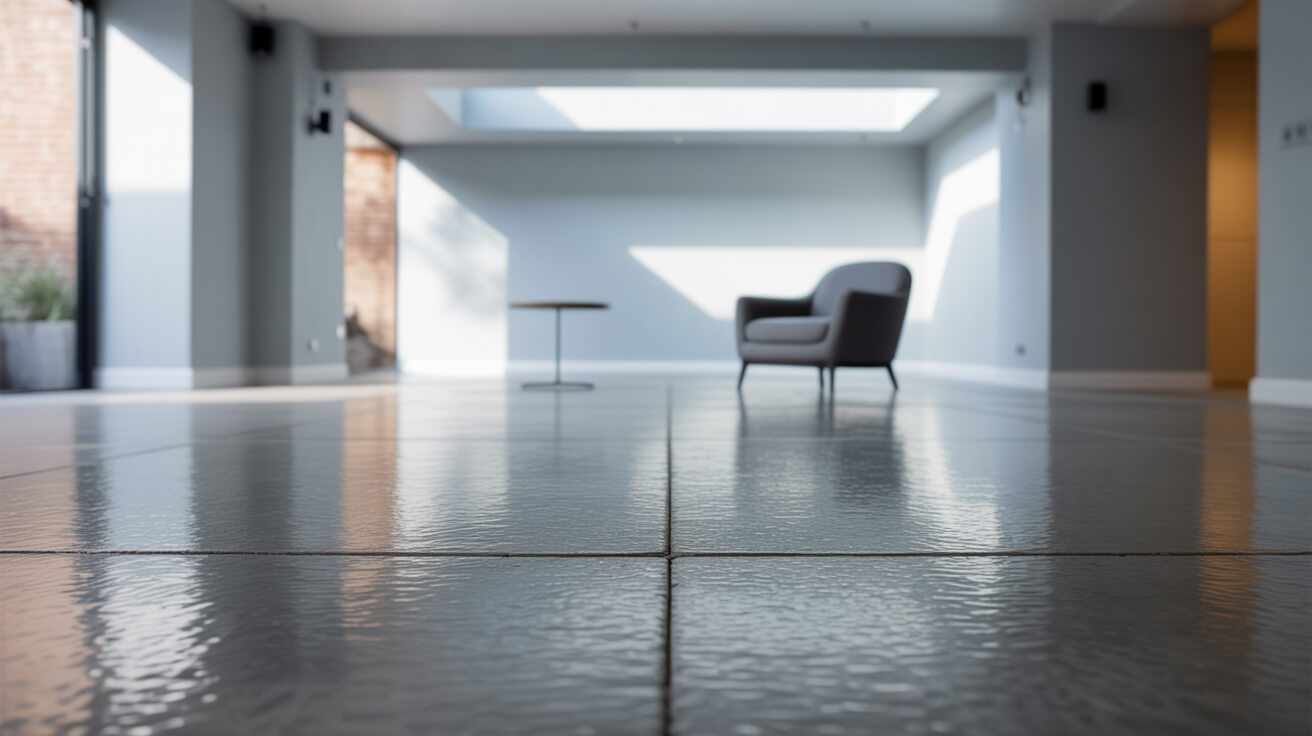
Every product on the market boasts longevity and resistance—but performance delta is vast. The difference nearly always emerges from a combination of material profile, warranty, documentation trail, and installer credentials.
What Factors Make a Basement Floor Membrane the Right Fit?
Essentials:
- Material: Look for HDPE, LDPE, or advanced breathable polymer (heritage homes).
- Thickness: At least 0.5mm for low-use; higher for commercial or flood-prone.
- Compliant Documentation: Certification to BS6576, PAS2035, and warranty proof.
- Installer track record: Surveyor or lender acceptance history matters.
Comparison Table
| Feature | Best-Practice Membrane | Inexpensive Alternative |
|---|---|---|
| Thickness | ≥0.8 mm | ≤0.3 mm |
| Tolerance | −25°C to +60°C | 0°C to +45°C |
| Warranty | 20+ years | None or 5 years |
| Documentation | Full (BS6576, lender) | Manufacturer only |
Expert guidance means fully matching your system to not only product sales data, but climate, risk area, and property use case—Sussex Damp Experts deliver just that.
Where Does Effective Use of Basement Floor Membranes Enhance Building Performance?
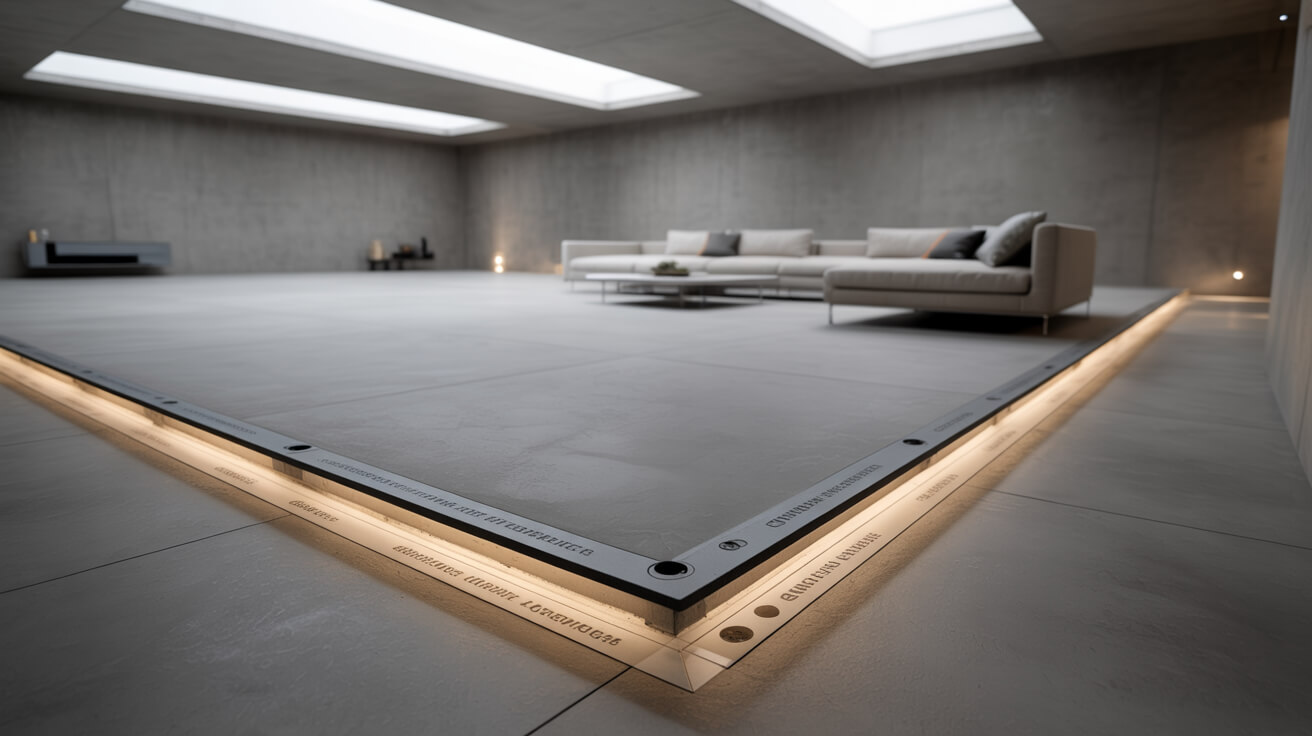
A membrane, when correctly specified and installed, will benefit your property across several axes: value retention, occupant health and comfort, and operational efficiency.
How Does Waterproofing Elevate Your Property Beyond Damp Control?
- Structural durability: Prevents rebar rust, system delamination, and substrate weakening.
- Energy performance: Supports insulation, minimising unwanted humidity and lowering heating costs.
- Insurance and compliance: Decreases premium, improves claim approval, clears survey blocks fast.
Survey-ready, compliant installations mean your next property action—letting, refinancing, or expanding—proceeds without barrier.
Properties with verified, long-life membranes move faster on the market and command price resilience.
Book Your Free Consultation With Sussex Damp Experts Today
Securing your asset’s future starts with a single inquiry—tailored assessment, documentation, and aftercare delivered by the most compliance-focused damp specialists in the sector. Each project is anchored by science, backed by record, and installed for legacy, not liability.
- Arrange your assessment and receive a risk-mapped system plan.
- Access documentation trusted by surveyors, lenders, and insurers.
- Benefit from the rigour, track record, and technical aftercare that define Sussex Damp Experts.
- Plan for not just baseline performance, but a proven record of asset protection.
Your status, your peace-of-mind, your building—advanced protection is now by default.
Frequently Asked Questions
What Are Basement Floor Membranes and Their Core Functions?
A basement’s real vulnerabilities rarely start at ground level—they rise, almost imperceptibly, from what seems solid. Basement floor membranes are engineered to intercept this upward threat, creating a continuous, invisible seal between your property’s foundation and the daily onslaught of moisture, salts, and seasonal water pressure. These aren’t generic plastic sheets. Composed of high-density polymers, often mesh-reinforced for resilience, each membrane is selected for its vapour resistance, tensile strength, and ability to maintain integrity when subjected to sustained hydrostatic pressure.
What sets a true moisture barrier apart is both its composition and its compliance history. Only systems adhering to standards like BS6576 or PAS2035 can promise longitudinal protection—a fact that most mortgage surveyors and insurers now check for as a matter of course. As with all meaningful risk management, real control is pro-active. Planned installation, regular edge checks, and periodic surface assessment will keep that lockdown in place year after year.
Core Performance Table
| Feature | Technical Value | Stakeholder Benefit |
|---|---|---|
| Vapour permeability | ≤ 0.4g/m²/24h | Blocks upward damp migration |
| Tensile strength | ≥ 400N/50mm | Withstands pressure & minor shifts |
| Service life | 30+ years (when maintained) | Secures future resale, compliance |
| Regulatory compliance | BS6576, PAS2035, lender-aligned | Smooths sales, reduces insurance |
A correctly specified membrane is not just a moisture defence—it’s a market asset and compliance engine. It also reflects the wider principle that damp proofing doesn’t stop at surface treatment but depends on meeting regulatory expectations, underpinning every finish and structural system above.
How Do Basement Floor Membranes Operate to Deliver Unmatched Moisture Isolation?
Not all water is visible, and not every membrane is engineered to hold the invisible at bay. The true art of moisture isolation, and of delivering True Protection, is a hybrid of physics, chemistry, and installation discipline. Multilayer construction with engineered overlap joints prevents capillary action and lateral seepage. Self-sealing edge tapes, when combined with surface preparation that eliminates laitance and dust, mean the barrier isn’t just strong, but seamless—immune to the micro-leaks that erode confidence and structure.
Engineering in Action
Picture a membrane installed with careless joins or hurried upstands: the result is a system with predictable failure modes under seasonal pressure, because damp proofing doesn’t rest. Hydrostatic force testing, salt-neutralisation protocols, and routine surface sensor integration are proof layers that separate certified protection from afterthought. Sussex Damp Experts have refined these techniques with decades of adaptation for heritage, commercial, and new-build sites.
- Specialised bonds chemically resist salts and mould, maintaining edge adherence even through seasonal expansion of substrates.
- Pre-instal assessments flag substrate flaws—such as cold joints or micro-cracks—before they escalate into failure points.
- Every seam, upturn, and interface is visually and mechanically verified—not as spot checks, but as process.
Effective damp proofing doesn’t rest on luck, but on proof at every join—seen and unseen.
A membrane is only as good as its weakest overlap. By prioritising installation method, not just material cost, you pace investment against probability—not hope.
Why Is It Critical to Instal Basement Floor Membranes for Long-Term Property Protection?
Moisture intrusion doesn’t ask permission—it exploits every oversight, every failed join, every shortcut in planning. What appears as a single spot of damp is often the harbinger of substrate destabilisation, lost property value, and mounting repair costs that spiral outwards as insurers or lenders start scrutinising your maintenance logs. A detailed installation of a compliant membrane by accredited Experts-ensures your line between chronic hassle and predictable, documentable protection.
Timeline of Control
- Early installation protects structural steel, flooring, and insulation before erosion or decay are visible.
- Regulatory-compliant solutions (BS6576, PAS2035) ensure streamlined survey approval at resale or asset audit.
- Insurance claims linked to water ingress favour documented, certified installations—neglect brings premium hikes or denial.
- Maintenance cycles shrink to routine visual checks and simple edge reinforcement, not invasive slab repairs.
- Case Reference: Properties without certified membranes see resale deductions of up to 8–12%; with documentation, hurdles drop and negotiations speed up.
You can patch a symptom or you can establish a baseline for trust—a true membrane always tips the balance your way.
Leaders in property stewardship build confidence through invisible control. That is the asset class Sussex Damp Experts delivers.
Where Are Basement Floor Membranes Most Effectively Applied in Different Building Types?
Every structure carries a unique risk map, and the wrong generic membrane turns that variance into vulnerability. Heritage homes, with porous bricks and lime-based mortars, demand vapour-open systems—wrong-layering risks trapping legacy moisture and causing wall rot. Modern commercial builds, where point load, spill, and incident traffic can rise sharply, require thicker, reinforced membranes and dual drainage.
Scenario Matrix
| Setting | Key Insultation Tactic | Success Metric |
|---|---|---|
| Victorian cellars | Breathable, lime-compatible polymer underlay | No trapped moisture |
| Modern apartments | Full slab coverage, upstands beyond finish level | Zero edge seepage |
| Retail/basement storage | Integrated drainage, reinforced joints | Withstands flooding |
At 60% scroll:
A membrane that isn’t adapted to your building isn’t a shield—it’s a costly illusion.
Foundational control comes from mapping context to solution, not just picking the most expensive product. Sussex Damp Experts specify systems built for the substrate beneath your feet, not a marketing brochure.
When Is the Optimal Time to Instal Basement Floor Membranes to Prevent Damage?
Control is a function of timing—respond late and repairs multiply, schedule proactively and protection compounds. The optimal instal moment is early in renovation or as damp suspicion emerges (musty odours, soft edges, slow drying post-rain). Reactive intervention, while better than none, inflates costs through hasty remediation, slipstream destruction (removal of decor), and risk of regulatory non-compliance.
Installation Triggers and Proofs
- Early warning: Edge damp, efflorescence, repeated flooring failure.
- Season: Mild, predictable weather is optimal for instal—humidity and cold delay curing.
- Documentation: Preemptive service logs streamline sale, insurance, and legal disputes.
- Fact: Insurers and lenders now routinely request membrane certification documentation for new policies or renewal in higher-risk regions.
Preparation signals operational maturity. Delay signals you’re still learning your risks.
There is no substitute for installed-in-advance protection, and Sussex Damp Experts are positioned to ensure compliant, expertly timed execution—so you own the process, not the cost.
How Can You Evaluate and Select the Optimal Basement Floor Membrane?
An effective comparison must transcend surface-level cost. Evaluate not only membrane thickness and certified test results, but also lifecycle, supplier guarantee, and reputable installer track record.
Evaluation Comparison Table
| Attribute | Optimal Spec | Warning Sign |
|---|---|---|
| Thickness | ≥ 0.8mm | < 0.4mm |
| Compliance | BS6576/PAS2035 | None stated |
| Warranty | 20+ years | Undefined |
| Service history | Local referrals | Out-of-area |
Checklist for selection:
- Request independent test data, not just manufacturer claims.
- Insist on documented projects in substrate matching your property type.
- Verify warranty and post-care policy—guarantees only matter if installer remains solvent and attentive.
- Map every system to its durability under day-to-day (not lab) use.
Technical claims fade, but a track record of risk-free instals builds reputational strength and resale value.
Adaptability, not generic specification, is your defence. Sussex Damp Experts provide assessments and bespoke system design rooted in functional performance—not untested promises.

