
 By
By  July 11, 2025


Protect Your Basement From Catastrophic Flooding Risks—What You Must Know
Basement flooding is a growing, quantifiable risk facing any property owner with below-ground space—whether you’re a homeowner safeguarding cherished belongings, a landlord protecting portfolio value, or an asset manager measured by regulatory uptime. Across the UK, more erratic storms and changing groundwater patterns put finished, unfinished, and heritage basements at increasing risk of sudden and sustained water ingress.
What Drives Basement Flood Risk, and Why Prevention Wins
Moisture finds its way to the lowest point every time. When severe rain raises water tables or blocks drainage, sub-floor pressure turns weak points into entry sites. Even a small flaw can multiply into long-term financial loss:
- Lost use of living or storage space and unplanned disruptions.
- Contractors and surveyors now flag untreated basements as valuation and mortgage red flags.
- Persistent damp undermines insurance and legal protection: standard policies may refuse repeat claims without professional proof of remediation.
Table: Impact of Untreated Basement Water Ingress
| Consequence | Average Direct Cost | Secondary Losses | Regulatory Ramifications |
|---|---|---|---|
| Flooring/material ruin | £5,000+ | Insurance denials | HHSRS repair orders |
| Mould/health exposure | £1,500+/claim | Complaints, asthma/allergy | Tenant breach, council action |
| Property devaluation | 10–20% | Mortgage refusal, lost rent | Compliance re-inspection |
The hidden cost of water ingress is the future financial opportunity you never see again.
A tanked basement is more than dry—it’s a quantifiable asset and compliance signal recognised by surveyors, insurers, buyers, and inspectors. Sussex Damp Experts provides site-specific, standard-compliant solutions for East Sussex and beyond, fitting every residential, landlord, and commercial use case in line with BS8102/BS6576.
Ready for certainty? Discover how basement tanking secures your investments—before the next storm uncovers new risks.
Why Are Basements Highly Susceptible To Water Ingress And Flooding?

Most basements were not designed to face today’s reality: more frequent downpours, pressure from shifting groundwater, or the strain of adjacent construction and changed landscaping. Their depth below grade exposes them to movement or seepage others floors avoid, creating unique challenges even for modern builds and heritage conversions.
How Water Finds Its Way Into Basements
Basements are vulnerable because:
- Hydrostatic pressure generated after heavy rain presses water into any available pore or hairline crack.
- Capillary action draws moisture up from subsoil, invisible until latent damp becomes visible stain or softening wall.
- Faulty or outdated drainage and poor integration of slabs or walls allow lateral movement, putting pressure on older renders or recent “quick fixes.”
Every minor seep is a red flag for structural health tomorrow.
Essential System Science: Modern Threats Require Engineered Solutions
Sub-floor and wall tanking create a barrier between unpredictable external forces and internal assets. The right approach is fundamental: it’s not just about “stopping water,” but designing a system in which trapped moisture can be managed and redirected, rather than relying on the just prevent problems-you build mindset. Sussex Damp Experts brings in-depth profiling, moisture tracking, and custom system specification to every site, for solutions that fit property use, heritage concerns, and compliance requirements.
Unseen water doesn’t forgive—neither should your basement protection plan.
How Does Tanking Deliver Certified, Lasting Flood Protection?

Tanking, when designed and managed by proven specialists, converts risk zones into controlled, insurable, and habitable spaces. Certification, traceable installation, and tailored aftercare distinguish ‘tanked’ basements from spaces that are merely ‘painted’ or patched.
What Is Tanking and What Makes It Effective?
Tanking is the deliberate creation of a continuous waterproof barrier over all basement wall and floor substrates. This isn’t just a high-performance paint or bitumen coat—professional tanking uses either:
- Cementitious waterproof slurries that bond deep into masonry.
- Membrane systems (cavity drain) that channel water into managed sumps for safe discharge.
- Hybrid assemblies for complex layouts or heritage substrates.
Quick clarity: Professional tanking is recognised by surveyors, mortgage lenders, and insurers for its testable, warrantied results.
The Science Behind Certified Waterproofing
- Site moisture analysis and substrate compatibility checks inform the system design.
- Installation follows BS8102:2022 and PCA/TrustMark requirements for material application, drainage, and warranty.
- Systems integrate with secondary drainage (pumps, sumps) for extra resilience against major flood events.
- Sussex Damp Experts produces full documentation and compliance packs for insurance, finance, resale, or tenancy.
Confidence in your basement shouldn’t be based on hope—it should be built on certification and evidence.
Certification moves you from uncertainty to full lender, tenant, and regulatory acceptance. Why wait for systemic failure?
What Are The Pitfalls of Quick Fixes And Standard Waterproofing?
Paints, foams, and old-school membrane rolls give the impression of progress—but they rarely buy more than a few months’ reprieve under true hydrostatic load. The trade-off for convenience is often cycles of re-installation, tenant complaints, and new mortgage or insurance headaches. DIY and builder-grade “solutions” consistently fail to meet lender, surveyor, or compliance expectations.
Why Cheap or Fast Solutions Fail to Deliver
- Roll-on paints and surface membranes crack, peel, or allow water to push around them, especially where walls or floors move with temperature changes.
- Unqualified damp proofing ignores substrate analysis; new coatings are sometimes applied to saturated or crumbling brick, compounding future repairs.
- Mortgage surveyors and insurance loss adjusters increasingly flag non-certified DIY approaches as grounds for rejection.
Table: Comparison of Waterproofing Approaches
| Approach | Typical Lifespan | Surveyor Approval | Insurance/Compliance | Real-World Track Record |
|---|---|---|---|---|
| DIY Paint/Sealant | 6–18 months | No | None | Peeling, recurrence |
| Builder ‘Membrane’ | 1–3 years | Sometimes | Limited | “Work arounds,” bubbling |
| Professional Tanking | 10–30 years+ | Yes | Full | Documented, warrantied |
A quick win today too often sows a bigger loss later.
Sussex Damp Experts works only with systems that meet or exceed official standards, tuned by on-site analysis, heritage and compliance status, and intended use.
Where Does Tanking Offer Maximum Return—Usable Space, Value And Insurance?
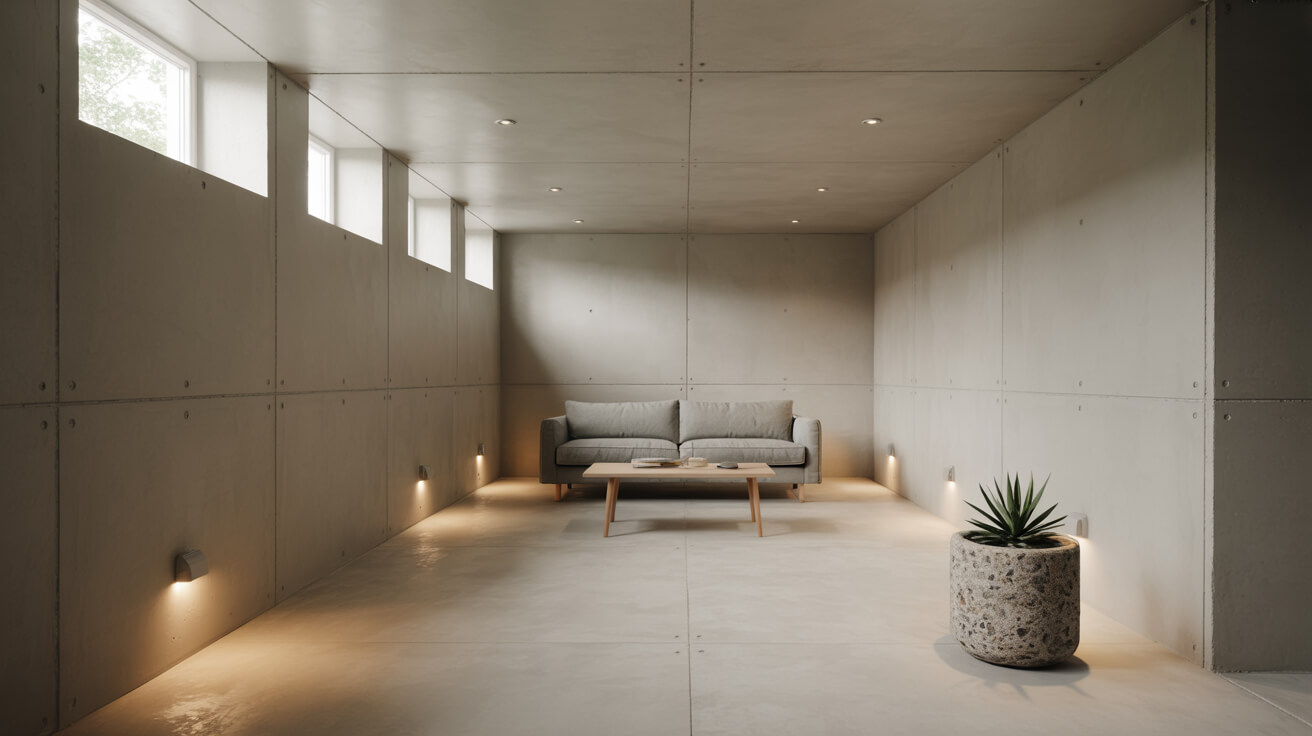
The value of a tanked basement increases with every stakeholder’s expectations: for the homeowner or buyer, it’s peace of mind; for the investor or asset manager, protected yield; for the letting agent, reliable, dry space. A professionally tanked, fully warrantied basement performs as a living space, a commercial unit, or resilient asset with clear, documented compliance.
Tanking’s Return: More Than Just a Dry Floor
- Surveyed data shows tanked and compliant basements command 15–25% higher valuations compared to untreated peers.
- Long-term maintenance costs drop as cyclical repairs, redecorations, or re-tenancy losses are replaced by predictable, manageable aftercare.
- Insurers and mortgage lenders often look for proof of BS8102/B6576 systems, with warranty and ongoing inspection records baked into cover.
Quick Reference Table: Value Added by Basement Tanking
| Asset Holder | Increased Value | Stakeholder Proof | Maintenance Savings |
|---|---|---|---|
| Homeowner | Yes | Survey, Insurer | Yes (annual drops) |
| Landlord | Strong | Tenancy, Council | Yes (taxable) |
| Commercial | High | Tenant, Regulator | Critical for yield |
A dry, certified basement isn’t just free from headaches—it’s investable, sellable, and trusted.
Upgrade your asset. Sussex Damp Experts provides system design, full documentation, and post-care, supporting every phase of ownership and use.
When Is The Best Time To Instal Basement Tanking For Optimal Results?

Optimal timing isn’t after a disaster, nor during peak demand when every contractor is scrambling. The most effective tanking is always scheduled before a known risk window—at purchase, pre-renovation, or when repurposing space for higher value.
How To Time Basement Tanking for Lasting ROI
- Plan for tanking at property acquisition or before letting to reduce regulatory issues and rent loss.
- Integrate tanking with other refurbishment works to save cost, access, and avoid rework.
- After a warning incident (e.g. water intrusion during storms), act before next season—costs rise sharply with emergency or repeat interventions.
- Use warranty inspection reminders and annual survey prompts for aftercare and future upgrades.
Quick Reference Block: Should You Wait?
Waiting for visible water is always a costly bet. Pre-planning tanking with Sussex Damp Experts creates opportunities for insurance support, smoother approvals, and fewer unknowns.
Every season’s delay turns a fixable job into a recovery project.
You control your risk curve. Our services fit into any renovation or scheduled maintenance plan, delivering clarity, compliance, and results—on your timeline.
How Can Tanking Be Adapted For Heritage, Listed, And Unique Buildings?
Heritage and listed buildings require intervention without compromise: materials must breathe, approvals must be navigated, and every measure must support conservation while managing flood risk and issues such as rising damp after flooding. Standard tanking often creates bigger risks—sealed walls trapping damp or damaging historic masonry.
Solutions That Respect Character—And Comply With Regulation
- Use of lime-compatible, vapour-open barriers and reversible membranes as required by heritage boards.
- In-house partnership with conservation officers, council planners, and heritage architects; documentation to pass listed consent and insurance.
- Seamless integration with period features, no occlusion or cutting of original fabric.
Table: Heritage Tanking Challenges & Solutions
| Challenge | Typical Risk | Compliant Solution | Approval Gatekeeper |
|---|---|---|---|
| Breathability | Moisture trapping | Vapour-open barriers | Council/Historic Body |
| Reversibility | Future works | Clip-fit or removable sys | Conservation Officer |
| Appearance | Visual mismatch | Colour, line-matched render | Owner & Planning |
To conserve is to safeguard against the very threats whose slow work may otherwise erase history.
Sussex Damp Experts’ heritage team adapts every tanking design for legacy property—ensuring survival, compliance, and liveability for generations.
Book Your Free Consultation With Sussex Damp Experts Today
You have the data. Now you have the team. Sussex Damp Experts offers site-specific, standards-driven basement tanking, full documentation for compliance and lending, certified heritage and commercial adaptability, and ongoing aftercare for value continuity.
- Begin with a risk-mapping assessment tailored to your property and aspirations.
- Choose a system profile and documentation set that fits with council, mortgage, insurance, or tenant expectations.
- Rely on process clarity: installation dates, scope, inspection intervals, and warranty care, all spelled out before works begin.
- Access post-care, future upgrade, and emergency support for ongoing ROI and peace of mind.
Flood resilience isn’t just an outcome—it’s an identity decision. Owners who act first stand to benefit longest.
You don’t just prevent problems—you build confidence and secure your asset. For every owner, manager, council, or investor who refuses compromise, Sussex Damp Experts stands ready to deliver security.
Frequently Asked Questions
How Does Tanking Protect a Basement From Unpredictable Flooding and Hidden Water Risks?
Tanking establishes an unbroken, engineered barrier that repels both visible and invisible water threats, transforming your basement from a vulnerability into a resilient, insurable asset.
Traditional waterproof coatings are only as strong as the last storm they survived. Today’s heavier rainfall and volatile groundwater mean that even well-built basements become exposed, especially where soil pressure and seasonal saturation push water into the smallest cracks or seams. Tanking, when executed by accredited professionals, isn’t just a sealant—it’s a complete system. This tailored approach assesses your property’s structure, substrate, and usage before specifying a solution: either a bonded cementitious approach, a cavity membrane system, or a hybrid design. The installed system blocks, redirects, or channels water to controlled drainage, ensuring a dry interior even when external conditions reach their worst.
Your decision to invest in tanking is really about safeguarding your peace of mind, property value, and the usability of vital living or storage space. By meeting BS8102 and insurer/mortgage compliance requirements from the outset, you anchor your home’s future to predictable sureness, not seasonal luck. If you own or manage property in a flood-prone or low-lying area, tanking is the definitive step from “constantly checking the weather app” to reclaiming control.
Flooding is rarely polite enough to warn you—professional tanking is the only protection strategy that never sleeps.
Why Are Basements So Prone to Water Ingress, and Why Do Standard Solutions Fall Short?
Below-ground spaces are always at odds with water. Your basement walls and floor are surrounded by earth acting as a sponge—holding moisture after rain, snowmelt, or even garden overflows. As this water moves, hydrostatic pressure literally forces it through concrete, masonry, or any breach in detailing, making “old house” and “new build” owners equally vulnerable.
DIY fixes—waterproof paint, absorbent blocks, or plug-in dehumidifiers—target the symptom but never solve the pressure or the physics. Moisture finds a new entry point, a hidden leak, or simply accumulates silently behind the finished walls—where it can rot joists, blister render, or, in rental properties, trigger compliance headaches with tenants and regulators.
A professional tanking system, specified by Sussex Damp Experts, accounts for:
- Site drainage, substrate type, and likely water table rise
- Historical “damp signatures” (areas of migration and recurring ingress)
- Service entries and old masonry bonds likely to become future failures
By integrating controlled drainage and active moisture barriers—using either cementitious tanking, cavity membrane systems, or a blend of both—tanking creates a resilient interior climate independently verified to national standards. The difference is not just drier air, but audit-ready assurance.
You can ignore the warning signs—but the water never does.
Every season deeper into climate uncertainty, properties with integrated basement tanking not only weather the storms but enjoy higher valuations, easier tenancies, and lower long-term costs. The science doesn’t permit shortcuts—real resilience means doing what’s proven, every time.
How Does Certified Tanking Offer More Than Surface Repairs or DIY Solutions?
Certified tanking is a comprehensive, standards-driven operation, not an afterthought or one-size-fits-all kit from a hardware store. Unlike paints or generic waterproofers, tanking creates a complete internal barrier—systematically mapped, installed, and documented for the life of the structure.
Regulatory and insurer expectations have never been more explicit. Mortgage lenders, housing authorities, and insurance underwriters demand traceability: Was your solution installed by qualified professionals, under BS8102, with documented aftercare protocols? If they see a patchwork of prior fixes, value reductions and cover denials often follow.
What makes a tanking project “certified” in practice?
- Full-diagnostic survey: Site analysed for moisture signature, substrate health, and existing failure points
- System specification: The optimum design (cementitious, membrane, or hybrid) selected for property type and risk profile
- Accredited installation: BS8102-trained, TrustMark-accredited teams deploy the system with guarantee-backed documentation
- Aftercare package: Warranty, inspection, and upgrade path built into the initial agreement
With Sussex Damp Experts, you are never left proving compliance after the fact; every stage is built for audit and reassurance. Choosing tanking is a one-off decision—choosing inadequacy is a cycle of regret.
Your legacy and asset value are too important to entrust to makeshift barriers. Only certified tanking means the basement stays dry, legal, and insurable—year after year.
What Common Mistakes Cause Standard Waterproofing and Quick Fixes to Fail?
Most failures come not from lack of effort, but from misplaced trust in products or contractors who promise speed over certainty. Retail or non-specialist waterproofing is often applied to unprepared surfaces, over active damp, or with incompatible materials. Once moisture penetrates a single weak spot, the result is accelerated decay—not just for the coating, but for insulation, walls, and flooring underneath.
Typical pitfalls include:
- Applying paint to walls with underlying moisture
- Ignoring cold joints, service entry points, or historic repairs
- Over-relying on exterior waterproofing without integrating interior solutions or drainage
- Skipping substrate profiling or failing to meet manufacturer installation depth and drying times
A scenario repeated across the UK: a landlord hires a budget contractor to repaint a basement wall that “just looks stained.” Months later, surface bubbling and softening signal deeper issues—now with added remedial costs and possible dispute with tenants. By the time the surveyor or insurance adjuster visits, documentation does not meet compliance and value is lost.
| Solution Type | Lifespan (avg.) | Compliance Ready? | Typical Failure Points |
|---|---|---|---|
| Retail paint | 6-18 months | Never | New cracks, rising groundwater |
| DIY membrane | ≤3 years | Rarely | Poor seal at joints, blisters |
| Certified tanking | 10-30+ years | Always (BS8102) | Maintained via aftercare protocol |
“Short-term savings invariably produce long-term costs.”
Professional tanking prevents the expensive cycle of repeat works, lost revenue, and reputation risk—delivering proven protection that’s as robust to audit as it is to weather.
Where Does Tanking Add Value: ROI, Insurance, and Usage Flexibility?
A tanked basement is an immediate upgrade to lifestyle, asset resilience, and market visibility. Landlords, buyers, and managers find that drier below-ground spaces convert seamlessly into offices, playrooms, rentable storage, or high-value tenancy units.
Insurers increasingly require evidence of professionally installed, standards-compliant tanking for cover, especially after previous incidents or in high-risk zones. Mortgage surveyors flag cellars and basements for remediation less frequently where proper documentation exists and ongoing aftercare is verifiable.
Quantifiable ROI:
- Basements with certified tanking command up to 20–25% higher valuations
- Properties return to market faster and with fewer compliance issues
- Insurance claims and losses for water ingress drop by up to 70%
- Maintenance cycles shift from firefighting to planned, predictable care
| Value Lever | Benefit |
|---|---|
| Audit path | Eases handover, sale, or rent |
| Occupancy value | Yields more usable space |
| Compliance | Satisfies mortgage, insurance, council |
| Tenant appeal | Reduces churn, increases rent |
Future-proofing isn’t an expense—it’s rising asset security, year over year.
Choosing Sussex Damp Experts ensures your asset’s value continues to rise, framed by a reputation for resilience—not repair.
When Is the Right Time to Invest in Tanking? Is There an Optimal Project Window?
The best time to schedule tanking is before hidden water risk becomes a billable problem. Proactive owners and managers audit, plan, and book upgrades before sales, tenancies, or seasonal weather shifts, allowing intervention at a time that minimises cost, downtime, and regulatory scrutiny.
Missed opportunities abound every spring flood or autumn downpour:
- Owners delay works in quiet months, only to face urgent intervention over a soaked floor or failed inspection
- Landlords defer upgrades until after tenant complaints, facing reputational damage and voided insurance
- Property managers bunch damp repairs during peak workload, multiplying stress and capping value potential
The optimal sequence:
1. Risk audit or professional consultation (Sussex Damp Experts provides, with full documentation)
2. Site-prep and substrate testing conducted before renovation or new tenancy
3. Instal aligned to other upgrades (electrics, insulation, plumbing)
4. Warranty, monitoring, and aftercare programmes initiated at handover
“You can wait for operational pressure to decide, or lead with documented resilience.”
Owners who plan in advance stand out as trusted stewards of property and safety. Schedule your risk assessment and lock in lasting security with Sussex Damp Experts before the next unforeseen weather event or regulatory sweep.
How Can Tanking Be Adapted to Heritage, Listed, or Non-Standard Buildings?
Tanking historic, listed, or architecturally unique buildings requires materials, installation methods, and aftercare tailored to preserve both the building’s story and its structural future. Antiquated walls, lime mortars, timber, or non-standard layouts are not enemies—they’re guides to a precision approach.
Specialist heritage tanking:
- Utilises vapour-open, lime-compatible solutions to preserve substrate breathability
- Emphasises reversibility, respecting requirements from conservation bodies or planning officers
- Incorporates detail work: hidden joints, non-intrusive fixings, visual alignment with period design
- Documents every step for future resale, audit, or restoration
Sussex Damp Experts maintains close collaboration with heritage architects, conservation officers, and planning authorities at every phase. Our certified specialists produce documentation, product specs, and aftercare programmes compliant with HHSRS, PAS2035, and planning mandates—allowing even the most sensitive property to achieve resilience without sacrificing character.
True stewardship means solving yesterday’s problems without risking tomorrow’s value.
Whether your base is Victorian, Georgian, modern, or mixed-use, Sussex Damp Experts shapes its solution to the fabric and aspirations of your project. You safeguard history, utility, and value in a single, engineered intervention, securing not just compliance but lasting reputation as a builder of legacy.

