
 By
By  July 11, 2025


Basement Drainage Systems: Reshaping Structural Security and Value
Protecting your property from the threat of damp begins below ground, where prevention is measured not in promises but in engineered certainty. Basement drainage systems are the foundation of real moisture protection—a synthesis of technical components and proven methods, each step built to outpace risk before it escalates. These aren’t optional extras, but baseline requirements for every property owner thinking beyond tomorrow.
You don’t see the cost of damp until it’s already written in the structure.
Why Is a Complete System Non-Negotiable for Damp Control?
Basement drainage systems combine engineered channels, resilient sump pumps, and carefully matched physical barriers to direct, collect, and extract groundwater. The design targets the root mechanisms of ingress—capillary action, lateral penetration, hydrostatic pressure—before symptoms emerge as musty air or crumbling finishes. Early integration isn’t just smart; recent property valuations and lender requirements now demand proof of comprehensive, standards-based drainage.
What Are the Direct Benefits for Property Owners and Managers?
- Moisture control: Safeguards interiors and investment value by preventing invisible water migration
- Regulatory readiness: Aligns with BS8102, PAS2035, and insurance conditions to unlock better mortgage and leasing outcomes
- Operational resilience: Mitigates unexpected repair cycles, lowers long-term costs, and delivers audit-ready compliance documentation
Properties with robust drainage not only survive—they command higher value and deliver days-to-weeks less disruption across their lifecycle.
How Drainage Channels Blueprint the Success of Moisture Defence
Basement Waterproofing Cost Calculator
- 1 Basement
- 2 Details
- 3 Estimate
Estimated Total Cost
£8,500 – £12,000
Type C cavity drain membrane for 20m² floor + 40m² walls
All Systems Compared
| System | Waterproofing | Finishing | Total | Warranty |
|---|
Property Value Uplift
+£36,000
Adding 20m² of habitable space could add significant value to your property
Payback Ratio
3.2x
Every £1 spent adds £3.20 in property value
Ready to waterproof your basement? Get a professional survey with an accurate quote.
Get a Basement Survey →The performance of basement moisture control begins at the perimeter. Channels built for engineered fit, material durability, and predictable water flow transform abstract “protection” into assurance.
A system built on guesswork is an invitation for water to win.
How Do Channel Designs Influence Long-Term System Value?
Channels—straight, T-junction, or corner—aren’t interchangeable if your goal is zero failures:
- Profile precision: Matched to the floor’s contour and load-bearing expectations
- Grade selection: From standard PVC to advanced high-density polyethylene, materials outlast cheaper options by years
- Modularity: Connectors and adaptors align seamlessly with maintenance logic and property-specific demands
Sussex Damp Experts calibrate channel systems for each building, so you don’t inherit expensive fixes—from annual blockages to creeping warping—engineered out before the first slab cut.
Are There Tangible Returns on Robust Channel Planning?
Yes; careful mapping and quality instal cut service calls by up to a third and maintain functional flow even under misaligned slabs or minor ground shifts. If your historic surveys show repeat subsoil damp or patch repairs, it’s time to switch from off-the-shelf to mapped and measured systems. That’s the professional route.
| Channel Design | Usual Material | Key Feature | Typical Lifespan |
|---|---|---|---|
| Straight Run | HDPE/Polymer | Fast flow, easy rod | 20–30 years |
| T-Junction | PVC/Polymer | Collects side flow | 10–20 years |
| Corner Return | Polymer | Directs flow | 15–25 years |
The route you select today is the history your maintenance team inherits tomorrow.
The Sump Pump’s Central Role: Making Extraction Automatic and Reliable

A drainage network’s value rests on its ability to move water out—before nature or a surprise storm overwhelms your defences. This is where sump pumps do more than just “finish the system”; they physically guarantee that moisture won’t linger and threaten what you own.
How Do Sump Pumps Work in Synchronicity With the Channel Network?
Automated, sensor-driven pumps activate the moment water collects, lifting and discharging it out of harm’s way. Proper specification matches pump power to your property’s footprint, projected ground inflow, and expected extreme events. Double-pump redundancy and battery backup keep protection live even as conditions change.
The right approach means your risk stays managed, not just mitigated until the next rainy season.
Why Is Pump Specification So Important for Long-Term System Health?
- Capacity calculation: Oversized pumps waste energy; undersized means costly emergency callouts
- Monitoring integration: Smart alarms and IoT sensors flag issues before flooding ever enters the room
- Accredited selection: BBA-certified or equivalent ensures your insurer and surveyor accept the system offhand
If your last installer didn’t show you discharge specs and backup options, your system might only be as protective as your local weather forecast.
How Sussex Damp Experts Lock In Reliability
Our team only supplies and instals those systems we’d trust in our own homes—proven to keep properties dry through East Sussex storms, power cuts, and tenancy turnovers. That’s more than service—it’s peace of mind engineered in.
Why Installation Discipline Dictates the Fate of Your Damp Protection

The gap between “installed” and “guaranteed to work” is filled with details other teams skip. Every missed seal, misaligned channel, or skipped check inscribes a repair in your future maintenance budget.
Perfect installation doesn’t cost extra. It pays for itself every time a client never calls back.
What Are the Core Phases of a Proper Instal?
- Preparation: Comprehensive slab survey, mapping groundwater and identifying historic failures
- Base Membrane Placement: Defining flow route and vapour barriers
- Channel Fitment and Slab Cuts: Triple-checking levels for consistent slope and catchment
- Joint Sealing & Taping: Application of hydrostatic-proof adhesives, never a shortcut caulk or ill-matched material
- Pumps & Alarms: Connected, calibrated, and site-tested on instal, not after
Sussex Damp Experts document every process, ensuring every compliance point for landlords, surveyors, or insurance audits is covered.
Avoiding the Most Common and Costly Installation Errors
Avoid:
- Ignoring slab irregularities, leading to pooled water undetected for years
- Neglecting membrane overlap, which allows vapour egress and future damp
- Commissioning with undocumented pumps or channels, jeopardising certification
A fully evidenced installation isn’t bureaucratic—it’s your best argument if any issue is raised for years to come.
Compliance: The Difference Between Security and Exposure
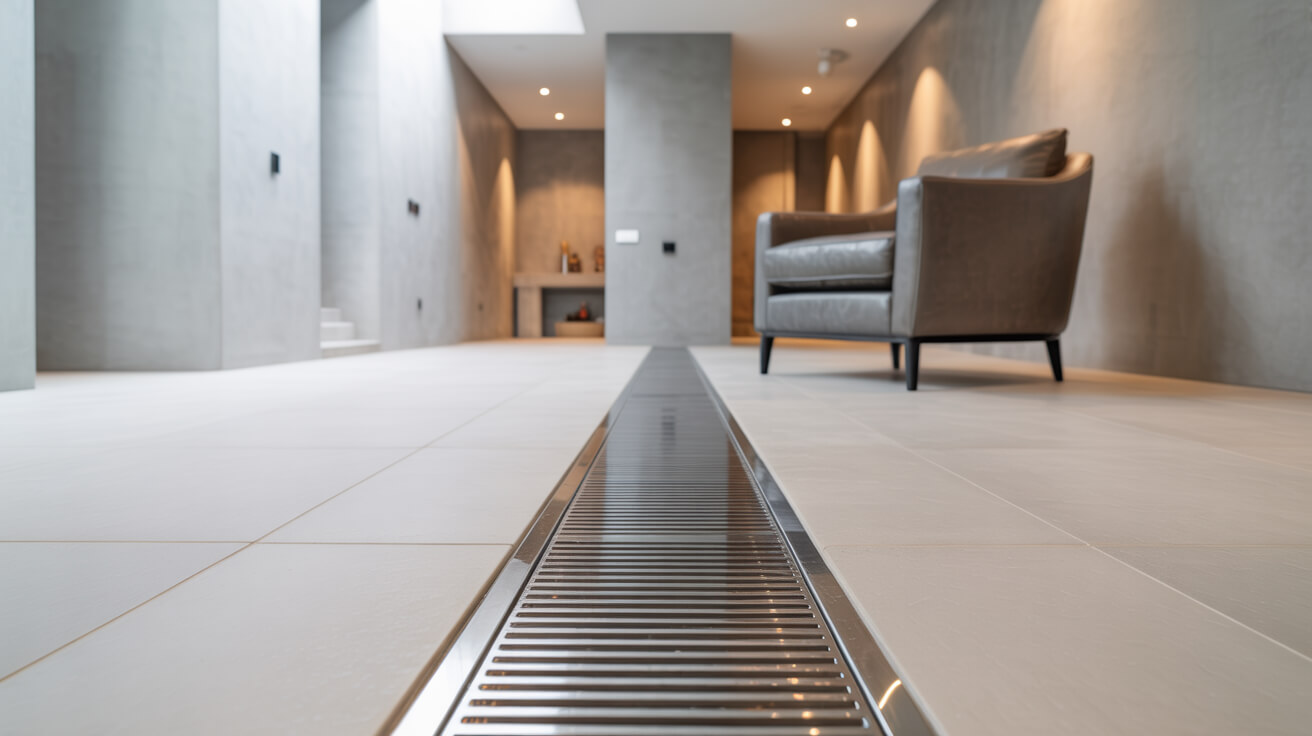
Regulatory compliance in property maintenance isn’t just a box-tick. It is a safeguard—your evidence that every step in your protection chain is verified and built to last.
What Makes BS8102 and PAS2035 Non-Optional Today?
Surveyors, lenders, and local authorities use these standards as benchmarks for every damp inspection. Non-compliance puts your sale, lease, or renewal at risk—sometimes without warning or recourse.
- BS8102: Outlines design and instal requirements for below-ground structures; failing to meet it risks mortgage and insurer decline
- PAS2035: Sets retrofit guidance; nonaligned systems can invoke tenant escalation or council remediation orders
| Compliance Standard | Scope | Risk of Non-Compliance |
|---|---|---|
| BS8102 | Waterproofing | Loan decline, value loss |
| PAS2035 | Retrofit | Tenant/council escalation |
| HHSRS | Health/Safety | Legal, forced remedial work |
Working with our team, your property, documents, and process stand ready for any audit or claim.
How Do You Prevent Compliance-Driven Disruption?
- Audit trails: Keep records at every phase (from instal maps to maintenance logs)
- Material and spec sheet archive: Handed to you or your portfolio manager at completion
- Ongoing reviews: Pre-empt inspection from housing associations or council stakeholders
The best defence is never needing to go on the defensive at all.
Technical Specification: The “Silent Insurance Policy” of Moisture Protection

Smart purchases are evidence-driven, not just price-based. Every channel width, membrane overlap, and pump spec that’s documented is a risk neutralised.
What Details Transform a Plan from Plausible to Proven?
Variables like trench width, slope, membrane thickness, and even connector torque resistance shape the reliability of the finished system. Sussex Damp Experts supply you with granular technical sheets, including:
- Tested material tolerances: for all components
- Expected lifespan and maintenance cycles: for essential parts
- Installed system stress-tests: against simulated flood and surge events
Your next survey, audit, or claim review—all validated within a single document set.
Aligning Specification With Regulatory and Operational Needs
You don’t need to become a specification expert—but having them to hand reassures lenders, letting agents, and property managers your investment is future-proofed and worry-free.
- Real lifespan data (not just “industry averages”)
- Compatibility with heritage sites and listed building requirements
- Traceable upgrades documented for future owner or manager review
Professional documentation is more than a folder—it’s your proof, no matter who’s checking.
Maintenance Isn’t Just a “Should”—It’s Your ROI in Action

No basement drainage system, no matter how perfect the instal, is “fit and forget.” Maintenance is your tool for stretching performance, lifetime, and compliance.
How to Build a Maintenance Plan That Prevents Costly Surprises
- Scheduled channel rodding and cleaning: Prevent blockages and biofilm buildup
- Battery and alarm testing: Minimise service failure during storms or power cuts
- Moisture mapping: Track vulnerability at known property “hot spots”
- Annual compliance review: Keep all documentation up to date for landlord, sales, and audit cycles
Managed as a habit, these basics offset emergency callouts and ensure you never fall behind shifting compliance rules or tenant expectations.
ROI: The Maintenance Difference
Properties with embedded maintenance see fewer claims, outperform insurance inspection, and retain value 3–7% higher than reactive-maintenance peers. Smart portfolios and homeowners know: scheduled care means predictable outcomes.
| Maintenance Task | Frequency | Impact | Recordable Proof |
|---|---|---|---|
| Channel Clean | Quarterly | Performance | Service log entry |
| Pump Test | Quarterly | Readiness | Alarm & discharge |
| Moisture Audit | Bi-Annually | Early problem | Map & photo |
| Compliance Check | Yearly | Audit defence | QC Report |
Your Next Move Defines the Standard for Asset Protection
Properties built or managed for long-term value start by demanding certainty where others gamble. Identity status comes from confident, well-documented choices: channel layouts, pump instals, compliance logs, and routine maintenance—all woven into a system that answers for itself.
What you verify today saves you from doubt—and untold cost—tomorrow.
If you’re ready to switch from reactive repair to engineered prevention, Sussex Damp Experts are here. You’re not just avoiding damp—you’re upgrading to a higher standard of property stewardship, every step tailored and auditable from first survey to latest review.
Your reputation, investment, and peace of mind are too valuable to leave to chance. Now’s the moment to lead, not follow, in the pursuit of lasting property health and regulatory confidence.
Frequently Asked Questions
What Components of a Basement Drainage System Make Water Intrusion a Solvable Problem?
A high-performance basement drainage system is a matrix of engineered components, each playing a non-negotiable role in making water ingress an avoidable—not inevitable—threat.
Hidden Risks Beyond Obvious Damp
Moisture infiltration often masquerades as harmless surface staining or a faint musty odour. However, basement damp is rarely isolated; it migrates, invades substrates, and quietly restructures the entire property’s resilience from below. This risk isn’t defeated with ad hoc pumps or piecemeal patching. Victory against water relies on an orchestrated combination of:
- Perimeter drainage channels: —engineered to capture and direct water at the earliest incursion points.
- Sump pump assemblies: —automated to evacuate water as soon as thresholds are reached, covering for power/interruption with backup batteries.
- Precision connectors, T-junctions, and sealed end caps: —eliminating gaps and dead-ends in your flood defence.
- Mapped, site-specific configuration: —designed for the actual slope, substrate, and threat profile of your building, not a generic template.
- Integrated monitoring and maintenance plans: —so each protection node continues delivering over the long haul.
Systems built for audit, not guesswork, deliver results that last longer than warranties.
Why Sussex Damp Experts Demand Full-System Design
Owners and managers constantly regret opting for “good enough.” Only with full-system installation can you transition your building’s status from “at risk” to “actively protected”—with documentation meeting BS8102 and PAS2035 compliance benchmarks. Mortgages, lease renewals, and modern insurance increasingly demand nothing less.
Your property’s foundation doesn’t have a second chance. An integrated drainage system is the only way to reclaim true control—and real peace of mind—over water’s ancient advance.
How Do Drainage Channels Shape Success or Failure in Moisture Control?
Drainage channels are the arterial routes of basement protection; every detail in their design, placement, and integration can determine whether you experience silent success or creeping failure.
Clarity in Channel Design and Material Selection
Where water moves, so will the consequences. Resilient, high-capacity channels—polymer or HDPE over brittle PVC—allow water to quickly exit high-risk slab edges. Channel geometry matters: straight sections for speed, T-junctions for side-run aggregation, corners to contour slab breaks. Every join is both an opportunity and a weakness if neglected.
| Channel Type | Strength | Best Use Case |
|---|---|---|
| Straight | Fast, direct evacuation | Perimeter or long runs |
| T-Junction | Branching side inlets | Multi-source catchment |
| Corner | Seamless flow redirection | Around slab breaks/obstacles |
When channels are ill-matched, substandard, or installed with slack tolerances, water becomes a resident—invading insulation, rotting timber plates, and escaping unseen into habitable zones.
The Audit Trail Advantage: What Sets Leaders Apart
Monthly and annual reviews on channel integrity—roddability, flow checks, and leak test records—transform passive components into an auditable asset. For property managers, this trail is not just compliance—it’s evidence-driven trust. Our integrated systems let you demonstrate to any stakeholder (lender, council, insurer, buyer) that your building outpaces risk by design.
You’ve outgrown “good enough.” Embrace reliable drainage as the core asset that lets your property claim elite status in risk and reputation.
Why Does a Sump Pump System Represent a Safety Net—Or a Critical Weakness?
The sump pump isn’t just a “final step”; it’s your property’s safety net, springing instantly to remove every litre that channels collect before saturation switches a warning to reality.
Where Most Pump Choices Go Wrong
A system is as robust as its pump. Undersized, unprotected, or ageing pumps are the silent reason moisture escapes containment. True security means:
- Automated high-sensor activation: —never relying on occupant vigilance.
- Redundant backups: —battery power and dual-pump redundancy as standard in high-risk basements.
- BBA-accredited hardware: —approved for compliance scrutiny, not just for marketing brochures.
- Remote monitoring: —sudden failure? You’re notified before it escalates.
*”It’s the pump you forget about that fails at midnight when the power drops.”*
Every pound allocated to a high-spec, failsafe sump pump equates to days not lost to downtime, insurance wrangles, or salvage operations. Sussex Damp Experts select and test every pump to threat-model: not all buildings face the same water table or climate volatility. You deserve a system calculated for your actual risk.
Proof Beyond Theoretical Protection
Case in point: a Brighton commercial manager seeing zero downtime during the wettest quarter in a decade, uniquely protected by the secondary and tertiary safeguards bred into an upgraded sump and channel suite. Redundancy bought back their business continuity—no last-minute water alarms, no reputational dents.
Lead with preparedness, not apology. Let your sump pump do its job, so you don’t need to.
What Makes Professional Installation the Deciding Factor in Long-Term Basement Resilience?
Installation isn’t a formality—it’s the unbreakable chain between material, method, and long-term outcome. One misjudged cut, misplaced slab slope, or underfilled joint can convert a world-class design into a maintenance horror story.
The Operational Anatomy of Setup Done Right
The Sussex Damp Experts process starts before the first panel arrives: pre-instal moisture readings, substrate mapping, and detailed tension-stress analysis for every junction. Each channel is bench-laid and fit-checked; membranes overlap to exceed regulatory overlap metrics. Joints are not just glued but hydro-tested before sign-off.
Numbers matter:
- Every .5° of drain fall is recalibrated to exceed standard.
- Channel runs are mapped twice—once for flow, once for service access.
- Photo-logged commissioning creates permanent proof for compliance, transfer, or future repairs.
The Warranty Dividend and Identity Frame
Owners following this regimen have yet to face warranty voidance. For managers tasked with asset legacy, nothing signals professionalism like a QR-coded, timestamped instal signoff—traceable across maintenance cycles, audit-proof against every challenge.
*”Speculate on installation, and repairs become your legacy. Document your decisions, and your control becomes permanent.”*
Choosing “just good enough” installation is the quickest way to see failure listed as a recurring line-item in your maintenance budgets. Choose meticulousness; the distinction will be visible in every audit, resale, and tenant review.
Why Is Compliance with BS8102 and PAS2035 the Unseen Shield Against Legal Headaches?
You don’t have the luxury to ignore compliance. Modern lenders, insurers, and councils require traceable adherence to codes like BS8102 (structural waterproofing) and PAS2035 (energy and moisture retrofits). These are not optional—they are the silent shield safeguarding your investment, occupancy status, and ability to operate.
The Compliance Dividend (and Penalty) Table
| Compliance Omitted | Typical Consequence |
|---|---|
| BS8102 Spec Not Met | Mortgage flagged, valuation cut, insurance denied |
| PAS2035 Ignored | Tenant complaint upheld, council fines, failed buy-to-let |
| No Commission Log | Legal claims, warranty void, resale struggles |
Documented, up-to-date compliance means passing the toughest financing and tenancy scrutiny with ease. Neglect it, and you’re bequeathing the next owner (or yourself) a string of post-hoc fix orders—and hefty costs.
Your professional reputation, and your asset’s liquidity, is always just one inspection away from a “fail” if compliance isn’t embedded at instal.
*”Certification isn’t branding. It’s a force field for your balance sheet.”*
Compliance doesn’t just tick a box; it preserves trust, market value, and operational freedom for years. Protect your future by making compliance an overt part of your system’s DNA from day one.
How Does Ongoing Evaluation and Maintenance Transform System Longevity—and Why Does It Matter More Than One-Off Repairs?
If you believe “set and forget” applies after practical completion, you’re betting the house against fate. Scheduled audits, channel cleaning, and sensor checks transform your drainage protection from static insurance to a dynamic, living buffer. “Fit-and-neglect” turns champions into future liabilities.
What Scheduled Maintenance Actually Delivers
- Quarterly flushing of channels: —removes silts and early blockages.
- Battery/pump run tests: —done every 3–6 months.
- Onboard sensor checks with annual logging: —turn subjective “all clear” into timestamped, auditable proof.
- Remote alerts for commercial portfolios: —detect faults before tenants so you own the solution, not the disaster.
Annual cost tallies show contract-maintained assets see less than half the claim rates for water damage, warranty disputes, or council interventions as those on “DIY cycles.”
Proof in Maintenance ROI
Portfolios run by Sussex Damp Experts contract holders have elapsed 7+ years without catastrophic drain failure, voided coverage, or insurer delays: particularly critical in multi-unit, high-value estates.
*”Reliability is engineered, not wished for—maintenance is the lever that keeps evidence on your side, not the claimant’s.”*
Protect your legacy, reputation, and ROI: let evaluation and maintenance shape your risk profile from reactionary to resilient.

