
 By
By  August 26, 2025


How Did Awaab’s Law Redefine Communication for Landlords and Tenants?
You can’t ignore paper anymore. Awaab Ishak’s tragic death didn’t just trigger headlines—it wrote a new chapter in UK housing law. Words exchanged on a phone call, half-remembered promises, or casual check-ins used to be enough to push a repair along. Not now. Awaab’s Law hardwired urgency and documentation into the heart of every hazard report. The law turned routine communication into a legal obligation: every damp, mould, or property hazard report now means a written summary must follow.
If you can’t show it in writing, you might as well admit it never happened.
Landlords, managing agents, and housing providers aren’t measured by effort or attitude—they’re measured by evidence. The law puts one question in a regulator’s mind: “Prove, with paperwork, that you investigated, explained, and acted.” And tenants now have a rock-solid right to see what’s happening, with timelines and next steps that can’t melt away in the sun. Vague logs or sympathetic phone calls won’t cut it when a child’s health, a mortgage application, or your legal standing is on the line.
The balance has swung: Instead of prioritising convenience, landlords now have a legislative duty to be transparent, timely, and detailed. Miss a step, or delay a summary, and you don’t just annoy your tenant—you risk enforcement, compensation claims, and reputational damage that’s impossible to wallpaper over. The law doesn’t reward “best effort.” It rewards airtight, written proof.
What Are Landlords Legally Obliged to Do Under Awaab’s Law?
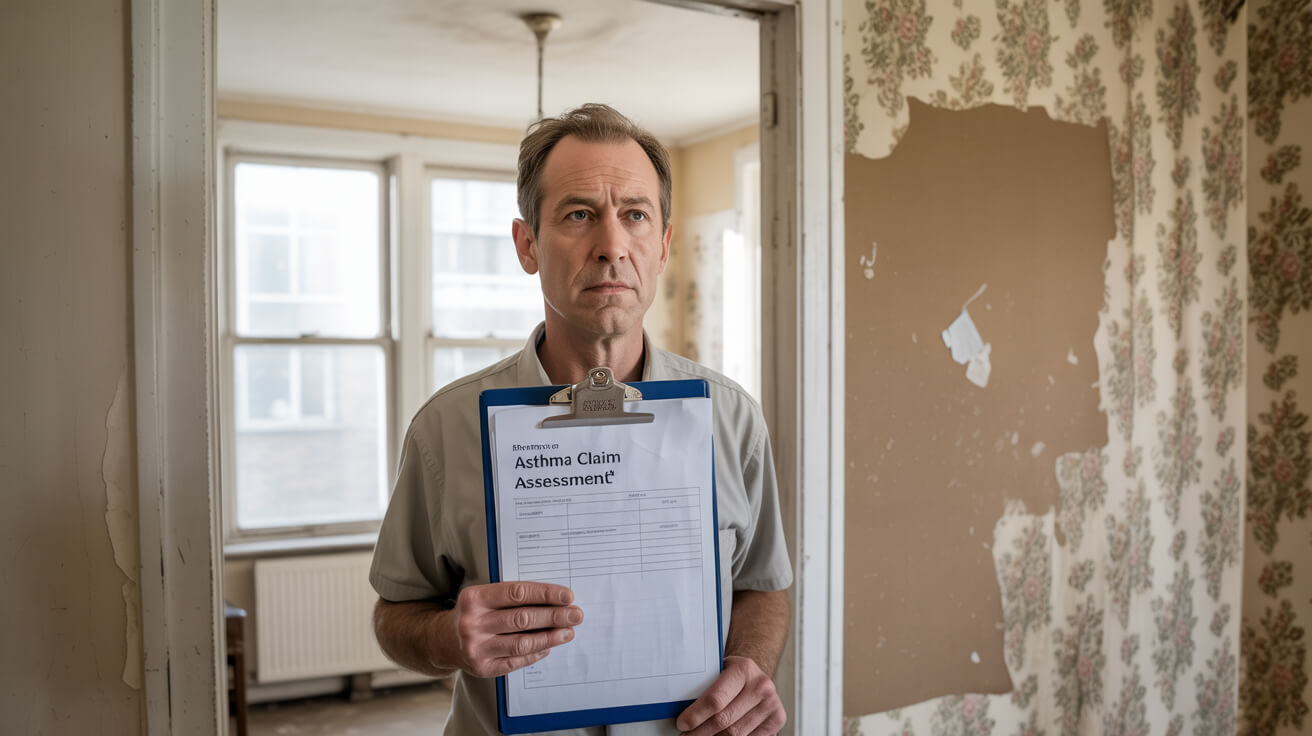
Awaab’s Law is clear-cut. It locks landlords and agents into a sequence with deadlines—no detours, no soft excuses. When a tenant—directly or through a representative—reports a property hazard, here’s the legally required game plan:
- Investigate within 14 calendar days.: The countdown starts the moment you receive the report—weekend, bank holiday, or school day, the clock doesn’t pause.
- Deliver a written summary within three working days of investigating.: This isn’t just “we’ll update you soon.” It’s a factual statement—who inspected, what was found, what’s being done, who’s responsible, and by when.
- If repairable hazards are found, start action within 7 calendar days: —or 24 hours for urgent threats to health or safety.
- Log every step of the process for at least 5 years.: That means digital or physical evidence—unbroken and retrievable. No lost emails, no gaps.
Say less, prove more—or prepare for fines, challenges, or direct action.
This isn’t admin for admin’s sake. Every written log is a legal shield and a reliability test: If your records are patchy, you lose credibility—and expose yourself to claims, tenant escalation to local authorities, and financial penalties. Landlords and agents who get this right position themselves as low-risk, high-trust. Those who don’t are a file or a complaint away from expensive lessons in accountability.
What Must Every Written Summary to Tenants Include?

Forget informal updates; your written summary does the heavy lifting in today’s compliance era. This document transforms a complaint from a frustrated exchange into managed, provable action.
Mandatory elements:
- Who: The inspector’s name, their credentials/role, property address, and exact inspection date
- What: Findings described directly—ditch the jargon, be precise, and, where possible, attach photographic evidence
- Next steps: Repairs required (or not), specific start and completion dates, and who is responsible for each action. If you aren’t repairing, explain why—backed by evidence
- Contact: An accountable person’s direct contact details, never a generic “team” email
- Mitigation: If any timeline slips, detail how you’re minimising risk, including dates for future check-ins or protective measures
Every weak point—a missing date, a fuzzy finding, a faceless contact—becomes a legal and reputational gap.
A missing date or photo is like an open window in your legal house; close every gap, every time.
Written Tenant Summary Element Checklist
Complete each row before sending—anything less is non-compliance:
| Element | What to Include | Why It Matters |
|---|---|---|
| Inspector | Full name, credentials, date | Establishes accountability |
| Findings | Direct description, clear photos | Reduces disputes |
| Action plan | Repairs, responsible parties, deadlines | Textbook proof of follow-through |
| Contact person | Real human, answerable number/email | Stops escalation loops |
| Delay handling | Evidence, mitigation steps, new date | Shields against challenge |
Miss one, and the law assumes the gap is hiding incomplete action.
How (and When) Must You Deliver Written Summaries?

Timing and accessibility are everything. The law ties your hands with tight, non-negotiable timeframes:
- Three working days after your investigation: —not after the next coffee break, but rapidly, with every finding made clear.
- Use whatever format works for the tenant: Email, hard copy, large print, translated versions, or even Braille if needed.
- Don’t just press “send”—record proof of delivery.: Save email receipts, postal records, or signed confirmations.
- Store all summaries and proof for at least five years,: ready for audit, complaint, or court.
- Always review your templates: outdated forms can land you in non-compliance.:
Digital compliance systems—those that confirm dispatch, track delivery, log read statuses, and remind for follow-up—put paper trackers to shame. If you can’t prove a summary arrived, you’re exposed to risk, regardless of how diligent your repairs were.
A summary unsent is a breach—no matter how perfect your work behind the scenes.
It’s not about overkill; it’s about covering yourself. Tenants, surveyors, and regulators only believe what you can prove.
What Are the Most Common Compliance Pitfalls (and How Do You Dodge Them)?

People slip up not because they don’t care, but because process lets them down:
- Deadlines missed: —when responsibility gets foggy, or email chains break
- Summaries that fudge the facts: —vague or missing findings, lack of photos
- Language too technical, forms too dense: —if tenants are confused, you lose trust and invite challenges
- Split or scattered files: —bits of evidence in inboxes, paper trays, or with agency staff who vanish
Nine times out of ten, the root of a fine is a broken process, not a bad intent.
You fix this with rigorous templates, process reviews, and real training—not “tick box” videos but active drills. Employ mock audits and get different team members to check what a third party would see. Don’t let agency or temporary staff become blind spots; their gap can be your downfall. The best defending move? Treat every summary as a future court exhibit.
What Tools and Templates Should Landlords and Agents Use?

Trust memory or habit at your peril. The best defences are sector-recognised tools that turn obligations into normal routine:
- Sector-approved summary templates: —from bodies like the Housing Ombudsman, MHCLG, or trade associations. These should force-fill critical evidence, dates, and who’s responsible.
- Central digital logs and case management: —every complaint, investigation, and summary gets an unbroken record, time-stamped and undeletable.
- Regular process audits: —simulate escalations, see where chains would fail, and patch the workflow accordingly.
- Staff training with live, scenario-based drills: —especially for new hires or agency staff.
Templates and checklists aren’t busywork; they’re what turns a warning into a resolved case. Set a schedule to review and update every six months minimum—templates do expire, and the law doesn’t forgive “I didn’t know.”
A broken process is more dangerous than a broken pipe—one will cost you in claims and lost business.
Teams that invest in these tools now rarely end up on the wrong end of a headline.
Who Is Responsible—And How Does Awaab’s Law Affect the Wider Sector?

From August 2025, every registered social landlord in England must comply. Smart operators go early: if you’re a private landlord, managing agent, or council property manager, get aligned now (not when the first claim hits).
Every property-based organisation should:
- Appoint a compliance leader: who updates forms, tracks training, and doesn’t disappear during staff turnover
- Mandate annual training: —virtual or face-to-face, but never “self-read and forget”
- Embed summary reporting as a routine: —everyone, not just the “compliance officer,” must play a part
- Hold every sub-agent, contractor, and emergency responder to account: —if they slip, you pay
Front-footers win trust, referrals, and time. Delayers get fines, audits, and lasting risk.
Set the example in your area, and you’ll become the landlord or company everyone wants to work with—and tenants are less likely to challenge.
How Can Sussex Damp Experts Help You Stay Compliant (and Out of Trouble)?

Each lost record, slow summary, or skipped process is a risk under Awaab’s Law. Sussex Damp Experts is your resource to lock down each stage—helping you turn compliance from a headache into a reputation builder.
- Access the latest, audit-ready tenant summary templates,: reviewed by sector experts and always up-to-date
- Book hands-on compliance training: that lifts your whole team’s confidence—even agency staff
- Rely on watertight reporting tools,: so you never scramble for old files or chase paper trails before an audit
- Call in on-site or remote support: for tricky complaints, health-driven escalations, or workflow reviews
The cost of a single lost record can outstrip years’ worth of good habits. Start strong, stay strong.
Protect your properties, reputation, and business by putting compliance first. Sussex Damp Experts makes sure your documentation stands up to scrutiny, your deadlines aren’t missed, and your risk stays low—no matter what’s thrown your way.
Awaab’s Law Compliance Flow Table
Keep your system robust: Use this as a spot-check or staff training tool.
| Stage | Tenant Receives | Timeline | What If Missed? |
|---|---|---|---|
| Tenant reports hazard | Acknowledgement notice | Immediate | Tenant can escalate |
| Inspection done | Findings summary | 3 working days | Authority or tenant dispute |
| Repairs needed | Repair plan, dates given | 7 days (24h urgent) | Notification to authority |
| No repairs needed | Justification, evidence | 3 working days | Tenant can challenge |
| Every step (recorded) | Proof of delivery & updates | On each action | Audit/compliance risk |
Every summary is one less dispute—and one more good night’s sleep for everyone.
When you act fast, document right, and use sector-backed support, you protect your tenants, your business, and your peace of mind. Sussex Damp Experts is ready to help: Book a property survey, access compliant templates, or arrange tailored training. Don’t let a missing document define your reputation—lock in your protection with the experts.
Frequently Asked Questions
Why must an Awaab’s Law hazard summary carry a named officer—and what happens if you miss the mark?
Awaab’s Law pins legal accountability to a real, named officer because a faceless system no longer keeps anyone safe from fallout when damp or mould endangers health. If you’re the registered social landlord—council, housing association, or ALMO—it’s your name on the regulator’s radar, not your agents’ or your contractors’ sleeves. Delegating inspections or paperwork doesn’t deflect this duty; only a named, accountable officer on every summary proves you’ve got your house—on paper and in practice—in proper order.
Summaries floating in anonymity or missing a signature leave you exposed. The moment a report misses its deadline or glosses over a key hazard, tenants and regulators see a breach—not a bureaucratic hiccup. Delivered summaries must name the officer responsible: tenants and auditors want a real person who can answer, clarify, or resolve, not an invisible “team.” Private landlords, don’t get complacent—policy is shifting, and questions about whether Awaab’s Law Apply to you are likely to become more pressing as it moves beyond social housing in due course. Acting now sets your compliance in concrete for audits to come.
How does named accountability change operational risk?
Once paperwork holds a personal signature, gaps and delays can’t hide behind “admin.” Failure to name a responsible officer is the first rope in a legal tug-of-war; expect ombudsman escalation or regulator focus whenever deadlines slip or hazards are left hanging. “But the surveyor did the visit” isn’t a shield: the named officer owns the outcome. Pin a name on every summary, and you turn audit risks into proof that your operation means business.
Who qualifies as a social landlord here?
- Councils, housing associations, and ALMO-registered providers
- Management agents with delegated authority (liability remains with the landlord)
- Private landlords: under watch as rules expand, so prepare your house now
What must a compliant hazard summary include to survive an audit?
A fully compliant summary under Awaab’s Law is clinical in its clarity: who inspected, what was found, what’s planned, who’s in charge, how the tenant is contacted, and how delivery is proven—all in clear, everyday language. Jargon and hedging invite confusion and challenge.
Six elements an airtight summary can’t skip
- Inspector identity: Name, contact, credentials, date, and property address—real details, not roles.
- Findings: Direct, plain description of every identified hazard (or “none”) and supporting evidence—photos or metre readings raise your shield.
- Repair plan: Specific steps, who does what, by when. No repair? Spell out why, what comes next for the tenant.
- Officer contact: A named officer’s direct phone and email—never “info@” or “the repair desk.”
- Explanation of delays: Detail why any standard timeframes slipped, and what you did to keep the tenant safe or informed.
- Delivery proof: Foolproof record of delivery: read receipts, log entries, or accepted handover.
Every summary belongs in a secure, accessible digital log—kept for at least five years. When auditors want receipts, digital trails beat paper folders and foggy memories every time.
Table: Non-negotiable hazard summary elements
| Core Element | What to Record | Why It Shields You |
|---|---|---|
| Inspector | Name, contact, credentials, address, date | Blocks fake-attribution risk |
| Findings | Plain details + photos/readings if possible | Stands up to challenge |
| Repair plan | Actions, timelines, owner—plus “none” explained | Transparency for tenant/reg |
| Officer contact | Named phone/email—not general | Enables direct escalation |
| Delay record | Specific cause + tenant protection steps | Shows you managed risk |
| Delivery proof | Timestamped log, delivery confirmation | Legal foundation |
If your process cuts corners on paper, it’s already crumbling when a tenant or regulator asks questions.
When and how must the summary be handed to tenants to seal compliance?
The clock starts ticking the moment your inspection ends—not when the first complaint lands. You have precisely three working days to deliver a clear, accessible summary, with proof. Good intentions don’t count; only evidence delivered and recorded stands up in dispute or audit.
Rock-solid delivery methods—and record-keeping habits
- Email: Use read receipts, request reply confirmations, and archive both. One click can save your operation later.
- Post or courier: Retain dispatch records, signed receipts, or delivery confirmation.
- Hand delivery: Get a signature, a photo at the doorway, or a timestamped handover note.
- Accessible formats: For tenants with language or impairment barriers, offer translation, large print, or other support—and log the adjustment.
When any channel could be unreliable, double up—email and post, or hand delivery and signed mail. “We sent it” washes away in audit; “here’s the delivery log” stands its ground.
When can you skip the full written summary?
If every urgent hazard is fixed and evidenced within the three-day window, a written summary of the fix still goes to the tenant, and the delivery must be recorded. The law is clear: “done” isn’t “documented” until the proof is in the log.
Every missing receipt or ambiguous handover draws auditors and ombudsmen like mould to a cold wall.
Which compliance failures expose you fastest—and how can you shut them down?
The trapdoors are predictable—but landlords still fall through by trusting the process instead of proof. The five classics:
- Late summaries: Colleagues get tangled in handovers, and deadlines slide. The law won’t accept “we did our best.”
- Incomplete findings: “See attached” with no attachment, or hazard boxes left unticked makes your defence paper-thin.
- Language barriers: Technical jargon or vague “passed inspection” phrases dilute clarity and invite tenant challenge.
- Poorly kept logs: Siloed emails, lost paper records—these won’t survive real scrutiny.
- Anonymous contacts: Escalations vanish in generic “repair team” addresses—every summary needs a reachable human name.
Five-step “last-defence” protocol to keep regulators at bay
- Use a single digital compliance log—no scattered folders, no paper-only chains.
- Require at least one peer or manager check before any summary goes out.
- Refresh and vet templates annually with compliance experts—don’t rely on legacy PDFs.
- Train staff and agency partners—handoffs are where most mistakes breed.
- Test your process with periodic dummy audits; plug the holes before regulators do.
Without bulletproof paperwork, even the best-run operation is rolling dice in court.
Where can you get templates and workflow tools that meet both sector standards and real-world inspection demands?
No template fits every property, team, or regulatory twist, but the best tools come from tested sources—never from the dusty archive of old agency documents. Use only resources issued by government bodies, reputable trade groups, or compliance consultancies grounded in current law.
Table: Trusted sources for compliance templates
| Type | Source | Suited For |
|---|---|---|
| Government | gov.uk Awaab’s Law draught guidance | First-time compliance, new rules |
| Sector groups | National Housing Federation, compliance trainers | Cross-checks, process reviews |
| Peer learning | Landlord forums, updated webinars | Training, scenario handling |
| Bespoke packs | Sussex Damp Experts | Historic/complex/atypical stock |
The most resilient landlords rotate templates yearly, record all versions, and build peer review into the update process. Sussex Damp Experts supply plain-English, sector-reviewed templates, tailored to your building, your compliance grade, and your team.
How does Sussex Damp Experts remove the compliance headaches and build you a legally defensible process?
Sussex Damp Experts doesn’t just hand you a “template”—we build a process that stands up long after the deadline’s passed. You get a forensic sweep of every workflow, gaps mapped to action, and sector-reviewed, up-to-date documentation. No more panic over shifting law or regulator focus.
- Full process mapping: From inspection to documentation, every step measured and logged.
- Compliance-vetted templates: Access packs that echo new legal requirements, not last year’s.
- Bespoke training across your team, including agency partners—flag shifting law, stop cross-party handover traps.
- Urgent review loop: When tension rises—audits, ombudsman action, or complaint—experts deliver fast truth, not stock advice.
- Escalation pathway: Local, confidential, and sector-aware—advice from someone who’s walked the survey, not read the script.
Secure documentation isn’t a bureaucratic extra—it’s what stands between your business and a phone call from the regulator or the press.
Don’t risk your properties or your reputation on yesterday’s paperwork. Book your compliance review with Sussex Damp Experts—build a process that earns trust with inspectors, tenants, and every stakeholder counting on your diligence.

