
 By
By  September 3, 2025


Why Is Paying for a Damp Survey the Smartest Move for Landlords and Tenants?
Every day, properties across Sussex quietly lose value, escalate health risks, or slide towards legal Deadlock—all because someone underestimated the real cost of damp. If you think a touch of condensation or a blotchy wall is just a cosmetic issue, the housing market and British law say otherwise. For tenants, visible mould is more than discomfort; it’s a threat to health, a trigger for rent disputes, and a direct path to council intervention. For landlords, unchecked damp or an insufficient report can destroy years of earned equity or reputation—one disputed letting, one failed mortgage, one funk behind the wardrobe away from a chain of liability you’ll struggle to break.
A compliant damp report is the difference between ‘he said, she said’ and a solution that sticks.
Sussex Damp Experts approach damp diagnosis as both a science and a shield. We live in a region where standards have gone up while patience—on all sides—has worn thin. A quality damp survey is no longer a “nice to have.” It’s a vital legal pivot: whether you want to prove your property complies, unlock mortgage funds, save a tenancy, or simply sleep easy knowing you won’t be blindsided by the surveyor when it counts.
Floating along with patchy advice, hopeful DIY, or freebie “inspections” is like waiting until your brakes fail before checking them: risk piles up, but so does the paperwork against you. Wherever you are in the chain—owner, landlord, agent, contractor, or tenant—the right survey is your control lever.
Immediate vs. Ripple Effects: How Surveys Rewire Your Outcomes
- Short-Term: A credible survey arms you for negotiations, substantiates maintenance, and brings clarity where finger-pointing drags on.
- Medium-Term: It prevents delays that can tank sales, blocks bad-faith claims, and positions you to act, not react, when authorities or insurers step in.
- Long-Term: You gain a reference point for future disputes, warranty claims, and portfolio audits—no matter how many hands the property passes through.
Quality surveys are not bureaucracy—they’re risk management, reputation repair, and peace of mind, all rolled up in one, evidence-backed document.
Who Actually Pays for a Damp Report, and When Does Waiting Become a Costly Mistake?
Damp Survey Cost Calculator
Estimated Survey Cost
£240 – £325
Full Diagnostic Survey for a 3-bedroom semi-detached property
What's Included
Basic vs Diagnostic Survey
| Basic Inspection (from £180) | Full Diagnostic Survey | |
|---|---|---|
| Written report | No | Yes — detailed with photos |
| Moisture readings | No | Yes — calibrated meter |
| Cause identification | Opinion only | Evidence-based diagnosis |
| Treatment plan | Sales-driven | Independent recommendations |
| Useful for quotes | Limited | Yes — compare like-for-like |
| Legal / mortgage use | No | Yes (some survey types) |
Ready to get a clear diagnosis of your damp problem?
Book Your Survey Now →The law is uncomfortably clear: landlords are responsible for investigating and fixing damp, unless there’s categorical proof that the tenant caused the issue (think drying heavy loads of laundry inside without ventilation, or blocking air bricks intentionally). The key here? You need independent, standards-backed evidence—because councils, insurers, and mortgage lenders won’t take a WhatsApp chat or a contractor’s sales sheet at face value (Homes (Fitness for Human Habitation) Act 2018; HHSRS Review; Shelter 2024).
Tenants, if your landlord isn’t playing ball or drags their feet on repairs, paying for your own survey can be a high-leverage bet. If your evidence persuades a surveyor—and later, a court or council—that building defects or maintenance failures are at fault, you are often entitled to recoup your costs, plus get the repairs addressed. Local authorities in Sussex and across the UK routinely side with those who present cleaner, accreditation-backed evidence—not just complaints (citizensadvice.org.uk).
Landlords find that every day of delay isn’t just a nuisance—it’s an exponential risk accumulator. Failing to act within a reasonable period (often less than 14 days after complaint) can escalate into forced repairs, fines, rent-increase freezes, and repair orders that leave your asset exposed for months. Waiting doesn’t just raise the bill; it hands decision-making over to third parties with little stake in your outcome.
Who pays? Usually, it’s the side who reacts, not the side that delays. Evidence—not bluster—wins the day.
What You Lose by Playing the Waiting Game
- Landlords: Delay and deflection burn money—council action or tenant-initiated repairs can cost more than sorting damp at the first sign.
- Tenants: Delays let issues escalate, disrupt your health and deposit, and weaken your future claims if problems worsen.
- Everyone: The clock isn’t just ticking on comfort—each day hands more leverage to mortgage underwriters, insurers, or the council instead of you.
Fast, accredited surveys flip the equation from passive risk to active proof—whoever you are in the process.
What Elements Truly Drive the Price of a Damp Report for Landlords or Tenants?
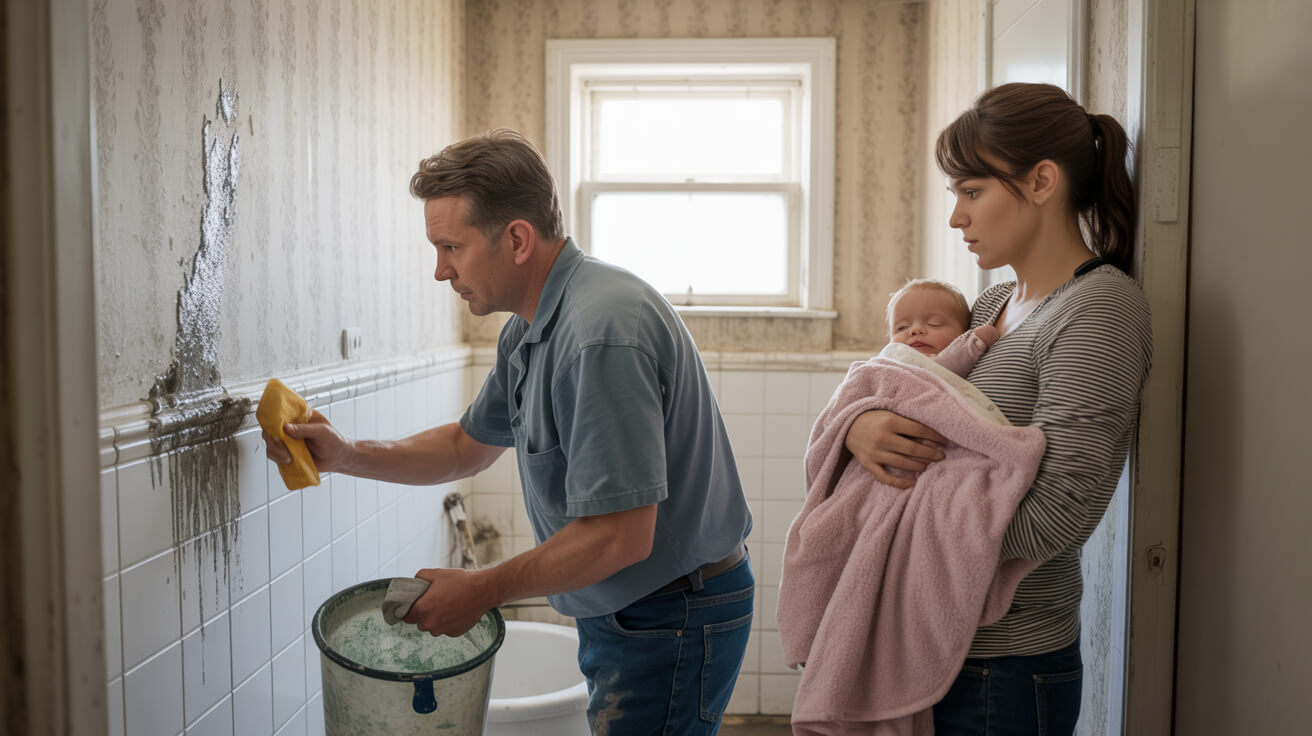
Not all damp surveys—or their price tags—reflect the real risks you’re up against. The most common question: “Why is this inspection £400 when the other guy said £99?” The difference? One is a compliance-grade document tracing evidence from the skirting board to the housing act, accepted by courts and lenders. The other is often a bid for a job that skips the steps which make your evidence stick.
What Really Moves the Needle on Cost?
- Property Type and Size: Flats and small terraces generally fall at the lower end (£200–£250), while sprawling heritage homes and larger houses may push to £400–£700+ due to breadth and complexity.
- Problem Complexity: Multiple types of damp (penentrative, rising, condensation, or tricky historic structures) drive prices up. A two-hour survey almost never suffices when both walls and roof are suspect.
- Purpose and Standards: Mortgage-grade, legal-grade, or insurance-required surveys mean more steps—chain-of-evidence photos, mapped moisture readings, and documented compliance with BS 6576 or PAS 2035.
- Accreditation Level: Only PCA-, RICS-, or equivalent-accredited specialist reports guarantee smooth passage through legal and financial hurdles.
- Urgency and Extras: 48-hour turnaround, or add-ons like thermal imaging, can add £50–£150—but shave weeks off approval or dispute cycles.
| Property Scenario | Typical Cost | What You Get |
|---|---|---|
| 2-bed Flat | £200–£250 | Accredited survey, clear evidence, full report |
| 3-bed House | £350–£400 | Multi-room surveying, standards-compliant |
| Heritage/4-bed+ | £500–£700+ | Full risk mapping, technical & legal focus |
Cheaper or “free” offerings normally miss root-cause diagnosis and carry little or no legal weight, leading to the most expensive phrase in property: “We’ll need to do this all over again, properly, or run the risk of refusal.”
Don’t Let a Cheaper Quote Set You Up for a Double Bill
What’s the cost of a survey that the council, bank, or court rejects? At best, you pay twice. At worst, you’re forced into urgent, expensive work at someone else’s pace (and price).
Do Cut-Price or “Free” Damp Surveys Give Any Legal or Financial Protection?
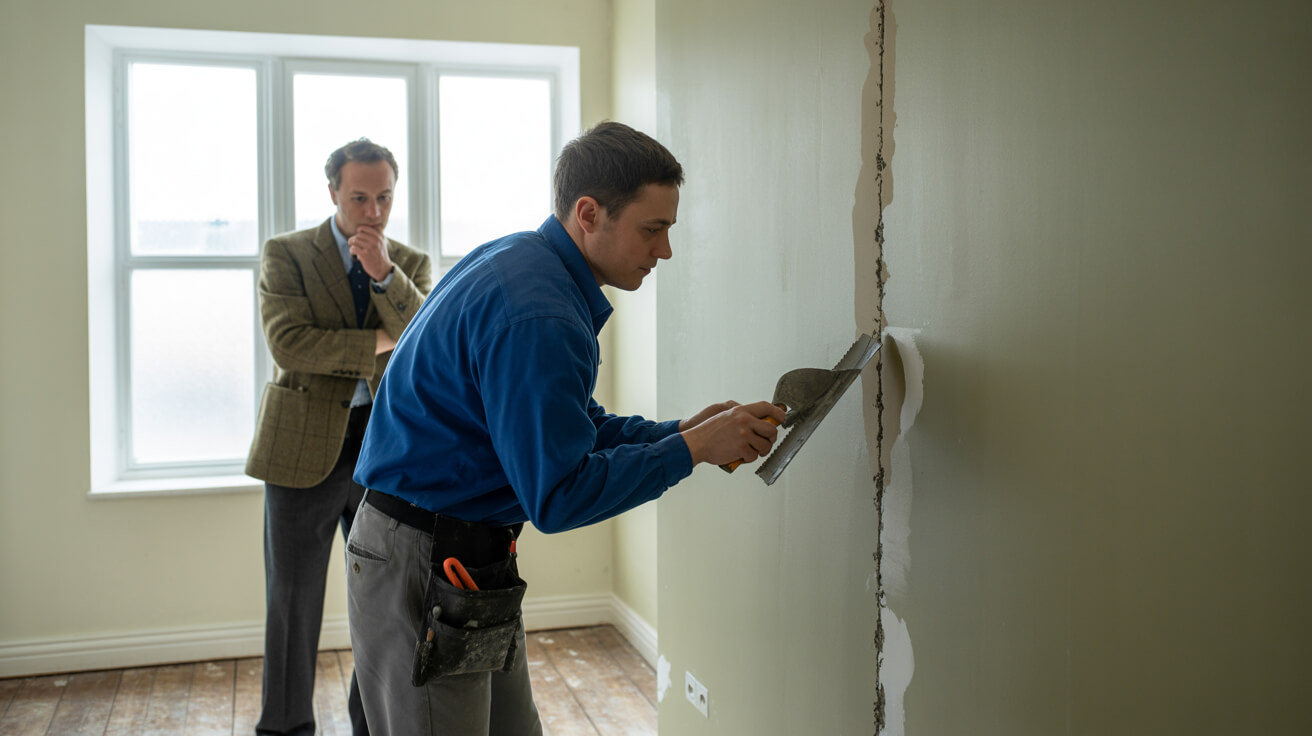
If you see “Free Damp Survey!” signs, get suspicious. These so-called surveys are nearly always a prelude to a sales pitch for remedial work. The surveyor’s fee disappears only if you sign their repair contract—and their findings tend to align perfectly with their pricier services (Which?, 2024).
- Legal Weight: Councils, courts, and lenders routinely ignore non-accredited, sales-driven or free reports. These are not investigative reports; they’re quotations dressed up to look like one.
- Diagnostic Rigour: Most are tick-box affairs lacking clear, mapped moisture readings; some barely pass for a list of “Observed Damp—recommend installing product X.”
- Motivation: Their purpose is to hook you into a pipeline, not to protect your interests or resolve the underlying issue in a way that stands up in a negotiation, transaction, or legal forum.
If your report can’t withstand scrutiny in a mortgage assessment or legal challenge, it isn’t worth the paper it’s printed on.
Trying to save a few pounds with a “free” survey leads many landlords and tenants into long stand-offs, costly disputes, or, worst of all, systemic repeat failures when the cheap fix takes precedence over a real solution. In these scenarios, regret is always more expensive than the upfront investment.
What Should a Professional Damp Survey Deliver in Sussex—and What Sets a Report Apart?

A survey from Sussex Damp Experts is more than an administrative procedure. It’s a full-spectrum diagnostic and compliance tool custom-fit to your property and legal situation. What do you actually get?
- Site Inspection by Accredited Pros: Only specialists with PCA, RICS, or BS6576 training, never templated or subcontracted.
- Forensic Evidence: Moisture metre mappings, thermal images (if needed), salt tests—accompanied by photographic documentation for every reading.
- Damp Type and Source Clarification: We separate rising damp, condensation, lateral penetration, and leaks, mapping source and spread forensically.
- Compliance and Legal Referencing: Each recommendation is tethered to the applicable law or standard—be it HHSRS, Part C of building regs, or PAS 2035.
- Actionable Remediation Map: Step-by-step next actions linked to evidence, showing exactly what should be done, in what sequence, to comply and resolve the issue.
- Warranty and Aftercare Pathway: Guidance doesn’t end with the report—future-proofing and annual checks are built in for continued property fitness.
This isn’t a repair estimate or half-baked memo. Each Sussex Damp Experts survey stands as a standalone document—accepted by mortgage providers, councils, property lawyers, and insurers, anchoring your negotiation power, compliance, and peace of mind.
What Elements Must Be in a Legally Robust Damp Survey Report?
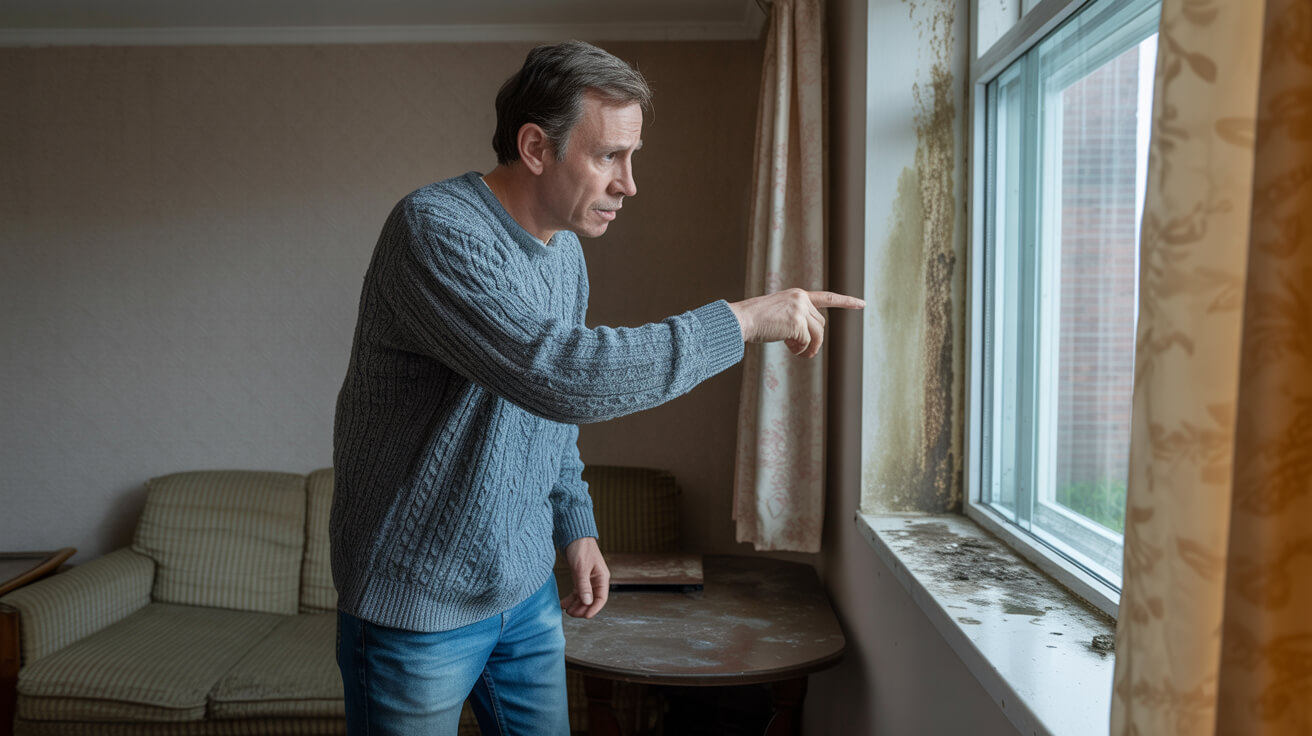
Not all survey reports make it past the council desk, mortgage underwriter, or housing tribunal. A real, defensible document follows strict conventions:
- Explicit Credentials: Clear display of PCA, RICS, or equivalent with qualified sign-off.
- Complete Property & Occupancy Mapping: Full address, property type, occupancy habits are logged—not just “flat in Brighton.”
- Detailed Damp Type and Cause: Specific identification and differentiation between rising damp, condensation, penetrating, or hybrid issues.
- Evidence Integration: Photographs, mapped metre readings, annotated diagrams, environmental readings—raw data, not just bullet points.
- Legal and Compliance Tie-In: Direct reference to the standards and laws underpinning your results and recommendations.
- Neutral Positioning: The report’s author does NOT stand to profit from recommending their firm for works; their only agenda is clarity and compliance.
- Transparent Warranty and Aftercare: If warranties are issued, the scope, limits, and maintenance actions are named up front.
Sussex Damp Experts build every report to survive contestation, audit, or insurance scrutiny—maximising your protection whether you’re defending a repair refusal or unlocking a mortgage.
What Actually Changes Once the Damp Report Arrives—and How Should You Act?
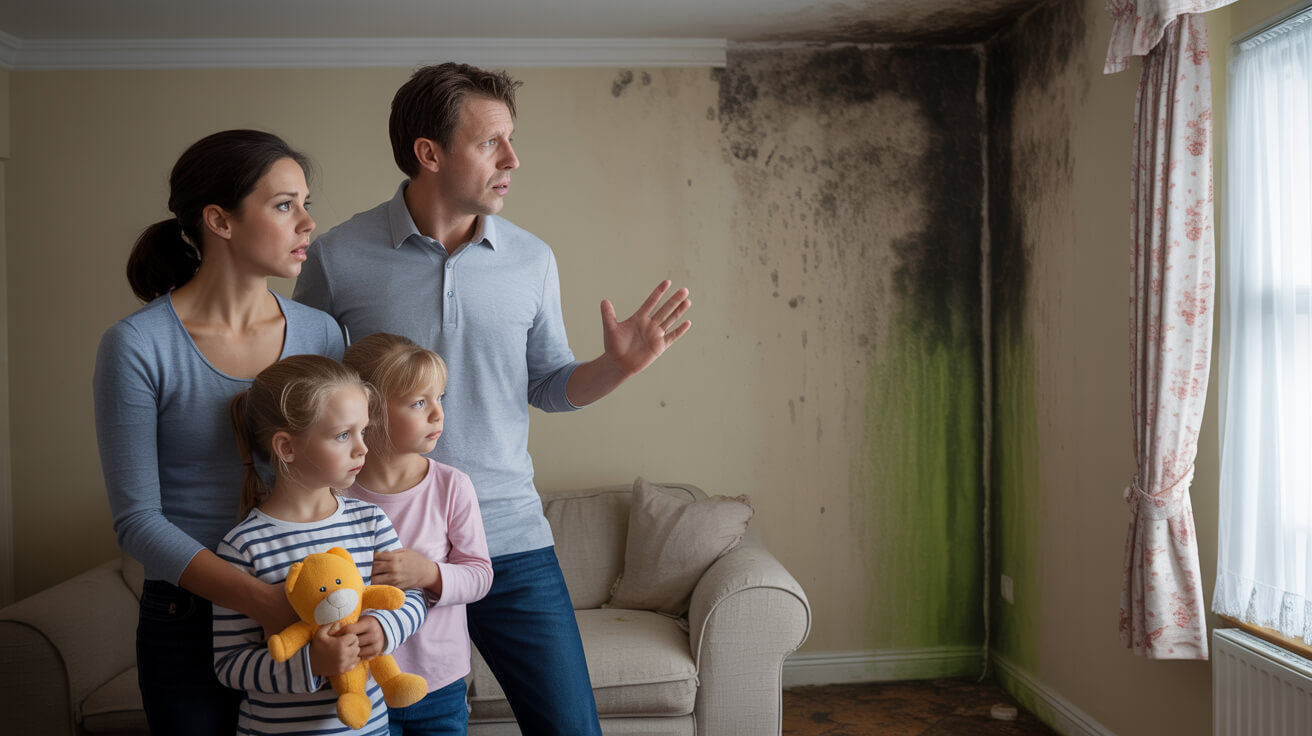
Don’t shelve the report. It is a trigger for practical, time-bound action. For landlords, a legally binding repair window—often 14 days—starts ticking the moment a compliance-grade defect lands in your inbox. Delay moves your issue up the escalation ladder: enforcement, fines, and mandatory corrective works.
Tenants, your accredited report does triple duty: It substantiates repair demands, empowers rent renegotiations, and serves as irrefutable backup if local authority intervention becomes necessary. In dispute situations, your survey is an insurance policy and audit trail all in one—supporting every word you record from first complaint to final sign-off.
A professional damp report is not a final answer; it’s your opening move in the game of resolution.
The right report, acted on quickly, collapses months of “he said, she said” and strips out the risk that you’ll find yourself blamed for problems that predate your ownership or tenancy.
What’s the Real Cost of Skipping Quality? How Cheap Surveys Multiply Risk, Expense, and Stress

The number one mistake: opting for cut-rate, template, or “mate did a look” reports when stakes require forensic evidence. The result is a dangerous cycle: reports get rejected by banks, agents, or councils, and urgent works are ordered at premium cost and on someone else’s terms.
- Asset Drain: Properties flagged for damp lose market value fast; correcting survey errors can erase any up-front savings.
- Legal Drag: Inadequate evidence weakens your ability to resolve disputes, claim deposits, or defend repair refusal.
- Financial Jams: Delays on mortgage approval, insurance claims, or letting eligibility—caused by weak paperwork—cost months and thousands in additional fees.
- Next-Tenant Risk: Issues missed now often compound, becoming bigger—and harder to defend against—during the following tenancy or sale.
Buyers, sellers, and housing pros in Sussex who opt for quality first see a recurring theme: one report, one clear path, and none of the “but that’s not what your mate’s report said last year” headaches.
Why Sussex Damp Experts Are the Right Choice for Property Owners, Managers, and Agents
When you commission a survey from Sussex Damp Experts, you aren’t buying insurance—you’re investing in a technical case file that makes the rest of your repairs, transactions, or disputes easier, faster, and less adversarial. Our reports are crafted by Darius Dampbane and his team—trusted by local authority officers, lenders, and property professionals for their balance of legal precision and construction know-how.
You get:
- Full site inspection and environmental mapping with all evidence tagged and documented.
- A chain of evidence robust enough for a council complaint, mortgage approval, or insurance payout.
- Clear remediation steps and compliance references, ready for use with contractors or in disputes.
- No hard sells, no conflict of interest—just actionable answers that hold up.
- Ongoing aftercare planning, so you aren’t left stranded if new regulations or future buyers raise questions.
Don’t trade credibility for comfort. Our reports prove your property’s value and legal standing—every single time.
The question isn’t whether you can afford a damp survey; it’s whether you’re willing to risk what happens if you skip the steps that real protection requires. Whether you’re managing a single let, a portfolio, an agent’s roster, or family home, Sussex Damp Experts puts control back in your hands—equipped for every inspection, transaction, or storm that comes your way.
Book your accredited report today. Stop the blame game, secure your value, and move forward with confidence.
Frequently Asked Questions
What financial and legal details shift the true cost of a Sussex damp survey for different property owners?
Damp survey pricing in Sussex is a moving target—driven by property age, urgency, type of report required, and ever-changing compliance standards from local councils and mortgage lenders. For a standard two-bed flat, expect a survey to start at £200–£250; for a three-bed semi, £350–£400; for large, heritage, or complex sites, £500–£700+ is typical. Historic houses or mixed-material builds (think timber frames or old stone) increase costs because they demand forensic moisture tracing, invasive diagnosis, BS6576 or BS8102 cross-referencing, and additional photographic documentation. Rush jobs (like pre-exchange deadlines) almost always command a premium—accredited surveyors may reschedule teams and deploy advanced diagnostics such as thermal imaging or salt analysis, adding to the bill.
Spend a little upfront on a proper survey, and you’ll sidestep the hidden toll of failed sales, lender rejections, and regulatory headaches.
What hidden variables alter damp survey fees beyond the base quote?
- Complexity and access: Crawl spaces, cellars, oddly-located voids, or heritage overlays often require specialist tools and more time per visit.
- Document grade: Mortgage- or litigation-ready surveys need accreditation, governed by strict protocols and legal referencing—raising both price and downstream value.
- Follow-on support: Top providers outline aftercare (post-survey moisture monitoring, annual checks). Always clarify if these are part of the quoted fee.
- Multi-property rates: Landlords or managing agents surveying several units may negotiate discounted rates—a move that prevents single-point failures cascading through a portfolio.
- Council zone and regional policy: Brighton, Hove, and heritage districts enforce higher evidence standards—adding an average 10% uplift to most locally-compliant surveys.
Why do UK laws make landlords, not tenants, pay for most damp surveys—and what unblocks disputes?
UK property law is clear: the cost and duty to commission damp surveys nearly always sits with landlords—not tenants. The Landlord and Tenant Act 1985, Homes (Fitness for Human Habitation) Act 2018, and HHSRS place damp as a hazard for landlords to fix, unless a survey proves tenants caused the problem (think blocked vents, repeated condensation from lifestyle choices). Failure to act risks legal complaints, council investigations, and, ultimately, fines or rent-repayment orders. For ambiguous cases—like disputed blame or recurring mould—a fully independent, PCA/BS6576-accredited survey breaks deadlock. Councils, courts, and letting agents accept only evidence-based, standards-driven reports.
If you’re a landlord, you pay for peace of mind—or pay later via council action, failed tenant relations, or legal penalties.
Are tenants ever responsible for survey fees or repairs?
- Only with strong evidence from a professional survey, proving tenant actions directly sparked the moisture, and after a clear request and response paper trail.
- Tenants may commission their own reports if the landlord fails to act; some councils underwrite these for at-risk groups, especially in urgent health scenarios.
- Recovering tenant costs demands full documentation—letters, escalation steps, and an accredited, independent diagnosis.
Why do independent surveys end disputes?
- Lenders, councils, and courts require unbiased proof—DIY or seller/landlord-written documents are usually tossed aside.
- Only surveys that directly reference BS6576, lucidly link to the relevant legal obligations, and map out root-cause evidence will resolve or shortcut disputes.
What separates a legal-grade damp report from a quick inspection—and why should buyers, sellers, and landlords care?
A compliance-grade, standards-driven damp report is a legal asset—far more than a tick-box quote or basic inspection. It’s cross-referenced to British Standards (BS6576, BS8102), loaded with photographic evidence, and signed off by accreditors who carry liability. Councils, mortgage lenders, insurers, and property managers all demand reports that lay out not just symptoms, but the causal chain and mitigations—mapped to current legal and housing standards. A throwaway “free” or quick inspection skips these steps, leaving gaping proof holes and opening the floodgates to challenges, delays, or repudiated claims.
If your survey can’t stand up in a court room, a mortgage assessment, or a housing tribunal, you don’t really have a survey—just a piece of paper and a pile of risk.
What does a compliance-grade survey always include?
- Site-mapped photographic evidence, cause tracing, and moisture gradient readings
- Explicit action steps, each referenced to law or code (HHSRS, landlord/tenant statute, building regs)
- Line-by-line diagnosis, with custom aftercare protocol for monitoring and guarantees
When does this level of documentation become non-negotiable?
- Any property flagged during conveyancing, remortgage, or HMO licencing
- Claims or disputes with tenants, buyers, or local authorities
- Heritage, listed, or unusual build types, where council scrutiny is tighter
Where do “free” or bargain surveys become a false economy for Sussex owners and agents?
Zero-cost or cut-price damp surveys only work until real evidence is required—they’re sales tools best suited for basic estimates. Mortgage lenders, courts, and housing inspectors reject these reports because they’re rarely accreditated, miss critical readings (like mapped moisture or salt analysis), and lack statutory backing. Going the cheap route often means paying again—this time under urgent conditions, and for the robust, independently-signed survey a transaction or dispute actually demands.
Surveys that don’t meet compliance standards don’t just delay repairs—they nuke sales, spike insurance premiums, and open up lawsuits.
What breaks most “free” or non-compliant reports?
- Insufficient diagnostic depth: no mapped readings or full photographic evidence, just guesstimates
- Ambiguous authorship: reports written by unaccredited or sales-motivated inspectors lose all legal standing
- Missing legal ties: no references to BS6576/8102, planning statutes, or landlord–tenant law
What’s the actual cost of a failed free survey?
- Consecutive surveys (paying twice or more)
- Weeks to months of regulatory limbo—sales, lets, or claims on hold
- Emergencies—council orders or warranty refusals triggered at the worst time
How do Sussex damp survey prices and value promise vary with property and provider choice?
| Property Type | Typical Range (£) | Standard Features | Expedited/Complex Work (+) |
|---|---|---|---|
| 2-bed flat | 200–250 | Accredited inspection, mapped evidence, compliance report | +50–80 |
| 3-bed semi or terrace | 350–400 | Multi-zone forensics, legal references, aftercare protocol | +50–80 |
| 4-bed/heritage/listed | 500–700+ | Heritage overlays, detailed diagnostics, court-quality PDF | +50–100 |
Sussex Damp Experts’ difference is consistency: every report features multi-method moisture diagnosis, mapped and referenced evidence, full legal compliance, and future-proof aftercare recommendations—because in this field, corners cut today become compounding headaches tomorrow.
Do more complex sites and urgent jobs always cost more?
- Yes—heritage overlays, listed structures, and subsurface analysis demand lengthier, higher-stakes site visits
- Tight deadlines (pre-sale, auction, or between lets) trigger surcharge; be upfront with your needs to avoid surprise fees
Where do reputable providers go further than the norm?
- Full transparency—quoting up front, disclosing aftercare options, providing proof suitable for any scrutiny (lender, insurer, council)
- Discounts for portfolios, managing agents, or developers wanting standardised compliance across multiple sites
What unfolds after the survey, and how does evidence-led reporting secure your next steps?
Completion of a legal-grade damp survey is far from the end: it’s the start of either resolution or escalation. Landlords are required to act promptly on hazards identified, buyers unlock lender approvals and avoid nasty surprises, and letting agents gain evidence they can stand behind in deposit claims or dispute mediation. Selecting the right expert means your report is future-proof—no holes, no caveats, no insurance lapses. Sussex Damp Experts’ diagnostics don’t just settle questions today—they arm you with documentation to close transactions, prevent regulatory fallout, and protect your asset’s value for years.
Documents written by accreditors outlive the fix—they hold up to lenders, courts, and warranty auditors long after a patch is dry.
How does an evidence-first report change what comes next?
- Property managers and agents accelerate transactions, close disputes, and minimise fall-through risk
- Councils act with greater speed and clarity when documentation meets their code
- A robust report reduces future costs—both direct (repairs, legal) and indirect (downtime, asset devaluation)
Be proactive: evidence-driven surveys keep you in control from the first claim to the final sign-off. Sussex Damp Experts supply not just the diagnosis, but permanent, portfolio-grade protection for your property.

