
 By
By  August 26, 2025


How the Regulator’s Clampdown on Damp and Mould Has Changed Everything for Building Owners and Agents
If you own, manage, or advise on English property, the Building (Higher-Risk Buildings Procedures) Regulations 2023 have rewritten the playbook. The Building Safety Regulator (BSR) now has explicit muscle to enforce action on damp and mould—not just in gleaming tower blocks, but anywhere the building fits the higher-risk definition. That “minor” patch of mould or unexplained damp in a corridor isn’t just between you and your tenant anymore—it’s a regulatory trigger, one with teeth, tight timelines, and consequences that ripple through your finances, insurance, and reputation.
Even a thumb-sized spot of mould can now launch a regulator’s investigation—are you ready for that scrutiny?
Not long ago, fixing damp was just “maintenance”: react, patch, paint, move on. Those days are gone. Now every reported spot is both a legal concern and a direct measure of your organisational credibility. Tragedies like Grenfell and Awaab Ishak forced moisture from the ‘nuisance’ column into the risk register. Asset owners who still treat it as “tomorrow’s job” face a regulatory machine laser-focused on documentation, prompt action, and proof of permanent fix—not intentions, not excuses, and certainly not faded paintwork memories.
A single misstep triggers audit trails, investigation, and—if you’re not prepared—regulatory action that can spread through your whole portfolio. This is no longer a world where you control the pace. If there’s moisture, you answer to the BSR—quickly, completely, and in writing.
Which Buildings Face Regulator Scrutiny in 2023—and Why Damp and Mould Are No Longer “Grey Areas”

Regulators used to speak mostly to council towers and city high-rises; not anymore. If you own, manage, or develop a residential building of 18 metres or more, with seven or more stories, or just two or more independent dwellings—you are squarely in the BSR’s crosshairs (gov.uk).
But HRB classification isn’t the end of the story. Any tell-tale sign of moisture gone unsolved—condensation beads along a window, salt bloom on a skirting board—can mark your property out as a target under the Housing Health and Safety Rating System (HHSRS). HHSRS doesn’t care about property value, postcode, or asset class; a single “serious damp” report triggers scrutiny, regardless of building height.
“Tick-box free zones” are fast-disappearing. Lenders and insurers are now tying asset value and risk appetite directly to HRB and HHSRS compliance. A misplaced file, a missed log, or a muddled registry entry can trigger investigations—and, increasingly, drive up rates or chill dealmaking. You’re judged by your evidence, not your explanations.
Compliance isn’t a comfort zone. Every missed step in your record-keeping is a red flag—sometimes for the whole portfolio.
Why Damp and Mould Now Rank as Top-Tier Hazards—and What That Means for Liability and Insurance

Moisture has moved from “repair-and-forget” to headline hazard for one reason: the law now places damp and mould in Category 1—alongside fire and major structural threats. Under HHSRS guidelines, persistent moisture, mould spores, or condensation make a property unfit for habitation (Shelter).
What does that mean for you?
- Legal penalties: Any evidence of Category 1 damp can trigger enforcement notices, rent freezes, and repayment claims.
- Lender and insurer scrutiny: Every incomplete log, blurred photo, or shaky diagnosis is now ammunition for underwriters and compliance teams seeking to limit their risk exposure.
- Spiralling repair costs: Respond late and you’ll pay in both disruption and professional fees.
- Downgraded property values: Reports of unresolved damp now travel fast on lender and insurer systems.
Half-done repairs, even with the best of intentions, are now marks against you—not just for regulators, but for anyone who might ever lend or insure you.
The stakes have turned. Paint over a patch, neglect your paperwork, or “wait for summer” and you risk making yourself an easy headline—sometimes literally.
What Triggers Regulator Action—And Why Your Documentation Process Matters More Than Your Good Intentions

In the new regime, enforcement is lightning fast. A single email, online form, or call can trigger a 48-hour regulator inspection (gov.uk). And modern spot-checks are rarely announced; they simply show up, scan for evidence, and expect you to produce a full logbook—immediately.
If your team can’t assemble a “regulator-grade” evidence pack—photos, moisture metre logs, expert commentary, root-cause trail, repair records—inside 14 days, you move from concern to violation almost overnight.
Multiple authorities now cross-check your data. If communication breaks between your office, managing agent, or local authority, unresolved complaints or missing traces don’t fade—they multiply, with risk rapidly rolling up from a single flat to your entire building—or wider portfolio.
Every missed phone call, skipped log, or vague excuse is a shortcut to breach status.
The harsh truth? Routine professionalism isn’t enough. Only evidence—independent, timestamped, robust—will shield you. Those who rely on well-meaning emails or “ongoing repair notes” are set up to fail.
Social Landlords Are on the Clock—But Private Owners, Agents, and Developers Aren’t Safe Either

Awaab’s Law set out strict, non-negotiable deadlines for social and registered landlords: 14 days to investigate, 48 hours for updates, and full evidence at every step (gov.uk). But that tide is rising across the entire sector. Private landlords and managing agents may technically have “softer” rules, but lenders, tenants, and insurers have raised their standards to match—and are already using them as benchmarks.
What’s changing?
- Every complaint, investigation, repair, and after-care action must have a digital trail—dates, photos, logged moisture readings, and expert sign-offs.
- Tenants, lenders, and local authorities increasingly expect the *same* documentation standards as Awaab’s Law, regardless of your status.
Your defence isn’t what you meant to do, it’s what you can digitally prove—on call, under pressure.
DIY repairs, informal assurance, and “it’s in the post” excuses don’t fly. Quarterly checks of your documentation processes are now the difference between confidence and existential risk.
The New Documentation Standard—What Regulators, Lenders, and Insurers Expect in 2023
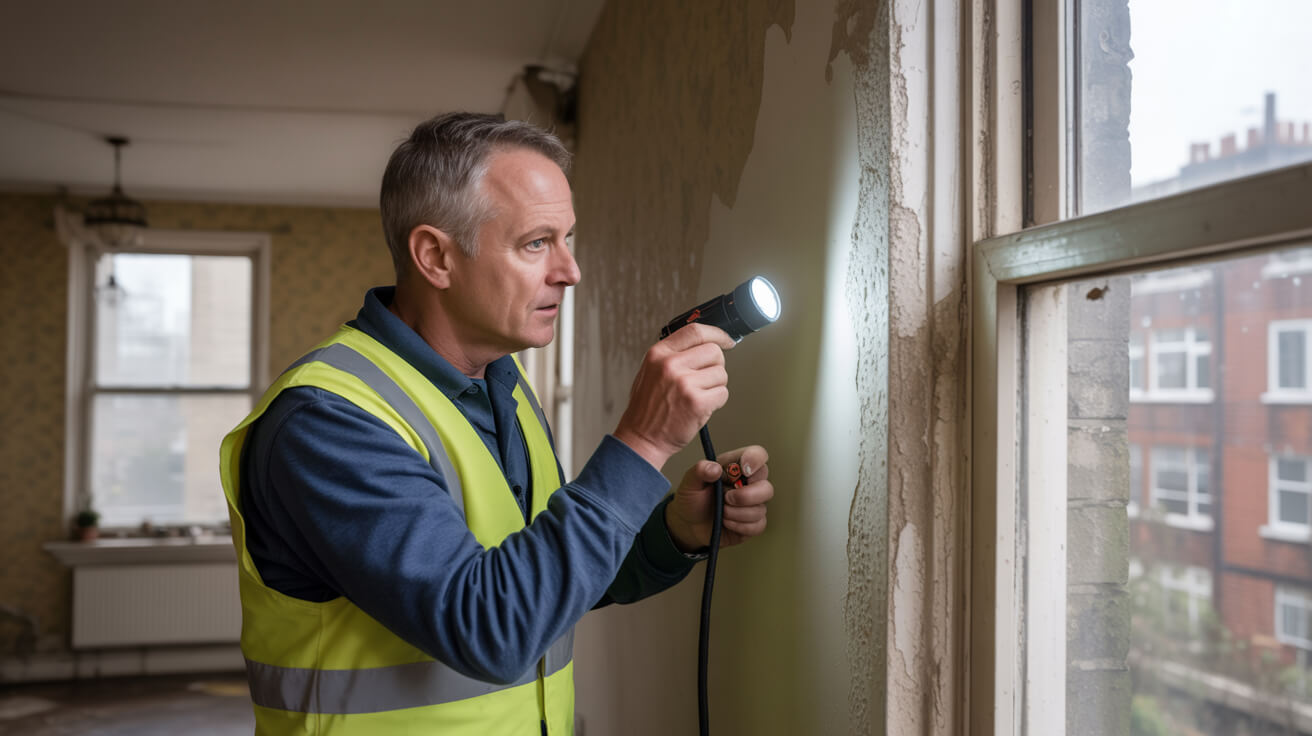
Gone are the days when good intentions or “we’re on it” satisfied stakeholders. Your compliance, asset value, and finance terms are directly pegged to your capacity for rapid, audit-ready documentation. What’s in the new must-have evidence bundle?
- Moisture logbooks: Time-stamped, device-calibrated, signed by qualified experts—no exceptions.
- Photo evidence linked to root-cause analysis: It’s not enough to show a stain—you must prove you identified and treated its source.
- Independent sign-off: PCA/TrustMark—or an equivalently qualified surveyor—must back every report.
- Repair and after-care maps: Noting the exact intervention, monitoring, and follow-up checks—no “cosmetic only” files.
- Full digital retrieval: Your system must serve up documentation inside 24 hours—even during staff absence, audit season, or regulator pressure ([BSI Group](https://www.bsigroup.com/en-GB/the-building-safety-act-and-bsi/?utm_source=openai)).
A string of emails, scattered photos, or DIY logbooks isn’t evidence—it’s a red flag. Only professionally managed, regulator-aligned evidence chains hold up.
If you can’t retrieve the full chain of evidence—log, diagnosis, fix, after-care—at pace, your compliance breaks down where it matters most.
How Sussex Damp Experts Deliver Regulator-Grade Defence for Property Owners and Managers

A damp contractor’s job used to end with dry skirting and a friendly handshake. Now, that’s the bare minimum. With Sussex Damp Experts, moisture management is built as a full compliance shield, not a cosmetic patch.
Here’s what sets our approach apart:
- Forensic diagnostics, survey-level documentation: We log every reading—the what, where, who, and how. From salt analysis and gradient mapping to non-invasive, mortgage-grade surveys, every job is a report built to stand in court or a regulator’s office.
- Root-cause documentation and chain-of-custody sign-offs: Every risk flagged, every intervention linked, every after-care check tied back to the original finding—no “gap-filling”, no missed photos, no DIY fudge.
- Audit-speed retrieval: Digital and hardcopy—PCA/TrustMark, BS 6576, and BS 8102 built in. When audit comes, your records arrive alongside it.
- Annual reviews with after-care promises: Your documentation never ages out or disappears in a staff change; we keep you always ready, always resilient.
Your compliance shield lives in the quality of your evidence, not the flexibility of your excuses.
If you want reputation and resilience, work with a process factory—one built for regulator timelines, mortgage scrutiny, and insurer demands.
The Steps That Future-Proof Your Assets: From Audit to Action

Chasing patches never paid; proactive documentation is your new moat. If you want to stay ahead of the next panic—or just prove you’re a trustworthy asset owner—the playbook is clear:
Systematic moves for regulatory peace of mind
- Audit your HRB exposure: Check every property for high-rise status, registration compliance, and documentation gaps—close them today.
- Build a digital evidence system: No more “files at the office”—your system must create a digital, searchable log every time moisture is logged, fixed, or checked.
- Independent, third-party inspections: Avoid DIY records; make PCA, TrustMark, or White Paper surveyors part of your team.
- Document root-cause repairs every time: Every remedial action must contain a “before, after, and follow-up” step—routes, proof, device data.
- Annual, logged inspections, not ad hoc fixes: Lenders & insurers see consistency as a mark of trust; so do regulators.
If you doubt whether your team could assemble a full evidence chain in a day, don’t wait for the regulator—the right moment to raise your game is now.
When Only Regulator-Grade Compliance Will Do—Call Sussex Damp Experts
No one can promise to stop all moisture risk—but you can decide how bulletproof your compliance process is before the call comes. Sussex Damp Experts give you:
- On-site, forensic diagnostics and salt mapping.
- Regulator, lender, and insurer-grade evidence packs—including PCA/TrustMark, BS 6576 and BS 8102-compliant reports.
- Fully digital, retrievable records—available day or night, on-demand.
- Repair and aftercare processes collaborative with portfolio and single-property owners.
Regulator readiness isn’t luck—it’s the result of a system built to stop compliance headaches before they start.
Step from anxiety to preparedness—with Sussex Damp Experts, you are always audit-ready. Protect your assets, your reputation, and your freedom to operate—before the next spot of damp becomes your next legal battle.
Frequently Asked Questions
Who actually enforces damp and mould law now—and why does every high-rise answer to a single authority?
Damp and mould compliance in English high-rise residences is now regulated exclusively by the Building Safety Regulator (BSR), who carries the final say on both detection and enforcement. If your block rises above 18 metres or stands seven stories tall with more than one flat, be ready: the BSR has jurisdiction to demand entry, order repairs, or declare a building unfit if hidden moisture becomes a threat.
The old patchwork is over—gone are the days of swapping between local councils, fire officers, or unnamed private professionals. BSR oversight means your entire risk cycle—from inspection through remediation—now passes under one unforgiving microscope. Documentation, calibration, and proof of action aren’t extras; they are your sole buffer if a BSR knock-up follows a surveyor’s email, lender’s audit, or tenant’s complaint.
When the BSR calls, you’re judged by your logbooks, not your intentions. Every shortcut burns twice: first in fines, then in lost trust.
Why does BSR rule change the stakes?
- Their findings sweep instantly to lenders, insurers, and local authorities
- A compliance gap—whether unlogged moisture, missing root-cause investigation, or fudge-painted repairs—can freeze your ability to sell, refinance, or let
- Site visits may be unannounced, and stop notices land without warning
Every missed document or half-baked audit amplifies risk: treat every asset as pre-judged and every document as a shield you can’t afford to drop.
How have enforcement triggers evolved?
- Resident complaints, digital reports, or social media posts flagging hazards
- Unscheduled regulatory site inspections
- Reports submitted by lenders or insurers
- Cosmetic repairs that disguise rather than resolve the issue
Move pre-emptively: with every set of keys comes not just stewardship but full legal accountability.
Which buildings are now high-risk—and why might invisible changes trigger scrutiny for yours?
“Higher-risk” properties mean every residential building in England at or over 18 metres, every block reaching seven stories with two or more family units, and a growing expanse of commercial conversions, care homes, and former hotels. It isn’t about heritage or recent works—regulation binds all, regardless of vintage.
Portfolio managers and property owners stumble when occupancy records lag behind reality, when a roof extension or basement flat slips through the annual audit, or when use changes slowly shift risk status. In 2023 alone, over a quarter of all interventions came from audit finds linked to missing occupancy logs or unmapped communal areas—document gaps, not outright faults.
You may not know your building’s status, but every insurer, lender, and BSR inspector does. Mind the gap—regime change is defined by what you don’t see.
How to spot danger before enforcement arrives
- Test each asset against BSR guidelines: floor count, vertical height, and use-type
- Audit occupancy, sublets, and special units every year—including dormant leases or short-term lets
- Review your own stock using BSR’s up-to-date HRB (higher-risk building) register
Leave portfolio review on cruise control, and old records will trip you at your next financing, insurance claim, or regulatory audit.
Practical best practice
Commission an independent regulator-grade survey and data check before your compliance window closes. What isn’t logged is already at risk.
How does a damp or mould enforcement play out—and where do most owners misjudge the process?
When a hazard is flagged—a complaint, pre-sale survey, or even a lender’s routine review—enforcement accelerates. The BSR initiates a strict sequence: from formal notification, to on-site evidence production, to binding orders that halt works, funds, or contracts if documentation or remediation falls short.
BSR’s five-stage intervention cycle:
- Trigger event: A complaint, survey finding, or digital report opens a compliance file
- Inspection window: BSR grants 48 hours’ notice to enter; restricted access or delays trigger escalation
- Evidence demand: You provide surveyor-verified logs, calibrated metre records, and root-cause reports on demand
- Enforcement order: Gaps or poor records trigger compliance or stop notices—freezing loans, lets, or sales overnight
- Remediation registration: Only a time-bound, specialist-signed remediation plan with aftercare logs can close the case
In practice it’s your evidence, not your words, that clears you—as soon as an inspector’s boot crosses the threshold.
Where do even experienced teams slip?
- Incomplete or non-calibrated moisture records
- Repeat “cover-up” repairs without cause mapping
- Aftercare forgotten or unlogged once the invoice is paid
Every complaint should switch you straight into full-audit mode—reactive response is risk, not reassurance.
Why does documentation define your legal risk—and how can you build a shield before the inspector calls?
Documented proof is now your one reliable defence. No matter how freshly painted or visually “dry” a surface looks, the BSR and lenders—along with every serious insurer—now demand complete chains of evidence: logged moisture readings, root-cause statements, full repair histories, and time-stamped aftercare schedules.
This isn’t a wish list—under Housing Health and Safety Rating System reforms, even a minor, lingering patch can lead to occupation bans, rent clawbacks, or insurance refusal if records don’t track what was done by whom and when.
It isn’t what you fixed, but what you can instantly prove, that keeps your asset in the clear.
What evidence actually stands up?
- Specialist hazard mapping with metre-calibrated readings and photographic proof
- Digital and physical logs showing every handover—from first call to completed fix, through scheduled aftercare
- On-call recall: everything accessible within hours if a regulator or bank demands it
Miss a paper trail or skip aftercare logging, and you risk voided insurance, frozen funds, and legal action—regardless of intentions.
Sussex Damp Experts’ guarantee
Surveys, repairs, and all aftercare are logged to audit and compliance standards by default—making your defence portable, and freeing you from frantic evidence chases or late-night compliance scrambles.
What strict deadlines now govern complaint reporting, repairs, and aftercare—and how can you meet every one?
Awaab’s Law has rewritten the timetable: investigations, tenant updates, and repairs are now measured in days, not months. Regulations require that social landlords—and, increasingly, every building manager—complete a site-level damp investigation inside 14 days, deliver written updates within 48 hours, and launch repairs or mitigation actions within 7 days. Failure isn’t just a statutory risk; it now marks your file with lenders and insurers.
Every hour lost after an alert becomes part of your audit history. Urgency isn’t about panic—it’s about preserving your best options.
Essential milestones under the new regime
- Site visit and hazard inspection: within 14 days
- Written update to occupiers: inside 48 hours of attending
- Repairs or mitigation: begin within 7 days—or within 24 for severe hazards
- Aftercare: log every step and result, with digital access ready at any audit
Automated reporting, calendar-linked reminders, and third-party signoff after remediation are no longer just sensible—they’re essential to keep your compliance file both current and credible.
How does Sussex Damp Experts ensure your compliance stands up—and what if your records don’t pass muster?
Sussex Damp Experts hardwire compliance into every project—no slapdash or “good enough” approach. Surveys use asset-specific metre logs; diagnoses outline root causes with supporting photographs; every treatment, from chemical DPC to aftercare, is tagged, registered, and archived for you and your wider professional team.
What sets this approach apart?
- Forensic mapping: Work begins by charting every source, symptom, and moisture pathway—nothing left to guesswork
- Digital records: Survey and remediation logs, image evidence, and signed inspection trails are available for every asset and on-demand for every audit
- Aftercare as standard: Scheduled monitoring and warranty reviews mean compliance continues after the initial fix, not just until the cheque clears
- Audit by default: All documentation aligns with BA 6576, BS 8102, TrustMark, and insurance/lender criteria—ensuring nothing is lost if the regulator calls
Skip these steps and you’re gambling—quick-fix logs and missing evidence leave you exposed to instant enforcement, insurance voiding, and lender withdrawals, no matter the quality of your trade work.
A system built for audit is a system built for resilience. Don’t wait for a complaint to get your house in order.
Commission an audit-ready compliance review with Sussex Damp Experts. From survey to signoff, your records stay regulator-proof and your portfolio—ahead of the curve.

