
 By
By  August 26, 2025


What Does Damp & Mould Non-Compliance Truly Cost You in 2024?
Leave a small patch of damp to fester, and you open a legal, financial, and reputational sinkhole for your property. What was once “some condensation on the window” is now the grounds for a council inspection, failed survey, lost tenancy, or insurance denial. The rules have changed—East Sussex property owners, landlords, agents, and contractors sit under a cloud of new compliance risk that no quick-fix can dispel.
The tiniest unseen leak today can quietly become tomorrow’s five-figure repair and a line in your legal record.
It’s not conjecture. In 2023, East Sussex saw a sharp rise in building condition enforcement—compelled by the Landlord and Tenant Act, Homes (Fitness for Human Habitation) Act, and above all, the Building Regulations 2010. Over 20% more enforcement actions were pressed compared to previous years, with damp and structural moisture failure topping the triggers (commonslibrary.parliament.uk; housing.org.uk). Whether you own, manage, rent, or renovate, non-compliance is now a recordable risk—affecting insurance claims, mortgage rates, and even your ability to sell or lease.
Each year, we see more buyers’ solicitors, insurance underwriters, and council officials treating sub-par damp remediation or missing compliance paperwork as deal-stoppers. Even a “minor” leak or patch of mould—especially one treated as a cosmetic eyesore instead of a systemic building flaw—can now spiral into asset devaluation, penalty fines, or loss of tenant confidence. If you’re reading this as a landlord, agent, or property manager, understand: the risk is no longer hidden.
Damp isn’t just unsightly—it’s a regulatory landmine that, if mishandled, doesn’t just cost you money. It makes you visible to auditors, insurers, and regulators. That means you need proof, not just promises.
How Do Building Regulations 2010 Define What Counts as Damp Compliance?
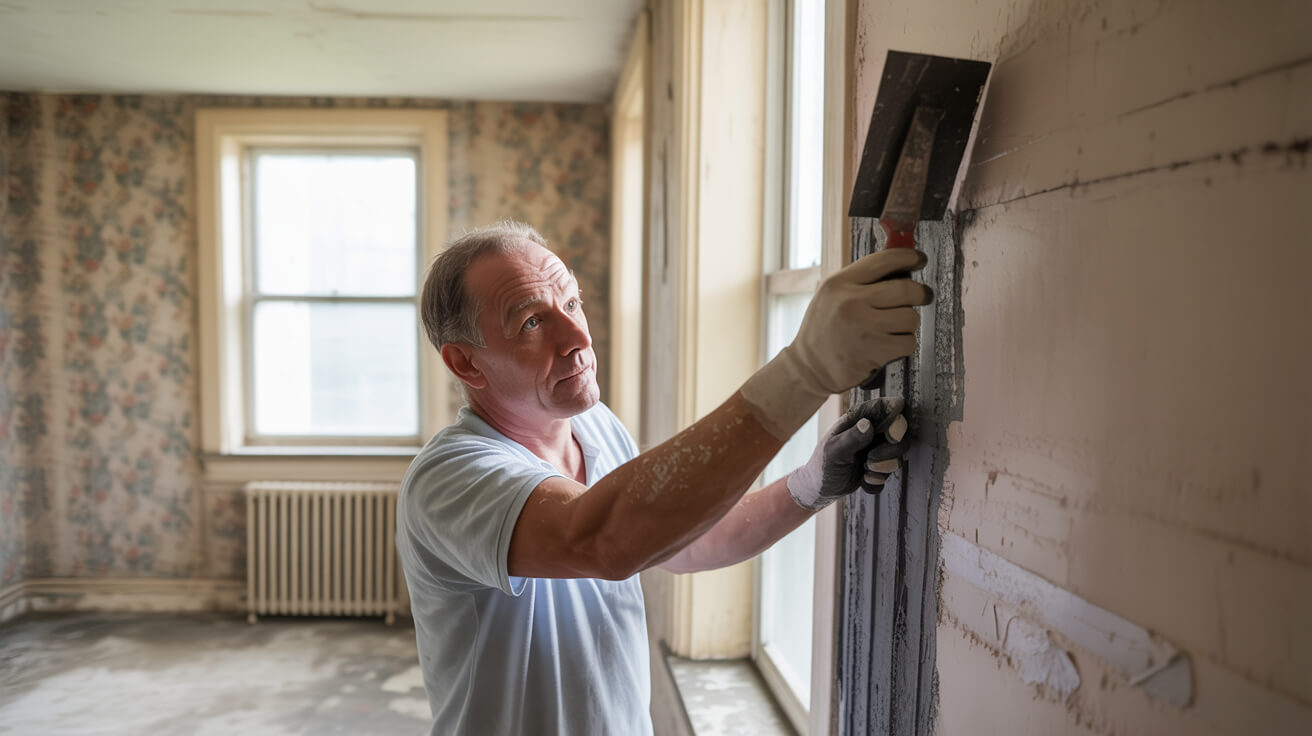
Forget vague assurances and patchwork fixes—the Building Regulations 2010 give sharp, enforceable lines for managing property moisture risk. Part C, the backbone for moisture resistance, commands a properly installed, continuous damp proof course (DPC) in all living areas—no less than 150mm above the external ground (travisperkins.co.uk). No legitimate lender or insurer will overlook this on a home survey; miss it, and you’ll face claim denials, mortgage reticence, or sale delays.
But moisture control is only half the game. Part F, updated for modern ventilation standards, requires mechanical extraction in key rooms—kitchens, bathrooms, utility spaces—calculated for both size and usage. Air bricks and openable windows are not enough. If persistent humidity, mould blooms, or surface condensation are documented, surveyors and local authorities now assume it’s a ventilation design failure, no matter how well-plumbed your home (everest.co.uk).
Every decade, regulations tighten. But today, compliance gaps are flagged by digital survey tools and instantly tied to enforcement actions.
Fail these benchmarks? It’s not just a letter from the council—it’s potentially refusal of mortgage or insurance cover, voided warranties, and a rapid drop in lettability and asset value. Even more costly: repeat remediations when a buyer’s surveyor finds non-compliance lurking after a “quick fix.” Compliance is the baseline—demonstrable, documentable, and impossible to fudge.
What’s Really Involved in a Professional Damp & Mould Survey (and Why Visual Checks Fail)?
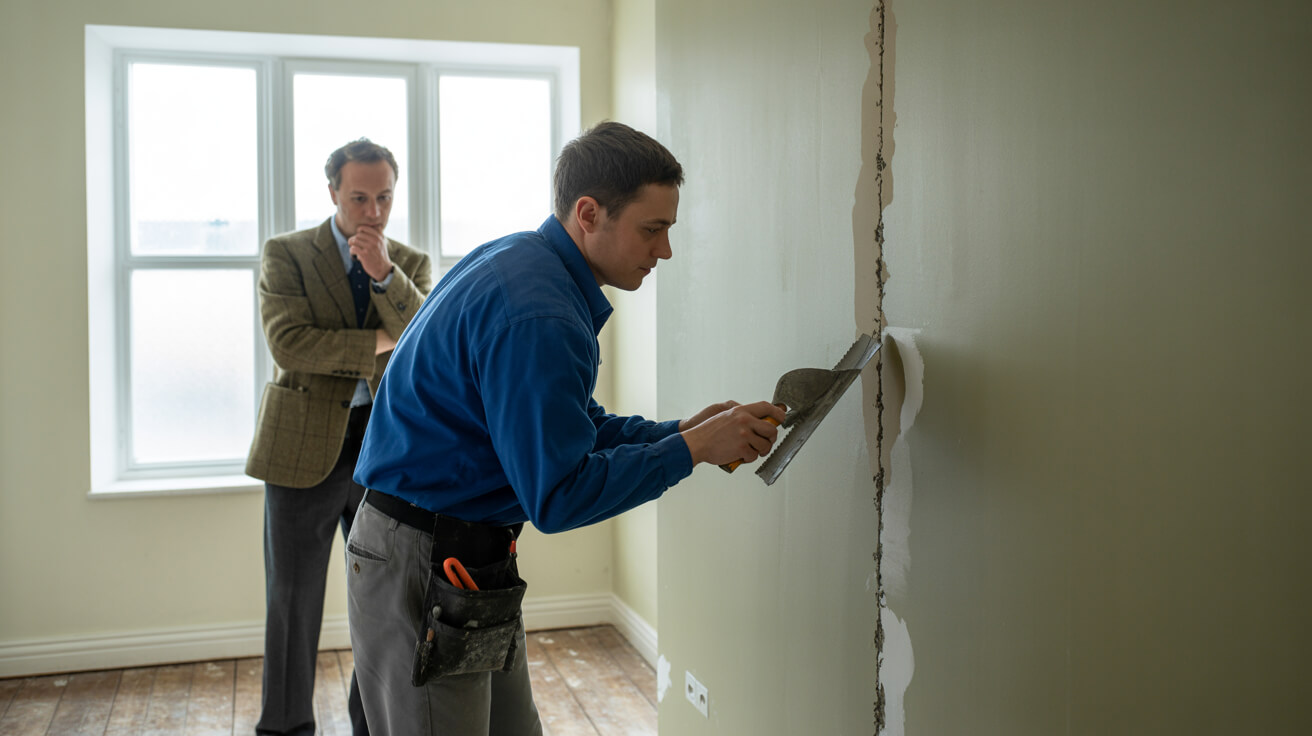
You can’t fix what you can’t see. Relying on “spot checks” or landlord walk-rounds is a perfect recipe for undetected decay and future litigation. Today, a “proper survey” in Sussex means deploying:
- Calibrated moisture metres to map gradients deeply into walls and floors
- High-resolution thermal imaging to track hidden leaks and cold-bridging
- Deep-wall borescope inspection for internal voids and unseen growths
- Chemical salt analysis to distinguish rising damp from condensation or leaks
- Geolocated, timestamped photos as audit-grade evidence
- Reporting compliant to BS 6576 and signed by accredited surveyors
Sussex Damp Experts use this full arsenal, not just to check a box but to deliver cast-iron protection against regulatory, legal, and financial blowback. Half-jobs—like a visual inspection or a generic builder’s note—are now roundly rejected by lenders, insurers, and councils. One missed DPC bridge, a misdiagnosed patch, or a missing calibration log can force sale collapse, claim rejections, or council-mandated rework at your expense.
If an insurer, lender, or legal body can challenge your evidence, you haven’t protected your property.
Full-spectrum diagnostics are not overkill—they’re the only way to futureproof against a “minor” moisture reading turning into a full-blown compliance crisis later. When you see a Sussex Damp Experts survey, you see an owner protected by the full weight of science and standards, not guesswork.
Why “Quick Fixes” and Unqualified Repairs Cause More Loss Than They Save
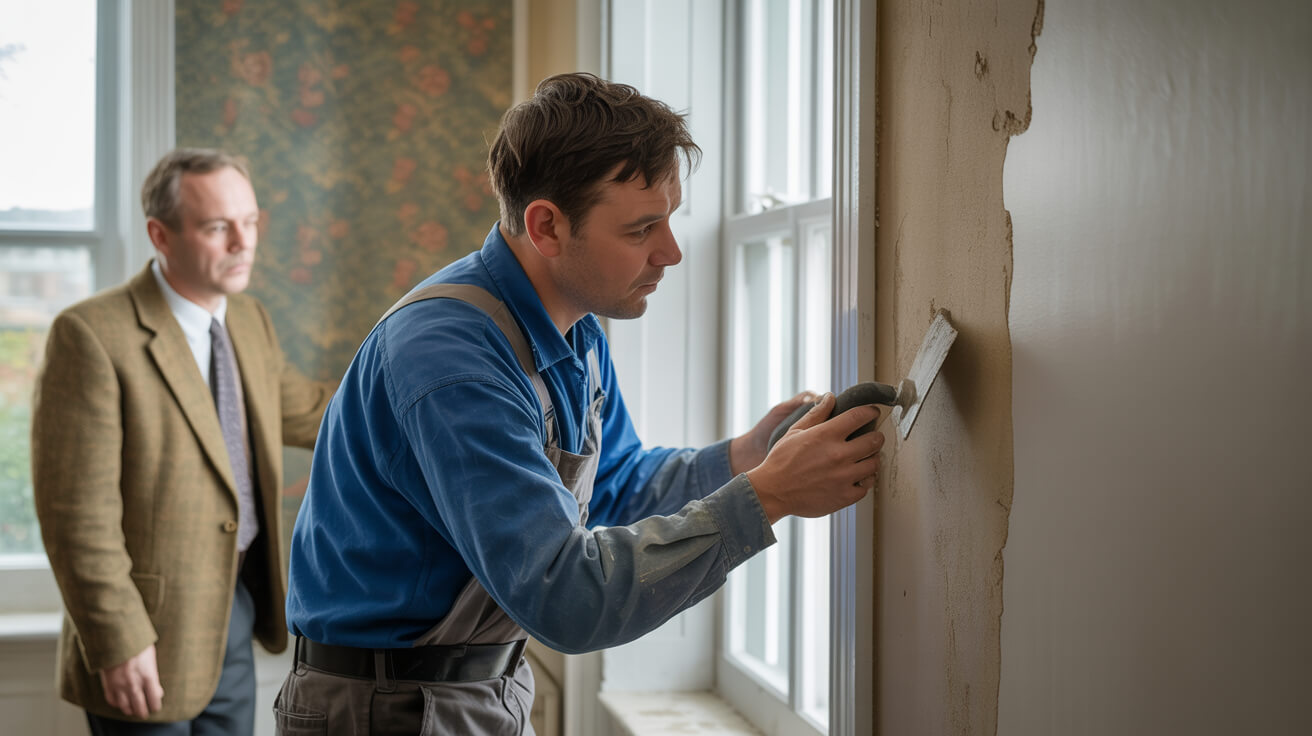
You’d never patch a leaking boat with masking tape. Yet, properties across Sussex fall prey to budget DPC injections, tanking slurries on heritage walls, and makeshift repairs pitched as “all you need” by handymen. These shortcuts seem clever until the first winter rain, property inspection, or warranty claim.
Quick fixes often trap moisture, breeding new risk and invalidating any real insurance or legal protection.
Regulations and lenders are wise to these tactics. If you mistakenly use a chemical DPC on a condensation issue or ignore the need for breathability in listed buildings, the outcome is inevitable: a repeat cycle of breakdown, warranty voiding, and a permanent black mark in your compliance record.
Professional compliance repairs follow a strict protocol:
- Identify the actual cause: rising damp, penetration, condensation, or bridging.
- Only match the right method and certified materials to the building’s context. For example, lime-based plasters for heritage, hybrid DPC for cavity walls, or integrated membranes for basements.
- Integrate ventilation, condensation control, and substrate compatibility—never rely on one element.
- Maintain a live, audit-grade paper trail: photos, calibrated measurements, and warranty certificates.
Without this chain, every pound “saved” is a future expense, and every shortcut is a potential lawsuit or council penalty.
Why Modern Ventilation and Real Aftercare Are Now Non-Negotiable in Compliance

Ventilation failures masquerade as damp issues in most Sussex homes—especially after upgrades like new windows or added insulation. Part F compliance doesn’t just mean fitting an extractor fan; you need proper system design (flow rates, ducting, humidity controls), and post-instal verification. Homeowners, agents, and landlords who ignore this expose themselves to the full brunt of the HHSRS and building regulations—where persistent black mould, humidity spikes, and condensation are treated as actionable health hazards.
The difference between a sold home and a flagged one is often a single missing ventilation report.
With new rules, properties must prove both initial installation quality and ongoing aftercare. Sussex Damp Experts deliver installation photos, specification logs, and ongoing monitoring data—covering you for council audits, tenancy disputes, and insurance renewal checks.
If your building has seen recent upgrades, never assume you’re still safe from hidden moisture risks. Internal insulation, double glazing, or even basic decorating can all trap water, invalidate previous compliance, and open you up to fresh claims. Compliance is dynamic: today’s “tick” can become tomorrow’s “fail.”
Why Accredited Expertise and Documented Certification Are Your First Line of Defence

An unaccredited “pro” with a drill isn’t enough to meet today’s scrutiny. Lenders, insurers, and legal authorities now demand diagnosis and remediation from accredited experts—no exceptions. Qualified surveyors reference BS 6576 and PAS2035 (for heritage or retrofit), with qualifications like PCA, ABBE Level 3/OFQUAL for surveyors, and at least ProQual Level 2 for installers.
Without a formal certificate and audit trail, your repairs are invisible to the only people who matter—lenders, insurers, and your council.
Every Sussex Damp Experts job includes a protocol: surveyor credentials are displayed, all works are referenced to the relevant British Standard, and every phase is backed by a geotagged, timestamped record. Accreditation is more than a badge; it’s your shield against legal challenge. Even with high-value, historic, or multi-residential assets, only credentials, not promises, count.
If you self-certify or trust a generic tradesman with “years of experience,” you’ll likely face claim rejections or council penalties. Recognised industry certificates and logs are your only defence when the paperwork is called for at sale, renewal, or audit.
Why Live Monitoring and Ongoing Maintenance Now Decide Compliance, Not Just Initial Repairs
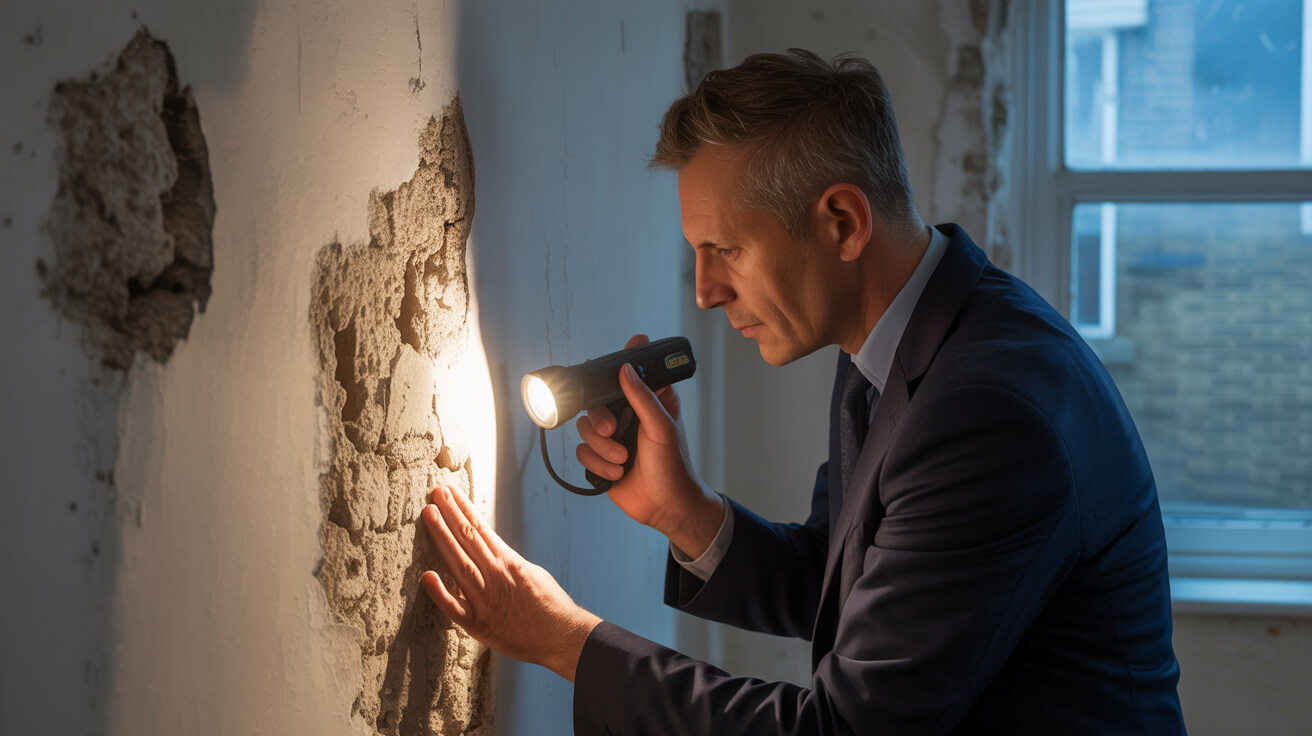
Damp and mould aren’t “solved” with a single fix—these issues resurface with seasons, building use, and trades’ activity. Modern compliance means continuous tracking and evidence: annual moisture audits, data-logging of aftercare, and operational guarantees that survive outside contractors and property handovers.
One missed annual check or unsecured joint can unravel years of compliance—and your legal or financial protection.
Insurance, warranty, and council requirements now expect working monitoring—logs from sensors or installer-verified aftercare visits. If a new tradesperson bridges a DPC, blocks a vent, or disturbs a membrane, your property reverts to non-compliance. Sussex Damp Experts manage these join-ups: external works, internal redecorations, and planned hand-offs get documented for a seamless compliance trail.
This is where asset value crystallises or dissolves. With live system records and future-facing warranty support, you protect both your immediate interests and your building’s long-haul solvency.
What Sets Professional Compliance-Driven Damp Solutions Apart (and Why It Matters)

There’s no shortcut anymore: “good enough” approaches are invalid. Damp and mould now set the bar for lettability, mortgage standing, and tenant safety. Sussex Damp Experts stands at the crossroads of forensic moisture diagnosis, end-to-end remediations, and solid legal compliance—covering every step from survey through to warranty.
Every project is led by a technically trained supervisor: only calibrated, standards-backed diagnostics, photo-verified step-logging, completely referenced installations, and warranty delivery that connects seamlessly with surveyor demands and mortgage requirements. For older and heritage sites, PAS2035 and BS 8102 drive system choices; for new builds and commercial spaces, insurance, planning, and mortgage compliance set the design bar.
Proof—not hope—is what buyers, agents, and law expect. That’s why Sussex Damp Experts sets the compliance gold standard.
Our systems are future-ready: QR-coded survey reports, warranty logs accessible to buyers and tenants, and documented evidence that makes you audit-proof.
Agents and landlords choose us because a single incomplete or mis-labelled repair can sink a tenancy or a deal. Homeowners and buyers choose us because our work stands up not just to weather, but also to every surveyor’s, lender’s, and letting agent’s inspection.
How to Secure Your Property’s Value, Safety & Reputation—Now and Next Year
Damp, mould, and invisible leaks are too risky to gamble on—you owe it to your property, investment, or tenants to make compliance watertight and future-proof. With Sussex Damp Experts, you don’t just buy a fix, but a strategic asset: fully logged, compliant, ready for sale or audit at any moment.
If you’re ready to end compliance anxiety and invest in your property’s longevity, start your claims-proof survey today. Sussex Damp Experts gives you science-first diagnostics, all evidence mapped to UK and local regulations, and every detail certified for insurance, lending, and peace of mind.
Don’t let invisible risks or compliance myths drain your building’s worth—get certainty that lasts. Sussex Damp Experts—bringing compliance, science, and integrity together for every property in East Sussex and beyond.
Frequently Asked Questions
What new legal pitfalls can catch landlords and property managers off guard with damp and mould compliance?
Misreading damp liability as “just maintenance” exposes you to escalating fines, rent clawbacks, and even criminal enforcement under today’s laws.
Damp is now a legal trigger, not a cosmetic issue. Since the Homes (Fitness for Human Habitation) Act 2018, property owners face strict duties—one ignored mould report can trigger an Improvement Notice, a rent repayment order, or immediate council works at your expense. The Housing Health and Safety Rating System (HHSRS) measures the tiniest sign of damp and places burden of proof on you, the landlord. Excuses about “tenant condensation habits” rarely protect you; councils usually side with health risks first, especially if you lack forensic documentation. Tenants find it easier than ever to raise damp claims—Ombudsman case files show a 32% rise in successful damp-related awards in Sussex alone during 2023. Mortgage surveyors and insurers, too, now flag unresolved or historic damp as a “material defect,” refusing cover or cutting valuation regardless of occupant blame. Fast action and an evidence-backed strategy—ideally with Sussex Damp Experts—steer you clear of being blindsided by legal escalation.
Where do most landlords get caught out?
- Failing to act “promptly” on tenant complaints or surveyor notes
- Relying on generic repair receipts instead of evidence-mapped diagnostics
- Overlooking aftercare, record-keeping, and third party trades undoing compliant work
Inaction over damp is the quickest route to statutory fines and falling asset value—prevention and records mean control.
How does UK Building Regulation Part C and Part F enforcement actually play out during a damp survey?
Council surveyors and mortgage valuers don’t just ask for a DPC—they want forensic proof, right materials, and documented ventilation for every wet zone.
For every habitable wall, Building Regulations Part C demands a continuous, visible DPC installed per BS6576 above 150mm from external ground. Basements fall under BS8102, with full waterproofing and specific risk management. Mechanical ventilation isn’t optional—Part F requires working extractors with certified airflow in all kitchens, bathrooms, and utilities. Surveyors increasingly use thermal imaging or borescopes to trace hidden breaks in the DPC or ventilation failures. Missing, blocked, or non-compliant systems are now among the top reasons for failed surveys and sales collapses. Heritage or solid wall homes face extra scrutiny: only specialist membrane systems or breathable lime plasters, applied under PAS2035 and documented with before-and-after logs, are accepted as compliant equivalents.
What do surveyors and councils demand as evidence?
- High-res photographic proof of DPC continuity, instal date, and location
- Installer credentials and full instal schematic (not just “job done”)
- Airflow test certificates for extractor fans, warranty documents for components
- Paperwork or QR code linking every major repair to survey schedule
Survey reviews from 2023 flagged missing or invalid DPC/vent installations in 78% of failed property transactions in Sussex—proving that the compliance bar is set by documentation, not intent.
What paperwork and digital records do lenders, insurers, and councils now view as “irrefutable” damp compliance?
Authorities now expect a document chain: British Standards-referenced survey, photographic work log, registered warranty, and active maintenance log—backed by digital access.
The minimum accepted chain includes a surveyor-signed report (citing BS6576 or BS8102), a mapped sequence of images from initial survey through to completed works, and a warranty spelling out exactly what was installed and where. Most insurers and lenders now demand QR-verifiable logs with clear links to regulatory standards, along with ongoing monitoring or annual check records. DIY declarations, outdated forms, or generic “job finished” notes often trigger instant rejection. Sussex Damp Experts digitise every phase—each file is labelled, timestamped, and ready for surveyor, mortgage, or compliance review at a moment’s notice.
Which record gaps are most likely to trigger a compliance failure?
- Missing chain-of-evidence (diagnosis not tied to repairs)
- Unregistered, expired, or non-transferable warranties
- No maintenance or aftercare logs post-installation
If your compliance folder isn’t ready for instant inspection, it’s as if you never fixed the problem at all.
How does professional damp treatment deliver legal security and pass every third-party audit?
Accredited specialists diagnose, record, and rectify damp according to legal standards—then map each stage digitally so your property passes any scrutiny, any time.
A professional approach starts with mapped moisture measurement—calibrated metres, salt tests, substrate thermal scans—documented as a risk report. Treatments are then selected for building age and use: chemical or physical DPCs for most homes, tanking and membrane systems for cellars, or PAS2035 heritage methods in listed buildings. Importantly, every treatment is photographed, sequenced, and signed off by a licenced technician to legal and insurance-grade standards. All subsequent aftercare—whether ventilation upgrades or annual moisture audits—gets logged and attached to your compliance chain. When auditors, surveyors, or insurers review the records, a seamless digital logbook clears the property for sale, mortgage, or occupation with minimal hassle.
What flags a “real” compliance-ready treatment report?
- Repair and materials explicitly referenced to survey “location of origin”
- Installer accredited by PCA, TrustMark, or equivalent authority
- Full digital sequence: assessment, work in progress, completed instal, aftercare
- Live warranty handover with reminders for follow-up checks
Recent figures show that over 60% of warranty disputes in Sussex originated from missing photos, ambiguous reports, or lost handover notes—proving that professional documentation is your best legal and financial shield.
Why does missing aftercare or future building work put your legal compliance and warranties in jeopardy?
Neglecting annual checks, letting trades disturb the system, or failing to update records can void both warranty and insurance—all undoing the best damp work in moments.
Quality warranty providers demand a digital “health check” each year—moisture monitoring logs, verified ventilation, and a maintenance trail. Any building work, from plumbing changes to plastering, risks bridging DPCs or damaging membranes; if these changes aren’t logged and rechecked, your entire compliance stack collapses. “Third party-related failures” have become the nationwide number-one insurance exclusion for property damp. Councils and legal teams increasingly request digital logs and trade sign-offs at audit. Sussex Damp Experts anticipate these challenges—handover reports include a full guide for future building trades, red-flag listings of compliance-sensitive areas, and a direct contact for record updates, so compliant work stays valid for years to come.
What are the top aftercare compliance breakdowns?
- Skipping scheduled survey or letting moisture logs lapse
- Failing to document changes by other trades after instal
- Not revisiting risk areas after any structural or plumbing modification
One careless knock-on-repair or missing aftercare log can turn a compliant job into a liability—don’t risk it.
What sets Sussex Damp Experts apart for legal, survey, and warranty-grade damp compliance across every property type?
Sussex Damp Experts blend forensic diagnostics, standard-referenced repairs, and digitally-mapped aftercare into a compliance package accepted by councils, lenders, and insurers.
Every job starts with a property-specific plan: root causes mapped with state-of-the-art kits, from thermal scans to moisture gradients. Treatments are picked not from a menu, but by matching property use, history, and legal duties to the right British or compliance standard. Installers hold specialist credentials—no cutters, no cowboys. Just as vital, every step is documented in real time, complete with geo-tagged photos and unique QR codes so records are audit-ready. Aftercare is built in—prompt updates for new works, checklists for trades, and annual review reminders protect your compliance status, value, and reputation. Sussex Damp Experts succeed where generic outfits fail: every property (from Victorian homes to grade-listed sites, flats to factories) receives a repair and documentation chain that stands up to the council, the bank, and any third-party buyer.
Why do Sussex Damp Experts deliver unmatched compliance confidence?
- End-to-end evidence, from survey to aftercare, ready for instant official review
- Custom-fit repairs for heritage, commercial, or complex mixed-use sites
- Digital audit trail engineered for surveyor, council, and mortgage lender acceptance
- Proven track record: zero fails on paperwork or audit in Sussex since launch
Your reputation, sale prospects, and occupancy security all rely on that chain being watertight. With Sussex Damp Experts, you can show it’s built—and stays—unbroken.

