
 By
By  August 26, 2025


What Penalties Strike Landlords Who Fail Awaab’s Law—And How Do You Dodge Them?
Awaab’s Law didn’t just sharpen the rules for landlords—it put every compliance miss-up under a public spotlight. Gone are the days when a “slow repair” or vague reply quietly vanished in the filing cabinet. Now, every slip—missed inspection, soft hold-up, half-hearted fix—becomes evidence. One missed deadline isn’t just an embarrassment: it opens you to fines, council intervention, and sharp scrutiny from the Housing Ombudsman. Repeat offences? Think regulatory probes, parliamentary summons, and a reputation that stains fast. Landlords who default become easy targets for press stories, regulatory databases, and council legal action.
Each missed deadline is an open invitation to fines and investigation—compliance is a survival skill, not a luxury.
Today, compliance means every repair, every report, every tenant update happens on record—fast. The era of “backlog tolerance” is history. Fail to meet the law’s set timeframes, or fudge your documentation, and regulators can move in without warning. Worse, tenants themselves have more power to escalate: they know the rules, and the law is designed to put them on equal footing with landlords—every gap or lag becomes leverage against you.
Why Is Compliant Action Now a Survival Skill, Not a Luxury?
What was paper-pushing is now a live audit trail. Landlords can’t call delay “scheduling pressure” or “operational challenges”—evidence always wins the argument. The law is built so patterns of poor reporting, slow action, or surface-only repairs pile up quickly as a “compliance dossier”. It becomes very public, very quickly.
A landlord’s failure to meet action timescales is now reported to local authorities and potentially placed on national registers *(insidehousing.co.uk)*
The point is clear: inaction is tracked, and the risks don’t just stop at a one-off fine—they multiply, escalate, and attach to both your business and your professional name.
Who Must Move Fast—And When Does Awaab’s Law Start Biting?

Every social landlord—councils, housing associations, managing agents—faces these new duties. From October 2025, the moment a tenant lodges a damp or mould complaint, the law’s timer starts ticking. This applies to any defect with structural or health risk, not just obvious, catastrophic leaks.
The Triggers and Timelines Landlords Cannot Ignore
- Emergency hazards (visible mould; water ingress; health risk): You must investigate within 24 hours of the complaint.
- Other significant but non-emergency hazards: Attendance and start of repairs are required within 10 working days.
- Tenant reporting: Within three days, you must provide a written summary of findings and next steps—nothing vague or postponed.
These deadlines turn “good intentions” into a quantifiable record. A missed window isn’t just a small black mark; the law is structured so each lapse is logged and visible. That means repeated failures force escalation—councils, the Ombudsman, or even Parliament can intervene, often at the tenant’s request.
Landlords who ignore timelines face council sanctions, fines, and public naming. *(insidehousing.co.uk)*
The era of “patch it up and hope it sticks” is over. Non-compliance means showing up on the wrong side of enforcement dashboards.
Why “Quick Fixes” and Phone Triage Are Not Enough
Gone is the excuse that “site visits are hard to schedule” or “admin is overloaded.” The 24-hour rule for emergencies demands physical attendance—call centre triage or telephone “checks” do not suffice.
What Do The New Timelines and Requirements Actually Demand of Landlords?
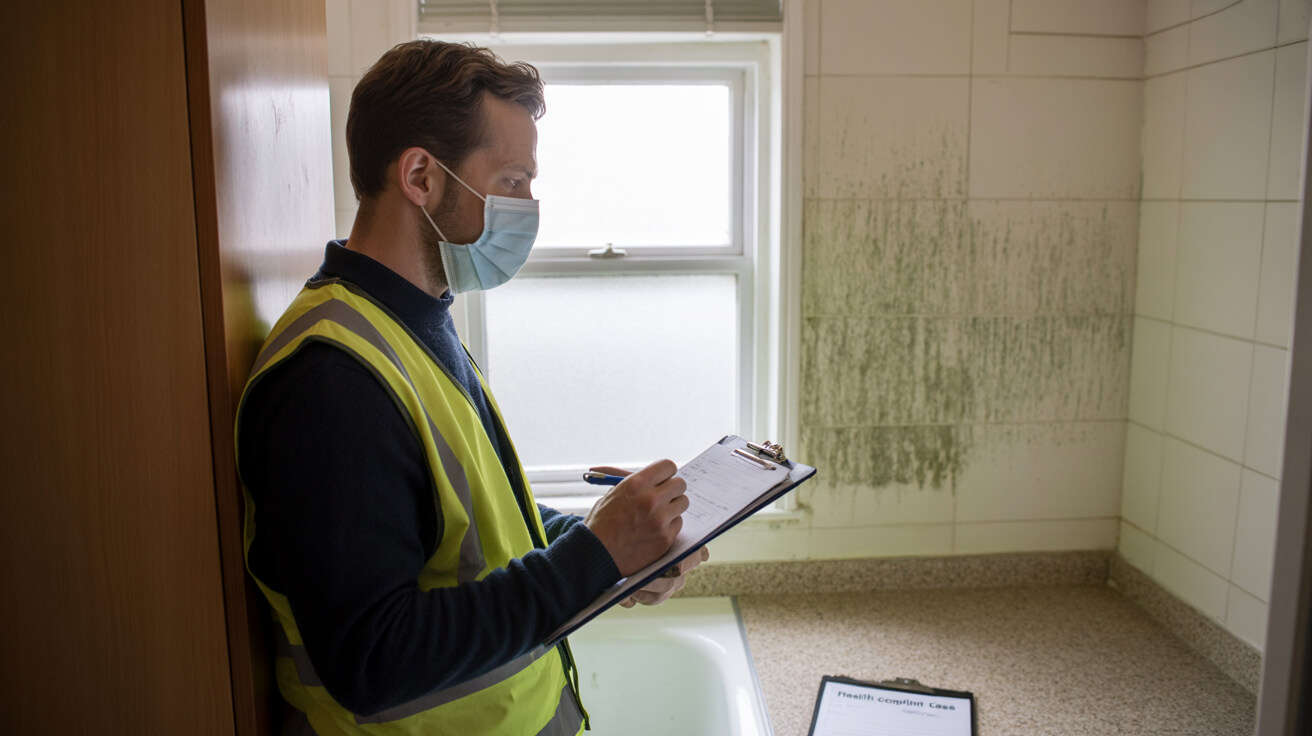
Awaab’s Law is a workflow law; intent doesn’t matter—outcomes and records do. The requirements are direct, practical, and unforgiving:
- Physical attendance: For emergencies, only an on-site inspection counts—desk reviews don’t.
- Evidence-first: Record the issue with photos and factual observation, timestamped and stored.
- 24-hour remediation: If health or structure is threatened, action must be taken within the day—no waiting until “the next window” or after school holidays.
- 10-day repairs: For significant but non-emergency risks, the countdown ends after ten working days. Delays must be explained in writing—not ignored, not “pending review”.
- Written updates: Every inspection or repair generates a formal summary—delivered to the tenant within three days.
Poor records or fuzzy definitions don’t float in a dispute. Landlords must define what counts as an “emergency,” train every level of staff, and be ready to show those definitions—and their evidence—if challenged. Tenants can contest interpretations easily, and the law is structured so ambiguity defaults in their favour.
Social landlords must attend emergency damp problems within 24 hours, and inform tenants of findings within three days. *(gov.uk)*
No more “we’ll get round to it” or “we thought it wasn’t urgent.” The standards are non-negotiable, and evidence—not intent—is the only defence.
Documentation: The Audit-Ready Advantage
A signed, timestamped, tenant-facing document is your shield. The law looks for completed forms, action logs, evidence photos, and repeat tracking—every time. Any “step” missed equals a compliance risk.
What’s the Real Culprit Behind Landlord Failures—And How Does It Multiply Penalties?

Landlords trip up not from laziness, but from systems failing when the pressure is on. That cycle is predictable:
- Delayed action: Admin or remote triage at the expense of site visits is an automatic breach.
- Patchwork repairs: Painting over the symptom (mould, damp patch) without tackling the root cause plants the seeds for repeat complaints—and regulatory suspicion.
- Disconnected updates: If tenants aren’t kept informed, they go straight to council or tribunal—each skipped letter is a separate breach.
- Thin records: Unlogged calls, missed staff names, or incomplete logs mean you have no defence when the Ombudsman calls.
- Inadequate training: If staff can’t reliably distinguish between an “emergency” and a regular request, expect even minor failures to escalate—a compliance nightmare.
Each breach is tallied—by date, incident, and repair—by the regulator. Those numbers influence your risk rating, your lending profile, and whether you get contracted for future funded projects.
Each breach is logged and tracked, directly impacting a landlord’s regulatory score and external reputation. *(cih.org)*
Landlords have to get ahead of the domino effect. One mistake shouldn’t cost you everything, but the system is now designed so repeated patterns do.
How Internal Weaknesses Become Public Penalties
Every weak link in your management system is now a liability: what happens in your back office will be seen by tenants, councils, and, in time, insurers and lenders.
What Are the Penalties—and How Fast Do They Escalate?

Awaab’s Law doesn’t offer “soft learning curves.” The penalty system hits hard from breach one and doubles down for repeat offenders:
- Fines: Each instance—missed deadline, incomplete report, unresolved repair—carries a £5,000 fine to start. For serial breaches, there’s no technical cap: repeated failures can become a six-figure liability, fast.
- Council intervention: Authorities have the right to step in, conduct urgent repairs (“in default”), and pass the inflated bill straight back to you—with admin charges and penalties stacked on top.
- Enforcement notices: Legal notices can escalate to forced sale if the property fails to meet required standards.
- Blacklist risk: Persistent offenders are listed on a national register—visible to regulators, lenders, tenants, and procurement managers. You become a “do not contract” risk.
- Court escalation: The Ombudsman or council can turn patterns of breaches into claims for injunctions or compensation—often with case law and precedent ready to roll.
Every “gap” is an individual breach; they add up quickly—creating a multiplier effect that can turn even well-established landlords into problem cases overnight.
Councils can fine each breach by a landlord £5,000 or more and pursue further sanctions for ongoing non-compliance. *(lettingagenttoday.co.uk)*
Blacklists, Not Just Bills: The Route to Public Sanction
Fines and fix-up costs are just the start. Landlords added to the public register face future regulatory audits, pressured lending, and, crucially, damage to tenancy pipeline and staff recruitment. Your reputation becomes its own risk factor.
What Are the “Hidden” Risks Behind the Fines—And Why Do They Bite Harder Than Most Expect?

Fines become front-page news, but the hidden dangers cut deeper:
- Personal and corporate liability: If a tenant’s illness links to unresolved damp or mould, you are directly exposed to significant claims—health, legal, and compensation risks spike.
- HHSRS and Environmental triggers: The Housing Health and Safety Rating System, Environmental Protection Act, and Rent Repayment Orders multiply liabilities. Actions from these frameworks can push your total liability into six figures, especially with repeat or ignored complaints.
- Funding risk: Lenders and insurers monitor compliance. Repeat offences regularly see mortgages pulled, lending thresholds raised, or insurance premiums doubled—sometimes causing forced asset sales.
- Deep audits: Landlords on the council’s radar must produce months (or years) of repair and inspection records on demand. Gaps or poor evidence are often read as ill intent.
- Market isolation: Reputational blowback from regulator censure can freeze out letting, contractors, and even in-house hiring.
Regulatory failures have real human costs and often prompt media scrutiny and further audits. *(insidehousing.co.uk)*
What stings is not just the official penalty. It’s the domino effect: audit, then lender, then market trust.
Why The Hidden Costs Often Outweigh the Official Fines
The law’s true edge is its stackable consequences—a landlord’s “compliance credit” shapes what funding, contracts, and tenants are open in the future.
Why Do Audit Trails and Evidence Chains Matter More Than Ever?

The new regime is built on “audit armour”—if it isn’t documented, it didn’t happen. Left unlogged, even good repairs or swift actions count for nothing. Key audit points:
- Invisible action: Calls and emails that aren’t centrally logged can’t be proven. At audit, your silence marks non-compliance.
- Fragmented response: Repairs or comms dropped between teams and roles breed deadline misses and vague records.
- Lack of qualified sign-off: Using staff or contractors without PCA or equivalent sign-off undermines your legal position, especially for heritage or high-risk properties.
- Skipped follow-ups: Failing to check, record, and evidence that repairs “stuck” doesn’t just risk redress— it makes future audits much harder.
Robust compliance means:
- Timestamped digital logs: for all complaints, site visits, and fixes—ideally with photographic proof.
- Documented process for emergencies: —that’s from tenant call, to investigation, to fix, to aftercare.
- Accreditation and expertise layers: —PCA accreditation on surveys, heritage sign-off where relevant, and proof of specialist input.
- Written, plain-language updates to tenants,: not vague promises.
Regulators increasingly demand before-and-after records, plus clear logs, as the core of compliance. *(lettingagenttoday.co.uk)*
An “audit-ready” record doesn’t just limit fines; it gives you a defence against every audit, tenant dispute, or press story.
Audit-Proofing: Making Compliance Unbreakable
Top landlords treat every case like it will end up in court: nothing is left undocumented, no call left unlogged, no fix left without a photo trail or tenant confirmation.
How Do Leading Landlords Bulletproof Their Systems—And Why Is Proactive Compliance a Competitive Edge?
The new winners are landlords who make compliance automatic—a badge, not a burden. Hallmarks of bulletproof practice:
- Standard forms and templates for every incident: —no rewrite, no guesswork.
- Digital recordkeeping: Every call, every fix, every letter is timestamped, not scribbled in a notebook.
- Expert sign-off: Use PCA-accredited and heritage-qualified surveyors as the evidence backbone—regulators notice.
- Aftercare and warranty cycles: Schedule post-repair checks and warranty reminders to cut repeats and boost trust.
- Staff training as a routine, not a reaction: Every tier—admin, call handler, surveyor—gets constant updates on new rules and timelines.
Landlords with this approach see not just compliance but reputational boost: easier funding, less friction with councils, happier tenants, and, when needed, a proven audit trail.
Accredited surveyor input and robust documentation is now standard in council and ombudsman review. *(cih.org)*
Why Compliance Becomes Brand (and Asset) Protection
Tenants, councils, and future partners now judge you first by your documentation and repair chain—being “audit ready” is no longer just a defence, it’s a selling point.
Contact Sussex Damp Experts Today
Awaab’s Law isn’t distant theory. Its processes are shaping how properties, portfolios, and landlord reputations survive. Sussex Damp Experts offers the PCA-accredited surveys, legal-standard reporting, and airtight digital records that take landlords from “at risk” to “audit ready.”
If your compliance depends on instant evidence, bulletproof repair logs, and rapid response to complaints, we provide the surveyor validations, photo evidence, and council-ready documentation that regulators count on. No cycle of patch-up and penalty—just compliance, transparency, and a reputation that keeps building.
Surveys and evidence supplied by qualified damp specialists help landlords meet and prove compliance. *(wrighthassall.co.uk)*
Sussex Damp Experts delivers:
- PCA-accredited surveyors: for expert compliance, from routine checks to high-risk or heritage buildings.
- Emergency repair and documentation chain: —our service includes on-the-day site attendance, photographic evidence, and written reports ready for audit.
- Digital audit records, aftercare, and support: —we keep your compliance evidence current, update warranty cycles, and monitor for repeat risk, so nothing falls through the cracks.
- Protection beyond the fix: —follow-up inspections, service reminders, and standing audit support to guarantee every box is ticked.
Awaab’s Law changes the damp and mould risk game—don’t get caught out by a missing deadline or a “lost” record. Contact Sussex Damp Experts today and swap worry for a compliance system that works, protects, and lasts.
Frequently Asked Questions
What decisive actions prevent Awaab’s Law penalties from landing on your doorstep?
Rapid, logged response is now your frontline defence—Awaab’s Law doesn’t pause for admin, committee, or intent. Every tenant damp or mould report demands an auditable chain: log it, assess emergency risk within 24 hours, follow Tenant reporting: Within three days with a clear update to the tenant, and progress urgent works to completion without deferral. Each clock starts with the first call, not your internal handoff. Failing on timing—whether through delayed logging, missed site attendance, or generic updates—gives authorities licence for £5,000+ council fines plus “works in default” repairs, invoiced at rates that often eclipse prevention. The Regulator of Social Housing can impose far harsher outcomes, including deregistration or forced management changes, for systemic lapses. Delays and missing records mean more than cost—they spell exclusion from future lettings, sector reputation damage, and recurring regulatory review.
The law remembers every lapse; what seems admin today can freeze your lettings tomorrow.
What triggers the highest risk of penalty?
- Missed 24-hour response for emergencies or hazardous complaints
- No physical survey for visible issues—phone logs and admin notes are not enough
- Incomplete records or vague tenant communications
- Patterns of non-compliance—repeat missed logs or delays elevate scrutiny
Immediate risk-mitigation steps:
- Log every tenant report instantly—record time, issue, and route
- Instruct a PCA or specialist damp surveyor for site attendance, not remote checks
- Deliver tenant updates in statutory language within three days, never boilerplate
- Complete repairs with documented evidence of each stage
- Retain records long-term—councils and Ombudsman may audit years after
Structured, surveyor-led workflows aren’t a bureaucratic burden—they are your insurance. Sussex Damp Experts builds these defensive protocols into every case, so fines and crisis calls don’t become your organisation’s legacy.
How does the law now define “investigative delay”—and how quickly do penalties follow?
Every step in your complaint process is now measured against hard legal windows—24 hours for emergencies, Tenant reporting: Within three days for written updates, and 10 days for major hazards. “Investigative delay” covers more than late paperwork: it’s the gap between report, logged action, and physical inspection. Site attendance is mandatory where visible damp or mould is alleged; phone-based “checks” or desk-only investigation fail to meet compliance standards. Failure at any link—slow logging, late survey, delayed update—invites both council and Regulator action, with penalties ramping from warnings to fines and even criminal investigation in cases of repeat or dangerous breach.
Delay is now evidence; each pause in your process is a breadcrumb for enforcement teams.
How do penalty steps escalate?
| Breach Type | Legal Deadline | Likely Penalty |
|---|---|---|
| Emergency response | 24 hours | £5,000+ fine, Regulator review |
| Written update | 3 days | Council warning, audit fail |
| Major hazard fix | 10 days | Fixed penalty, forced repairs |
What does “investigation” require?
- On-site inspection—desk review is not sufficient
- Surveyor-granted diagnosis where cause isn’t self-evident
- Written and timestamped logs for every action taken
- Immediate escalation to remedial work if safety is in doubt
Fixating on admin speed alone misses the point—the law demands evidence of real-world action. Sussex Damp Experts puts surveyor attendance first, not last, so timelines become strengths, not liabilities.
Why do missing logs and “desk-only” records threaten landlords with fines and compensation claims?
A chain is only as strong as its weakest record—under Awaab’s Law, incomplete complaint logs, untimestamped site visits, or absence of written tenant communication are compliance sins that councils and the Ombudsman are actively looking for. “Desk-only” records—calls handled, emails sent without follow-up, site attendance left undocumented—can’t shield you when a claim or audit arises. Tenants increasingly bring polaroid evidence, medical letters, and call transcripts, exposing any mismatch between your official logs and the messy reality. Regulators treat each absent or fuzzy record as non-cooperation, opening the door for compensation demands or forced remedial works. The audit trail must be granular, verified, and defensible—vague summaries or backdated admin are red flags.
Gaps in evidence linger—every unlogged incident can become an invoice or legal claim, months or years later.
Most common evidence pitfalls:
- No date and time on complaint logs or visit notes
- Inspections reported but not evidenced—no photos, no surveyor stamp
- Delays between report, update, and visit without justification
- Lack of official repair summaries provided to tenant
Essential audit chain:
| Evidence Element | Tenant Might Bring | Your Minimum Obligation |
|---|---|---|
| Dated complaint log | Yes | Yes, including route and timing |
| Photos pre/post | Often | Yes, archived with timestamp |
| Surveyor report | Sometimes | PCA/specialist, not template |
| Written updates | Letters, emails | BSI-compliant, timely |
Sussex Damp Experts integrates robust photographic documentation and specialist reporting from first complaint, eliminating audit gaps and defending your compliance position.
What is the real path from missed deadline to management takeover or criminal risk?
Enforcement doesn’t stop at a polite reminder. One missed statutory window can trigger council-issued Improvement Notices, with each further slip inviting escalating fines, council-enforced repairs (at their rates, not yours), and open compliance registers. The Regulator can then demand specific management changes, suspend your right to manage stock, or refer you for prosecution—unlimited fines and even criminal liability for serious, repeated, or health-related failings. Beyond that, sector-wide blacklisting, forced asset sales, and permanent audit flags become real risks, scarring reputation and hampering all future operations.
Escalation is automatic; the system responds to gaps—reputations and balance sheets pay the price.
Progression of authority response:
- Complaint logged → council reviews, issues Notice
- Missed update or repair → fines, “works in default” applied
- Regulator intervention → audit, public register, management order
- Continued breach or health impact → court, criminal proceedings
Mistakes compound if left untreated, but right-first-time workflows and rapid surveyor deployment break the chain. Sussex Damp Experts closes enforcement triggers at the intake, not after escalation.
How does a public compliance breach undermine funding, insurance, and your property’s long-term value?
Insurance and lender risk profiles have changed—one negative compliance finding is now enough to see mortgages refused, insurance premiums hiked or policies cancelled, and grant eligibility withdrawn. Public registers of compliance history are used by investors, grant-makers, and lenders; repeat breaches make future funding or green incentives vanish, often costing more than the initial fine. These “audit memories” endure long after repairs, chilling partner confidence and placing board oversight under stress. For multi-property portfolios, persistent compliance lapses can even force asset disposal or renegotiated financial terms on less favourable ground.
Fines are only the headline—lost funding, higher premiums, and exclusion from opportunities do more damage over time.
How penalties ripple into finance:
- Mortgage or loan approval hurdles—red flags block deals
- Higher or refused insurance premiums for flagged portfolios
- Disqualification from sector incentives or green schemes
- Ongoing regulator and auditor review of all applications
Sussex Damp Experts structures compliance so you don’t just chase the next audit—you secure your assets and reputation for the long game.
What does “audit-ready” compliance actually look like for property managers today?
Being “audit-ready” means every tenant interaction—first complaint, survey, update—flows into a cradle-to-grave evidence file, not a patchwork admin trail. It requires digital logbooks, real-time site attendance, photographic records, and PCA-accredited surveyors for every serious case. Updates to tenants must be formatted to meet BSI and statutory templates, not improvised, and aftercare (like humidity monitoring or annual rechecks) should be routine, not exceptional. Staff training, checklist workflows, and regular mock audits are now part of the minimum standard. Piecemeal “fix as you go” operations will not stand up to modern enforcement, leaving teams vulnerable when records get called.
Every proactive file is a reputational asset—the difference between smooth handling and months in dispute resolution.
Steps to a resilient compliance backbone:
- Log every complaint with context—immediate timestamp, issue, and outcome
- Book instant, surveyor-led site attendance as a rule
- Archive every photographic record, survey, and engineer report
- Write and send tenant-facing updates in lawful, BSI-verified terms
- Build aftercare into every job, not just the initial fix
- Schedule recurring internal audits and spot-checks—never assume
A Sussex Damp Experts compliance chain isn’t just paperwork—it’s a living, operational shield that shows regulators, partners, and clients you lead by anticipation, not apology.

