
 By
By  August 26, 2025

How Does the Environmental Protection Act 1990 Turn Damp and Mould From Chore to Legal Threat?
Damp and mould are easy to write off as “just a maintenance issue”—until a complaint lands, the council knocks, or a homebuyer’s surveyor waves a red flag. The Environmental Protection Act 1990 (EPA) doesn’t care how minor a patch started out, and in a nuisance damp case, if damp or mould puts health at risk, the issue leaps straight into legal territory. For anyone with property in their name—landlord, homeowner, letting agent, freeholder, or commercial manager—EPA Section 79 classifies persistent damp, mould, or moisture decay as a statutory nuisance. This shifts the narrative from patch-and-forget to enforceable obligation: now failure to act can result in official abatement notices, court hearings, and even criminal prosecution.
Letting a musty smell linger can turn your property into a compliance emergency, not just a DIY headache.
At its core, the EPA isn’t about nit-picking decor; it’s about shielding public health. Evidence shows that unchecked damp or visible or hidden mould spikes the risk of breathing illnesses—including asthma, allergies, and respiratory infections—hitting children, the elderly, or anyone with a compromised immune system the hardest. If a tenant, neighbour, or inspector raises a concern, the onus swings squarely onto the property owner or manager. Councils have both the authority and the public duty to step in—often with little warning.
The stakes escalate quickly. A proven statutory nuisance doesn’t just mean fixing the leak; it can lead to legal scrutiny, property devaluation, sales blockages, and in extreme cases, statutory nuisance orders, barred access, or hefty fines. In the eyes of the law, your chance to act proactively disappears the moment health is at risk.
When Does Damp Turn Into a Statutory Nuisance Under the EPA?

The crossover point is stark: as soon as damp or mould is “prejudicial to health or a nuisance” under Section 79 of the EPA, it becomes a nuisance damp case and a statutory nuisance, no matter how small it looks (legislation.gov.uk, Section 79). That’s not speculative—it’s the letter of UK law. This includes any recurring condensation, musty areas, salt staining, and water ingress, not just textbook “black mould”. The focus is impact: if the issue endangers comfort, aggravates asthma, or threatens structural safety, the council must respond. Cosmetic “management” or covering up is never enough.
If a room is unfit for living or work because of damp-related health risks, local authorities must intervene.
The tragic Awaab Ishak case (2022) redefined the landscape: no more blaming lifestyle; no more plausible deniability. Policy and practice now treat all “category 1” hazards (as defined in the Housing Health and Safety Rating System—HHSRS) as immediate triggers for action. That means any damp or mould that might damage health, directly or via repeated exposure, is enforced, regardless of cause. Health protection takes precedence over explanations or cost-saving.
If you spot persistent blackening, peeling walls, visible leaks, or unexplained condensation—especially if it’s reported by a child, elderly resident, or immune-compromised individual—don’t wait. Statutory nuisance isn’t about perfection, but about risk. If health, comfort, or use is threatened, you’re already on the hook for proper, permanent repair.
What Steps Do Councils Take When Enforcing the EPA for Damp and Mould?
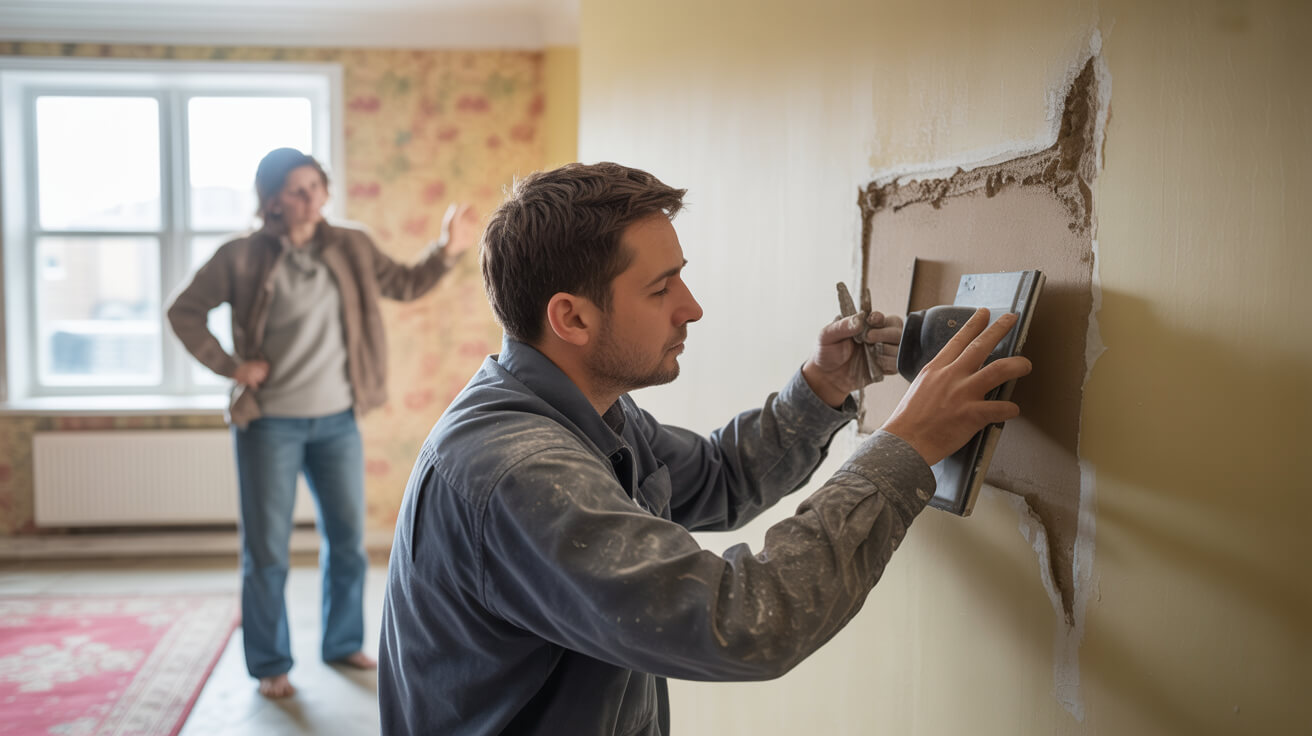
Once a damp or mould complaint hits the local authority, council officers spring into action. Investigations typically start within two weeks of the initial report. The process is systematic: on-site visits are scheduled, and inspections use every ordinary and specialist tool available—moisture metres for mapping water ingress, thermal cameras for tracing cold bridges, salt test kits for detecting hygroscopic issues, and a full evaluation via the HHSRS. Officers assess the extent, progression, and health risk profile of all damp areas (Propertymark 2023).
Should inspectors find evidence that confirms a statutory nuisance, a formal abatement notice is served. The language is blunt: fix the specified defects, within a council-set deadline, or face criminal prosecution for non-compliance. The clock rarely allows more than weeks. Deadlines aren’t negotiable.
Abatement notices mean you have days, not months—delay invites both enforcement and extra cost.
Partial repairs or temporary cosmetic fixes (such as repainting or superficial cleaning) don’t satisfy the notice. The law expects evidence of root-cause elimination—often requiring specialist diagnosis, full traceability on materials and repair methods, and signed completion documentation. For landlords or managing agents, the implication is clear: dodge the work, and council contractors may step in to resolve the problem, often at premium cost, before adding fines and admin charges on top. A single damp complaint can snowball into a dramatic operational and financial event.
What Happens if You Ignore or Don’t Fully Comply With the Notice?

Ignoring a statutory abatement notice isn’t simply “a risk”—it’s the quickest way to criminal prosecution under Section 80 of the EPA (legislation.gov.uk; Citizens Advice 2023). Councils are permitted—and expected—to escalate rapidly: fines with no upper cap, court orders, and ultimately forced entry for remediation if need be.
Council cases on public record show hefty fines and months-long fights for owners unwilling to act.
Property owners have a narrow window (usually 21 days) to appeal an abatement notice, but legal grounds are limited to clear errors in the council’s assessment or untenable deadlines. Successful appeals are rare. Most owners who rely on “waiting it out” lose both time and control. The system is set up so that every delay opens the door to more aggressive penalties, enforcement costs, compulsory repayments, and negative publicity.
For landlords, agents, and property businesses, public non-compliance can rattle lenders, destabilise insurance, and sour relationships with tenants—sometimes permanently. Dithering on urgent repairs rarely ends well; proactive compliance isn’t just legal best practice—it protects value, reputation, and asset viability.
How Can Tenants or Residents Force Action If the Council Moves Too Slowly?

If the council lags or seems to drag its feet, affected parties aren’t powerless. Section 82 of the EPA gives tenants, residents, and even neighbours direct recourse—they can bypass the local authority and apply straight to the magistrates’ court for an order compelling repairs. This mechanism applies to both residential and commercial premises (legislation.gov.uk; Citizens Advice 2023).
Organised tenants win: detailed records, dated photos, and surveyor reports force the council’s—or the court’s—hand.
Justice relies on documentation: comprehensive surveyor reports, continuous correspondence (preferably by email for date-tracking), photographs of all affected areas over time, and consistent health records if illness is involved. Advocacy groups such as Shelter or Citizens Advice offer proven templates and legal support for self-representing complainants. Practically, this means a motivated resident or neighbour—armed with evidence—has the power to trigger binding legal intervention, secure compensation, or even force urgent rehousing.
For property owners, the lesson is simple: manage complaints seriously and early. Private legal action is now routine, and the case law favours quick, permanent resolution, not negotiation or delay.
What Does “Compliance” Now Mean for Landlords, Agents and Surveyed Owners?
The age of plausible deniability is over. Since the Fitness for Human Habitation Act 2018 rewrote housing law, “fit for habitation” isn’t a judgement call—it’s a regulated baseline (Shelter.org.uk 2019). Chronic or recurring damp and mould means the property fails that baseline, regardless of intent or explanation.
Across Sussex and South-East England, criminal prosecutions for EPA-related damp breaches have surged. Lenders and insurers aren’t waiting out informal DIY jobs or verbal assurances. They want paper audits: certified property surveys, independent verification, council- and court-compliant repair logs, and official certificates (PCA, BS6576/8102, TrustMark, etc.). Audit trails must show root-cause elimination, not just a patch-up.
£10,000 fines and repair orders are no urban legend: they’re now standard for statutory nuisance breaches.
Sussex Damp Experts supply the required technical evidence—survey narratives, digital moisture mappings, photographic logs, and compliance sign-off—trusted by both authorities and mortgage providers. Correct, standards-led paperwork closes most complaints and is now indispensable for insurance claims, resale, or rental.
In a compliance landscape this strict, documentation is your only shield.
How Does the EPA’s Reach Mesh With Other Housing and Health Laws?
Statutory nuisance enforcement is the centre of a wider regulatory web. The Housing Health and Safety Rating System (HHSRS) sits atop the enforcement pyramid, marking “excess cold, damp, and mould” as Category 1 hazards: these demand urgent council attention, mandatory repair orders, and legal follow-through (Commons Library 2023).
Overlaying this are the Landlord & Tenant Act 1985 and the Fitness for Human Habitation reforms. These statutes combine to create multiple, overlapping triggers for legal intervention—with councils, tenants, and local partners able to initiate action. HMOs, large rentals, or multi-tenant blocks face even sharper scrutiny, often from licencing authorities with additional rulebooks: breach can trigger licence revocation, extra fines, or prohibition orders.
Years of council leniency are done: Zero tolerance is now the legal mood—hesitation only attracts bigger penalties.
If delays persist, enforcement partners may step in and share information: environmental health, planning, housing, and building control now work together to flag, escalate, and enforce against failure. In this environment, the only durable strategy is comprehensive, standards-driven survey and remediation, documented for any audit, claim, or dispute.
Why Do Lenders, Buyers, and Courts Prioritise Survey-Grade Evidence?

One-off repairs are rarely enough for property sales, rent renewals, or insurance claims. Mortgage underwriters and insurers have shifted from trust to evidence: they flag pre-sale surveys, random council notifications, or even tenant complaints as red flags without a trail of compliant, survey-grade documentation. For courts, it’s even more explicit—only substantive, evidence-based diagnosis and root-cause repair is considered satisfactory.
A clear survey and documented evidence can make the difference between a deal closed or left in limbo.
Sussex Damp Experts delivers exactly the proof these bodies request: audit-compliant surveys, PCA/BS6576/8102 technical references, phase-by-phase remediation logs, and clear, photographic before-and-after evidence. For buyers and sellers, this supports valuations, expedites mortgage release, and helps dodge deal-breaking conditions. For landlords, it means fast-tracking rental licences, minimising voids, and reducing tenant risk.
It’s a new legal terrain: “good enough” repairs fall short if audits or lenders query; full survey and compliance logs are now standard self-defence.
How Can Sussex Damp Experts Future-Proof Your Property Against Legal and Financial Surprises?
A standards-compliant, court-ready damp solution isn’t just smart property management—it’s now the price of admission for continued ownership, investment, or tenancy. Sussex Damp Experts operate at the intersection of technical, legal, and practical demands. Our forensic diagnosis, root-cause targeting, and full compliance documentation cover every angle, shielding clients from EPA penalties, surveyor refusals, and insurance denials.
Our up-to-date protocols meet the toughest requirements: BS6576, BS8102, PAS2035, TrustMark, and beyond. We capture photographic evidence, generate digital moisture maps, and compile court-ready audit trails with clarity and precision. Every client receives not just fixes, but the paperwork and advice to stand up to council, buyer, or court scrutiny.
Cut-rate patching brings repeat headaches. Proper diagnostics and full audit trails stop legal crises before they start.
Arrange a compliance-led damp survey today. You’ll receive our statutory nuisance action kit—direct guidance on timelines, evidence-gathering, and when damp is statutory nuisance, helping you avoid legal and financial shocks. With Sussex Damp Experts, you stay ahead of enforcement, make your asset ready for any sale or inspection, and ensure resident health for the long term.
Book now—protect your property, your pocket, and your peace of mind.
Frequently Asked Questions
Why is damp or mould sometimes treated as just a cosmetic issue—and what forces it into the legal danger zone?
Damp or mould becomes a legal hazard—not just an eyesore—when it undermines health or the quiet enjoyment of your home. UK law doesn’t fuss about surface scruffiness; it zeroes in on cases where recurring damp triggers coughs, wheezing, skin irritation, or a musty air that lingers after every clean-up. If you’re unsure when damp is statutory nuisance, the key point is that if someone in the property (tenant, child, or employee) suffers symptoms tied to indoor mould, or if areas are so damp that neighbours or visiting professionals raise red flags, your situation is already crossing into that territory under Section 79(1)(a) of the Environmental Protection Act 1990.
The strongest legal cases are built not on faded paint, but on persistent health impact or relentless, reappearing damp that defies quick fixes.
A string of complaints—especially if backed by medical notes or repeated reports—pushes local authorities into action. Even one property can tip a whole building or terrace into council scrutiny if symptoms and physical signs point to an ongoing hazard.
What physical signs or patterns turn “mild damp” into a priority for council or legal action?
- Mould recurring after cleaning, especially in cold corners or behind furniture
- Symptoms like coughing, rashes, or breathing trouble that fade on holiday or after a move
- Water staining, salt lines, blistered walls, or spoiled plaster that never fully dries out
- Neighbour complaints or simultaneous issues in flats above, below, or adjacent
- Clear diary entries or GP letters linking health complaints to the property
Fresh surveys by Sussex Damp Experts often highlight how rapidly a minor nuisance can become a legal catalyst—especially if children, the elderly, or those with asthma are in the property.
If you’re not sure of the source, is it still worth acting?
Absolutely. Uncertainty over whether it’s condensation, penetrating damp, or a hidden leak won’t slow a council’s investigation if evidence impacts health or habitability. Fast, standards-based diagnosis limits the odds of costly escalation.
How do councils probe and document statutory nuisance damp in residential and commercial properties?
Local authorities launch into action when they receive a damp or mould complaint classed as a potential statutory nuisance. Environmental Health Officers (EHOs) generally schedule an inspection within a fortnight—often sooner for families with children or medically vulnerable occupants. Expect a toolkit: moisture metres check behind the surface, thermal cameras flag unseen cold spots, and salt analysis uncovers older or recurrent leaks.
Their approach is comprehensive. EHOs walk through the property, photograph every sign of trouble, and map out the spread: bedrooms, basements, and attic spaces are all fair game. They track not just where the damp is, but how it might be getting in—pointing out failed membranes, blocked ventilation, or historic repairs that haven’t lasted.
A single site survey can reveal an invisible network of issues—what you see on the wall is often the tip of the iceberg.
HHSRS (the Housing Health and Safety Rating System) is the scoring backbone: properties with Category 1 damp hazards—especially where children or older adults live—move straight up the council’s enforcement queue.
What unique technical data do EHOs record during a statutory damp complaint?
- Moisture gradients within the wall and at vulnerable joints
- Past cosmetic cover-ups, like new paint over rotten plaster or old stains
- Patterns of condensation that point to insufficient air flow, blocked vents, or shoddy insulation
- Areas where multiple units or rooms show identical symptoms—“migration mapping” shows root causes
- Evidence of repeated repairs or DIY that’s failed under inspection
Is there any property type or tenure that escapes these inspections?
Not at all. Owner-occupied homes, let houses, shops, offices, or ground-floor studios—if the hazard threshold is met, every class of building is subject to inspection and potential enforcement.
What sanctions do councils impose if landlords or owners delay repairs or dispute nuisance damp cases?
With statutory nuisance confirmed, councils don’t haggle—they issue Section 80 abatement notices under the EPA 1990, effectively statutory nuisance orders requiring the problem to be remedied within a strict timeline. Cosmetic tweaks or half-hearted attempts carry no weight; a failed repair or a second complaint can lead to direct council intervention. When the deadline expires without enough progress, councils can send in their own contractors and reclaim all costs, often with substantial mark-ups.
Delays are costly. Your property can be flagged on local “rogue landlord” or enforcement registers, making future mortgages, insurance, or lettings trickier. Non-compliance is considered a criminal offence under the EPA, with no statutory limit on fines, and council actions are often made public for years.
One ignored council deadline can cost more than the original repair—council teams never shop around and always send the invoice after the fact.
What common triggers send a case from council warning to outright prosecution?
- Councils discover a pattern—other flats or shops in the building have similar issues
- Survey reports document cosmetic “band-aids” where real repairs were needed
- Vulnerable tenants, especially children or elderly people, are exposed to health risk
- Lenders or insurers are notified via open registers, triggering finance or policy challenges
- Failure to permit access, repeated delays, or outright refusal to fund repairs
Your best defence is prevention: certified repairs with a transparent evidence trail, especially from surveyors who know how councils build their cases.
Do commercial or mixed-use buildings face different penalties?
Not in practice. Although methods may vary, statutory nuisance is enforced equally—any building where occupancy or business is affected by damp or mould falls under council jurisdiction.
When councils won’t act quickly or refuse to pursue damp repairs, what private legal channels truly work?
If official routes stall, Section 82 of the EPA gives you power to take direct action. After registering a written complaint (allowing at least 21 days for a fix), you may file straight to the magistrates’ court—even without a solicitor. The magistrate weighs evidence: medical notes, photos showing progression or failed repairs, professional survey documentation, and any records of communications with the landlord or council.
Success is built on preparation. The court can grant an immediate order for repairs, compensation for distress or costs, and a reimbursement of legal expenses—all before the next heating season starts. Housing charities now supply guide packs, helplines, and template documentation for private claimants.
Delay leaves you with the pain and the bill. Action, even if direct and personal, shifts responsibility onto those who profit from safe buildings.
What increases your odds in a private statutory nuisance case?
- Date-stamped photo series showing how the problem grew or recurred over time
- Third-party surveyor reports to standards like PCA, BS6576, or BS8102
- GP or hospital letters linking health conditions to the living or working environment
- Meticulous records of attempts to engage both the council and the responsible party
Straightforward, well-documented cases often settle before any hearing, saving time, upheaval, and reputation for everyone involved.
Which legal codes, standards, and policies now anchor statutory nuisance and property repair in the UK?
Today’s damp enforcement landscape covers far more than “statutory nuisance.” Robust legal and policy frameworks ensure both property owners and councils take damp and mould seriously:
- HHSRS (Housing Health and Safety Rating System): Damp, mould, and condensation scoring as Category 1 hazards—forcing urgent council action
- Homes (Fitness for Human Habitation) Act 2018: Universal landlord duty for safe, healthy homes, enforceable by tenants through repayment orders and rent refunds
- Building Regulations Part C (Moisture): UK baseline for waterproofing and moisture control on new and renovated buildings
- Building Regulations Part F (Ventilation): Sets minimum ventilation for every living space, regardless of tenure
- Housing Act 2004 (Licencing): Powers for local authorities to restrict or withdraw licences from non-compliant landlords
Notably, many mortgage lenders, building insurers, and letting agents now ask for damp survey evidence that meets PCA, BS6576 or BS8102 to clear risk flags or close transactions. Evidence from reputable sources is rapidly becoming an expectation, not an afterthought.
Why do standards-aligned damp surveys carry more weight?
- Lenders and insurers reject generic “treat and check” paperwork absent a named industry standard
- Pre-emptive certification helps prevent last-minute sales fall-throughs or scan penalties when remortgaging
- Tenants and buyers are now advised to demand these for their own legal and health protection
Choosing a surveyor fluent in standards doesn’t just ease council inspections—it insulates you from future disputes and ensures every invoice stands up in court or claims panels.
What makes Sussex Damp Experts an unrivalled ally in EPA, council, and legal damp enforcement cases?
Compliant damp repair is more than a technical fix; it’s about closing every legal loophole from diagnosis to aftercare. Sussex Damp Experts approach every case with ecosystem thinking: pinpointing the origin, mapping the consequence, and future-proofing your repair history for every council, lender, or insurer likely to scrutinise.
Every survey is built on clear, traceable benchmarks: measurements using calibrated metres, full photographic audits, humidity logs, and materials selected for proven performance in East Sussex buildings. Reports and site logs reference PCA, BS6576, and BS8102, with plain-English explanations built in, making them ready for landlord defence, buyer reassurance, or even courtroom examination if stakes rise.
A repair crafted for tomorrow’s audit keeps councils, insurers, and buyers comfortable, letting you move on with your plans—whatever they are.
Sussex Damp Experts go further by guiding on-site teams (yours or your contractors) through the aftercare: from safe ventilation and planned maintenance to warranty preservation and dispute response. Whether you need bulletproof documentation for a mortgage, council negotiation, or risk-free sale, booking a standards-based survey now is the simplest way to sidestep years of future friction.
Order your compliance-centred damp survey and document pack—protect the value, safety, and legal standing of your property for years ahead.

