
 By
By  August 26, 2025

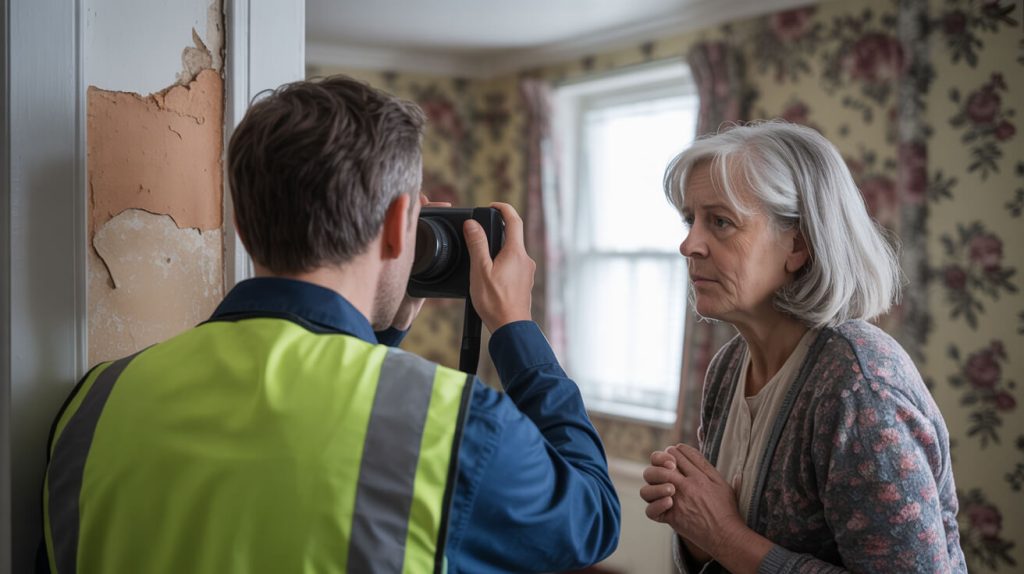
How Do You Build an Unbeatable Mould Complaint Case Under Awaab’s Law?
If you’re living with mould, you’re not simply fighting a cosmetic nuisance—your health, your rights, and your future tenancy are on the line. Awaab’s Law has swung the power needle into your hands, but power is nothing without proof. Everything pivots on clear, relentless documentation—from that first mould patch to the last email chasing repairs.
Day-one evidence turns long battles into fast results.
Awaab’s Law isn’t just a set of rules—it’s a merging of health, safety, and time. Your home is now guarded by legal deadlines, process transparency, and strict consequences for landlords who dawdle or dodge. Elevating your mould complaint above the noise starts with a disciplined approach to evidence, forcing every foot-dragging landlord to sit up and act.
What Does Awaab’s Law Actually Require From Landlords?

With Awaab’s Law in force, landlords, especially those in social housing, have lost their old wriggle room. There’s no space left for vague excuses about “lifestyle” or “just open a window.” The law sets mandatory actions linked to hard deadlines—if your complaint lands, the landlord clock starts ticking.
What Are the Legal Timelines and Landlord Duties?
Landlords now live by the clock:
- Acknowledge and investigate: your complaint within 14 days—7 if urgent, or 24 hours in an emergency ([Gov UK](https://www.gov.uk/government/publications/awaabs-law-draught-guidance-for-social-landlords/awaabs-law-draught-guidance-for-social-landlords?utm_source=openai)).
- Provide a written repair plan and clear schedule: , not just empty words or delay tactics.
- Prioritise health risks: submit medical proof (a GP letter does the job), and works must start inside 7 days for health risks.
- Complete repairs for serious threats in 7 days: —or move you to safe accommodation.
- After works, supply closure proof: not just a completed job, but a written sign-off and follow up.
From the moment you file a written or photographic complaint, the countdown is live. Each email, dated photo, and call log adds weight to your position, and a clear trail of documents and photos convinces by putting the burden to act directly on the landlord.
Why Is Early Documentation Your Most Powerful Move?

Your greatest leverage is the paper (and digital) trail. Each dated record—whether a photo, a logbook note, or a GP’s letter—strengthens your legal muscle. Early and precise documentation locks the process on your terms, not the landlord’s.
What Makes Early Evidence So Decisive?
- It cements the timeline.: The law measures from your first formal complaint—not from the day the repair team “gets around to it.”
- Every additional record builds cumulative proof.: A slow or dismissive response doesn’t just hurt you; it’s another clear brick in your legal wall.
- It destroys plausible deniability.: Even when you lack technical jargon or miss details, those time-stamped records and recurring photos speak volumes in any dispute.
Every snapshot and saved message is another lever to force action.
Set yourself up with a dedicated digital or paper folder. Structure it by complaint date, landlord responses, and repairs promised. If your landlord tries to play games, this archive will end the debate before it starts.
What Evidence Makes Your Mould Complaint Impossible to Ignore?
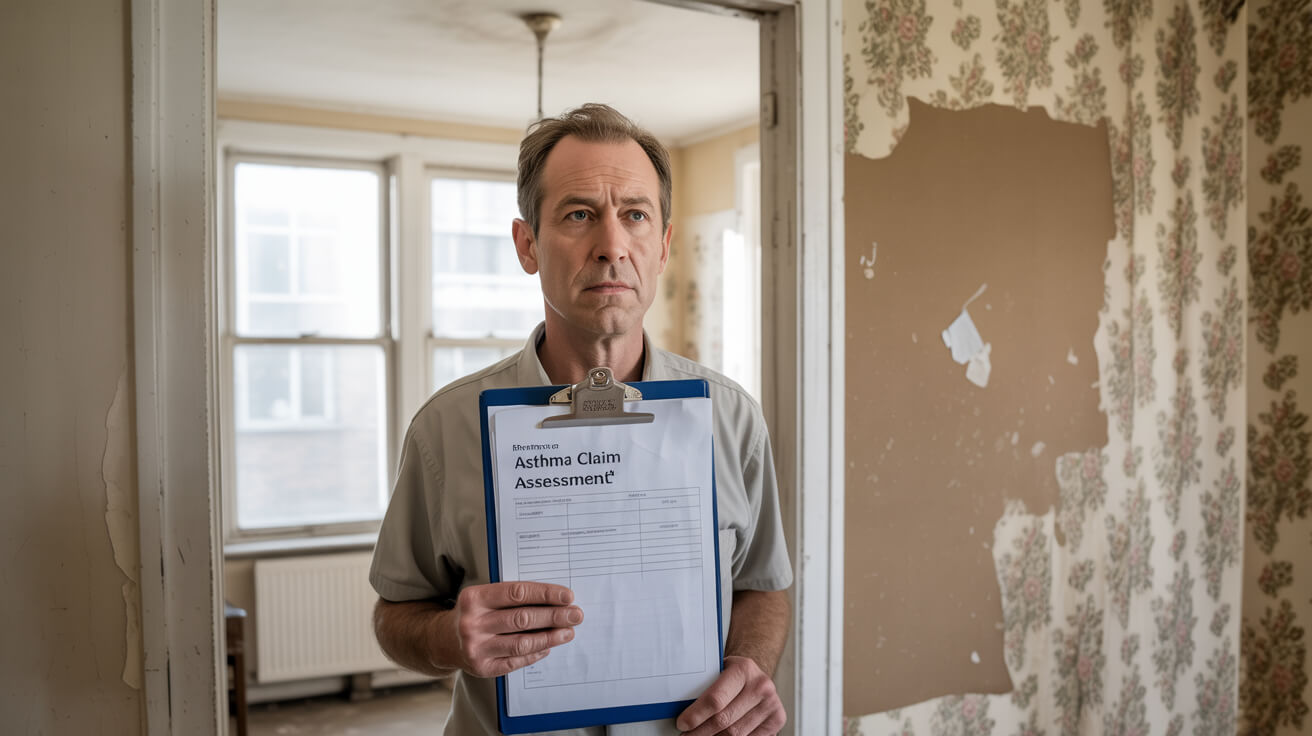
When you’re armed with solid evidence, you move past being “just another complainer.” Your case gains the gravity to shift attitudes at every level—landlord, council, ombudsman, and even courts.
How Can You Assemble an Unbeatable Evidence Pack?
- Photograph everything.: Take wide shots and close-ups, use date-stamp, and label what and where.
- Record videos: narrate what you’re seeing—describe smells, visible mould, leaks, and any health symptoms linked to the problem.
- Maintain a daily log: note any changes in the mould’s spread, failed repair attempts, or new symptoms like cough or headaches.
- Consult your GP: get proof tying health issues (children’s asthma, adult chest infections) directly to damp; request a supporting note or summary.
- Save all communication records: emails, texts, written notes of calls (with names and dates)—and after every phone call, send a summary email to confirm content.
- Organise by phase: keep clear divisions—initial complaint, landlord reply, council involvement, medical info, ongoing updates.
Every time you add an update, your position tightens, demonstrating urgency and your refusal to be brushed aside.
How Should You Report and Escalate Your Mould Complaint Like a Professional?
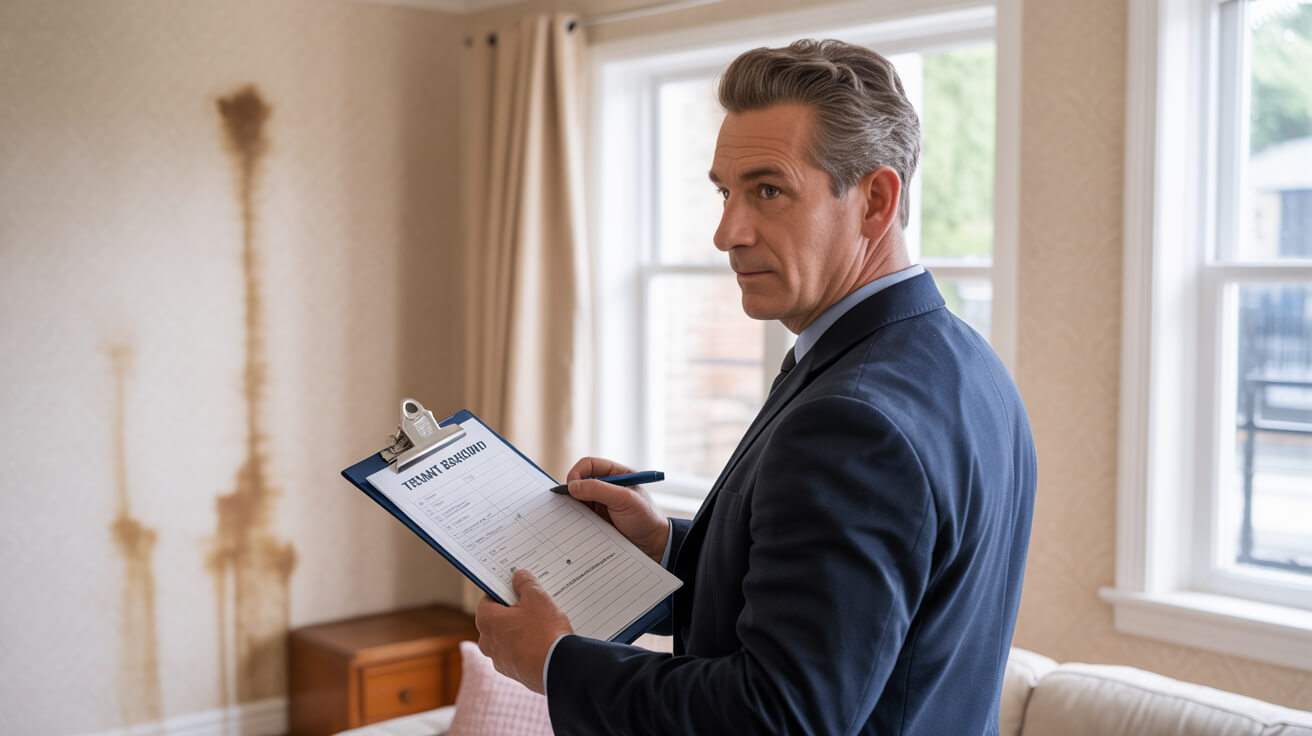
Evidence is only as useful as its trail. Too many tenants lose their case because communication gets lost in WhatsApp, or details get left out of call notes. Stick to formal, traceable channels that create an unbroken professional record—think like a case-builder, not just a sufferer.
Which Reporting Paths Give You Maximum Legal Cover?
- Always use official written channels: —email, registered post, or the landlord’s online portal. Avoid casual WhatsApp or texts unless you follow up with an email summary.
- After every phone or face-to-face chat, email a brief recap: mention what was discussed, promised, and next steps; include dates and all names.
- Maintain a clear timeline log: who you spoke to, when, outcomes, and any missed appointments or promises.
- Send follow-ups after each repair or visit: lock down what happened and what is left to do.
- Back up your files: cloud storage, email folders, and a paper copy if possible—leave nothing to chance.
A timeline backed by dated documents and photos convinces any authority you’ve done your part.
Owning the record-keeping game demonstrates you’re serious—authorities notice this, and hesitant landlords fall in line faster.
What Happens When Your Landlord Misses Deadlines—And How Should You Escalate?

Awaab’s Law cuts “wait and see” out of the picture. Missed deadlines mean you’re ready to escalate—and every escalation swings extra power into your hands.
Who Can Step In if the Landlord Delays or Dodges?
- Local Council Environmental Health or Housing Officers: armed with fresh powers to intervene and enforce safety ([Housing Ombudsman](https://www.housing-ombudsman.org.uk/centre-for-learning/key-topics/damp-and-mould/damp-and-mould-expectations/?utm_source=openai)).
- The Housing Ombudsman: send your evidence pack for an official decision—health impacts and repeat damp cases rise to the top of their priority list ([Gov UK](https://www.gov.uk/government/publications/awaabs-law-draught-guidance-for-social-landlords/awaabs-law-draught-guidance-for-social-landlords?utm_source=openai)).
- Tenant charities and legal support (Shelter, Citizens Advice): especially powerful for vulnerable groups—families, the elderly, disabled adults.
- Each escalation reboots the compliance clock: every time you take a formal step, the landlord is on the hook for a whole new deadline.
Escalating your case isn’t confrontation—it’s using your rights to unlock action.
A well-tracked history of attempts, complaints, health impacts, and repeat failures takes you from frustrated to un-ignorable—authorities now have backing to demand landlord action.
Can Landlords Still Blame You—Or Does Science Wipe Out Old Excuses?

For decades, tenants faced “just open a window” or “that’s an old house for you.” Those lines don’t carry the same weight anymore. Building science, public health, and legislation have shifted—now excuses fall flat under scrutiny.
Breaking the Myths: What’s Actually True?
- If mould keeps returning despite cleaning or ventilation, the building is usually to blame: —not your lifestyle or habits.
- Landlords, not tenants, must prove tenant responsibility: now, your recorded evidence is assumed correct unless they have technical proof.
- Retaliatory actions are illegal: —threatening eviction or harassment after a damp complaint is classed as illegal under modern housing law ([Gov UK](https://www.gov.uk/government/publications/awaabs-law-draught-guidance-for-social-landlords/awaabs-law-draught-guidance-for-social-landlords?utm_source=openai)).
- Science links mould and damp directly to real health damage: —worsening asthma, skin issues, or even immune struggles, especially for children or the elderly ([sussexdampexperts.com](https://www.sussexdampexperts.com/about)).
- Enduring, well-documented complaints always trump vague or delayed ones: time after time, authorities rule for the most diligent record-keeper.
Today’s law and science reward tenants who keep records over those who just hope.
When you meet resistance, stick to the documentation and repeat the facts. Silence, deflection, and myth no longer beat receipts and records.
Why Expert Surveys From Sussex Damp Experts Can Win The Case
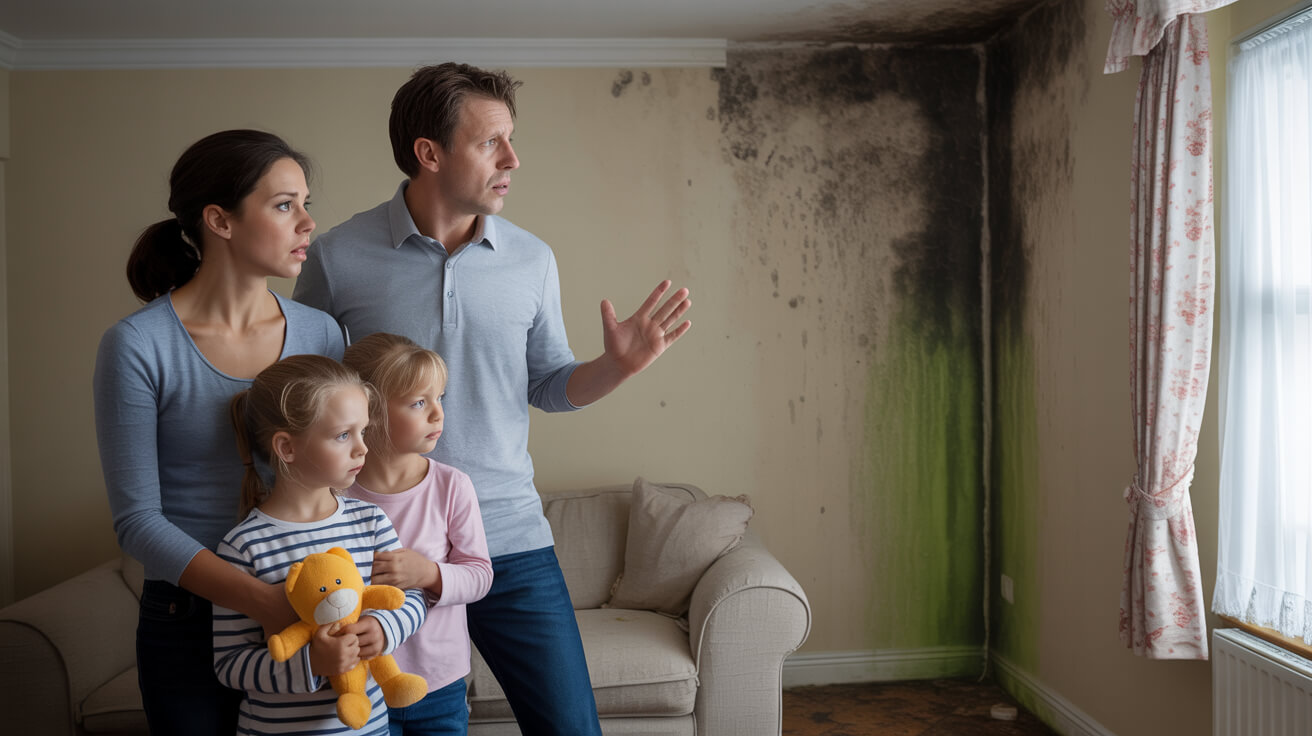
Personal logs, medical notes, and emails go far. When you truly need weight—especially when landlords stall or question your records—a formal, expert survey becomes the sledgehammer. Sussex Damp Experts’ reports have been pivotal in turning ignored complaints into action, thanks to forensic depth and regulatory muscle.
What Makes Sussex Damp Experts’ Reports So Convincing?
- Deep-dive moisture tracking: using advanced tools—thermal imaging, salt tests, borescopes—we reveal the invisible leaks, hidden rising damp, and substrate faults landlords often miss or ignore.
- Built and referenced to British Standards: full surveys cite BS 6576, BS 8102, PAS 2035, making your case council-proof, court-ready, and immune to landlord “grey area” claims.
- Simple, direct instructions: unlike many generic reports, ours lay out issue, impact, and repair logic in clear, foul-proof steps.
- Evidence packs for escalation: every finding is time-stamped, photographed, annotated, and cross-referenced—making it escalation-ready even if the case reaches legal review.
- Instant context for Sussex properties: we apply local compliance, construction quirks, and typical risk factors—from Brighton’s Regency terraces to Lewes’ listed cottages.
Across Sussex, landlords, agents, and even other surveyors know our reports move the needle. If a local authority or mortgage lender questions a case, a Sussex Damp Experts report rarely gets ignored.
When you send a report endorsed by Sussex Damp Experts, excuses evaporate—practical fixes happen.
Take Back Control—Book Sussex Damp Experts Today
You shouldn’t be stuck playing detective, archivist, and health advocate while your landlord drags out repairs. Sussex Damp Experts put the power of Awaab’s Law at your side: robust documentation, forensic surveys, and clear, locally tailored standards. You move from lone complainer to empowered client, whose case cannot be brushed aside as noise.
From the first survey to aftercare, you’re armed with everything for swift, effective action. Every client receives a court-grade report, a full evidence bundle for use with councils or legal teams, and step-by-step guidance for what happens next.
Don’t waste another week, another day, watching mould spread. Take control and put Sussex Damp Experts between you and endless landlord delays—your health, and your rights, demand it.
Frequently Asked Questions
What makes evidence from a tenant stand up to scrutiny for rapid action under Awaab’s Law?
A landlord or council won’t blink until you’ve built an air-tight chain: photographs with clear dates, symptom diaries, formal written reports, and proof of every interaction—especially silence after a complaint within 14 days. Start the moment you notice a change: wide shots, close-ups, and specific mentions of days when the mould worsened, rooms affected, and how it disrupts everyday life, because documents and photos convinces no one unless the record is clear and complete. It pays to collect health notes alongside—who’s coughing, what triggers it, whether symptoms fade if you leave home for a night. Every time you email or message the landlord, forward yourself a copy and log the date—you’re building a timeline that’s hard to ignore if the case escalates.
Every email and date-stamped photo is another brick in the wall that weak landlords can’t dodge.
How do you make your submission unbreakable?
- Date-stamp every image (camera or handwritten sign)
- Write symptom details (“bedroom, musty odour, 20 March, patch grew after rain”)
- Log landlord responses—even a non-response matters
- Bundle by room and date in a named folder (one per complaint)
- Update logs after every event (storm, work, or health change)
A steady record like this pushes the process forward, empowering councils to accelerate repairs or enforcement. Skipping steps often leads to missed deadlines—and only slows the relief for those living with mould.
Why do official logs and checked templates carry more legal force in a damp or mould dispute?
Official complaint logs and checklists from housing charities and councils do the heavy lifting: they “translate” your experience into the language the system and ombudsmen expect, including guidance similar to Ombudsman: send your evidence. They help you record every detail—from the earliest signs to repair requests—so you do not miss deadlines, symptoms, or building details needed for council review. Templates also sharpen your case by setting out why the issue matters, what you want done, and which legal triggers are being engaged.
How do ready-made templates change the game?
- They spell out what’s needed—dates, locations, types of mould (black, fluffy, etc.), and symptom records
- Timelines and reminders ensure you escalate before a window closes
- Room-by-room breakdowns pin responsibility on landlords to fix *all* affected areas, not just the worst
- Digital logs can be quickly shared when a surveyor or Environmental Health steps in
- Formal templates “speak lawyer”: they make hesitation much harder for the local council or the Ombudsman
If you keep to the checklist, your claim lands like a pro; if your documentation could double as a surveyor report, you’re set for the fastest path to repairs.
Where do most claims crumble—by failing to escalate the right way or missing deadlines?
The right channel triggers legal deadlines; the wrong one vanishes into memory. Texts and offhand remarks don’t start official repair clocks—email, written complaint forms, and portal submissions do. Awaab’s Law works on strict deadlines: landlords must act on a complaint within 14 days from a written report (7 for health-damaging cases). If the landlord delays, or fobs you off, use your official documentation to escalate to the council—who can compel immediate action.
What’s the cost of an informal or delayed approach?
- Missed deadlines erase legal leverage; landlords are not obliged to fix forgotten or verbal claims.
- Council and Ombudsman reviews will bounce incomplete or misdated submissions.
- Weak trails hand all the power to landlords to stall, deflect, or claim no knowledge
- Delays expose you, loved ones, or tenants to health dangers—and open you to further legal issues
Every missed escalation is another season with cold walls and rising costs—don’t let slow process become a permanent guest.
To win, formalise everything: escalate fast, log each step, and refuse to accept vagueness or verbal promises without a date in writing.
How does connecting health symptoms with damp or mould speed up repair orders under Awaab’s Law?
When the system sees not just damage but clear health effects—persistent coughs, headaches, asthma attacks, or allergic reactions—the repair timeline accelerates. Even a basic written note of symptoms, or a GP summary after several incidents, shifts a file onto the “urgent” track: the law requires response in seven days (24 hours for life-threatening risks) rather than 14.
What’s the practical play?
- Start a daily symptom log from the first sign. A few lines each day build a powerful record.
- Link complaints to these records: “child’s cough worsened after heavy rain in March”
- Share all doctor notes or medical summaries with your evidence pack—even basic letters or after-visit notes count
- For at-risk individuals (elderly, infants, long-term illness), council or Environmental Health escalates to priority case status instantly
“Don’t bottle up silent suffering—health evidence moves your case from the waiting pile to the red folder.”
Because health-related risks open authorities to legal exposure, your documented symptoms often force the system to move faster than merely reporting patchy paint or mildew.
What are the riskiest documentation and evidence mistakes for property owners, agents, or managers tackling mould?
Relaxed, scattershot record-keeping is the hidden enemy for both landlords and agents. Insurers and buyers now expect a meticulous “mould history”—clear records of investigations, treatments, and annual aftercare. Gaps (missing dates, lost messages, ad hoc photo dumps) cost everyone: insurance refusals, fines, lost sales, or even council enforcement.
Where do most slip-ups happen?
- Relying on WhatsApp, verbal agreements, or separately stored photos—nothing counts without date and context
- Skipping formal complaint or inspection logs: memory is not a legal defence
- Failing to gather survey or treatment receipts; the council or courts want paperwork, not promises
- Not compiling a handover pack for buyers that includes mould risk, treatment guarantees, and aftercare log
Precision protects. Everyone—owner, agent, landlord—needs a single folder per property, date-stamped and ready to hand over to the next inspector, council, or buyer. That’s especially true now that regional and national legal standards flag incomplete documentation as risk.
How do Sussex Damp Experts take documentation further, making evidence bulletproof for legal, council, or buyer needs?
Sussex Damp Experts doesn’t stop at simple fixes. Each inspection delivers a forensic report: photo libraries with airtight dating, logged humidity and room-by-room symptom mapping, and fully annotated documentation. We handle more than diagnosis—expect compliance-ready complaint forms, digital logs, template correspondence tailored to what the council and insurers expect, and guidance on Ombudsman: send your evidence.
What sets the Sussex Damp Experts process apart?
- Specialist surveyor packs: timestamped evidence covering every damp issue, matched to current and historic property standards
- Legal-ready complaint templates and logs for tenants, landlords, or agents—minimising risk of missed steps or delays
- Hassle-free digital folders and checklists—making escalation, insurance claims, or post-sale handovers frictionless
- Annual aftercare and treatment records—so maintenance or future sales never stall due to missing paperwork
With us, your route is clear: evidence is never lost, standards are always met, and you’re ready for scrutiny from buyers, councils, or the law.

