
 By
By  August 26, 2025


Does the Defective Premises Act 1972 Quietly Make Damp and Mould a Legal Trap for Every Property Owner?
There’s a law shaping the fate of every property in the UK, even if most buyers, landlords, and agents rarely talk about it—the Defective Premises Act 1972. This statute turns a patch of damp, a wisp of mould or a musty odour from “something to watch” into a live legal threat, with Defective Premises Act compliance becoming a practical issue rather than a technicality. Under today’s regulatory net, that means a private landlord in Brighton, a housing association in Lewes, or a first-time buyer in Hastings all face the same ticking clock: the moment defects appear, the risk of court action, council fines, blocked sales, and reputational loss grows. Owners who see damp as merely a cosmetic flaw risk tripping a silent wire—one that can drag them through months of costly claims, mortgage refusals, or enforced works.
Ignore one water-stained wall, and soon you’re not managing a house—you’re defending your name, your finances, and your freedom to let or sell.
The Act doesn’t just target “bad landlords” or major developers. It cares little for intention or size. Private home owners, property firms, freeholders, contractors and agents all sit in the frame if their actions (or inaction) leave a property below the bar for “fitness for habitation.” Since the fit-for-habitation reforms of 2018, any unaddressed damp, latent leak or mould recurrence can mean non-compliance. Mortgage lenders, insurers and, most aggressively, local housing authorities now hunt for such weaknesses—on survey reports, tenancy agreements or even on social media complaints.
When Sussex Damp Experts survey a home flagged for “a bit of damp,” the call’s often about urgency: a previous owner overlooked the warning; a letting agent’s maintenance note went unchased; a buyer’s lender is spooked. Every unnoticed or shrugged-off mark, in this context, isn’t just an aesthetic flaw—it’s the opening line in a legal claim under the Defective Premises Act.
Damp doesn’t shrink with time—it expands, triggering penalty after penalty the longer it’s left to seep.
Who Ends Up Legally Responsible for Damp and Mould Problems?

Liability under the Defective Premises Act fans out wider than many property professionals realise. It’s not just about the landlord or the freeholder footing the bill. If you build, convert, repair, manage, survey, or even pass along a tenant’s complaint, you could be “on the hook.”
The Modern Liability Parade—Who’s at Real Risk?
Landlords and Freeholders
The Act shines a cold beam here first. If you own or let out a property, you must keep it free from defects affecting “habitability,” even those that look minor. Failing to log repairs, jogging past a tenant’s email about a wet spot, or letting several months pass between inspections can be enough for enforcement.
Developers and Builders
A flaw in the building’s “as built” condition—such as installing a compromised damp proof course, taking shortcuts on tanking, or misreading British Standards—lands on your record for six years (or more in cases involving safety). Claims for defective construction have stretched a decade or longer when defects show up late.
Letting Agents and Property Managers
If you know about a complaint (from a tenant or contractor), but let it drift, you’re a link in the liability chain. That’s now enshrined in law—and agents acting vaguely or passing blame quickly find themselves named in actions.
Surveyors
A missed diagnosis, wrongly labelled condensation, or a “clean” report that skips root cause opens surveyors to professional claims. More sales fall apart now on the back of contradictory or incomplete damp reports.
Specialist Contractors, Builders, and Architects
If your work skips compliance (say, failing to meet BS 6576), or you use unsuitable materials, you risk claims of negligence—even years later. Professional indemnity insurers treat these defects harshly, with repeated claims leading to premium hikes or lost coverage.
Shared knowledge means shared risk. Once anyone in the process is aware—or should have been—of defects, the law expects traceable, documented action. Expecting a problem to “settle itself” or relying on vague handovers is now high-risk behaviour.
One flagged photo in an agent’s inbox can spark full enforcement, all the way to the property owner or company board.
What Are Your Concrete Legal Duties When Repairing, Converting, or Building Properties?

Every act—whether stripping an old wall, swapping a window, digging out a basement, or fitting a new damp proof course—is judged by a clear standard: does it make (and keep) the property “fit for habitation”? And—critically—can you prove every step, every material choice, every trade’s credential in a simple, accessible file? This is where dozens fall into costly legal holes.
Habitation: Not Just an End Result, but a Proven Process
British Standards Compliance
BS 6576 and BS 8102 are no longer “nice to have.” Any work that can’t map to these standards is at risk. Using untested materials, skipping proof-of-source checks, or cutting corners on tanking specifications means the repair is assumed defective if damp recurs.
Qualified Specialists
Don’t let an unaccredited contractor anywhere near your moisture management or wall sealing work. Use PCA/TrustMark (or equivalent) listed experts, and get their credentials and insurances in writing. Courts and councils trust specialist sign-off far more than DIY assurances.
Chain-of-Custody Documentation
Hold every inspection, repair, and aftercare step in well-ordered, date-stamped records. File away survey reports, quotes, receipts for key materials, pictures of before-and-after, and explicit resident communications—all together.
Regularity
This isn’t “one and done.” New rules demand systematic check-ups (often annual or after heavy weather) and scheduled reviews for known problem areas, feeding data and logs back into the property file.
DIY jobs, patch repairs, and “blind” work are now financial booby traps—just one failed council check can open months of dispute or legal gridlock.
The judge and insurer both want details—guesswork or scribbled notes from memory now count as evidence of negligence.
What Level of Proof Do You Need to Avoid Penalties and Challenge Claims?
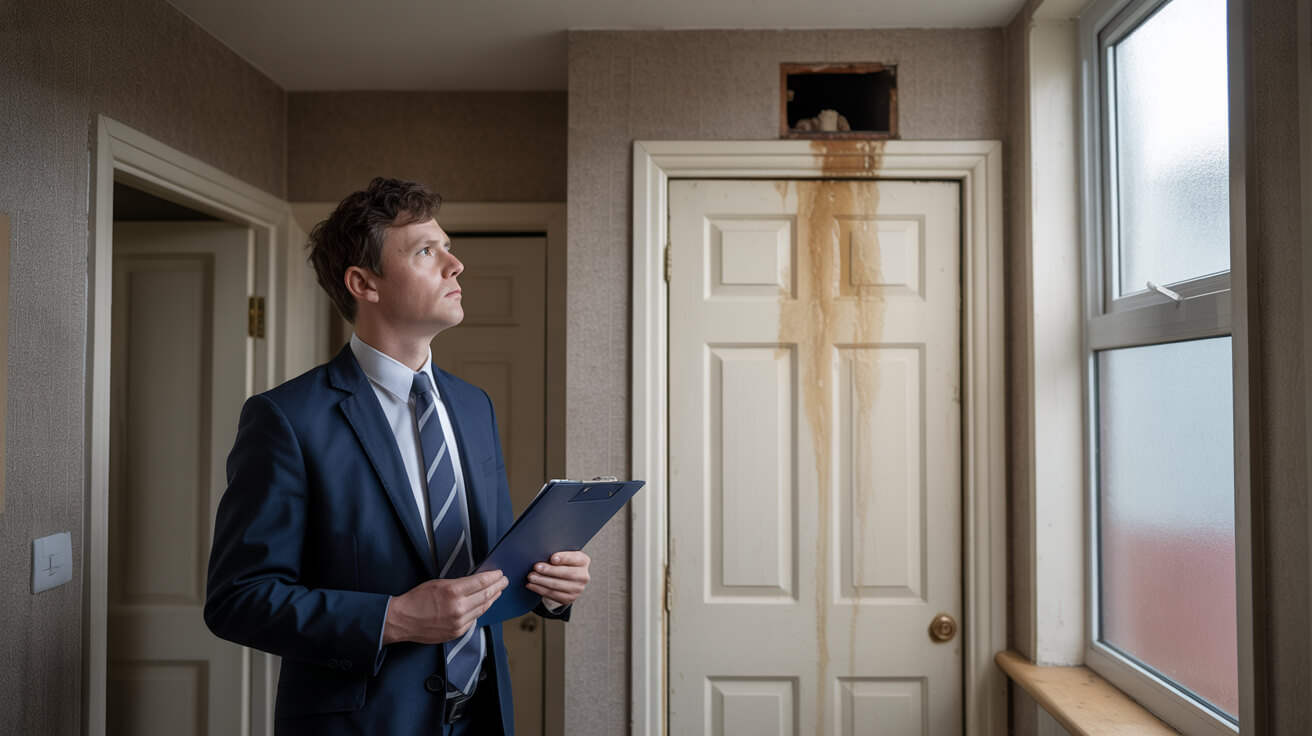
The best defence isn’t a quick fix—it’s a paper trail. Even if every visible sign is erased, your repair won’t count legally unless you can provide full documentation. The “gold standard” for defence against claims, council action, or lender challenges isn’t perfection—it’s provable process.
Step-by-Step: Building a Legal Safety Net
Incident Log
Every complaint or observation—from tenants, vendors, agents—gets recorded, timestamped, and photographed. Even a passing comment in a text conversation should enter the log.
Qualified Diagnosis
When damp is detected, your response isn’t speculation. Use calibrated moisture metres, salt analysis, and, if possible, surveyor confirmation. The report must cite location, severity, root cause, and suggest Boxing (symptom isolation) if cause is unclear.
Certified Remediation
The fix is not complete until fully logged: show materials, methods, the name and ID of the treating operatives, and before/after photographic evidence.
Aftercare and Monitoring
Return after a set period (often, 3, 6, and 12 months) to retest. Monitor with moisture sensors for known risk rooms, and keep reports open for future inspections or sale.
Connected Documentation
Connect every action to formal guidance—British Standards, manufacturer’s spec, PCA/TrustMark warranty, and council or planning consent where relevant.
Most owners who lose legal fights do so not from lack of intention, but from vague, partial, or simply missing documentation. Make the “invisible” visible.
With a full, traceable record, you hold the shield. Without it, every letter becomes a sword.
What Actually Pushes a Property Into Defect Under the Act?

Superficial remedies never stand up to enforcement. True “fitness for habitation” requires proving that a structure resists moisture in all normal and likely eventualities—now and well into the future. The standards are high, and getting stricter with each policy cycle.
Signs That Trigger Legal Action—And Why They Matter
Long-Term Mould Growth
If a damp or musty surface persists beyond a single season, it signals a structural or ventilation defect—unless tenant misuse (extreme drying of laundry, for example) is proven and evidenced. The burden falls on owners to demonstrate they took and documented all possible mitigating steps.
Rising and Penetrating Salt Stains
White efflorescence along baseboards? That’s more than “old house character”—it’s often evidence of failed DPC, breached membranes, or water tracking through masonry or render joints. Paint won’t hide the cause.
Recurring Condensation, Peeling or Rot
If window frames, skirting boards, or plaster show repeat damage or have a distinctive musty odour, authorities now assume a system-level issue. You must show full ventilation assessments and post-remediation checks.
British Standards—especially BS 6576—now set the investigative foundation. If an enforcement agent or mortgage surveyor requests evidence of compliance and you fumble for files or explanations, you default to breach.
Fresh paint can hide the truth for weeks, but good records are your real waterproofing in court.
How Quickly Can Delays Turn Damp Into Severe Legal or Financial Repercussions?

Enforcement is now not just certain, but swift—and property values, income, and reputation can collapse in months. Tech-savvy tenants and buyers trigger action with speed.
Red Flags That Lead to Penalties, Fast
Private Claims
Tenants or next owners can claim compensation for discomfort or property damage. Numbers vary, but compensation payouts often start at £1,000 and climb to £5,000-£10,000 where children or vulnerable groups are involved (Shelter UK, Inside Housing 2024).
Council Action—HHSRS
Environmental officers issue notices under the Housing Health and Safety Rating System; if you drag heels or contest without clear evidence, the council often fixes and bills the works directly—at rates far above market average.
Mortgage and Insurance Strikes
If your property is surveyed with unresolved damp, offers are pulled, insurances withdrawn, and sales locked in limbo—sometimes until full inspection and remediation is repeated by an accredited contractor.
Warranty and Escrow Rejections
Failing to follow up, document thoroughly, or resolve complaints derails warranty claims or puts release of sale funds at risk for months.
A single scraping letter or text can spark the process; silence, incomplete records, or blame-shifting make the slide irreversible.
Every fortnight of wait and see is a risk multiplier—what you delay, others will force with interest.
What Steps Can You Take to Strengthen Your Position and Reduce Day-to-Day Risk?

Owners and managers exposed to the DPA succeed by treating documentation and proactive handling as a daily ritual—not a last-resort fix.
Action Steps That Build Real Protection
Keep a Live Moisture History
Snap and file routine photos in suspected areas, with date, weather, and any relevant comments or readings.
Use Accredited, Third-Party Surveys
Do not rely on informal checks—warranty, resale, and legal layers only recognise properly certified reports with clear, binary outcomes.
Demand a Paper Trail From All Trades
Every repair must be supply chain traceable—from materials receipts to installer identification and warranty forms.
React Immediately to Reports
Escalate any complaint (email, app, phone call) to all relevant parties; document both the action and how the report was resolved or monitored.
Provide Ongoing Aftercare
Schedule returns after any repair to demonstrate due diligence. Aftercare is both prevention and, if needed, your strongest legal evidence.
When this becomes standard practice, mortgage and insurance delays fall away, regulatory risks plummet, and owners gain a reputation for professionalism—both with buyers and with local councils.
In a world running on digital proof, real resilience is proactive, not reactive.
How Do Sussex Damp Experts Deliver Legally Sound Damp & Mould Solutions That Bulletproof Your Evidence?

With regulators and councils now demanding expert-grade evidence over intention, Sussex Damp Experts has systematised the entire survey, remediation, and aftercare process to hold up in property courtrooms and mortgage desks alike.
- Diagnostic Rigour
We deploy only calibrated, industry-leading tools—moisture metres, thermal cameras—and every surveyor holds full PCA/RICS compliance. Our reports conform precisely to BS 6576, BS 8102, and PAS2035.
- Ironclad Evidence Chain
Each step—diagnosis, recommendation, works, and aftercare—is photographed, logged, and time‑stamped, with materials and technician credentials archived into your documentation portfolio.
- Audit Trail Harmonised with Law
Treatment specifications, product data, and installation methods are linked directly to British Standards. The O&M file provided to you is already mapped for mortgage, sale, tenancy or council use.
- Warranty With Aftercare
Our work doesn’t stop at handover. Scheduled follow-ups, maintenance checklists and a ready support line—plus documented warranties—keep you covered through property and legal life cycles.
So when a council summons, an insurance assessor, or a buyer’s solicitor requests evidence, your file isn’t a scramble—it’s bulletproof. Our clients across Sussex and the South East don’t just fix damp—they futureproof value, reduce legal exposure, and secure smooth property transactions.
In today’s litigation-heavy, risk-intense market, your defence is in your documentation—not in hoping the problem fades from sight.
Secure Your Property’s Future With Sussex Damp Experts
Damp, mould and condensation aren’t “just part of owning a home”—they’re legal and financial mines, waiting to detonate. Sussex Damp Experts equips you with the compliance-meeting surveys, repair cycles, and bulletproof paperwork demanded by today’s courts, councils, and lenders. Don’t gamble with assets or your reputation. When you act early, you control the timing, cost, and—crucially—your peace of mind.
Shield your property, your capital, and your future. Talk to Sussex Damp Experts before problems escalate—let your paperwork and your building stand solid, together.
Frequently Asked Questions
How does the Defective Premises Act 1972 make visible damp and mould a legal liability for property owners and managers?
Damp and mould have graduated from a surface problem to a legal tripwire because the Defective Premises Act 1972—and the need for Defective Premises Act compliance—holds anyone responsible for housing “unfit for habitation,” and visible moisture or mould is now hard proof that something has slipped.
If a resident, tenant, or visitor suffers health issues linked to indoor moisture, or surveyors spot untreated ingress, the Act presents an open invitation for legal action. Ownership rarely offers insulation: the moment a damp-related risk is reported—by message, call, or inspection note—responsibility lands directly on landlords, property managers, agents, builders, and even contractors who handled recent works.
Each missed vent or patch of flaking paint is more than maintenance—it’s potential evidence in a legal dossier.
What makes mould and damp a legal flashpoint?
- Immediate visibility: Musty odours, black spotting, or bubbling paint show clear neglect.
- Health triggers enforcement: HHSRS and councils assume a health risk exists if children, the elderly, or anyone with asthma is exposed.
- Paper trail is relentless: Emails, repair logs, WhatsApp texts, or agent notes can upgrade a complaint into statutory notice.
- Duty is shared, not shifted: Builders, surveyors, managing agents, and landlords can all be called to account—sometimes years after an initial fix.
The real risk isn’t just in what you see—it’s in what you don’t document. Modern property management means acting on the first sign, keeping dated records, and being ready to demonstrate compliance the moment the law, insurer, or lender comes asking.
What steps prove a property is “fit for habitation” and how do landlords, agents, and owners produce evidence quickly?
Proving “fitness for habitation” demands you act promptly, log each stage, and refer back to the standards in every repair cycle. The legal yardstick isn’t subjective—it is driven by British Standards (BS 6576, BS 8102), Building Regulations Part C/F, and the Housing Health and Safety Rating System.
As a landlord, agent, or homeowner, tackling reported moisture begins with no-excuse investigation. You’re expected to log complaints from the minute they land, commission surveys with accredited bodies (PCA, RICS), diagnose the root (rising damp, condensation, leakage), and specify works accordingly. Any shortcut—like painting over mould, using DIY sealant, or missing a step in the documentation—can immediately undermine your position.
Table: Evidence lifecycle for damp and mould claims
| Incident | Required Action | Evidence You Need |
|---|---|---|
| Tenant or buyer reports issue | Log with time-stamped photo or note | Complaint log, images |
| Diagnosis | Accredited survey or inspection | Surveyor’s certificate/report |
| Remedial action | Specify BS/PAS-compliant system | Quotation, product spec, invoice |
| Repair phase | Accredited work, dated records | Material/warranty file |
| Aftercare | Post-fix moisture reading, monitoring | Follow-up report, annual log |
Even informal WhatsApp or email notes become your legal starting gun. Keep your digital and paper archive ready for lenders, insurers, agents, or council inspectors at a moment’s notice.
When does legal responsibility for damp and mould fall on builders, landlords, agents, or surveyors—and where is the line drawn?
Liability travels with both the timeline and the cause. Builders remain responsible for defective design or installation (like failed DPCs, incomplete tanking, or membrane errors) for up to six years under the Defective Premises Act and Limitation Act 1980. If an issue arises during works or after practical completion and someone flags it, the builder can share the burden—sometimes even if ownership has shifted.
Landlords, owners, and property managers are on the hook for missed maintenance: if gutters overflow, ventilation is undersized, or water ingress is ignored after a complaint, the law lands on whoever had power to act. Agents acting on behalf of owners, especially in tenancy-managed situations, cannot wriggle off with deflection—if they receive and sit on a complaint, or hire subpar contractors, insurers and the courts close ranks. Surveyors can be caught if they overlook, misdiagnose, or sign off on defects.
If your name hits the inspection log, or your team handles the fix, you’re in the chain of liability—clear documentation is your only shield.
Table: Which party is liable for which failure?
| Event | Builder/Contractor | Owner/Landlord | Agent/Manager | Surveyor |
|---|---|---|---|---|
| Construction defect | Yes (1-6 yrs) | Sometimes | Rarely | Yes (if failed) |
| Poor maintenance | Rarely | Yes | Yes (if managing) | Maybe (if ignored) |
| Ignoring complaints | Only in warranty | Yes | Yes | Only if warned |
| Unaccredited repair | Sometimes | Yes | Yes | If advised/cleared |
A properly cross-referenced timeline—diagnosis, fix, follow-up, and compliance proof—often means the difference between disputed blame and outright protection.
What documentation and routines reduce the risk of council action, insurance refusal, or mortgage delays for damp and mould?
The safest route is evidence-led: record every step, from tenants’ first text through to final cure and aftercare check. A robust system, mapped to BS and HHSRS, means you can lay hands on every relevant log in moments, not days.
Create a “compliance folder” for each property. At a minimum:
- Incident and complaint log, time stamped, with clear images.
- Professional survey diagnosis (PCA, RICS, or similar), with recommendations.
- Repair and installation files: system spec, materials certification, supplier details.
- Monitoring records: moisture metre results, ongoing checks.
- Warranty, insurance, and aftercare documentation, all indexed to the property and repair zone.
Missing data is not a neutral—it’s a penalty. A council officer, buyer, or lender will fill in the blanks for you, and rarely in your favour.
Checklist: Your legal compliance pack
- All incident and inspection logs linked to repair cycles
- Professional surveyor reports, quotations, and sign-off forms
- Specification for all works (BS 6576, BS 8102, PAS 2035, or equivalent)
- Post-repair moisture testing and aftercare plan
- All guarantees, certificates, and tenant acknowledgements digitalised
These aren’t box-ticking formalities—they’re your running insurance in any dispute, sale, or compliance investigation.
How do local authority enforcement, insurance denials, and mortgage holds intersect with DPA obligations and records for property owners?
Local authorities, insurers, and lenders now act as an intertwined “verification chain” on the property’s compliance status. Councils can issue notices after a single substantiated tenant complaint, immediately escalating a landlord or owner into enforcement mode. The Housing Health and Safety Rating System (HHSRS) is a quick trigger: once mould or moisture risk is logged, a professional inspection and mandatory works often follow.
Insurers take a hard line against partial repairs or missing documentation—denying claims if no British Standard diagnosis or installation record exists. Mortgage lenders, especially with growing regulatory scrutiny post-2023, halt new loans or remortgages when any survey reveals damp, incomplete repairs, or ambiguous file trails. This risk ratchets up in high-value areas or with listed buildings, where proving correct process is non-negotiable.
Table: Where compliance is checked, and what’s at stake
| Checkpoint | Authority | Risk for Poor Record |
|---|---|---|
| Complaint/enforcement | Local authority (HHSRS) | Emergency repairs, legal action |
| Insurance claim | Insurer | Denied payment/voided cover |
| Sale/remortgage | Lender/Surveryor | Blocked or delayed funding |
Streamlining your documentation process isn’t just smart: it’s the only reliable way to avoid sudden, high-cost problems that can block sales, void insurance, or lock you in an enforcement spiral.
How does Sussex Damp Experts actively minimise legal and operational risk for owners, agents, and managers dealing with damp?
Sussex Damp Experts shields property portfolios with an integrated survey-to-remedy chain—stepping far beyond cosmetic “fixes.” Each phase is led by forensic root-cause analysis (using industry-calibrated moisture mapping, salt analysis, and compatibility checks for heritage, cavity, or timber frames), all referenced against the relevant British Standards and council requirements.
Every action taken is logged with supplier details, method statements, and surveillance photos; every survey is performed and signed off by PCA-accredited professionals. Post-repair, Sussex Damp Experts runs targeted checks using digital moisture sensors and annual aftercare walks, fending off relapses.
- Surveyor-grade diagnostics using calibrated moisture metres, substrate analysis, and photographic evidence.
- Specified systems tailored to the property context, delivered to exceed PAS 2035, BS 6576, and HHSRS best practices.
- Repair files built for lender and insurer review, with mapped warranties and ready-issued compliance statements.
- Embedded aftercare, so every fix becomes a case study in risk control—not just moisture removal.
You’re not simply buying a “damp treatment”; you’re investing in a compliance buffer that protects capital, future lending, insurability, and your hard-won reputation. Book a Sussex Damp Experts compliance audit today and stay comfortably ahead of council, lender, or insurance scrutiny.
In property, the gap between a fix and a failure is almost always the evidence. Build your defence as you build your home.

