
 By
By  August 26, 2025

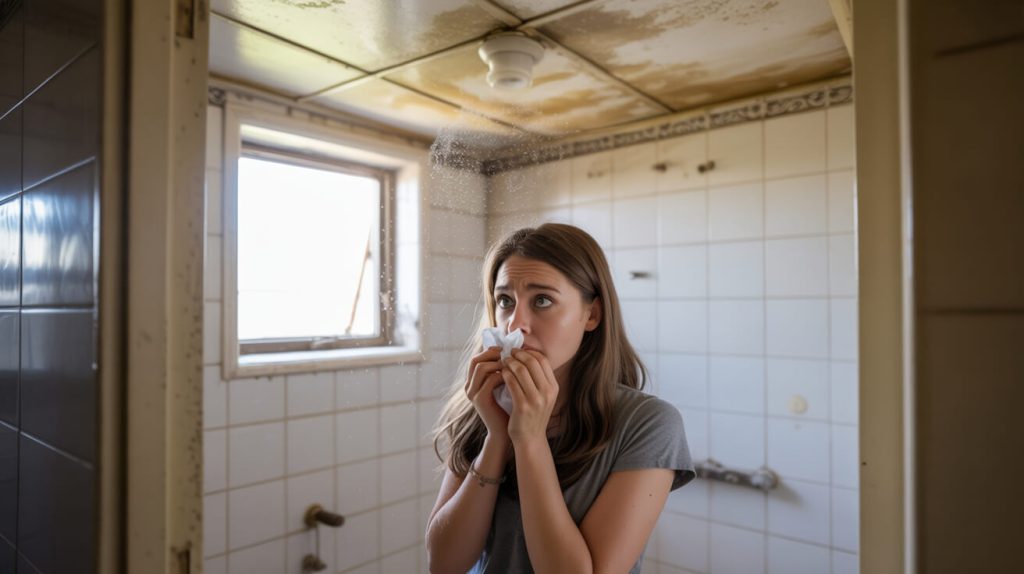
Why Damp and Mould Are Now a Human Rights Issue—Not “Just a Nuisance”
You can no longer call persistent damp or mould a “minor headache” and hope the problem dries up. Across East Sussex, blackened corners or a lingering musty odour signal far more than property neglect—they signal legal, financial, and, most importantly, human consequences. Modern regulations, case law, and public health frameworks now treat unmanaged damp in housing as a breach of human rights.
Every ignored patch of mould is a warning sign, not a decorative flaw.
Gone is the era where peeling paint was shrugged off, or a small water stain was just a job for the next rainy weekend. Today’s landscape demands a hard look at damp and mould, positioning them as triggers for direct legal claims, regulatory scrutiny, tenant activism, and even national news coverage. If your building—or your client’s—develops these silent problems, you’re exposed not only to costly remediation but also to fines, reputational hits, and health claims that no insurance policy can truly buffer.
Here’s why this shift is unavoidable:
- Studies by the World Health Organisation show that damp and mould contribute significantly to asthma, respiratory infections, and allergies among children, the elderly, and other vulnerable populations ([World Health Organisation, 2009](https://www.euro.who.int/en/publications/abstracts/who-guidelines-for-indoor-air-quality-dampness-and-mould-2009?utm_source=openai)).
- UK courts are now flooded with cases where a ignored leak, patch of mould, or persistent condensation triggered claims not just for property damage, but for violation of personal rights and health standards.
- Media attention means what was once back-page news can now escalate into a story that stings reputations, triggers legislative change, and shifts market expectations permanently.
Across Europe and the UK, the bottom line is clear: if you manage or own property and wave off signs of moisture, the risk isn’t just to your walls, but to your business model, your legal standing, and—most crucially—your obligations to protect human health.
What Makes Safe, Dry Housing an International Right?

Safe housing isn’t “nice to have” in the eyes of the law. Across the globe, the right to healthy, habitable accommodation is enshrined in hard-won treaties, national rules, and court decisions. The world’s leading health and human rights agencies have spoken with rare clarity: a home compromised by damp or mould is a breached right, not a mere maintenance failure.
Global frameworks that drive this shift:
- International Covenant on Economic, Social, and Cultural Rights (ICESCR): This treaty, ratified by the UK and most European nations, cements “adequate housing” as a right—which includes protection from environmental health risks like damp, mould, and condensation.
- World Health Organisation / United Nations directives: Both bodies have made explicit demands for governments to enforce standards that protect all residents from the proven health threats linked to humidity and mould ([UN Factsheet No. 21](https://www.ohchr.org/sites/default/files/Documents/Publications/FS21_rev_1_Housing_en.pdf)).
If your tenants shiver next to damp-stained walls, you’re already breaching more than a contract.
These frameworks are far from theoretical. Tenant associations, housing watchdogs, and legal bodies are using international law as both shield and sword: when national systems stall or landlords delay, these global rights power legal actions, media exposés, and compensation claims that cut deep.
If you own or manage property, knowing these rights isn’t just about academic awareness. It’s commercial survival. Failing to uphold this foundation leaves you vulnerable to claims, forced repairs, and major reputation loss—whether you oversee five houses, a hundred flats, or commercial leases across Sussex.
How Does European Law Turn Damp and Mould Into a Legal Breach?

Europe’s legal climate is shifting underfoot. Damp and mould are now classified by courts as genuine threats to “private and family life”—a right protected under the European Convention on Human Rights (ECHR). Leading cases—including “Lee v Leeds City Council”—prove that landlords and managers risk more than a telling-off: a documented, persistent damp or mould issue can and does become a direct legal violation (hutcheonlaw.co.uk).
You don’t have to own a slum to face legal action—just ignore a serious complaint.
What does this mean for you?
- Chronic, proven instances of damp or mould, especially those that affect the health or well-being of tenants, now constitute a breach not just of contract, but of fundamental rights.
- Medical reports, surveyor evidence, and repeated tenant notifications are taken seriously in court. “Out of sight, out of mind” is a fast-track to litigation.
- Repairs that are superficial or delayed become a trigger for government intervention, direct tenant legal action, or both.
Housing courts across the UK and the continent demand records, independent survey evidence, and prompt corrective action. If these are missing, claimants are winning not just repairs but substantial compensation and orders that leave owners and managers boxed in—financially and reputationally.
What Are Your Legal Duties if You Own or Manage Property?

UK law—and its European counterparts—now leaves less wiggle room than ever before. Regulatory updates like the Homes (Fitness for Human Habitation) Act 2018 grant tenants across England and Wales the clear right to legal action when living conditions fall short. “Fit for human habitation” is a test anchored on objective standards: no structural damp, no unaddressed leaks, no visible or hidden mould (legislation.gov.uk).
Scotland’s Repairing Standard and the Housing (Scotland) Act 2006 go further, while across EU states, “health and safety” benchmarks are regularly wielded by lenders, insurers, and government inspectors.
Documentation isn’t optional; it’s your only defence against legal action.
Here’s the modern compliance reality:
- Investor, landlord, agent or property manager: You must maintain robust, up-to-date evidence that you have inspected, diagnosed, and addressed any damp or mould—preferably before a tenant complaint lands.
- Survey-grade records: Professional documentation, complete with independent surveyor reports and moisture mapping, is the new standard.
- Transparency and speed: Patchwork jobs, cosmetic fixes, and vague documentation no longer pass muster; swift, credible repairs and open records are expected.
This isn’t about ticking boxes for an audit: it is about pre-empting legal challenges, maintaining good standing with lenders and insurers, and sustaining market value as reputation-driven risk mounts.
How Is Enforcement Actually Carried Out—and Who Wins?

Enforcement in the housing sector has grown more agile and assertive, swinging the odds in favour of tenants and regulators. In England, the Housing Health and Safety Rating System (HHSRS) lets tenants or advocates flag risks, summoning local authority power to order repairs or impose strict penalties.
New rules such as Awaab’s Law raise the bar further, enforcing tight inspection and remediation timelines—often as little as 14 days to inspect and seven weeks to complete works (prokil.co.uk). This pace shapes expectations for both public and private landlords, making delay perilous.
Delay is now the costliest mistake; speed and thoroughness win disputes and save reputations.
Private buyers, sellers, commercial tenants and legal teams are also getting savvier. Survey-grade evidence at point of transaction is no longer negotiable. “DIY” reports or a few phone photos won’t outgun a professional diagnosis in court—especially not with councils, lenders or insurers demanding verifiable third-party proof.
The short answer: only those with strategic, proactive compliance—solid survey evidence, swift action, and proper records—stay ahead. The rest risk regulatory intervention, costly compensation, or public shaming.
Why Expert Survey and Diagnosis Are Essential Defences

Take it from those who see these issues daily: relying on educated guesses or “quick-fix” repairs no longer cuts it. Professional diagnosis based on surveyor-standard inspections is your only reliable defence—both for routine management and urgent disputes.
Survey-grade proof isn’t a luxury—it’s the key to controlling costs and courtroom outcomes.
Moisture and mould experts make a difference by:
- Using calibrated equipment—like moisture metres, thermal imaging, and borescopes—to establish precise causes, not just symptoms.
- Delivering documentation that survives scrutiny from insurers, mortgage lenders, housing teams and courts.
- Providing step-by-step action plans, including aftercare and monitoring advice so issues don’t recur or trigger repeated complaints.
For home sales, this means smooth transactions and fewer renegotiations. For letting agents, it means gaps filled, claims cooled, and regulatory nips avoided. For landlords, it means disputes are stopped at the door, not in the courtroom.
At Sussex Damp Experts, regulatory-grade reporting and execution are built into every job—a relief both to legal teams and to property owners who’d rather avoid a public fight.
Why Preventive Action and Ongoing Monitoring Are Now Business-Critical

The most expensive errors in moisture management are always reactive decisions. Today’s legal and market environment rewards those who spot and solve early; it penalises those who wait until the wall crumbles or the tenant moves out.
Proactive steps now essential:
- Instal moisture sensors in sensitive areas: Track live readings and keep a running log—missed readings become liabilities when disputes arise.
- Scheduled aftercare: Make surface inspections, validate warranties, and check mechanical ventilation as routine, not as afterthought.
- Record every complaint and fix: These records, instantly retrievable, are gold. If challenged, they demonstrate compliance and “best strategy” thinking—not negligence.
Risk isn’t just what you see—it’s what you can document and prove.
Homeowners with prevention built in secure a healthier environment and keep up property values. Landlords and agents find that planned aftercare keeps voids short and lease rattles to a minimum. Ongoing monitoring cuts the stress and the cost on every side—an ounce of prevention sweeps away mountains of risk.
Contact Sussex Damp Experts Today
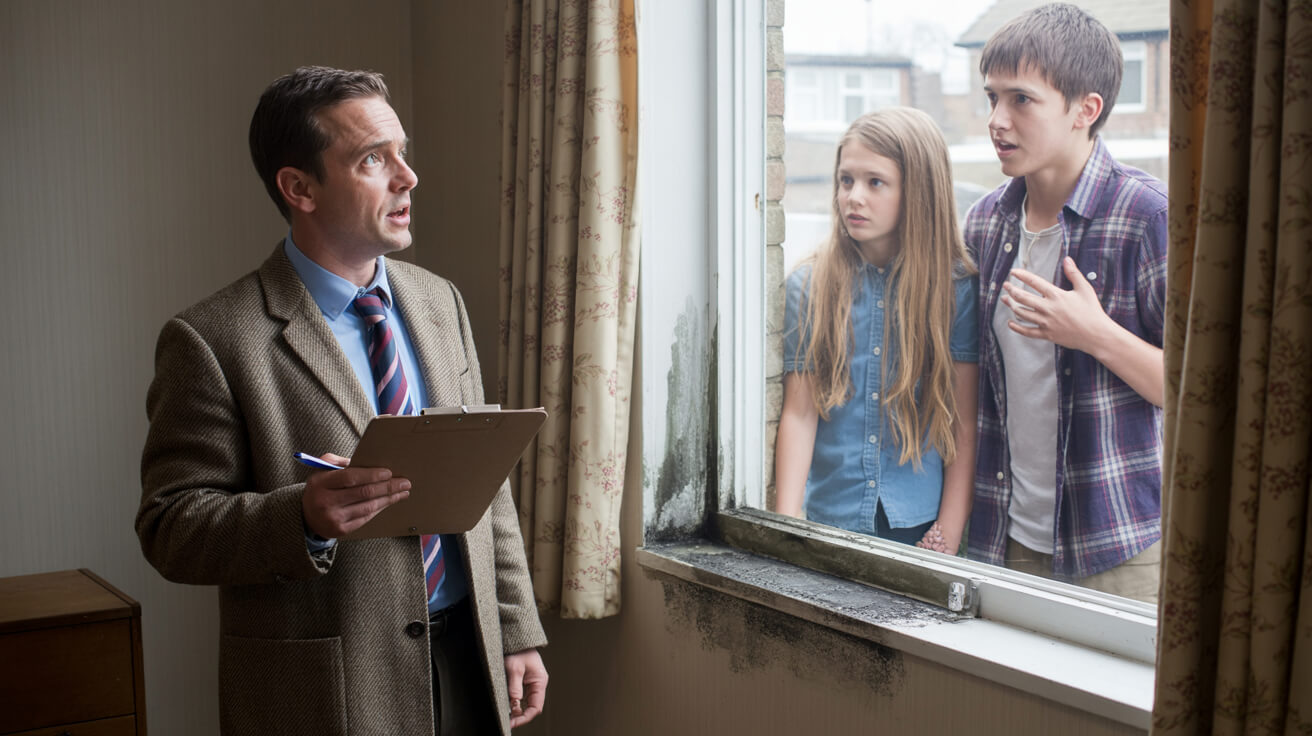
If you own, buy, sell, let or manage property in East Sussex, the time to treat damp and mould as side-issues is gone. Every ignored signal—from a subtle discolouration to a musty odour—now carries the risk of court action, substantial costs, and loss of trust from those you serve.
At Sussex Damp Experts, our approach is rooted in prevention, legal-grade diagnostics, and solutions aligned with the highest health and property standards.
You decide whether today’s leak becomes tomorrow’s lawsuit—or your best review.
Don’t leave compliance—and the value of your asset—up to chance or look-the-other-way repairs. Choose a science-driven, regulation-ready partner to protect your people, your properties, and your business future.
Sussex Damp Experts – Your Guarantee of Healthier, Legal, and Commercially Safer Properties.
Frequently Asked Questions
Why is damp and mould now treated as a breach of human rights in housing?
Damp and mould are no longer seen as minor annoyances—they’re viewed as threats to health, safety, and dignity, with roots in international and UK human rights law.
The International Covenant on Economic, Social and Cultural Rights (ICESCR) defines safe, habitable housing as a human right—a definition mirrored in the UK by the Homes (Fitness for Human Habitation) Act 2018 and enforced via the Housing Health and Safety Rating System (HHSRS). Failing to tackle damp and mould doesn’t just lower living standards—it can lead to asthma, respiratory illnesses, and mental distress, especially for children, the elderly, or anyone with pre-existing health issues.
When condensation creeps and mould takes root, the law sees more than a stain—it recognises a risk to your family’s health and dignity.
How rights are enforced when damp is present
- Local authorities can force repairs or impose penalties when minimum standards are ignored.
- The World Health Organisation flags any indoor mould greater than 1m² as an urgent hazard, raising both the legal and ethical stakes for resolving the problem.
- Social landlords face strict deadlines (introduced by Awaab’s Law) to rectify serious hazards, closing off loopholes for delay.
When a home slips below these standards, tenants and homeowners gain powerful leverage—damp becomes a springboard for real legal remedy, not just grounds for complaint.
What international agreements and UK laws guarantee protection from damp and mould?
Your right to a dry, healthy home is safeguarded by both global conventions and hard-edged national law.
The UK is a signatory to the ICESCR, which enshrines health and safety in housing as a legal standard, not just an aspiration. This commitment steers home-grown legislation: the Landlord and Tenant Act 1985, the Fitness for Human Habitation Act 2018, and the HHSRS put clear-cut duties on property owners to keep homes free of moisture, condensation, and mould. International guidance, such as the WHO Housing and Health Guidelines, influences British enforcement practice—every damp survey or repair must meet these global health protections.
Where the rules converge:
- National laws translate international obligations into practical repair standards.
- Local authorities and courts regularly refer to WHO criteria when assessing risk or negligence.
- Even private landlords must meet these thresholds, with failure opening the door to forced repairs or financial penalties.
Maintaining a damp-free home is no longer just courteous property management—it’s the law, with international backing and local enforcement power.
How do various countries and UK nations handle landlord accountability for damp?
Each country applies pressure in its own way, but the direction is the same: effective, enforceable protection.
- England/Wales: Councils have legal muscle to inspect, order repairs, or fine landlords dragging their heels, using the Fitness for Human Habitation Act.
- Scotland: The “Tolerable Standard” sets out right-of-entry for necessary works and Tribunal power for unresolved hazards.
- Ireland: Housing inspections are routine, with authorities authorised to serve legal orders or prosecute non-compliance.
- Australia & New Zealand: Both embed minimum moisture, warmth, and insulation standards within tenancy laws; state-level tribunals expedite enforcement.
| Area | Enforcement Route | Typical Outcome |
|---|---|---|
| England/Wales | Council enforcement/courts | Repairs & penalties |
| Scotland | Housing Tribunal | Compulsory works |
| Ireland | Local Authority, legal action | Fines, orders |
| Australia | State Tribunal, rent redress | Rapid compliance |
| New Zealand | Tenancy Tribunal | Enforcement, fines |
Even across borders, the same truth applies—persistent damp is a legal failing, not a cosmetic one. Landlords are expected to act promptly or face procedural, financial, and sometimes reputational consequences.
When have courts and councils ruled that damp and mould cross into rights violations?
Courts respond decisively when tenants’ health, privacy, or well-being are threatened by damp, using both national law and human rights as justification.
In Lee v Leeds City Council & Ratcliffe v Sandwell MBC (2002), severe damp and chronic mould left tenants struggling with both health effects and loss of comfortable living. The Court of Appeal signalled that, beyond a certain point, this isn’t just “unpleasant living”—it breaches Article 8 of the European Convention on Human Rights (right to respect for private/family life).
More recent tragedies, like Awaab Ishak’s death from persistent mould (Rochdale, 2020), have permanently shifted the regulatory landscape: new rules (Awaab’s Law 2023) now force social landlords into tight repair timelines.
Courts draw a sharp line: when evidence of harm stacks up, landlord excuses run dry—regulators and judges side with protection over profit every time.
How these rulings shape your case:
- Well-documented health impacts—photos, medical records—accelerate intervention.
- Delays over weeks or months, especially for families or vulnerable tenants, tip cases from mere maintenance disputes into legal battles with serious consequences.
What are the most effective strategies to force damp repairs using both UK and international standards?
Winning swift repairs takes more than reporting a problem—it calls for disciplined documentation, strategic escalation, and invocation of the right legal and policy hooks.
Step 1: Gather photographic evidence and medical/symptom logs.
Step 2: Secure an accredited damp survey from a specialist—PCA, BS 6576, or PAS 2035 accreditation is vital.
Step 3: Send a written complaint, referencing not only local duties but also international health standards (e.g., “WHO guidelines recommend immediate action for mould over 1m²”).
Step 4: Cite statutory repair timeframes—social tenants now have specific deadlines under Awaab’s Law; all tenants can invoke HHSRS urgency.
Step 5: Escalate through council, ombudsman, or court if there’s no timely action.
| Strategy | Impact |
|---|---|
| Photo logs | Proof of persistent hazard |
| Specialist report | Provides technical authority |
| Written trigger | Activates legal response timeline |
| Enforcement action | Unlocks regulatory and legal leverage |
These steps transform a “maintenance request” into a fully defensible legal claim—a process that’s even stronger when you can point to global consensus on minimum healthy home standards.
How does hiring Sussex Damp Experts defend your rights and unlock rapid compliance?
Working with Sussex Damp Experts brings more than technical fix—it delivers strategic, legally defensible protection for your property and your health.
These professionals blend forensic analysis (moisture mapping, salt testing, substrate checks) with expert interpretation of both UK and global standards. Their reports translate damp from a “maybe” into a documented breach of law, backing you whether you deal with landlords, councils, or insurers.
- Compliant diagnosis: Each survey meets or exceeds BS 6576, BS 8102, PAS 2035—all supporting legal credibility and enforceability.
- Clear, actionable reporting: You receive documents that decipher root causes and identify what is required for a truly durable fix—not just cosmetic patching.
- Legal muscle: When negotiations stall, expertly prepared reports act as a lever for enforcement. You can show councils or the courts that the issue isn’t just “noticed,” it’s been forensically proven.
- Aftercare assurance: Warranty-backed repairs and post-completion inspections give your case an extra layer of security, helping you avoid repeat problems or insurance snags.
A real damp specialist gives you more than a diagnosis—they provide the firepower, evidence, and credibility to turn legal rights into repaired walls and safer living.
Contact Sussex Damp Experts to move your situation from frustration to solution, and to prove—beyond any doubt—that your right to a dry, secure home will be protected as robustly as the law and science allow.

