
 By
By  August 26, 2025


How Does Awaab’s Law Actually Protect Your Property—and What Changes for You?
Awaab’s Law flipped the script on property management across England, leaving no room for half-measures or hopeful improvisation. What sparked this change? The tragic, avoidable death of two-year-old Awaab Ishak due to unchecked mould—an event that forced Parliament to treat damp with the same urgency as a gas leak or exposed wiring. As explained in awaabs law and mould tenants rights to safe housing in 2025, under the Social Housing (Regulation) Act 2023, protecting occupants from damp and mould isn’t a gesture of goodwill—it’s a legal mandate with teeth.
When the law starts its clock, wishful thinking just builds an audit trail.
Awaab’s Law means every report—musty smell, peeling paint, persistent cough—becomes a formal, time-bound obligation. If you own, manage, or let a property, you’re required to act: not next month, not after “monitoring,” and not after another coat of paint. Excuses, cosmetic quick fixes, and blame-shifting aren’t just frowned upon; they’ll see you facing unlimited fines, an ombudsman, or the wrong kind of media attention.
Landlords, agents, and property companies are bracing for a new reality. Now, every time a tenant spots trouble, the stopwatch starts. Every delay, every shortcut, and every missing record increases your risk—not just to your reputation, but also to your ability to defend your decisions in court or with regulators. If you thought “business as usual” kept you safe, Awaab’s Law just rewrote the rulebook.
Where Dangers Lurk: Damp, Mould, and the True Price of Delay

Damp isn’t just a cosmetic nuisance—it’s a silent wrecking ball if ignored. What starts as a flaky corner or a musty odour quickly spirals into structural erosion, airborne mould, and a health threat to anyone unlucky enough to inhale the outcome. Awaab’s Law makes clear that even the suspicion of damp or mould demands immediate action—before anyone suffers, and before a single regulator’s visit.
Children living with visible mould are 40% more likely to develop respiratory illness. (Shelter UK)
Waiting it out or blaming “tenant lifestyle” no longer flies. Letting the problem linger with a why-should-I-rush shrug opens the door to major risk—financial, legal, and human. The law expects you to hunt for damp as if you’re chasing a gas leak: investigate, document, and treat every warning sign. This isn’t about just covering up marks, but understanding the moisture’s journey through your building—right to its core. Modern property management means knowing what’s lurking behind the surface.
The costs of inaction aren’t limited to repair bills or a few grumbling tenants. Chronic damp weakens walls, rusts fixings, peels paint, and becomes a launching pad for black mould—a notorious health hazard, especially for children, the elderly, and anyone with respiratory problems. The law’s message is simple: delays can make you liable for more than damage; you’re answerable for the wellbeing of people living in your property.
What Statutory Deadlines Exist—and Why Days Now Matter

With Awaab’s Law, property owners and managers must treat damp and mould complaints like emergencies, not admin tasks. Each stage comes with a ticking clock and little wiggle room:
- Inspection: Every complaint must be investigated onsite within 14 days—no exceptions.
- Tenant Notification: Tenants must be updated in writing within three working days of inspection, sharing what was found and what comes next.
- Emergency Works: Any urgent risks—serious mould, fungal damage, unsafe conditions—require action within 24 hours.
- Standard Repairs: All other necessary works must start within seven days.
- Supplementary and Preventive Work: Things like upgrading ventilation, improving insulation, or boosting the damp proof course (DPC) must begin within five working days once the urgent hazards are controlled.
- Completion: While some flexibility is allowed, you’ll need hard evidence for any “reasonable” extension (rarely more than 12 weeks).
- Alternative Accommodation: If a property can’t be made safe fast, you must arrange for your tenants to be housed elsewhere—immediately.
Every missed deadline is a loaded trap: unlimited fines, legal costs, or ombudsman action—your explanations won’t mean a thing without hard proof (gov.uk).
These rules mean there’s no hiding behind admin delays or supply chain excuses. From the moment a resident raises concern, you’re on the hook to act and document every step.
Superficial Checks Are Out: Forensic Damp Diagnosis Is In
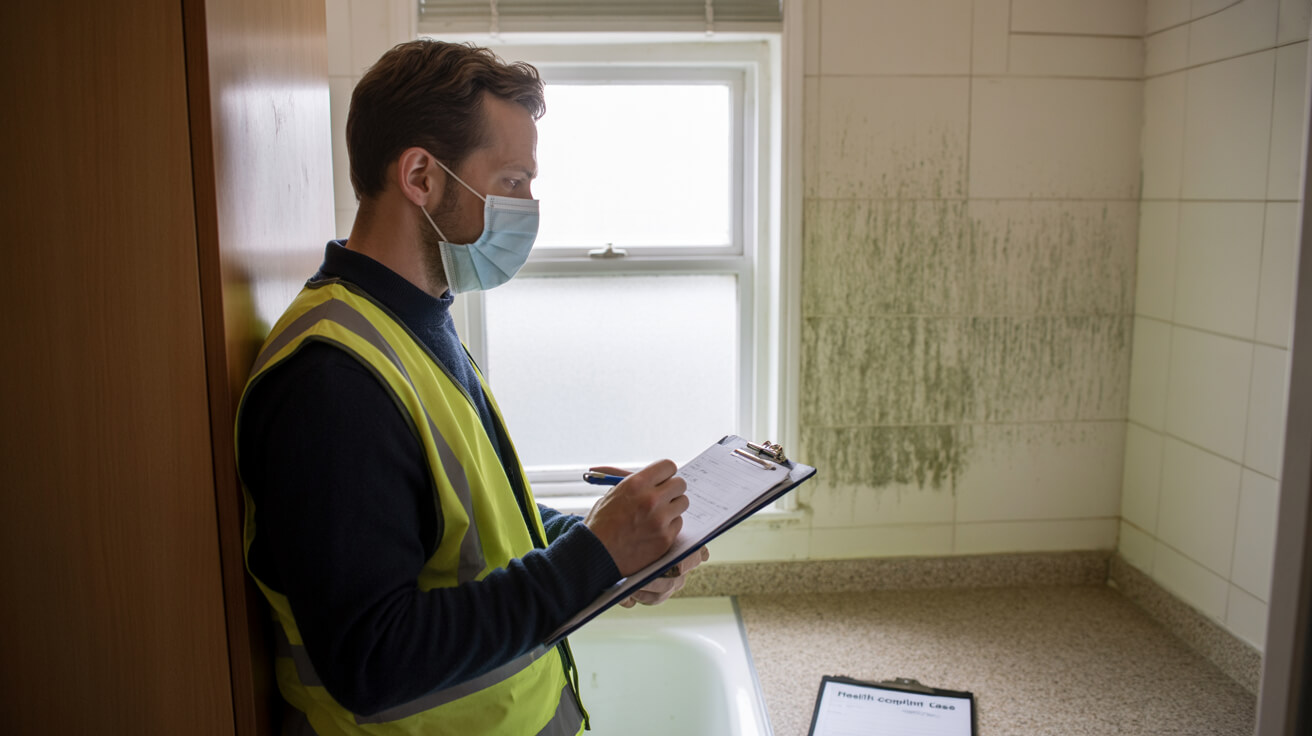
Awaab’s Law leaves no place for guesswork, finger-pointing, or visual “looks fine” routines. Diagnosis now means evidence, not hunches—and audit trails, not assumptions. Property owners, managers, and agents are expected to approach every case as though preparing for court. That means rolling out the serious tools: moisture metres, borescopes, thermal cameras, and chemical salt tests.
A cursory note of ‘looks like condensation’ no longer counts—damp diagnosis demands moisture readings, substrate analysis, and a traceable paper trail. (sussexdampexperts.com)
You can’t get away with a casual flick of the wrist and “Looks like a spot of condensation.” Inspecting damp today means moisture readings at various wall depths, salt and substrate analysis, and thorough photo documentation. Every reading, every metre, every thermal camera snap must have a timestamp and link straight to your action plan. Regulators and courts expect nothing less—no detail is too small.
Skip this forensic standard and you flat-out risk losing your case. Not “I thought it was okay”—but “Here are my logs, readings, photos, and stepwise evidence.” That’s what compliance—and peace of mind—look like.
The Two-Stage Remediation Rule: Why Quick Fixes Aren’t Enough
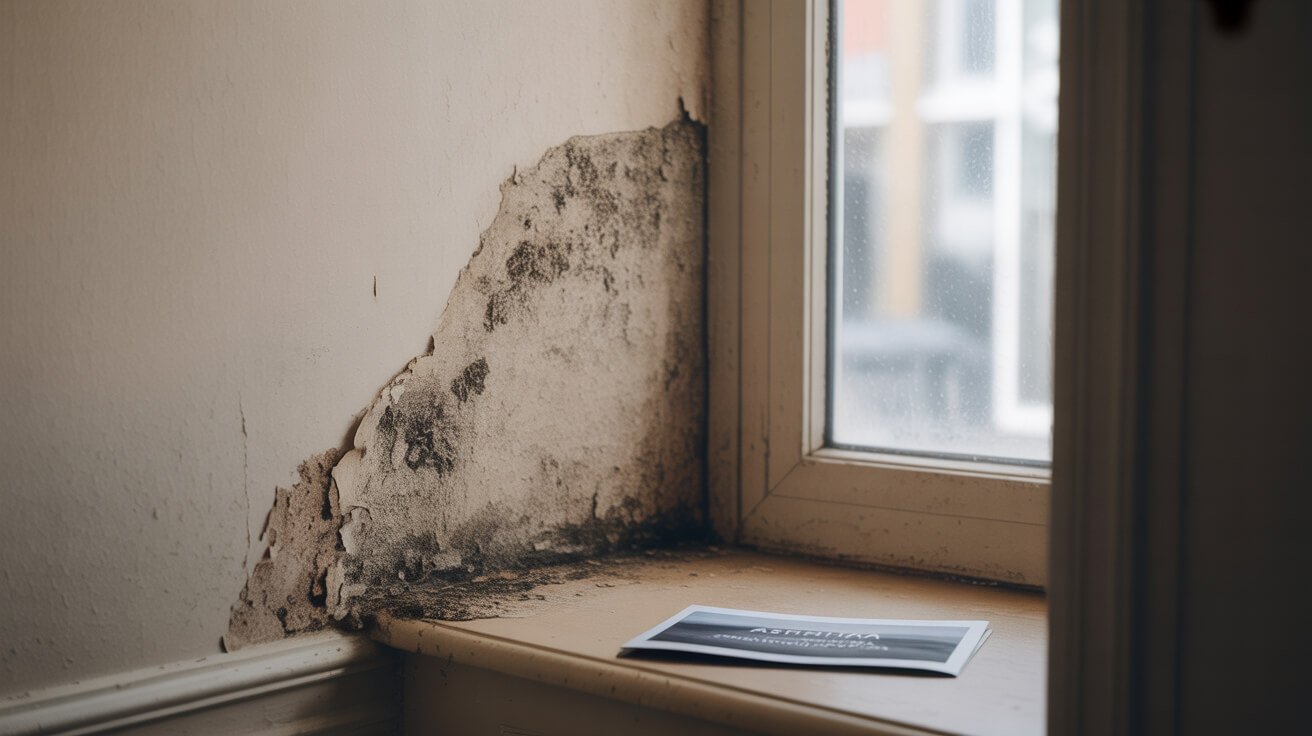
Forget one-and-done cover-ups. Under Awaab’s Law, compliance is a two-stage journey: Neutralise the immediate hazard, then build permanent prevention into the very structure. Here’s what that means:
- Stage One – Emergency Control: Scrub away the harm—strip back visible mould, dry saturated materials, stop active leaks. Move as fast as safety allows, but don’t stop at symptoms.
- Stage Two – Supplementary Defence: Get upstream. That means installing or upgrading extractor fans (with airflow tested and documented), repairing or improving DPCs, insulating cold bridges, replacing compromised plaster and substrate, and verifying full compliance with BS6576.
All of this is documented, from plan to completion. Replacement, not just treatment, is key—especially with persistent cold spots, historic walls, or previous treatment failures.
You’re no longer judged by a tidy wall but by your ability to keep damp at bay permanently—regulators accept only documentary proof of both emergency action and prevention. (letzero.co.uk)
Education now sits alongside engineering. Every tenant or resident must get written advice, not just a verbal “open the window more.” Proving that you’ve explained their role in prevention is now part of the law.
Compliance That Stands Up to Scrutiny: Documented Prevention and Proof
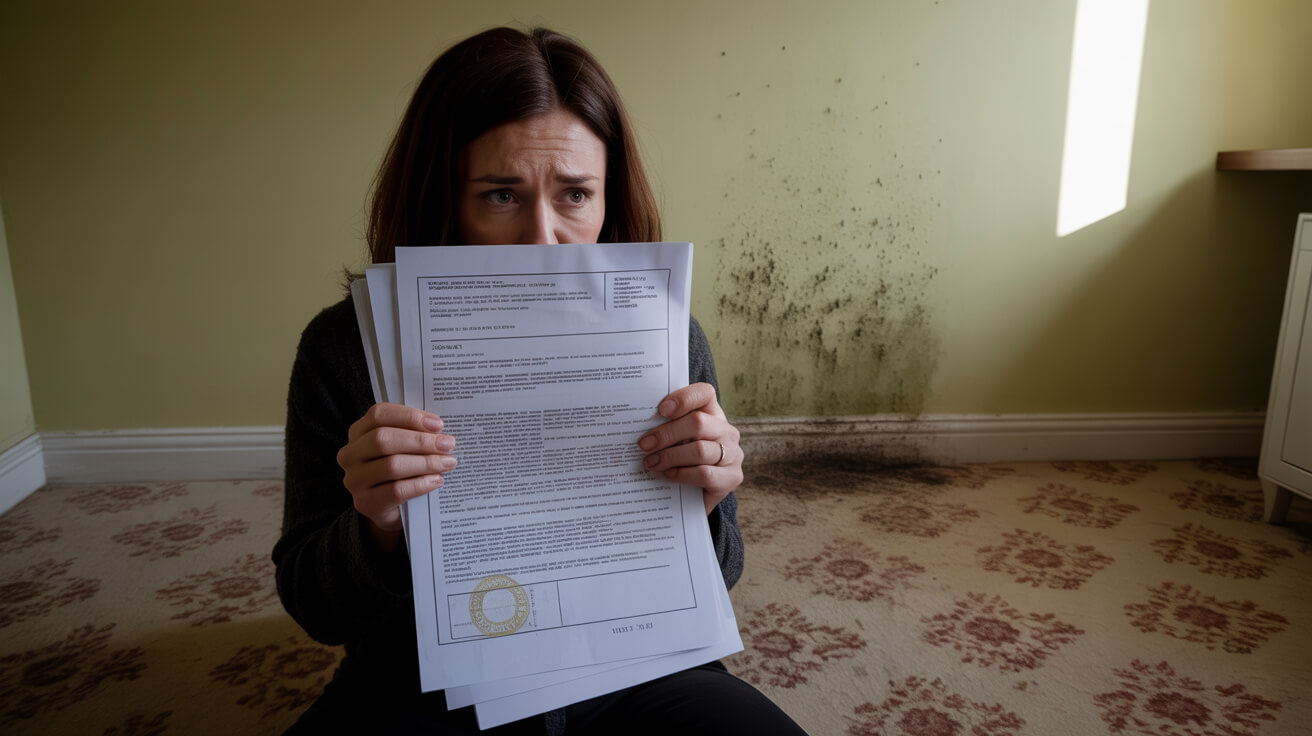
Compliance isn’t a binder on the shelf. It’s your proof—sometimes your only defence—in any dispute, inspection, or legal review. The new standard? Transparent, layered evidence for every claim:
- Maintenance Logs: Track every check-up, repair, and system refresh, and log what, where, and when.
- Inspection Records: Date-stamped photos and instrument readings before, during, and after each fix, not just summary notes.
- Remediation Evidence: Proof of every material or system used, from DPC creams to extractor fans, with certificates and guarantees on file.
- Tenant Communications: All written updates, tenant notifications, and instructions, kept in order for at least six years.
Courts are clear: not just remediation, but demonstrated prevention—complete with audit-grade documentation—is the new standard. (mydeposits.co.uk)
Auditors, ombudsmen, and tenant lawyers now see a missing photo, absent log, or vague record as proof of negligence—not just missed paperwork. Hard records protect you; gaps expose you.
Real-World Barriers: Navigating Heritage Listing, Planning, and Third-Party Delays
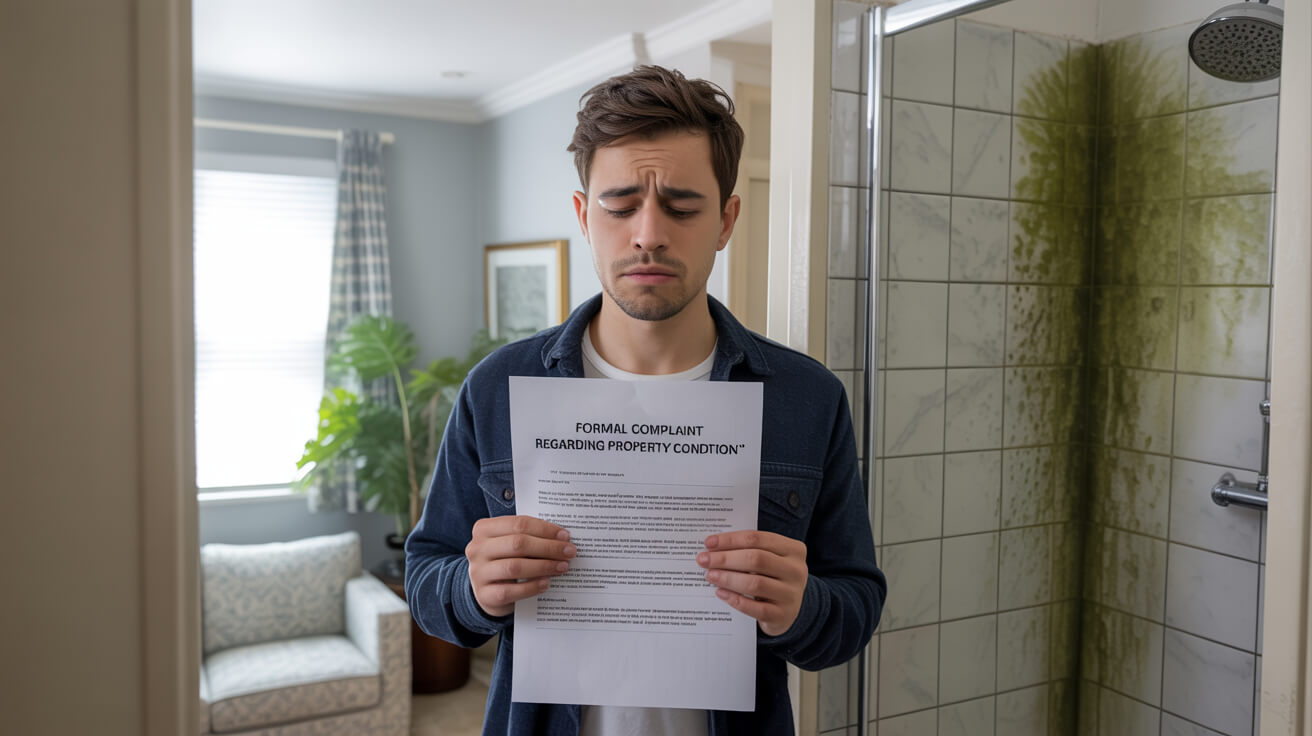
Listed or heritage buildings, conservation area controls, and supply chain problems create hurdles for even the most diligent owner. Awaab’s Law recognises these—but makes no space for silent stalling. You’re expected to act, to update, to document:
- Planning and Heritage: Log every request for permissions, council queries, and conservator feedback. Keep all correspondence, and never leave tenants out of the loop—explain, in writing, every roadblock.
- Delays and Disruptions: Delays must be documented with time-stamped records, showing active efforts at every turn, not just a start and end date.
- Communication: Tenants must receive written explanations: what’s happening, why it’s delayed, and what’s being done. If things slow down, your recordkeeping must pick up.
A conservator may delay you, but failing to explain that in writing to your tenant and auditor is a failure of duty, not just project management. (insidehousing.co.uk)
Absence of records is evidence of inaction—full stop. Courts and regulators treat gaps in the evidence as gaps in care, erring always on the side of tenant safety.
The Paper Trail That Wins: Evidence Chains Favoured by Auditors and Courts
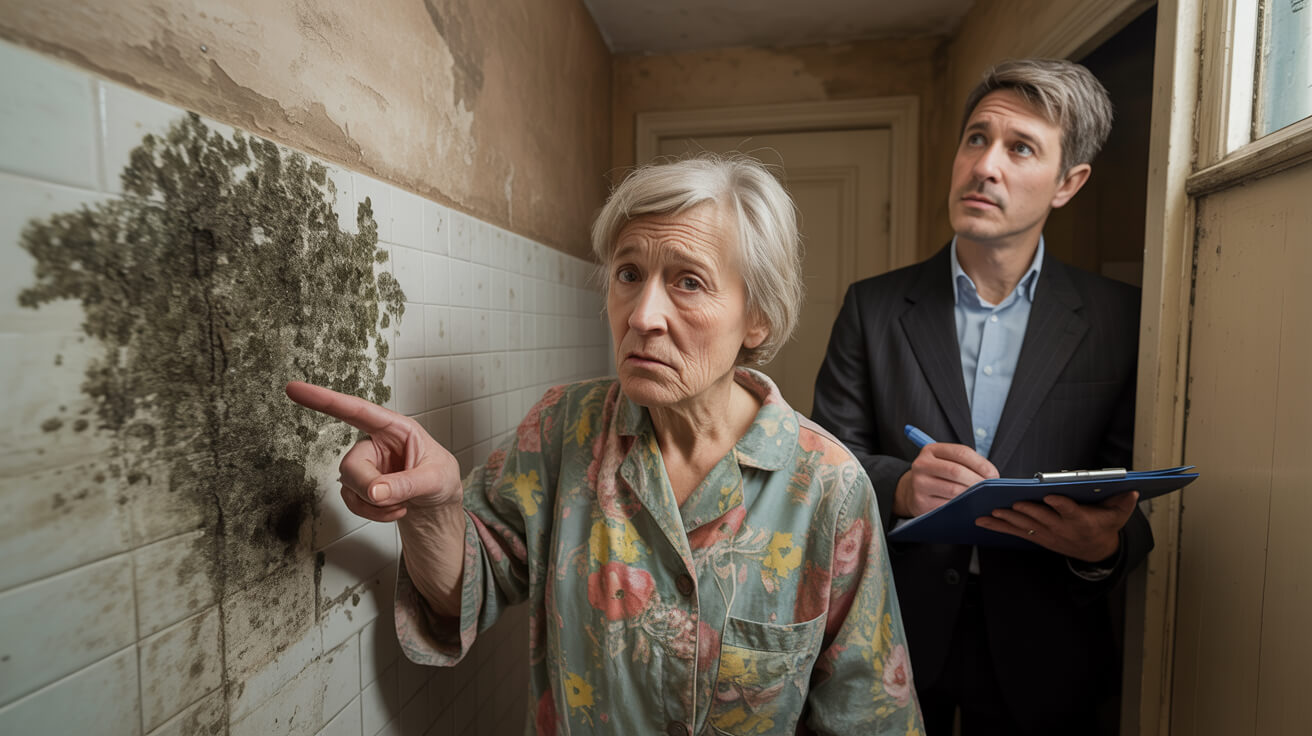
The best intentions mean nothing when measured against what’s on paper. Defending against a complaint or regulatory claim today relies on your ability to prove everything you’ve done—from the first report to final sign-off.
- Comprehensive Complaint Log: Each concern logged, date-stamped, named handler assigned.
- Visual Documentation: Before and after photos, mapped to specific locations; notes on what work was done, by whom, and when.
- Instrumented Evidence: Moisture and salt readings, airflow and ventilation checks, all linked directly to the issue and resolution.
- Education Record: Save every tenant notification and instructional handout, with delivery dates.
- Communication Archive: Store all written contact, messages, letters, and notes on calls for at least six years.
- Completion Pack: When finished, issue a summary—work carried out, guarantees issued, documented proof—so every party is on the same page.
A well-built audit trail isn’t just protection. It’s a competitive advantage—demonstrates professionalism to lenders, insurers, regulators, and new tenants.
Contact Sussex Damp Experts Today
Awaab’s Law means you simply can’t treat damp and mould as a side project. You need a partner with mastery across compliance, technical diagnostics, and airtight documentation—there’s no room for shortcuts or improvisation. Sussex Damp Experts pulls together accredited professionals with deep experience in moisture mapping, forensic investigation, heritage adaptation, and legally watertight reporting.
Every survey and treatment follows the strictest requirements: advanced diagnostics, digital photo evidence, and logs you can put in front of a regulator, lender, or insurance company. Solutions are adapted for new builds and heritage sites alike, with compliance to BS6576, BS8102, and PAS2035 built into every plan. You receive everything your property needs to pass a survey, stand up in court, and weather the audit spotlight.
You can’t improvise a compliance defence after the fact—only a well-built evidence chain protects you from Awaab’s Law risk. (housingtoday.co.uk)
Don’t risk your property value, reputation, or legal standing. With Sussex Damp Experts, you step ahead of the law—securing your asset, protecting your tenants, and freeing your mind from compliance anxiety. Our team removes the guesswork, delivers hard evidence, and leaves you ready for anything. Take proactive control: act, document, and stay protected with a single call.
Frequently Asked Questions
What makes Awaab’s Law a uniquely tough turning point for tackling damp and mould?
Awaab’s Law transforms the approach to damp and mould by locking landlords into strict timeframes, forensic diagnostics, and legal teeth unseen in old housing rules. From October 2025, every social landlord—council, housing association, or registered provider—must respond to any report of damp, mould, leaks, or structural defect within ten working days, update the tenant in writing within three, and fix urgent threats in 24 hours. Failures bring unlimited fines, forced council repairs billed to you, public naming, and court risk. Unlike before, there’s no hiding behind “tenant lifestyle,” endless referrals, or patchwork jobs; the law demands root-cause fixes, documented at each stage, with recurring problems triggering deeper scrutiny. For the first time, delays and surface treatments aren’t just frowned on—they’re regulatory breaches with consequences.
Where delay once bought time, it now buys legal trouble. Every damp wall sets a timer the moment a tenant speaks up.
How is this a break from the old enforcement style?
- Deadlines are hardwired: ten-day investigations, five-day fixes, no more endless “awaiting parts” defence.
- All actions, evidence, and delays require logging, not just informal notes.
- Cosmetic repairs and tenant-blaming have no legal standing now.
- Tenants gain actionable rights—written evidence, intervention, council-mandated repairs, and legal recourse.
- Landlords see real consequences: fines, repair costs, public reporting, and compliance audits for repeat issues.
Which standards now define a “safe” property—and what does a landlord have to prove?
Under Awaab’s Law, a property only meets the safety bar if damp and mould risks are diagnosed with specialist tools—not just a quick visual once-over—then eliminated at the source and tracked with written proof. A “safe” home must show no hidden damp, ventilation that works, no ongoing leaks, and every step—from inspection to repair—must be time-stamped and shared in writing with tenants. Surface cover-ups, excuses about delivery times, or incomplete repairs put your reputation and wallet at risk. Even negotiations with insurers or heritage authorities must be logged and relayed to the tenant. Ultimately, you need proof of the actual physical removal of risk, ongoing inspection, and prompt aftercare before you can call a property “safe.”
Practical steps for legal safety proof
- Detailed inspection with calibrated metres, thermal imaging, and salt testing as standard
- Written reports at every milestone, delivered to tenants as events happen
- Permanent repairs to underlying cause—no revisits for repeat issues
- Working ventilation and heating systems, with aftercare plans logged for all completed jobs
Table: Awaab’s Law—Deadlines and Consequences
| Compliance Duty | Legal Timeframe | Penalty for Breach |
|---|---|---|
| Initial Investigation | 10 working days | Council/regulator intervention, fines |
| Written Tenant Update | 3 days | Written warning, possible compensation |
| Emergency Repair/Rehouse | 24 hours | Forced repairs, landlord covers costs |
| Significant Hazard Works | Start in 5 days | Rising fines, public notice |
Why won’t a single repair or “patch job” satisfy the new legal standards?
Under the new regime, quick fixes and one-off repairs are no longer enough—statistics and case history show that properties treated with surface repairs alone experience repeat mould, escalating costs, and recurring legal flags. To end this cycle, landlords must go beyond visible problems and carry out “supplementary prevention” within five working days of a major fix. This covers everything from new mechanical ventilation, proper insulation, sealing cold bridges, to drainage and rainwater improvements. If exceptional circumstances arise—like heritage permission requirements—detailed logs explaining delays are mandatory, and the window closes at twelve weeks. Failure to act invites inspection, compounding penalties, and risk of legal or reputational harm. In short, the “second stage” is no longer optional but a statutory duty, demanding a future-proof solution, not just an emergency patch.
Every patch job is a bet against the future, but the house always wins—and the house is the law.
Examples of mandatory double-layered works
- Upgrade or instal extractor fans, make trickle vents usable, fit controlled thermostats
- Renew brickwork joints, repair or reroute gutters and downpipes for full drainage
- Add insulation, remove thermal bridges, resolve bridging DPCs
- Tanking below-ground, cavity membrane installation where required by substrate or risk
- Document every step—before, during, and after—so you can evidence compliance if questioned
How can damp and mould be prevented before becoming legal or health threats?
Prevention has become the main line of defence and legal protection. Schedule comprehensive annual surveys using digital tools—moisture mapping, infrared imaging, and damp metres should be routine, with extra checks after storms, leaks, or tenant turnover. Insist on thorough records from any tradesperson: photos, diagnosis reports, warranties, service receipts. At the start of every tenancy, provide written advice covering ventilation, laundry, and moisture management, recording the handover and any client queries. For older or heritage properties, early engagement with local authorities is essential; record all compliance steps and supply chain obstacles to justify any delays. Keeping full, traceable logs for at least six years is now required and forms your first line of defence if challenged by tenants, regulators, or surveyors. Informal or undocumented “good practice” will no longer provide adequate defence.
Damp prevention protocol—meeting legal and health expectations
- At least one formal, metre-driven property survey per year, tailored after storms or occupant change
- Scheduled and recorded inspections of all gutters, drains, and roofs
- Documented checklists for ventilation, heating, and insulation performance
- Tenancy onboarding with written moisture mitigation instruction, digitally prepped and signed off
- All documentation retained and available for regulator or tenant request
What happens if you fail a statutory deadline or don’t solve the root cause?
Regulators are empowered to act the instant a breach is logged, regardless of intent or partial completion. Unlimited fines, cost recovery for forced repairs, and tenant rehousing (on your bill) are now standard for missed deadlines or incomplete works. Repeat breaches—especially across multiple properties—bring increased scrutiny, with public compliance reports and the risk of losing your landlord status. Crucially, even incomplete records (such as missed update logs or missing compliance certificates) can be treated as evidence of negligence. Financial exposure isn’t limited to fines—rent repayment orders, ombudsman-mandated compensation, and reputational damage all build upon each other. The new regime treats every milestone as an opportunity for scrutiny, and informal fixes no longer pass muster.
Enforcement and penalty triggers landlords can’t afford to overlook
- Immediate regulator or council intervention—no more leeway for “almost finished”
- Unlimited financial penalties and council-contracted (more costly) repairs
- Name-and-shame public listings and enforcement records
- Mandatory, fully funded tenant rehousing if issues put safety at risk
- Additional compensation for tenant distress, health issues, or procedural failures
Which records, monitoring, and documentation now protect landlords—and tenants—from backlash?
Robust, well-kept records have become the single best legal shield. That means logs for every inspection, before-and-after photos, digital copies of all correspondence, signed handover forms, and certifications for every fix (BS6576, BS8102, PAS2035). Detailed explanations for any delay or obstacle—legal, planning, or supply—should be relayed directly to tenants as they happen. Auditable records must be maintained for no less than six years, always accessible for review. These aren’t mere paperwork; they’re operational proof that every standards box was ticked, every promise documented, and every oversight owned up to. Anything less can be interpreted as deliberate negligence or incomplete service—at a cost.
Audit-proof documentation checklist for legal resilience
- Full sequence of diagnostics—metre readings, images, site notes
- Time-stamped updates and repair logs, provided to tenants and regulators
- Warranty documentation and work sign-offs from all contractors
- Maintenance and aftercare logs for every system improved
- On-demand demonstration of standards compliance upon request from any authority
Protect your properties, tenants, and standing from the ground up. Sussex Damp Experts combine site-specific diagnosis, BS6576/BS8102 standard compliance, and airtight documentation so you’re always a step ahead—whatever the building, whatever the regulation. Get the evidence, expertise, and support you need for the era of Awaab’s Law.

