
 By
By  August 26, 2025

Why October 2025 Is the Real Deadline for Damp and Mould Law—And What It Means for Your Properties
October 2025 isn’t just another mark on your property calendar; it’s when the law flips the script on damp and mould in English homes. After years of hand-waving, the rules are live—and there’s nowhere to steer blame, inertia, or paperwork dodges. The aftermath of Awaab Ishak’s tragedy sparked Parliament’s overhaul: enforcement of Awaab’s Law, fully woven into the Homes (Fitness for Human Habitation) Act 2018. This time, compliance isn’t a soft target; it’s the hard line where fines, forced repairs, and public red flags appear the moment a complaint surfaces.
A missed patch of damp isn’t just a building issue—it’s a legal trigger with immediate costs.
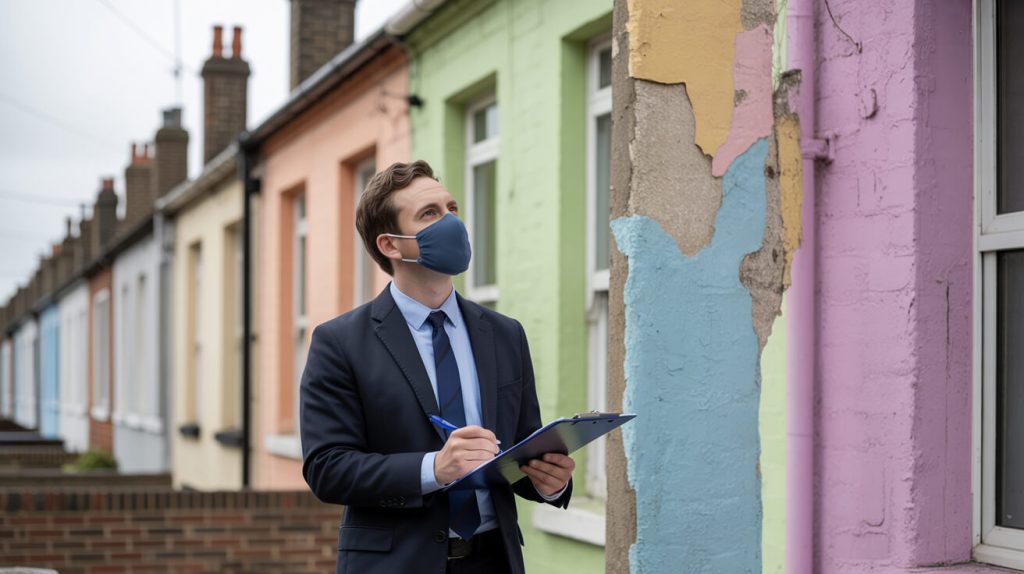
For every homeowner, landlord, letting agent, and property manager, October starts a new game: the legal burden lands squarely with you to investigate, remedy, and document everything about damp and mould—often within a week of first notice (BBC, 2024). This isn’t about what caused the problem or if a tenant “ventilated properly.” Delay, deflection, or casual fixes won’t survive digital audits, council checks, or insurer probes. Council inspectors will be armed not just with clipboards but with statutory clocks, digital evidence trackers, and the power to intervene—charging you, not the tenant. Let a damp report slide or leave your evidence patchy, and you’ll find legal notices, insurance snags, and lender scrutiny come at you before you’ve even sourced a tradesperson.
In short: October isn’t a pipedream—it’s the line in the sand. From that day, landlords and property managers answer not to tradition or industry habit, but to fixed deadlines, compulsory evidence, and regulatory teeth.
What Is Legally Required From Landlords and Agents Under the New Damp and Mould Regime?

The legal matrix is now explicit, timed, and documented—compliance workflows aren’t open to interpretation or “best effort.” Here’s how the new duty of care lands on your door:
- Complaint triggers immediate action: The clock starts the moment a tenant or resident makes a report; nothing stalls the process.
- Inspection window: Within 10–14 days of complaint, someone competently trained in damp has to attend and complete a survey—no extensions for “holidays” or “workloads.”
- Clear written findings: You deliver a results letter to the reporting tenant within 48 hours, written in ordinary language and referencing the underlying legal framework.
- Prompt repair initiation: All remedial work must begin within 5–7 days after inspection, focusing on removing cause and risk, not just patching the surface.
Every single step—from complaint log to survey, diagnosis, repair, and communication—needs to be documented, timestamped, signed, and securely archived. No evidence? You’re out of compliance, full stop. Councils now wield improvement notices, with deadlines: miss them, and local authorities take over, repair at their rates, and bill you back. There’s no wriggle room: paper trails, council databases, and audit logs are your new currency of proof (Nearly Legal, 2023).
The new regime brings:
- Fines that start at £5,000 and have no upper ceiling:
- Council-mandated repairs performed by third parties at your expense:
- Public enforcement history that impacts mortgages, insurance, and future sales:
- Mandatory disclosure of any enforcement when letting, refinancing, or selling the property:
With the legal microscope dialled up, only audit-grade evidence and bulletproof timing keep your assets safe.
Why Damp and Mould Are Now Legal Hazards—Not Just Building Flaws

The law has split from tradition: it doesn’t matter whether you think a patch is simply “condensation,” or if the damp “looked minor.” Under 2025’s rules, any trace of damp, no matter how faint, becomes a formal hazard requiring formal remedy. Blaming tenants or dismissing complaints as “lifestyle” issues is now a legal own goal.
All Types of Damp Demand Specific, Recorded Action
- Rising damp: Even a hint (salt lines, crumbling plaster, warped skirting) demands calibrated testing and photographic proof it was properly addressed; subjective guessing exposes you.
- Penetrating damp: Leaking roofs, cracked bricks, or missed render repairs aren’t just maintenance tasks—they generate regulatory files that can trigger council action and fines.
- Condensation and mould: The default now is to treat each as a defect in structure, ventilation, or heating—not evidence of tenant error. Every spot gets logged, traced, prescribed.
Ignore it and hope for the best trades a £200 repair for a compliance breach and a risk of thousands in fines, invalidated insurance, or forced repair notices.
Gone are the days when cosmetic fixes or delay strategies could shield your letting or sale. Moisture metres, digital photo records, salt and air quality diagnostics—these are now minimum expectations, not added extras (RICS, 2023). Compliance is not about good intentions; it hinges on specialist techniques, traceable records, and unbiased, outside scrutiny.
How Modern Damp Auditing Works—And Why Speed, Evidence, and Clear Communication Matter
Compliance isn’t won with a last-minute scramble or patchwork log entries: it’s delivered through an integrated discipline that turns every report and repair into a defensible file.
The Core Components of a Legally Sound Audit Trail
- Complaint log: Date, time, party, and explicit description, with at least one clear photo or tenant note attached.
- Surveyor inspection report: Metered readings, salt analysis, and at least three photos—all signed by a qualified professional and uploaded to a cloud record accessible for inspection (by council or insurer).
- Repair record: Each action linked back to diagnosis, with photographic proof, product batch numbers, and compliance with standards like BS6576 and PAS2035.
- Communication evidence: Copies of every notice, email, and timeline sent to tenants and authorities, with time-stamps and reply acknowledgements.
A missing log entry or half-baked evidence piece can see councils escalate instantly—fines, publicly listed breaches, or outright transfer of repair powers. Councils and insurers now use national audit platforms that flag even single missing records. Compliance software and secure, timestamped upload tools are no longer perks—they’re essentials (Inside Housing, 2024).
Being out of step with this system risks more than a paperwork headache; it risks total exclusion from insurance, mortgage cover, and letting rights.
What Non-Compliance Looks Like In Practice—It’s Instantly Visible (and Costly)

October 2025 puts teeth in old promises and writes deadlines into law. Here’s the practical impact:
- Enforcement notices are timebombs: Miss one inspection or repair due date, and fines start at £5,000. There’s no upper cap or waiting period.
- Local authorities can “step in and repair”: Councils now hire their own teams and bill you. Their rates override market norms and control the timeline, leaving you out of both the cost and the quality loop.
- Non-compliance gets reported to lenders and insurers: That means your future mortgage, remortgage, insurance renewal, or even property sale faces risk bars and price hikes.
- Your record is public: Properties with unclosed repairs or legal breaches are now visible in council and national housing databases, alerting all future buyers and renters.
Delay, incomplete documents, or lost emails aren’t technicalities—they are the fastest route to asset devaluation and legal lockdown.
Actual repair costs for forensic, compliant work might run £500–£3,000. But delays or gaps can freeze portfolio sales, block re-financing, and set off chains of council intervention, outright bans, or forced asset disposals (This is Money, 2024). Every year, the expectation is raised: “audit or lose.”
Why Only Professional, Fully Accredited Surveys Count in 2025

The compliance bar is high and simple: fast, expert diagnostics, documented evidence, fully signed repairs, and timestamped logs—every step mapped to PAS2035 and BS6576 standards.
Key Elements the Law Now Expects
- All diagnostics meet PAS2035 / BS6576: Think detailed root tracking, not covers or quick sprays.
- Every photo and test is signed, timestamped, and attributable: Repairs without these are treated as not done. DIY or “mate’s fixes” void the compliance trail.
- Warranties are real or ignored: Claiming “10-year cover” or “guaranteed dry” means nothing unless backed by an audit-grade log and accredited signoff.
Sussex Damp Experts delivers the gold-standard approach:
- Forensic moisture-mapping—tracing every water path, not just surface effects.
- Digital, shareable records—upload-to-insurer or council on demand
- Accredited diagnosis, repairs, and aftercare—proven on hundreds of East Sussex homes, with data security and regular reviews.
When a council inspector or mortgage lender calls up your audit log, only professional, evidence-led files make the grade. The rest is legal risk, full stop ([BRE, 2024](https://www.bregroup.com/insights/a-guide-to-awaabs-law-and-key-compliance/)).
How to Package Your Compliance—And Prove It When Challenged

A compliance file is no longer a nice-to-have—it is your property’s passport. The complete digital audit trail is your active asset protection. Here’s what you need in hand:
- Documented complaint log—date-stamped, with supporting evidence:
- Surveyor’s report—metre readings, cause-mapping, legally compliant analysis:
- Treatment logs—specific actions, materials, and “before and after” photos:
- Communication file—every relevant tenant and authority notice, time-stamped:
- Work orders and invoices—linked host-to-host in the audit chain:
- Future care schedule—dates for checks, future warranty, reminders for tenants/buyers:
Miss any one and you’ll walk into regulatory lockdown, blocked listings, and runaway costs. Sussex Damp Experts creates and maintains these files by default—no brittle DIY templates, no clumsy spreadsheets, no missed deadlines (Aviva, 2024). The process flows from survey to aftercare, aligning to every new 2025 expectation, so your portfolio stays future-ready and “audit bulletproof.”
Let other firms complain about red tape—we use it to close risk loops and protect value, not just tick boxes.
Why Sussex Damp Experts is Your Strategic Bridge for 2025 Compliance (and Peace of Mind)

From October, every property manager faces the reality that stepwise evidence, accreditation, and time-bound legal actions separate “standard” landlords from those who can preserve and grow their assets. Sussex Damp Experts builds systems for the new world: every log is instant, every fix is guaranteed, every record is audit-ready. Where many see paperwork or compliance as a burden, SDE operates as your invisible insurance—covering legal, regulatory, and asset value risk from the inside out.
You get more than a fix; you get a future-proof file system, accredited repairs, and aftercare that stands up to any regulator, insurer, or buyer. Risk dissipates, asset values hold steady, and market opportunities increase—precisely because your evidence makes you “above and ahead” of requirements.
In 2025, compliance isn’t a hassle—it’s your property’s shield, competitive edge, and peace of mind—delivered by those who live and breathe this law.
Secure Your Properties—and Their Future—With Sussex Damp Experts
There are no more half-measures. From autumn 2025, the winners are those who act early, close evidence chains, and hand councils and buyers the files they demand before anyone asks. Sussex Damp Experts stands between your assets and the next enforcement letter—with deep experience, digital records, and accredited repairs, our team doesn’t just help you pass audits—we help you sleep at night.
If damp, mould, or compliance risk keeps you awake, end the cycle. Reach out to Sussex Damp Experts and see what real evidence, professional aftercare, and legal certainty feels like, one property at a time. Protect your assets. Secure your reputation. Never run from an audit again.
Frequently Asked Questions
What fresh legal and financial risks do 2025 damp & mould rules quietly create for landlords, agents, and stakeholders?
The new 2025 damp & mould law doesn’t just penalise blatant neglect—it systematically exposes silent documentation gaps that most property professionals never see coming. Rather than focusing solely on emergency repairs or headline leaks, enforcement officers and insurers are now tracing every step in your compliance record, hunting for missing links in diagnosis, certification, or aftercare that even diligent owners regularly overlook.
The compliance regime has become forensic. If your survey lacks a certified moisture log or the treatment trail doesn’t line up with tenant reports, your file’s intent no longer matters—any gap is enough to trigger instant escalation, premium hikes, or asset devaluation. The new regime expects not only technical repairs, but an evidence lattice that holds up to council, lender, and ombudsman inspection—one typo or unlabelled material sample can break the chain.
Key risks accelerating in 2025 include:
- “Partial fix” cases where root causes aren’t proven—nullifying insurance or lender protection
- Missing post-treatment credentials or batch traceability—voiding manufacturer guarantees
- Communication lapses between letting agent, owner, and trades, which under new law, become regulatory breaches
- Unlogged tenant concerns, with omission now classed as “passive non-compliance”
It’s never just about the work—it’s about how you translate every action, diagnosis, and communication into a single, joined-up proof chain.
Sussex Damp Experts systematically build every compliance file to withstand future audits, so you don’t just survive a council inspection—you lead with ironclad evidence that advances your standing as a landlord, property manager, or commercial stakeholder in East Sussex and beyond.
How do minor oversights now snowball into enforcement and financial loss?
A child’s illness, an unlogged photo, or an ambiguous repair note now draws attention from ombudsmen, not sympathy. This is a regime of proof, not mere intention. A dated, surveyor-signed log and a mapped aftercare plan aren’t “nice-to-haves”—they’re now your minimum safety net.
How does the law punish cosmetic damp “treatments” and surface-level quick fixes in 2025?
“Paint-over” damp fixes are a liability trap under the latest legal standards. From 2025, cosmetic intervention—whether it’s paint, sealant, or scented sprays—counts as formal evidence of risk concealment. Enforcement teams treat these shortcuts as red flags: they don’t just fail to solve damp, they actively provoke penalties and public scrutiny.
The new rules demand that every incident, from black mould to salt stains, is mapped to its root cause via scientific data—survey-calibrated moisture readings, photographic evidence, and detailed chain-of-custody records. Covering over—without rigorous diagnosis—voids your audit defence, undermines warranty claims, and leaves a digital paper trail that insurance and lender teams now check for every renewal or loan.
Common actions that instantly attract legal action:
- Skipping cause mapping (like salt migration diagrams or thermal camera scans)
- Issuing repair certification before an evidence-based diagnosis
- Patch repairs or superficial “finishes” that don’t document substructure moisture
- Claims of “tenant lifestyle” or “seasonal” explanations without hard proof
Quick fixes don’t make the problem disappear—they make you the next enforcement story.
With Sussex Damp Experts, your file doesn’t just show what’s been fixed—it evidences why, how, and who verified every stage, providing a transparent shield from the shortcut traps that cost others dearly in fines, lost cover, or blocked sales.
When do insurers or councils escalate a surface fix into financial pain?
If a post-repair check finds unchanged humidity levels or evidence of concealed damage, liability shifts to you. A single cosmetic fix log can trigger an insurance claim refusal or a formal council action: being thorough isn’t an upgrade—now it’s the baseline.
Why do heritage, listed, or uncommon buildings face unique compliance hurdles under updated regulations?
2025 compliance means specialist diagnosis and evidence-led adaptation for every building that falls outside “standard construction”. Older homes, basements, timber frames, or anything listed draw extra scrutiny, as generic fixes or modern plasters often backfire. Enforcement teams now expect bespoke material selection, breathability reports, context-adjusted aftercare, and full documentation of permissions for heritage and conservation areas.
Many owners and agents don’t just face technical risk—they face legal violations if modern damp solutions clash with substrate, ventilation, or listed consent rules. Using impermeable tanking under a lime-render wall or failing to log internal condensation risk isn’t just a technical slip, it can become a prosecutable oversight.
You can’t retrofit a historic property using modern logic—councils and lenders now expect heritage-grade proof for every stage of work.
Sussex Damp Experts operate in conservation corridors, listed districts, and unique structures across Sussex—ensuring your compliance files cite the right standards (PAS 2035, BS 8102/6576), protect both value and fabric, and stand up to audit with supplier chain evidence and surveyor-ready logs.
What short-cuts or errors most often cost heritage and complex-property owners?
Omitting breathability mapping, using modern cements where lime is required, or neglecting detailed aftercare on a specialist site can invalidate your works and choke your ability to repair, let, or sell.
How do evidence-linked communication and aftercare secure future legal and insurance defence?
The 2025 standards convert every complaint, survey, and repair into a digital lattice—timestamped, cross-validated, and auditable end-to-end. Sending a tradesman to tackle a leak is not enough. If the diagnosis, stakeholder communication, and aftercare aren’t mapped and joined, you risk non-compliance by omission.
Modern legal and insurance checks now probe for:
- A fully dated complaint log—initiated at first symptom, closed after verified repair
- Every interaction with the tenant, freeholder, or trades tracked by date and action
- Repair logs joined to material batch numbers and before/after-site photos
- Aftercare schedules and monitoring proof (e.g. sensor logs, damp metres) open for review
- A transparent audit file showing the logic, progression, and personnel behind each step
If an aftercare visit, call, or monitoring result isn’t logged, for auditors it may as well never have happened.
Sussex Damp Experts guarantee that not only your work, but your full communications and monitoring, are evidence-sealed. This suits single sites and full portfolios alike, and provides an audit trail for buyers, tenants, and insurers that’s future-proof by design.
Where do most property managers lose legal or insurance protection after repairs?
It’s rarely the repair itself—it’s a lost appointment card, an unlogged sensor readout, or a single email chain that snaps under dispute. Robust aftercare management is now a compliance demand, not an optional service.
What industry misconceptions about cause, blame, and “good enough” documentation still trigger disputes and legal losses?
Certain “old truths” are now legal risks—especially the belief that blaming tenant habits or partial, surface-only reports will pass inspection. 2025 sees councils, insurers, and tenant advocates united around root-cause analysis and complete records—anything less can become evidence of neglect or deception.
Residual industry myths now legally hazardous include:
- Pinning problems on “tenant lifestyle” instead of logging system failures
- Relying on a single contractor report or non-documented diagnosis
- Assuming insurance will cover repairs without a proof-packed log
- Believing that well-intentioned, rushed fixes constitute compliance
Tomorrow’s law views your file through a forensic lens—tenancy, repairs, and diagnosis all have to tell the same transparent story.
Sussex Damp Experts deliver surveyor-trained compliance narratives that withstand audit. No step is skipped; every cause, solution, and warranty is crystal clear. That’s how assets and reputations survive in this new era—where transparency and completeness aren’t goals, but preconditions for safety.
How do disputes most often start—and how do “myths” add fuel?
When council enforcement or a complaint file is opened, every reference to “lifestyle” or lack of timestamped diagnosis becomes a breach. Disputes snowball when one missing datum or unverified assertion breaks the record—every myth is now an open invitation to deeper, costlier investigations.
What new lender and insurer compliance demands will upend asset finance and insurance from 2025 forward?
The finance and insurance industries have adapted ahead of the law—auditable traceability for every damp issue and repair is now baseline, not bonus. Mortgage and insurance teams require digital, time-stamped, surveyor-level evidence. A simple receipt, or even a surveyor’s unsigned note, can’t not justify cover or an advance.
Increasingly, you can expect:
- Mortgage providers requesting a chain of surveyor-signed diagnoses and aftercare receipts before completion
- Insurers verifying every batch number, material specification, and warranty issued—a missing link can mean denied claims
- Higher premiums, claim deferrals, or outright refusals for incomplete, old-style “tickbox” files
- Policy wording explicitly referencing compliance with Building Regs Part C, HHSRS, and PAS 2035
Finance and insurance now treat incomplete files as indicators of neglect, not just paperwork snafus—they decide risk and pricing at the file, not on inspection.
Sussex Damp Experts have designed every service to produce evidence-native, lender- and insurer-compatible records—so you unlock better financing and peace of mind before any risk arises.
Why is retrofitting evidence compliance rarely as effective—or affordable—as getting it right first time?
Old approaches miss today’s timestamping, lifecycle tracking, and root-cause logging. Retro-compliance is often patchwork, costing more and offering less security—and usually comes too late to avoid lost value or finance.
Making the invisible visible, Sussex Damp Experts turn every repair into a compliance asset—so you protect your property, your reputation, and your future, no matter what 2025 brings.

