
 By
By  March 10, 2025

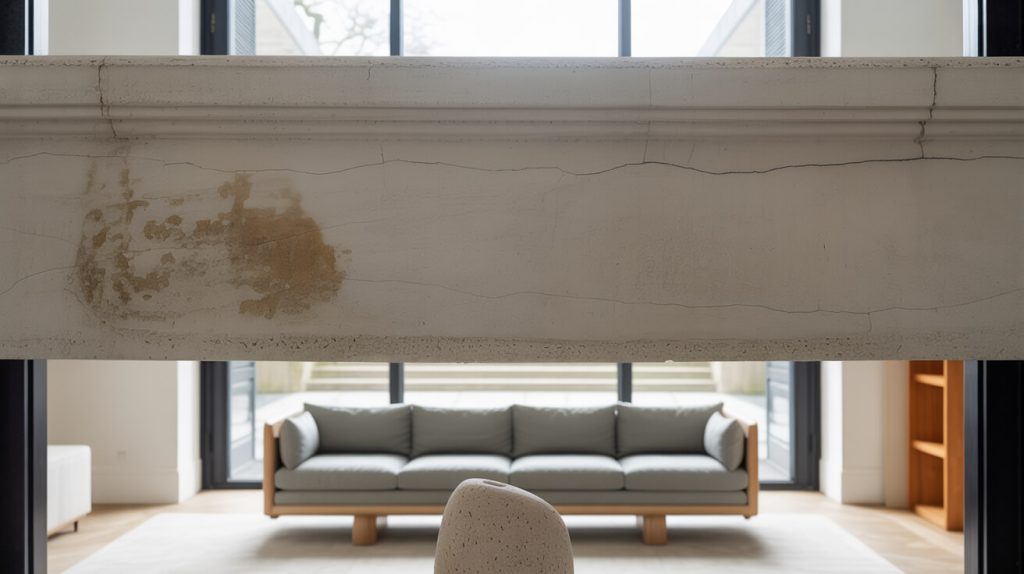
Why Do Lintels Fail? Uncovering the Hidden Threats to Your Building’s Integrity
Structural failures don’t usually begin with drama. In most buildings, the signs are simple—a new crack above a window, a fine fracture in brick, a patch of sagging plaster. These aren’t cosmetic accidents. They’re early warnings from structural components designed to bear weight invisibly, as explored in Structural Lintels Decoded. Lintels fail quietly, and the cost to your building, your safety, and your investment can multiply before you notice.
The Essential Role Lintels Play in Your Property
Lintels quietly absorb and redistribute the weight above doors and windows, preserving wall alignment and the safety of the rooms below. When Lintels Fail, the danger extends far beyond surface appearance, especially if that silent deterioration is overlooked.
What Makes Lintel Failure Especially Dangerous?
- Problems often remain hidden until significant structural movement or visible damage appears.
- Legacy repairs using shallow patching, quick repainting, or “one-size-fits-all” damp solutions nearly always result in recurring problems.
- When ignored, minor cracks evolve into legal or insurance headaches, survey delays, or urgent compliance failures.
| Symptom | Silent Risk | Result |
|---|---|---|
| Hairline crack | Load redistribution error | Structural weakening |
| Sagging or drooping | Material fatigue/rot | Loss of support/instability |
| Rust staining | Rebar or steel corrosion | Advanced internal damage |
| Brick/workout of line | Failed load path | Increased collapse risk |
The smallest shift in your wall’s geometry can trigger a cascade of repair costs far above routine maintenance.
If you want certainty, you need accurate diagnosis, not theoretical fixes. Our team approaches every project as a unique system—always blending expertise in modern and heritage materials, forensic moisture mapping, and regulatory knowledge. Prevention saves exponentially compared to crisis repair.
What Causes Different Lintel Materials to Break Down?
External Wall Damp Checker
- 1 Wall Type
- 2 Signs
- 3 Timing
- 4 Results
- Cracks in render (hairline or wide)
- Missing or crumbling mortar in pointing
- Blown render (sounds hollow when tapped)
- Damp patches on INSIDE walls after rain
- Green algae or moss growth on walls
- White salt stains (efflorescence) on brickwork
- Paint peeling on external walls
- Render pulling away from wall
- Cracks around windows or doors
- Previous patch repairs visible
- Damp is worse after rain
- Damp on one specific wall only
- Damp mainly at ground level
- Damp everywhere, all year round
- Only in winter months
Most Likely External Cause
—
—
—
Recommended Repairs
Check These First
External wall problems rarely fix themselves. Our surveyors use moisture mapping to pinpoint the exact entry point before recommending repairs.
Book an External Wall Survey →No two buildings share exactly the same weak points. Lintel vulnerabilities stem from a combination of material, environment, and usage history. Understanding these distinctions is the first defence against preventable failure.
How Material Type, Age, and Installation Determine Risk
- Steel and Concrete Lintels: Internal steel can corrode if exposed to moisture, leading to expansion, concrete cracking, and ultimately spalling (chunks breaking loose).
- Timber Lintels: These are common in heritage or pre-1930s buildings and are susceptible to rot. Damp penetration, woodworm, and fungal decay are real threats—especially if patch repairs trap moisture inside the wall.
- Brick and Stone Arches: Often used in Victorian or Georgian construction, arches can suffer settlement cracks or lose cohesion if repointed with modern mortars that don’t “breathe” with the building.
- Hybrid Installations: Modern renovations sometimes introduce material mismatches. Forcing steel or resin-finished lintels into lime- or clay-built walls can promote unseen water ingress, destabilising otherwise stable structures.
Environmental Triggers That Accelerate Damage
- Persistent damp or condensation raises the risk profile for every lintel type.
- Freeze-thaw cycles in external walls worsen cracks and encourage material fragmentation.
- Chemical reactions (such as alkali-silica interaction in some cements) quietly degrade reinforcement.
How Sussex Damp Experts’ Approach Aligns With Best Practice
We systematically assess:
- Environmental and ventilation factors
- Architectural and historic context
- All previous repairs and their compatibility
Repairing a lintel is never about just patching the crack. It’s about resetting the whole system so your building stays stable for decades.
How Are Lintel Failures Diagnosed and Distinguished from Less Serious Issues?

Not every crack signals imminent disaster, but knowing the difference can safeguard your investment and your reputation. The gap between harmless blemish and urgent failure isn’t always obvious—a qualified diagnosis is mission-critical.
Diagnosing At Home: Warning Signs You Can’t Ignore
- Are cracks diagonal from the corners of an opening?: This can be a sign of load redistribution away from a failing lintel.
- Is there a visible bow or droop above windows or doors?:
- Do repairs fail to last, or do new cracks appear even after recent work?:
- Are there signs of water ingress, rust bleed, or softened timber behind wall finishes?:
Professional Diagnostics: Science vs. Surface
- Salt analysis: identifies rising damp or capillary action undermining the masonry surrounding lintels.
- Moisture metres and thermal imaging: find hidden moisture, helping target both the cause and extent.
- Load path reviews: (part of a RICS-compliant survey) trace the way forces travel through masonry and timber.
- Historical data and property use: often predict vulnerability in listed or heavily modified buildings.
DIY vs Expert: When to Escalate
You can check some symptoms yourself—but only a qualified survey delivers the holistic view insurers, buyers, and councils trust. Our service includes a photo-logged condition report, moisture mapping, and materials advice matched to your unique property situation.
You’re not just avoiding expense; you’re building a portfolio of proof for future audits, sales, or compliance.
Why Do Foundation Movement, Subsidence and Building Alterations Affect Lintel Performance?

Change in a building’s foundation, soil, or structural envelope can trigger lintel failure even when the lintel appears sound. What happens below can undermine integrity above.
Foundation and Soil: The Bedrock of Lintel Stability
- Settlement or subsidence distorts the force distribution around every opening.
- Tree roots, drain leaks, or altered water tables can subtly amp up stress levels, making minor cracks expand almost overnight.
- New extensions or heavy renovations often shift original load paths, leaving lintels under unforeseen tension.
Alteration Risk Map
| Change Trigger | Hidden Impact |
|---|---|
| Nearby excavation | Unexpected wall movement, lintel cracking |
| Removal of internal supports | Unbalanced loads above new open spans |
| Addition of heavy insulation | Moisture trapping against older timber/stone |
| New window/door installation | Material mismatch, worsened weatherproofing |
The Compliance and Insurance Dimension
Banks, insurers, and local authorities will treat unaddressed structural movement as a red flag—stalling sales, voiding insurance, or triggering official repair mandates.
Ignoring a small shift in foundation behaviour can lead to urgent legal or financial consequences.
Sussex Damp Experts’ approach is always to review movement history as part of your diagnosis, preventing compliance surprises.
When Is Urgent Lintel Repair or Replacement Required for Safety and Compliance?

Waiting for vivid danger signs means putting property value, occupancy, and personal safety at risk. Some triggers for action are unambiguous: fast-spreading cracks, significant droops, or crumble that leaves masonry unsupported.
When Action Is Already Overdue
- If a crack has grown significantly over weeks or new movement is visible, immediate escalation is necessary.
- Sagging, stuck doors/windows after weather changes or prolonged heavy rain.
- If earlier repairs have failed—especially those using cement overlays or paints that now flake away.
Compliance and Safety Escalation Table
| Risk Trigger | Regulatory/Insurance Response |
|---|---|
| HHSRS regulatory complaint | Council enforcement, repair order |
| Insurance inspection failure | Policy exclusion, non-payout |
| Tenant reports falling debris | Liability/fine risk, potential claim |
| Pre-sale surveyor red flag | Blocked sale, required remedial action |
Reacting quickly isn’t just about fixing a problem—it’s about proving you acted at the right time, with the right team.
Our rapid assessment and compliance-grade repair documentation are valued by landlords, asset managers, and home sellers alike. Assurance of both safety and a robust audit trail is standard.
Where Do Building Type, Age, and Heritage Status Influence Lintel Risk and Remediation?

Each building brings its own risk fingerprint. An intervention that works for a 1970s semi can backfire spectacularly in a Regency terrace. Heritage and commercial builds, in particular, are held to standards far beyond “make good and move on.”
Heritage, Listed, and Conservation Builds
- Using modern mortars or paints on traditional lime or clay walls can trap moisture—worsening both decay and regulatory non-compliance.
- Sussex’s listed stock requires reversible, documented interventions—matching breathable plasters, timber, or correctly-specified steels.
Modern and Postwar Properties
- Cavity wall homes may look solid but can conceal steel corrosion, insulation bridging, or poor connection between material layers.
- Reuse of incompatible “DIY fix” materials seen in recent window/door retrofits is a common failure source.
Commercial/Multi-Unit / Managed Premises
- Span size, volume of traffic, or commercial fit-outs increase engineering and inspection demands.
- Managed and multi-unit assets must prove ongoing compliance—scheduled reporting, audit logs, and maintenance all matter.
Heritage repair isn’t showmanship—it’s engineering humility, legal awareness, and evidence, all at once.
Working with real forensic surveyors guarantees all work aligns to both audit standards and resale confidence.
How Is a Lintel Professionally Repaired and Maintained for the Long Term?
Expert repairs begin with a system. Our survey-led workflow integrates material analysis, engineering standards, proof layers, and aftercare to help you defend both value and compliance in any audit.
Stepwise Certified Repair
- Survey and Visual Assessment
- Capture original construction details, decay triggers, and any historic or regulatory context.
- Root Cause Analysis
- Distinguish between water, movement, biological decay, and prior defective work.
- System Selection and Design
- Match repair type (resin bars, partial replacement, or arch pinning) to context, not just symptom.
- Controlled Intervention
- Accredited teams, manufacturer/audit-trail compliance, full documentation at every step.
- Aftercare, Monitoring, and Long-Term Reporting
- Scheduled re-inspection, photo-logged progress, warranty and insurance paperwork to close the loop.
Comparative Table: Professional vs DIY Lintel Repair
| Approach | Material/Structural Guarantee | Legal/Audit Value | Longevity Proof |
|---|---|---|---|
| DIY/Patching | None | Not admissible | Failure likely |
| Accredited Expert | Full, product-specific | Certified | Tracked, insurable |
No fix is just a fix—if it doesn’t live up to insurance audit or pre-sale survey review, you pay twice.
With Sussex Damp Experts, your repair includes not only guarantees but a repair passport for every future stakeholder.
Book Your Free Consultation With Sussex Damp Experts Today
Every property owner, manager, or developer needs operational certainty, safety, and audit-proof documentation. If you see cracks, experience shifting frames, or want to pass every compliance check—don’t wait for more evidence.
A consultation from Sussex Damp Experts prioritises accurate forensic diagnosis, options tailored to your building profile, and a repair plan backed by full documentation for insurers, tenants, or future buyers. You protect your property; we protect your peace of mind.
Reach out today to align your asset management with durable, proof-positive solutions built for Sussex buildings.
In structural risk, the only wrong move is to delay the right decision.

