
 By
By  March 5, 2025


Why Must You Treat Concrete as More Than Just “Solid”?
Concrete’s reputation as a water barrier is only as strong as your design, curing, and joint detailing. Most property owners and professionals realise—just after evidence of hidden damp or paint delamination appears—that what looked robust on the surface was quietly vulnerable. Ignoring concrete’s relationship to water control relies on luck, not strategy.
How Does High-Quality Concrete Repel Water?
The density of top-grade concrete, combined with an intentionally engineered low water-to-cement ratio, stymies capillary absorption. If your installation team gives equal focus to compaction, consistent curing, and joint preparation, you get a structure that isn’t just solid, but actively resists water migration. This is not achieved with generic mixes or unmeasured guesswork.
Key factors that empower concrete to repel water:
- Sub-0.2mm crack width design, deflecting even capillary water ingress
- Hydration-targeted curing to strengthen the microstructure
- Integrated waterbars at every construction joint
Every unchecked assumption in concrete design becomes water’s next opportunity.
If you’re tasked with safeguarding a residential basement, a commercial slab, or any heritage build’s value, settling for “standard” puts that asset in a slow leak lottery. Sussex Damp Experts aligns every project with BS EN 1992-1-1 specifications, never leaving water resistance to chance.
Where Does Water Resistance Really Begin—In the Lab or On Site?
Damp Treatment Cost Calculator
- 1 Property
- 2 Damp Type
- 3 Details
- 4 Estimate
Estimated Total Cost
£2,400 – £3,800
Based on 2 rooms with moderate rising damp in a semi-detached property
| Item | Estimate |
|---|
How This Compares
This is a guide estimate based on typical Sussex projects.
Get an accurate, no-obligation quote from our surveyors.
Every technical submittal claims “water resistance,” but lasting performance demands more than manufacturer claims. Concrete’s impermeability comes to fruition through design scrutiny, field-calibrated mixing, and critical, real-time adjustments—a synergy lab specs alone cannot guarantee.
Which Mix Variables and Additives Determine Success?
Your performance window hinges on hydration chemistry and pore management. Admixtures like superplasticisers and pozzolans aren’t an afterthought—they’re the design lever that calibrates workability while cutting permeability.
Technically Speaking:
A well-dosed superplasticiser reduces water permeability by up to 40% compared to traditional mixes. The right batch achieves a denser, tighter microstructure—blocking pathways for leaks, even under pressure.
Are Structural Joints and Edges Your Weakest Link?
Think about your past repairs: Did the leak appear in the middle of a slab, or where materials or phases met? It’s always the joints, utility penetrations, or slab edges. Sussex Damp Experts never assumes perfect performance at interfaces; every project is mapped to waterbar installation and independent moisture validation, closing out the most common failure points before they cost you.
Answer Block
Even small inconsistencies—0.1 in water ratio, rushed finishing, incomplete waterbar overlap—explain almost all early-life leak claims.
If a survey can be passed simply by walking a floor with a clipboard, you’re exposed. We sign off with diagnostics, not just eyes.
How Do Waterproofing Standards Protect Your Investment—Or Trip You Up?
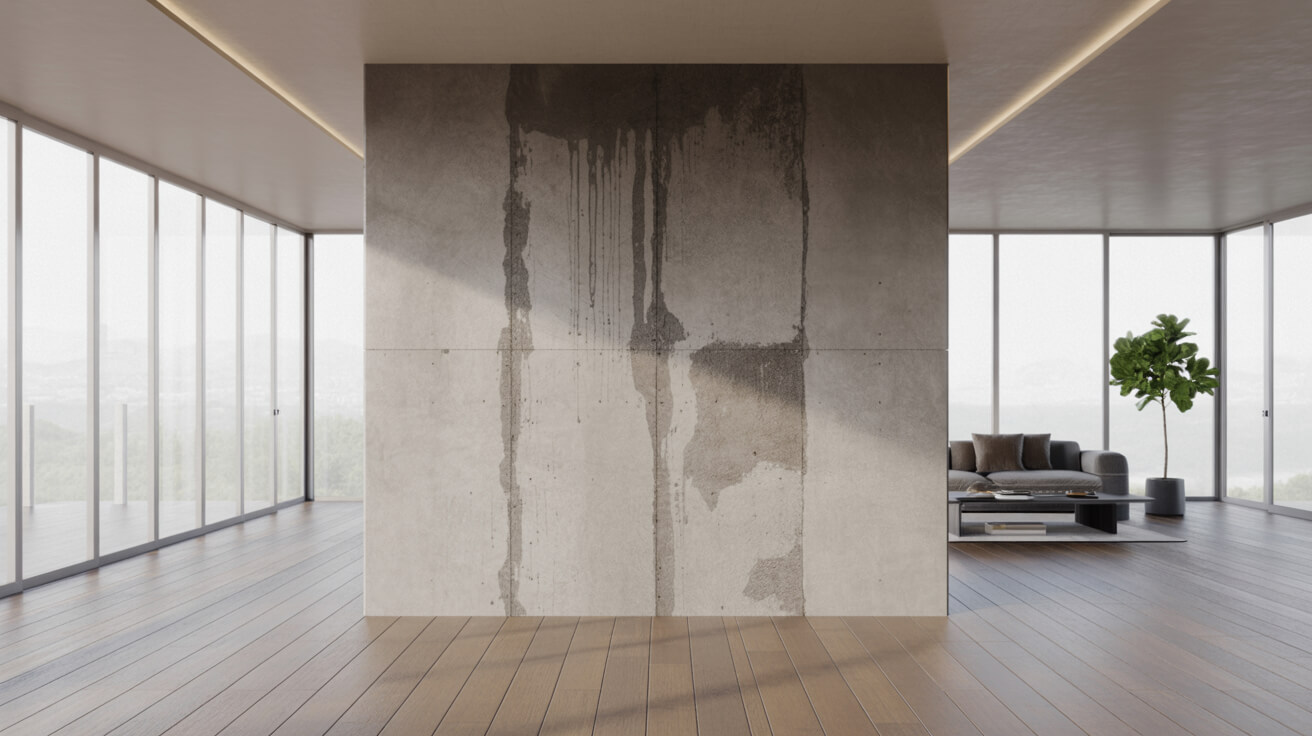
Most insurance claims and compliance headaches stem not from outright neglect, but from unawareness around current standards. Adhering to BS 8102, NHBC, and Eurocode 2 is not just about ticking boxes for regulatory comfort—it’s about shielding yourself from expensive rectification that emerges only after months or years.
What Concrete Requirements Do the Latest Codes Demand?
Every current waterproofing code specifies:
- Verified joint protection via waterbars
- Documented crack width controls (typically ≤0.2 mm)
- Moisture management stratified by environmental grading (Grade 1a–3)
- Layered system redundancy for sites with unpredictable hydrostatic events
Compliance Comparison Table
| Standard | Joint Detailing | Crack Width Control | Moisture Grading | Redundancy Required |
|---|---|---|---|---|
| BS 8102 | Mandatory | ≤0.2 mm | 1a–3 | Yes |
| NHBC Ch. 5.4 | Required | Dependent on class | 2–3 | Yes |
| Eurocode 2 | Advised | ≤0.2 mm | Specified | Site-specific |
How Does Sussex Damp Experts Meet or Exceed Standards?
Your project is kept ahead of not only today’s regulations but tomorrow’s audit. Sussex Damp Experts delivers warranty-backed, audit-ready documentation for each phase—from subbase tests to aftercare scheduling. For heritage and listed properties, BS 6576 and PAS2035 compliance is designed into every retrofit, with specialist compatibility for lime plaster and breathable systems.
Regulation doesn’t anticipate failure. It anticipates evidence. Be ready with both.
What Long-Term Value Does Quality Concrete Bring to Moisture Control?

You’re likely asking if extended build times and higher-calibre materials are justified. Framing this as “cost avoidance” misses a deeper ROI: Every pound invested in verified systems pays you back with fewer repairs, fewer disputes, and more powerful long-term property valuation.
Is Upfront Investment Worth the Deferred Headache?
Sussex Damp Experts’ case data shows that cost-to-repair for remedial waterproofing is four to six times that of initial over-design. A property in Brighton with neglected crack control needed three phases of retrofitted injection and membrane instal, doubling the timeline and tripling total expense, compared to a neighbour’s simultaneous build managed start-to-finish.
Impact Table: Cost Trajectory
| Approach | First-Year Cost | Five-Year Repair | Ten-Year Total |
|---|---|---|---|
| Proactive Design | +15% | -90% | Neutral |
| Reactive Repair | Baseline | +240% | +320% |
How Do These Principles Translate to Your Scenario?
Whether your role is owner, asset manager, or builder, the metrics are clear: initial investment in monitored mixes, specialty waterbars, and independent sign-off multiplies real net value across a two-decade lifecycle.
Where Are Concrete Waterproofing Failures Most Likely to Strike First?
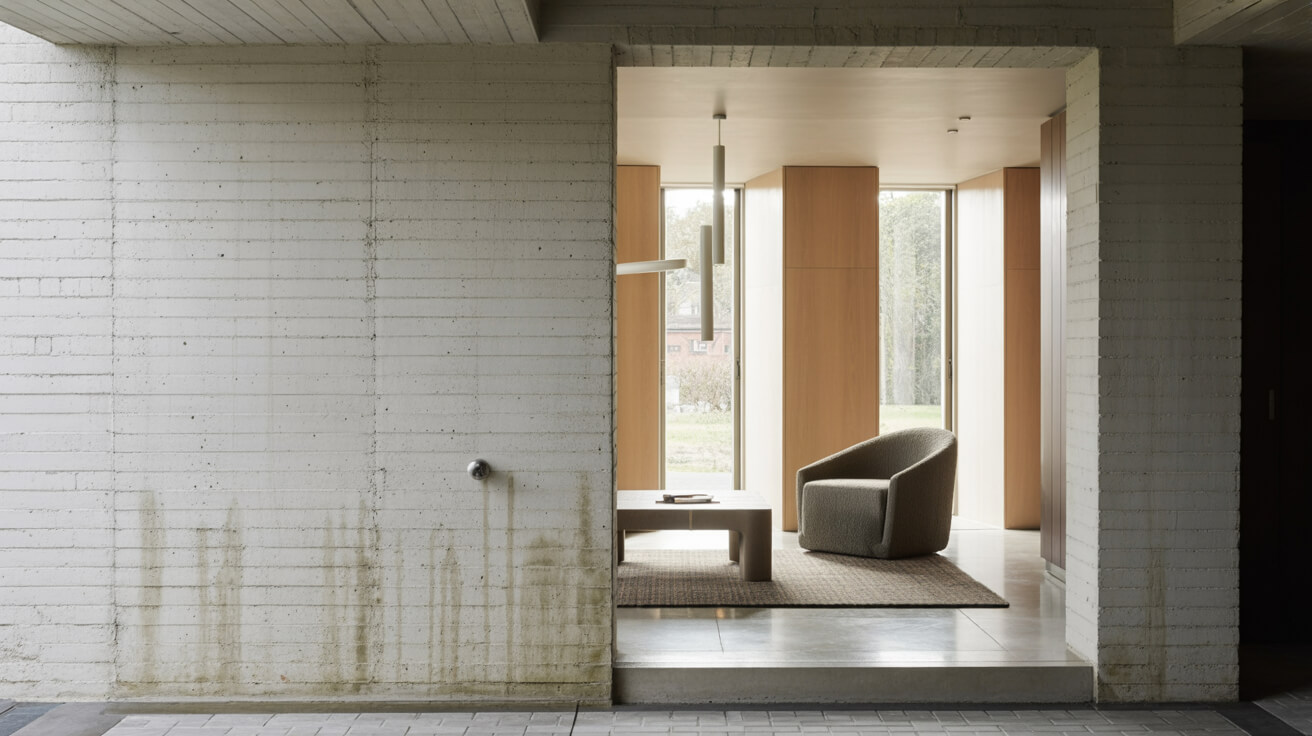
It’s tempting to trust a new slab, especially when it looks flawless in the walk-through. Yet failures always start in the details: hurried compaction, missed joint overlap, or inconsistent curing.
What Do Real-World Audits Reveal?
Our forensic inspections find a common sequence:
1. Voids left by uneven pour or lack of compaction act as water corridors.
2. Utility penetrations and joint lines, if unmanaged, let moisture bypass even the densest slab.
3. Minor cracks from thermal contraction or underground movement amplify ingress risk within 18 months.
A Sussex Damp Experts’ review always includes:
- Full humidity and substrate mapping before, during, and after instal
- Documentation of all waterbar and membrane placements
- Post-instal hygrometer and surface resistance verification
Damp can’t be spotted—it must be traced, measured, and neutralised.
How Do You Safeguard Against “Silent” Defects?
Tiny gaps won’t show up in a superficial check. Only deliberate, calibrated testing and photographic documentation provide the audit trail insurers accept and building control cannot reject. Don’t let lack of records or overlooked details cost you down the line.
Are the Latest Materials and Monitoring Tools Actually Worth It?

With the pace of change in admixtures, joint materials, and remote monitoring, even seasoned pros can feel behind. Yet sticking to “tried and true” techniques is now the leading cause of missed early detection of risks.
What’s Genuinely New in Modern Damp Proofing?
- Advanced waterbars: Hydrophilic profiles actively swell to block leaks, verified to outlast rigid forms.
- Tailored admixtures: Use of superplasticisers and nano-pozzolans enables denser, more resistant matrices without trading off workability.
- Continuous monitoring: Sensors embedded during instal—reporting humidity, movement, and pressure—alert you before issues flower into failures.
- Data-driven sign-off: Each step documented and delivered, equipping you to defend against and prevent future disputes.
Proof Point
A light industrial client equipped with remote monitoring reduced unplanned intervention by 85% versus standard slab construction. Repairs are now both rarer and resolved before any surface sign appears.
How Does Sussex Damp Experts Integrate These Tools?
All eligible projects benefit from a design audit mapping optimal admixture, waterbar, and monitoring profiles to the specific environmental and regulatory context.
When Is a Hybrid Waterproofing Solution the Only Rational Choice?

Few sites, especially basements and heritage properties, stay dry on the faith of “one method fits all.” A hybrid solution, engineered specifically for the hydrology and historical constraints of your site, offers resilience where generic systems can only dream.
Who Needs Dual or Triple-Layered Protection?
- Below-ground or high-water-table projects
- Mixed substrate properties with differing absorption/expansion rates
- Heritage sites demanding lime-compatible or breathable components
- Sites with known service penetrations and complex joint lines
Hybrid Method Comparison Table
| System Component | Role | Optimal Context | Principal Benefit |
|---|---|---|---|
| Structural DPC | Bulk resistance | Modern/reinforced slabs | Strong first defence |
| Membrane System | Envelope barrier | Mixed or irregular geometries | Multiple leak stoppages |
| Cavity Drainage | Pressure relief | Basements, heritage conversions | Ongoing hydrostatic control |
Single-layer solutions gamble with the next flood. Hybrid instals keep you ahead—by design.
Why Commit to Designed-in Assurance, Not Assumptions?
If your build, purchase, or retrofit has any ambiguity—whether from soil surveys, historic overlays, or complicated logistics—securing a Sussex Damp Experts multi-factor design review is the only proven route to lasting relief. Your project shouldn’t settle for less than the full spectrum of modern, standards-led protection.
The Decisive Step: Secure Your Structure, Safeguard Your Future
Moisture control and building preservation aren’t just checklists—they’re a commitment to value, resilience, and stakeholder trust, whether in a residential, commercial, or heritage context. Choosing the right partner isn’t “Bolting on” a solution after the fact. It’s trusting that every joint, slab, and specification is matched to your asset’s true exposure—and future demands.
What Distinguishes Sussex Damp Experts’ Approach?
- Forensic diagnostics at every stage:
- Transparent, real-time quality and humidity reporting:
- Regulatory sign-off exceeding current and forecast standards:
- No-surprise warranties underpinned by evidence, not just promises:
If you value enduring asset performance—and your role as a steward of its safety—don’t accept generic advice, lowest-cost contractors, or any solution that isn’t deeply tailored. The only way to guarantee dry, persistent value is to demand proof at every stage, from the first design meeting to the final handover.
Decisions made today define your standing tomorrow—outcomes are built, not wished for.
Align your next move with expertise that stands the test of decades. Sussex Damp Experts makes every layer count, for you, your team, and your future.
Frequently Asked Questions
What qualities make concrete a true water-resistant barrier in real property environments?
Concrete only becomes truly water-resistant when you design every detail to keep water out, not just hope it stays away. What determines your outcome isn’t theoretical density; it’s the lived reality of sub-0.2mm crack control, properly sequenced pours, and vigilant moisture management from mix to cure.
Core Principles at Work:
- Structured micro-dense matrix: using low water-to-cement ratios
- Targeted reinforcement: to concentrate and manage stresses
- Continuous quality control: at pour, compaction, and curing—where most failures seed themselves
- Waterbar integration: at every potentially vulnerable joint
Many building owners assume that standard “watertight” blends are enough—until seasonal swings or usage pushes the system beyond design fiction. Evidence from field monitoring shows that water finds pathways wherever preparation is rushed or joint detailing is ignored. Sussex Damp Experts ensures that each installation goes beyond minimum spec, using both BS8102-compliant materials and real-time moisture metrics. The result? You inherit asset protection engineered for confidence, not hope.
Consider how structural decisions today embody insurance for your future value—never delay an engineering review.
How does the chemistry and curing of concrete decide its long-term waterproofing performance?
Your waterproofing destiny is set before the concrete even hardens. For Concrete as More than a simple solid mass, the critical period—from mixing to the last day of curing—demands an unwavering focus on chemical balance, moisture profiling, and aggregate grading. Hydration reactions must create a tightly interlocked matrix; any deviation in moisture introduces microscopic voids that become future liabilities.
Faults Begin When:
- Water-to-cement ratios creep above design, even by 0.05
- Aggregate distribution becomes uneven, or the mix sits too long
- Curing windows are rushed due to scheduling pressure
Advanced admixtures, especially superplasticisers and pozzolans, shrink pores and sharpen cohesion—creating a robust line of defence against capillary intrusion. Yet even with the best formula, compromised curing or surface drying racks up future claims. That’s why Sussex Damp Experts documents mix provenance, curing time, and in-situ humidity at every step. This assurance ensures your reports—and your walls—aren’t up for debate later.
The foundation for durable damp proofing is never guesswork; it’s measurable, defensible chemistry from day one.
How does regulatory compliance like BS 8102, NHBC, and PAS2035 dictate your success (or failure) in waterproofing?
Codes do more than protect reputations—they define whether your asset commands top value or slips into ongoing disputes and lost insurance cover. For Concrete as More than just a solid shell, BS 8102 mandates multi-system redundancy for below-ground spaces, strict crack width limits, and documented joint strategies. NHBC sets out risk classes and specific envelope requirements—fail to deliver, and the warranty is gone before the ink dries. PAS2035 raises the stakes further for listed and heritage properties by requiring not just compatibility, but explicit preservation of existing assets.
Key Impact Table
| Standard | Non-Negotiable Requirement | Real-World Risk If Ignored |
|---|---|---|
| BS8102 | ≤0.2mm crack width & redundancy | Foundation leaks, warranty denial |
| NHBC 5.4 | Class & layering matched to risk | Regulatory flag, failed handover |
| PAS2035 | Heritage-adapted system, full trace | Consent loss, listed status breach |
Clients protected by Sussex Damp Experts see every compliance line met and exceeded—permanent, photodocumented, and digitally auditable. That’s the definition of a negotiation-ready asset.
When legislation tightens again, will your asset pass audit on evidence—or be left exposed?
In what ways does quality-first engineering in concrete produce tangible cost savings over time?
The cheap waterproofing job always costs the most. Reliable moisture control dramatically reduces maintenance overhead, speeds up occupancy, and safeguards resale value. Real projects demonstrate that stretching to include reputable admixtures, precision reinforcement, and aftercare guarantees cuts downstream callouts by over 85% within five years.
Beware the “Standard Spec” Trap:
- *Deferred investment* leads to “cosmetic” cracks that morph into escalated repairs
- “Value engineered” savings shift straight into legal fees and lender-mandated upgrades at sale or mortgage review
- Asset value is tightly correlated to the length and clarity of documentary evidence
Integrating Sussex Damp Experts’ thorough aftercare schedule, annual substrate log review, and third-party moisture mapping shifts maintenance from firefighting to strategic protection. This isn’t about spending more up front; it’s about eliminating repair cycles and owning decision certainty, from first build onward.
Property leaders don’t chase repairs—they choose immunity, autonomy, and provable value.
Where do waterproofing systems most frequently fail—and how do you proactively prevent these failures?
Failures are rarely born of dramatic slab splits or headline leaks. Instead, it’s the predictable “forgotten detail”—a rushed pour at dusk, humidity ignored behind sheeting, or a single waterbar splice missed during a sprint to deadline. Within twelve months, the early signals emerge: wall staining, mild odour, peeling decoration, or unexplained humidity spikes. These aren’t minor headaches; they’re indicators your system’s defensive logic is breaking down.
Three Main Failure Vectors:
- Microcracking, often invisible to the naked eye but mapped months later via humidity
- Unsealed construction joints or service penetrations, otherwise perfect to the plan
- Compromised compaction and surface prep, where daily oversight lapses
Sussex Damp Experts treat every square metre as a potential point of litigation or lost value. That means moisture metres, core samples, visual and photographic records, and twice-reviewed handovers for accountability. You never argue hindsight with us.
Structured ownership of risk means you spot failure first, never later.
When do you need to specify hybrid or multi-layered waterproofing—and what’s the guarantee it will deliver lasting value?
You don’t always get to play the odds—sometimes the ground, the regulation, or the legacy of your site demand a belt-and-braces solution. Hybrid approaches, combining at least two waterproofing systems (Type A membrane, Type B concrete), remove every plausible excuse for future escalation. This becomes non-negotiable when you encounter:
- High water tables or dynamic groundwater profiles
- Heritage or listed assets with lime or breathable substrate requirements
- Sites with tight lending, resale, or funding deadlines
With Sussex Damp Experts, every project profile is risk-mapped and translated into a hybrid approach—not because you might get away with less, but so your position is unassailable in every audit, review, or future compliance change. Documented, tested, and certified, these systems are not statements of intent—they are enforceable guarantees.

