
 By
By  January 17, 2025

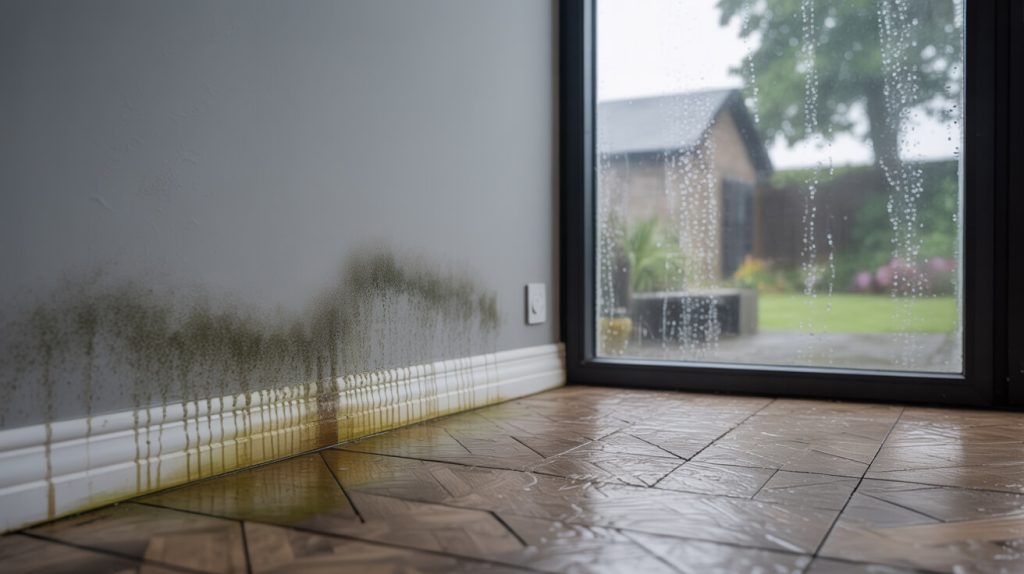
What Does Damp Look Like? Signs & Causes Explained
If you own or manage property in the UK, recognising the visual signs and underlying causes of damp is central to protecting your asset, meeting legal obligations, and maintaining safety for those who live or work in your buildings. This guide breaks down everything you need to know, following the evidence and statutory standards that define how damp is identified, documented, and remediated—without jargon or ambiguity.
Unchecked moisture never disappears quietly; it settles into your property’s bones, raising costs and risks with every day it goes ignored.
What Is Damp And Why Is It So Serious?
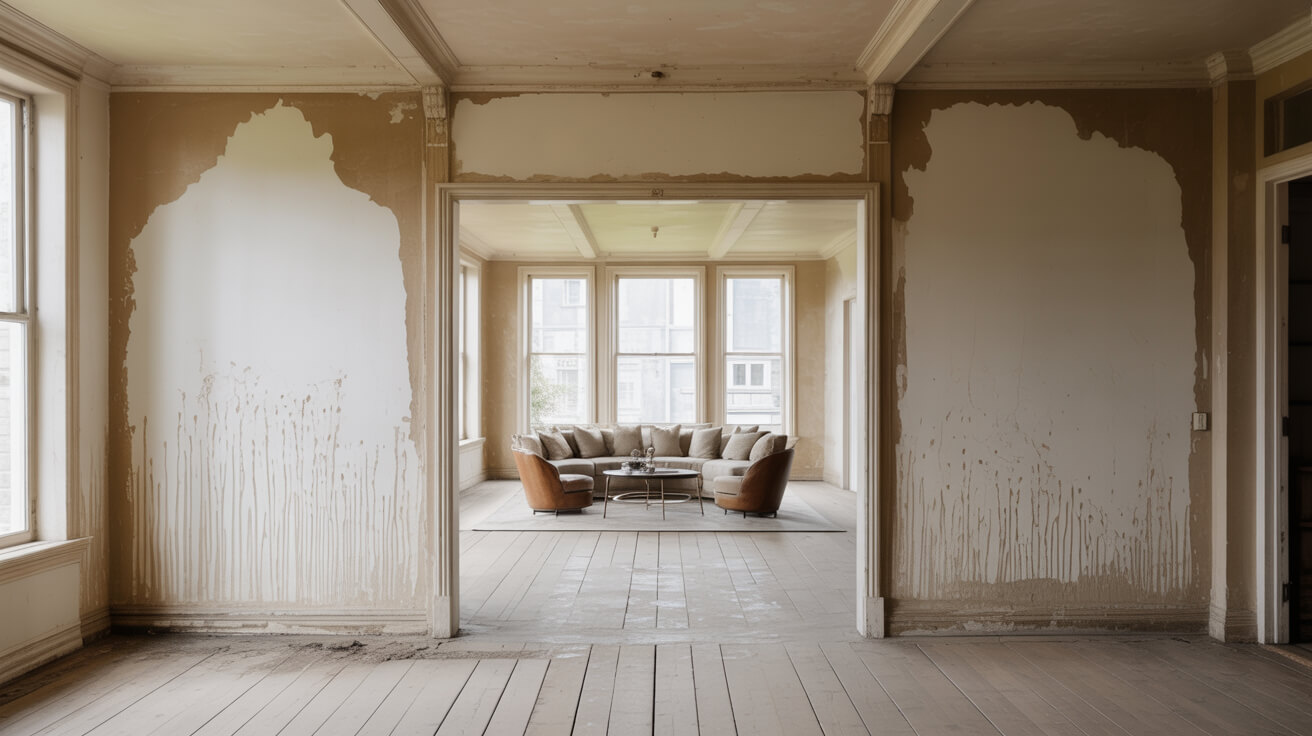
The Structural and Human Impact of Dampness
Damp in buildings is unwanted water—liquid, airborne, or both—accumulating inside walls, floors, ceilings, or basements and causing both visible and hidden damage. The first consequence is gradual material decay: weak mortar, spalled bricks, paint or plaster crumbling, and timber rot. Left unresolved, damp accelerates structural damage at every level: it may undermine foundations, trigger hazardous mould, or invite wood-boring pests.
Damp and Legal/Statutory Risk
For landlords, property managers, or asset holders, the consequences are more than physical. Under the UK HHSRS framework, chronic damp and mould are Category 1 hazards. Failure to address them can lead to enforcement notices, fines, and even criminal proceedings. Rental properties and workplaces come under additional scrutiny, with mandatory repair timelines and documentary requirements governed by legislation like the Landlord & Tenant Act 1985.
Health, Value, & Compliance
Long-term moisture in any building raises relative humidity, lowers energy efficiency, and impairs indoor air quality. According to the NHS and government research, chronic damp exposure is a root cause of asthma, allergies, and respiratory illness—particularly for young children, seniors, or vulnerable adults. From a financial perspective, RICS mortgage surveys routinely flag unresolved damp as justification for price reduction, retention, or refusal of financing.
Key Damp Outcomes
- Material decay: plaster, paint, brick, timber, insulation—everything is at risk.
- Occupant health decline: increased asthma/allergy rates, absenteeism, or hospital visits.
- Sale/rental risk: valuation downgrades, insurance refusal or caveats, lost tenants.
- Legal exposure: HHSRS enforcement, fines, rent repayment orders, extended litigation.
- Operational disruption: recurring repairs, disrupted management time, or vacancy losses.
Prioritising inspection and prompt remediation isn’t just responsible—it is the gateway to sustained asset value and regulatory reliability. Sussex Damp Experts structures all surveying and repair recommendations to exceed these compliance thresholds, embedding assurance at every step.
How Do You Identify Each Type Of Damp?

Visual, Sensory, and Contextual Diagnostics
No two damp cases are alike, but every type presents distinct patterns. Your challenge is knowing what to check, where to look, and how to distinguish between harmless surface moisture and a deep-seated problem requiring expert intervention.
Typical Damp Types
| Damp Type | Signature Signs | Usual Location | Root Cause |
|---|---|---|---|
| **Condensation** | Mould in corners, wet sills | Bathrooms, kitchens, bedrooms | Poor ventilation, temperature gaps |
| **Rising Damp** | Tide marks, salty crusts, paint/plaster decay below 1m | Ground floor walls, skirting | DPC failure or absence, capillary rise |
| **Penetrating Damp** | Patchy wet areas, variable height | All floors, often after rain | Faulty gutters/pointing, roof leaks |
| **Bridging Damp** | Localised damp near ground or bridging material | Old walls, chimneys, party walls | Faulty render, raised external ground, old repairs trapping moisture |
| **Hygroscopic Damp** | Persistent wetness with salty deposits | Internal walls, chimney breasts | Salt-contaminated or chimney walls |
Breakout: Sensory & Material Markers
- Odour: Musty or earthy smells—especially persistent after cleaning—signal hidden decay.
- Touch: Cold, damp patches (especially during/after rain events).
- Sight: Peeling, bubbling paint, fuzzy black/green mould, white efflorescence crystals, warped surfaces.
Checklist: Self-Inspection
- Scan all skirting and lower walls for tide marks or blistering.
- Examine windows, behind furniture, and corners for condensation spots or black mould.
- Look for irregular patches on ceilings or chimney breasts—especially after rainfall.
- Note any flaking, crumbling plaster or salty surface deposits.
If any sign persists, recurs after previous repair, or appears without obvious cause, escalate the diagnosis. Sussex Damp Experts can supplement visual checks with advanced inspection, e.g., moisture metres, salt analysis, or infrared mapping.
Why Does Damp Develop, And What Triggers It?

The Chain of Moisture Intrusion
Damp arises when water enters or persists inside a property faster than it can escape or evaporate. This can stem from both external and internal sources, construction or maintenance faults, and from specific architectural features.
Construction & Environment Triggers
- Failed or missing DPC: Allows capillary action to pull groundwater upward into walls.
- Blocked gutters, defective flashings: Rainwater is misdirected, saturating walls.
- Insulation and retrofit errors: Modern materials can trap moisture within period or heritage structures.
- Bridging: Incorrect plasters, external render above DPC height, or soil against walls.
- Lifestyle factors: Showers, cooking, or drying clothes without sufficient ventilation.
Environmental Multipliers
- Heavy rainfall or high groundwater:
- Extreme seasonal humidity:
- Urban properties with minimal airflow:
Process Diagram: Causal Triggers
| Issue | Cause | Prevalence Context |
|---|---|---|
| Capillary rise | No or failed DPC | Pre-1919, ground-level units |
| Rain ingress | Faulty gutters/roofs | All building types |
| Condensation | Poor air flow | Double-glazed post-1980s |
| Bridging | Raised outside ground | Edwardian, Victorian, Rural |
Without holistic diagnosis, partial repairs (e.g., painting over stains or cleaning mould) fail, as root triggers remain active. Sussex Damp Experts conduct cause-and-effect mapping on every assessment, combining technical insight with building history for full remediation.
Where Do Damp Issues Most Commonly Show Up In Buildings?

Mapping Your Building’s Damp Hotspots
Damp rarely announces itself in the middle of the living room. It appears first where conditions support the accumulation of water—and those risk points are well known.
Ground-Floor & Perimeter Zones
- Visible tide marks, salt lines, or spalling at lower ground-floor walls—especially behind furniture or where landscaping is high.
- Under bay windows, behind kitchen units, or in unventilated corners.
Wet Rooms & High-Humidity Spaces
- Recurring mould growth and water marks in bathrooms, kitchens, and near extraction vents.
Basements and Below-Ground Spaces
- Persistent musty odours, wall sweating, or pools at floor edges indicate poor drainage or waterproofing.
- Remedial tanking or cavity drainage may be required—Sussex Damp Experts assesses compatibility with heritage or modern standards.
Roof Spaces & Upper Floors
- Water staining on ceilings or down party walls after rainfall: check roof tiling, flashing, or plumbing stack leaks.
- Patches that shift seasonally often indicate lateral penetration.
Commercial & Multi-Unit Properties
- Regular surveys of voids, risers, and plant rooms reveal hidden condensation traps.
- Portfolio landlords—and especially block managers—should implement scheduled inspections as part of compliance practice.
| Area | Typical Damp Source | Notes for Owners/Managers |
|---|---|---|
| Skirting & lower wall | Rising or bridging | Look for paint flaking/tide marks |
| Ceilings, party walls | Penetrating damp, leaks | Seasonal/rain-driven patterns |
| Bathrooms, utility, kitchens | Condensation | Mould at edges, behind units |
| Basements/cellars | Groundwater, rain ingress | Persistent damp & odour |
Frequent review of these hotspots creates an early-warning system, minimising risk of missed problems escalating into full-scale decay. Our team validates findings using mapped moisture profiles, ensuring even hidden zones are not overlooked.
When Should Damp Trigger Immediate Action?
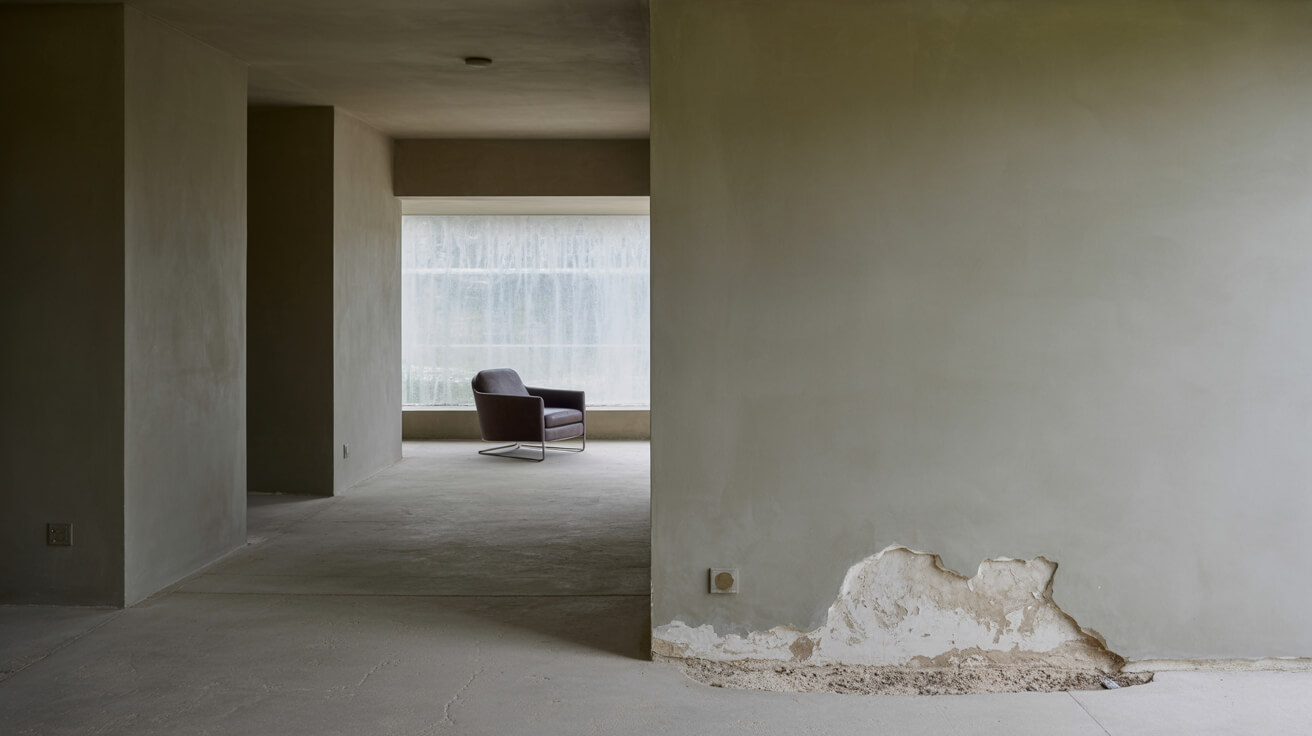
Escalating Damp: From Nuisance to Urgency
A faint mark or transient condensation rarely warrants intervention. But persistent, migrating, or expanding damp should never be ignored.
Red Flags for Immediate Action
- Paint, plaster, or timber softening faster than a seasonal cycle.
- Black or green mould forming in rooms beyond obvious water sources.
- Persistent odours or visible water after repair or professional cleaning.
- Survey, insurance, or tenant complaints highlighting repeated areas.
- Health symptoms among occupants: increased coughing, sneezing, or asthma flare-ups.
Legal & Regulatory Timelines
- HHSRS mandates landlords remedy Category 1 damp/mould hazards immediately.
- Section 11 obligations: failed repairs, repeated complaints, or vulnerable tenants mean fines, compensation, or legal orders.
- Survey flags: mortgage or insurer may impose repair deadlines or adjust coverage terms.
Action Table: Urgency Thresholds
| Sign | Escalation Action | Proof/Documentation |
|---|---|---|
| Persistent mould/damp | Pro survey immediately | Surveyor report, photos |
| Post-repair recurrence | Expert re-diagnosis, litigation | Chain of audit evidence |
| Health impact tenants | Emergency action, report to EHO | HHSRS, doctor’s statement |
| Value/insurance loss | Compliant survey, before/after | RICS, insurer documentation |
If any sign reaches escalation, delay is not prudence; it’s exposure. Sussex Damp Experts prioritises urgent assessments, delivers compliant timelines, and compiles the necessary documentation to eliminate ambiguity.
How Is Damp Diagnosed And Documented Professionally?
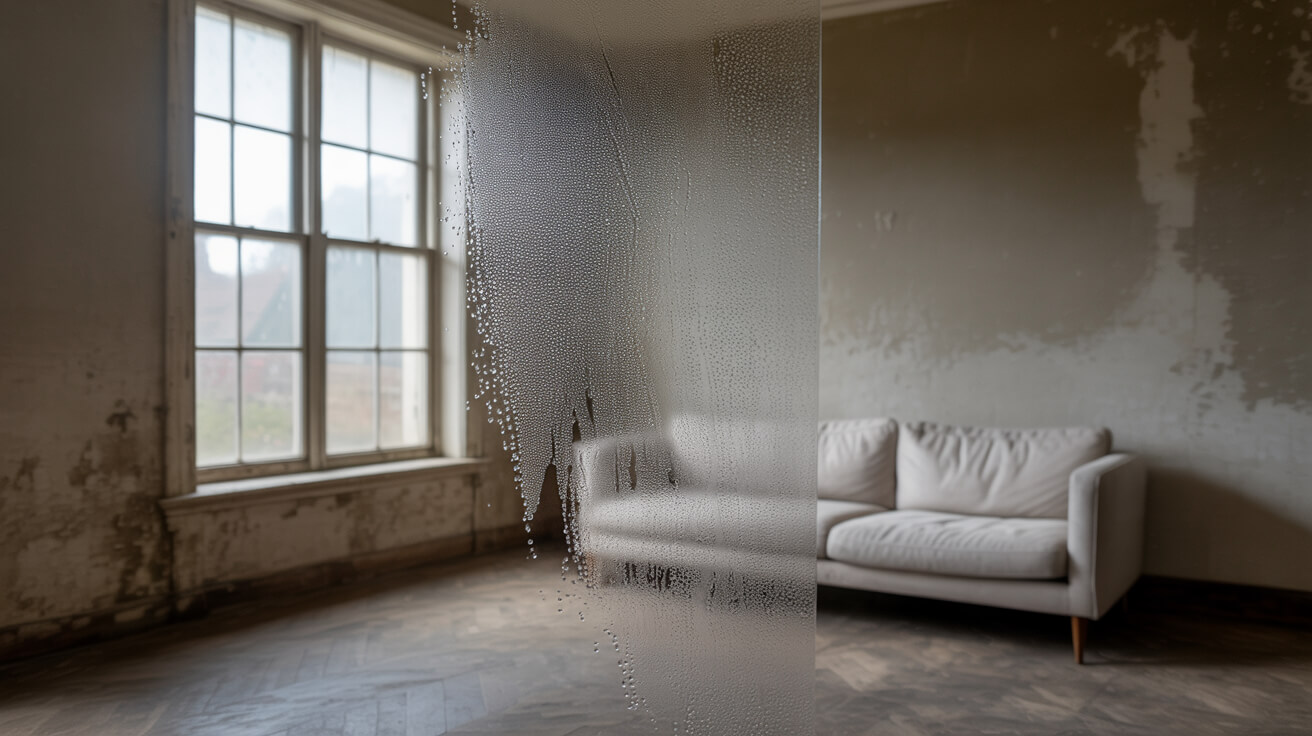
Survey, Testing, and Reporting Explained
Professional damp diagnosis is a multi-layered process. Sussex Damp Experts conduct initial visual assessment, logging every symptom and known risk vector. We then employ:
- Moisture metres: pin and pinless for mapping wall/floor gradients.
- Thermography: finds hidden cold/condensation bridging.
- Salt analysis: distinguishes rising damp (nitrate/sulphate) from surface effects.
- Hygrometer/sensor logs: chronic issues on ongoing monitoring.
For heritage or protected sites, investigation expands to include fabric compatibility studies and archival checks.
Reporting: Crossing the Mortgage, Legal, and Compliance Divide
Reports carry step-by-step findings, photographic evidence, moisture readings, mapped cause diagrams, and clear compliance/repair recommendations. All documents are formatted to exceed RICS, HHSRS, and PAS 2035 protocols, delivering confidence to buyers, sellers, tenants, and managing agents.
Certified Checklist: Essentials
- Visual symptom mapping and reference photos
- Moisture level and salt type readings
- Risk source diagram for primary/secondary impact
- Remediation recommendation by proven method
- Ongoing monitoring (if risk persists/root cause unclear)
With these in hand, you move forward with reputable, authorised documentation—the difference between proactive stewardship and last-minute panic.
Can Damp Impact Building Value, Health, Or Legal Standing?
Tangible and Intangible Costs
No serious owner or manager can afford to dismiss the value, health, and legal implications of unresolved damp. At its most blunt, unchecked damp:
- Reduces mortgage valuation, sometimes voiding offers or halting exchange.
- Downgrades property worth by 5–20% depending on severity and market cycle.
- Increases annual maintenance, insurance excesses, or claims refusal rates.
On the human side, residents and tenants exposed to chronic damp or mould see increased rates of respiratory illness, absence, and, according to NHS data, more severe, longer episodes especially in children, elderly, and asthmatics.
Legal/Compliance Dimensions
Landlords risk fines, legal claims, or rent repayments. Block managers and housing authorities face increased audit scrutiny, more tenant churn, or unenforceable leases.
Table: Damp’s Impact Channels
| Risk Area | Immediate Impact | Downstream Effect |
|---|---|---|
| Property value | Lower surveyor rating | Sale delay, price loss |
| Health & well-being | Increased illness | NHS/council involvement |
| Legal compliance | Fines, claims | Reputation, future valuation |
Mitigating these is about more than cost: it’s about establishing the kind of vigilant asset management that investors, tenants, and banks trust.
Book Your Free Damp Assessment And Professional Survey
Today’s property landscape demands proof, action, and credibility. Your goal isn’t just to fix what’s visible—but to officially safeguard your investment, comply with regulations, and give every occupant the confidence of a healthy, well-maintained environment.
From initial inspection through to certified documentation and tailored aftercare, Sussex Damp Experts delivers process transparency, in-field precision, and fully credentialed assurance. Whatever your property type, portfolio size, or compliance duty, your peace of mind is one step away.
Take advantage of a diagnostic survey built to exceed every regulatory, tenant, or buyer demand. Secure your property’s future, your reputation, and your own peace of mind—with expert intervention before small risks become major liabilities.
Frequently Asked Questions
What are the first warning signs of damp—and why do overlooked symptoms cost more than you think?
Damp usually starts with whispers, not alarms. Your best early defence is learning to spot visible and subtle cues that separate a healthy property from one at risk. Dark staining or “tide marks” along skirting boards, powdery white efflorescence, or a persistent earthy smell in corners all suggest moisture where it shouldn’t be. In living spaces, pay attention to:
- Peeling or bubbling paint
- Plaster that crumbles at the touch
- Black spot mould in window reveals or behind sofas
- Discoloured patches that seem to migrate after rain
In basements or heritage homes, warped floorboards, salt lines, and stubborn damp odour are early red flags. All these clues mean water has breached your property’s natural defences—either from below (rising damp), through walls (penetrating damp), or from daily life (condensation).
Key takeaway: Ignoring “cosmetic” symptoms sets the stage for spiralling repair costs, HHSRS compliance headaches, or even insurance denials later. Swift investigation and professional assessment—like the actionable, survey-grade process from Sussex Damp Experts—help you move from endless cycle of quick fixes to a reputation for prevention.
How do you tell if it’s condensation, rising damp, or penetrating damp?
The symptom location and behaviour are your compass. Condensation favours unventilated bedrooms, bathrooms, or kitchens, where you’ll find water droplets on glass, black-mould clusters in corners, or excess humidity even in the absence of leaks. Causes are linked to lifestyle: lack of extraction, drying laundry indoors, or blocked vents.
Rising damp is defined by its reach. Look for staining, flaking, and salt bloom confined to the bottom metre of external ground floor walls—a boundary almost never crossed by condensation. The most telling evidence? Salt crystals or chalky residue and plaster soft enough to crumble. This means water has migrated up from below, typically through a faulty, bridged, or missing DPC.
Penetrating damp clues you in with shape and timing: irregular, spreading patches often climbing up mid-wall or appearing on ceilings (especially after storms, gutter overflow, or cracked render). Expect to find external triggers—blocked downpipes, damaged pointing, or worn flashings.
Comparison Table:
| Symptom Location | Condensation | Rising Damp | Penetrating Damp |
|---|---|---|---|
| Windows/corners | ✔️ | ❌ | ❌ |
| Lower walls/skirting | ❌ | ✔️ | Sometimes |
| Ceilings/mid-walls | ❌ | ❌ | ✔️ |
| Smell musty/earthy | Sometimes | Often | Sometimes |
| Changes with weather | Rare | Rare | Common |
Expert insight: Acting on visible moisture without decoding its source means you’re gambling with the outcome. Our diagnostic service translates these patterns into precise cause—and a remedy that actually lasts. This is how you shift from reactive spending to planned prevention.
What causes damp to develop in buildings—and how can you anticipate and prevent it?
Damp’s origins are both structural and behavioural, with environmental forces acting as accelerants. A failed, missing, or bridged damp proof course (DPC) sets the stage for rising damp. Bridging takes many forms: concrete or earth built up above DPC level, internal plaster slumping below the original barrier, or old repairs that trap water inside historic walls.
Penetrating damp has external partners—cracked render, missing pointing, decayed sills, or gutters that channel rainwater against the masonry. Modern energy upgrades (solid wall insulation, non-breathable paints) can also suffocate older buildings, boxing in humidity that older lime walls once released.
Condensation is the cost of modern life: hot showers, drying laundry indoors, and not running the extractor. High occupancy or underheated rooms create pockets where moisture accumulates and clings to cold surfaces.
Root Cause Table:
| Trigger | Risk | Likely Building/Zone |
|---|---|---|
| Blocked gutter/rainpool | Penetrating damp | Upper walls/ceilings |
| Failed DPC/plaster | Rising damp | Ground floor skirting |
| Poor vent/insulation | Condensation/hygroscopic damp | Bathrooms, kitchens, basements |
| Modern impermeable paint | Trapped moisture in heritage walls | Listed/period properties |
| High ground levels | Bridging rising damp | External perimeter |
Best practice: Prevention isn’t about products—it’s about systems. Maintain gutters, repair brickwork and pointing, and ventilate every high-risk zone. When dealing with heritage or mixed-use sites, use breathable materials and respect the logic of the building’s envelope. This is how your asset moves from “problem offender” to “low-risk, high-value” in any property portfolio.
Where are damp issues most likely to hide—and which overlooked areas cost the most?
Damp rarely attacks in open daylight. Some of its most tenacious outbreaks flourish out of direct sight.
- Behind bulky wardrobes, kitchen units, or vanity cabinets
- Under bay windows and stairwells—especially where airflow is absent
- In corners where furniture blocks wall access
- Roof voids, plant rooms, and bin stores in commercial buildings
- Subfloor spaces or basement corners, particularly in older or terraced homes
- Beneath synthetic flooring or laminate where rising moisture becomes trapped
- In voids between internal insulation and solid wall in retrofitted properties
Persona insight: Asset and compliance managers dread the phrase, “It looked fine until the next inspection.” Tenants report that “odd smell” or damp underfoot before mould or visible decay. Surveyors routinely flag hidden issues in these exact locations—a nightmare if you’re facing an upcoming valuation, housing association audit, or tenant changeover.
Professional audit: Our property risk assessments focus on precisely these high-risk, low-visibility areas. You get a map of current threats—and a plan that makes missed damage, “just in time” repairs, and unplanned expense something your portfolio never has to face.
When does a damp issue demand immediate escalation, regardless of budget or timetable?
The simple answer: the moment recurring or spreading symptoms defy your last repair, or when an independent surveyor’s report, health complaint, or tenancy review flags the problem as unresolved. In rented or managed properties, UK regulation (HHSRS, Section 11 Landlord and Tenant Act) mandates that Category 1 hazards must be resolved in days, not weeks. Delay can lead to council intervention, compensation payouts, or legal challenges that dwarf the initial repair cost.
For homeowners, a mortgage survey that cites “persistent damp” or “visible tide marks” is no longer a mere maintenance note. It’s a red flag that slows, devalues, or blocks a sale—and likely spikes insurance premiums or triggers claim refusal.
Escalation triggers for immediate action:
- Mould that continues to return after cleaning or simple “treatment”
- Tide marks moving above original DPC level
- Plaster or timber decay that spreads between inspections
- Surveyor, tenant, or agent report that singles out unresolved damp
- Health issues (asthma, allergies) clustered in rooms with visible symptoms
Your best reputation and value-protection move is to escalate, document, and remediate before authorities or buyers do it for you. Our process is built for compliance, audit readiness, and operational certainty—eliminating emotions like panic with a system that rebalances risk.
How does professional diagnosis and survey documentation transform your damp risks into long-term asset strength?
Expert damp assessment is a blend of science, compliance, and foresight—not a glance and a quote. Measurement, mapping, and validated reporting done to standards such as BS6576 and PAS2035 become your property’s evidence pack and first line of audit defence.
Our advanced surveys include:
- Moisture metre readings (across risk zones—not just random sample)
- Salt analysis for rising/penetrating damp differentiation
- Infrared thermography to spot hidden condensation / cold bridges invisible to the eye
- Building history/heritage compatibility review (for listed properties)
- Full photographic evidence with annotated elevation plans
Value table: DIY diagnosis vs. Professional survey
| Area | DIY | Sussex Damp Experts Survey |
|---|---|---|
| Visual/Surface Checks | ✔️ | ✔️+ |
| Moisture Mapping | ❌ | ✔️ |
| Salt Type/Source Testing | ❌ | ✔️ |
| Compliance Documents | ❌ | ✔️ (meets BS6576/PAS2035/PCA/RICS) |
| Actionable Aftercare Plan | ❌ | ✔️ |
| Insurance/Mortgage Proof | ❌ | ✔️ |
Surveyor’s mantra: “If it isn’t documented, it isn’t compliant.” For landlords, agents, and homeowners facing valuation or claims scrutiny, this is the difference between confidence and costly, endless cycle of repair. Our evidence-first approach is how you permanently shift reputation from “problem property” to “the benchmark others follow.”

