By
By  May 2, 2024


Rising Damp Signs: Recognising the First Warning Signals
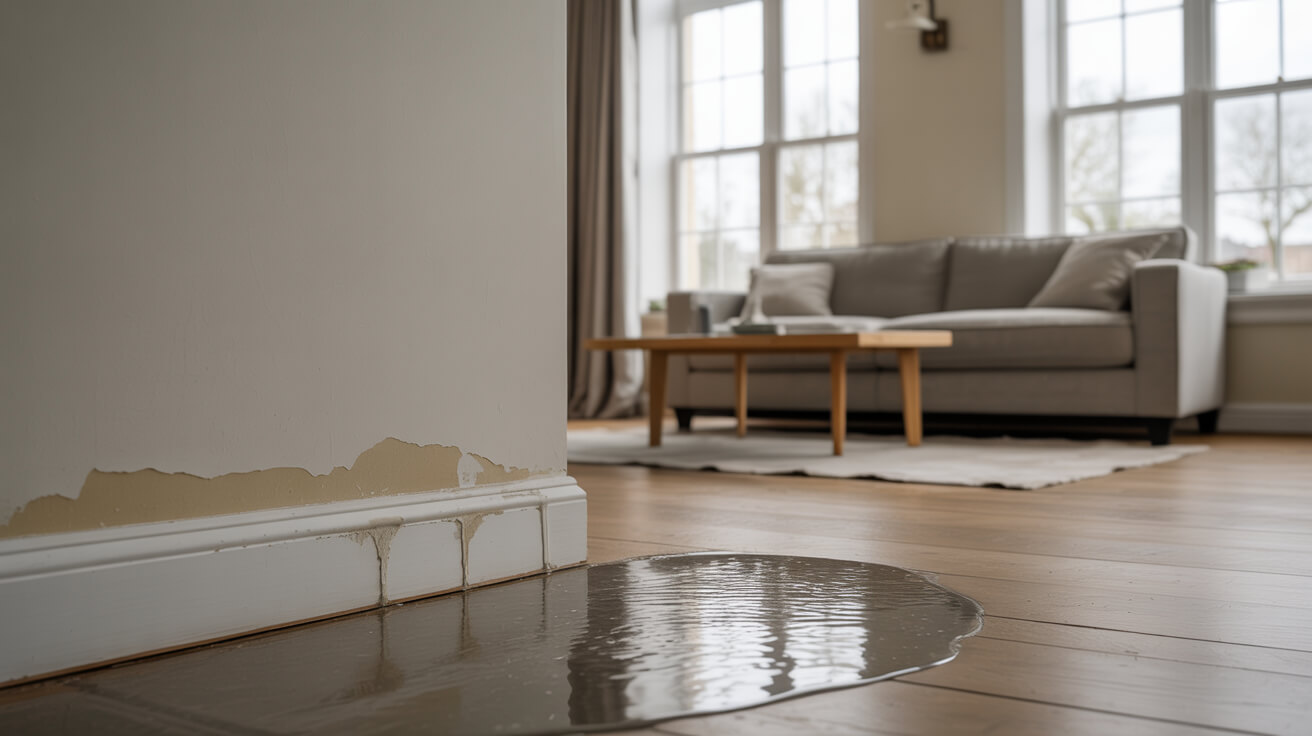
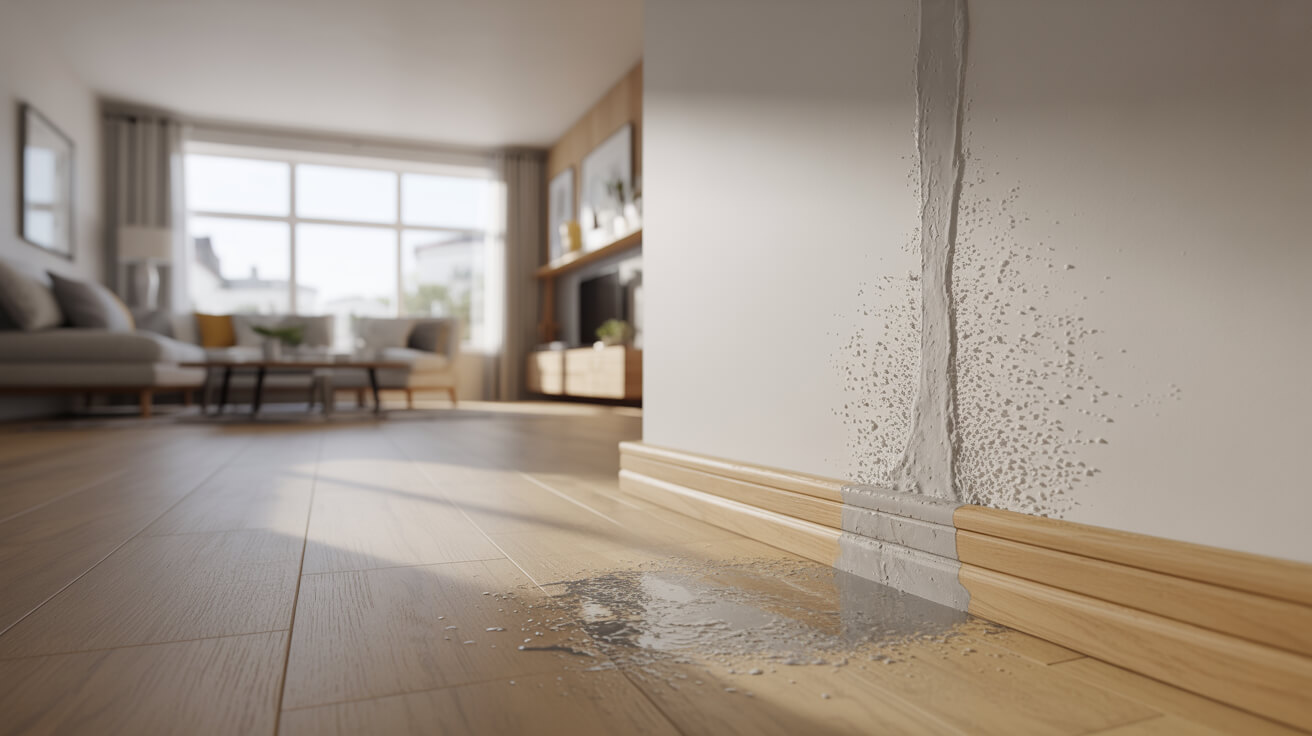
Every home or building tells a story in its lower walls: faint brown stains, swelling or crumbled plaster, a musty drift just below window level. These are the subtle beginnings of rising damp—a hidden process where groundwater travels up through masonry, unchecked, until it’s more than cosmetic. Early-stage signs, often overlooked, include a distinct tide mark (typically less than a metre high), fine white salt deposits that reappear after cleaning, and paint that cracks or peels above skirting boards. Owners and managers who spot these signals early save exponentially on repair, health risk, and asset value.
Why Do Damp Indicators Appear Only at Ground Level?
Rising damp is a ground-up phenomenon: water from soil or pavements seeps into brick, stone, or mortar, moving upward through capillary action. Unlike condensation or leaks, it never starts upstairs. Salt crystals appear as the water evaporates, drawing minerals up into decorative finishes. If you see isolated patches, check for other common flags: softness or rot in timber trim, changes in wall texture, or wavering surface temperature at touch.
How Can Small Patches Signal Larger Problems?
- Patches that persist or return after redecorating indicate a continuing process beneath.
- Recurring efflorescence, especially near corners or external walls, is almost never superficial.
- When timber elements become soft, cracking, or lose paint around the base, it’s a clear moisture pathway.
- Unusual odours, especially on dry days, warn of deeper wall saturation.
You only see the symptom once the damage is already assuming a rhythm.
Early Action: Immediate Advantage
Acting at the first sign not only caps cost but often prevents structural or decorative loss. Sussex Damp Experts provide rapid diagnosis and practical mitigation at this stage, offering evidence-based reports and guidance to keep your home, portfolio, or premises ahead of long-term risk.
What Sets Rising Damp Apart From Other Moisture Problems?
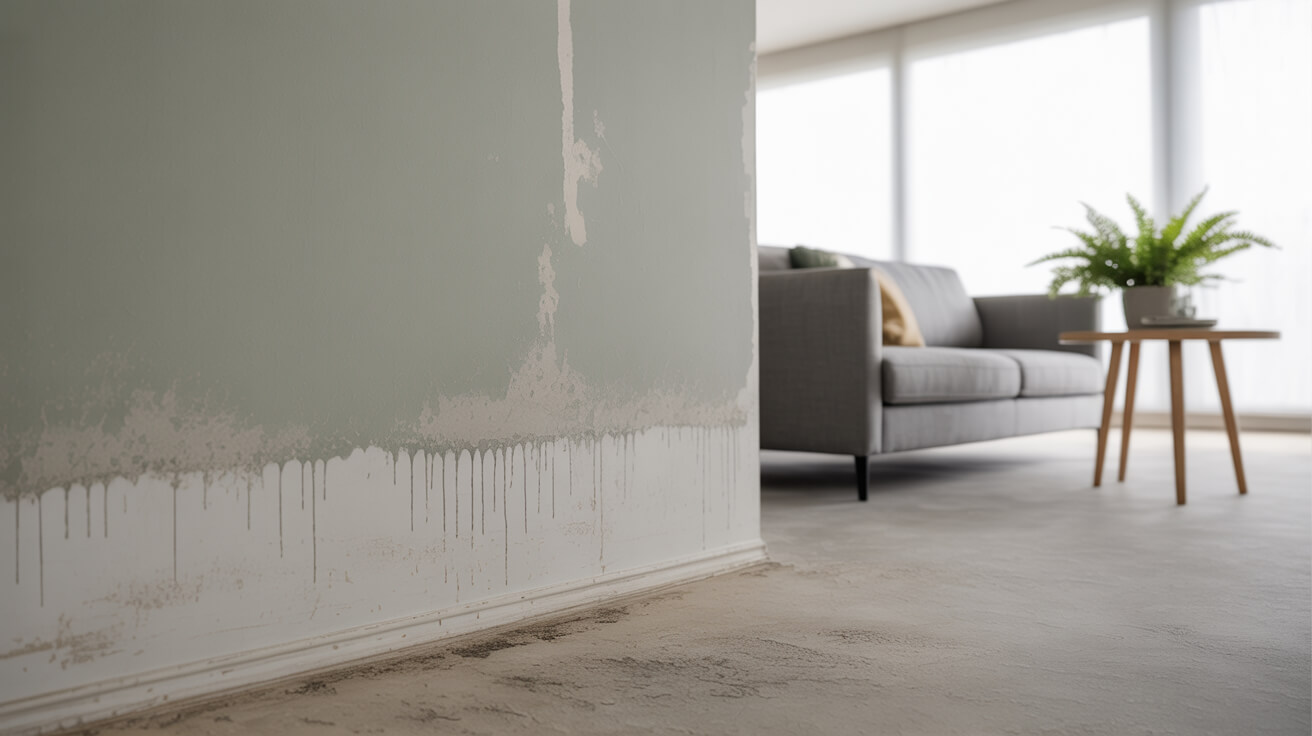
Most visible wall symptoms get mislabelled as “damp.” Yet in practice, rising damp and other moisture sources (condensation, rainwater ingress, plumbing leaks) follow different paths, influencing what works—and what fails—next. Correct diagnosis is not academic: financial, legal, and structural liabilities depend on it.
What Technical Signals Distinguish Rising Damp?
- True rising damp manifests on ground-level walls, never higher floors.
- It creates horizontal tide marks (not vertical or patchy), salts appear even after cleaning.
- Patterns follow ground contact points, often below windows, chimney breasts, or old external wall features.
Condensation, by contrast, favours cold corners, appears with seasonal humidity, and creates widespread, faint stains above DPC line. Penetration damp mirrors rainwater paths, showing up anywhere from roof to basement, rarely forming clean salt bands.
Diagnostic Approaches: How to Avoid Expensive Mistakes
| Feature | Rising Damp | Condensation | Penetrating Damp |
|---|---|---|---|
| Typical Location | Ground Floor Only | Any (esp. ceiling/wall corners) | Anywhere (walls/ceiling) |
| Salt band present | Yes | No | No/Random |
| Responds to ventilation or heat | No | Yes | Rarely |
| Linked to rain event | Rare | No | Yes |
| Involves external walls | Usually | Sometimes | Usually |
- Moisture metres track depth: rising damp readings fade as you go higher; other types stay flat or random.
- Professional salt analysis identifies the specific contamination rising damp brings up from the soil.
- Spotting the difference matters: cosmetic fixes for the wrong cause always fail and often result in repeat costs, survey failures, or compliance breaches.
Why is Accurate Identification so Important?
Acting on misdiagnosis is the most common cause of wasted spend and lost trust—from missed mortgage deadlines to lost tenants and regulatory fines for rental portfolios. Sussex Damp Experts use calibrated tools and accredited standards (BS 6576/PCA) to deliver the evidence you need for mortgage, insurance, or council documentation.
Accurately diagnosing rising damp is the only way to ensure the right remedy, compliance proof, and lasting results.
Why Is Quick Action Crucial to Prevent Damage?
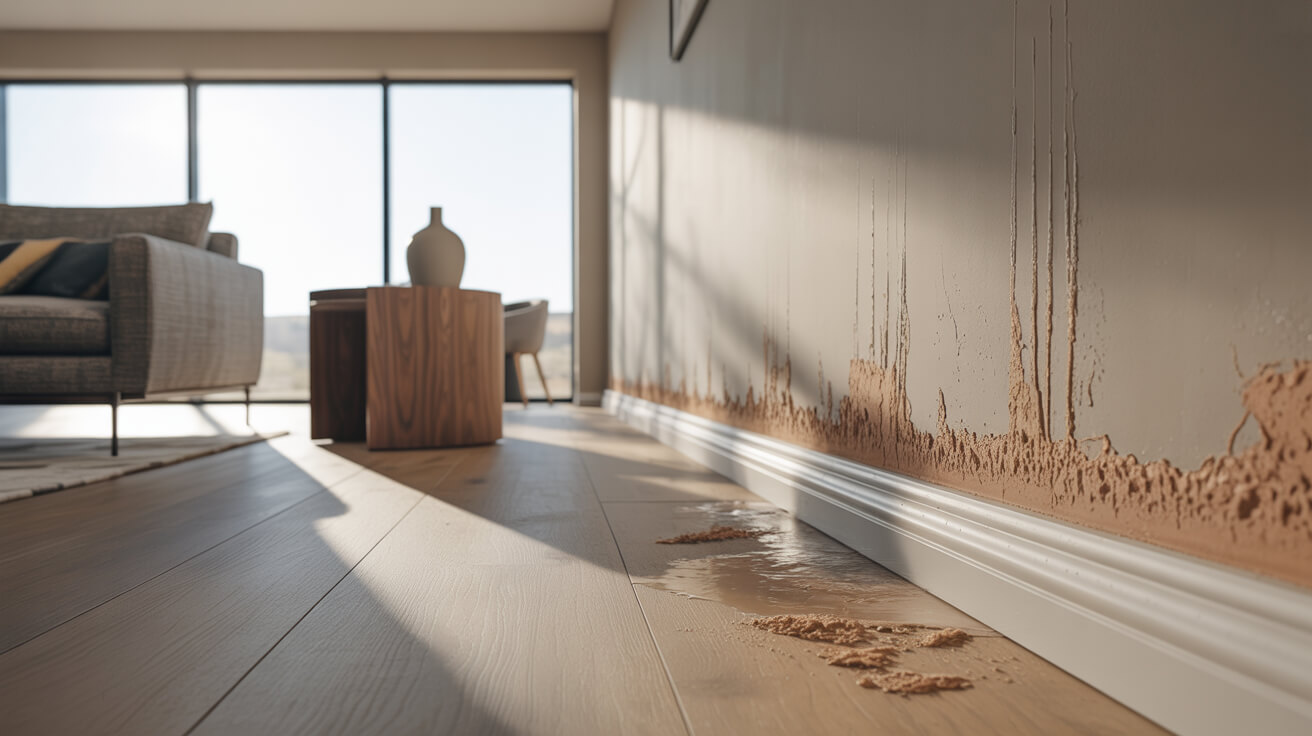
Unchecked rising damp never reverses on its own. The earliest stains or soft spots may seem manageable, but delay brings compounding effect—spread of moisture, salt saturation, and risk penetration into timber, masonry, and insulation. Health risks escalate, resale and rental value drop, and avoidable costs mount with time.
What Does Rising Damp Cost Over Time?
- 3–6 months: Plaster and paint show visible signs, odours establish, minor repairs remain possible.
- 6–12 months: Salts start weakening finishes, timber and skirtings begin to decay, secondary issues (mould, rot) establish.
- 12–18 months: Insulation, wiring, even subfloor elements may become compromised. Structural repairs become necessary, warranties can be voided, and insurance claims denied for “progressive” damage.
| Timeline (months) | Visible Damage | Underlying escalation |
|---|---|---|
| 0–6 | Paint/plaster issues | Capillary rise, salt ingress |
| 7–12 | Salt, skirting rot | Timber decay, increased wall damp |
| 13+ | Mould, visible timber/brick decay | Substrate, insulation, resale value |
Not acting quickly also triggers:
- Mortgage providers revaluing or refusing loans.
- Compliance issues for landlords/agents, leading to HHSRS action.
- Rental income loss and longer asset vacancy.
Neglect is a silent multiplier—lost weeks become lost years, lost profit, lost confidence.
What Action Transforms Risk into Security?
Proactive owners, agents, and managers audit at the first sign, not after problems compound. Early diagnosis from Sussex Damp Experts speeds up sale, lets, and insurance processes, containing loss and restoring value.
Where Is Rising Damp Most Likely to Strike First?
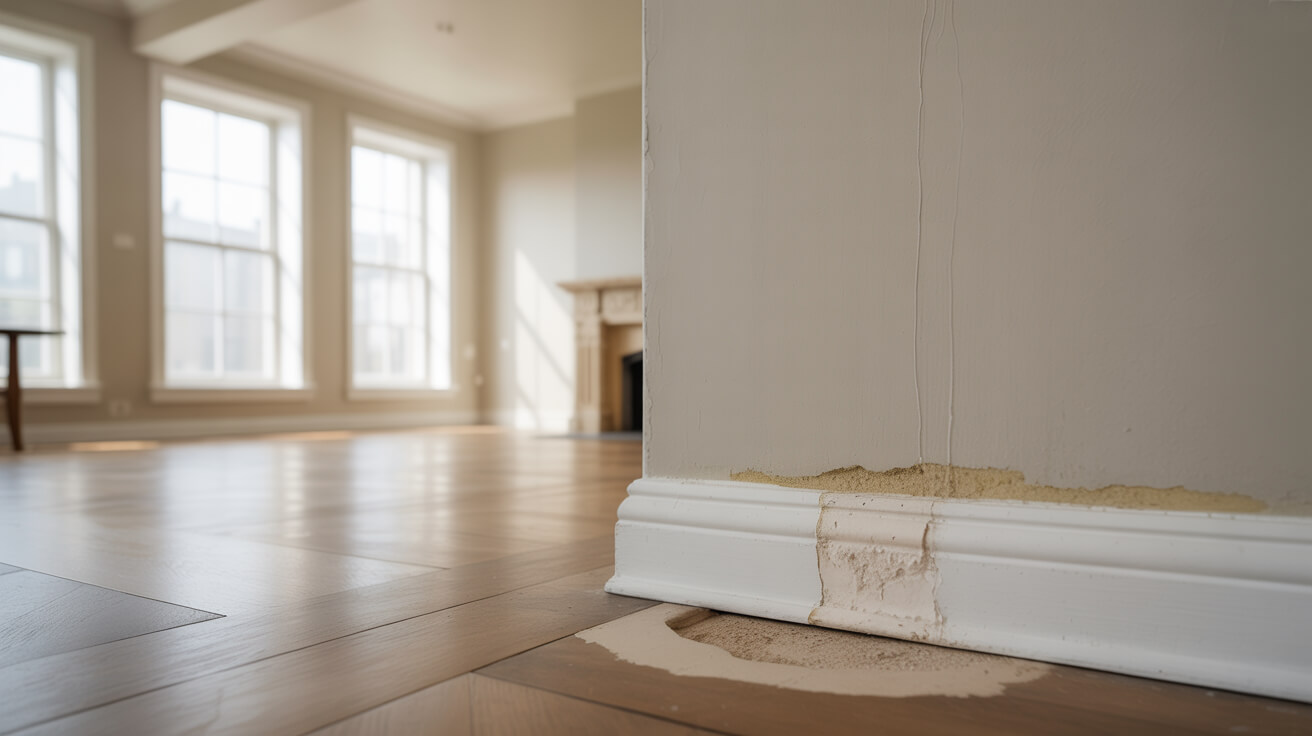
Visualisation reveals risk: ground floors harbour the early warning signals. Localised moisture begins not in ceilings, windows, or random patches, but close to where building meets earth, especially in older, heritage, or poorly drained properties.
What Are the Most Vulnerable Zones?
- Ground floor internal corners: (adjacent to external walls or gardens)
- Skirting boards and wall junctions:
- Wall bases beneath windows:
- Entryways, hallways, behind radiators:
- Rooms adjoining poorly drained patios or flowerbeds:
- Heritage structures lacking modern damp proof courses:
Properties altered through extensions or insulation upgrades—especially with internal/external wall bridging—are particularly prone.
Quick Property Self-Check
- Walk each ground floor wall, feeling for coolness or texture change.
- Visually inspect behind appliances and heavy furniture.
- Examine skirting for paint, softness, or gap formation.
- Check exposed brick, stone, or plaster for crystal or tide mark build-up.
- Monitor rooms after heavy or sustained rain.
How Does Asset Type Alter Risk?
Heritage properties without a synthetic DPC are at maximum risk—salt migration and breathability conflicts escalate faster than in more modern homes. Flats, commercial, and managed property may hide initial symptoms behind fitted units, in communal corridors, or corners less regularly cleaned or inspected.
Bespoke surveys from Sussex Damp Experts turn overlooked or ambiguous areas into actionable maps—meaning you can prove status and reduce risk at audit or transaction.
How Do Professionals Diagnose Rising Damp According to UK Standards?
Expertise sets the standard: Not all damp reporting or builder assessments are sufficient for regulatory, insurance, legal, or sale purposes. True professional diagnostics present replicable evidence, photographic records, and compliance references that defeat doubt in any forum.
What Does a BS 6576/PCA Survey Provide That Others Do Not?
- Full wall-height, multi-point moisture readings
- Salt analysis and identification of contamination source
- Underlay and substrate checks for bridging or absence of DPC
- External factor assessment: garden beds, external finishes, weep holes
- Full documentation, with mapped findings and photographic evidence, designed for submission to lenders, brokers, or councils
Diagnostic Activity General trades Sussex Damp Experts (Accredited) Wall moisture mapping Sometimes Always Salt/saline test Rarely Always Suitable for mortgage/insurance/legal Rarely Always Heritage-safe approach Unlikely Standard Report generation turnaround Days/weeks Priority/fast (on request) Proof:
Over 80% of sellers’/agents’ survey delays stem from documentation gaps. 100% of insurance claims for rising damp require independent professional verification. Sussex Damp Experts’ surveys are calibrated for purchase, remortgage, or HHSRS/Homes Act responses.Why Should You Avoid DIY or Incomplete Reports?
Lenders, councils, and insurers routinely reject non-accredited reports. Even when initial work is performed, lack of documentation can stop a sale or trigger retrospective liabilities. Working with Sussex Damp Experts means you receive proof that is accepted, trusted, and valued.
What Solutions and Treatments Permanently Solve Rising Damp?
Elimination of rising damp is a function of system, not symptom. Long-term solutions require matching the problem’s depth to the building’s context, embedding protection, and providing transparent aftercare.
What’s Involved in Proven Remediation?
- Diagnosis: Map all affected areas, including “bridging” or substrate anomalies.
- Decant and Prepare: Remove any compromised, contaminated plaster/decor 1m+ above the highest affected point.
- DPC Installation: Choose chemical, physical, or hybrid solution tailored to structure (lime, brick, cavity). In heritage, breathability and materials take priority.
- Replaster: Use certified, salt-resistant, breathable renders (never gypsum in old properties!).
- Dry and Monitor: Allow for scheduled drying/monitoring phases to confirm resolution, using sensors or periodic site checks.
- Aftercare and Documentation: All interventions logged, aftercare scheduled, warranty/backed documentation provided.
Remediation Approach Method Heritage Compatibility Duration Warranty Physical DPC New damp course cut-in With consent/lime render 7–14 days 10–20 years* Chemical DPC Drill and fill Some limitations 1–3 days 20 years* Internal Membrane Vapour-open system Yes 3–5 days 10–20 years *Warranties only valid with scheduled post-care and ambient condition compliance.
A guarantee isn’t a promise—it’s a mapped process, an audit trail, and a tool for your future confidence.
Is Heritage or Modern Property Treated Differently?
Yes; conservation areas, listed buildings, and unique structures require methods that prioritise breathability and legal compliance. Sussex Damp Experts use specified lime or mineral renders and ensure listed consent/heritage grant pathways are observed.
Can Proactive Maintenance and Aftercare Prevent Damp Recurrence?
Lasting protection is a function of commitment, not luck. Scheduled aftercare transforms one-time repairs into enduring protection, and separates those who simply treat from those who build future-proof value.
How Should Homeowners, Landlords, and Managers Monitor Risk After Treatment?
- Schedule annual, then periodic, wall and humidity checks.
- Keep vent points clear, test gutter/soil run-off after storm events.
- Log all aftercare actions, keep photographic proof, store warranties digitally and in print.
- Use sensor or wireless humidity monitors in high-risk or complex assets.
- For commercial or multi-property portfolios, automate inspection cycles and link findings to compliance or insurance records.
Aftercare Task Frequency Who should act Benefit Wall moisture scan Annually Owner/professional Detects relapse early Vent/gutter clearing Biannually Owner/contractor Prevents bridging/re-entry Warranty/inspection log As required Owner/surveyor Keeping coverage Sensor check Quarterly Owner/property manager Alerts to real-time risk How Does Aftercare Align to Compliance and Value?
- Insurance and lends require evidence of ongoing care for high-value or regulated assets.
- Heritage and compliance agencies may spot-check after work in listed buildings; only portfolios with evidence avoid disputes.
- Sussex Damp Experts provide ongoing check-ins, scheduled reminders, and update warranty status with each inspection—giving you a compliance and value edge.
Book Your Free Professional Consultation With Sussex Damp Experts
Taking ownership of property risk, safety, and value means moving from “tick the box” maintenance to preemptive, evidence-driven decision making. When you partner with Sussex Damp Experts, you’re not only solving today’s moisture challenge—you’re futureproofing your asset, supporting transaction, lease, compliance, and regulatory milestones with proof that travels with your property.
You have options now: act early, with evidence and support, and never surrender control to delay or uncertainty. Schedule your assessment now—for a status, asset, or business that’s resilient, compliant, and always one step ahead.
Frequently Asked Questions
What Are the Most Telling Early Signs That Indicate Rising Damp in a Property?
Detecting rising damp early relies on your willingness to interpret the property’s quiet warnings, long before expensive repairs become inevitable. The first signals rarely announce themselves with drama. Instead, you might spot a faint, horizontal tide mark—a shadow at the base of the plaster, or notice salt crystals that form, dissolve, then stubbornly reappear after each cleaning. These patterns reflect more than weather or a cleaning lapse; they’re evidence that your wall is absorbing water from the earth, pulling it slowly but relentlessly upward.
How to Recognise These Early Signs
- Look low: Concentrate on ground-floor walls, especially where you see peeling paint, bubbling or crumbling plaster, or warped skirting boards.
- Feel for texture: A patch that feels unexpectedly cold or damp, especially in an otherwise warm room, is a red flag.
- Rely on your senses: Persistent musty or earthy odours after a spell of wet weather can mean slow, ongoing wall saturation.
- Watch for patterns: If a stain, efflorescence, or a small patch keeps reappearing in the same spot, this isn’t coincidence—it’s a symptom of rising damp’s persistence.
Ignoring these clues never rewards you. Over time, what started as a minor, easily addressed intrusion becomes a pathway for rot, mould, and long-term structural loss. Recognising these signals is an act of ownership foresight—a baseline of diligence that both defends your property’s value and signals your commitment to its future.
Spotting early warning signs is the best investment you’ll ever make in your building’s lifespan. When in doubt, opting for a professional moisture survey from Sussex Damp Experts gives you an actionable diagnosis before small problems escalate.
How Is Rising Damp Proven to Be Different from Other Damp and Stain Problems?
Confusion between damp sources is more costly than most realise. Rising damp is defined by three certainties: it always manifests from the ground up, it only affects ground floors, and it draws with it distinctive salts from the soil—leaving marked, horizontal bands that don’t migrate vertically or appear mid-wall. Unlike condensation, which festers in cold, high corners and thrives on excess humidity, or penetrating damp, which often blooms after heavy storms, rising damp is methodical—its signature is persistent, low, and salt-heavy.
What Sets the Diagnosis Apart
- Presence of salts: Only rising damp reliably leaves both nitrate and chloride residues in the plaster.
- Pattern repetition: Symptoms that recur in an undisturbed, repeating zone (especially under windows or near external doors) are strong indicators.
- Ineffectiveness of surface fixes: Paints, fillers, and even dehumidifiers won’t stop the return, because the source is deep-seated.
Type of Damp Occurrence Location Salts Present Recurs after surface fix? External Event Linked Rising Damp Ground floor, up to ~1m Yes Always No Condensation Corners, ceilings No Sometimes High humidity Penetrating Damp Any wall/height Not typical Sometimes Rain/weather If you diagnose incorrectly, you either spend on repeat repairs or unwittingly trigger more serious decay. Sussex Damp Experts use standardised instrumentation, salt testing, and moisture profiling, providing you with evidence that not only ends confusion but stands up to scrutiny in any compliance, rental, or sale process.
Choosing certainty isn’t indulgence—it’s a proactive step that saves your budget and your building from years of incremental decline.
Why Is Urgency Essential When You Discover Evidence of Rising Damp?
Every month that passes after the earliest symptom is a gamble with direct financial, structural, and compliance consequences. What begins as a faint tide mark quickly becomes the root of persistently shedding paint, rotting skirting, and at its worst, significant timber and brick degradation. But the danger isn’t just to building materials; mortgage lenders, insurers, and even local authorities treat ignored damp as an owner’s failure to maintain, often withholding approvals, payouts, or even serving legal notices.
What Escalates If You Wait?
- Cost doesn’t rise linearly—it explodes: Minor patch repairs transition into large-scale substrate replacements, rapid timber rot, and loss of wall insulation value.
- Lender and insurance reactions: Properties flagged with unresolved damp often see devaluation, blocked transactions, or denied claims.
- Legal pressure for landlords: Regulatory frameworks like HHSRS treat ignored damp as a hazard to habitation and can force costly, supervised remedial work.
A minor delay aft today can be a forfeiture of value and freedom tomorrow. The window for affordable, controlled remediation shrinks quickly, and the regret of inaction lingers for years.
You don’t just protect your asset and health by acting with urgency—you position yourself as a property steward who’s respected by lenders, tenants, and buyers alike. Choosing Sussex Damp Experts for an immediate survey isn’t panic; it’s proof that you rely on foresight, not luck.
Where Do the First Signs of Rising Damp Usually Surface—And Why Does Location Matter?
Rising damp is inevitable wherever unprotected masonry meets a persistent moisture source, but it isn’t random. The first battle lines are at the base: skirting boards, ground-floor corners, and the borders of external walls. Time and again, it begins in low-traffic, rarely inspected spaces—behind furniture, under radiators, in hallways, or at the transition from inside to out.
Key Locations to Audit
- Skirting and wall bases around perimeter rooms:
- Under bay or box windows (classic risk for bridging):
- Rooms adjacent to poorly drained patios or flowerbeds:
- Heritage builds with lime-plastered or solid brick construction:
- Any area with adjacent changes in ground level or external paving:
Older homes and heritage properties, with their porous materials and lack of modern DPCs, are inherently more susceptible—especially after decades of landscape changes or failed previous repairs. Even contemporary properties can develop risk if renovations or landscaping unknowingly bridge a once-effective damp barrier.
Noting where symptoms cluster is your tactical edge. Consistent signs in these zones, especially if paired with recurring odour or salt bands, should trigger a call for a mapped, technical survey before attempting repairs or cosmetic improvement.
Treat these locations as you would smoke detectors—first to inspect, last to ignore.
How Do True Professionals Diagnose Rising Damp—and Why Should You Demand Accreditation?
A reliable diagnosis is an actionable guarantee, not a surface-level impression or a verbal handshake. Genuine professionals, especially those holding Property Care Association (PCA) and BS 6576 credentials, bring a forensic toolkit. They don’t just look—they document, test, and prove.
What Makes Specialist Diagnosis Reliable?
- Moisture gradient analysis: Readings taken at intervals up the wall—only rising damp reveals a predictable fading with height.
- Salt testing: Laboratory or on-site assays confirm the chloride/nitrate profile unique to groundwater origin.
- DPC status assessment: Detects bridging, absence, or insufficient placement, often using borescope insertion or substrate sampling.
- Photographic and schematic mapping: Every damp event is logged and positioned—vital for resale, insurance, landlord or compliance audit.
A DIY report, or unaccredited builder’s “opinion,” isn’t just incomplete—it’s often ignored by banks, insurers, or councils. That means failed mortgages, blocked pay-outs, or landlord liability. The reports issued by Sussex Damp Experts are trusted across every major property transaction channel for their traceability and documentation layer.
Accreditation means the difference between evidence and opinion, between a resolved problem and a recurrent financial drain. In property upkeep, trust isn’t just earned—it’s demonstrated on every survey form.
What Solutions Genuinely and Permanently End Rising Damp—And How Are They Matched to Your Building?
Damp proofing is not a one-size or one-product landscape. It’s a system—diagnosis, isolation, treatment, aftercare—sequenced with the unique needs of your property type, history, and future.
The Solution Matrix
- Modern builds: Chemical DPC injection followed by salt-resistant, breathable render. Surface redecoration only after moisture targets are recorded as safe.
- Heritage or listed properties: Breathable, lime-based renders or internal membrane systems are chosen, with listed building consents navigated for you.
- Unusual or composite substrates: Custom approaches verified by test patching and substrate soundness review.
Building Type Preferred DPC Method Unique Considerations Modern cavity wall Chemical injection, internal render Rapid action, cost-effective, seamless Heritage solid wall Lime render, breathable strategies Consent, preservation, full documentation Commercial/multi-unit DPC+ membrane, tech monitoring Access scheduling, rapid drydown, aftercare But technical fixes mean little without care for execution and future-proofing. Poorly specced work, shortcuts on substrate prep, or unverified materials are the leading causes of repeat failure. Sussex Damp Experts deliver not just instal, but a mapped and monitored remediation, capped with long-term warranty and annual check options.
Permanent solutions are made—not chosen—through process, oversight, and a documentation trail that earns lender, court, and stakeholder approval. That’s the bar. Anything less is just a temporary pause before you’re back at square one.
Can Active Maintenance and Aftercare Actually Prevent Damp From Coming Back—Or Is That Just Wishful Thinking?
Damp’s return isn’t fate—it’s a matter of whether you treat maintenance as an afterthought or an active part of property management. Preventing recurrence means recognising that moisture, landscaping, and property use change over time.
The Aftercare Protocol
- Routine Inspections: Schedule annual or biannual professional reviews, augmented with moisture sensors for higher-value or heritage risks.
- Substrate Audits: Confirm ongoing DPC integrity—especially after renovations or landscape work.
- Active Zone Monitoring: Garden beds, paving, external renders all need a place in your maintenance log.
- Documentation Module: Maintain a digital/written log of every repair, survey, and warranty inspection for seamless insurance or sale proof.
Effective aftercare makes sure that every warranty, insurance policy, or compliance document remains unchallengeable. Landlords and managers, in particular, reap financial and reputational rewards when documented diligence eliminates grounds for tenant complaint or authority intervention.
Sussex Damp Experts package every major intervention with optional aftercare paths—keeping you connected to expert oversight, regulatory updates, and audit trails. Maintenance is no longer an expense; it’s your recurring shield against both rapid repair bills and slow property erosion.