
 By
By  March 14, 2024


Replastering Damp Walls – Restore Property Value and Prevent Recurring Damage
Damp is a silent but relentless destroyer. Whether you are protecting your family home, managing multi-unit properties, or safeguarding a listed asset, ignoring underlying wall moisture issues and the rising damp hidden costs comes at the expense of long-term value, tenant safety, and legal standing. Every sign of damp demands not just cosmetic attention, but a complete, standards-backed solution anchored in visible, documented science.
Your property deserves more than a surface fix. Its integrity is defined by what you address beneath the skin.
Why Most Damp Patch Repairs Leave Owners at Risk
Visible stains, musty odours, and flaking paint are only the surface-level indicators of a deeper struggle. Temporary fixes—quick-skims, new paint, shop-bought damp sealers—trap moisture or salts inside your wall, setting up future failures. Without Compliant Replastering, this approach exposes you to repeat costs, surveyor red flags, and loss of faith with tenants, buyers, or inspectors. Sussex Damp Experts prevent that cycle by restoring the entire wall ecosystem, not just hiding symptoms.
What Owners, Landlords, and Managers Gain from Certified Replastering
Mitigated risk, peace of mind, and guaranteed compliance are the real deliverables:
- Your asset value stays resilient during surveys and sales.
- Occupants remain safe—no repeat health complaints, no council escalation.
- All repair work passes lender, insurer, and legal scrutiny—eliminating uninsurable gaps.
Ready to reset your property’s future? Our team can provide an on-site assessment and risk grading—so you always know where you stand and what actions are truly required.
What Makes Replastering the Gold Standard for Damp Wall Recovery?
Damp Diagnosis Quiz
- 1 Location
- 2 Appearance
- 3 Timing
- 4 Pattern
- 5 Results
Select the location that best matches your situation.Select the description that best matches what you can see.Think about whether it changes with the weather or seasons.Describe the direction or pattern of the damp.Most Likely Diagnosis
—
—
What Is This?
—
Recommended Next Steps
Urgency: —Confidence Breakdown
This quiz provides general guidance only. A professional survey identifies the exact cause and recommends the right treatment.
Book a Professional Diagnosis →Is Cosmetic Repair Ever Enough?
Surface treatments rarely address the pathways damp uses to compromise your wall. The gold standard means total cause elimination, correct substrate removal, and the application of approved, salt-resistant plasters—each step carried out to industry benchmarks. This method not only solves today’s issue but ensures lasting relief for years ahead.
Key distinctions of a gold-standard approach:
- Old, salt-contaminated materials fully removed—zero bridges left for moisture return.
- Application of salt-retardant or breathable plasters (necessary for DPC compliance).
- Moisture profiling and risk reporting issued as standard.
- Documented processes for proof of compliance, warranty, and peace of mind.
| Cosmetic Fix | Gold-Standard Replastering |
|---|---|
| Surface skim | Full substrate removal |
| Paint/sealer only | Salt retarder/breathable render |
| Visual “cure” | Measured, monitored process |
| Short-term | Warranty-backed, lender-ready |
You never have to accept repeat repairs or unknowns. Let’s show you why our process ends the cycle—for good.
What Triggers Wall Dampness According to Building Science?

How Do Walls Become Damp—and Why Does It Persist?
Moisture incursion is a physics problem: capillary action, condensation, and mechanical bridging are all mechanisms that move water through or into walls, often below the visible layer. Understanding these pathways is essential to any lasting solution.
Primary triggers include:
- Rising damp (capillary uptake from the ground)
- Penetrating damp from gutters, render, or structural cracks
- Condensation in cold, unventilated spaces
- Leaks from plumbing, roofs, or poorly executed DPCs
- Substrate bridging—old plaster, debris, or improper membrane application
Simple Testing Measures:
- Metered wall profiling.
- Thermal imaging and humidity mapping.
- Salt and substrate sample analysis.
Every moisture symptom has a cause. Identifying the precise combination ensures all future repairs are proportionate, effective, and justifiable in any audit, claim, or survey.
Why Are Salts and Efflorescence the Main Reason for Failed Repairs?

What Role Do Salts Play in Persistent Damp Wall Issues?
Hygroscopic salts are the unseen engine of recurrence. Drawn into the wall by rising damp or past leaks, these salts absorb moisture from the air and continually reintroduce dampness, regardless of the weather or recent repairs. Ignoring salt content is the main Reason for Failed Repairs—paint peels, plaster crumbles, and health complaints return.
Removing the risk means:
- Laboratory-grade salt testing to distinguish between surface and systemic contamination.
- Stripping and treating all affected substrate prior to replastering.
- Selecting the right plaster system for both residual and future salt scenarios (e.g., salt-retardant or lime-based in heritage walls).
Salt remembers every drop your property has suffered; if you leave it, it will perform an encore.
To protect your asset, request a salt analysis as part of any damp wall survey. Compliance requires more than good intentions; it demands proof.
How Can a Building Owner Accurately Gauge Damp’s True Extent?
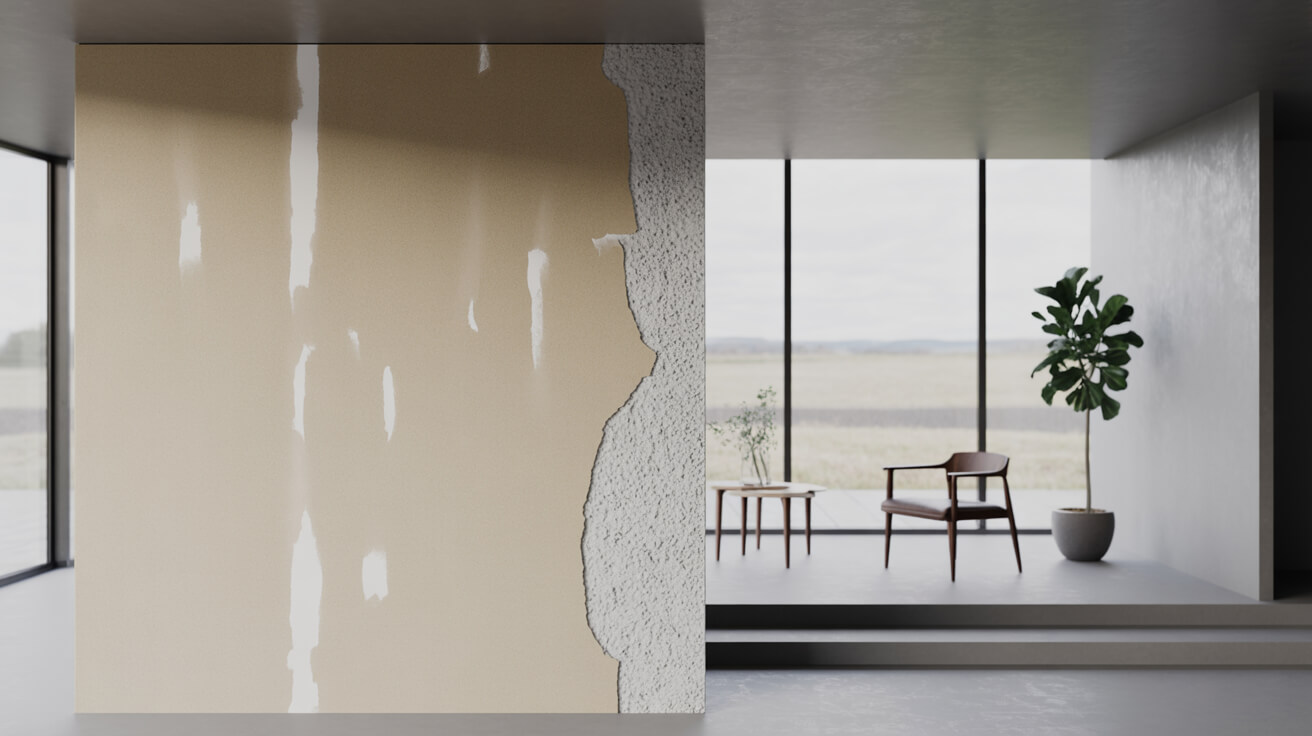
Beyond Sight—The Professional Diagnosis Advantage
DIY detection is unreliable. Professional assessment combines digital moisture profiling, substrate sampling, and airflow/condensation analytics for a three-dimensional view of wall health. This level of diagnosis provides factual clarity:
- Distinguishes between true “dry” and visually dry.
- Identifies hidden bridging or voids that set up future failure.
- Documents pre-existing substrate risk for compliance and legal defence.
Common owner oversights:
- Misreading the limits of visible moisture.
- Overlooking legacy salts or patch-repaired plaster.
- Ignoring airflow or insulation coupling (especially after renovations).
Our diagnostic tools and reporting set the benchmark for both insurance claims and regulatory audits. That’s why lenders, agents, and portfolio managers put their trust in a full Sussex Damp Experts survey, not just a visual once-over.
How Does the BS6576-Compliant Replastering Process Deliver Long-Term Results?
What Steps Secure a Permanent, Warranty-Ready Wall Restoration?
Only a methodical sequence—documented from assessment to final finish—delivers genuinely warrantied, mortgage-ready protection:
- Source elimination: Any leak, bridging, or condensation pathway closed off first.
- Full stratigraphic removal: Old, salt-laden plaster and contaminated debris are taken out to a clean, testable wall.
- Substrate neutralisation: Surface is either biocidal- or salt-neutralised as required.
- Drying verification: Monitored by calibrated metre—no new layer until walls are below threshold.
- Systematic replastering: Only salt-retardant or approved breathable plasters (lime for heritage) are applied.
- Controlled redecoration: Only after warranted dry-down and final approval.
- Warranty and compliance: All work logged and certificate-ready for insurance, sale, or letting.
| Repair Step | Gold-Standard Indicator |
|---|---|
| Source stopped | Evidence photo/log |
| Full removal | Debris mapped/disposed |
| Dry-down | Metre readings/graph report |
| Replaster | Named system, batch/lot no. |
| Aftercare | Instructions/evidence pack |
Complacency is a future invoice; process is an insurance policy.
After years of looking for elusive “permanent” cures, our approach finally closes the loop.
Where Must Damp Repairs Align With Industry and Regulatory Standards?
What Compliance Mandates Shape the Repair Roadmap?
The legal and financial viability of your repairs—whether for a private house, BTL, portfolio, or commercial space—is built into current compliance. Insurers and lenders enforce BS6576 for DPC works, HHSRS defines tenancy risk, and PAS2035 governs broader moisture and energy compliance. Non-adherence is the trigger for denied claims, failed sales, and council action.
Key compliance checkpoints:
- Pre- and post-repair reporting documented at every stage.
- All works aligned to latest local and national standards.
- Heritage works vetted for conservation consent before intervention.
Table: Typical Compliance Requirements by Owner Type
| Owner/Entity | Required Standard(s) | Critical Risks of Non-Compliance |
|---|---|---|
| Homeowner | BS6576, PAS2035 | Refused sale/mortgage, high repair cost |
| Landlord/Agent | HHSRS, BS6576, TrustMark | Tenant claims, fines, voided warranty |
| Heritage/Listed | Listed Building Consent, PAS2035 | Legal reversal, asset damage |
| Portfolio Manager | Multi-stage docs, PAS2035 | Insurance refusal, dropped valuations |
To stay ready for every audit, claim, or dispute, make sure every repair step is documented, cited, and mapped to the relevant framework.
When Are Conservation-Grade Methods Required for Damp Wall Repair?
What Makes Heritage/Listed Properties Exceptionally Demanding?
Standard damp treatments are often disastrous for period buildings. Breathability, minimal intervention, and conservation consent are non-negotiable. For owners or managers, using the wrong approach can end in irreversible loss or forced reversal.
- Only vapour-open, lime-rich, or otherwise heritage-certified systems are acceptable.
- Pre-approval and real-time record-keeping are often mandatory.
- Post-repair, documentation must be available for planning, insurance, and future sales.
| Treatment Variable | Standard/Council Expectation |
|---|---|
| Plaster type | Lime, vapour-open, historic system |
| Damp course | Internal membrane, low-impact DPC |
| Documentation | Full evidence pack, consent log |
| Compliance check | Scheduled inspection, authority sign-off |
The value you protect is measured not in cost saved, but in history preserved and risk owned.
Our team is trusted by conservation officers and heritage bodies for this very reason—each wall restored is a wall preserved in value.
Book Your Free Consultation With Sussex Damp Experts Today
Ready to make the move from patchwork to true permanence? The future of your property—its comfort, compliance, and value—is built on today’s proactive choices. Let Sussex Damp Experts clarify your options, document your repair, and guarantee your peace of mind with every survey, certificate, and warranty our name stands behind.
- Receive a complete moisture, salt, and compliance diagnosis
- Protect your property with a solution calibrated to asset/lender/regulatory needs
- Rely on ongoing support, aftercare, and documentation for all insurance, sale, or tenancy eventualities
You don’t just maintain a property. You lead its story—and those who depend on it—for years ahead.
Act with the confidence of someone whose decisions are always justified by documentation, warranty, and lasting results.
Frequently Asked Questions
What Distinguishes Replastering from Basic Damp Repairs, and Why Is It Now the Standard for Long-Term Protection?
If you want more than surface-deep results, only comprehensive, Compliant Replastering resets your property’s resistance to damp, salts, and value loss. Damp isn’t a simple stain; it’s a persistent process that works through your walls, challenging both cosmetic fixes and DIY optimism. Quick repairs create only the illusion of safety—true durability requires stripping past failures and reconstructing the wall with purpose-built layers, each calibrated for your building type and moisture history.
Why ‘Cure & Cover’ Always Loses to Recurrence
- Hidden salt and moisture: Surface painting and skimming trap contaminants, causing repeated bubbling, discoloration, or odours.
- Compliance: Most insurers, buyers, and surveyors demand certification that past damp is extinguished—not just masked.
- Future costs: Every failed patch is a signal to lenders or tenants that risk is unresolved—hurting yield and resale at every step.
When Sussex Damp Experts replaster your walls, you aren’t paying to hide yesterday’s mistakes. You’re investing in substrate-level resilience, with salt-resistant and breathable systems that manage moisture, making your ‘dry walls genuinely tested dry before restoration begins. That is why properties upgraded to our standard routinely clear mortgage, insurance, and tenancy hurdles without challenge.
Surface confidence is a liability. Depth-proofing is an asset. Compliance isn’t paperwork—it’s what makes your decisions stand the test of interrogation.
What Are the Most Common Triggers of Damp Walls, and How Do They Defy Quick Fixes?
Damp walls are rarely a one-cause problem—they are a matrix of physical, environmental, and historic risks. Capillary rise, as seen with rising damp in old walls, draws ground moisture through bricks and mortar; lateral ingress breaches walls via failed render or pointing, while condensation and bridging sabotage the unventilated or the recently “improved.” Every route that escapes rigorous survey is a blind spot waiting to turn cosmetic upgrades into operational headaches.
Modern Triggers Outpacing Old Advice
- Unseen plumbing faults in service voids can saturate walls, years before symptoms surface.
- Heritage substrates react uniquely to closed-cell insulation and synthetic plasters, making inappropriate instals doubly punishing.
- Occupant-driven damp—from unvented dryers to overstuffed rooms—compounds the physics of any structure, old or new.
Professional Diagnosis Outclasses Guesswork
Sussex Damp Experts employ digital moisture metres, borescopes, and salt mapping—even the smell of a wall can reveal substrate decay invisible to untrained inspection.
Neglecting these tools means you risk reinventing the same failure modes, year after year.
| Risk Factor | Impact if Unresolved | Optimal Response |
|---|---|---|
| Capillary rise | Constant wall saturation | DPC & salt-barrier |
| Lateral penetration | Localised or sudden wetting | Repair + tanking |
| Condensation | Health, mould, and odour escalation | Design for breathability |
| Bridging | Fast recurrence after repair | Complete substrate isolation |
By reframing your repairs as system upgrades, not patches, you transform your property into a defensible asset that can weather any audit, sale, or dispute.
Why Are Salts and Efflorescence the Real Barrier to Reliable Damp Solutions?
Salts and efflorescence don’t just leave a white mark—they are moisture’s way of telling you nothing has truly changed beneath the plaster. Hygroscopic and deliquescent salts migrate during each wet/dry cycle, undermining both low-cost fix and high-end finish. If you’ve ever seen a clean wall turn patchy after “successful” repair, you’ve witnessed what happens when salt is left to dictate the outcome.
The Cycle That Traps Homeowners and Managers
- Resealing—without salt removal—causes rapid paint failure, odour resurgence, and even rot in adjacent timbers.:
- Salt attracts atmospheric moisture, making your ‘dry’ wall a time-release trap.:
- Every mortgage or insurer check will now ask for proof of salt remediation, not just surface replacement.:
Sussex Damp Experts: Salt Strategy in Action
Our process doesn’t gamble on hope. We sample, chemically test, and only proceed when residual salt risk falls safely within accepted bounds. Overlay with industry-approved salt-retardant or lime plasters, and the risk curve drops to near zero. If your wall never sees salt-proof logic, any upfront savings become a future expense—guaranteed.
Salt is the wall’s long memory—if you ignore the lesson, you get to pay for it again.
How Can You Accurately Gauge the True Extent of Damp in Your Building?
The real scope of damp risk extends beyond visible spots or soft patches—most threats to your structure or a damp wall survey. Compliance issues lie beneath and are only revealed when a qualified survey exposes the true moisture map. DIY testers, or even some professional guesses, flatter to deceive, leading to underestimation, hasty replastering, and an ongoing cycle of complaint and fix.
Advanced Mapping Separates Hidden Risk from Cosmetic Flaws
- Sussex Damp Experts deploy pin/scan metres, thermal survey, and salt content analysis to grade every zone.
- Our reporting flags not just immediate fixes, but the risk profile for adjacent spaces, future decay, or previous work’s “invisible” bridging.
| Signal | What It Means | Next Step |
|---|---|---|
| Spread after repair | Incomplete salt or source removal | Full risk map and remedy |
| Hollow sound | Substrate void or old patch detachment | Targeted substrate strip out |
| Odour + cold to touch | Active moisture, poorly vented or hidden leak | Immediate source investigation |
Early, verified mapping ensures your repair funds fix the whole problem the first time—saving you the pain and expense of future interventions, regulatory notices, or unwelcome survey surprises.
What Guarantees Does the BS6576-Compliant Replastering Process Offer, and Why Should You Demand It?
A BS6576-compliant sequence delivers not just new plaster, but documented, standards-backed protection that is recognised by surveyors, mortgage lenders, insurers, tenants, and professional peers. This code isn’t for bureaucracy’s sake; it is your best shield against value loss, void discoveries, and the crushing cycle of rework.
Stepwise Proof, Not Promises
- Initial assessment ties every repair to a measurable substrate profile—zero guesswork, full audibility.:
- Critical drying phases are validated by metre, not by feel, ensuring no short-cuts or premature resurfacing.:
- Every layer is specified for your wall type—period home, landlord HMO, or office block—no unnecessary variance, no generic solutions.:
- Certification, warranty, and handover come with supporting evidence built for your next sale, audit, or emergency claim.:
By demanding compliance, you set up future success: repairs that pass every check, tenants who stay, and investments that show no cracks, literal or financial. That’s why Sussex Damp Experts’ work is repeatedly endorsed by agents and compliance officers—not simply for the finish, but for the artefact trail it leaves behind.
How Do Legal and Regulatory Standards Shape Every Phase of Your Damp Proofing Plan?
Every step in wall restoration carries legal, financial, and operational standards. For landlords, the HHSRS, PAS2035, and Building Regulations are not technicalities—they’re the line between passive income and statutory breach. For homeowners, mortgage releases and insurance policies are tied to certified remedial evidence. For commercial property managers, documentation must withstand external audit and long-tail dispute.
Compliance Touchpoints—Your Security and Selling Point
- Upfront disclosure and certified survey grant you access to finance and limit dispute.:
- Remedial process must mirror local and national standards—fall short, and you pay with time, value, or compliance penalty.:
- Only damp and salt-resistant materials, with supporting evidence, will pass post-work audits.:
| Stakeholder | Key Standard(s) | Consequence of Breach |
|---|---|---|
| Landlord | HHSRS, PAS2035 | Voided lease, fine |
| Homeowner | BS6576, mortgage | Survey fail, ins. denial |
| Agent/Manager | BRegs + PAS2035 | Higher voids, dispute |
| Heritage Owner | Conservation, LBC | Reversal, historic loss |
Sussex Damp Experts actively manage compliance as an integrated process, not a final tick-box. This elevates your property, shields your ongoing returns, and positions you as the type of owner, manager, or developer whose assets can always stand up to inspection and scrutiny—whatever the audience, pressure, or market.

