
 By
By  January 4, 2024

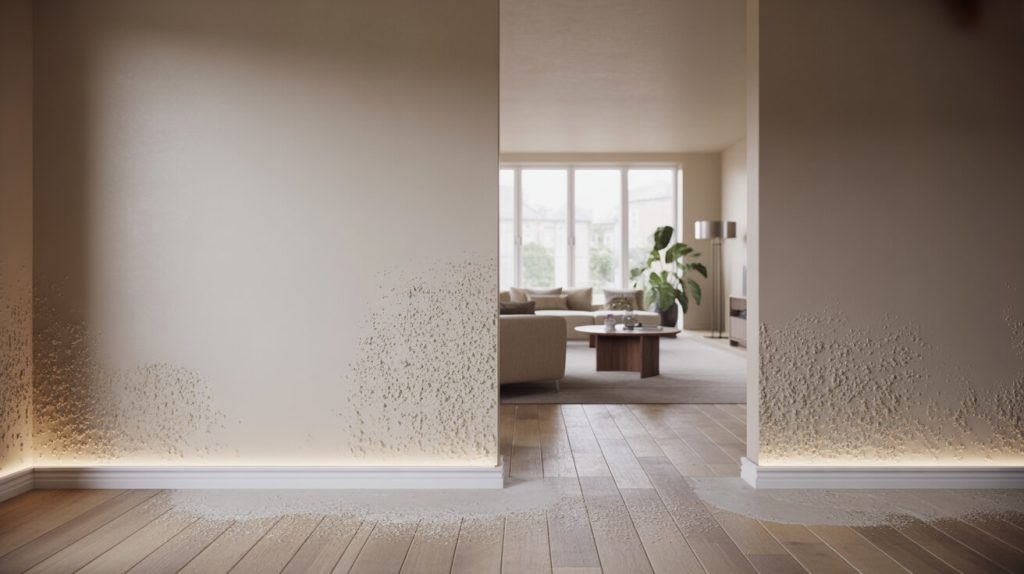
Professional Mould and Condensation Surveys: Your Standard for Health, Value, and Compliance
A persistent mould or condensation problem is not a cosmetic nuisance—it’s a material risk to your building, health, and future financial outcomes. If you’re a homeowner, investor, or property manager, you know the visible patch on the paint never tells the whole story. Independent, accredited surveys empower you to move from passive uncertainty to operational mastery.
Our accredited assessment process establishes every relevant fact: specific causes, likely progression, clear site evidence, risk exposure, and required steps for full resolution. This is not a “builder’s quote.” It’s your technical passport to property confidence—removing ambiguity for lenders, insurers, authorities, and ultimately yourself.
The Role of a Professional Survey
- Defines the exact source and pathway of indoor moisture.
- Documents regulatory and compliance posture (BS 6576 / BS 8102 / PAS 2035).
- Translates evidence into lender- and authority-accepted action steps.
- Shields asset value by closing insurance and legal loopholes.
When it comes to asset defence, guesswork is never a strategy—only evidence puts you on the front foot.
Sussex Damp Experts combine material science, site diagnostics, and legislative fluency to make sure you’re never left negotiating repairs, claims, or compliance with ambiguity.
What Are the Primary Causes and Indicators of Harmful Damp and Mould?

Your building’s decay curve is defined less by crises and more by slow, accumulative faults—blocked air pathways, undetected leaks, or incompatible insulation. These hidden shifts are where damage takes root and where uncorrected mistakes compound.
The Mechanics of Moisture Risk
Moisture finds weak points in every asset. Condensation forms when humid indoor air meets cold wall surfaces—often due to inadequate airflow or bridge-prone insulation layouts. Rising damp exploits failed or bridged damp courses, while penetration leaks track faulty gutters or forgotten flashing.
Major Early Warning Signs
- Recurring condensation on cold surfaces, persistent black spotting, or odour even after routine cleaning.
- Peeling or salty deposits near skirting boards and window reveals—even in “recently renovated” rooms.
- Unexplained spikes in heating costs, hard-to-heat rooms, or constant need to air out the property.
Table: Early Signs vs. Likely Root Cause
| Indicator | Typical Root Cause | Urgency | Hidden Risk |
|---|---|---|---|
| Black mould on windows | High humidity, cold bridging | Medium | Health/rot |
| Salt stains by flooring | Rising damp, bridged DPC | High | Undermined assets |
| Peeling wall paint | Substrate moisture, poor airflow | Low | Systemic spread |
| Musty odour, even dry | Substrate decay, ventilation | High | Chronic/recurring |
The Protective Power of Fast Recognition
Decisive identification—before decay takes root—creates your strongest margin window for a low-cost, high-value intervention. Everything after is a negotiation with time, money, and regulatory scrutiny.
Why Do Partial Fixes and DIY Efforts Often Fail?

Most failures in property moisture management come not from neglect, but from mistaking surface symptoms as the true threat. Quick patches—paint, temporary fans, even off-the-shelf “proofing”—fail because they’re not engineered to address systemic causes.
False Economy in DIY and Incomplete Works
- Masking visible mould allows deeper substrate decay to spread unnoticed.
- Damp-proof paint over untreated salts guarantees rapid return, damaging new finishes and invalidating future warranties.
- Introducing non-breathable membranes or tanking without substrate profiling leads to trapped moisture and escalation elsewhere.
Why “Shortcuts” Backfire
- Warranty claims can be invalidated if root causes weren’t professionally addressed.
- Insurance and mortgage lenders reject non-accredited “builder” fixes, exposing you to unexpected loss or failed transactions.
- Repeat repairs rapidly eclipse the initial cost of correct diagnosis and treatment.
Every shortcut has a cost—it just hides until the next inspection, survey, or repair.
This is why Sussex Damp Experts insist on a comprehensive, standards-driven process for all clients.
How Does the Professional Survey Process Work From Booking to Solution?
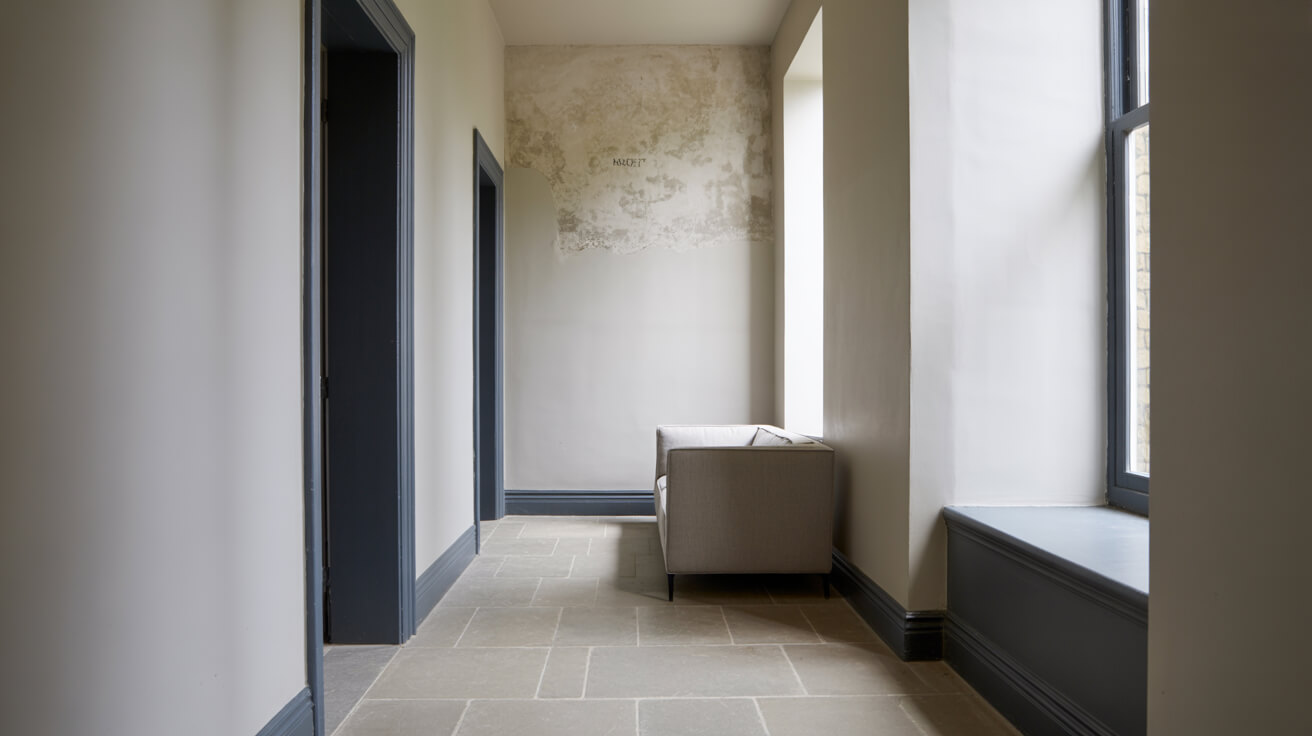
Getting from problem to certainty doesn’t have to be convoluted. Sussex Damp Experts guide you through a stepwise process engineered for clarity and full stakeholder acceptance—from first call through aftercare.
Stepwise Process, Maximum Transparency
- Survey Booking: You detail concerns and property context. Our intake phase ensures the right instruments and surveyor profile.
- On-Site Diagnostics: Moisture profiling, thermal mapping, air and surface humidity measurements, salt tests, substrate integrity checks. No assumption stands untested.
- Evidence and Analysis: Data is synthesised, cross-referenced to construction type, historic works, and regulatory standards.
- Report Generation: Within 48 hours, your report lands in your inbox—complete with site photos, annotated findings, prioritised remedies, and compliance statements.
- Aftercare and Guidance: Our obligation doesn’t end with the report. Implementation advice, access to contractors (or your own), multi-year monitoring, and warranty pathways close the loop.
Common Persona Concerns and Our Response
- When will I have results? – Reports are delivered within 2 business days, expediting your next move.
- Will the survey disrupt tenants or workflow? – Inspections are minimally invasive, scheduled for operational continuity.
- How do you prioritise urgent vs. long-term risks? – Reports highlight critical, near-term, and preventative actions—no confusion.
Confidence at Every Step
- Multi-layer documentation allows you to present findings to insurers, conveyancers, or council without further site access.
- Independent, standards-aligned process is your universal shield if disputes or compliance action arise.
Where and When Are Specialist Surveys Legally Required or Financially Prudent?

Regulatory and contractual triggers now make accredited damp and mould surveys non-optional in many contexts. Delaying or delegating these requirements can result in failed transactions, legal claims, and uninsured loss.
Legal and Transactional Scenarios
- Tenancy handover or deposit disputes: HHSRS and landlord-tenant law now require documentary proof of property fitness, including moisture/condensation audit.
- Mortgage or insurance: Lenders and insurers often stall or refuse transactions for flagged damp unless backed by accredited surveyor diagnosis.
- Heritage/listed structures: Any intervention (internal wall insulation, DPC upgrade) must be justified with heritage-safe, standards-driven reporting prior to planning consent.
Risks of Inaction
- Unnecessary repair spend when issues are misdiagnosed: insurance may decline payment if rectification wasn’t independently validated.
- Fines or lack of rentability when compliance is contested by local council or housing association.
- Delays and value loss in sale, letting, or refinancing—solved with preventive survey action.
Documentation isn’t a burden. It’s the pass that keeps your asset liquid, insurable, and marketable.
What Are the Most Advanced Techniques and Standards Used in Accredited Surveys?

Modern survey methodology is defined by precise instrumentation and industry-aligned process, not just observational skill. Sussex Damp Experts leverage an evolving toolchain self-calibrating to the best available technical and regulatory guidance.
Technical Arsenal
- Moisture metres: Pin and pinless for mapping depth, source, and migration.
- Thermal imagers: Uncover insulation failure, cold bridges, and unseen condensation cycles.
- Salt analysis: Differentiates rising damp (nitrates) vs. penetration (chlorides), directing the correct remedy.
- Air quality and dew point instruments: Validate risk for persistent condensation or mould recurrence.
Surveyor Compliance Matrix
| Tool | Standard Referenced | Output | Proof Path |
|---|---|---|---|
| Moisture metres | BS 6576 | Depth/gradient mapping | Surveyor/Property |
| IR cameras | PAS 2035 | Thermal imaging | Legal/Planning |
| Salt kits | BS 8102 | Rising/penetration ID | Remediation action |
| Data loggers | HHSRS | Environmental metrics | Tenant/Compliance |
Advances for Complex Properties
- Heritage models employ non-intrusive sensors for lime or listed-wall fabric protection.
- All reports carry regulatory cross-index—ensuring usage for legal, compliance, or warranty purposes.
- Reports tailored to audience: PDF for mortgage/insurer, annotated print for planning, digital for council upload.
Can Ongoing Monitoring and Maintenance Prevent Long-Term Damage?

Static solutions rarely suffice in property management. Moisture risk is dynamic, especially with evolving occupancy or climate trends. Sussex Damp Experts close the lifecycle with ongoing support that adapts as your needs shift.
Monitoring = Risk Margin
- Deployable humidity sensors track risk shift in real time.
- Automated inspection reminders maintain scheduled compliance.
- Multi-year aftercare pathways keep warranties live and reduce future spend.
Maintenance Wisdom
- Long-form monitoring data becomes your evidence in future claims or disputes.
- Built-in escalation triggers prompt early intervention, maximising cost avoidance.
- Ongoing advice (seasonal, material upgrade, tenant protocol) reinforces initial survey value.
Persona Guidance
- Landlords: Lower long-term OPEX, protect rental yield.
- Buyers: Maintain value and exit timing flexibility.
- Managers: Deliver provable operational standards to investors or authorities.
A well-monitored building never negotiates with damp—problems are traced, not tolerated.
Your Next Move: Secure Your Building’s Value, Compliance, and Wellness with Sussex Damp Experts
If you expect your asset to endure, doing nothing isn’t neutral—it’s a choice to invite loss, insurer refusal, regulatory penalties, or avoidable repair expense. Our independent, data-driven damp and condensation surveys are designed to clear obstacles before they arise, closing every gap between perceived safety and technical proof.
You’re the kind of decision-maker who takes future problems off the table, not just from your building—but from your reputation, finances, and peace of mind. Sussex Damp Experts stand ready to deliver what only independent expertise, certified process, and warranty-backed aftercare can provide. No one manages risk—regulatory, legal, or financial—by trusting assumptions. You deserve actionable proof.
If you’re ready to move from uncertainty toward definitive asset control, request your accredited survey today. Your building, your legacy, your standards—set higher.
Frequently Asked Questions
What makes a professional damp and condensation survey essential for safeguarding your property—beyond just surface repairs?
A professional damp and condensation survey provides you with a foundation of evidence, risk mapping, and operational certainty that shallow inspections or cosmetic fixes simply cannot. True protection for your asset, health, or legal standing starts by revealing invisible threats: trapped moisture, substrate decay, or regulatory blind spots that evade a homeowner’s eye or a contractor’s sales pitch.
Why precision trumps assumption
- Surface clues often lure you into a cycle of repetition: Peeling paint, musty odours—these are the last act of a problem that began deep within the wall.
- Mortgage lenders, insurers, and councils increasingly require independent, accredited reporting: Without it, your options narrow just as the stakes rise, especially in pre-sale or contested tenancy scenarios.
- The science of moisture isn’t about expectation—it’s about measurement: Professional surveyors use real-time diagnostics, measurement-backed risk grading, and photographic evidence that anchor every step to insurance, regulatory, and market requirements.
- Only full-spectrum mapping closes the risk loop: Your property isn’t static; local weather, occupant change, or missed ventilation adapts the threat profile every season.
You own what you can prove. Everything unverified erodes value in ways you only calculate after a loss.
A true survey transforms passive optimism into actionable readiness—a move that’s as much about status as about stewardship.
How can you recognise the invisible factors that drive damp or mould before they undermine your property—and why do subtle symptoms matter?
Early-stage detection is the only intervention that saves you headaches, expense, and disputes later. The most damaging problems are nearly always silent for years: water vapour coalescing where thermal bridging hides, biofilms growing behind wardrobes, capillary rise activating salts beneath new flooring, builders mis-identifying the origin of a patch with each passing tenant.
Table: Hidden Drivers of Damp vs. Obvious Symptoms
| Hidden Driver | Likely Missed Symptom | Potential Consequence |
|---|---|---|
| Inadequate airflow in voids | Occasional condensation | Long-term mould colonisation |
| Bridged DPC by insulation | Salt staining at skirting | Timber decay, compliance fail |
| Route of entry via old render | Brief damp patch after rain | Internal rot, insurance void |
| Persistent cold surface zone | Children’s coughs in winter | Housing authority complaint |
Every property is a chain of vulnerable links: one slip in insulation, failed mastic, a blocked vent. The cascade from warning sign to urgent action is nearly always compressed in rental or heritage contexts, where you’re judged not just as an owner, but as a custodian.
- Always question recurring “minor” stains or odours—no matter how well a recent paint job hides them.
- Watch for seasons or occupancy changes that flip your building’s moisture balance.
- Record humidity and temperature at problem sites, not “room averages”.
- Remember that insurers and authorities expect documentation, not stories.
Compliance isn’t about perfection—it’s about detecting the real threat before the paperwork finds it for you.
What’s the hidden risk in DIY damp fixes or unaccredited repair plans—and why do shortcuts cost more than you think?
The true cost of cutting corners is revealed only when compliance, warranty, or tenancy scrutiny demands evidence. Most failed fixes result not from bad faith, but from a lack of system perspective: a quick patch today becomes a haunted file tomorrow.
The proof chain: Why professionalism pays
- Unaccredited solutions disqualify claims and erode legal posture: Insurers and mortgage lenders recognise only traceable, standards-aligned work, not guesswork.
- Surface treatments mask, not solve, substrate or air pathway issues: Moisture is a systems problem, where airflow, substrate, insulation, and living patterns combine.
- DIY always carries an evidence risk: If you can’t trace action to accredited diagnosis, every future survey (or legal event) exposes past failings at your cost.
- Warranty is only as strong as baseline evidence: Professional reporting is your ticket to recourse; every shortcut steals from that safety net.
Nobody audits intention—only process. The day you need proof is always sooner than you think.
Every time you solve a “little problem” with a brush or new product, you rewrite the property’s status—and the next buyer, tenant, or surveyor will hold that pen with much less patience.
Which steps does a professional damp and condensation survey follow, and what separates industry-grade reporting from generic advice?
A professional survey isn’t guesswork or a five-minute walkaround—it’s an orchestrated sequence, where each diagnostic feeds the next, stripping away guesswork layer by layer until every threat is visible and every solution is provable.
Walkthrough: The Industry-Standard Damp Survey Sequence
- Pre-survey consultation: You describe patterns, triggers, and any historical fixes—targeting the investigation.
- Site profiling: Accredited surveyors chart humidity, temperature, and moisture gradients using Pin/Pinless Metres and hygrometers, capturing real-world conditions.
- Thermal and salt analysis: Imaging and surface chemistry pinpoint rising damp, condensation cycles, or external breach, setting off the correct compliance protocol.
- Risk grading and documentation: Findings are logged with photo evidence, moisture maps, and standards alignment (BS6576, PAS2035, HHSRS), making your case defensible.
- Action recommendations: Only tailored fixes reach you, with alternative options mapped by urgency and future risk.
You emerge with a document recognised by lenders, authorities, and future buyers. Sussex Damp Experts deliver not just insight but the operational clarity that auditors, insurers, and stakeholders demand.
Regulators audit the process, not the promise. Evidence makes ownership defensible, not just hopeful.
When does professional documentation become non-negotiable—and who sets the bar for compliance or recourse?
Professional damp survey reports are more than “nice to have:” they are now the dividing line between smooth legal, mortgage, or insurance action and red-inked delay. Lenders increasingly condition loans on traceable surveys; councils may halt rental or HMO operation on failure to prove inspection cycles; insurers sift claims for unaccredited repairs before payout. Compliance is no longer simply about prevention—it’s about keeping all the doors open for your asset.
Regulatory, Legal, and Financial Compliance Triggers
- Mortgage lenders demand accredited moisture or condensation survey on flagged assets.:
- Landlord-Tenant law (Fitness for Human Habitation, HHSRS) equates non-action with liability, including rent repayment orders or fines.:
- Insurers demand causation and remedy traceability, refusing coverage if documentation or substrate compatibility is absent.:
- Heritage and listed sites require dual-path reporting: conservation calibrations, substrate provenance, and periodic monitoring.:
At each decision fork—financing, letting, insuring—professional reporting is your shield. Sussex Damp Experts operate not just as surveyors, but as compliance guides, ensuring asset liquidity and reputation can travel with you, not against you.
Which advanced tools, standards, and workflows define a modern, defensible survey—and why does the technology behind the paperwork matter?
Modern damp and mould diagnosis is a contest of evidence, not empty reassurance. Sussex Damp Experts fuse multi-sensor mapping, substrate sampling, and predictive scenario modelling, creating a traceable audit trail for every finding.
Table: Diagnostic Tools and Their Compliance Roles
| Tool | Purpose | Compliance/Proof Path |
|---|---|---|
| Moisture Metre | Reads depth and lateral wetting | BS6576, Mortgage Survey |
| Thermal Imaging | Maps bridging, hidden cold surfaces | PAS2035, Building Control |
| Salt Analysis Kits | Differentiates damp sources | Insurance Claim, Spec |
| Hygrometers | Tracks ambient/spot RH | HHSRS, Tenant Disputes |
| Data Loggers | Enables ongoing, documented monitoring | Heritage, Aftercare |
The future of moisture management isn’t just in what you see; it is in what the system records. This is the new standard for defensible, competitive property stewardship.
- Third-party lab testing when substrate or chemical makeup needs confirmation.
- Temporal mapping—tracking problem sites over heating/cooling cycles.
- GIS or surveyor-certified mapping for multi-site or portfolio assets.
- All data cross-referenced for warranty, compliance, or escrow release needs.
Every number, every image, every log entry is a shield for your asset’s integrity and your reputation.
By integrating these next-generation standards, Sussex Damp Experts move your property from risk to recognised resilience.

