
 By
By  December 27, 2023


Can You Detect Powder Post Beetle Before it Destroys Your Floor?
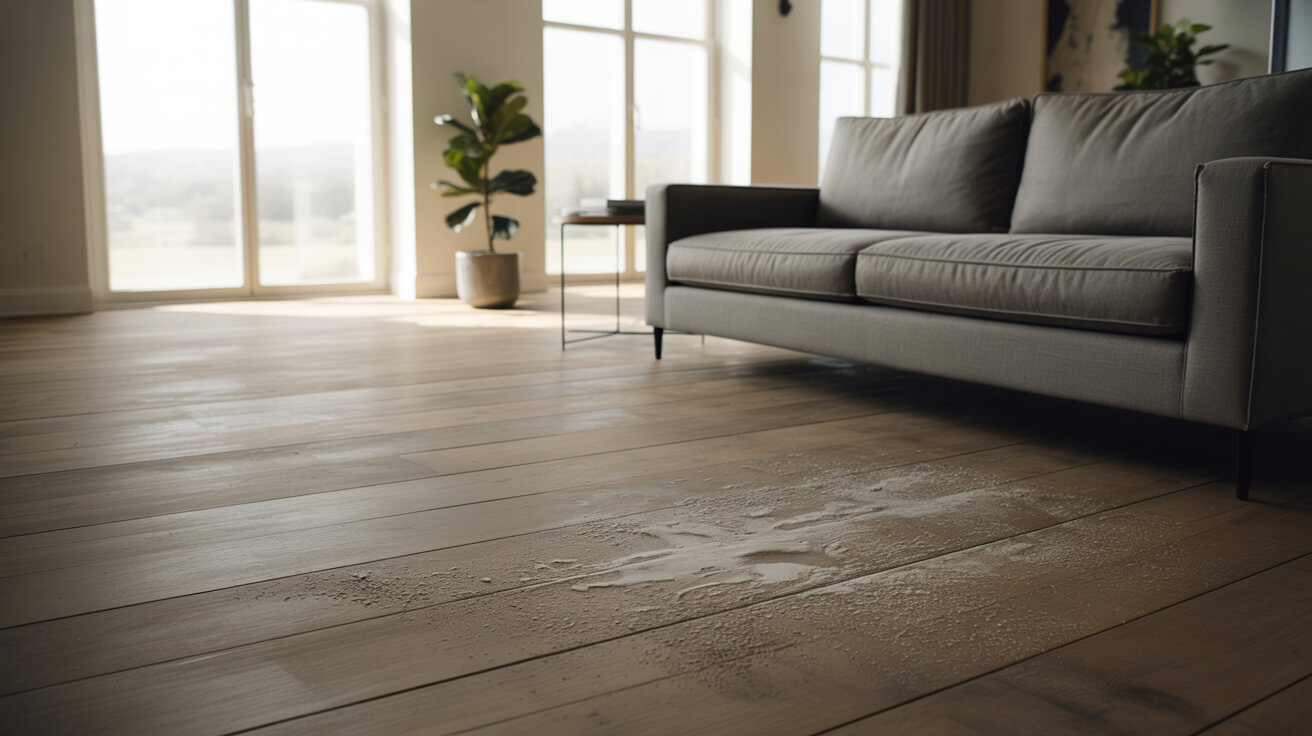
Powder Post Beetle infestations silently undermine timber strength and property value, presenting as innocuous powder, pinholes, or soft spots—signs often missed by well-meaning owners and professionals alike. Early detection requires not just vigilance, but a forensic sense for tell-tale symptom combinations. If you notice fine, floury dust collecting near board edges, or encounter thumbtack-sized, perfectly round holes clustered along the grain, don’t assume wear or installer residue. Active beetle larvae work deep in sapwood, often for months, before surface failure is obvious.
Visual Signatures to Prioritise
- Clusters of precise 1–2mm holes
- Fresh powder noticeably lighter than household dust
- Localised dullness or painless hollowing when tapping boards
Neglecting these markers risks escalation from minor cosmetic issues to extensive, structural repairs—especially for premium hardwood species such as oak, ash, or imported exotics.
Most avoidable flooring failures begin with ignored evidence, not bad luck.
Immediate Owner and Agent Tactics
- Capture clear, date-stamped photos—showing powder, holes, or discoloured streaks.
- Avoid household pest control products, as they rarely penetrate deep enough or satisfy insurer/warranty criteria.
- If in doubt, request a professional inspection calibrated for both infestation and proof-gathering—your documentation could be the difference between a warranty payment and a costly loss.
Property managers and landlords: when tenants report these symptoms, escalate before tenant complaints become legal liabilities. Our approach enables you to build a defence for future claims while acting swiftly to prevent tenant displacement or asset depreciation. Rapid, certified floor diagnostics are included in our initial assessment options for all client types.
Why Are Certain Timber Floors So Exposed to Beetle Attack—and What Can You Change?
Timber Pest Identifier
- 1 Location
- 2 Holes
- 3 Frass
- 4 Other Signs
- 5 Results
Most Likely Timber Pest
—
—
—
What the Damage Looks Like
Exit holes: —
Frass: —
Structural Risk Assessment
—
Treatment Method
—
Typical Cost Range
—
Can I DIY This?
—
Lifecycle & Behaviour
—
Confidence Breakdown
UK Timber Pest Comparison
| Pest | Hole Size | Frass | Risk | Cost Range |
|---|
This quiz provides general guidance only. A professional timber and damp survey will identify the exact pest, confirm whether the infestation is active, and recommend the right treatment.
Book a Timber & Damp Survey →Not all hardwood floors are equal. The biological and sourcing realities of modern timber supply chains determine infestation risk well before you take ownership or approve an instal. Powder Post Beetles crave high-starch sapwood—blonde, porous bands common in fast-grown or budget-sourced oak, ash, and tropical exotics. Often, the seeds of a future outbreak arrive in your delivery truck, embedded as undetectable larvae during timber processing.
Identifying High-Risk Floor Types
- Boards lacking kiln-drying certification or traceable provenance
- Species with visible, pale sapwood striations
- Recent installations, especially after rainy or humid periods
If your procurement process does not demand full treatment documentation, or if your supplier is vague about anti-pest certification, your risk profile rises sharply. Many infestations originate in supply chains, not homes—a fact that suppliers conveniently neglect when post-sale disputes arise.
A warranty claim always goes more smoothly when you demanded the right documents up front.
Business, Agent, and Heritage Owner Considerations
For multiple-property managers and conservation asset stewards, tight procurement and chain-of-custody records are your buffer against destructive infestations and costly litigation. Our services extend pre-installation QA to include:
- Third-party timber batch verification
- Supplier contract reviews with legal and conservation alignment
Whether safeguarding a heritage asset from irreversible harm or defending a recent installation in new-build stock, transparent supplier scrutiny is the first step toward long-term preservation.
Are DIY Checks Enough—or Do You Need Forensic Floor Assessment?

Superficial visual checks are insufficient for uncovering the true scope of beetle damage. The essence of professional evaluation is depth—measured both technically and legally. If your aim is peace of mind, insurance confidence, or ready-to-submit evidence, specialised methods are non-negotiable.
When to Transition from DIY to Expert
If you find signs such as:
- New powder (distinct from old sawdust or silt)
- Unexplained softening along traffic lanes
- Unusual sound when tapping boards (subtle hollowness)
it’s time to bring in a specialist.
Our assessment protocol includes:
- Deep-penetration moisture metre scans
- Frass microscopy to distinguish beetle species and lifecycle
- Subfloor and joist integrity mapping—critical for heritage, multi-storey, and commercial sites
Insurance, landlord, or warranty claims require standardised, date-stamped proof. Our reports are recognised by UK insurers, lenders, letting agents, and conservation bodies—so your claim or compliance is met without dispute or delay.
A proper diagnosis makes the difference between a fix and years of regret.
Clients benefit from an objective record and technical clarity not just for remediation, but as a decision tool should property-sale or asset management concerns arise.
What Repair and Treatment Methods Prevent Recurrence—and Which Give the Best Lifetime Value?

Effective remediation balances minimal intrusion, regulatory requirements, and a guarantee-backed future. The goal: restore value and preserve compliance or historic status while fitting your budget and downtime tolerance.
Comparative Repair Matrix
| Treatment Type | Best For | Disruption Level | Warranty Capable |
|---|---|---|---|
| Spot Re-treatment | Minor, early-stage local infestations | Low | Yes |
| Chemical/Boron-based | Deeper, established, or multi-board spread | Moderate | Case-by-case |
| Professional Full Replacement | Extensive/subfloor-embedded attack | High | Yes |
Heritage or listed properties require low-toxicity, reversible options and council consultation—common commercial treatments may void conservation status or trigger fines if used without prior authority.
Choosing and Sequencing Treatments
- Begin with expert assessment and a formal specification (required for claim recognition)
- For active, contained outbreaks: localised boron-based chemical or physical removal
- For systemic or undocumented installations: staged replacement, ensuring only certified timber goes in
- For protected or architecturally significant floors: consult with specialists—our compliance-focused programmes minimise risk and bureaucracy
Our project teams deliver plans that align with both warranty rules and regulatory mandates—ensuring long-term durability is supported by legal certainty and historic preservation coverage.
What Are Your Legal, Warranty, and Insurance Levers After Beetle Damage Hits?

Any incident triggers a deadline-driven evidence race. Statute and contract will only protect proactive owners—claims filed late or lacking technical proof are nearly always dismissed.
Essential Documentation Sequence
- Site photos—high-res, timestamped
- Independent professional diagnostic report (not just quotes)
- Communication log with supplier/installer, noting deadlines
- Warranty and insurance policies, pre-checked for pest exclusions
- Regulatory consents or conservation reports, where applicable
Key Claims Scenarios
New Buyer/Landlord: Act within warranty or Sale of Goods timeframe, with survey in hand.
Tenant Complaint/Agent: File detailed timeline and forensic assessment at first symptom.
Heritage/Commercial: Insurer claim is only honoured with logs of certified maintenance and prior risk reporting.
We arm clients with letter templates, logical evidence files, and hands-on claims navigation—shielding you from missed deadlines, process gaps, or supplier pushback. Let us handle negotiations; you can remain focused on your business or daily operations.
A single missed deadline can mean tens of thousands in uncovered remedial cost.
How Can You Prevent Reinfestation and Protect Timber Floors Long-Term?

Infestation prevention is not a one-off event, but an annualised, systematised process. Most recurring losses stem from failure to address root causes at procurement or during routine ownership.
Year-Round Protection Framework
- Material control: Only source kiln-dried, certified timber from vetted suppliers—retain full batch documentation.
- Installation QA: Schedule pre-instal humidity and substrate checks—with logs. Challenge any spec uncertainty.
- Ongoing Inspection: Establish semi-annual visual and technical checks, with digital/audit-ready records.
- Stakeholder accountability: Owners and managers of multi-unit or heritage sites should assign explicit responsibility for QA, schedule, and documented aftercare.
When problems are flagged, pair immediate response with long-horizon prevention planning. Our ongoing aftercare clients benefit from risk scoring, push/pull priority lists, and all required insurance/conservation notifications.
Future control and value retention are engineered from the routine—not from crisis response.
Preventing the next infestation is about system, not scramble. Tap Sussex Damp Experts for end-to-end, compliance-backed lifecycle plans designed to support every asset class and risk profile.
Does Heritage or Listed Status Change Every Step of the Remediation Process?
Floors living under heritage or listed status are governed by an additional layer of policy, consent, and record-keeping. These floors are as much historical artefacts as functional surfaces; loss of regulatory compliance is often more damaging than physical deterioration.
Heritage Intervention Checklist
- Always photograph and describe starting conditions—regulators want evidence of prior care.
- Submit formal consent applications before any chemical intervention.
- Use only treatments approved by heritage bodies or conservation officers.
- Maintain a living compliance log—document every material, contractor, and remediation step.
- Prepare to show reversible compliance for future audit or sale.
Commercial, institutional, and heritage managers: you need partners versed in policy, science, and stakeholder expectation. Sussex Damp Experts is regularly approved to deliver council-accepted, low-impact heritage remediation, with minimal delay and zero loss of historical value in the record. Take the stress and ambiguity out of your compliance workflow.
Why Leading Owners and Managers Trust Sussex Damp Experts for Beetle Control Success
For owners, managers, and heritage stewards, the difference between recurring crisis and retained value is foresight, transparency, and relentless documentation. You deserve to be seen—not as someone who missed warning signs—but as a stakeholder who gets ahead of risk, demand, and audit. Sussex Damp Experts are calibrated for a future where proof, outcome, and compliance are one.
Our tailored diagnostic and restoration programmes underpin everything from family investments to flagship commercial floors, heritage icons to managed portfolios. When your flooring assets are at risk, don’t settle for second-guessing or reactivity—demand the gold standard.
Book your fully managed, evidence-packed floor assessment today and earn peace of mind before someone else defines your asset’s future.
Frequently Asked Questions
How Do You Spot Powder Post Beetle Damage in Hardwood Flooring?
Spotting powder post beetle takes more than a passing glance—it’s the difference between a routine fix and a gut-wrenching floor replacement. What appears as faint pinholes, drift lines of talc-fine dust, or subtle softening underfoot is, in reality, an advanced warning system. If you find these clues, you’re likely early in the infestation clock—timing matters. Boards will lose resonance—watch for sections that suddenly go hollow, or a mossy powder building in barely noticeable patterns along the seam or under a rug edge.
Unattended, the beetle’s silent tunnelling can hollow out the sapwood in weeks, even in high-spec oak or engineered floors. It’s not limited to ageing properties—too often, floors installed out of season or from poorly vetted suppliers become ticking liabilities before you get your first utility bill. High humidity, overlooked storage protocols, and inadequate post-instal checks set the stage for damage that only surfaces when business or family routine is already disrupted.
High-Stakes Clues to Look For:
- Clusters of round holes (1–2mm diameter) with fresh, pale dust (“frass”) nearby
- Dull, softer floor sound or mild sag where none existed weeks before
- Patterns of faint ridges or masking under varnish—suggesting exit points, not cosmetic wear
If any element triggers a “wait—was that there last month?” your next step should be a forensic-grade damp survey, not a quick vacuum. That escalation is what separates regrettable bills from recoverable, claim-ready events. Sussex Damp Experts use substrate profiling and moisture mapping to document every warning sign in your asset, arming you for supplier, insurer, and tenant negotiations alike. For proactive managers and owners, being able to hand over this detailed report is a direct shortcut past months of delay, blame, and out-of-pocket restoration.
Every sign ignored is a cost multiplied down the road; see the risk before it sets the bill.
Why Are Certain Timber Floors Prone to Powder Post Beetle Infestation?
Floors don’t become vulnerable overnight—susceptibility is a built-in risk, engineered by sourcing, storage, and finishing choices you often make only once. Beetles select their targets with ruthless efficiency: they favour sapwood-heavy boards, poorly kiln-dried shipments, or any timber left exposed during humid stretches in transit or on-site. Not all oak or ash is at equal risk; lower-quality, “fast-cured” imports and non-certified stock are the secret weak link in even high-end projects.
Variables That Decide Fate Before Installation:
- Sapwood content: the lighter, softer outer timber, rich in starch
- Drying & certification: boards without traceable heat/chemical treatment have high survival rates for beetle larvae
- Environmental inertia: delays between delivery and installation in damp conditions weaken your asset from the core
Poor vetting at the procurement stage becomes unfixable later—no after-market chemical or patch will fully eradicate an infestation embedded from week zero. The risk is compounded for listed or historic properties, where council restrictions on treatments mean options shrink as soon as a problem appears.
At Sussex Damp Experts, our logic is simple: prevention trumps cure. Vendor trace checks, moisture audits, and batch-level documentation close the loopholes most beetles wriggle through. Share these safeguard protocols with your surveyor or builder, and you’ll rarely be surprised by the phrase “merchantable quality dispute.”
Your project won’t fail from the floor surface; it’ll fail when risk is allowed to enter through an unchecked delivery bay.
What Is the Value of Professional Diagnosis Versus DIY for Suspected Infestation?
Self-diagnosis is attractive—until a minor oversight turns into a thousand-pound misstep. Household tools and the naked eye are blind to the real activity: live larvae hidden in plank cores, differences between inactive “dead” holes and ongoing, insurance-claimable damage, and subtle substrate failings that spell doom only months later. Landlords and managing agents in particular walk a tightrope: responding too late exposes you to regulatory fines or tenant disputes, while overreacting on inconclusive evidence costs goodwill and budget.
Professional assessment is not simply “peace of mind”—it’s a survival tool. Sussex Damp Experts deploys diagnostic gear and standards unavailable to most property teams or DIYers: borescope probes, humidity/dew-point loggers, spectral substrate analysis, and forensic “frass” microscopy—all designed to prove or disprove ongoing infestation in an evidence chain that stands up in supply and insurance disputes.
Why Certification and Documentation Matter
- Insurers, lenders, and housing officers routinely reject non-expert evidence as “unsubstantiated”
- Rental law and statutory health standards demand date-stamped, third-party reports
- Detailed inspection logs instantly upgrade a landlord’s defence when challenged under Housing Act or HHSRS frameworks
The key to protecting your asset is not guesswork—it’s professional proof. When you show up with our certified report, the chain of accountability shifts from you to the source—builder, supplier, or tenant behaviour—as context demands. Sophisticated asset managers and commercial facility supervisors treat this documentation as more than a fix: it’s a lever for every future property conversation you’ll have.
Proof, not opinion, shortens every dispute by months—and sharpens your leverage.
Which Damp Repair and Floor Remediation Methods Deliver Lasting Value?
Effective remediation means matching true risk to intervention—neither overreacting with costly full replacement nor trusting sprays and patches when the core problem is deep and active. Cosmetic fixes—fillers, varnish overspray—solve nothing if larvae are at work three centimetres beneath. For minor, surface-level or historic activity, localised boron or VOC-safe surface treatment, monitored annually, pays its way. But for multi-board infestations, structural decay, or compliance settings (heralded by council, heritage, or warranty review), only board-by-board or full floor replacement offers reliable closure.
Solution Options, Mapped to Risk:
| Method | Use Case | Impact | Regulatory Fit |
|---|---|---|---|
| Localised Treatment | Small, contained surface outbreaks | Low | Widely accepted, audit trail needed |
| Full Board Replacement | Multiple-spot or deep-core failure | Medium-High | Needed for asset protection, insurance-backed |
| Comprehensive Removal | Subfloor/joist invasion or listed property | High | Requires council/heritage signoff |
For heritage projects and high-mobility commercial assets, documentation of treatment approach—aligned to council and insurance rules—matters as much as the physical work. Our remediation protocols ensure written proof at every step, paired with future care roadmaps tailored to your operational needs.
Shortcutting cost or trying to “just treat the symptom” without root-cause elimination is the surest way to see new damage recur…and goodwill evaporate with tenants, stakeholders, or auditors.
A fix is only as strong as the proof supporting it—credible, defendable, and ready for review.
What Rights, Warranty Routes, and Insurance Protections Exist for Owners After Infestation?
Rights only protect those who use them on schedule and with evidence. Merchants, suppliers, and insurers rely on procedural gaps—missed notification windows, incomplete reports, DIY coverage gaps—to sidestep claims. The moment you suspect powder post beetle, your first move should be building an irrefutable audit log: photos, communication threads, third-party reports, all time-stamped and collated.
If you own or manage rented, commercial, or historic property, your claim rules—and risk—are more complex:
- Insurers will rule out “wear and tear” or tenant negligence unless proved otherwise by expert
- Housing or public sector managers must demonstrate best-attempts at remediation, documentation, and timely escalation to third parties
Legal frameworks, from Sale of Goods to HHSRS and beyond, only favour the proactive and the papered-up. Sussex Damp Experts delivers court-ready and council-approved asset assessments and remediation logs, arming your organisation for any compliance initiative or legal interruption.
When the inspector calls, processes trump instincts—own the process, own the outcome.
The right claim, on the right protocol, at the right time—upgrades you from expense risk to compliance asset in every stakeholder’s eyes.
Which Long-Term Prevention Strategies Actually Protect Your Timber Floors?
Lasting security isn’t luck; it’s engineered. Most repeating beetle outbreaks start with a single oversight—lax sourcing, skipped storage controls, or post-treatment neglect compounded by changing tenancies or asset turnover. Your prevention strategy is only as strong as the weakest link: missed annual check, undocumented instal, or unchecked environmental shift.
The science is simple:
- Buy only kiln-dried, certified, low-sapwood boards from traceable suppliers.
- Store and acclimatise timber in moisture-aligned, pest-shielded environments.
- Conduct pre-fit and post-fit humidity and substrate checks.
- Log all inspections—and compare logs over six-, twelve-, and thirty-six-month spans.
Landlords and property managers, embed our annual inspection and reporting cycle into your compliance frameworks. Heritage owners, demand council signoff and corresponding treatment trace for every action, not just the first.
Your insurance underwriter will favour you, tenants will thank you, compliance officers will reference you as “prepped and preventable.” We designed our aftercare and re-inspection regimes so your building’s story is always one of resilience, not regret.
Risk isn’t random—it’s recorded. Get the record and your outcome changes.

