
 By
By  December 9, 2023

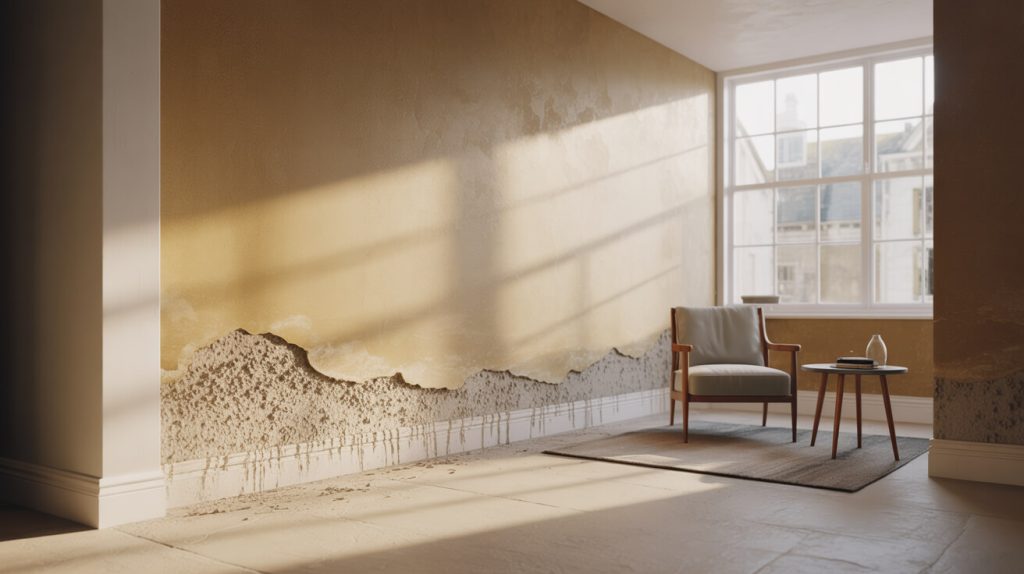
Permanent Rising Damp Solutions for Internal Walls
Rising damp in internal walls is one of those issues that doesn’t announce itself with drama until the underlying damage has already crept deep into your property. The visible impact—peeling paint, crumbling plaster, persistent musty odours—is only part of the story. What’s often overlooked is the silent compromise to your structure, air quality, tenant safety, and asset value. Addressing this isn’t about ticking a compliance box; it’s about safeguarding your long-term interests with science-based solutions proven in the toughest property environments.
Sussex Damp Experts position your asset for resilience. Every recommendation is grounded in British Standards (BS 6576, PAS 2035), and every treatment is tailored—residential, commercial, heritage-listed, or high-rise block. You don’t just receive treatment; you inherit operational clarity, survey-proof documentation, and direct pathways to regulatory and lender acceptance.
Neglected damp isn’t a small maintenance oversight—it’s tomorrow’s denied mortgage, void period, or escalating repair bill.
Why Immediate Action Aligns With Asset Protection
- Timely diagnosis reduces project costs and structural risk:
- Targeted repair strategies extend property life and tenant satisfaction:
- Warranty-backed work unlocks insurance and financial leverage:
- BS-certified documentation mitigates compliance, legal, and reputational threats:
If your asset—a listed cottage, city flat, or managed commercial block—shows any symptoms, moving decisively is the path to operational confidence and market value protection. Scroll onwards to understand what to spot, what really causes the problem, and how precision-driven intervention sets you ten steps ahead of every risk.
What Are the Typical Symptoms of Rising Damp in Internal Walls?

Recognising genuine rising damp isn’t about following a checklist; it’s about understanding how symptoms map directly to failure points and future risk. Differentiate these early, and you position your property for certainty—delaying means running blind and stacking up future costs.
Internal Wall Damp: Telltale Indicators
Rising damp manifests with an unmistakable cluster of symptoms—if you know what to look for:
- Paint and wallpaper that bubbles, flakes, or discolours in distinct, horizontal bands—usually up to 1–1.2 metres from your floor.
- White or crystalline salt deposits (efflorescence) on surface plaster or revealed brickwork.
- Skirting boards turning soft, warped, or separating from walls without obvious external cause.
- Cold, clammy wall surfaces that resist drying, regardless of room heating.
- Escalation of coughs, respiratory discomfort, or allergic issues for building occupants.
Table: How Symptoms Signal Specific Underlying Risks
| Symptom | Likely Mechanism | Escalation Risk | Immediate Action |
|---|---|---|---|
| Salty deposits | Moisture bringing salts | Plaster decay, dust | Surface test & survey |
| Skirting soft/warped | Moisture wicking into timber | Timber rot | Inspection & repair |
| Paint/wallpaper bubble | Water under surface layer | Concealed saturation | Remove, substrate test |
| Chronic musty smell | Persistent damp | Mould, health hazard | Vent, investigate |
If you identify one or more of the above, especially in properties over 30 years old, rapid professional assessment prevents further, hidden escalation. DIY “paint and pray” is a common false economy—the real fix requires deep mapping and structured repair.
The first symptom isn’t just a mark on your wall; it’s a sign to act before your investment loses value.
Discover how root failures arise in the next section—or, if you’re facing a looming tenancy review, move straight to our diagnostic protocols for urgent surveys.
Why Do Damp Proof Courses Fail in Older or Heritage Internal Walls?

Questions around DPC (Damp Proof Course) failure haunt every pre-1970s property owner—and for good reason. Legacy construction methods, subsequent “modern” interventions, and environmental change all conspire to render even well-built or previously protected buildings vulnerable.
Unpacking Real-World DPC Failures
- Missing Physical Barriers: Most pre-war and heritage buildings simply *never* had a DPC installed, relying on lime plaster breathability or brick density rather than engineered barriers.
- Bridging: Modern renovations often bury DPCs beneath external render, insulation, or raised landscaping—making safe drying impossible.
- Chemical DPC Breakdown: Old injection systems (from the 1980s and 1990s) have known longevity limits and often failed to address substrate compatibility or wall construction idiosyncrasies.
- Invasive DIY Interventions: Quick “upgrades” using cement, gypsum plaster, or non-breathable renders trap moisture at depth, often causing more harm than leaving the native materials alone.
When Heritage + Modernity Collide
Heritage property owners face the tightest compliance standards. Conservation rules often dictate what you cannot do, but rarely specify the right sequence or layering to safely repair. Sussex Damp Experts integrate heritage, conservation, and surveyor guidance into each step—so you never face compliance risk or accidental devaluation.
When your building’s buffer against ground moisture fails, the next issues aren’t surface-deep—they’re systemic. The earlier you align repair with standards, the more your history and investment remain intact.
If your survey, sale, or tenant situation brings to light past quick fixes—connect now. We’ll map, document, and plan a fully standards-compliant restoration.
How Do Professionals Diagnose and Distinguish Internal Wall Damp?

Correct diagnosis is the dividing line between permanent solution and costly cycle. Not all “damps” are the same—and only forensic, tool-driven investigation gets your money’s worth from repair, survey, or guarantee.
The Science and Practice of Damp Diagnosis
At our core, Sussex Damp Experts never guess. We deploy integrated, industry-validated tests, each tailored for wall type, property history, and environmental exposure:
- Moisture Mapping: Digital readings across every metre of internal wall surface, profiling vertical and horizontal movement.
- Salt Analysis: Onsite or lab identification shows whether saline signature matches rising damp (e.g. nitrates/chlorides) or is linked to external leakage or plumbing failure.
- Thermal Imaging: Reveals hidden saturation, bridging, and cold spots that standard metres miss—key for multi-layered or insulated builds.
- Borescope/Microdrilling: Direct inspection inside wall cavities, confirming hidden wet zones or identifying bridging debris.
Each test is documented, timestamped, and compiled into a report you can submit—with confidence—to mortgage lenders, buyers, insurers, or local authorities.
Blockquote:
A generic quote for rising damp is a warning flag; only a forensically-mapped, standards-aligned report protects your investment.
Professional diagnosis also acts as your locus of evidence in any dispute—be it with tenant, local authority, or insurer. Ready for proof? Book your comprehensive, standards-driven damp survey.
What Are the Most Effective Modern Treatments for Internal Wall Rising Damp?

Treatments for internal wall rising damp have advanced beyond “inject and hope.” Success, however, comes from matching solution to structure, use-case, and future occupancy—not just convenience or trend.
Treatment Spectrum and How Repairs Are Matched to Buildings
- Chemical DPC Injection: Modern, waterproofing creams injected along the base course restore the original barrier effect with minimal intrusion. Most effective for solid brick or cavity properties, and deliver rapid, measurable drying curves.
- Physical DPC (Slate, Plastic, Lead): Used for listed/heritage or legal cases. Requires qualified instal and, often, partial wall rebuild in compliance with planning authority guidelines.
- Lime/Breathable Replaster: Each internal wall above the treated course receives breathable plaster for evaporation—standard cement or gypsum risks recurrence and future “plaster bloom.”
- Tanking/Waterproof Slurry: For high-pressure or underground areas (cellars, basements) where upward and lateral ingress combine. Always paired with aftercare monitoring.
Table: Treatment Type vs. Property Profile
| Property Type | Recommended DPC | Plaster System | Aftercare Required |
|---|---|---|---|
| Postwar/Midcentury | Chemical (Cream) | Breathable (Lime) | Annual/2-year check |
| Heritage/Listed | Physical (Slate/Lead) | Lime | Consent req./monitor |
| Basement/Cellar | Tank Slurry/Membrane | Cement-based | High-frequency checks |
No solution is “instal and forget.” Sussex Damp Experts builds every treatment window with client and asset context in mind—summoning manufacturer warranties, surveyor letters, and aftercare plans to back each instal.
Treatment Pitfalls to Avoid
- DIY chemical kits seldom address substrate thickness, cold spots, or complex profiles.
- Overpainting can “trap” rather than cure, making future repairs messier and pricier.
- Skipping aftercare wipes out most warranty claims.
Your fastest path from symptom to warranty-protected solution starts with structured intervention—customised for your building history and future.
When Is It Essential to Seek Accredited Professional Help?

There’s a defined trigger point: when symptoms appear, all DIY and passive measures are officially exhausted, or when a survey, tenant, or legal challenge puts your liability in writing. Delay after this threshold is always more expensive than prompt action.
Escalation Events—What Triggers Direct Action
- Mortgage Retention/Failure: Survey flagged rising damp; sale or refinancing now requires full damp report and evidence of remedial works.
- Tenant/Occupant Complaint: Health risk now falls on owner/manager to resolve to HHSRS or local authority standards.
- Heritage Enforcement/Planning: Permission or alteration failed; only certified, documented repairs acceptable.
- Symptom Recurrence: Prior repairs have failed or symptoms have returned faster than documented drying curve would allow.
Immediate Benefits of Accredited Engagement
- Official documentation for every action.
- Regulatory cover against council, buyer, or tenant action.
- Eligibility for long-form insurance-backed guarantees.
- Direct aftercare and ongoing support commitments.
Ignoring these trigger points repositions liability directly onto owners and managing agents. Sussex Damp Experts delivers both the armoured report and the required operational repair, closing liability gaps fast and forever.
Can Guarantees, Aftercare, and Monitoring Prevent Damp Recurrence?

Ownership isn’t just about solving the now—it’s about locking permanent protection into your property, portfolio, or development pipeline. Aftercare and modern monitoring are as essential as treatment itself.
Why Professional Aftercare Delivers Lasting Confidence
Effective aftercare combines routine monitoring, education for all stakeholders, and warranty enforcement that’s accepted by insurers and lenders.
- 10–20 Year Insurance-Backed Guarantee: Written documentation accepted by insurers and housing authorities.
- Annual/Periodic Monitoring: Proactive moisture measurement and substrate review to catch new threats before they escalate.
- Guided Aftercare Plans: Custom, property-specific care instructions and repair triggers for managers or occupants.
- Hands-On Support: Single-call support for warranty, compliance, or documentation queries.
Example: Table of Aftercare Components
| Aftercare Element | Frequency | Action/Resource | Stakeholder Benefit |
|---|---|---|---|
| Moisture Check | Annually/bi-annually | Moisture metre test | Early warning |
| Client Guidance | On repair + renewal | Care guidebook | Prevention-based |
| Warranty Audit | At claim/transfer | Documentation review | Value protection |
| Responsive Support | As needed | 24/7 support/reports | Fast resolution |
A guarantee is nothing if not coupled to real, operational follow-up. Sussex Damp Experts ensures owners, residents, and asset managers never face recurrence in silence—or loss.
Book Your Free Consultation With Sussex Damp Experts Today
Take direct control over your rising damp challenges, before they dictate your survey results, asset value, or compliance standing. Sussex Damp Experts offers fast, accredited, full-scope internal wall damp surveys—all mapped to British Standards and designed for immediate regulatory and lending approval. From initial booking to proof-backed instal and aftercare, your asset’s permanent resilience is within closer reach than you think.
Schedule your free consultation and discover why asset owners, managers, and landlords trust Sussex Damp Experts when value, compliance, and peace of mind matter most.
Frequently Asked Questions
What Are the Typical Symptoms of Rising Damp in Internal Walls?
Rising damp signals itself through a pattern most ignore until damage is established: you’ll spot paint blistering along a horizontal band near the base of internal walls, powdery white salts forming in neat tide lines, and wallpaper peeling where you least expect. Moisture climbs methodically, softening skirting and rendering plaster fragile beneath the surface. Even the air shifts—mustiness stubbornly returns after ventilation or cleaning, hinting at a deeper challenge no air freshener or “damp trap” will resolve.
Key Diagnostic Markers:
- Horizontal tide marks or salt efflorescence within 1m of floor:
- Peeling plaster or flaking decorative finishes beneath windows or behind furniture:
- Skirting boards warping, darkening, or pulling away from the wall:
- Unusually cold or damp wall surfaces, especially on ground floors:
Most crucial: these symptoms persist through weather changes and will not abate by repainting, temporary drying, or household remedies. For residential buyers, landlords, or anyone managing older stock, these indicators flag an underlying issue that—if overlooked—compromises asset value, health, and legal assurance. Every early symptom you note is both a warning and an opportunity: act now, and a minor repair replaces the cycle of patching and regret.
Why Do Damp Proof Courses Fail in Older or Heritage Internal Walls?
Damp proof courses (DPCs) are only as reliable as their context and age allow. In many heritage or pre-1950s UK properties, a DPC may be absent, outdated, or quietly bypassed over years of alterations. Renovations—especially those adding impervious plasters, sealed floors, or overzealous landscaping—often compromise original barriers, letting water bypass the intended line of defence. If the DPC exists at all, it might be bridged by debris, insulation, or new cement layers. Lime and soft stone constructions, common in period and listed homes, were designed to “breathe” out moisture; sealing them with modern materials backfires, trapping water in fabric and foundation.
Common DPC Weakness Triggers:
- No DPC installed (common in pre-war builds):
- Bridged by surface or subfloor debris from renovation:
- Modern renders/plaster closing off capillary “exits”:
- Landscaping/driveways inadvertently above DPC level:
Typical repairs made without correct analysis or consultation—quick-injected chemicals, waterproof wall paints—don’t fix the underlying migration routes. For heritage assets, incorrect DPC work can even risk regulatory breach, listed status harm, or permanent loss of market value. If your property’s story includes upgrades, re-plasters, or external design changes in recent decades, treat every new tide mark as the signal to consult a compliant, survey-ready specialist.
How Do Professionals Diagnose and Distinguish Internal Wall Damp?
Expert diagnosis isn’t guesswork—it’s a forensic mapping operation that transforms uncertainty into actionable facts. A credible specialist opens with a moisture metre survey, running vertical profiles across affected walls. Salt analysis distinguishes rising damp’s nitrate/chloride watermark from local leaks or condensation. Thermal imaging uncovers cold bridges, penetrative ingress, and the invisible spread of moisture beyond surface aesthetics. In period or complex constructions, microdrill or borescope inspection exposes hidden wall voids, filled cavities, or misguided insulation—often the true culprit when quick-fix surface repairs keep failing.
Professional Damp Diagnosis: Stepwise Reliability
| Tool / Technique | What It Proves | Compliance Standard |
|---|---|---|
| Moisture Metre Profile | Damp migration path | BS6576, PAS2035 |
| Salt Test (chemical) | Rising vs. lateral damp | Surveyor & mortgage audit |
| Thermal Imaging | Cold bridges/leaks | Insurance, claims, pre-sale |
| Borescope Drill | Cavity blockages/bridges | Heritage, period context |
Landlords, asset managers, and buyers all benefit: this evidence package is more than a faster repair—it’s documentation for insurance, mortgage, tenancy, or council compliance. Patchwork testing, visual-only “surveys,” or DIY metres never provide the audit trail required for meaningful warranty or financial recourse.
The difference isn’t just technical. Diagnosis is what transforms uncertainty into a contractable, insurable solution.
What Are the Most Effective Modern Treatments for Internal Wall Rising Damp?
Permanent treatment is always a sequence: precise diagnosis, route removal, barrier reinstatement, and restoration using compatible, breathable materials. Most UK homes now benefit from advanced chemical DPC creams—targeted insertion along the mortar line that interrupts rising moisture with minimum upheaval. In listed or heritage properties, the strategy pivots to physical DPCs or lime render, ensuring conservation compliance and vapour permeability. Every modern fix removes salt-contaminated plaster, halts upward capillarity, and replaces finishes with materials that breathe and “move” with the building’s natural cycles.
Damp Treatment: The Modern Sequence
- Survey-anchored diagnosis with compliance reporting
- Source route identification and full wall mapping
- Salt neutraliser or contaminated plaster removal
- Installation of new DPC (chemical or physical as fit)
- Breathable, high-permeability plaster reinstatement
- Ongoing monitoring and routine aftercare
Landlords and property managers gain most when every stage is documented for handover, insurance, and regulatory audit. Skip a link in this chain—especially the substrate mapping and aftercare—and the entire cycle resets, often worse. Fast-track chemicals or quick “tankings” are rarely durable; the best guarantee is skilled installer, high-compatibility materials, and methodical aftercare protocols. Sussex Damp Experts have made this workflow standard—our reports and warranties are accepted across mortgage lenders, councils, and insurers for a reason.
When Is It Essential to Seek Accredited Professional Help?
You don’t have to wait for a sale to collapse, a tenant to call Environmental Health, or a timber floor to crumble. The moment damp symptoms persist beyond season or DIY “success,” you cross a threshold: further delay is an active financial, legal, and reputational risk. Landlords and agents must respond to HHSRS and Homes Act claims in 14 days; sellers who wait risk offers falling through post-survey. Heritage and commercial buildings face similar compliance challenge: only accredited, standards-driven specialists can legally issue moisture and remediation certificates that protect value on record or during audit.
Escalation Triggers Demanding Professional Action
- Survey flagged damp as retention or mortgage threat:
- Tenant/occupant complaint logging under landlord legislation:
- Heritage/listed building requiring planning or conservation review:
- Repeat symptoms post-DIY or contractor attempt:
Most professional services—like Sussex Damp Experts—offer rapid, documented response with report, timeline, and compliant remedy. Engage them at the first sign of persistence; “hoping out” of formal review or risk only increases costs and tightens regulatory exposure.
In property management, delay isn’t a tactic. It’s an admission you’re waiting for someone else to force your hand.
Can Guarantees, Aftercare, and Monitoring Prevent Damp Recurrence?
Recurrence is increasingly seen as a failure of care, not just repair. Comprehensive solutions blend robust, insurance-backed guarantees with a schedule of aftercare visits—digital moisture monitoring, repeat physical checks, and in-home education. A Sussex Damp Experts warranty isn’t a slip of paper. It’s an extension of your property’s operational continuity and a currency for lenders, buyers, and risk assessors. For asset portfolios or heritage sites, this aftercare becomes the regulatory heartbeat—evidence that properties are run for longevity, not margin.
How Aftercare Powers True Damp Protection
- 10–20 year written, insurer-lodged warranty:
- Annual or biannual wall moisture review:
- On-demand callout and digital reporting for insurance claims:
- Proactive, seasonal property guidance:
Most damp returns aren’t product failures—they’re missed checks, misunderstood upgrades, or over-confident “paint and walk away” trades. When every link from diagnosis to aftercare is formalised and followed, recurrence becomes rare, and day-to-day ownership becomes proactive, not reactive. Fact: documented aftercare Protocols are now required by premium insurers for some property types.

