
 By
By  May 23, 2023


How Professional Basement Floor Drainage Systems Work to Protect Your Property
Basement floor drainage is the practical foundation for safeguarding your property’s long-term value and use, often reducing the need for later damp repair. Rather than reacting to visible water or the first signs of mould, system-based drainage is a proactive defence that quietly manages unseen risks below ground. Relying on scientifically engineered solutions, compliant drainage systems intercept and expel groundwater before it can undermine structural integrity, finishes, or occupant health.
How Do Drainage Systems Intercept and Control Water?
Floor drainage begins with a vapour-impermeable cavity membrane installed along the basement’s walls and floor. This membrane channels water seeping through the substrate into perimeter drainage channels, ensuring that increasing hydrostatic pressure cannot penetrate the living space. Collected water flows to a sump chamber, where an automatic pump expels it to a safe external outlet.
Key Functions:
- Passive capture of rising damp, lateral water, and condensation
- Directed water flow to prevent pooling and hidden saturation
- Automated removal with failover (battery backup) to handle system interruptions
What Are the Documented Outcomes of Proper Drainage?
Properties equipped with robust, standards-aligned floor drainage systems consistently:
- Avoid recurring damp repair cycles, which quickly erode asset value
- Pass mortgage, insurer, and local authority inspections without friction
- Maintain healthy environments free from structural spoilage or black mould
- Support higher property valuations and smoother sale/let processes
Proof Table: Value and Compliance Benefits
| Outcome | Non-Compliant Instal | Full System (Sussex Damp Experts) |
|---|---|---|
| Mortgage Approval | Often delayed/denied | Smooth, documented approval |
| Sale/Let Readiness | Major negotiation | “Move-in ready” status |
| Insurance Cover | Frequently excluded | Recognised and discounted |
| Indoor Air Quality | Risk of mould | Consistently safe |
You protect not only your structure, but also your property’s reputation and your peace of mind. Sussex Damp Experts designs every system to meet full BS8102 compliance, delivering proven technical authority and ongoing support you can reference for every inspection, audit, or tenant handover.
Unseen water does more than threaten—it quietly rewrites your building’s future.
What Are the Principal Components of a Regulation-Compliant Floor Drainage System?
Basement Waterproofing Cost Calculator
- 1 Basement
- 2 Details
- 3 Estimate
Estimated Total Cost
£8,500 – £12,000
Type C cavity drain membrane for 20m² floor + 40m² walls
All Systems Compared
| System | Waterproofing | Finishing | Total | Warranty |
|---|
Property Value Uplift
+£36,000
Adding 20m² of habitable space could add significant value to your property
Payback Ratio
3.2x
Every £1 spent adds £3.20 in property value
Ready to waterproof your basement? Get a professional survey with an accurate quote.
Get a Basement Survey →A compliant basement drainage system is a series of interdependent technologies—not a standalone fix. Each element performs a unique function, ensuring all water is safely managed without dependency on any single barrier.
Which Elements Guarantee Regulation-Aligning Performance?
- Cavity Drain Membrane: Laid on both floors and walls; vapour-impermeable but allows water to reach controlled drains.
- Perimeter Drainage Channel: Sited at wall-floor junctions, these channels eliminate stagnant water by transporting all captured moisture to collection points. Access ports are provided for easy inspection and cleaning as required under UK building regs.
- Sump Chamber: A tank at the low point, aggregating flow from all channels. Should include dual pump installation for redundancy and compliance.
- Automatic Sump Pump(s): Fitted with float switches, battery backup (where power is business-critical), and remote alarm systems to meet insurer and regulatory expectations.
How Do Product Choices and Configuration Make or Break a System?
Membranes must be certified, drain channels correctly sized and pitched, and all hardware carry up-to-date compliance stamps (BS8102, PCA/TrustMark). A system’s long-term durability is defined not by any one “advanced” product, but by respecting compatibility and design rules. Improper substitutions trigger silent failures and invalidate future insurance or mortgage claims.
Component Comparison Table
| Component | Minimum Approved Spec | Compliance Proof | Upgrade Options |
|---|---|---|---|
| Membrane | BS8102-certified, >0.5mm | PCA/TrustMark docs | Vent-layered, eco-membrane |
| Drain Channel | Preformed, >100mm wide | Inspection ports | Antimicrobial, alarmed |
| Sump Pump | Dual system, alarmed | Documentation log | Battery, remote sensor |
| Maintenance Access | 2+ per perimeter | Photos, signoffs | CCTV-ready |
Why Is Consultation Essential for Custom Sites?
Unusual layouts, heritage sites, or mixed-use conversions require project-specific adaptation to maintain compliance. Our approach at Sussex Damp Experts is to audit every relevant parameter and submit a written plan and fixture list—backed by full regulatory documentation—to defend your investment.
Why Proper Drainage Safeguards Your Structure, Health, and Finances

Mould on the skirting or a musty air isn’t just unpleasant—it signals that underlying protection is not working as it should. Every year, countless properties lose market value, face insurance refusals, or require painful repairs after failing basic drainage tests.
Which Structural and Health Risks Are Actually Preventable?
When drainage is absent or improperly maintained:
- Wood rot spreads unseen beneath floors, risking collapse or costly replacement.
- Cold, plume-effect airflow drives condensation, encouraging persistent surface mould.
- Health codes (including HHSRS) are breached, creating legal exposure for landlords and agents.
- Each incident carries compounded financial consequence: vacancy, legal costs, and devaluation.
How Does Proper Drainage Unlock Financial and Regulatory Benefits?
- You pass every lender and insurer’s audit, often reducing insurance premiums.
- Documentation enables fast, smooth transactions during sale or tenancy changes.
- Scheduled aftercare enables anticipation of repairs, not emergency responses.
- Investment ROI: is maximised: preventive drainage always costs less than remedial excavation or health-related claims.
Decision Pathways Table
| Scenario | Unprotected | Expert-Protected |
|---|---|---|
| Rent to New Tenants | Blocked | Approved instantly |
| Mortgage Remortgage | Delayed | Pass with documentation |
| Insurance Claim | Denied | Paid quickly, full cover |
| Health Inspection (HHSRS) | At-risk | Fully compliant |
If you don’t have evidence of protection, you have evidence of risk.
What Sets Sussex Damp Experts Apart for Asset and Occupant Safety?
Our compliance-first, documentation-driven delivery means you’re always ready for the next event—be that a regulatory spot check, a buyer’s engineer, or a family member wanting a healthy, dry living space.
How Are Professional Drainage Systems Designed and Installed?
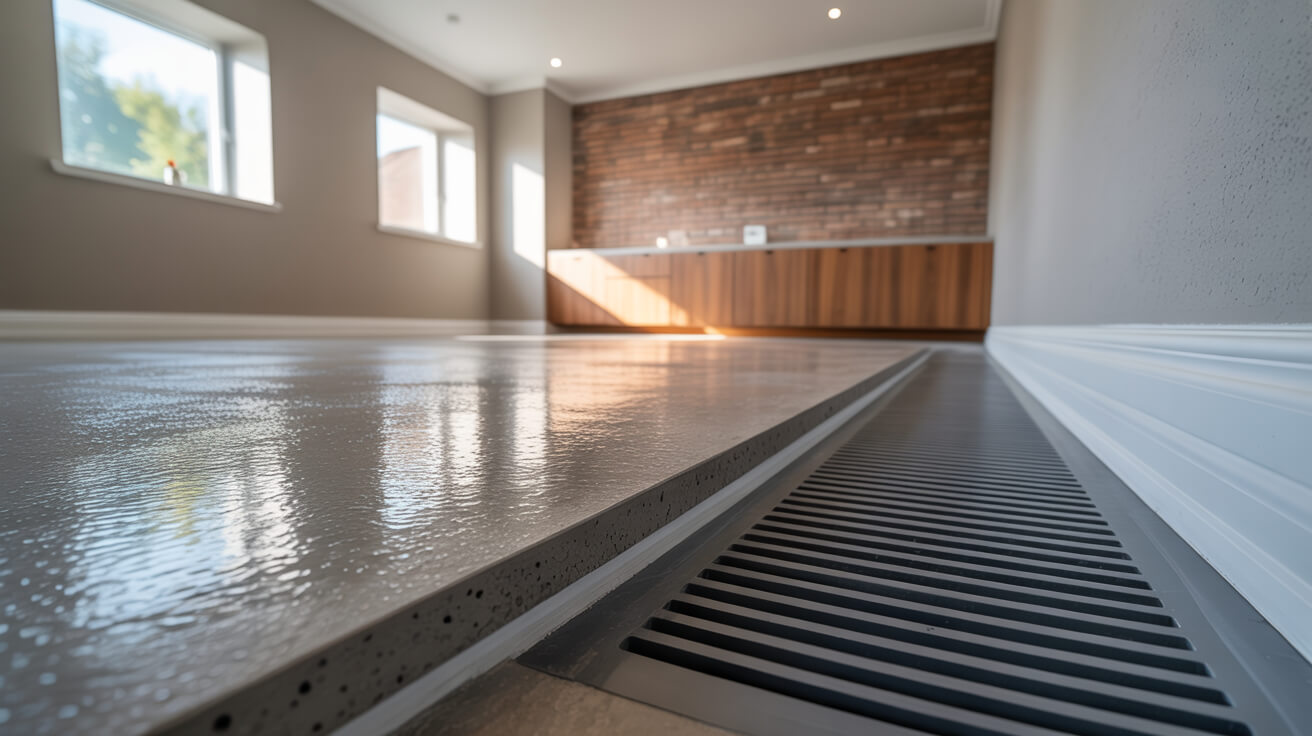
Smart system design isn’t about “secrets”—it’s about discipline, sequence, and a refusal to leave any variable unchecked. True professionals work with the view that no plan is immune to change and that every check performed now saves drama later.
Which Steps Define a Risk-Minimising Installation?
- Site-Specific Assessment: Substrate profiling, surveying of historic context, and water source mapping. Old brick? Cavity wall? Tunnel? Each gets a tailored approach mapped to the British Standard.
- Design and Planning: Selection of compatible membranes, approval of component locations, interface points for future service, and allowance for client’s intended finishes.
- Installation: Pre-clearance of all surfaces, checked by digital and manual moisture mapping. Membrane, channel, and sump/pump fitted by accredited teams only.
- Quality Assurance: Every phase is logged, imaged, and tested before further work proceeds; warranty and compliance documents stored both on and off-site for secure access.
- Owner/Tenant Training: You receive walk-throughs, digital guides, and a point-of-contact for service or emergencies.
How Does Ongoing Support Maximise Longevity?
A maintenance protocol featuring annual visits, real-time alerts for pump function, and scheduled cleaning ensures problems are addressed before they escalate—turning a potential disaster into a routine update.
Fail to verify a single contact point, and the system will choose when to remind you.
Why Trust Sussex Damp Experts for Precision and Aftercare?
Our focus is lifelong protection, not just project fulfilment. Every installation emits a digital and physical paper trail that survives owner transitions or audits—no exceptions, no shortcuts.
Where Must Drainage Be Located for Maximum Effectiveness and Compliance?

Drainage components only protect what they touch, and the costliest failures always trace to overlooked junctions or thoughtless placements. Placement isn’t just a technical formality—it’s your guarantee of hassle-free audits and zero surprise findings.
What Rules Govern Exact System Siting?
- Cavity membranes must hug all below-ground surfaces with no unsupported “hot spots.”
- Access/inspection ports must be documented and mapped (especially for multi-owner, multi-use or tenanted premises).
- Sump pits located at the lowest point, clear of future service interference, and with power/battery secure from accidental tripping or water ingress.
Placement Challenges Table
| Site Type | Primary Threat | Key Placement Actions |
|---|---|---|
| Historic Vaulted | Lateral water, bridging | Use reversible membranes, hidden channels. |
| Basement Flat | Sharing, misuse | Secure, tenant-inaccessible pump location; clear port maps for landlord. |
| Commercial Storage | Heavy loads, traffic | Protection from track impact, accessible channel/port for rapid inspection. |
| New Build | Regulation, future use | Allow space for planned expansion, fit inspection ports for easy aftercare. |
How Does Sussex Damp Experts Ensure Regulatory and Audit Success?
Our design processes always include a complete placement and inspection schedule mapped in line with British Standards and client requirements. The result: every element is where it should be—for now and for whatever comes next.
Tomorrow’s audit is only difficult when yesterday’s plan was a guess.
When Is Ongoing Maintenance Required to Protect Drainage Performance?
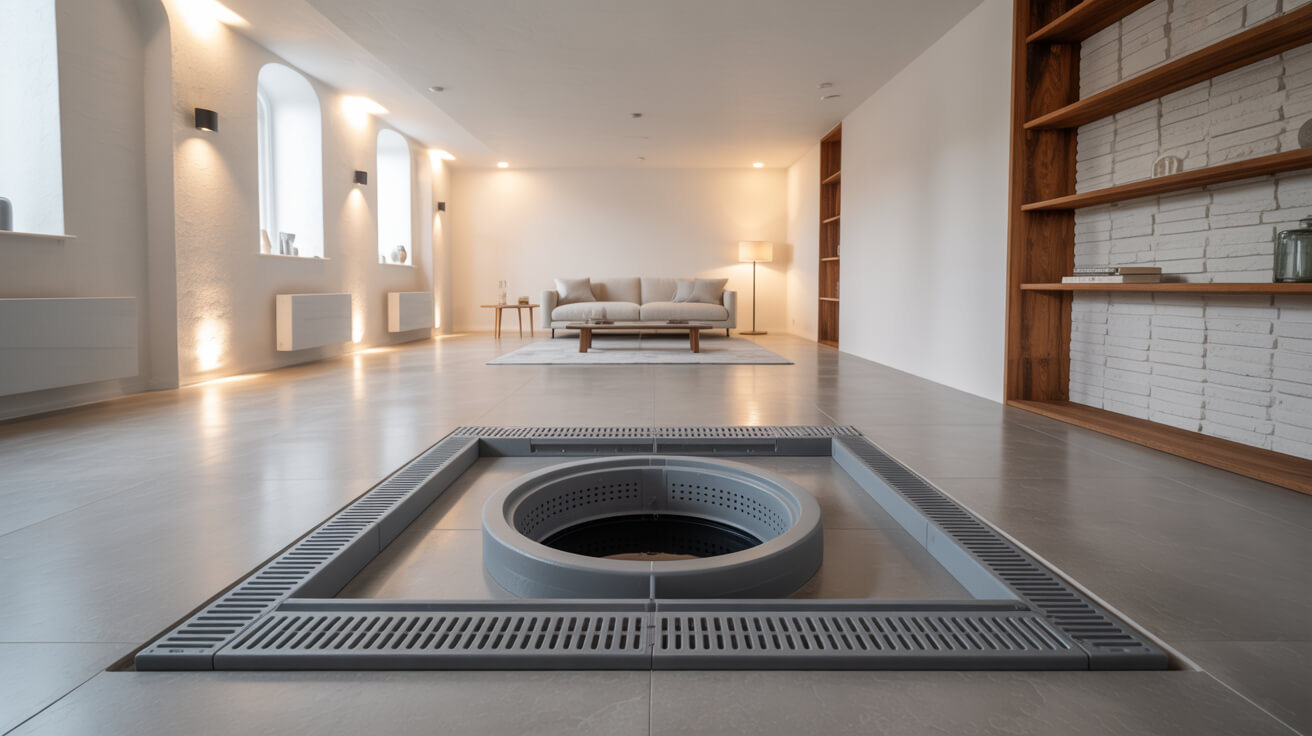
No system—however advanced—can defy entropy without intelligent care. Maintenance isn’t a “nice to have”; it’s the deciding factor between smooth, cost-efficient use and catastrophic, event-driven expense.
What Schedules and Actions Secure Peak System Operation?
At a minimum:
- Servicing by qualified technicians at least once per year
- Visual checks on inspection ports at intervals defined by risk profile (high-occupancy, high-value, mixed-use means more checks)
- Timely filter, pump, and battery backup checks, all digitally logged
If you operate a managed portfolio or a high-value site, expect more frequent checks, often tied to insurance and warranty terms.
Maintenance Responsibilities Table
| Responsibility | Owner | Frequency | Documentation |
|---|---|---|---|
| Annual Service | Technical team | Annually | Service signed-off |
| Port Inspection | Site manager | Bi-annual | Log sheet |
| Emergency Drills | Landlord/Agent | Ad hoc/monthly | Alert log |
| Remote Alarm Check | Third party | Quarterly | System dashboard |
How Does Proactive Maintenance Pay Off Long-Term?
Small investments in regular care return multiples in reduced emergency callouts, full insurance compliance, and long-term system viability. Lapses are always discovered—but on someone else’s timeline, not yours.
Sussex Damp Experts ensure you maintain maximum cover and operational stability from day one.
Can Floor Drainage Be Customised for Heritage, Complex or Non-Standard Properties?

Not all properties fit a template. Whether you’re fighting the limitations of listed building status, facing unusual geometry, or operating at commercial scale, custom strategies keep you compliant while maximising property value.
What Approaches Work for Unique Spaces or Regulatory Scenarios?
- Use reversible installation methods where heritage or substrate risk is high—no fabric harm, full future removal if needed.
- Deploy hybrid systems (gravity + pump) for multi-zone, split-level, or complex layouts.
- Incorporate ultra-low-profile membranes and channels for failed headroom, visual impact, or bottleneck access.
Custom Solutions Comparison Table
| Challenge | Standard Fix | Custom/Heritage Solution |
|---|---|---|
| Listed Building Status | Not allowed | Removable membranes, port-mapping |
| Fragmented, Multi-level Basement | Single sump, fails | Multiple zones, hybrid config |
| Commercial Storage, High Load | Generic channel | Reinforced, traffic-resistant channel |
When Should You Seek Expert Consultation?
If the answer to either of these is “yes,” book a specialist:
- Are you governed by conservation, letting, or commercial standards?
- Do you have more than one owner or user? Complex layout? No previous compliance doc?
Sussex Damp Experts custom-design and manage the planning, compliance, and instal journey, ensuring no one is left vulnerable.
Book Your Free Compliance Consultation with Sussex Damp Experts
Every property has a story, but only those committed to compliance and proactive care can ensure a happy ending. Whether you’re a residential owner, commercial operator, landlord, or property manager, now is the moment to set a new standard for watertight, audit-ready resilience.
Sussex Damp Experts stand ready to provide more than just expertise. You gain a strategic partner—one who works alongside you from initial mapping through ongoing care, ensuring that every stakeholder—buyers, tenants, auditors, insurers—sees your property for exactly what it is: protected, future-ready, and managed with local mastery.
Unlock tomorrow’s confidence. Take action now and ensure your asset remains a benchmark for reliability and value.
Frequently Asked Questions
How Does a Professional Basement Floor Drainage System Actually Shield Your Property?
Every reliable basement drainage system is a silent workhorse—defending your foundation without fanfare or false comfort. Instead of letting moisture trickle through subsoil and slab, these systems actively divert water through targeted architecture: vapour-blocking membranes cloak every wall and floor; engineered channels lurk at the junctions, capturing seepage before it can pool. Critical water finds its only escape to a dedicated collection point at your basement’s lowest contour, where a sump chamber and advanced pump send it safely away—even when extreme rainfall, blocked gutters, or a rising water table put older homes under siege.
In a well-designed system, there are no lucky days—only predictable outcomes for building health and asset value.
Letting water linger—hoping next season will be drier—does nothing but subsidise decay beneath your floor. Where do you want your story to end: negotiating repairs after structural loss, or holding a certified compliance certificate and a property inspection that inspires confidence?
True basement security means water never surprises you—you’ve already anticipated its every move.
Securing your space now means your surveyor, buyer, or tenant later sees incomparably higher value, comfort, and documentation. That is how your property gains both resilience and respect.
What Specific Components Give Drainage Systems Their Edge Under Modern Building Codes?
A modern floor drainage system is a strategy expressed in hardware, not a patchwork of afterthought fixes. Begin with a studded cavity drain membrane—continuous from walls to slab, vapour-impermeable but engineered to funnel water. Installation precision matters here: seams, overlaps, and fixing must follow BS8102 to avoid hidden bypasses. At the base perimeter, preformed drainage channels map the shortest path from seepage to collection; key design is in gradient, access for flushing, and integration around columns or awkward corners.
The nerve centre is your sump chamber. Location? Always at the natural collection low. Specification? Dual, high-specification pumps with float switches and battery backup—so “wet weather” never becomes a crisis. Inspection ports mean you or your agent can check function in seconds (not after the smell begins). For heritage and listed structures, systems must be reversible and documented so you pass both regulator and conservation review.
Key Features:
- Seamless vapour-barrier membranes
- Engineered perimeter drains
- High-reliability sump chamber and pumps
- Maintenance/inspection access at mapped intervals
- Battery backup and smart alarms for continuous operation
- Full traceability logged for lenders, insurers, and future buyers
| Component | Function | Compliance Signal |
|---|---|---|
| Membrane | Vapour interception | BS8102/Heritage files |
| Perimeter channel | Drainage routing | Inspection ports |
| Sump (+dual pump) | Water removal | Alarmed Redundancy |
| Access/maintenance kit | Longevity & proof | Inspection logs |
Shortcuts in design cost little up front and everything later. That is why you need a provider dedicated to building-code mastery, like Sussex Damp Experts, who align every instal with current and upcoming compliance.
Why Does Professionally Managed Drainage Change Structural, Health, and Financial Outcomes?
Ignoring beneath-the-floor moisture is not “risk tolerance”—it is silent forfeiture of structure, safety, and liquidity. Moisture’s first sabotage is rarely dramatic: paint bubbling here, a faint musty aroma there, floorboards growing soft. Later, timbers rot, bricks crumble, and black mould thrives. Mortgage surveyors don’t send warning letters; they just devalue your property (or recommend buyers walk away). Insurers deny claims on the strength of missing logs.
Properly managed drainage systems, by contrast, set a new baseline for property reliability. You present documented protection, pass regulatory checks (such as HHSRS), and can point to a schedule of recurring maintenance, all recognised by lenders and councils.
Here’s what an investment in full drainage control delivers:
- Resilience: Endure years of climate volatility, high water tables, and neighbouring building work without loss.
- Tenant and family morale: Eliminate respiratory hazard and reputation loss.
- Operational freedom: Maintain control over rentals, sales, and extensions—the asset works for you, not against you.
Landlords, managing agents, and residential owners should see drainage not as a grudge purchase, but as a transfer of power: from nature’s sabotage to record-setting documentable performance.
Neglect is a wager you inevitably lose. Certification is a windfall you keep.
If your property matters to you, and you expect others to trust in it (family, tenants, underwriters, buyers), control of moisture is not a luxury. It is the price of sustained ownership.
What Makes the Design and Installation of a Drainage System a Test of Expertise?
Effective floor drainage is not a product—it is an applied science, and good damp repair separates skilled service from every “quick fix” hawker in the trade. True providers begin not at the tool-shop, but at your soil map and foundation plans. They walk the site, moisture metre in hand, measuring gradients, sills, and substrate. Each variable determines how your unique system is mapped: the right gradient for channels, the exact length for membrane overlaps, the watertight join at every service penetration.
High-calibre instal teams operate in three modes:
1. Site investigation: Survey, test, review conservation status, and map water pathways with precision.
2. Specification: Select every membrane, pump, access port, and alarm—a system, not a grab-bag of parts.
3. Instal and validate: Prepare, fit, test. Photograph and log every step for future audits.
4. Commission: Run pumps under simulated flood, confirm alarms, train owners, integrate maintenance schedule.
5. Lifecycle support: Hand over digital and physical logs; schedule regular checks.
“Planning for reversibility isn’t ‘belt and braces’—it’s what keeps a historic structure viable and compliant for decades to come.”
You don’t hire a single tradesman—you partner with a discipline, a standard, a network of accountability. This is what Sussex Damp Experts delivers: a system whose installation integrity is never in doubt, from blueprint to annual log.
Where Does System Layout Decide if Drainage Delivers—Or Exposes You?
Positioning is not details, it is fate: the location of every membrane, channel, and pump decides whether control is complete or a single failure awaits. Drainage never asks permission—it finds the lowest point, so your installation must anticipate and exploit that physics. Channels should form a continuous loop along all wall-floor junctions with no gap or discontinuity. Corners are not just risk—they are a guarantee of water’s attempted entry.
Sump chambers must always rest at the lowest possible grade, never “conveniently” close to a door, but precisely mapped to subfloor profile. Access points for flushing and CCTV should align with use—multi-owner buildings need scheduled map access, not just hope.
The gold standard? Every detail is mapped, logged, and blueprinted for audit, sale, or re-planning. Compliance means your system is defendable, never needs retrofitting under negative survey, and can evolve with your building’s use over years.
Placement checklist for compliant, resilient drainage:
- Total floor and wall coverage
- Continuous channel, no blind spots
- Sumps at true (not architectural) low
- Inspection ports for every zone
- Digital and physical records for every phase
“Missing a metre in a channel is like locking your front door but leaving the window open.”
Your layout—when designed and installed by Sussex Damp Experts—defends your asset’s future better than any insurance promise.
When Does Maintenance Matter Most, and What Do Neglected Systems Actually Risk?
Every robust drainage setup is a live system, not a frozen artefact. Without clear, recurring checks, you convert today’s guarantee into tomorrow’s unplanned expense. Sediment, mineralization, construction debris, and mechanical wear all chip away at protection over time.
Professional care schedules are neither complex nor arbitrary:
- Annual check: Test pumps, flush channels, examine membranes, document compliance.
- After extreme events: Inspect post-flood, major build nearby, or alarm trigger.
- Log results: Maintain proof for insurers, tenants, and future buyers—your audit trail is your defence.
What’s at stake for neglect? Systemic failure, catastrophic loss, denied claims, regulatory citations. For managed properties, a single lapse can expose owners to reputational or legal damage; for homes, it means years of unwelcome surprises rather than quiet comfort.
A system that’s only as reliable as its last service is no protection at all.
That’s why our maintenance programmes exist: not just to “fix” but to preempt, to log, and to inoculate your property against future trouble—without exception.
How Do You Adapt Drainage for Heritage, Uncommon, or Complex Properties?
It’s easy to believe some buildings “just can’t be protected”—especially if you’ve heard it from those who profit from uncertainty. In reality, even the most delicate heritage foundation or the oddest architectural maze can host world-class drainage if design is specific, documentation is diligent, and installers embrace modern, reversible methodology.
- Listed/heritage sites: Membranes and channels installed without damage; full removal possible. Our method is council and conservation officer endorsed.
- Multi-level or complex space: Hybrid gravity/pump layouts, zone-by-zone channelling, and digital mapping maximise coverage and minimise disruption.
- Heavy industry or storage: Reinforced systems, high-throughput pumps, anti-backflow tech—all mapped for operational resilience.
Every unique site is a solvable equation. The limiting factor is not historic fabric—it is expertise. By consulting early and working with proven conservation specialists, your property can remain protected, valuable, and regulation-ready for decades.
Every structure can be preserved. The real skill isn’t in the materials—it’s in the design discipline and desire for proof.
Select your partners for their willingness to document, adapt, and stand behind their work—and earn both regulatory and market confidence in return.

