
 By
By  January 26, 2023


The Hidden Dangers of Dry Rot: Why Treatment is Essential
Every unnoticed area of decay in your property raises the question: what’s happening out of sight that could reshape tomorrow’s costs, safety, and value? Dry rot is not an inconvenience—it’s a hidden force undermining timber, eroding physical integrity, and derailing plans for homeowners and property professionals alike. Small visual cues—peeling paint, subtle odours, soft floorboards, and other wet floorboards causes—often precede deep structural risk.
Could your property’s health be on the line?
Dry rot, caused by Serpula lacrymans, can quietly devastate subfloors, joists, and walls, especially where moisture control is absent or maintenance is reactive. Statistics from damp proofing industry audits show that otherwise sound buildings have failed pre-sale surveys due to undiagnosed fungal damage, sometimes resulting in value drops of 10–25% or delays lasting months.
Property value isn’t lost when the rot appears—it’s lost the moment you overlook what’s happening in your floors and walls.
What signals demand early intervention?
- Mortgage providers increasingly demand certified dry rot surveys before final underwriting.
- Insurance exclusions for structural decay rest on timely diagnosis and proof of action.
- Tenants and residents hold landlords legally responsible for unseen hazards, with housing standards frameworks (HHSRS) escalating simple complaints into actionable cases.
- For heritage and commercial stakeholders, regulatory breaches tied to uncontrolled timber decay result in expensive enforcement and reputational risk.
Integrated damp proofing strategies, such as those deployed by Sussex Damp Experts, combine advanced detection, documented compliance, and warranty-backed reassurance—giving your assets an edge from first inspection.
What Environmental and Structural Factors Accelerate Outbreaks?

Dry rot thrives where moisture meets inattention. Its onset follows failures in water management, ventilation, and substrate compatibility. While some assume only “old houses” are at risk, data shows modern extensions and conversions are equally susceptible—especially where new meets old or building envelopes are altered without holistic moisture control.
Where do moisture and decay hide in modern and heritage properties?
Key risk zones include:
- Suspended timber floors, crawlspaces, and unventilated voids
- Continuity breaks in damp-proof courses (DPCs) or where bridging has occurred
- Junctions between additions/older structures
- Roof valleys, valleys, and parapets with recurring leaks
Heritage or listed buildings compound these risks as compliance barriers prevent modern tanking or chemical DPCs; these sites require tailored, breathable damp proofing and deep understanding of conservation law.
Table: High-Risk Property Zones for Dry Rot
| Area | Common Fault | Risk Driver | Diagnostic Priority |
|---|---|---|---|
| Suspended floors | Blocked air bricks | Trapped humidity | High |
| Cellars/basements | Absent tanking/DPC | Perpetual damp | High |
| Rooftop extensions | Poor drainage link | Water ingress, leaks | Moderate-High |
Why does dry rot break out even with “good maintenance”?
Dry rot’s lifecycle exploits micro-failures—hairline cracks, flawed insulation, or misaligned retrofits—turning minor oversights into costly repair events. Retrofitted insulation or underfloor heating that wasn’t paired with improved airflow worsens hidden condensation, leading to ideal fungal growth conditions.
Our asset-mapped surveys identify these pressure points, enabling you to target future faults before they emerge.
How Does Dry Rot Cause Structural, Health, and Legal Crises?

Unchecked dry rot undermines more than physical timbers—it degrades the very certainty that underpins property ownership and management. Collapse is not the result of sudden disaster, but of silent, cumulative loss behind walls, beneath carpets, or in unvisited corners. Each unnoticed outbreak chips away at load-bearing capacity, undermines insurability, and opens the door to tenant health complaints.
How does undiagnosed timber decay undermine confidence—and budgets?
- Early decay often presents as soft, sagging floors, sticking doors, or subtle discoloration of skirting and joists.
- Mycelium and spores migrate through brick and plaster, moving beyond the original source—risk amplifies with each month of inaction.
- Mould and airborne spores silently compromise air quality, increasing health risks for children and vulnerable adults.
- Regulatory standards (HHSRS, BS6576) and insurance policies are explicit: failure to act on visible risk begets liability.
Failures aren’t explained by surface damage. They’re measured in loss of structural certainty, compliance standing, or family safety.
Legal consequences and avoidable outages
Portfolio managers and letting agents face severe cost escalation not only from repair work but from regulatory enforcement—rent repayment orders, fines, or forced renovations. For sellers or buyers, a flagged survey can stall transactions indefinitely, while mortgage lenders refuse funds on properties with active, untreated dry rot.
Deploy prevention and compliance as a defence—not an afterthought—using certified asset mapping and damp proofing insight that protects both people and property.
Why Is Professional Diagnosis Needed for Permanent Remediation?

Home remedies and generic repairs miss the systemic complexity of dry rot. While DIY fixes promise speed and low cost, they routinely push rot deeper, making future repairs disruptive and expensive. Industry-accredited specialists bring decisiveness and precision—identifying invisible spread, confirming causation, and issuing reports that stand up to insurance audits and lender scrutiny.
What sets a certified survey apart from “handyman” fixes?
- PCA and TrustMark professionals use invasive and non-invasive diagnostics—thermal imaging, borescope inspection, calibrated moisture readings, and salt analysis.
- Accredited inspections result in reports accepted for mortgage, compliance, and resale by financial and regulatory institutions.
- Aftercare includes scheduled moisture monitoring, ongoing compliance documentation, and transferrable guarantees—impossible to replicate with one-off, unverified repairs.
Common home remedy failures and their real costs
| DIY Approach | Problem Overlooked | Recurrence Risk | Cost Escalation Factor |
|---|---|---|---|
| Surface cleaning | Does not penetrate timber/substrate | High | Compounds with every cycle |
| Ventilation only | Misses trapped damp in voids | Moderate | Issue migrates unseen |
| Chemical sprays | No spread mapping/compliance proof | Extreme | Can void warranty, insurance |
Initial cost savings become long-term liabilities, especially when documentation is needed for compliance or insurance.
Your properties deserve engineered, compliant, and thoroughly documented protection from decay, delivered by expert teams who stand behind every report and remedial action.
Where Can Dry Rot Go Undetected Until It’s Too Late?
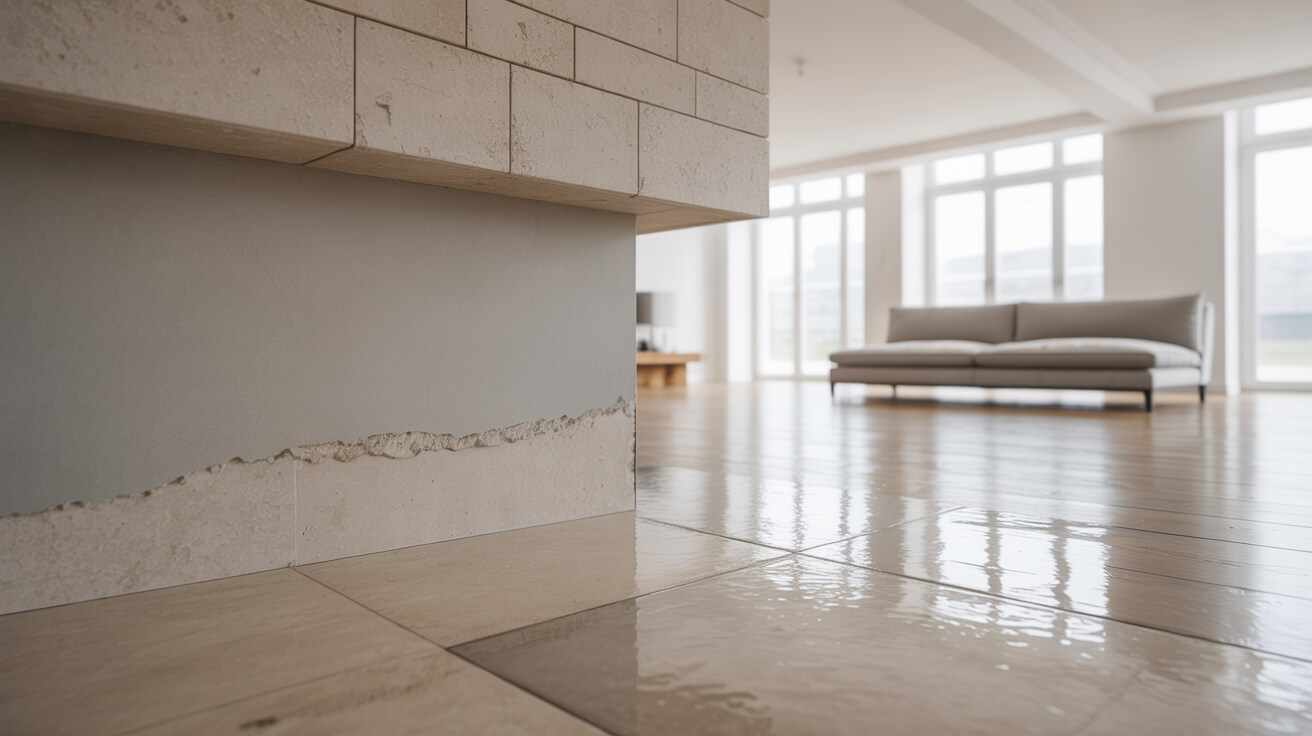
Dry rot’s stealth is its most formidable weapon. Traditional building layouts, modern add-ons, and even well-intentioned refurbishments can create voids and channels where decay runs unchecked. Shared walls, floors, or communal spaces multiply these risks, leading to complex disputes and shared cost cycles.
Which property features most often conceal outbreaks?
- Partitioned crawlspaces obscured during building upgrades
- Encapsulated insulation layers (retrofit or historic)
- Unventilated subfloors and attic timbers in heritage settings
- Complicated renovations creating new voids and moisture traps
Failure to schedule regular, forensic-grade damp surveys creates an open door for silent, systemic decay.
The portfolio manager’s paradox: risk multiplies as properties scale
Managing five, fifteen, or fifty residential or commercial units means the chance of undetected decay rises with every new wall and floor added. Insurance claims falter when evidence of ongoing monitoring is absent; communal disputes compound as the source of infection is debated by contractors, agents, and leaseholders.
A single unchecked crawlspace can make a safe portfolio a liability overnight.
Choose a forensic inspection approach that turns hidden risk into mapped, manageable certainty—Sussex Damp Experts tailor inspection protocols to scale for portfolios as well as individual homes.
When Do Losses Multiply and Compliance Risks Escalate?

Delaying intervention is not neutral—it’s asset risk exponentialized. The lifecycle of dry rot is measured in months. DIY “monitoring” or calendar excuses allow minor outbreaks to become major liabilities, multiplying repair needs, regulatory compliance failures, and legal or financial exposure.
How does inaction convert manageable problems into systemic failures?
- Early rot (managed for low thousands) transforms into strip-out and reconstruction work (mid five figures) after 18–24 months without decisive action.
- Insurance policies may lapse or be voided entirely if failure to act is shown in claims documentation.
- Mortgage lenders may refuse to release final funds or even cancel approvals upon surveyor discovery of decay, freezing transactions.
- For leaseholders, block managers, or owners, delayed response can result in enforced remedial timelines, legal penalties, or shared works cost recovery.
Dry Rot Delay Risk Table
| Delay Duration | Typical Discovery | Average Cost Multiplier | Secondary Risk |
|---|---|---|---|
| 0–6 months | Localised timber loss | 1–1.3x | Minimal |
| 6–18 months | Partial floor fail | 2–3x | Insurance exclusion |
| 18–24+ months | Multiple rooms/zones | 5–8x | Mortgage block |
In property compliance and asset health, time is a cost amplifier.
Asset managers, landlords, and professionals turn certainty into resilience by anchoring decisions in early, expert-grade diagnostics and timely, warranty-carrying intervention.
Can Modern Remediation Deliver Lasting Security and Regulatory Compliance?

Permanent protection is built on certification, legal resilience, and proactive aftercare. Repair without compliance reads as guesswork; repair plus inspection equals asset future-protection.
What defines a lasting remediation?
- PCA or TrustMark certification proves the work was carried out to industry consensus, ensuring insurance and mortgage compliance.
- Stepwise, transferable warranty structures (10–20 years standard) reflect confidence in method and material.
- Aftercare includes scheduled inspections, digital moisture logbooks, and guarantee recertification—vital for portfolio operators, high-value clients, and compliance-focused owners.
- Methodologies are adapted to heritage, listed, or modern multi-unit sites to ensure conservation or regulatory mandates are never breached.
Table: Certified Remediation Features vs. Non-Specialist Repair
| Feature | Non-Specialist | Sussex Damp Experts |
|---|---|---|
| PCA/TrustMark Cert. | No | Yes |
| Warranty Transferable | No | Yes |
| Legal/Regulatory Report | No | Yes |
| Heritage Adaptation | Rarely | Yes |
Regular, transparent reporting and digital aftercare tools ensure your compliance, insurance eligibility, and peace of mind for the long run.
Move beyond “just repair”—insist on futureproof asset protection from Sussex Damp Experts, so you’re never explaining a failure to a lender, tenant, or buyer again.
Your Action Plan: Secure Your Property Now
There are two paths: await the first sign of collapse, or act while the damage is still invisible, manageable, and cost-contained. Sussex Damp Experts’ accredited inspection and treatment packages are engineered for your risk profile—single homeowners, portfolio managers, listed building custodians, and commercial property stakeholders all find certainty within our precision protocols.
Why decisive action wins
- Personalised, risk-calibrated assessment maps your building’s unique vulnerabilities.
- Each service includes a clear, stepwise restoration and compliance roadmap.
- Full documentation supports your financial, insurance, and regulatory needs.
- Ongoing aftercare ensures warranty value and compliance continuity—removing future stress from your priorities.
To secure your building, protect your status as a responsible asset owner, and anchor your property’s resilience for years to come, follow your best instincts: choose expert intervention. Sussex Damp Experts’ systems stand invisible when all goes well—but you’ll know the difference the first time it counts.
The decisive owners aren’t the ones with the least risk—they’re the ones who act before it multiplies.
Frequently Asked Questions
What Makes Dry Rot Such a Hidden and Escalating Danger for Your Property?
Dry rot quietly undermines your building’s strength, value, and safety while you focus on life above the floorboards. Unlike most home maintenance issues, dry rot doesn’t advertise its presence—its spore-laden strands expand behind walls, beneath skirting, or inside floor cavities, feasting on timber long before you notice anything is wrong. One overlooked patch of damp can start this decay, which ripples through your asset with shocking speed as the wood’s core is reduced to brittle, hollowed waste.
The Structural Risks You Don’t See
- Subtle warping, crumbling skirting, or windows that suddenly stick are often surface warnings of widespread compromise underneath.
- Dry rot can leap structural gaps by traversing mortar and brick, affecting areas never directly exposed to moisture.
Mortgage lenders, surveyors, and insurance agents now view dry rot as a trigger for delayed transactions or policy exclusions, especially when warning signs such as wet floorboards causes remain unclear. Your role isn’t to second-guess the threat—it’s to stay ahead with deep detection, transforming blind spots into a mapped, manageable asset. This is how you turn a potential loss into reputational and financial resilience.
Housing teams, asset managers, and individual property owners alike all face one unavoidable truth: even one outbreak left unchallenged can sabotage not just the building, but your planning, rental yields, or exit strategy. You don’t need perfect knowledge to act decisively—you need a system that surfaces every risk before it multiplies.
Where Does Dry Rot Begin, and Why Are Seemingly Safe Properties Still Exposed?
The single biggest misconception about dry rot is that it’s exclusive to “old, damp” buildings—it isn’t. Modern renovations and new builds see outbreaks too, especially where insulation, retrofits, or hybrid wall junctions trap condensation near untreated timbers. It ignites wherever persistent moisture combines with poor ventilation and organic material, whether from leaking pipes, blocked gutters, bridged damp-proof courses, or even defective window installations.
Unexpected Risk Zones
- Subfloors above crawl spaces, basements, or cellars
- Roof valleys, parapet flashings, and gutter junctions
- Internal voids created by partition walls or 1970s conversions
Critical for heritage property owners: most chemical treatments and tanking methods are legally restricted, and traditional lime-plaster constructions serve as both shield and vector. Allowing a non-specialist to “patch” rot in these environments can unleash regulatory nightmares, destroy historical fabric, and trigger prosecution or grant clawbacks.
Your first level of security is to map these high-risk nodes through targeted substrate moisture diagnostics—our moisture control and damp proofing programmes not only identify, but actively neutralise hidden vulnerabilities. Effective risk management isn’t about reacting to visible damage but predicting the exact points where it will start.
Why Are Home Remedies or Patch Repairs So Unreliable in Eradicating Dry Rot?
Relying on DIY advice or quick cosmetic repairs is like painting over a structural crack—you briefly mask symptoms while weakening your asset’s real resistance. Dry rot’s complexity defeats most off-the-shelf fungicides and “ventilate and wait” approaches. Home remedies do not trace mycelium along joist ends, behind insulation, or through bridging plaster. Each overlooked strand remains an active source for fresh outbreaks, and may even drive rot deeper into load-bearing zones.
The Proof in Professional Diagnosis
- Accredited surveyors apply tools like thermal imaging, salt profile mapping, and borescope inspections that reveal both surface and hidden decay.
- Certified reporting (compliant with BS6576, TrustMark, PCA) is frequently required to legitimise insurance and mortgage claims.
Perhaps most persuasive: if a failed repair or delayed diagnosis shows up on an asset management log or tenant complaint, the ensuing costs go beyond immediate remediation. Legal claims, rent reductions, or failed refinancing can leave owners picking up a tab far greater than the original threat. The hallmark of effective intervention isn’t a fast fix—it’s a visible, documented chain of prevention and aftercare that stands up to audit, resale, or historic preservation oversight.
This is why a Sussex Damp Experts survey isn’t just peace of mind—it’s operational proof that your choices are legally, financially, and reputationally defensible.
What Happens If Dry Rot Is Left Untreated? (And Why Does the Timeline Matter So Much?)
Unchecked dry rot breaks audit trails and unravels future plans. A single missed outbreak rapidly advances from cosmetic inconvenience to catastrophic decay. Timbers lose bearing capacity, subfloors warp, possessions and coverings rot, and the underlying value of the property sinks at an accelerating curve.
Consequences Beyond the Immediate Damage
- Health risks: Dry rot spores contribute to poor indoor air quality, increasing allergies and respiratory issues for tenants, owners, or staff.
- Compliance and insurance: Many policies explicitly exclude payout for decay arising from “negligence or deferred maintenance”—and surveyor reports that list untreated infestation can freeze refinancing or buyer confidence.
- Cost escalation: Repairing structural collapse, replacing heritage material, or rehousing tenants means costs spiral far beyond that of early, expert-led remediation.
| Delay Period | Average Cost Increase | Common Regulatory Consequence |
|---|---|---|
| 0–6 months | 1–1.2x | Minimal (manageable with repairs) |
| 6–18 months | 1.5–3x | Possible insurance exclusion |
| 18 months to 2+ years | 4x or more | Compulsory order/legal exposure |
Your decision window is shorter than you think—by the time visual cues appear, structural and legal issues are already advancing. Every week of delay is not buying “peace of mind”; it’s multiplying risk vectors and stripping away defensive options.
Where Does Dry Rot Hide and How Does It Spread Across Building Types?
Dry rot does not respect boundaries. It invades space beneath new floors or behind decorative finishes as easily as it does heritage beams or period joists. Modern, listed, and commercial buildings each present their own traps:
- Modern developments: Joists and OSB subfloors, installed in haste or without moisture control, may harbour fungus beneath pristine laminate for months.
- Heritage/Listed sites: Original timbers or wall plates, shielded from view by conservation dictates or internal insulation, lie especially exposed.
- Portfolio/Block Managed: Interconnected voids allow outbreaks to cross party walls, implicating multiple assets and rights-holders.
Adding to the challenge, property managers face increased dispute risk from co-owners or tenants when decay crosses into shared spaces. Proper monitoring—using annual substrate scans, documented moisture mapping, and scheduled expert review—turns potential liabilities into a mapped, defensible status. For asset-heavy owners and block managers, this is the only way to control long-term outcomes and sustain asset value under scrutiny.
You earn status as a responsible stakeholder, not by hoping problems won’t appear, but by proving that nothing is lurking beyond your audit horizon.
How Does Professional Damp Proofing Offer Assurance and Compliance That Endures?
The decisive difference between piecemeal repairs and engineered protection is the after-action layer—warrantied, certified, and ready to withstand audit or transaction. Professional damp proofing is much more than chemical barriers or patch fixes: it is a system that integrates scientific diagnosis, evidence-based repair, and perpetual aftercare. Every asset is reinforced with documentation ready for insurer, surveyor, or compliance check.
Proof Layers That Stand Up to Scrutiny
- Certification: PCA, TrustMark, and BS6576 reports back your operational decisions and protect asset value by enabling future sales or policy renewals.
- Transferable warranty: Years-long, insurance-backed guarantees give your stakeholders confidence—whether that’s a family inheritance, tenant safety, or regulatory sign-off on a housing association’s compliance programme.
- Ongoing support: Annual monitoring, digital logs, and proactive follow-up catch future risk before it starts, sustaining your leadership, not just your building.
| Feature | DIY/Non-Specialist | Sussex Damp Experts |
|---|---|---|
| Certified inspection | Rare | Always |
| Legal/insurance proof | Unlikely | Guaranteed |
| Heritage readiness | Uncompliant | Sympathetic |
| Warranty duration | Limited/void | 10+ years standard |
| Proactive aftercare | N/A | Digital/logbook |
The only way to protect—and project—your role as a futureproof property owner or professional is to insist on compliance-oriented, audit-proven damp surveys and repairs. This signals to peers, lenders, and competitors alike that you do not simply react to problems—you anticipate, neutralise, and control them.

