
 By
By  December 28, 2022


Identifying Dry Rot: Critical Signs, Symptoms, and Early Detection
Dry rot undermines more than timber in a building—it challenges your command over value retention, safety, and compliance. This guide provides the practical insight you need to recognise Dry Rot from its early warning signs, act promptly, and restore authority over your property. Whether you own a family home, heritage residence, or manage multi-unit investments, immediate awareness of warning signs saves budgets, preserves assets, and protects reputations.
Distinguishing Dry Rot from Ordinary Deterioration
Dry rot is triggered by a specialised fungus, Serpula lacrymans, capable of transforming once-solid timber into a brittle shell. Distinguishing Dry Rot from ordinary damp patches or benign mould matters because it typically develops out of sight. By the time it is visible, remediation costs often dwarf those for proactive intervention. Early identification separates vigilant property stewards from those exposed to compounding losses and regulatory headaches.
Initial Clues That Should Not Be Ignored
- A persistent, earthy or mushroom scent that lingers.
- White or grey ‘cotton wool’ mycelium on hidden timbers.
- Timber that peels, splits in blocky patterns, or collapses on gentle pressure.
- Warped or springy floors, misaligned doors, crumbling skirting.
- Orange-red pancake-like ‘fruiting bodies’ pushing through paint or plaster.
- Bubbling, flaking, or detached decorative finishes.
- Hidden dampness, often without clear leaks.
Why Quick Recognition Delivers Real Savings
Addressing dry rot early will help you:
- Halt damage escalation before it threatens structure or safety.
- Avoid surprise costs during mortgage or insurance surveys.
- Maintain tenant satisfaction and regulatory standing.
Should any of these symptoms appear in your property, consult a moisture diagnostics professional trained in regulatory compliance (BS6576, PAS2035). Early review transforms risk into resilience.
What Enables Dry Rot to Flourish in Buildings?

True asset protection means not just reacting to threats, but understanding the invisible mechanics that allow them to thrive. Dry rot only requires a subtle combination of excess moisture, unavailable airflow, and overlooked detail to gain hold.
Underlying Factors That Feed Fungal Aggression
- Persistent humidity: Subfloor moisture above 20%, often from leaks or ground contact.
- Interrupted or bridged damp proof courses: Especially common after renovations or external work.
- Blocked air bricks or compromised ventilation: A silent risk in heritage buildings or after insulation upgrades.
- Legacy materials: Timber or lime-based masonry with organic matter retained from construction.
- Recurring leaks or condensation in hidden voids: Behind kitchens, bathrooms, or attics.
Moisture’s role is always the same: Enabler, not culprit. Prevention means seeing these patterns before rot announces itself.
Modern Versus Heritage Building Vulnerabilities
| Building Type | Unique Risk Factors | Prevention Focus |
|---|---|---|
| Modern Homes | Thermal bridging, trapped insulation condensation | Regular HVAC, DPC review |
| Heritage Houses | Lime/masonry breathability problems, old repairs | Specialist survey, airflow |
| Multi-Unit Blocks | Shared voids, inter-property water bridges | Coordinated inspections |
| Commercial Premises | High-load floor risk, operational humidity | Scheduled site audits |
Scenario: When Risk Hides Behind Compliance
A letting agent assumes damp was solved after “replaster and paint.” A year later, a routine HHSRS check finds major decay—attributable to a missed subfloor damp bridge. Inaction triggered a compliance investigation and five-figure repair costs.
Where Should Dry Rot Inspection Start for Maximum Risk Reduction?

Avoiding invisible losses means aiming inspections at the true origin points of risk—not just the obvious.
High-Frequency Risk Zones Demanding Regular Checks
- Under suspended timber floors.
- In and behind skirting, architraves, and sills.
- Loft, attic, roof voids—especially near tank supports.
- Basements and crawl spaces with legacy timber contact.
- Kitchens and bathrooms where moisture clouds ventilation.
- Recently renovated or heavily insulated areas.
Creating a Self-Managed Inspection Workflow
- Record prior water events, leaks, or repairs—even several years back.
- Schedule annual (residential) or quarterly (multi-unit/commercial) crawl-throughs targeting the above areas.
- Utilise a basic moisture metre for at-risk timber. Look for readings consistently above 18-20%.
- Document signs, and review with a compliance-trained specialist if thresholds are breached.
- For heritage or listed assets, seek professionals familiar with substrate interactions unique to older constructions.
A gap in your inspection log is an open gate for tomorrow’s compliance failure.
Inspection Red Flags Table
| Area | Symptom/Warning Sign | Next Action |
|---|---|---|
| Floor voids | Bouncy, musty, cracked timber | Moisture test |
| Skirting & joinery | Flaking paint, misalignment, odour | Probe for decay |
| Attic/roof | Sag/infestation, wet insulation | Survey surveyor |
| Basement | White bloom, visible rotting, odour | Full survey |
| Bath/kitchen voids | Warping, untraceable odours | Moisture scan |
How to Recognise Definite and Subtle Signs of Dry Rot?
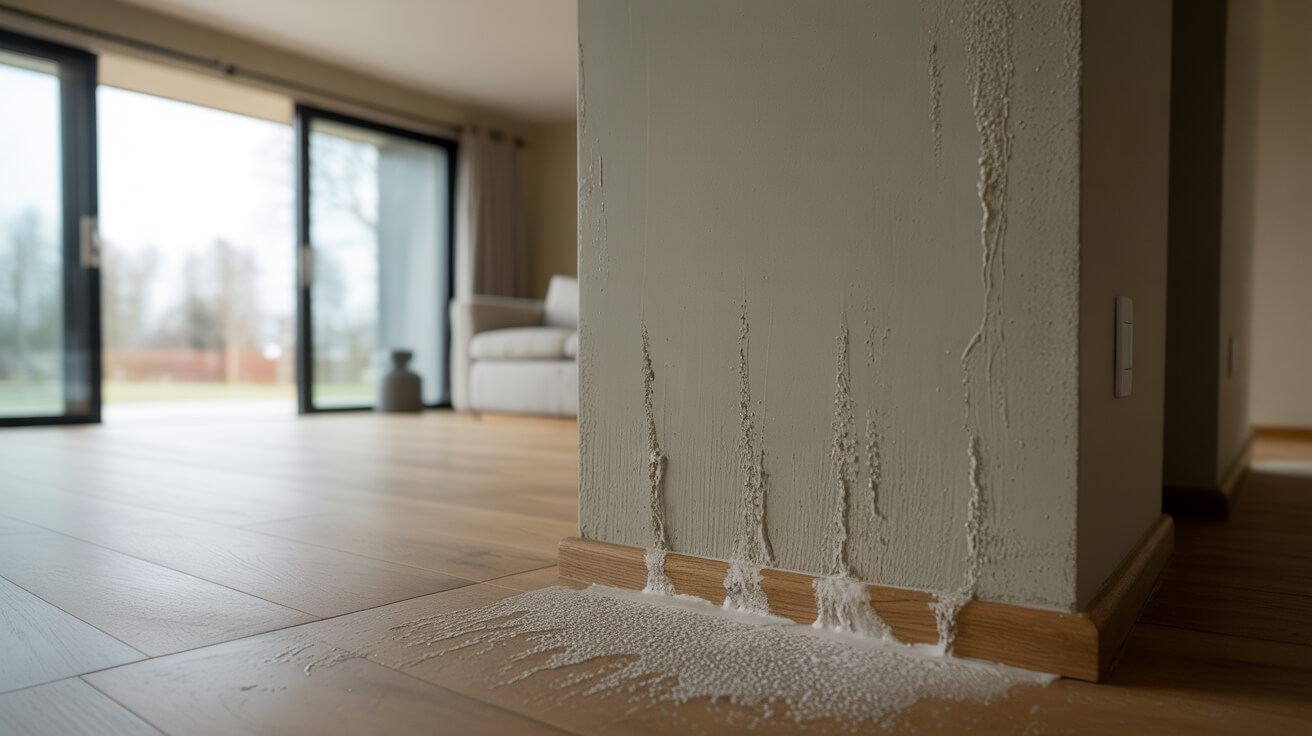
Dry rot’s stealth is its advantage. Knowing what to look for—beyond the obvious—keeps you in control.
The Visual-Sensory Profile of Active Decay
- Dense white mycelium: —spreads between wood and masonry, looks like stretched wool.
- Irregular ‘cuboid’ cracks: Timber splitting in right angles, often with bright orange stains.
- Sinking, spongy floorboards or steps: Rapid integrity loss, doesn’t recover after drying.
- Red-orange ‘fruiting bodies’: Pancake-like, often emerges overnight, tinges surrounding surfaces.
- Unmistakable odour: Not merely damp; sweet, earthy, ‘cellar’ note, can emerge in warmth or wet.
Secondary Signs and Common Confusions
- Mould is surface-only, powdery or spotty—rarely produces cuboid cracking.:
- Wet rot retains moisture, but timber bends rather than crumbles.:
- No warping or hollow sound? Likely not dry rot—but vigilance is wise.:
Table: Dry Rot vs Wet Rot vs Mould
| Sign/Clue | Dry Rot | Wet Rot | Mould |
|---|---|---|---|
| Mycelium present | Yes | Rare/No | No |
| Cuboid cracking | Yes | No | No |
| Odour | Mushroom/sweet | Musty/earthy | Earthy |
| Paint peel | Blistering | Swelling | Sporadic |
| Fruiting body | Common | Very rare | Never |
Self-Check: When to Escalate to a Professional
If you see mycelium, fruiting bodies, cuboid cracking, or have persistent musty odour after dry conditions, photograph affected areas and contact a surveyor specialising in moisture diagnostics, not just cosmetic repair. Rapid intervention transforms potential disaster into controllable cost.
It isn’t the wall you see, but the health of what you cannot, that decides long-term safety.
How Do Proven Dry Rot Diagnostic Methods Ensure Accuracy and Compliance?

Surface appearances are never the whole story. Legal standards and insurer requirements now demand precise, unbiased evidence—a step beyond “experience” or visual checks.
Diagnostic Pathways: DIY vs Professional
DIY Efforts:
- Buy a basic pinless moisture metre; scan suspect timbers.
- Check for hollow or sharp changes in floor feeling.
- Use a handheld probe to press affected areas—surface crumble or softness signals high risk.
Professional Surveyor Methods:
- Certified survey devices: Thermal imaging finds cold-bridges behind walls that breed decay.
- Salt tests: Distinguish between rising, penetrating damp, and condensation triggers.
- Borescope/endoscope: Cameras probe deep into voids for unseen rot advance.
- BS6576 & PAS2035: Full regulatory framework; supports claims, legal action, and compliance.
Compliance Snapshot Table
| Tool/Method | Use Case | Insurer/Lender Status |
|---|---|---|
| Moisture metre | Initial screening, DIY | Informal |
| Thermal imaging | Hidden void checks | Advisory |
| BS6576 survey report | Insurance, refinance, litigation | Required |
| Salt/borescope | Root cause, heritage diagnosis | Required (heritage) |
Proof Scenario
A homebuyer’s report flags possible historic damp; a BS6576-registered specialist reviews, delivers a compliance-ready diagnosis, and the buyer not only closes the deal, but also receives a lower insurance premium due to the documented evidence trail.
In the new compliance era, evidence always outruns assumption.
Why Can Delaying Action on Dry Rot Trigger Major Financial, Structural, and Legal Risks?
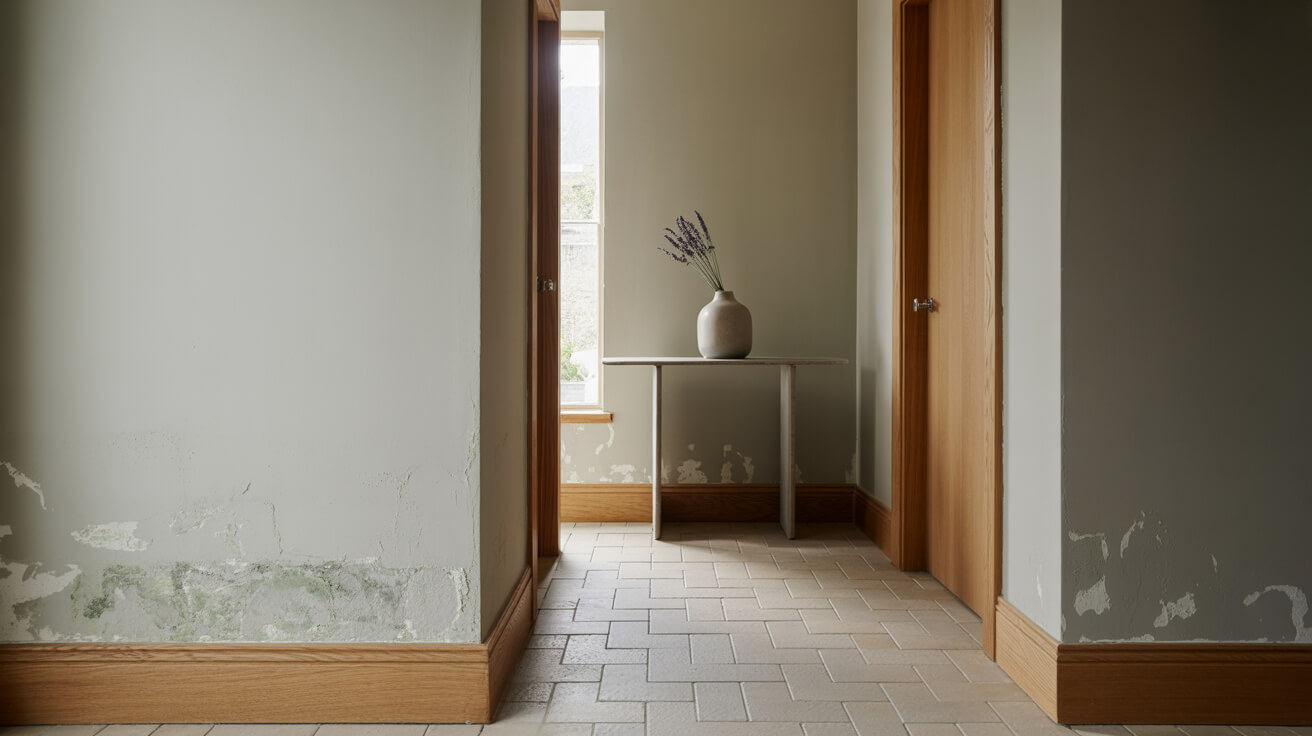
The price for inaction is never just the cost of repair. Most real-world losses pile up quietly: market value, tenant trust, and insurability dwindle as rot expands.
True Cost Progression—What Delay Actually Means
- First missed symptom: repair cost rises 20% every fortnight in active conditions.
- Sale at risk: mortgage refusals near-certain on “visible decay” reports.
- Insurer exclusions: late identification voids “sudden event” cover.
- Tenancy default: HHSRS, Environmental Health risk fines.
| Delay Stage | Typical Loss or Penalty |
|---|---|
| Cosmetic patch only | £2k–£8k rework within 12 months |
| Survey delay | £12k insurance gap, £5k market loss |
| Regulatory exposure | Fines, enforced vacancy, legal risk |
It’s never the single issue—it’s the silent chain of escalation that topples unguarded portfolios.
Proactive Action Beats Reactive Repair
Swift, specialist-led diagnosis and fully-documented remediation protect not just the building, but your capital, market mobility, and operational sanity. For every week of hesitation, opportunity costs multiply.
How Can Long-Term Dry Rot Prevention and Futureproofing Strategies Be Applied?

Control means no longer depending on luck. Prevention is structured protection—routine, non-negotiable, and measurable.
Ongoing Protection in Practice
Annual/Seasonal Checklist for All Properties
- Full gutter/downpipe flush.
- Moisture scan of all historic timber contact points.
- Air brick, vent, and insulation slot review.
- Updated maintenance log—archive with building docs.
- Scheduled professional survey every 18–24 months; more frequent in heritage/multi-unit.
DIY vs Pro: Setting Limits, Protecting Value
Homeowners: DIY checks and log updates can mitigate surface risks.
Landlords/Managers: Scheduled professional documentation required for compliance, claims, and funding.
Heritage: Seek conservation-accredited surveyors with PAS2035/BS6576 expertise.
Downloadable Prevention Log [Sample Headings]
| Inspection Point | Date | Findings | Action Taken | Follow-up Needed |
|---|---|---|---|---|
| Guttering | ||||
| Subfloor moisture | ||||
| Ventilated voids | ||||
| Maintenance record |
Prevention isn’t a one-off—it’s your yearly statement of property leadership.
Book Your Free Dry Rot Consultation With Sussex Damp Experts
Lasting asset protection is within reach. Whether you’re reacting to new symptoms, safeguarding investment for tenants, or maintaining a heritage asset for a new generation, rapid expert action defines decisive leadership.
Sussex Damp Experts deliver:
- PCA-accredited surveys and repairs—BS6576 and heritage standard compliant.
- Responsive, zero-obligation consultations for risk, compliance, or restoration planning.
- End-to-end documentation supporting insurance, regulatory, and grant/funding claims.
Restore your property’s status and stabilise future value. Take the step that signals to lenders, insurers, and your own standards that you put stewardship first.
Be recognised as the owner, manager, or agent who stays ahead of decay, secures your investment, and leaves nothing to chance.
Frequently Asked Questions
What are the earliest warning signs that dry rot or damp is taking hold in your property?
Dry rot rarely starts with drama; it announces itself through discomfort, subtle visual changes, and a sense that something is wrong beneath the surface. When you notice a musty, sweet odour lingering in a specific room, or paint blistering above skirting boards with no clear cause, the need for a Rot Consultation With Sussex becomes more apparent, as your property may be signalling a hidden threat. If timber sounds hollow when tapped, or lines of fine cracks—what technicians call “cuboidal” fracturing—appear across window frames or floorboards, you’re beyond minor cosmetic worry: you’re seeing fungal infiltration, not just water damage.
Dry rot is a silent assailant, thriving efficiently behind drywall or under floor coverings. Owners who take note of warped wood, detached finish, or fuzzy white growth at edges are spotting the earliest Signs of trouble. If you own a period house or manage a portfolio with legacy buildings, be aware that heritage materials often disguise the onset for months before symptoms surface. At the first hint, the double benefit of early expert diagnosis is clear: cost minimisation and proof of preventive stewardship for insurers, lenders, and tenants. Effort invested now defends market value and long-term peace of mind by providing clarity where symptoms are often hidden.
How does unaddressed dry rot or chronic damp affect your property’s value, compliance, and insurability?
Letting dry rot remain is a slow-motion undoing of your asset’s security, credibility, and compliance posture. Mortgage surveyors are trained to scrutinise timber health, and when they uncover signs that dry rot or damp is present but untreated, they flag properties for remediation before approving a loan or allowing a sale to complete. For landlords and property managers, unresolved decay breaks the statutory duty of care, risking improvement notices or rent suspension under HHSRS and the Housing Act.
More insidiously, insurers carve out “progressive decay” and claim denials with each unchecked month. Investors and family buyers alike often realise too late that the point where damp is taking hold is also the point at which a home begins to be classed as an asset at risk—one that sheds value, scares buyers, and accumulates legal liabilities. Rapid, forensic reporting from Sussex Damp Experts supplies compliance-grade documentation and practical repair planning, restoring the status your property requires to retain its value in a competitive marketplace. A smart owner establishes a paper trail not just to fix a problem but to demonstrate enduring care and compliance to any future stakeholder.
How can you reliably distinguish dry rot from wet rot, mould, or surface damp—and why does this difference matter?
Not all timber damage is created equal, and confusing them can waste years and resources while the real problem spreads beneath the surface. Dry rot (Serpula lacrymans) rapidly destroys the core structure of wood, often travelling through masonry and hidden air voids, and does so even when surfaces look dry. Wet rot, in contrast, favours persistently soaked timber but doesn’t leap across the building fabric; it softens but rarely hollows wood. Mould, meanwhile, blooms on surfaces with high humidity but leaves the internal integrity untouched.
The key is a vigilant eye: dry rot’s cuboid cracks, pancake-shaped fruiting bodies, and a pronounced “mushroom” odour are all unique. Touch timber—if it breaks with gentle pressure or reveals a cottony, white mat beneath the surface, you’re facing dry rot, not simple damp. Only a professional survey is equipped to tell if you’re confronting isolated wet rot, extensive dry rot, or recurring ambient damp. This is where precision and evidence become non-negotiable for asset managers seeking return on investment, or for families demanding long-term refuge—Sussex Damp Experts lean on regulated diagnostic protocols, not hunches or one-size-fits-all treatments.
| Issue | Typical Symptoms (Visual/Odour) | Spread Pattern | Structural Risk | Typical Fix |
|---|---|---|---|---|
| Dry rot | Cuboid cracks, sweet odour, mycelium | Jumps across timber, masonry, air | High – hollow, breaks easily | Full survey + strip |
| Wet rot | Soft, dark, heavy odour, swelling | Localised to wet area | Moderate – bends, warps | Isolate + dry |
| Mould/damp | Musty odour, surface discolouration | Dead spots in humid areas | Low – no timber destruction | Boost air, clean |
Why do damp problems and ineffective repairs so often resurface in the same building?
Repeat damp problems are not a coincidence or “bad building luck.” They are the byproduct of short-term fixes that address symptoms but neglect the unseen causes or construction context. Painting over damp, patching plaster, or slapping in a chemical DPC treats the surface—while moisture, salts, and spores thrive below. In period or heritage buildings, incompatible modern materials trap vapour, accelerating rather than preventing fungal spread.
What breaks the cycle is a system-led, stepwise methodology: trace all moisture ingress routes, identify any ventilation blockages, assess how moisture clouds ventilation, evaluate legacy repairs, and select materials and methods suited to both your construction type and local climate. It’s not simply about “doing more”—it’s about doing what aligns with the fabric of the building and regional compliance. Sussex Damp Experts use a blend of historic sensibility and contemporary diagnostics to close the loop, providing documentation and aftercare that stops problems recurring and sets the gold standard for both compliance and peace of mind.
What documentation and standards are critical for landlords, buyers, and commercial managers tackling timber decay or damp?
The current regulatory climate demands more than receipts or contractor reports. Landlords require BS6576-compliant surveys and signed eradication certificates to meet their duty of care and pass local authority audits. Buyers can face mortgage refusals or renegotiated contracts if dry rot is reported but not repaired to regulated standards. Commercial managers, especially in portfolio roles, find insurance underwriters increasingly requesting proof of routine inspection, risk mapping, and certified repairs as a condition for continued coverage.
Compliance is clear: structured surveys, risk maps, and step-by-step repair logs—anchored to standards such as PAS2035 or the Housing Health and Safety Rating System (HHSRS). Missing a certificate, snapshot, or inspection log can turn a delayed paperwork queue into a legal headache. Sussex Damp Experts specialise in the production and management of all compliance documentation, ensuring your property portfolio is never caught in an administrative dead zone or legal tangle at the precise moment you need liquidity or protection.
How do professional surveys and evidence-based repairs deliver lasting confidence and protection compared to standard fixes?
Professional, evidence-focused services begin by mapping moisture and decay with survey devices: Thermal imaging, cavity borescopes, and moisture metres calibrated for both timber and masonry. Instead of assuming all symptoms share a cause, they build a forensic model of your property, ensuring no hidden pocket of risk escapes attention. When you entrust your property to regulated expertise, you ensure a repair plan that is warranty-backed, context-sensitive, and aligned to every compliance requirement demanded by lenders or regulators.
This diagnostic and documentation-centric approach does more than patch or replace; it fortifies the very market value, rental yield, or historic beauty you own. With Sussex Damp Experts, every intervention is not merely an expense—it’s an uplift, a shield against future risk, and a marker of elite stewardship recognised by both insurers and discerning buyers. This is how you turn dry rot’s silent threat into your asset’s strongest proof of care.

