
 By
By  September 5, 2022

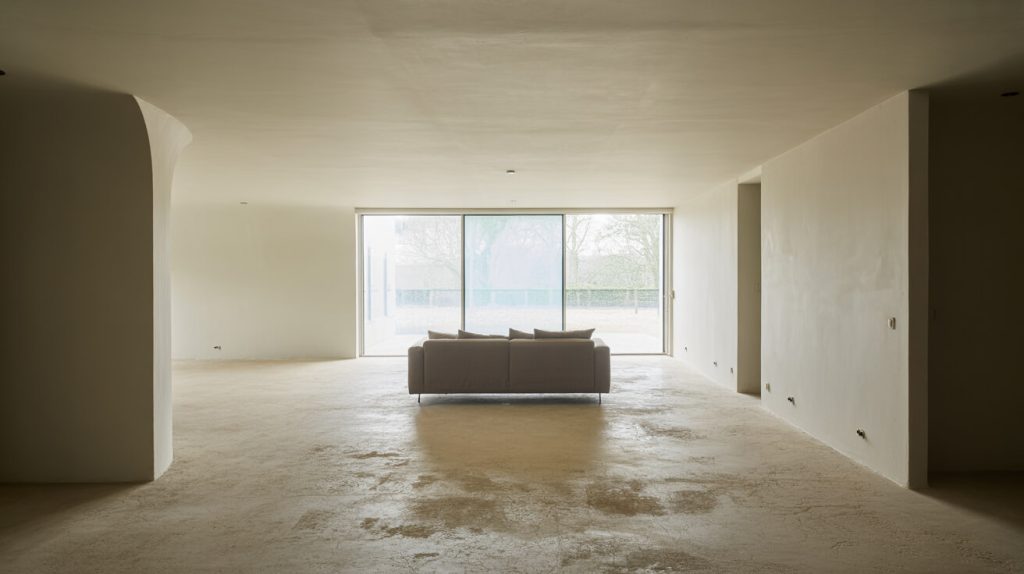
What Is the Overall Impact of Damp on Concrete Floors?
When concrete floors show signs of damp, you’re not simply facing an inconvenience—your asset’s value, safety, and usability all come into question. The real risk is rarely visible at first glance, especially when Concrete’s Physical Properties are assumed sound in residential renovations, commercial tenancies, or managed properties where floor activity is constant and confidence in substrate health runs high.
How Damp Weakens Foundations—And Reputations
Concrete’s capillary action, paired with micro-cracks and movement joints, creates a constant pathway for ground moisture. Over time, the unnoticed ingress leads to substrate degradation, adhesive breakdown, and surface instability, undermining project timelines and asset appreciation. For property owners, this translates to:
- Loss of mortgage leverage from failed surveys
- Costly remediation cycles due to underdiagnosed slab issues
- Health hazards like mould and allergens beneath the surface
- Ongoing disputes over landlord or developer responsibilities
Regulatory standards such as BS6576 weren’t created as guidelines—they exist because the market punishes oversight. Early identification, via specialist diagnostics, prevents small warning signs from exploding into legal or structural liabilities.
| Symptom | Early Indicator | Unchecked Consequence |
|---|---|---|
| Patchy cold flooring | Moisture migration | Surface bubbling, adhesive loss |
| Musty odour | Minor leak/void | Chronic underfloor mould |
| Paint/plaster peeling | Local damp hotspot | Replastering, full depth repair |
Setting the right expectation isn’t just about problem avoidance—it’s about placing your decision-making at the forefront. When you’re confident in your floor’s health, every renovation, sale, or audit becomes a negotiation from strength, not damage control.
The hidden risk isn’t just cost—it’s control lost to repeated failures.
When Should You Consider Professional Evaluation?
- Any recurring sign of localised damp, odour, flaking, or discolouration
- Disputes during handover, letting, or buyer survey
- Structured maintenance cycles in high-throughput environments
Sussex Damp Experts offers diagnostics that are audit-ready and aligned to current standards, letting you move decisively when the stakes are highest.
How Do Concrete’s Physical Properties Contribute to Dampness?

Concrete isn’t monolithic; its matrix comprises countless micro-pathways for water, each accelerating with time, ground movement, or changing ambient conditions. Damp-proof membranes—critical barriers—are often expected to deliver decades of protection, yet installation error, legacy age, or under-specification mean many assets are already at the edge of failure.
What Are the Scientific Mechanisms At Work?
Moisture rises through capillary action—especially where a DPC (damp-proof course) is missing, bridged, or chemically degraded. Every floor with a legacy slab or insufficient underlay is at risk, but even well-installed systems degrade with:
- Poor edge sealing, especially at wall junctions
- Repeated freeze-thaw cycles, especially in exposed or uninsulated areas
- Aggressive cleaning chemicals or high-traffic abrasion
What Early Indicators Should You Watch For?
Look for salt bloom (efflorescence), subtle patch discolouration, and temperature differentials on thermal imaging. Sussex Damp Experts validates site readings with multi-modal devices—no guesswork, just traceable diagnostics you can act on.
Most surface failures started as an invisible change in the slab’s chemistry.
Technical Validation: Lifetime and Reliability Signals
| Damp-Proofing Strategy | Typical Lifespan (years) | Core Failure Mode | Early Warning |
|---|---|---|---|
| Bitumen membrane | 10–20 | Chemical breakdown | Moisture detected by metre |
| Modern plastic DPM | 30–50 | Weld/lap failure | Perimeter damp patches |
| Epoxy coating (good) | 10–20+ | Abrasion/crack | Isolated peeling |
Informed owners and managers rely on these diagnostics as an explicit warranty against future headaches—turning technical certainty into operational advantage.
Why Do Environmental Forces and Construction Flaws Amplify Damp Risks?

It’s rarely “just the floor”—external variables, site histories, and design shortcuts all conspire to keep damp a moving target. Ignoring them ensures that even the best direct fix fails next season.
What External Conditions Escalate Damp?
Flood-prone geography, clay soils, or a high local water table drive persistent ground moisture into slab interfaces, exploiting any weak points. Modern property management means factoring in not just climate, but evolving site dynamics: urban basements, adjacent construction, and landscaping drift all play their part.
How Do Construction Details Tip the Balance?
Failure to integrate the right DPM, under-specifying joints, or using incompatible slab additives turns your floor into a sponge. The most common mistakes we see during inspections:
- Subpar or discontinued membranes that no longer meet spec
- Unvented, uninsulated voids
- Poorly timed pours and rapid surface drying, multiplying microcracks
Rushed projects leave future costs for someone else—usually you, when a tenant or auditor turns up.
Sussex Damp Experts carries out advanced risk assessments directly referencing BS6576 and PAS2035, leveraging both historic site data and real-time diagnostic insight.
When Are Structural Issues Most Likely To Surface?
After events: major weather swings, new external drainage works, heavy plant movement, or adjacent builds mean previously ‘stable’ floors now show new vulnerabilities.
Real-World Example
In Brighton, one commercial landlord faced repeated floor bubbling after a major drain relining in an adjacent street raised the local water table. Had proper risk mapping been done at installation, a different system—paired with better edge protection—would have locked that asset value in.
What Treatment Options Deliver Lasting Damp Control for Concrete Floors?

Mitigating risk means more than treating symptoms; it involves creating layered, code-compliant systems that stop moisture at multiple points. Sussex Damp Experts prioritises solutions by substrate condition, future use, and compliance demands, not just supplier claim.
Epoxy and Liquid Membrane Options
Contemporary resin and membrane systems, especially those certified as VOC-safe and FeRFA compliant, transform slab resilience. Key steps to ensure their effectiveness:
- Surface cleanliness and preparation: no sealant survives poor substrate adhesion
- Application by manufacturer-trained technicians
- System compatibility with foot or vehicle traffic, chemicals, and future overlays
When Is a Full DPM Necessary?
Where legacy construction, repeated failure, or survey mandates exist, installation of a modern plastic DPM is the only reliable barrier. Integration with perimeter walls, sumps, or flood controls may be required.
| Solution | Use Case | Expected Durability | Typical Next Maintenance |
|---|---|---|---|
| Epoxy coating | Commercial, domestic high-wear | 10–20 years | Surface top-up (as needed) |
| Liquid membrane | Complex slab footings, old builds | 10–25 years | Inspection 5–10 years |
| Plastic DPM | Legacy property, survey fail | 25–50 years | Only with damage or build |
Choosing Appropriately
- Understand your asset: Basements, kitchens, or car parks each require unique assembly.
- Know compliance: Mortgage, tenancy, and insurance claims only recognise code-compliant work.
A generic resin is fast. A system built for your use-case is futureproof.
How Do Drainage Solutions and Crack Repairs Enable Reliable Damp Prevention?

A technical fix is only as strong as the context in which it’s delivered. Many failures come not from the choice of resin or membrane, but from ignoring drainage and substrate pathologies.
Cavity Drainage—Your Quietest Risk Minimizer
Cavity drainage systems capture and outside-route ground moisture before it contacts your floor structure. Especially critical in basements or older properties, they deliver autonomous protection—usually requiring only occasional maintenance to ensure sumps and channels remain clear.
- Key benefits: less intrusive installation, works even when slabs remain damp, compatible with heritage floor finishes.
Strategic Crack Detection & Repair
Unmapped and unsealed cracks are a silent enemy. They open the door to recurring issues—efflorescence, surface instability, and localised material breakdown. Sussex Damp Experts use resinous and flexible sealant approaches, matched for the degree of slab movement and environmental risk.
- Visual inspection → Instrumented mapping → Chemical/physical sealing
Ignore a microcrack, inherit a major repair.
Repair and Drainage—Integrated Approach Table
| Issue | Diagnostic Step | Long-Term Solution | Monitoring Action |
|---|---|---|---|
| Cavity moisture rise | Sump test | Channel + automated pump | Routine visual check |
| Visible cracks | Dye tracing | Resin seal + edge reprofile | Moisture metre review (6 mo) |
| Saline efflorescence | Conductivity test | Salt-neutralising filler | Annual surface scan |
Integrated approaches aren’t luxury—they’re the only path to killing root causes for the life of your property.
What Diagnostic and Ventilation Methods Ensure Ongoing Damp Control?

Advanced technology places control in your hands. Spot checks and casual fixes are obsolete—data is your best assurance against recurrence.
Moisture Measurement—It’s About More Than a Metre
Expert surveyors, such as Sussex Damp Experts, deploy digital capacitance, carbide test, and thermal imaging in sequence. Redundant measurement is the standard, not the exception—ensuring every finding stands up to insurance, lender, or compliance audit.
Airflow and Humidity Control
Effective damp protection isn’t ‘instal and forget.’ It includes:
- Mechanical extractors for air movement in below-grade or high-humidity areas
- Passive ventilation for maintenance-phase properties
- Integration with building management systems for commercial scenarios
Trendline data—not guesswork—wins every dispute and prevents every failure.
Data-Driven Intervention Table
| Method | Use Case | Frequency | Alert Signal |
|---|---|---|---|
| Thermal imaging | Suspected hidden risk | Quarterly/seasonal | New colour anomaly |
| Humidity metre | Basements, kitchens | Ongoing | Spike >60% for >24hr |
| Capacitance test | All properties | During check-in | >4% increase in 6 months |
Proactive monitoring—driven by scheduled activity, not complaint—prevents issues, preserves value, and unlocks future warranties and lending options.
How Does Strategic Maintenance Lock In Long-Term Damp Protection?

Ongoing maintenance is not a cost—it’s an investment multiplier, reducing lifecycle OPEX and securing asset status for tenants, buyers, and insurers.
The Anatomy of an Effective Upkeep Plan
- Inspection schedule: high-use areas 2x/year; standard once annually
- Leak, joint, and channel review after every severe weather event
- Surface renewal or patch repairs, coordinated with warranty cycles
- Documentation of every action for asset logs, facilitating audits
Economic and Regulatory Consequences of Inaction
Neglected slab damp almost always leads to:
- Refusal of insurance/tenancy payment after failed survey
- Emergency repair costs that are double planned interventions
- Repetitive disputes with tenants, surveyors, or buyers
Systems always reward the prepared—maintenance is your lever, not your liability.
Maintenance ROI Table
| Action | Prevented Issue | Direct Savings | Compliance Benefit |
|---|---|---|---|
| Scheduled inspections | Structural loss | Avoids >3x repair | Satisfies BS6576, PAS2035 |
| Drainage cleaning | Flooding | Avoids downtime | Estate/letting hand-off |
| Renewal of surface coatings | Surface failure | Extends lifespan | Retains value on resale |
Sussex Damp Experts offers structured maintenance plans—engineered to blend performance with asset protection across mixed portfolios.
What Immediate Value Does Expert Damp Consultation Unlock for Your Property?
Every day spent debating damp is another day at risk for material loss, compliance drift, or opportunity cost. The only defence is decisive action built on evidence—not intuition.
Decision Certainty
A Sussex Damp Experts assessment includes:
- Full diagnostic regimen, recording conditions so that every finding withstands third-party scrutiny (surveyors, insurers, mortgagers, or auditors).
- Prioritised, cost-resolved plan highlighting urgent actions and low-impact scheduling for lower-priority needs.
- Documentation formatted for the next step: claim, resale, tenancy, or internal audit.
Ready for Compliance—And Reputation
Modern property is always in the spotlight. Full compliance, proven by documented interventions and data-logged care, speaks to both external regulators and internal stakeholders. Your property rises above routine, showing proactive stewardship.
How Do You Begin?
- Book a tailored site assessment—compliance-assured, lender-recognised.
- Get your data and evidence set for the season, future-proofed for every audit and transaction.
- Stop debating what you can secure—schedule now, and shift from risk to absolute confidence.
Experience the asset security, peace of mind, and market recognition that only truly decisive ownership unlocks. Your floor’s reliability—and your reputation—start with one expert assessment.
Frequently Asked Questions
What are the tangible risks if damp takes hold in a concrete floor?
Damp developing in concrete floors doesn’t merely signal a surface blemish; it raises a flag for cascading failure throughout your property’s integrity and value, making Reliable Damp Prevention essential. The first instances—white salt blooms clinging to the surface, paint losing adhesion, areas underfoot that feel chilly or emit a stubborn mustiness—can be ignored for months. Yet this quiet buildup of moisture isn’t waiting for permission to spread. It penetrates deeper, reaching the steel reinforcement, corroding from within, and sending invisible cracks through your economic security and peace of mind.
Homeowners and facility managers often mistake these early warnings for cleaning or maintenance issues. In reality, moisture in your floor is quietly undermining insulation, warping timber thresholds, and threatening occupancy compliance. Worse yet, once the problem surfaces in a mortgage survey or HSE inspection, the required remediation won’t be cosmetic. It becomes a full-scale intervention—removal of floor finishes, costly drying regimes, substrate reinstatement, and certification for future use.
Key research shows that properties with unresolved damp sell for up to 12% less. For landlords, undiagnosed floor moisture can trigger enforcement under HHSRS rules and undermine rental yield, which is why Reliable Damp Prevention matters before moisture migration escalates. Landlords, estate managers, or residential buyers each face different exposure, but the root cause is always the same: moisture goes unchecked, and the repair bill compounds with delay.
With Sussex Damp Experts, you’re not guessing—you’re acting with diagnostic certainty, preserving the long-term survival of your building and the value of your name in the tenancy or market.
How do the structure and age of your floor surface enable damp—and what catches most owners off guard?
The reason concrete floors are so easily breached isn’t random; it lies in Concrete’s Physical Properties. Even the highest quality mix is riddled with microscopic capillaries, each one a ready-made tunnel for moisture. Capillary rise, a physical law that draws water upward against gravity, exploits these gaps—especially as the chemical bonds in the original damp-proof membrane degrade over decades. It takes only a missed join, a small puncture from a later plumbing job, or skipped perimeter sealing for the system to fail.
Think of old bitumen DPMs lying brittle beneath aged slabs, or a modern membrane that was insufficiently lapped on a fast-track build. In either case, once ground moisture finds an entrance, it migrates relentlessly upward, saturating insulation and putting adhesives and finishes under constant attack.
Physical Red Flags to Watch For:
- Powdery, white crystalline deposits (efflorescence)
- Mysterious cold or damp patches in rooms above uninsulated voids
- Flaking paint, especially following seasonal wet periods
Most property owners see these as minor annoyances. Yet each is a symptom pointing backward to a failure in the original design, material lifespan, or installation method. Structured assessment—using moisture metres, drilled core samples, and humidity recorders—separates fact from assumption, and every datapoint informs tactical repair, keeping you ahead of expensive surprises.
If the evidence appears, act early. Sussex Damp Experts deciphers these warning signs, calibrating remediation precisely—so one small oversight does not metastasize into full-scale asset loss.
Why do regional climate, ground conditions, and fit-out shortcuts transform minor damp into major disaster?
The hand you’ve been dealt—whether high groundwater, heavy clay subsoil, or a history of flooding—magnifies every on-site installation shortcut and can lead to Ongoing Damp. Even premium additions can’t save a floor poured over a saturated footprint or a building sited without proper external drainage. Every time your region faces sustained rainfall, street works, or a neighbour’s landscaping project, the water table shifts, creating a new risk profile.
Meanwhile, site errors add new vulnerabilities:
- A single missed ventilation duct or short-poured apron
- Lack of perimeter draining or ineffective surface grading
- Over-zealous contractors who lay screed before the slab is dry
Each shortcut acts as a future failure point—often only noticed after your new surface blisters under summer heat or chills during frost. The resulting “minor” repairs stack up: patching, re-surfacing, eventually gutting the system back to concrete for a multi-week reinstallation.
| Environmental Oversight | Immediate Effect | Long-Term Cost |
|---|---|---|
| No perimeter drainage | Pooled water ingress | Full membrane/floor rebuild |
| Poor venting | Elevated humidity | Ongoing underfloor rot |
| Skipped curing time | Delamination/blister | Warranty void, shortened life |
Take control of your environment: every risk mapped at instal phase heads off years of Ongoing Damp and recurring cost. Bring in expert assessment before your project’s first delay or the first tenant complaint. Sussex Damp Experts audits every site variable—external, internal, human—to turn weak links into robust proof against the elements.
What proven solutions provide true, lasting control over concrete floor damp?
Permanent damp resistance can only be claimed by layered, standards-aligned systems—never quick, single-component fixes. Start with professional-grade surface prep: the substrate must be dust-free, dry to verified tolerance (typically <75% RH), and tested for both humidity and salt content before membranes or coatings can be specified. Epoxy or polyurethane damp-proof membranes, applied by Sussex Damp Experts’ FeRFA-trained technicians, create a seamless water barrier that is both VOC-safe and resilient to industrial traffic.
For legacy or severe ground-contact risk, a new plastic DPM—integrated with wall upstands and all edge junctions—provides the only lasting guarantee. Documented photo evidence, RH logging pre- and post-instal, and full manufacturer certification close the chain of traceable assurance.
Layered Approach Breakdown:
1. Substrate profiling and moisture mapping
2. Patch and repair of all surface defects and cracks (see next FAQ)
3. System-specific primer and membrane deployment
4. Protection and verification before applying final floor finish
5. Comprehensive handover with compliance and warranty documentation
Think of this process as an investment in your property’s standing—insurance, survey, and legal benchmarks all satisfied in a single operation. It’s what distinguishes long-term resilience from surface-level savings.
How do integrated drainage and surgical crack repairs change the outcomes—and why do cut corners unravel entire systems?
Unmatched floor reliability flows from the invisible details: how water moving beneath the surface is managed and how every crack—potential or active—is sealed at a molecular level. If drainage is ignored, a thousand-point-perfect membrane may still fail as hydrostatic pressures find a single breach. For basements, commercial garages, or historic assets, the networked cavity drainage matrix fundamentally changes outcome probabilities, shunting infiltration away before it reaches vulnerable spots.
Targeted crack repair is not “filling and forgetting.” Sussex Damp Experts locates even hairline fissures using dye tracing and digital mapping, selects flexible or resinous fillers rated for substrate movement, and overlays salt-neutralizers at expansion joints so that recurring white blooms can’t return.
Scenarios that demonstrate the danger of neglect:
- A small settlement fissure is missed—surface patches hold, but come winter, expansion cycles pop the floor, and moisture swamps insulation.
- No drainage routing means sump overflows after unseasonably heavy rain, requiring costly full-system reboot.
| System Element | Role | Risk if Skipped |
|---|---|---|
| Cavity drainage | Diverts sub-slab moisture | Internal flooding, mould |
| Flexible crack resin | Seals moving joints/fissures | Water ingress, recurring failure |
| Salt neutralizer | Stops efflorescence | White powder, salt corrosion |
The result of integrated execution isn’t just low lifetime cost—it’s the peace of mind that comes with a fix that stands up to the next decade, not just the next audit.
How do advanced diagnostics and active ventilation prevent old damp problems from quietly resurfacing?
True moisture mastery begins with meticulous auditing, not reactive repair. Sussex Damp Experts leads with high-fidelity surface and sub-slab moisture metres, carbide bomb readings, and when needed, laboratory salt analysis. This isn’t belt-and-braces: it’s a legal and functional baseline, establishing where moisture lies hidden and what repairs or upgrades will actually hold.
But diagnosis is nothing without active airflow management. Mechanical extractors, dedicated subfloor vents, and humidity monitors synchronise to maintain below-threshold RH throughout the year. For residential buyers, landlords, and commercial property managers, this active approach means asset reliability is established and maintained long after the original repair.
Inspection Roadmap:
- Routine quarterly or biannual full-slab diagnostics
- Continuous spot checks during renovation or after unusual weather
- Documented thresholds vs. recommended standards (typically under 75% slab RH pre-fitment)
- Cross-reference with prior audits to spot pattern risk
Ventilation Upkeep Checklist:
- Set mechanical extractors on schedule, especially in kitchens, gyms, or storage rooms
- Keep subfloor airways free from blockages
- Validate electronic monitors or BMS links for early warning triggers
By building a verification and air management culture, you replace dread with data. The reward is a slab that resists the elements—and a reputation as the property leader who never leaves resilience to chance.
What signals define proactive maintenance—and what’s at stake for those who lag behind the upkeep curve?
Resilient floor systems, whether in commercial spaces or family homes, owe their longevity not to luck but to pre-planned, cyclic attention. It’s a pattern seen everywhere: the properties commanding the best prices, lowest insurance premiums, or highest re-leasing rates are those where owners or managers patrol for issues, audit compliance, and refresh finishes proactively.
Proactive maintenance isn’t expensive; it’s anti-expense. The steps are concrete, literally and figuratively:
- Half-yearly professional inspections by moisture control specialists (quarterly for flood-prone or high-traffic properties)
- Reapplication of protective treatments on the recommended multi-year cycle, as per system manufacturer
- Drainage and ventilation cleaning plus operational checks every wet season or after localised flooding
- Rigorous documentation, so all compliance and warranty actions are logged and ready for property re-sale, insurance claim, or regulatory review
| Task | Benefit | Lost Opportunity if Missed |
|---|---|---|
| Scheduled inspection | Early detection, low repair | Major works, rent loss |
| Drain/vent cleaning | Maximises moisture dispersion | Accumulated stress/moisture |
| Protective renewal | Maintains compliance/warranty | Voided claims, tenant churn |
The cost of lagging isn’t just measured in pounds—it’s counted in time lost, reputation overlooked, and future ambition narrowed. Whether your goal is occupancy growth, portfolio insulation, or zero-surprise asset management, the path is the same: start with precision, follow with discipline, and maintain with the support of teams who see every invisible risk.
Hire for diligence, not appearance. That’s how homes, business parks, and tenancies become benchmarks for reliability across Sussex and beyond.

