By
By  January 16, 2022


What Causes Condensation? The Science of Hidden Moisture (and Why It Matters for Your Property)
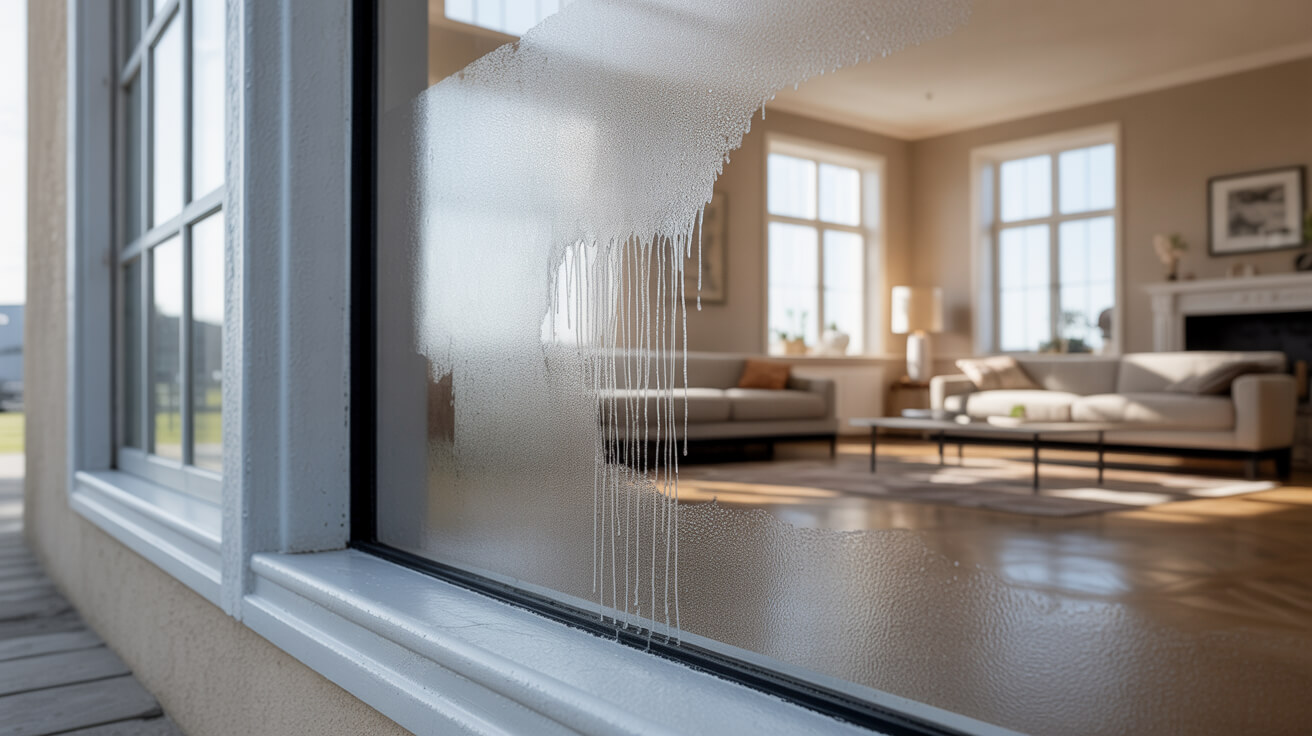
Condensation starts as a detail—a fine blur on glass, a cold patch behind the sofa. But its presence reveals a precarious margin between building health and a cycle of repair costs, lost value, or worse. The real question isn’t whether you see it, but whether you can afford to misunderstand where it comes from and why it returns. Every property, from city flat to listed manor, follows the same laws: humid air plus cold surfaces, when mishandled by materials, usage, or upgrades, deliver persistent damp—risking health, resale, and peace of mind. Owners, landlords, renovators, and tenants alike need more than guesswork; you need actionable, evidence-led understanding.
Most people treat condensation as a seasonal nuisance—until a failed survey or persistent mould turns it into a liability.
How Does Condensation Actually Form in Buildings?
Condensation forms when saturated indoor air meets a surface calibrated below its dew point—the exact threshold where water vapour transitions to liquid. Your daily routines—showers, cooking, laundry, occupied rooms—release litres of invisible moisture. When trapped by sealed windows, modern insulation, or closed vents, the vapour has only one escape: cold walls, glass, or structural bridges. Once there, water beads, soaks, and starts its slow attack—inviting black mould, salt staining, and substrate breakdown.
Key mechanisms:
- Warm, humid indoor air holds significant water; sudden temperature drops drive this to condense out instantly.
- Air-tightness improvements, while energy-saving, drastically reduce passive moisture escape.
- Cold “thermal bridges” (lintels, sills, corners) attract water most, especially on north/east-facing elevations.
Condensation is caused by excess indoor moisture that cannot escape, settling onto the coldest surfaces as water droplets. This is not a weather fluke; it’s a predictable result of modern living patterns layered onto traditional or retrofit building envelopes.
What Are the Signals You Can’t Ignore?
If you see persistent fog on windows, black spotting on external wall lines, or an earthy smell in corners or behind wardrobes, your property’s moisture handling is out of balance. For property managers or compliance officers, recurrent tenant complaints, failed EPCs, or survey flags signal underlying system errors—most are fixable if caught before invasive damage or health complaints emerge.
How Do Property Age, Materials, and Upgrades Change Your Moisture Risk?

Every building, whether a 19th-century villa or a contemporary extension, brings its own set of vulnerabilities. Paradoxically, improvements aimed at comfort or efficiency—double glazing, cavity insulation, tanking, or air-tight membranes—can amplify condensation risk by blocking air exchange and trapping humidity.
Why Are Heritage and Modern Homes Both at Risk (But for Different Reasons)?
- Pre-war and solid-wall homes move water passively through lime plasters, chimney breath, and deliberate “leakiness.” These systems rely on vapour diffusion, not mechanical ventilation.
- Post-2000 builds and retrofit-heavy properties seal moisture in, counting on extractor fans, heat-recovery systems, or vapour barriers to compensate. When upgrade quality, commissioning, or daily use falls short, stagnant humidity accumulates.
- Listed buildings present layered challenges: regulation prohibits certain upgrades or quick remedies, requiring system-perfect, vapour-permeable solutions.
Table: Building Type vs. Condensation Risk
| Building Era/Type | Vulnerability | Typical Failure Mode | Key Solution Focus |
|---|---|---|---|
| Pre-1919 Solid Wall | High | Mould at cold junctions | Breathable insulation |
| Post-War Cavity | Medium | Cold bridge at ties/lintels | Controlled ventilation |
| Modern Insulated | High if mishandled | Widespread humid stagnation | Extractor + monitoring |
| Listed/Heritage | Unique constraints | Hidden fabric decay/mould | Historic-safe adaptation |
Should You Upgrade—Or Step Back and Diagnose?
Not all comfort improvements are universally compatible. Before retrofitting, property managers and owners should demand a moisture pathway survey—a step our team builds into every project, combining regulatory alignment (PAS2035, BS6576) with property-specific science.
How Do Your Habits and Lifestyle Affect Condensation Risk?

Everyday activities do more than fill your home with warmth and food smells—each one adds to your property’s unseen “moisture load.” The difference between a healthy building and one on the edge is often a matter of routine: how you cook, ventilate, bathe, even arrange furniture.
Which Routines Multiply Your Moisture Risk (and Which Changes Actually Help)?
- Closed windows during/after showers or cooking: Even a brief delay in airing out a bathroom or kitchen spikes interior humidity.
- Drying laundry indoors: Each load adds multiple litres of water to the air that must settle somewhere; radiator drying and airers are among the worst offenders.
- Running unvented tumble dryers, blocking or painting over air vents: These cut the property’s ability to “breathe.”
- Short-burst heating (turning heat on/off rapidly): Sudden temperature drops force vapour onto cold surfaces.
Scenario: You purchase a new home, instal fresh double glazing, and hang thick curtains— but your bay window starts growing mould within weeks. The mismatch? Improved heat retention without added ventilation, plus furnishings blocking airflow.
Empowering yourself with small, consistent changes—like regularly airing, using extractor fans, or moving large furniture away from cold walls—yields surprising results. Sussex Damp Experts can audit your unique living patterns, offering specific guidance that brings you one step closer to moisture-managed confidence.
Where Does Condensation Lurk (and How Do You Detect Hidden Threats)?
Condensation seldom appears where you want it—it collects in hidden, inconvenient places, quietly building up until repair costs and compliance penalties balloon. Relying on “clean looks” alone lets invisible risks mature unchallenged.
Which Areas Demand Regular Checks?
- External wall corners, window reveals, and sills
- Behind or under wardrobes, cabinets, and fitted furnishings
- Unheated roof spaces, especially above bathrooms or kitchens
- Under stairs, in porches, and neglected utility corners
Detection Tactics for Owners and Inspectors
- Sensory: Trust your nose—mustiness precedes visible mould.
- Visual: Look for tiny black marks, paint lifts, or efflorescence where you least expect.
- Instrumental: Use low-cost moisture metres or seek professional infrared surveys (Sussex Damp Experts offer rapid diagnostics tailored to all property types).
The most expensive damp is the damage you never see—until a tenant, insurer, or buyer flags it in writing.
Snippet Answer Block
Check for condensation in corners, behind large furniture, above ceilings, and on window reveals—especially after periods of heavy use.When Should You Escalate to Professional Diagnosis or Action?
Some problems escalate while you debate short-term fixes. Patterns that persist past seasonal change, or which resist all DIY remedies, often signal system-wide faults that demand professional investigation and compliance-ready documentation.
What Are the Red Line Triggers for Landlords, Owners, and Managers?
- Repeated mould regrowth after standard cleaning
- Damp spreading beyond initially affected zones
- Tenant, employee, or household health complaints
- Failed home survey or red flag on mortgage application
- Insurance challenges linked to past claim or property condition
- Heritage or listed building requirements limiting intervention scope
Proof Layer—Compliance and Legal Triggers
If you manage multiple properties or let to families, you’re now subject to HHSRS, fitness for habitation, and insurance mitigation mandates. Sussex Damp Experts provide BS6576-aligned reports recognised by local authorities, lenders, and insurers—closing loopholes before they become liabilities.
- Documentation by professionals often preempts legal disputes and unlocks support or funding options.
- Early escalation leads to repairs that cost less and work faster—before damage becomes a compliance emergency.
What Maintenance and Building Approaches Actually Prevent Recurring Condensation?
Proactive moisture management differentiates properties that excel from those that revolve around crisis cycles. Prevention isn’t about luck—it’s about known, manageable routines underpinned by system checks and disciplined investment.
Practical Maintenance Approaches That Make Properties More Resilient
- Schedule annual extractor fan checks, with repair or upgrade as needed
- Keep trickle vents open and functional year-round
- Arrange for annual or bi-annual moisture audits (especially before winter or after upgrade works)
- Use only vapour-permeable paints and renders on heritage assets
- Relocate bulky furniture at least 50mm from external walls to not trap air
- For managed portfolios or commercial stock, activate a Moisture Management Control Plan (MMCP) as a compliance and operational standard
Table: Annual Moisture-Proofing Schedule
Task/Check Frequency Asset Owner Value Delivered Extractor/fan inspection Annual All Constant ventilation performance Moisture/thermal audit Annual / Pre-sale All Early invisible risk detection Trickle vent check Quarterly All Reduce pressure, prevent condensation Furniture offset survey Annual Agents, OOs Stops hidden mould, enables airflow Aftercare system activation Ongoing/commission Managers Real-time alerts, minimised claims Expert Framing
Properties on a planned regime avoid 85%+ of recurring complaints and legal conflicts documented for properties left to ad hoc repair.Where DIY Falls Short: Professional Surveys and Compliance Reporting as the Only Sensible Next Step
DIY action works for routine maintenance, but persistent, multi-room, or compliance-linked problems require robust documentation. Only a full forensic survey closes the loop for buyers, lenders, tenants, councils, and insurers.
Who Benefits From a Sussex Damp Experts Survey?
- Buyers and sellers seeking transaction-ready, warranty-supporting proof
- Landlords needing to demonstrate full repair and compliance steps
- Heritage owners balancing regulations with authentic fixes
- Agents and managers navigating high-turnover properties or regulatory scrutiny
You can attempt a temporary fix—or settle for certainty that stands up in court, survey, or family health audit.
The BS6576 and PAS2035 Edge
All Sussex Damp Experts reports reference the highest recognised standards, providing paperwork accepted by local authorities, mortgage lenders, and national insurance providers. This is your bridge from “DIY try and hope” to “professionally validated, protected for the future.”
Secure Your Next Step: Consultation With Sussex Damp Experts
Every stage above demonstrates that faulty moisture management, left unaddressed, grows more expensive and disruptive over time. Our expertise isn’t simply in rapid diagnosis—it’s in prevention, legally sound remediation, and future-proofing every asset under your care.
Your action today sends a clear message to every stakeholder—family, tenants, partners, or regulators: your property is not a problem waiting to happen but a model of care, compliance, and asset management.
Book your expert survey now. Move with the evidence, not the anecdote. Partner with Sussex Damp Experts; secure your property’s value, trust, and future on your terms.
Frequently Asked Questions
What Causes Condensation — and Why Does It Matter in Your Building?
Condensation is the direct result of warm, moisture-laden air in your property meeting a surface cold enough for water vapour to return to liquid. Far beyond simply fogged glass, this phenomenon reflects an underlying imbalance: excess indoor humidity with nowhere to escape, often worsened by modern building upgrades that favour airtightness over the daily habit that Stops hidden damp through natural ventilation. Hot showers, bubbling pans, tumble-drying, even breathing—all contribute to a daily, invisible flood that settles on windows, walls, and hidden corners when the air cools.
The Hidden Mechanics of Moisture
- Air holds more vapour at higher temperatures: Any sudden drop (like at night or near uninsulated walls) creates the ideal setting for droplets to form.
- Well-insulated spaces often suffer more: Double glazing, dense insulation, and well-sealed doors block moisture’s escape just as effectively as they retain heat.
- Lifestyle load adds up: One family can add over 20 pints of water to indoor air per day without even noticing it.
Scenario Risk Unlocked Best Step Forward Winter sealing & no venting Persistent condensation, hidden damp Targeted ventilation assessment Ongoing fog on windows, black mould Health hazard, property devaluation Forensic damp survey + air audit “Quick-fix” painting or DIY wipes Recurring damage, survey failures Expertise in root-cause diagnosis If condensation is a frequent visitor to your property, it’s your building telling you a structural or behavioural correction is overdue—not just for comfort, but for compliance and the health of everyone living or working inside. Sussex Damp Experts map and solve the root causes with data-backed precision, helping identify the daily habit that Stops hidden damp before what’s concealed becomes tomorrow’s emergency.
How Do Building Age, Materials, and Modern Upgrades Influence Condensation Problems?
Every layer of your building, from ancient lime plaster to state-of-the-art insulation, alters how moisture travels and accumulates. For heritage properties, those thick, solid walls and breathable renders were designed to manage humidity with open fires and draughty windows—the very features modern retrofits tend to erase. If your property has welcomed double glazing, tanking, gypsum-based plasters, or foam insulation, you may have unintentionally blocked off the old paths moisture relied on to escape.
Age & Upgrade: When Progress Backs You Into a Corner
- Heritage structures demand breathability: Impermeable materials trap damp, leading to decay behind decorative surfaces you can’t see until resale or inspection.
- Modern builds, when unbalanced, breed new surprises: Inadequate ventilation upgrades are nearly guaranteed to breed excess condensation—sometimes in rooms that used to be trouble-free.
- Combined-use or commercial premises escalate the risk: Modern HVAC, open-plan layouts, and tighter envelope standards require a holistic review, especially after occupancy changes.
If your property is a blend of history and innovation, hidden moisture risks can develop where old and new materials meet. When comfort technology limits a building’s ability to ‘exhale’, both compliance and capital value are exposed, and low-cost moisture metres or other quick checks rarely show the full extent of the problem. Sussex Damp Experts tailor solutions that respect regulatory boundaries, material science, and period authenticity—bridging what your property was built for and what it must support today.
In What Specific Ways Do Your Habits and Daily Routines Escalate Condensation Risks?
Often, the routines you keep to make the space feel like home—long showers, warm kitchens, “cosy” closed windows—shift within the building to quietly accumulate risk. When several occupants run showers back-to-back or the dryer hums all winter, the likelihood of invisible saturation behind furniture or inside corners goes up. Even short-cycling your heating to “save energy” can lead to temperature spikes and drops, each bout inviting vapour to fall out of air and onto the nearest chilly surface.
More Than Just Mornings: The Compound Effect of Everyday Living
- Bathroom and kitchen use: Exhaust fans not run long enough = damp lingers in soft furnishings and around window reveals.
- Furniture tight against exterior walls: No airflow means cold traps, where warm air delivers a daily hit of new moisture.
- Laundry drying inside, even in rooms with a “dry heat” feel: Clothes and sheets push moisture to circulate and re-condense elsewhere.
Routine Impact on Moisture Simple Adjustment Doors closed during steamy use Local concentration Open or crack a window after Skipped extractor after shower Lasting humidity Run fans 15 min past finish Radiator drying loads High, persistent Dry outside/smart venting By mapping and adjusting these patterns—preferably before symptoms dominate—your building’s “moisture load” can shift back to a manageable state. Sussex Damp Experts deliver household audits and routine guidance, ensuring every habit is a step towards dry walls and higher asset reliability.
Where Do Condensation Problems Hide—And Why Are Some Hotspots Always Missed?
Condensation loves obscurity. It hides in corners, behind the stacked wardrobe, under sills, and even under your feet—in the voids and layers most cleaning routines never touch. Multi-occupancy properties, heritage sites with multiple thermal zones, or blocks with disparate tenants each face their own “blind spots,” often left unchecked until decay or health complaints make the risk public.
Hidden Zones & Overlooked Triggers
- Corners behind couches, beds, or heavy wardrobes: Air stagnation equals daily accumulation.
- Above ceilings or inside roof voids: Especially after upgrades that alter heat flow or block previous paths for dry air.
- Storerooms, under stairs, plant rooms in blocks: Places least visited by cleaning staff or occupants that often signal the true extent of saturation.
- Windows with heavy curtains, or double blinds: The perfect setup for morning puddles and creeping wall tide-marks.
Location Probable Signal Diagnostics Tactic Wardrobe rear Black marks, powder residue Moisture metre or IR scan Loft or attic Board rot, insulation clumping Insulation profile, air test Window reveals Flakes, surface corrosion Salts analysis, surface swabbing Condensation damage doesn’t spread—it blossoms out of the sight lines you check last. Every new stain is a message sent months earlier.
With tailored inspections and monitoring tools, Sussex Damp Experts reveal and document what’s missed by the untrained eye, transforming neglected risks into mapped, manageable, and certifiable outcomes.
When Does Condensation Become a Legal, Health, or Financial Emergency?
Unchecked condensation is a compliance tripwire. The same patterns that start with fogged windows or modest patches morph into black mould outbreaks, survey disqualifications, and warranty disputes. For landlords, commercial managers, or anyone bound by housing law or HHSRS, recurring moisture is a live complaint to be managed—not after panic, but before blame or cost accrues.
Escalation Triggers You Can’t Ignore
- Repeated mould return after cleaning — sign of systemic failure, not bad luck.
- Peeling paint or surfaces after recent refurbishment — proof that cosmetic fixes are not enough.
- Complaints paired with NHS or doctor reports — tenants or staff with health impacts.
- Survey findings before sale or mortgage renewal — “condensation risk” is shorthand for “unfinished due diligence.”
- Insurance or compliance escalation — as soon as property records document a recurring fault.
- Failure to meet Building Regs or PAS2035/BS6576 guidance — the official threshold for professional remediation.
Trigger Event Underlying Emergency How Expert Diagnosis Resolves Failed survey report Quotation for full repair Data-driven compliance mapping Tenant health claim Regulatory scrutiny Health/council negotiation Persistent decay Financial devaluation Traceable aftercare documentation A property with unresolved condensation is an asset exposed, not just to the elements, but to the sharp edges of modern compliance, insurance, and buyer expectation.
With forensic protocols and government-aligned standards, Sussex Damp Experts provide traceable records, insurance-powering documentation, and a clear path from emergency back to operational assurance.
How Does Proactive Maintenance and Systemic Building Review Minimise Condensation for the Long Haul?
Preventive discipline—incorporating building-wide protocols and systematic checks—renders condensation a manageable, rather than an emergent, issue. Rushing to fix visible damage without a mapped maintenance or monitoring plan all but ensures repeat problems and increased lifecycle cost.
The Five Pillars of Effective Damp Maintenance
- Annual extractor and vent audit: Not only fit, but optimise and document airflow patterns.
- Scheduled humidity and temperature surveillance: Sensors in risk-prone rooms and layers.
- Thorough review post-renovation or occupancy change: Any new insulation or heating system alters the equation.
- Review of all soft-finish surfaces (paints, wall coverings, floorboards): For permeability and safety rating.
- Active aftercare — scheduled check-ins and digital monitoring where possible.:
Maintenance Action Recommended Frequency Damp Proofing Benefit Extractor vent test Every 6–12 months Verified humidity egress Surface check (walls) Quarterly Catch early deterioration Digital moisture log Always on Trends before symptoms Aftercare pro review Annually or when needed Compliance, value retention Routine isn’t about ticking a box—it’s the ongoing proof that every future surveyor, warranty officer, or compliance manager wants to see.
The aftercare packages and system reviews offered by Sussex Damp Experts turn unpredictable risk into a measured, budgetable, and reputation-enhancing asset for every property steward.
Why Is Professional Diagnosis and Official Damp Documentation Essential for the Future of Your Building?
The greatest value of professional diagnosis isn’t the solution itself, but the record: a defensible, traceable, and respected audit trail of your control over risk, history, and asset reliability. Anyone can wipe, repaint, or replace visible damage. The question isn’t what’s covered—it’s how, why, and whether it will return flagged, devalued, or noncompliant later.
Closing the Loop: From Inspection to Irrefutable Aftercare
- Traceable intervention: Timestamped records move with your property, protecting resale and warranty evaluation.
- Negotiation power: Buyers, insurers, or leaseholders see the full story, not speculation.
- Lifecycle assurance: Eliminate recurrences—proven fix, scheduled check-ins, and transparent data.
- Strategic positioning: Every compliance step, every health record, every repair is part of your professional asset management narrative.
Outcome Secured Process Stage Sussex Damp Experts Solution Survey clearance Pre-sale/Refinance Official diagnosis + fix report Warranty preserved Aftercare Instal validation + log Litigation averted Tenant/Regulator Dated survey evidence, compliance A building with a mapped, verified moisture history isn’t just safer; it’s worth more, looks better, and is a stake in the ground for everyone who comes next.
Status and trust are implicit in every report, every inspection, and every documented remediation completed by Sussex Damp Experts. You’re not just fixing a problem—you’re securing the legacy and operational future of your entire asset.