
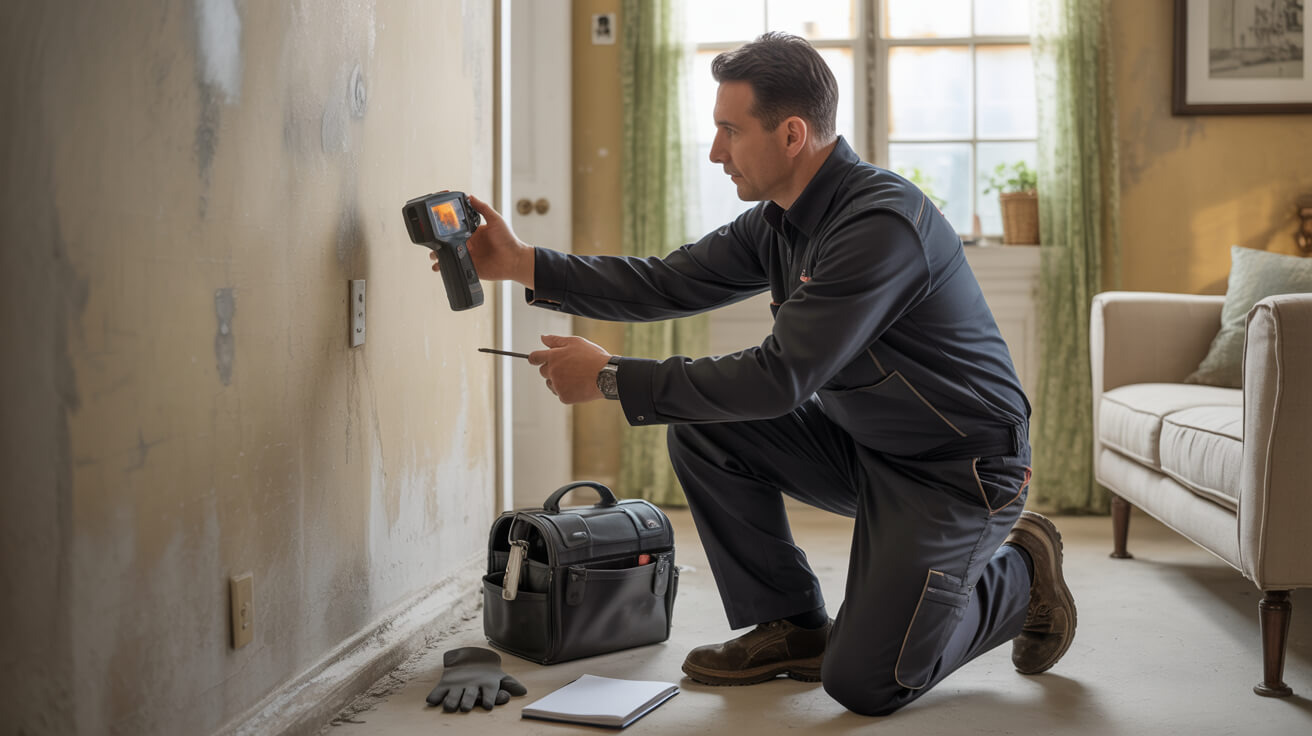
Thermal treatment applies carefully regulated thermal energy to damp substrates, leading to accelerated drying and improved material performance. The method enhances the visual and structural integrity of building components while maintaining compliance with industrial damp proofing standards. Its applications span residential upgrades, commercial maintenance, and heritage conservation, providing a sustainable, non-invasive alternative to conventional chemical treatments.
Overview / Context
Thermal treatment in the context of damp proofing represents a convergence of material science, applied physics, and building engineering. This technique involves increasing the temperature of moisture-laden surfaces so that water in the form of humidity is efficiently evaporated without causing thermal shock or damage to the substrate. The approach harnesses fundamentals of heat transfer, such as conduction and radiation, to redistribute thermal energy and facilitate drying.
Background
In modern building maintenance, dampness remains one of the primary concerns as it directly affects the integrity and longevity of structures. Excess moisture not only leads to mould proliferation and surface staining but also compromises the thermal efficiency of insulation systems. Thermal treatment offers an innovative solution by targeting moisture at its molecular level, thus accelerating evaporation and mitigating associated risks.
Scientific Principles
The process of thermal treatment is underpinned by several principles:
- Heat Transfer: By increasing the temperature of materials, thermal energy is transferred to water molecules, increasing their kinetic energy and facilitating evaporation.
- Thermal Bridging: This refers to the conduction of heat across different building materials, which must be managed to ensure even drying.
- Dew Point Dynamics: Proper management of the dew point is critical to prevent condensation that could counteract the treatment’s efficacy.
Practical Implications
Thermal treatment is not a standalone remedy but is often integrated into a broader damp proofing strategy. It is particularly useful in cases where chemical damp proof courses may not be feasible due to environmental, aesthetic, or substrate-specific considerations. The technique serves as a complementary or alternative approach, offering advantages in energy efficiency and preservation of historic building fabric.
History
Thermal treatment as a damp proofing method has evolved significantly over several decades. Early experiments in building maintenance relied on rudimentary heating methods to address moisture issues, with limited understanding of the underlying physics. As technological advancements emerged, so did the ability to control temperature and monitor moisture levels more precisely.
Origins
Initial forays into thermal drying techniques date back to the mid-20th century, when basic heating devices were employed to hasten the drying of damp walls. These early methods were often inconsistent, largely due to a lack of standardised protocols and the absence of precise monitoring instruments.
Industrial Emergence
With the advent of thermal imaging and moisture metering technologies in the late 20th century, the concept of controlled thermal treatment began to take shape. During this period, research focused on understanding the interaction between heat and moisture within building materials. This led to the development of more sophisticated treatments that could be applied in a controlled manner, reducing the risk of damage while enhancing the drying process.
Contemporary Evolution
In recent decades, thermal treatment has become increasingly integrated into comprehensive damp proofing programmes. Modern systems incorporate real-time monitoring and automated controls, enabling practitioners to adjust treatment parameters dynamically. Regulatory frameworks such as BS6576 and PAS2035 have evolved to include guidelines relevant to thermal treatment, driving further refinement in technique and equipment. Today, thermal treatment is recognised as a viable, effective method for addressing persistent moisture problems, particularly in environments where chemical treatments might adversely affect heritage structures.
Concept / Description
Thermal treatment involves applying controlled thermal energy to building materials to induce moisture evaporation. It operates on the foundational concept of changing the thermal profile of a structure, thereby shifting the moisture equilibrium in favour of drying.
Process Mechanisms
Controlled Heating
Controlled heating involves gradually elevating the temperature of the damp substrate using calibrated heat sources. This method carefully avoids rapid temperature spikes that could lead to thermal shock, which might cause micro-cracking in sensitive materials. Instead, it promotes steady evaporation by maintaining an optimal temperature over a set period.
Infrared Drying
Infrared drying employs infrared radiation to heat the surfaces directly. This technique is effective for targeted treatment of localised damp areas. The infrared rays are absorbed by the surface, increasing the localised temperature and accelerating moisture evaporation without affecting surrounding areas.
Cryogenic Cooling
In certain specialised applications, cryogenic cooling is introduced as a method to contract the substrate slightly. The contraction can force moisture to the surface, where it can be more easily evaporated during subsequent heating phases. This method, while less common, has shown promising results in specific contexts where traditional heating alone is insufficient.
Sequential Heat/Cool Cycles
The sequential application of heat and subsequent cooling cycles is designed to optimise the drying curve. This method alternates between raising and lowering temperatures to enhance the release of bound moisture and promote uniform drying. By carefully timing the cycles, the process ensures that moisture is removed comprehensively and consistently across different areas.
Scientific and Technical Foundations
Thermal treatment leverages a blend of applied physics and material science. It relies on:
- Kinetic Theory: As materials are heated, water molecules gain kinetic energy, which facilitates their transition from liquid to vapour.
- Thermal Diffusivity: Different materials respond uniquely to heat, necessitating tailored treatment protocols based on the thermal diffusivity of each substrate.
- Moisture Migration Patterns: The movement of moisture through capillary action is influenced by temperature gradients, forming the basis for controlled moisture extraction.
This comprehensive understanding of the interplay between heat and moisture has led to the development of robust treatment protocols that are both safe and effective for a wide range of building materials.
Functionality / Purpose / Applications
Thermal treatment serves as a non-invasive method to control dampness by actively managing the moisture content of building materials. Its functionality is grounded in both mechanical and environmentally sensitive design, which addresses several practical needs.
Objectives and Functional Benefits
- Moisture Reduction: The primary function of thermal treatment is to lower the moisture content in affected materials. Elevated temperatures facilitate rapid evaporation, thereby reducing the potential for mould growth and biochemical decay.
- Mould Suppression: By increasing the temperature of damp substrates, thermal treatment alters the microenvironment, making it less conducive to mould proliferation. This effect is significant in reducing health hazards and preventing material degradation.
- Energy Efficiency Enhancement: The method optimises the thermal properties of a building, indirectly contributing to improved energy performance. By restoring the integrity of insulation systems, thermal treatment helps maintain consistent indoor temperatures with lower energy consumption.
- Structural Preservation: Thermal treatment is particularly effective in heritage and historic buildings, where minimal intervention is required to preserve original materials. Its non-chemical approach ensures that the physical and aesthetic properties of traditional substrates remain intact, supporting conservation efforts.
Application Domains
Thermal treatment is applied across various sectors:
- Residential Dwellings: Homes facing damp issues in walls, floors, and ceilings benefit from thermal treatment by achieving uniform drying and mitigating mould growth.
- Commercial and Industrial Buildings: In larger structures, thermal treatment is integrated into comprehensive maintenance programmes to ensure operational efficiency and maintain high indoor air quality.
- Heritage and Conservation Projects: For listed or historic properties, the method provides a sensitive solution to moisture problems, preserving the original fabric of the building while complying with conservation standards.
- Renovation and Retrofits: During the retrofit of older buildings, thermal treatment is used in conjunction with other damp proofing measures to prepare substrates for further repairs or protective coatings.
By addressing these diverse needs, thermal treatment contributes significantly to the overall damp proofing strategy, offering an efficient, scalable, and sustainable solution.
Classifications / Types / Variants
Thermal treatment methods are diverse and can be categorised based on the specific approach and technology used. The main variants include:
Controlled Heating
Controlled heating is characterised by the gradual elevation of temperature through the use of calibrated heat sources. This method is designed to reduce moisture without inducing thermal shock, making it suitable for sensitive materials.
- Advantages:
- Uniform heating
- Minimal risk of substrate damage
- Limitations:
- Longer treatment times
- Requires precise control systems
Infrared Drying
Infrared drying utilises infrared radiation to directly heat affected areas. This targeted heating method is particularly effective for isolated damp patches.
- Advantages:
- Rapid localised drying
- Minimises impact on surrounding materials
- Limitations:
- Requires specialised equipment
- Calibration critical for uniformity
Cryogenic Cooling
A less common variant, cryogenic cooling employs extremely low temperatures to induce contraction in the substrate. This contraction forces moisture to the surface for subsequent evaporation.
- Advantages:
- Effective for substrates with high moisture retention
- Can be used to treat particularly stubborn damp conditions
- Limitations:
- Specialist equipment required
- Complex operational parameters
Thermal Shock Treatment
Thermal shock treatment involves the sudden application of temperature changes. This method is intended to disrupt moisture retention structures by generating rapid thermal gradients.
- Advantages:
- Can quickly eliminate localised damp conditions
- May be used in combination with other methods
- Limitations:
- Potential for micro-cracking in brittle materials
- Requires careful monitoring of thermal cycles
Sequential Heat/Cool Cycles
Sequential heat/cool cycles combine the benefits of both heating and cooling phases. Alternating temperatures optimise the evaporation process and ensure even moisture removal.
- Advantages:
- Enhances treatment efficacy across diverse substrates
- Provides dynamic control of moisture levels
- Limitations:
- Complex programming of cycles needed
- Environmental factors can affect performance
The selection of the appropriate variant depends on a variety of factors, including the type and extent of dampness, the substrate materials involved, and specific performance targets as dictated by regulatory and conservation requirements.
Systems / Tools / Methodologies
The effective implementation of thermal treatment requires a suite of specialised tools, systems, and operational methodologies designed to monitor and manage the process.
Diagnostic Instruments
Integral to the success of thermal treatment is the use of advanced diagnostic tools:
- Thermal Imaging Cameras: Used to capture high-resolution images of temperature distributions, these devices help identify damp hotspots and monitor the treatment progress.
- Moisture Metres: Essential for measuring the moisture content of substrates both before and after treatment. These metres provide quantitative data that informs the treatment strategy.
- Temperature Sensors: Deployed in critical areas to continuously track environmental conditions and the response of materials to applied heat.
- Infrared Thermography: Enables detailed analysis of heat distribution and detection of thermal bridging issues that may compromise treatment uniformity.
Treatment Equipment
Specialised apparatus used in thermal treatment include:
- Thermal Treatment Units: These devices provide controlled heat output through various technologies (electrical, gas-powered) and are configured to maintain consistent temperature profiles.
- Infrared Drying Systems: Designed specifically for the application of infrared radiation, these systems allow for focused treatment of damp areas with precision.
- Cryogenic Chambers: Employed for cryogenic cooling treatments, these chambers create controlled, low-temperature environments to induce desired thermal contractions.
- Automated Feedback Systems: Integrated with diagnostic sensors, these systems facilitate real-time monitoring and adjustments, ensuring optimal treatment conditions are maintained throughout the process.
Methodological Standards
Implementation of thermal treatment adheres to established protocols derived from industry guidelines and regulatory standards:
- Treatment Cycle Protocols: Detailed plans specifying temperature ranges, cycle durations, and operational sequences help standardise the application process.
- Quality Control Procedures: Ensuring the calibration of diagnostic and treatment equipment is vital for achieving reliable results.
- Data Logging and Analysis: Automated logging of thermal performance and moisture levels provides an empirical basis for evaluating treatment efficacy and supports iterative process improvement.
Collectively, these systems and methodologies form the backbone of modern thermal treatment practices, ensuring high accuracy, safety, and reproducibility across varied applications.
Stakeholders / Entities Involved
The successful deployment of thermal treatment as a damp proofing method involves multiple stakeholders, each of which plays an essential role in ensuring the process is executed effectively and in compliance with regulatory standards.
Property Owners and Managers
property owners, whether residential or commercial, are the primary beneficiaries of thermal treatment. They are concerned with:
- Maintaining structural integrity and energy efficiency.
- Reducing repair costs associated with damp-related damage.
- Protecting property value and ensuring regulatory compliance.
Surveyors and Technicians
Building surveyors play a crucial role in diagnosing damp conditions and determining the suitability of thermal treatment for a specific application. Their responsibilities include:
- Conducting detailed moisture assessments using infrared and diagnostic tools.
- Documenting treatment requirements and verifying post-treatment efficacy.
- Coordinating with treatment contractors to ensure adherence to technical standards.
Treatment Contractors
Specialised contractors are responsible for implementing thermal treatment protocols. Their expertise encompasses:
- Operating advanced treatment equipment and executing controlled thermal cycles.
- Integrating multiple treatment methodologies tailored to specific substrates.
- Managing quality control processes and following established treatment protocols to meet regulatory benchmarks.
Engineers and Technical Experts
Engineers and technical experts design, calibrate, and maintain the equipment integral to thermal treatment. Their contributions include:
- Developing optimised treatment parameters based on substrate and ambient conditions.
- Integrating real-time feedback and data analysis systems for continuous process control.
- Innovating new treatment techniques that enhance performance and efficiency.
Regulatory Authorities
Regulatory bodies are tasked with ensuring that thermal treatment methods adhere to national and international standards. Their roles include:
- Enforcing compliance with building regulations such as BS6576 and PAS2035.
- Certifying treatment protocols and laboratory testing procedures.
- Providing guidelines to ensure that treatment does not compromise the structural or environmental integrity of buildings.
Heritage Conservation Specialists
In projects involving historic or heritage buildings, conservation specialists provide critical oversight to ensure that thermal treatment is applied in a manner that preserves original materials and architectural character. Their expertise ensures that treatment protocols are compatible with conservation standards and that any intervention is reversible or minimally invasive.
These stakeholders collectively form an integrated ecosystem that supports the safe, efficient, and compliant application of thermal treatment technologies in the context of damp proofing.
Legal / Regulatory / Ethical Considerations
Thermal treatment as a technique for managing dampness in buildings must navigate a complex landscape of legal and regulatory frameworks. These ensure that all processes adhere to safe, efficient, and ethical standards as dictated by national and international standards.
Regulatory Standards
- Building Regulations: Documents such as BS6576 and Building Regs Part C outline the technical parameters that govern damp proofing practices, including temperature limits and substrate compatibility. Compliance with these regulations is essential for ensuring that thermal treatment does not impair a building’s structural integrity.
- Retrofit and Conservation Standards: PAS2035 provides guidelines for retrofitting buildings in a manner that preserves heritage value while ensuring effective damp control. Thermal treatment protocols in heritage projects must be designed to respect these standards.
- Health and Safety Protocols: The Housing Health and Safety Rating System (HHSRS) addresses the risks associated with damp and mould. Thermal treatment must achieve demonstrable reductions in these risks, protecting occupant health and ensuring a safe indoor environment.
Ethical Considerations
In addition to meeting regulatory requirements, thermal treatment methods are evaluated in terms of their ethical impact:
- Environmental Sustainability: The reduced reliance on chemical-based treatments supports ecological sustainability. Thermal treatment mitigates the usage of potentially hazardous substances and minimises environmental contamination.
- Preservation of Heritage: For historic buildings, maintaining the originality of construction materials is a key ethical imperative. Thermal treatment offers a non-invasive and reversible solution that aligns with conservation best practices.
- Transparency and Accountability: Ethical application requires clear documentation of treatment procedures, effective communication of risks, and adherence to quality standards. This transparency builds trust among property owners, regulatory bodies, and stakeholders.
Quality Assurance
Quality assurance measures play a vital role in ensuring that treatment protocols are both efficacious and reproducible:
- Certification Processes: Organisations and contractors employing thermal treatment methods are often subject to certification by industry bodies to ensure adherence to established standards.
- Ongoing Monitoring: The use of real-time monitoring technologies helps to verify the efficacy of treatment while providing data for continuous improvement.
- Regulatory Audits: Periodic reviews and audits ensure that treatment protocols remain aligned with evolving legal standards and best practices.
By adhering to these legal, regulatory, and ethical considerations, thermal treatment methods reinforce their reliability and integrity while safeguarding both property assets and public health.
Performance Metrics / Data / Measurements
The effectiveness of thermal treatment is quantifiable through various performance metrics and data collection methodologies. These measurements form the basis for evaluating the impact and efficiency of the treatment process and supporting continuous improvement.
Key Metrics
- Drying Curve Analysis: Monitors the rate at which moisture content decreases in treated substrates. Data is obtained from calibrated moisture metres and logged over time to provide a graphical representation of the drying process.
- Energy Consumption Records: Quantitative data on the energy required to perform the treatment is critical for assessing cost-effectiveness and overall efficiency, as well as for comparing thermal treatment with alternative methods.
- Treatment Efficacy Rates: Post-treatment assessments are conducted using infrared thermography and additional moisture metres to determine the reduction in dampness. The efficacy rate is typically expressed as a percentage improvement in moisture reduction.
- System Calibration Data: Regular calibration of diagnostic and treatment equipment is essential for maintaining the accuracy of collected data. Metrics collected during calibration sessions serve as benchmarks for ongoing quality assurance.
- Environmental Impact Assessments: Detailed energy usage and emission profiles are analysed to evaluate the sustainability of the treatment process.
Data Collection Techniques
- Real-Time Monitoring: Automated systems integrate thermal sensors and moisture metres to provide continuous readings during the treatment process.
- Data Logging: Treatment sessions are recorded using digital loggers that capture parameters such as temperature, humidity, and energy consumption, ensuring that every phase of the treatment can be reviewed for precision and consistency.
- Comparative Analysis: Performance metrics are compared against historical data from similar projects to validate improvements and identify areas for further optimization.
A comprehensive approach to data collection and performance measurement not only substantiates the technical claims of thermal treatment but also facilitates the refinement of protocols to enhance both efficacy and efficiency.
Challenges / Barriers / Limitations
Thermal treatment, while offering a promising approach for damp control, faces several inherent challenges that can affect its overall success and acceptance. These challenges arise from technical, operational, financial, and environmental factors.
Operational and Technical Challenges
- Precise Temperature Control: The efficacy of thermal treatment depends on maintaining specific temperature ranges over extended periods. Variations in ambient conditions or substrate thermal properties can lead to inconsistent results.
- Equipment Calibration: Regular calibration of infrared cameras, moisture sensors, and heat generators is necessary to ensure accurate performance. Inaccurate instrumentation can introduce significant variability.
- Uniform Heat Distribution: Achieving uniform heating across heterogeneous building materials poses a challenge, especially in structures with diverse substrates such as brick, timber, and concrete.
- Cycle Management: Sequential heat/cool cycles require dynamic adjustments and precise timing to be effective. Mismanagement of these cycles can result in suboptimal moisture reduction and potential thermal shock.
Economic Factors
- High Initial Investment: The acquisition and maintenance of specialised thermal treatment equipment can be cost-prohibitive, particularly for small-scale projects.
- Operational Costs: Continuous energy consumption and the need for periodic system calibration contribute to ongoing operational expenses.
- Return on Investment: Property owners may hesitate to invest in thermal treatment if the long-term cost benefits and improvements in property value do not clearly outweigh the initial expenditures.
Regulatory and Social Barriers
- Stringent Standard Compliance: Adherence to multiple regulatory standards such as BS6576, PAS2035, and HHSRS requires comprehensive documentation and rigorous adherence, which can delay project implementation.
- Conservative Industry Practices: In some regions, traditional chemical damp proofing methods have long been established, and introducing a new thermal treatment method demands overcoming entrenched practices and scepticism among practitioners.
- Environmental Conditions: Variability in weather and ambient temperature can profoundly affect the performance of thermal treatment, necessitating adaptations to local conditions that may complicate standardisation.
Technical Limitations
- Substrate Sensitivity: Certain building materials, particularly older or heritage substrates, may not tolerate rapid thermal changes. This necessitates a more gradual approach that may prolong treatment duration.
- Process Complexity: The multifaceted nature of thermal treatment requires a high degree of expertise to execute properly. Lack of sufficient technical training among operators can hinder successful implementation.
Addressing these challenges requires ongoing innovation in treatment technology, improved operator training, and the development of flexible protocols that can be adapted to diverse conditions and regulatory requirements.
Impact / Influence / Legacy
Thermal treatment has significantly influenced modern damp proofing practices through its scientific basis and practical applications. Its impact is observable across several dimensions, including technological advancements, economic benefits, and contributions to sustainable building maintenance.
Technological Advancements
The integration of thermal treatment into damp proofing has spurred developments in diagnostic technologies and treatment methodologies:
- Enhanced Diagnostic Tools: The widespread adoption of thermal imaging cameras and real-time moisture sensors has refined the precision of damp proofing, allowing for targeted interventions.
- Process Optimization: Through ongoing research and iterative improvements, thermal treatment protocols have become more efficient, reducing treatment times while maximising moisture removal.
- Data-Driven Adjustments: The use of automated monitoring systems and drying curve analyses has enabled continual refinement of treatment parameters, leading to more consistent and reliable outcomes.
Economic and Environmental Benefits
Thermal treatment contributes to both the economic and environmental sustainability of building maintenance:
- Cost Savings: By reducing re-treatment frequency and maintenance costs, thermal treatment has demonstrated measurable return on investment over the long term. Improved building performance often leads to enhanced market valuations.
- Energy Efficiency: Through better moisture management, thermal treatment supports improved thermal insulation, reducing energy consumption and lowering operating costs.
- Reduced Chemical Use: The method minimises reliance on chemical damp proof courses, thereby reducing the environmental impact associated with chemical runoff and waste management.
Contributions to Building Preservation
In the realm of heritage conservation, thermal treatment has emerged as an important tool:
- Preservation of Original Materials: For historic buildings, the non-invasive and reversible nature of thermal treatment helps preserve the architectural integrity while effectively managing damp-related issues.
- Compliance with Conservation Standards: The method’s compatibility with regulatory frameworks ensures that treatment processes are aligned with both conservation goals and modern performance standards.
- Enhanced Longevity: By mitigating moisture-related decay, thermal treatment extends the lifespan of building materials and contributes to the overall durability of structures.
Cultural and Professional Legacy
The legacy of thermal treatment is also reflected in its role within professional practices:
- Standardisation: Its integration into industry standards has established thermal treatment as a recognised method within damp proofing, fostering trust and widespread adoption among practitioners.
- Knowledge Transfer: The ongoing evolution of treatment protocols continues to influence academic research and professional training programmes, ensuring that the method remains at the forefront of industry innovation.
- Holistic Building Management: As part of an integrated approach to property maintenance, thermal treatment represents a shift towards sustainable, data-driven strategies that prioritise long-term building health and efficiency.
Future directions, cultural relevance, and design discourse
Emerging research and technological innovations indicate several promising avenues for the future development of thermal treatment. These future directions highlight both the evolving nature of the technology and its increasing integration within broader frameworks of sustainable construction and heritage conservation.
Integration with Smart Technologies
Future advancements are likely to see the incorporation of smart sensor networks and real-time data analytics into thermal treatment systems. This integration would allow for dynamic monitoring and adjustment of treatment parameters, enabling automated responses to changes in moisture levels, substrate temperature, and environmental conditions.
- Predictive Maintenance: Enhanced sensor integration can lead to predictive maintenance models that anticipate potential failures or inefficiencies before they become significant issues.
- Automated Controls: The development of intelligent control systems may allow for autonomous adjustment of thermal cycles, optimising energy use and treatment efficacy based on real-time data.
Advances in Energy Efficiency
Research into energy-efficient thermal treatment systems is expected to focus on optimising heat delivery and reducing overall energy consumption. Innovations in this area could include:
- Alternative Energy Sources: The use of solar power or other renewable energy sources to drive thermal treatment units.
- Optimised Heat Distribution: Improved designs that minimise energy loss and ensure uniform treatment across different substrates.
- Enhanced Computational Models: The adoption of advanced mathematical models to simulate heat transfer dynamics and optimise treatment parameters for different environmental contexts.
Expanded Applications in Heritage Conservation
In heritage buildings, there is a growing focus on treatment methods that preserve historic materials while effectively controlling damp. Future research may explore:
- Customised Protocols: Developing treatment protocols tailored to the specific thermal and moisture characteristics of historic substrates, such as lime plaster and traditional masonry.
- Non-Invasive Techniques: Further refinement of methods that avoid altering the appearance or integrity of heritage structures, ensuring that interventions are both effective and reversible.
- Collaboration with Conservation Specialists: Increased collaboration between engineers, conservationists, and regulatory authorities to develop guidelines that balance performance with preservation.
Interdisciplinary Research and Innovation
The continued evolution of thermal treatment is expected to be driven by interdisciplinary research that bridges the gaps between engineering, materials science, and environmental policy. Such collaborations will likely result in:
- Innovative Treatment Methodologies: The development of hybrid treatment methods that combine thermal, chemical, and physical approaches to maximise moisture control.
- Enhanced Material Science Insights: Research into the microstructural properties of building materials that influence thermal treatment outcomes, leading to more precise and tailored interventions.
- Policy and Regulatory Reforms: Proactive reforms in building regulations and standards, driven by the latest scientific insights and environmental considerations, ensuring that emerging thermal treatment technologies are quickly integrated into industry practice.
Cultural Relevance and Design Integration
As building aesthetics and sustainability become increasingly intertwined, the discourse surrounding thermal treatment is expected to include:
- Design-Oriented Approaches: Innovations that integrate thermal treatment with architectural design, ensuring both functional performance and visual harmony in building facades.
- User Experience Considerations: Strategies that enhance the overall comfort and energy efficiency of buildings, leading to improved occupant satisfaction and reduced environmental impact.
- Cultural and Historical Perspectives: Discussions on how contemporary treatment methods can respect and preserve the cultural heritage of buildings while meeting modern performance standards.
Global Adaptability and Future Research
Thermal treatment techniques must also evolve to meet the diverse challenges posed by different climatic and construction contexts around the world:
- Regional Customization: Tailoring treatment protocols to address local environmental conditions, such as high humidity in tropical regions or extreme temperatures in colder climates.
- Scalable Solutions: Developing adaptable treatment systems that can be scaled for different building sizes and types, from small residential units to large commercial complexes.
- International Standards: Encouraging the harmonisation of damp proofing standards on a global scale to facilitate the adoption of best practices across different regions.
As thermal treatment continues to advance, its role in damp proofing is set to become more integral to the maintenance and preservation of building heritage. Ongoing research, technological innovation, and interdisciplinary collaboration will ensure that the method evolves to meet both current and future challenges in the field of damp control, ensuring a lasting impact on building performance and sustainability.

