
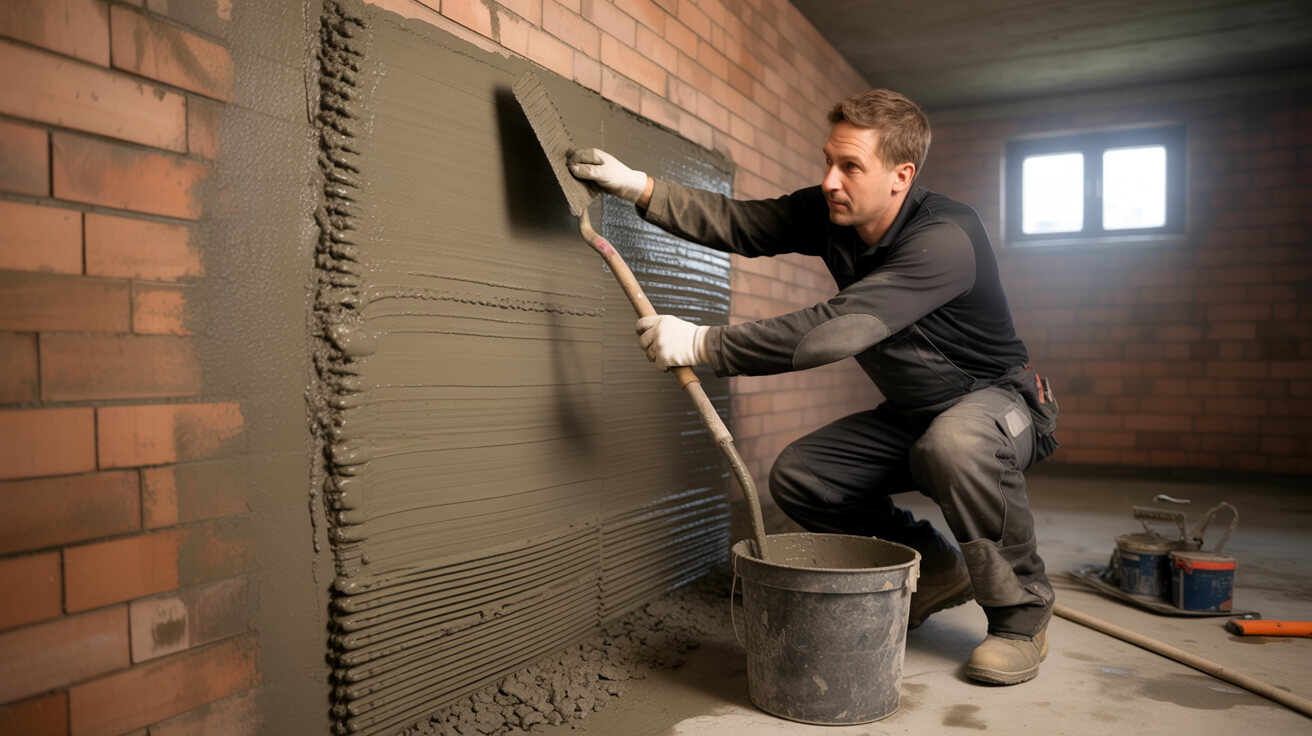
Tanking slurry represents an advanced method within the field of damp proofing and is characterised by its unique composition of waterproof additives and binding agents. This treatment is used to arrest the capillary rise of moisture through masonry and concrete surfaces, ensuring that structures are protected from rising damp and external water intrusion. Owing to its dynamic properties, tanking slurry is applied in both new construction and retrofit scenarios under stringent quality and regulatory standards such as BS8102 and BS6576.
Etymology or Name Origin
The term “tanking slurry” derives from the concept of creating a “tank-like” seal on a surface to block water and moisture. Historically, the evolution of moisture control techniques in construction has led to the adoption of chemical treatments that mimic the effectiveness of traditional tanking methods. “Slurry” refers to the semi-liquid mixture that is applied and allowed to cure into an impermeable film. Over time, this terminology has been refined within technical literature as the product has evolved from rudimentary mixtures to highly engineered formulations.
Overview / Context
Damp proofing is an essential aspect of building maintenance and construction, particularly in areas prone to high humidity and moisture ingress. In the context of damp proofing, treatments are designed to control water migration through building materials, which can compromise structural integrity and indoor air quality. Tanking slurry is one such treatment designed to inhibit the passage of water through walls and foundations by forming a robust chemical barrier.
The application of tanking slurry is commonly implemented in scenarios where traditional damp proof courses fail to establish an effective seal. This includes situations where substrate variability, such as differences in porosity or surface deterioration, prevents conventional methods from achieving desired results. As such, tanking slurry is frequently adopted in both new buildings and in the remedial treatment of older structures that exhibit signs of rising damp, salt efflorescence, and mould growth.
History
Origins
Early damp proofing methods relied primarily on physical barriers and natural materials such as lime plaster and bitumen coatings. However, these methods often lacked the chemical properties needed to form a continuous, flexible barrier capable of adapting to the inconsistencies in modern construction materials. With the advent of industrial chemistry in the early twentieth century, the construction industry began experimenting with a variety of chemical treatments. These initial formulations aimed to combine the adhesive properties of binder agents with the waterproofing abilities of bitumen and other emulsions.
Industrial Emergence
During the mid-20th century, the manufacture of waterproofing chemicals expanded significantly as research in polymer science and material engineering matured. This era saw the standardisation of many damp proofing techniques, including the development of tanking slurry as a distinct category. Manufacturers began to refine their formulations to address specific challenges such as moisture penetration through capillary action, leading to improved products that were better able to adhere to heterogeneous substrates. Standardisation also became a significant factor, with organisations such as the British Standards Institution (BSI) developing guidelines that would form the basis for later standards, including BS8102 and BS6576.
Contemporary Evolution
In recent decades, the technology behind tanking slurry has advanced through the integration of modern polymers, nanomaterials, and proprietary chemical blends. This evolution has resulted in products that not only provide enhanced waterproofing but also offer improved durability, faster curing times, and greater environmental resistance. Contemporary tanking slurries are engineered to deliver consistent performance even under challenging environmental conditions such as high humidity and variable temperatures. Moreover, the advancements in application technology, including precise injection systems and digital moisture mapping, have significantly reduced the margin for error in their application. The modern approach is marked by rigorous testing and certification processes, ensuring that each treatment meets or exceeds established industry standards.
Concept / Description
Definition
Tanking slurry is defined as a chemically formulated, liquid-applied damp proofing treatment that cures to form a continuous and impermeable barrier on a surface. It is designed to prevent the ingress of moisture through porous building materials by effectively sealing the substrate and inhibiting capillary action.
Composition and Mechanism
The composition of tanking slurry typically includes several key components:
- Bitumen Emulsion: Provides the primary waterproofing function by forming a waterproof matrix.
- Waterproof Additives: Such as polymers and resins, which enhance the barrier properties and improve adhesion.
- Adhesion Promoters: Chemical agents that ensure strong bonding between the slurry and the substrate.
- Fillers and Pigments: Often incorporated to adjust the viscosity and improve the visual consistency of the application.
Upon application, the slurry penetrates small fissures and irregularities within the substrate. As it cures, chemical reactions within the formulation result in the formation of a dense, cohesive film that adheres to the underlying material. This film obstructs the pathways through which moisture might otherwise travel, effectively reducing the risk of damp ingress. The curing process is critical, as it determines the ultimate bond strength and durability of the treatment.
Relevance and Integration
From a functional perspective, tanking slurry is a cornerstone element of advanced damp proofing systems. Its ability to penetrate and seal a wide range of substrates makes it a versatile solution for diverse building environments. For instance, in historical construction where traditional damp proof courses might be unsuitable due to material incompatibility, tanking slurry offers a modern alternative that can be adjusted to meet specific conservation requirements. Likewise, in new construction, it serves as a reliable preventive measure to guard against future moisture problems.
Functionality / Purpose / Applications
Practical Use and Application Process
The primary purpose of tanking slurry is to create an effective moisture barrier that prevents water from penetrating building components. The application process is methodical and requires precision at each stage to achieve optimum performance:
- Surface Preparation: The substrate must be meticulously cleaned, with loose materials, contaminants, or previous coatings removed. This step ensures that the slurry can bond securely with the underlying surface.
- Drilling and Injection: Controlled drilling is performed to create a pattern of injection points. The slurry is then forced into the substrate through these holes using specialised injection equipment. The pattern and depth are calculated based on the moisture content and physical properties of the wall.
- Curing: Following application, the slurry is allowed to cure under controlled environmental conditions. This phase is monitored to ensure that the treatment sets properly, achieving the requisite bond strength and barrier properties.
- Quality Control: Tools such as moisture metres and thermal cameras are employed to verify the effectiveness of the treatment. Data is recorded to validate that the process has met the established performance metrics.
Areas of Deployment
Tanking slurry is predominantly used in scenarios where existing damp proof courses have failed or when the risk of damp is high. Key applications include:
- Basements and Underground Structures: In these environments, high hydrostatic pressure and moisture-laden soil create conditions where traditional methods may not suffice.
- Heritage and Listed Buildings: Specially formulated variants can be used in conservation projects where the substrate is sensitive and requires non-invasive treatments.
- New Construction: As part of an integrated moisture control system, tanking slurry is applied in the early stages of construction to prevent future moisture-related complications.
- Residential and Commercial Properties: Both sectors benefit from its ability to stabilise moisture levels and protect the integrity of internal finishes.
Intended Outcomes
The desired outcomes of applying tanking slurry are multifaceted, including:
- Moisture Inhibition: Creating a durable barrier that prevents the capillary rise of moisture.
- Structural Preservation: Reducing the risk of damp-induced decay and extending the lifespan of building materials.
- Improved Indoor Environment: Lowering the potential for mould growth and associated health hazards.
- Economic Benefits: Reducing the ongoing costs related to damp-related repairs and maintenance, thereby preserving property values.
Classifications / Types / Variants
Variants of tanking slurry are developed to address different environmental and substrate-specific challenges:
- Standard Formulations: Typically employed in general applications, these are based on conventional bitumen emulsions with added waterproofing agents.
- Enhanced Variants: Incorporate additional polymers or nanomaterials to enhance adhesion and resistance to high-pressure conditions.
- Heritage-Compatible Slurries: Designed specifically for use on traditional substrates, these formulations use less aggressive chemicals to maintain compatibility with historic materials.
- Hybrid Formulations: Combine features of chemical and physical damp proofing, often used in complex or mixed-material structures where multiple moisture pathways exist.
Each variant is chosen based on factors such as the type of damp encountered, the nature of the building substrate, and the specific performance requirements dictated by environmental conditions and regulatory standards.
Systems / Tools / Methodologies
Application Tools and Equipment
The application of tanking slurry requires specialised equipment to ensure precision and consistency:
- Injection Devices: High-pressure injection guns capable of delivering the slurry into drilled holes at controlled intervals.
- Drilling Equipment: Tools used to create the necessary injection points, ensuring uniform distribution across the target area.
- Surface Preparation Tools: These include scrapers, wire brushes, and cleaning agents, all of which are critical for removing contaminants and ensuring a clean substrate.
- Measurement Instruments: moisture metres, thermal cameras, and hygrometers are used to gauge the pre- and post-treatment moisture content, ensuring that the target conditions are met.
Methodological Process
The methodology for applying tanking slurry is characterised by a systematic, multi-step process designed to optimise performance: 1. Pre-Treatment Survey: A detailed inspection is carried out to determine the extent of moisture ingress and the condition of the substrate. This survey informs decisions regarding drilling patterns and the quantity of slurry required. 2. Surface Preparation: The substrate is cleaned and repaired to eliminate any dust, debris, or existing coatings that could impair adhesion. 3. Injection Protocol: A predefined drilling pattern is established, and the slurry is injected using calibrated equipment. The injection depth and pressure are adjusted in accordance with the material properties and moisture measurements. 4. Curing and Monitoring: Post-application, the treatment is left to cure under controlled conditions. The curing process is monitored using digital sensors to ensure that the material forms a coherent, durable barrier. 5. Quality Assurance: Final inspections using moisture metres and thermal imaging confirm that the treatment has met all performance criteria.
Integration with Industry Standards
The entire process is designed to comply with established guidelines such as:
- BS8102: Which sets out the requirements for waterproofing in below-ground and below-surface structures.
- BS6576: That provides standards for the application of chemical damp proof courses.
- PAS2035: Which influences retrofit projects, particularly in relation to heritage conservation.
- HHSRS: Which outlines health and safety risks associated with damp environments.
These standards guide every step, from formulation selection to post-treatment monitoring, ensuring a high level of reliability and consistency.
Stakeholders / Entities Involved
Professional Participants
Several professional groups are typically involved in applying tanking slurry:
- Damp Proofing Specialists: Experts in diagnosing moisture problems and implementing treatment solutions.
- Building Surveyors: Professionals who assess the condition of structures and verify the success of the damp proofing treatment through detailed measurements.
- Contractors: Skilled tradespeople responsible for the physical application of the slurry and related repair works.
- Project Managers: Individuals who oversee the planning, execution, and quality control aspects of the treatment process.
- Quality Assurance Inspectors: Authorities who ensure that the project complies with relevant building regulations and industry standards.
Regulatory and Standards Bodies
The use of tanking slurry is governed by stringent regulations and standards that involve various entities:
- Standards Organisations: Bodies that publish guidelines such as BS8102 and BS6576, which dictate material quality and application techniques.
- Local Building Authorities: Agencies responsible for enforcing building regulations and ensuring that construction and retrofitting projects comply with safety standards.
- Certification Bodies: Organisations that provide quality assurance and certification of waterproofing systems, thereby bolstering confidence in the treatment’s performance.
Legal / Regulatory / Ethical Considerations
Regulatory Framework
tanking slurry application is strictly regulated to ensure safety and efficiency:
- Compliance with BS8102 and BS6576: These British Standards specify the performance and installation procedures for damp proof courses and chemical treatments, ensuring a high degree of reliability.
- Modern Regulatory Requirements: In retrofit scenarios, PAS2035 and similar guidelines influence the selection of materials and the methodologies used, particularly in heritage buildings where preservation is paramount.
- Health and Safety Regulations: The Housing Health and Safety Rating System (HHSRS) and other relevant legislation address the health risks posed by damp environments and mandate effective remedial interventions.
Ethical and Conservation Considerations
Ethical considerations are paramount, particularly when applying treatments to heritage or listed buildings:
- Material Compatibility: It is crucial that the chemical treatment does not irreversibly alter or damage historically significant materials.
- Transparency in Reporting: Accurate documentation and reporting are essential to inform property owners and regulatory bodies of the treatment’s efficacy and the overall condition of the building.
- Conservation Sensitivity: The choice of treatment must balance modern damp proofing efficacy with the preservation of traditional construction methods and aesthetics.
Performance Metrics / Data / Measurements
Key Performance Indicators
The effectiveness of tanking slurry is assessed using a range of technical parameters:
- Bond Strength: This measures the adhesion between the slurry and the substrate, which is critical for long-term durability.
- Curing Time: The duration required for the slurry to cure fully is monitored to ensure it develops optimal mechanical properties.
- Vapour Permeability: It is important that the treatment maintains a balance between water resistance and the ability of the substrate to breathe, thus preventing excessive moisture build-up.
- Moisture Content: Pre-treatment and post-treatment moisture measurements are compared using calibrated instruments to evaluate the reduction in dampness.
- Thermal Performance: The use of thermal imaging can reveal inconsistencies in the treatment application, ensuring uniform coverage and curing.
Data Collection Techniques
Various measurement techniques are employed throughout the process:
- Moisture Metres: These devices provide quantitative data on the moisture level of the substrate before and after treatment.
- Thermal Cameras: infrared thermography is used to visualise moisture distribution and detect potential weaknesses in the application.
- Sensor-Based Monitoring: Advanced systems may incorporate wireless moisture sensors that log data over time to track the long-term performance of the treatment.
- Laboratory Analysis: In some cases, samples of the cured material are tested under controlled conditions to determine properties such as compressive strength and durability.
Challenges / Barriers / Limitations
Operational and Technical Challenges
The application of tanking slurry is complex and subject to a variety of challenges:
- Substrate Variability: Differences in the physical characteristics of building materials, such as porosity and surface deterioration, can affect the adhesion and performance of the slurry.
- Surface Preparation: Inadequate cleaning or improper repair of the substrate may lead to poor bonding, compromising the treatment’s effectiveness.
- Environmental Conditions: The curing process is highly sensitive to ambient temperature, humidity, and other climatic factors, which can vary significantly from site to site.
- Application Consistency: Ensuring a uniform application over an irregular surface requires precision in drilling patterns, injection depth, and pressure control.
- Maintenance and Durability: Over time, factors such as UV exposure, chemical degradation, and mechanical wear may reduce the effectiveness of the treatment, necessitating periodic inspections and maintenance.
Economic and Social Considerations
In addition to technical challenges, economic and social factors also influence the use of tanking slurry:
- Cost Implications: The overall cost of treatment includes material expenses, labour, and potential downtime during application, which can be a concern for property owners.
- Property Valuation: Inconsistencies in application can lead to issues in property valuation and impact mortgage approvals, influencing how the treatment is perceived by lenders and insurers.
- User Expertise: The need for skilled professionals to apply tanking slurry according to the stringent regulatory standards can limit its widespread adoption, especially in smaller projects.
- Market Perception: Despite its proven effectiveness, the adoption of tanking slurry may be met with resistance from stakeholders accustomed to traditional damp proofing methods.
Limitations in Existing Practices
There are inherent limitations associated with current tanking slurry technologies:
- Material Degradation: Even under optimal conditions, the efficacy of tanking slurry may diminish over time, requiring periodic maintenance or reapplication.
- Application Errors: Mistakes in the application process, such as incorrect drilling patterns or insufficient curing time, can lead to early failure of the treatment.
- Environmental Variability: The performance of tanking slurry is closely linked to local environmental conditions, making it difficult to standardise across different geographic regions without specialised adaptations.
Impact / Influence / Legacy
Structural and Economic Impact
The proper application of tanking slurry yields significant benefits:
- Enhanced Structural Integrity: By forming a robust barrier against moisture, tanking slurry contributes to the preservation of both the functional and aesthetic qualities of building fabric.
- Economic Advantages: Reducing damp-related damage translates to lower maintenance costs and improved property valuations. Consistent treatment also supports smoother insurance and mortgage processes.
- Long-Term Durability: The collective impact of high-quality treatment is seen in extended building lifespans, with fewer instances of water-induced decay and associated repair costs.
Industry Influence
Tanking slurry has left a lasting imprint on the field of damp proofing:
- Standardisation of Methods: The widespread adoption of regulated tanking slurry techniques has driven improvements in both formulation and application processes, leading to more reliable outcomes.
- Innovation in Material Science: Continued research into the chemical properties of tanking slurry has spurred the development of enhanced variants that offer better performance under challenging environmental conditions.
- Knowledge Dissemination: Through industry organisations and regulatory bodies, insights about tanking slurry have been effectively disseminated, contributing to improved practices in the broader construction sector.
Legacy in Practice
The legacy of tanking slurry is evident in its continued use:
- Historical Preservation: In heritage buildings, the careful application of tanking slurry has allowed for the preservation of traditional construction methods while safeguarding against contemporary moisture challenges.
- Technological Integration: Modern technological enhancements, including sensor-based monitoring and digital quality control, have reinforced the treatment as a mainstay in damp proofing solutions.
- Sustainability Considerations: As the industry moves toward more environmentally friendly practices, tanking slurry is increasingly integrated into sustainable building protocols, balancing effective damp proofing with reduced environmental impact.
Future directions, cultural relevance, and design discourse
Emerging Trends
Advancements in material science and application technology are likely to influence the future of tanking slurry:
- Innovative Formulations: Research is underway to integrate nano-materials and bio-based compounds to create tanking slurries that are both highly effective and environmentally benign. These formulations aim to enhance water resistance while improving material sustainability.
- Smart Monitoring Tools: The integration of digital sensor technologies that continuously monitor moisture levels could revolutionise the field. Real-time data collection will enable more adaptive maintenance schedules and proactive interventions.
- Automated Application Systems: Developments in robotics and automated injection systems may lead to more precise, consistent, and efficient applications of tanking slurry, minimising human error and increasing overall effectiveness.
Regulatory Evolution
Regulatory frameworks are expected to evolve in parallel with technological advancements:
- Enhanced Standards: Future revisions of standards such as BS8102 and BS6576 may incorporate new criteria that reflect the latest scientific research, environmental concerns, and technological capabilities.
- Greater Emphasis on Sustainability: Regulatory bodies may increasingly require treatments that reduce the ecological footprint of damp proofing systems, prompting further innovation in tanking slurry formulations.
- Improved Quality Assurance: The adoption of digital monitoring and advanced testing methods will likely lead to more robust quality assurance protocols, ensuring greater consistency and reliability in treatment outcomes.
Cultural Relevance and Design Discourse
The cultural and design aspects of damp proofing are gaining prominence alongside technological advancements:
- Heritage Sensitivity: There is an increasing need to reconcile modern construction techniques with the preservation of historically significant structures. Tanking slurry, when tailored to heritage requirements, plays a critical role in maintaining both the functionality and integrity of older buildings.
- Design Integration: As buildings become more integrated with digital and sustainable architecture, damp proofing solutions are expected to contribute aesthetically to design outcomes. Future treatments may be designed to be less visually intrusive while maintaining high performance.
- Academic and Industry Debates: Ongoing academic research and critical reviews will continue to refine the knowledge base around tanking slurry, influencing educational curricula and professional certification programmes. These discourses contribute to a more informed approach to damp proofing that balances technical performance with cultural values.
Prospective Innovations
Looking forward, several innovations appear poised to shape the future of tanking slurry:
- Digital Twin Integration: The use of digital twin technology may allow for the virtual simulation of damp proofing treatments, enabling optimization of application methods and prediction of long-term performance outcomes.
- Adaptive Formulations: Advances in responsive material technologies may lead to the creation of tanking slurries that adapt their properties in real time according to environmental changes, offering dynamic protection where traditional methods fall short.
- Interdisciplinary Collaboration: Closer collaboration between chemists, engineers, and conservation specialists will likely spark breakthroughs that further refine tanking slurry applications, ensuring they are both effective and minimally invasive.
- Global Standardisation Efforts: With increasing globalisation in construction practices, international collaborations may lead to more universally accepted standards and methods that improve the consistency and reliability of tanking slurry applications across different regions.

