
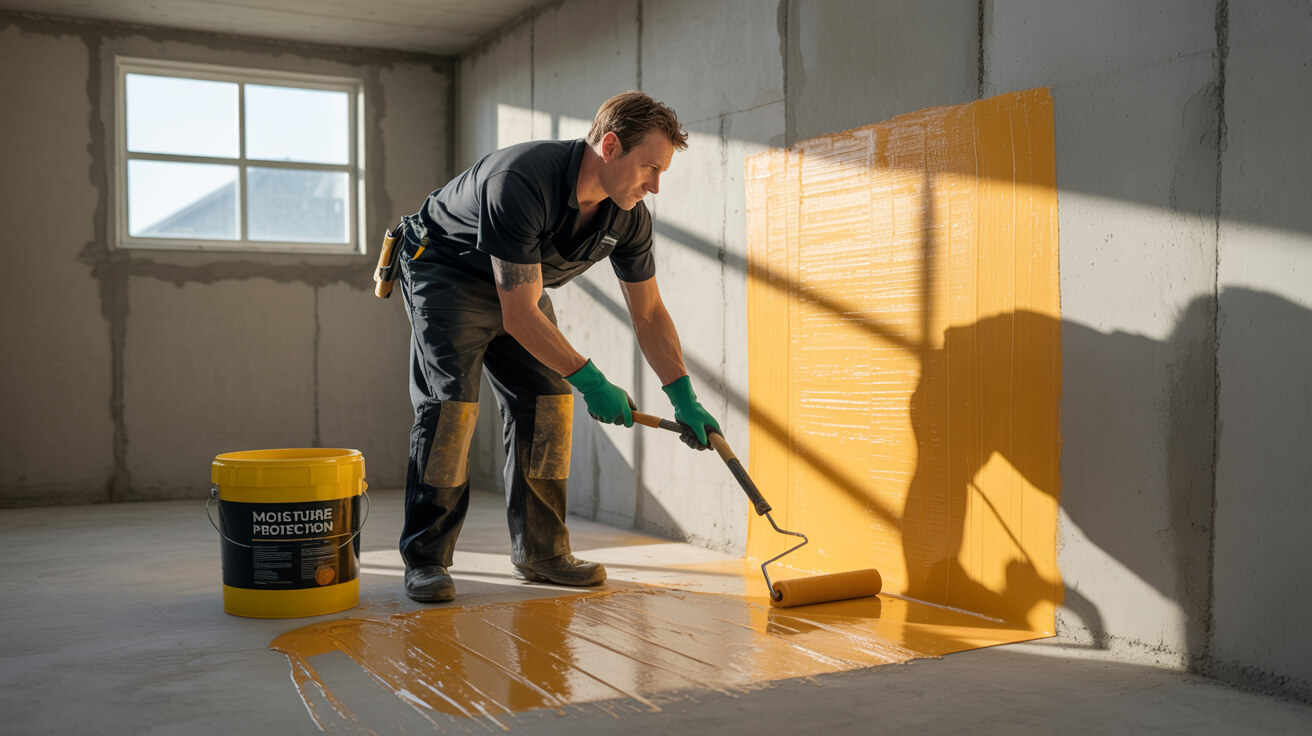
Internal waterproofing involves a range of techniques aimed at preventing moisture from compromising interior finishes or weakening structural integrity. By implementing chemical and physical barrier systems, this treatment not only mitigates indoor dampness but also helps in preserving the durability and aesthetic quality of building materials. In practice, its applications span residential, commercial, and heritage properties, reflecting both an evolution in technology and a response to regulatory standards such as BS6576, BS8102, and PAS2035.
Overview / Context
Internal waterproofing plays a critical role in the broader context of damp proofing by addressing moisture issues that penetrate or accumulate on interior surfaces. This discipline is particularly important in scenarios where exterior treatments prove insufficient or are impractical. Moisture within buildings may arise from various sources, including condensation due to temperature differentials, capillary rise from the ground, or infiltration caused by structural defects.
The Environmental and Structural Imperatives
- Moisture Sources: Internal dampness can result from external factors such as heavy rainfall, high water tables, and capillary action, or from internal sources like high humidity and insufficient ventilation.
- Building Substrates: Different materials (e.g., brick, concrete, plasterboard) respond variably to moisture. Internal waterproofing methods must be tailored to the specific properties and absorption characteristics of these substrates.
- Regulatory Framework: Compliance with standards ensures that internal waterproofing reinforces the overall safety and durability of structures, while also contributing to better energy efficiency and indoor air quality.
Importance in Damp Management Systems
Internal waterproofing is employed when external measures are insufficient or when direct intervention inside the building provides a more viable solution. It works in tandem with other damp proofing measures—such as external damp proof courses, ventilation improvement, and drainage systems—to form a layered defence against moisture. This holistic approach is particularly critical in older buildings and those subject to heritage preservation guidelines, where the integrity of original materials must be maintained.
History
The evolution of internal waterproofing reflects advancements in both materials science and building technology, as well as changing regulatory environments. Over centuries, basic techniques have developed into a sophisticated set of practices, including methods where Spray Application: Used for certain systems, designed to address the complex challenges of damp management.
Early Practices
Historically, moisture control within interiors was managed through rudimentary methods such as the application of lime washes and simple plaster repairs. These early interventions were based on empirical observations aimed at mitigating visible signs of damp, though they lacked the scientific rigour required for long-term effectiveness.
Industrial Advancements
The industrial revolution brought about significant changes in construction methods and material availability. With the development of synthetic chemicals and improved diagnostic instruments, internal waterproofing methods advanced considerably. Innovations during this period included the introduction of waterproofing creams and the use of injection systems, which allowed for more controlled and precise application of moisture barriers within building substrates.
Modern Techniques and Regulation
Contemporary internal waterproofing is characterised by a dual focus on functional performance and regulatory compliance. The incorporation of standards such as BS6576 and BS8102, along with the emergence of PAS2035 for retrofit projects, has established a framework that ensures treatments are both effective and safe. Advances in technology—most notably in diagnostic tools like moisture metres and thermal imaging cameras—have enabled practitioners to more accurately assess damp issues and tailor treatments accordingly. These developments have not only improved the reliability of internal treatments but have also decreased the incidence of recurring damp problems by providing robust, scientifically validated solutions.
Concept / Description
Internal waterproofing is a specialised process aimed at safeguarding buildings from moisture intrusion by establishing an interior barrier. This process involves a variety of chemical and physical methods that work to prevent water from penetrating interior surfaces, thereby maintaining the integrity and longevity of both the structure and its finishes.
Core Principles and Mechanisms
- Barrier Formation: The fundamental aim is to create a water-resistant barrier through either chemical impregnation or the installation of physical membranes. This barrier minimises the movement of water molecules through porous materials.
- Moisture Management: The process seeks to control not only liquid water but also the vapour phase, balancing the need for impermeability with the necessity for breathability to prevent moisture entrapment.
- Prevention of Damp Migration: By stopping moisture at its point of entry, internal waterproofing reduces the risk of damp-related deterioration, such as efflorescence, mould growth, and paint failure.
- Adaption to Internal Conditions: Treatments are designed to be compatible with existing interior finishes and substrates, ensuring that the aesthetics and structural performance are preserved.
Components and Materials
Internal waterproofing systems are typically composed of several layers:
- Preparation Layer: The initial step involves preparing the surface by removing contaminants and ensuring proper adhesion. This may include cleaning, degreasing, and the removal of loose materials.
- Barrier Layer: Applied either as a chemical treatment (e.g., waterproofing creams or injection systems) or as a physical barrier (e.g., membranes or sealants), this layer is the core of the moisture-protection system.
- Finishing Layer: Often involving replastering with breathable plasters, this layer provides both protection and an aesthetic finish, allowing moisture vapour to escape without permitting liquid water ingress.
Theoretical Underpinnings
Internal waterproofing is grounded in principles of moisture physics, including:
- Capillary Action: The phenomenon by which water moves through small pores in materials, which the barrier layer must counteract.
- Condensation Dynamics: Understanding how temperature gradients within a building contribute to moisture condensation on internal surfaces.
- Thermal Bridging: The transfer of heat across poorly insulated areas, which can lead to cold spots that promote condensation.
- Vapour Permeability: The ability of a material to allow water vapour to pass through it, a key metric in selecting appropriate finishing materials that balance protection with breathability.
Functionality / Purpose / Applications
Internal waterproofing serves multiple critical functions in building maintenance and performance. It primarily focuses on controlling indoor moisture levels to enhance structural lifespan, indoor environmental quality, and energy efficiency.
Objectives and Functional Benefits
- Moisture Control: The primary goal is to restrict the passage of water into the building’s interior, thereby preventing damage to finishes and structural components.
- Protection of Indoor Finishes: By minimising damp penetration, internal waterproofing helps maintain the integrity of paint, plaster, and decorative finishes.
- Improved Energy Efficiency: Reducing moisture content in building materials can improve insulation properties and reduce energy costs associated with heating and cooling.
- Mitigation of Health Risks: Controlling internal moisture reduces the potential for mould growth and other damp-related health hazards, contributing to a healthier indoor environment.
Application Areas
Internal waterproofing is applied across various contexts, reflecting its versatility:
- Residential Properties: Particularly in older or heritage homes, where internal damp issues are common due to outdated construction methods and limited external waterproofing.
- Commercial Buildings: Where maintaining a dry and comfortable interior environment is essential for operational efficiency and occupant well-being.
- Heritage and Conservation Projects: In historical buildings, internal waterproofing must balance modern performance requirements with preserving the original character and materials.
- Renovation and Retrofit Projects: Especially when updating building envelopes to meet modern energy and safety standards without compromising existing structures.
Practical Implementation
The process of internal waterproofing involves several sequential steps: 1. Diagnostic Assessment: Using tools such as moisture metres, thermal imaging cameras, and salt test kits to determine the extent and source of moisture ingress. 2. Surface Preparation: Cleaning and preparing the substrate to ensure optimal adhesion of waterproofing treatments. 3. Barrier Application: Deploying chemical treatments, physical membranes, or a combination of both, depending on the nature of the moisture problem; Spray Application: Used for certain coatings where the specification and substrate condition permit. 4. Curing and Finishing: Allowing adequate curing times for the applied materials, followed by replastering with breathable finishes to finalise the treatment. 5. Performance Monitoring: Ongoing use of diagnostic tools to assess the effectiveness of the waterproofing treatment and to detect any potential re-occurrence of dampness.
Classifications / Types / Variants
Internal waterproofing initiatives can be classified based on the method and materials used. The categorization helps in selecting the most appropriate system for a given scenario.
Chemical Methods
Chemical waterproofing methods rely on liquid-applied treatments that penetrate and bond with the substrate. Examples include:
- Waterproofing Creams: These are injected into the wall, where they chemically react with the substrate to form a water-repellent barrier.
- Injection Systems: Using specialised equipment, these systems deliver waterproofing chemicals in precise patterns to ensure even coverage and absorption.
Physical Barrier Systems
Physical systems create a continuous impermeable layer by applying sheet or liquid membranes over prepared surfaces. Key variants include:
- Sheet Membranes: Pre-formed materials that are applied to the internal surface to provide a continuous barrier against water.
- Liquid-Applied Membranes: These are sprayed or rolled on, forming a seamless, flexible layer that adapts to the contours of the substrate.
Plaster-Based Solutions
Plaster-based systems incorporate waterproofing within the finishing material itself. Examples include:
- Breathable Plaster Systems: These allow water vapour to escape while preventing liquid water from penetrating the surface.
- Polymer-Modified Plasters: Enhancements to traditional plasters that combine the benefits of conventional installations with increased water resistance.
Systems / Tools / Methodologies
A variety of diagnostic tools, materials, and methodologies are integral to the practice of internal waterproofing. These systems ensure that the process not only meets regulatory standards but also adapts to the specific conditions of each building.
Diagnostic Tools
Accurate diagnosis is central to effective internal waterproofing. The following tools are commonly employed:
- Moisture Metres: Devices that quantitatively measure the moisture content within walls and substrates.
- Thermal Imaging Cameras: These capture temperature variations on surfaces to highlight areas where moisture may be present.
- Salt Test Kits: Used to identify the presence of salts, which are often a byproduct of damp or rising moisture.
- Hygrometers: Instruments for measuring the relative humidity of indoor environments, aiding in the determination of potential condensation issues.
Methodologies
The practical methodology for internal waterproofing can be broken down into several critical phases:
- Surface Preparation: This initial phase involves the thorough cleaning, degreasing, and removal of any loose or deteriorated material. Successful adhesion of waterproofing treatments depends on a properly prepped surface.
- Application Techniques:
- Injection: Utilising specialised injection guns, waterproofing chemicals are introduced into the wall system at controlled pressures and intervals.
- Roller/Brush Application: For liquid-applied membranes or sealants, this method ensures even distribution across larger surface areas.
- Spray Application: Used for rapid and uniform application of thin-film waterproofing materials.
- Curing and Finishing: Once applied, the treatment must be allowed to cure under controlled conditions. This phase is often followed by replastering using breathable finishes that restore the interior aesthetics without compromising moisture control.
- Monitoring Procedures: Post-application evaluation is conducted through periodic measurements of moisture levels and visual inspections to ensure treatment efficacy.
Integration with Building Systems
Internal waterproofing often must work in concert with other structural and environmental systems:
- Ventilation Systems: Enhancing natural or forced ventilation to reduce the likelihood of condensation and improve air quality.
- Dehumidification Controls: Automated systems that maintain optimal humidity levels throughout the building, thereby complementing waterproofing efforts.
- Internal Drainage Solutions: In some cases, supplemental drainage systems are installed to redirect any residual moisture away from critical areas, preventing stagnation and further damp issues.
Stakeholders / Entities Involved
A multidisciplinary group is involved in the planning, execution, and maintenance of internal waterproofing projects. Understanding the roles of each stakeholder is essential for ensuring successful outcomes.
Key Stakeholders
- Homeowners and Property Owners: These individuals are primarily responsible for property maintenance and must decide when and how to address damp issues.
- Landlords and Facilities Managers: Typically tasked with ensuring the overall safety and compliance of properties, these stakeholders monitor and commission waterproofing measures as part of routine maintenance.
- Contractors and Waterproofing Specialists: Professionals who instal and maintain internal waterproofing systems, ensuring that the materials and techniques meet industry standards and building regulations.
- Surveyors and Compliance Inspectors: Specialists who assess the extent of damp problems and verify that treatments adhere to relevant standards such as BS6576, BS8102, and PAS2035.
- Retrofit Coordinators: In cases where older buildings require updated treatments, these professionals oversee projects to integrate modern waterproofing techniques with existing heritage fabrics.
Collaborative Processes
The successful implementation of internal waterproofing is dependent on the coordinated efforts among various parties:
- Pre-Installation Consultations: Joint assessments involving property owners, surveyors, and contractors to tailor waterproofing solutions to the specific conditions of a building.
- Quality Assurance Reviews: Continuous monitoring and subsequent certification that treatment procedures have met the rigorous standards set by regulatory bodies.
- Maintenance and Follow-Up: Ongoing engagement is required to ensure that installed systems continue functioning optimally, with regular inspections and potential reapplications as needed.
Legal / Regulatory / Ethical Considerations
Ensuring that internal waterproofing methods comply with legal requirements and adhere to ethical standards is essential for both safety and consumer protection.
Regulatory Framework
- Standards Compliance: Internal waterproofing practices must conform to industry standards such as BS6576, which outlines diagnostic criteria and treatment methods, and BS8102, which specifies requirements for basement waterproofing. The PAS2035 standard further guides retrofit projects by detailing modern best practices.
- Building Regulations: Various sections of the Building Regulations (notably Part C) mandate specific moisture control measures, ensuring that installations reduce risks to structural integrity and occupant health.
- Consumer Protection: Legally, contractors must meet established standards to protect consumers from inadequate or hazardous treatments. Ethical obligations demand that treatments provide long-term performance without compromising safety.
- Heritage and Conservation Requirements: In cases involving listed or historically significant buildings, compliance with heritage conservation guidelines is necessary. Such treatments must balance modern waterproofing technology with respect for the building’s original fabric.
Ethical Considerations
- Quality Assurance: The ethical practice of internal waterproofing involves providing accurate diagnosis, high-quality materials, and reliable installation practices. This ensures that homeowners and property managers receive effective, long-lasting solutions.
- Transparency and Accountability: Practitioners have an ethical obligation to adhere to regulatory standards and to communicate clearly with property owners regarding the limitations and maintenance requirements of installed systems.
- Environmental Responsibility: Selection and use of waterproofing materials are increasingly informed by considerations such as sustainability and environmental impact, aligning treatment choices with broader ecological standards.
Performance Metrics / Data / Measurements
Quantitative measurements and performance metrics are vital in determining the success of internal waterproofing systems.
Diagnostic and Measurement Tools
- Moisture Metres: Used to evaluate the moisture content in walls and other substrates, providing a baseline for treatment efficacy.
- Thermal Imaging: Cameras capture surface temperature variations, offering an indirect measure of moisture distribution over treated areas.
- Hygrometers: These assess indoor humidity levels and help determine if additional ventilation or dehumidification measures are necessary.
- Data Logging Systems: Integrated sensor networks enable continuous monitoring of moisture levels, allowing for trending analysis and early detection of anomalies.
Key Performance Indicators
- Moisture Reduction: Measured as a percentage decrease in moisture content compared with pre-treatment levels.
- Curing Time Accuracy: The extent to which curing times meet targeted benchmarks, ensuring the chemical treatments set appropriately.
- Warranty Validity: Performance data is critical for validating warranty claims, particularly in defining the longevity and reliability of the treatment.
Data Integration and Analysis
Organisations may use tables and charts to compare pre- and post-treatment performance data. For example, the following table outlines typical measurement parameters:
| Parameter | Pre-Treatment Value | Post-Treatment Target |
|---|---|---|
| Moisture Content (%) | 18-22 | < 12 |
| thermal imaging Variance (°C) | 3-5 | 1-2 |
| Curing Time (days) | N/A | 7-14 |
| Warranty Benchmark | N/A | 10-20 years |
Such structured data is essential for property managers, facilities directors, and surveyors to assess the reliability of internal waterproofing solutions.
Challenges / Barriers / Limitations
Despite significant advancements, several inherent challenges and limitations persist in the field of internal waterproofing.
Operational and Technical Challenges
- Surface Preparation: The success of internal waterproofing is heavily dependent on thorough surface preparation. Inadequate cleaning or improper removal of old materials can compromise the adhesion and efficacy of the applied treatment.
- Material Compatibility: Different building substrates respond variably to waterproofing materials. For instance, brick and concrete have different absorption rates and pore structures, necessitating careful selection of treatment systems.
- Installation Variability: Even slight inconsistencies in application—such as uneven injection pressure or incorrect membrane alignment—can lead to weak spots that fail to provide a continuous barrier against moisture.
- Curing Dependencies: Correct curing conditions are essential for chemical treatments; any deviation in temperature or humidity during the curing phase can impact effectiveness.
Economic and Logistical Barriers
- Cost Considerations: Quality internal waterproofing typically requires significant investment in both materials and skilled labour. This financial burden may deter some property owners, leading to deferred or suboptimal treatments.
- Disruption of Occupancy: The process of internal waterproofing usually necessitates temporary disruption of normal building use, which can be particularly challenging in commercial settings or in occupied residential properties.
- Diagnostic Ambiguities: Distinguishing between internal damp issues—such as condensation, rising damp, or internal leakage—can be complex, leading to potential misdiagnoses and inappropriate treatment choices.
Socio-Economic Considerations
- Property Valuation Impacts: Inadequate internal waterproofing can lead to reduced property values due to persistent damp issues, while proper treatment enhances long-term marketability.
- Regulatory and Compliance Constraints: Strict regulatory standards require rigorous adherence, and deviations can result in legal complications. These frameworks sometimes impose additional costs or limitations on treatment choices.
Impact / Influence / Legacy
Internal waterproofing has significantly influenced building maintenance practices and material science, with its applications yielding lasting benefits and setting precedents for future innovations.
Structural and Functional Impact
- Enhanced Material Durability: By effectively reducing internal moisture levels, internal waterproofing extends the lifespan of building materials, reducing the frequency and cost of repairs.
- Improved Energy Efficiency: The maintenance of dryer interior conditions contributes to better insulation performance and, consequently, lower energy consumption.
- Preservation of Building Aesthetics: The prevention of mould, salt staining, and degradation ensures that indoor finishes retain their appearance and functional integrity over time.
Broader Industry Influence
- Evolution of Standards: The development and refinement of internal waterproofing techniques have influenced the creation and updating of industry standards and regulatory frameworks, such as BS6576 and BS8102.
- Knowledge Dissemination: Advances in the field have been integrated into professional training programmes and technical guidelines, enhancing overall industry competence and reliability.
- Economic and Cultural Legacy: Reliable internal waterproofing contributes to the long-term value of a property and influences cultural perceptions of building quality and maintenance, particularly in regions with heritage buildings. Organisations such as Sussex Damp Experts have played a role in shaping these standards through rigorous practice and continuous improvement.
Future directions, cultural relevance, and design discourse
The future of internal waterproofing is poised to benefit from technological advancements, regulatory evolution, and interdisciplinary insights.
Technological Innovations and Research
- Advanced Sensor Integration: Future waterproofing systems are expected to integrate smart sensors that provide real-time data on moisture levels, enabling proactive maintenance and automated adjustments.
- Novel Materials and Formulations: Research is ongoing into more sustainable and efficient waterproofing chemicals and membranes that offer improved performance while reducing environmental impact.
- Digital Diagnostics: Enhancements in thermal imaging and AI-driven moisture analysis are likely to refine diagnostic accuracy, ensuring that treatments are precisely tailored to the specific conditions within each building.
Evolving Regulatory and Cultural Contexts
- Stringent Building Regulations: With increasing emphasis on energy efficiency and building safety, future regulations may impose even stricter standards on internal moisture control, driving innovation in treatment technologies.
- Heritage Preservation Challenges: As conservation practices evolve, internal waterproofing methods will need to adapt further to meet the dual demands of modern performance and historical preservation. This balance will be critical in heritage buildings where aesthetic integrity is paramount.
- Sustainable Practices: There is an emerging trend toward environmentally responsible construction practices. Future waterproofing solutions will likely incorporate sustainable materials and methods, aligning with global pushes for eco-friendly building technologies.
Design Discourse and Stakeholder Engagement
- Integration with Architectural Aesthetics: The future of internal waterproofing is likely to move towards a seamless integration with overall building design, where moisture management systems are incorporated into architectural planning rather than being viewed as retroactive solutions.
- Increased Stakeholder Collaboration: The roles of property owners, contractors, regulators, and conservation experts will continue to evolve, with increasing emphasis on collaborative approaches to maintenance that leverage digital tools and data-driven decision-making.
- Impact on Market Dynamics: As internal waterproofing methods improve, property valuations, particularly in markets where damp issues previously diminished marketability, are likely to rise. This trend will drive further investments in state-of-the-art treatment technologies and foster greater transparency in property maintenance.
| Emerging Areas | Key Developments |
|---|---|
| Smart Monitoring Systems | Integration of IoT devices and data analytics to continuously monitor moisture levels |
| Sustainable Materials | Development of eco-friendly waterproofing chemicals and membrane systems |
| Digital Diagnostic Tools | Advances in image processing and AI for more accurate and faster moisture assessment |
| Regulatory Innovations | Anticipated updates to BS6576, BS8102, and PAS2035 addressing modern building challenges |
| Heritage-Compatible Methods | New techniques that blend modern waterproofing with conservation-friendly materials |
As research and industry practices evolve, internal waterproofing will continue to be a dynamic field. Its convergence with digital technologies, sustainability imperatives, and advanced regulatory standards promises to reshape the very fundamentals of building maintenance and design. The ongoing discourse in this area reflects a broader commitment to ensuring that interior environments remain safe, efficient, and resilient in the face of ever-changing climatic and technological landscapes.

