
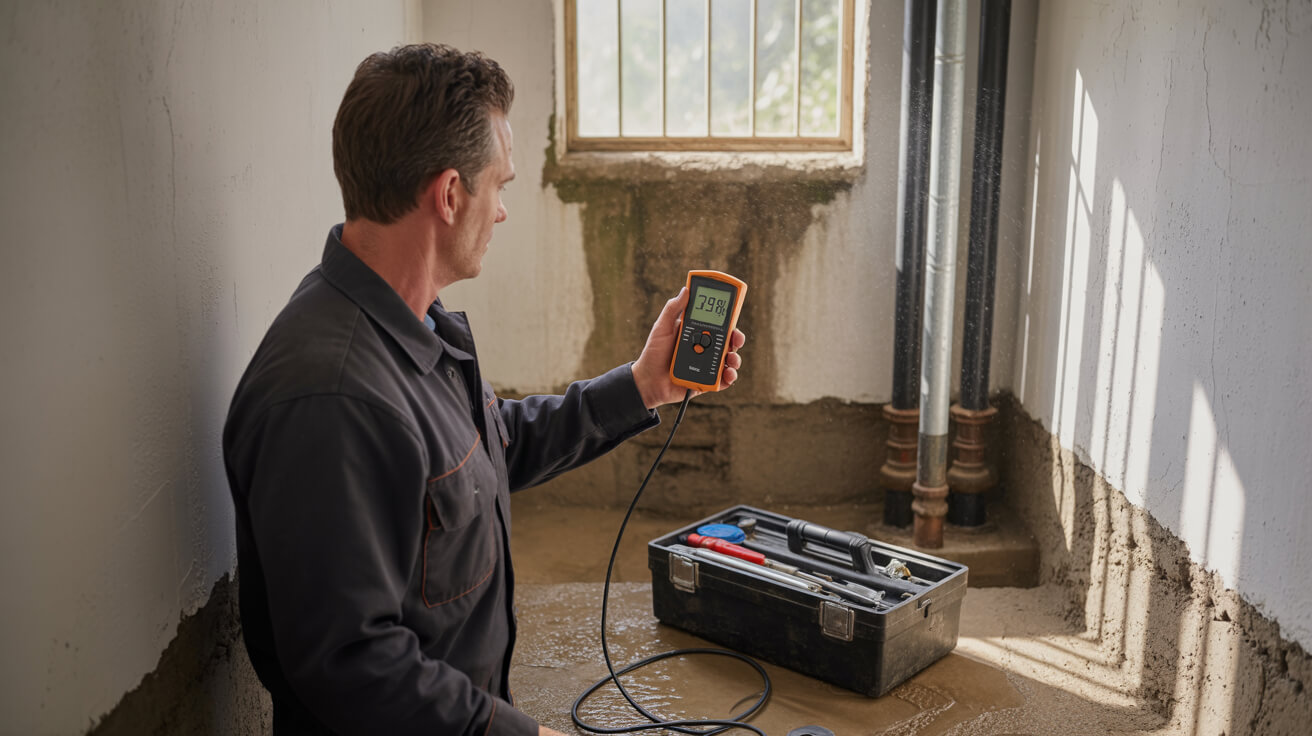
High moisture conditions represent a significant challenge within the field of damp proofing, where accurate measurement and effective treatment are essential to preventing long-term structural damage and deterioration. Excessive moisture can stimulate biological decay, promote mould growth, and facilitate the leaching of salts from surfaces. It also plays a decisive role in compliance with established industry standards and building regulations, which are designed to safeguard health and ensure reliable performance in building maintenance. Overall, an understanding of high moisture impacts is fundamental for professionals and property owners alike in sustaining durable, safe buildings.
Overview / Context
High moisture in the context of damp proofing is characterised by water content in building substrates that exceeds 20%. This measurable condition is significant because modern diagnostic tools consistently show that surpassing this threshold intensifies physical and chemical processes detrimental to material stability. From a physical perspective, water in building materials alters mechanical properties, leading to weakening of bonds, expansion, and eventual decay.
Scientific Background
- Capillary Action: Water can ascend through pores in materials such as brick, stone, and mortar due to capillary action. When moisture levels exceed 20%, the surficial effects become pronounced, and visible decay processes accelerate.
- Hydrostatic Pressure: In scenarios where water remains in contact with foundation walls, hydrostatic pressure can force water into the structure. This pressure is especially notable in areas with high water tables or following heavy precipitation.
- Condensation Mechanisms: When warm interior air contacts cool surfaces, condensation occurs, raising the moisture level. This phenomenon is particularly common in poorly ventilated environments and contributes to layered moisture build-up.
Environmental Factors
Environmental influences such as relative humidity, rainfall, seasonal temperature fluctuations, and local water table conditions all affect the moisture content in building materials. Climate and regional conditions can exacerbate moisture infiltration, making water management a critical component in both new constructions and retrofits.
Implications for Building Integrity
Excess moisture not only compromises the structural strength of construction materials by inducing freeze-thaw cycles and chemical degradation but also fosters conditions conducive to microbiological growth. This dual impact underscores the importance of understanding and maintaining moisture levels below problematic thresholds, specifically within the realm of damp proofing.
History
The understanding of damp and its management has evolved considerably over centuries. Initially, rudimentary observation and basic remedies were employed to combat noticeable signs of dampness such as efflorescence and mould. Historical documents reveal that early builders often relied on simple ventilation and the use of primitive water-repellent coatings to mitigate damp problems.
Early Detection and Treatment
- Observational Methods: In historical settings, moisture issues were primarily diagnosed through visual inspection—identifying discoloration, peeling plaster, and salt deposits.
- Primitive Remedies: Early solutions included the application of lime washes and other natural water repellents. However, these measures often provided only temporary relief.
Industrial Innovation
The advent of modern industrial engineering brought significant advancements. The development of moisture metres in the mid-20th century provided quantitative data for moisture content, enabling more precise diagnosis. Along with the introduction of thermal imaging techniques and laboratory-based testing methods, the field advanced into more reliable detection methods.
Regulatory Milestones
Subsequent decades saw the introduction of industry standards such as BS6576 and BS8102 in the United Kingdom, which formalised the criteria for damp proofing treatments. More recently, frameworks like PAS2035 have emerged to provide comprehensive guidelines for building retrofits in relation to moisture management. These regulatory advances not only improved treatment efficacy but also established benchmarks for quality and compliance across the industry.
Concept / Description
High moisture in damp proofing is defined by a measurable water content >20% in construction materials. This threshold is critical because it indicates that water has permeated past initial surface dampness into deeper layers, initiating a host of deleterious processes.
Core Principles
- Moisture Dynamics: Elevated moisture alters the properties of substrates; it increases permeability, decreases adhesion, and may chemically react with materials leading to accelerated degradation.
- Material Interactions: Different construction materials respond to moisture in varied ways. For example, porous masonry may absorb and retain significant amounts of water, while modern composites might resist moisture but fail when subjected to prolonged exposure.
- Diagnostic Criteria: The use of instruments like moisture metres and thermal imaging cameras is vital in quantitatively determining material moisture content. A reading consistently above 20% signals that the material is likely experiencing structural stress and deterioration.
Distinguishing Characteristics
High moisture conditions differ from routine dampness primarily in their permanence and the extent of their impact. While incidental damp may resolve with simple remedial measures such as improved ventilation, high moisture levels typically demand comprehensive treatment strategies and continuous monitoring due to the persistent nature of water migration in building materials.
Functionality / Purpose / Applications
The practical applications of understanding high moisture lie in its potential to compromise both safety and property value. Managing excessive moisture is crucial for a variety of purposes:
Preservation of Structural Integrity
- Diagnosis: Detecting moisture levels accurately helps predict potential structural failures. Measurements are used to determine if remedial actions are necessary and to monitor the effectiveness of interventions.
- Remediation: Effective mitigation strategies can arrest the deterioration process, ensuring that building components maintain their load-bearing abilities and resilience over time.
- Maintenance: Continuous monitoring and periodic inspections are critical to preventing recurrence. Advanced sensor technologies enable real-time data collection, which enhances post-treatment maintenance protocols.
Health and Environmental Impact
- Mould and Allergen Control: Elevated moisture facilitates the growth of mould and mildew, which can significantly degrade indoor air quality. Long-term exposure to these contaminants poses health risks, particularly for sensitive individuals.
- Ecosystem and Energy Efficiency: Maintaining proper moisture levels also contributes to energy efficiency by minimising the thermal bridging and deterioration that can disrupt a building’s thermal envelope.
Industry Applications
- Residential and Commercial Use: High moisture management is applicable both in new builds and the rehabilitation of existing structures, including historical buildings. In all cases, a systematic approach to damp proofing ensures longevity and compliance with safety standards.
- Regulatory Compliance: Meeting industry standards reduces the risk of legal disputes and improves the marketability of a property. Adherence to frameworks such as BS6576 and BS8102 formalises acceptable practices, ensuring uniformity and efficacy in treatment approaches.
- Economic Considerations: Early detection and effective remediation are financially advantageous. Property owners who address high moisture issues promptly are likely to save on extensive and costly structural repairs in the future.
Classifications / Types / Variants
High moisture issues intersect with various damp phenomena, necessitating a refined classification system:
Damp Types Related to High Moisture
- Rising Damp: Characterised by upward movement of moisture through capillary action from a moisture-laden substrate. High moisture levels exacerbate this condition, leading to notable deterioration at the base of walls.
- Condensation Damp: Stemming from intra-building condensation, this type results from the interaction of warm, humid air with cold surfaces. Elevated moisture content intensifies the risk of water accumulation and mould growth.
- Penetrating Damp: This involves water ingress through external breaches in the building envelope. When moisture becomes excessive, this type can rapidly compromise the protective barriers of structures.
- Hygroscopic Damp: Caused by the absorption of atmospheric moisture by salts and other compounds within the materials, this variant results in pronounced efflorescence and degradation.
Distinctions by Material Response
Different substrates exhibit varying responses, allowing further sub-classification:
- Porous vs. Non-Porous Materials: Porous materials such as brick and stone tend to absorb more water, necessitating different management strategies compared to non-porous or composite materials.
- Heritage vs. Modern Structures: Historical buildings often require different methodologies, as traditional materials interact with moisture in a way that modern treatments may not accommodate without compromising heritage integrity.
Systems / Tools / Methodologies
Advanced diagnostic and treatment systems are integral to managing high moisture in damp proofing. A wide array of tools and methodologies supports the meticulous assessment and remediation of moisture issues.
Diagnostic Instruments
- Moisture Metres: These devices are calibrated to provide quantitative readings of moisture content in building materials. Consistent readings above 20% indicate that remedial measures are required.
- Thermal Imaging Cameras: By detecting temperature anomalies caused by moisture evaporation, these devices help localise damp areas and identify hidden moisture gradients.
- Borescopes: Used for visual inspections of internal wall cavities, borescopes provide critical insights into moisture distribution in inaccessible areas.
- Salt Test Kits and Hygrometers: These tools confirm the presence of moisture-related salts and measure relative humidity, supporting the diagnosis of conditions such as efflorescence.
Remediation Methodologies
- Chemical Damp Proof Course (DPC) Injection: A well-established method that involves injecting a chemical solution to create a barrier against rising damp, preventing further moisture penetration into building materials.
- Tanking Slurry Applications: This involves applying a slurry that forms a waterproof barrier on foundations or basement walls, impeding moisture ingress through direct contact with soil.
- Internal Waterproofing and Replastering: Techniques that integrate water-resistant additives into replastering systems to mitigate dampness from within.
- Ventilation Improvement: Enhancing airflow within buildings helps decrease indoor humidity and mitigate condensation, thus reducing overall moisture accumulation.
- Drainage Solutions: Addressing external water accumulation through improved drainage systems minimises the hydrostatic pressure against foundations.
Post-Treatment Monitoring
- Wireless Sensor Logging: IoT-based systems continuously monitor moisture levels, transmitting real-time data that facilitates proactive maintenance.
- Annual Reinspection Protocols: Scheduled inspections ensure that treatment outcomes remain effective over time and that moisture levels are maintained within acceptable thresholds.
- Drying Curve Analyses: Graphical evaluation of moisture decay over a period post-treatment provides quantitative feedback on the success of remediation efforts.
| Diagnostic Tool | Function | Application |
|---|---|---|
| Moisture Metres | Measures water content in materials | Identifying high moisture hotspots |
| thermal imaging Cameras | Detects temperature differences | Revealing concealed damp areas |
| Borescopes | Provides internal visual inspection | Assessing hidden moisture in cavities |
| salt test kits | Analyses efflorescence and salt deposits | Confirming moisture-induced decay |
| hygrometers | Measures ambient humidity levels | Assessing environmental conditions |
Stakeholders / Entities Involved
The successful management of high moisture is predicated on the coordinated efforts of multiple stakeholders, each fulfilling distinct roles:
Primary Stakeholders
- Property Owners and Homeowners: Responsible for maintaining their properties and ensuring that moisture levels are monitored and controlled to prevent damage. Their proactive involvement in scheduling regular inspections plays a crucial role in long-term structural health.
- Landlords and Real Estate Managers: Must ensure that properties under their care comply with regulatory standards and provide safe, stable environments for tenants. They often engage with specialists to implement and oversee damp proofing measures.
- Contractors and Damp Proofing Specialists: These are the professionals who execute diagnostic tests and apply remedial treatments. Their expertise in material science and treatment technologies is essential for effective intervention.
- Surveyors and Inspectors: Provide the critical third-party evaluation of moisture conditions. Their assessments help determine the need for intervention and verify compliance with industry standards.
- Regulatory and Standards Bodies: Organisations that establish and enforce the standards (e.g., BS6576, BS8102, PAS2035, HHSRS) ensure that all interventions meet a baseline level of quality and safety.
- Technology Providers: Developers of diagnostic instruments and sensor systems contribute significantly to advancements in detection accuracy and treatment efficacy.
Collaborative Functions
Effective high moisture management relies on the interaction between these stakeholders. Clear communication channels and shared responsibilities ensure that the diagnostic, remedial, and monitoring processes are executed efficiently, leading to sets of best practices that continue to evolve as regulatory standards change and new technologies emerge.
Legal / Regulatory / Ethical Considerations
A comprehensive approach to managing high moisture must also rigorously conform to established legal and regulatory frameworks. These regulations are designed to maintain safety, ensure quality, and protect the health of building occupants.
Key Regulatory Standards
- Building Regulations Part C: Provides guidelines for moisture control, emphasising the prevention of water ingress in buildings.
- BS6576: Specifies technical standards for the application of chemical damp proofing treatments. This standard outlines acceptable moisture levels and treatment efficacy to ensure long-term durability.
- BS8102: Focuses on the waterproofing of below-ground structures, essential for preventing moisture ingress in foundations and basements.
- PAS2035: Sets comprehensive guidelines for building retrofits, particularly relevant to older and heritage constructions where damp proofing solutions must be integrated without compromising historic features.
- Housing Health and Safety Rating System (HHSRS): Evaluates health risks associated with damp and mould, influencing treatment decisions and regulatory compliance.
Ethical Responsibilities
Contractors and property managers are ethically obligated to address moisture issues comprehensively. The high moisture levels not only pose structural risks but can also lead to adverse health outcomes. As such, adherence to regulatory standards is not merely a legal necessity but also a moral imperative to ensure the welfare of building occupants.
Implications for Litigation
Failure to appropriately address high moisture issues can result in significant financial losses, decreased property values, and legal action. Contractors may face disputes if treatments prove ineffective or if remedial work does not comply with the mandated standards. Detailed documentation, regular inspections, and compliance with established best practices are critical for mitigating litigation risks.
Performance Metrics / Data / Measurements
Assessing the success of damp proofing interventions for high moisture involves a systematic evaluation of various performance metrics and data points.
Key Measurement Tools and Methods
- Moisture Content Readings: Using calibrated moisture metres, quantitative data is collected to determine if and when water content surpasses the critical 20% threshold.
- Thermal Imaging Data: Infrared cameras provide spatially distributed temperature data, which serve as indirect indicators of moisture concentrations.
- Drying Curve Analysis: By graphing moisture levels over time, professionals can monitor how effectively a treatment reduces moisture and whether moisture returns during reinspection.
- Post-Treatment Monitoring: Continuous monitoring via wireless sensor systems allows for the real-time tracking of moisture levels, ensuring early detection of problems post-treatment.
Industry Benchmarks
Performance data is frequently compared to standardised benchmarks established in guidelines such as BS6576, BS8102, and PAS2035. These benchmarks not only inform the selection of appropriate treatment methods but also serve as a reference point for evaluating ongoing treatment success through periodic inspections and sensor data analysis.
| Metric | Measurement Tool | Benchmark/Standard |
|---|---|---|
| Moisture Content (%) | Moisture Metre | ≤20% for sound materials |
| Temperature Variance | Thermal Imaging Camera | Identifiable cold spots indicating moisture |
| Drying Curves | Data Logger/Graphical Analysis | Expected moisture reduction over 7–14 days post-treatment |
| Compliance Checks | Surveyor Report & Regulatory Audit | Alignment with BS6576 and BS8102 thresholds; PAS2035 in retrofits |
Challenges / Barriers / Limitations
While significant progress has been made in damp proofing technology, managing high moisture remains a challenge due to various technical, operational, and regulatory factors.
Technical and Diagnostic Challenges
- Measurement Variability: Variations in material composition and environmental conditions can lead to inconsistent moisture readings. The influence of temperature, humidity, and substrate heterogeneity may complicate the diagnostic process.
- Limitations of Tools: While modern instruments like moisture metres and thermal cameras are advanced, they require regular calibration and skilled operation to yield reliable data.
- Integration of Data: Collating and interpreting data from multiple diagnostic sources demands sophisticated analytical frameworks, which are still evolving.
Treatment and Remediation Barriers
- Substrate Compatibility: Treatment effectiveness varies significantly with different building materials. For example, porous materials may require more intensive treatment compared to non-porous composites.
- Incomplete Remediation: In some cases, incomplete or improperly applied treatments lead to residual moisture that can trigger recurring issues.
- Environmental Influences: Weather conditions, seasonal variability, and ground water fluctuations can all influence moisture levels, complicating both diagnosis and treatment.
Regulatory and Compliance Constraints
- Evolving Standards: As new research informs best practices in damp proofing, regulatory standards continue to evolve. Keeping pace with these changes requires continuous adaptation from contractors and property managers.
- Economic Constraints: High-quality diagnostic equipment and comprehensive treatment protocols can be costly, creating barriers for some property owners. Compliance with advanced standards may require significant financial investment.
- Interdisciplinary Coordination: Addressing high moisture effectively requires the integration of technical, regulatory, and operational expertise. Coordination among multiple stakeholders is essential yet remains challenging due to differing priorities and expertise levels.
Socio-Political and Economic Limitations
- Stakeholder Perception: The perceived severity of moisture-related issues varies among homeowners, landlords, and contractors. Some may underestimate the long-term impact, leading to delayed or insufficient interventions.
- Market Fluctuations: Economic pressures, such as rising property prices and shifting market demands, can influence decisions regarding investment in damp proofing measures. These factors may lead to compromises in treatment quality or maintenance frequency.
Impact / Influence / Legacy
The pervasive effects of high moisture extend across multiple levels, influencing both the physical integrity of properties and broader industry practices.
Structural and Material Impact
- Material Degradation: High moisture accelerates the breakdown of building materials by promoting chemical reactions, encouraging fungal growth, and compromising structural bonding.
- Long-Term Durability: Persistent moisture can lead to a cumulative weakening effect on buildings, reducing their expected lifespan and necessitating more frequent and costly repairs.
- Thermal Efficiency: Moisture impairs the insulating properties of materials, leading to increased energy consumption and decreased comfort within living and working spaces.
Economic and Market Implications
- Property Valuation: Properties affected by high moisture often experience depreciation in market value due to the anticipated costs of rectification and ongoing maintenance.
- Insurance and Lending: Excessive moisture levels can trigger scrutiny by insurance providers and mortgage lenders, often resulting in increased premiums or loan rejections.
- Operational Costs: The direct and indirect costs associated with remediation, maintenance, and compliance contribute to the overall economic burden on property owners and managing authorities.
Health and Environmental Consequences
- Indoor Air Quality: Elevated moisture is closely linked to the proliferation of mould and other allergens, which directly impact the health and wellbeing of occupants.
- Ecosystem Considerations: The environmental implications of extensive damp-proofing treatments, including the use of chemicals and the alteration of building materials, necessitate a careful balance between remediation and sustainability.
Legacy and Industry Transformation
- Advancement of Standards: The challenges associated with high moisture have driven significant advancements in diagnostic and remedial techniques, culminating in comprehensive standards such as BS6576 and BS8102.
- Historical Data and Research: Extensive research over decades has resulted in a robust body of knowledge that informs current practices. This legacy of data helps refine future treatment protocols and regulatory frameworks.
- Cultural Impact: The evolution of damp proofing methods has shaped public awareness regarding building maintenance and safety. The ongoing dialogue between regulators, industry experts, and property owners continues to drive improvements in building sustainability and resilience.
Future directions, cultural relevance, and design discourse
The landscape of damp proofing, particularly concerning high moisture conditions exceeding 20%, is poised for continued transformation through technological innovation, evolving regulatory standards, and shifts in design philosophy.
Technological Innovations
- Smart Monitoring Systems: The integration of IoT-based sensors and wireless data logging is set to revolutionise post-treatment monitoring. These systems enable real-time tracking of moisture levels and facilitate proactive maintenance strategies that can detect and remediate issues before significant deterioration occurs.
- Advanced Diagnostic Tools: Future advances in thermal imaging, high-precision moisture metres, and automated data integration will enhance diagnostic accuracy. Improvements in sensor calibration and algorithm-driven analysis promise to reduce variability and improve reliability in moisture assessments.
- Material Science Breakthroughs: Ongoing research into advanced composite materials and eco-friendly waterproofing agents may yield treatments that not only mitigate high moisture conditions effectively but also enhance the durability and energy efficiency of buildings.
Regulatory and Industry Evolution
- Refinement of Standards: As research continues to illuminate the nuances of moisture behaviour, regulatory standards such as BS6576 and PAS2035 are expected to evolve, providing even more stringent and detailed guidelines for damp proofing practices.
- Integrated Solutions: Future regulations may emphasise a holistic approach to building maintenance, incorporating both preventive measures and innovative remedial technologies. Increased collaboration among regulatory bodies, industry experts, and technology providers will support the development of integrated systems that address multiple aspects of moisture management simultaneously.
- Economic Incentives: Policy initiatives and financial incentives may be created to support the adoption of state-of-the-art damp proofing methodologies. Such measures could facilitate broader implementation of advanced diagnostic and treatment systems, particularly in heritage and economically sensitive sectors.
Cultural and Design Considerations
- Heritage Preservation: There is a growing dialogue around the need to balance modern damp proofing techniques with the preservation of historical and culturally significant structures. Approaches that respect traditional materials while introducing effective moisture barriers are likely to gain traction.
- Aesthetic Integration: Innovative damp proofing solutions are increasingly designed to integrate seamlessly with building exteriors and interiors. Materials that are both effective and aesthetically compatible with traditional design elements support both the functional and visual integrity of heritage properties.
- Sustainable Practices: The drive towards environmentally sustainable building practices will impact future damp proofing strategies. Eco-friendly waterproofing agents, reduced chemical usage, and energy-efficient treatment protocols will likely become key focal points in the industry.
Emerging Research Directions
- Predictive Analytics: The application of machine learning and data analytics to moisture management is an area of active research. Predictive models that forecast moisture migration patterns based on historical data and environmental inputs may provide critical insights for both preventive maintenance and timely remedial action.
- Interdisciplinary Studies: Collaborative research spanning material science, architecture, and environmental engineering is expected to yield new insights into the long-term effects of high moisture on building durability. Such interdisciplinary approaches will further refine treatment protocols and influence design innovations.
- Global Standards Frameworks: As damp proofing becomes a global concern, international standards and best practices may converge, leading to more unified guidelines that simplify compliance across different jurisdictions. The exchange of expertise across borders will enhance the overall quality and consistency of moisture management strategies.
| Advancement Focus | Technological Outcome | Industry Implication |
|---|---|---|
| Smart moisture sensors | Real-time monitoring and data logging | Enhanced proactive maintenance protocols |
| Advanced Thermal Imaging | Higher diagnostic precision | Improved detection of concealed damp areas |
| Eco-friendly Materials | Reduced environmental impact | Sustainable, long-lasting remediation |
| Predictive Analytics | Forecasting of moisture migration | Optimised treatment schedules and resource allocation |
| Integrated Regulatory Solutions | Streamlined compliance and oversight | Greater industry standardisation and reduced litigation risks |
The continuous evolution in damp proofing practices emphasises the necessity for ongoing research, regulatory refinement, and the integration of advanced technologies. As industry stakeholders adapt to new insights and emerging standards, the management of high moisture will increasingly rely on a multidisciplinary approach that balances technical rigour with sustainable practices.
In conclusion, the body of knowledge surrounding high moisture conditions in damp proofing remains dynamic, with a persistent focus on refining diagnostic accuracy, treatment efficacy, and regulatory compliance. Collaborative efforts among researchers, industry professionals, and regulatory bodies will continue to drive innovations that effectively address the challenges of high moisture, ensuring that structures remain safe, durable, and resilient in an ever-changing environmental context.

