
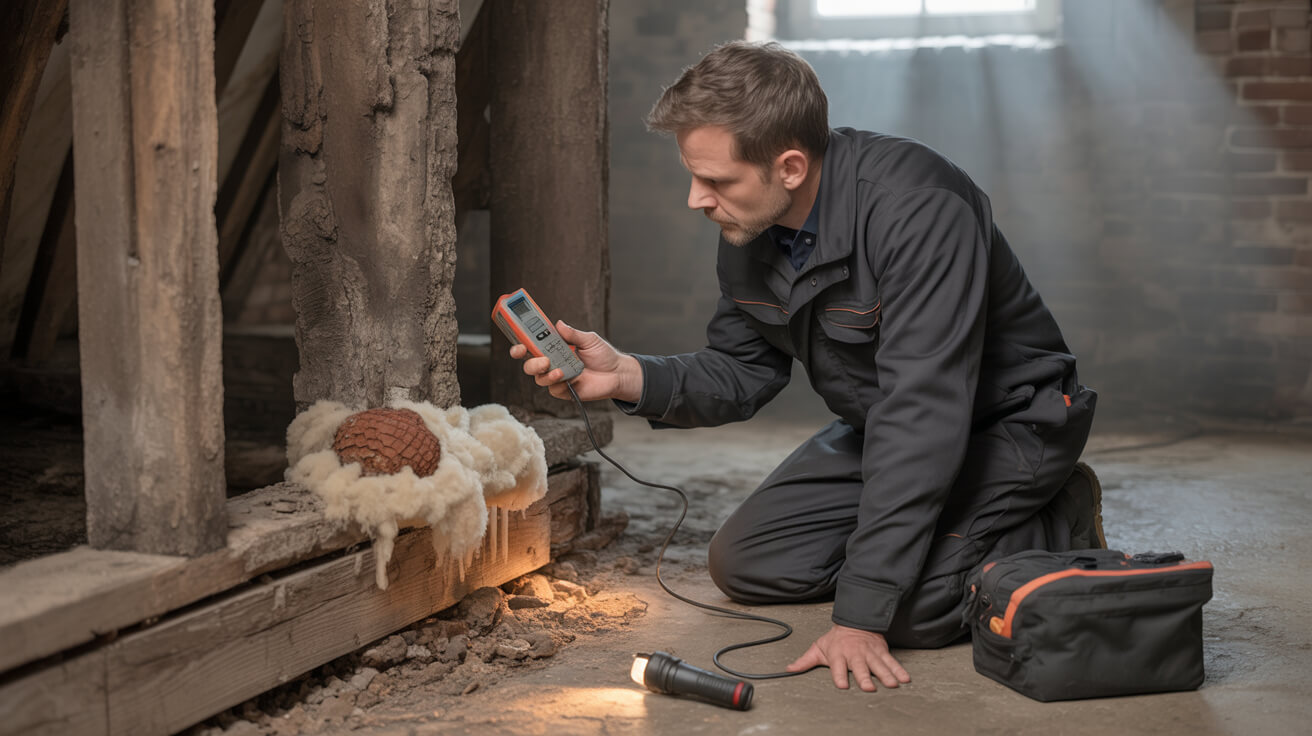
Dry rot, caused by the organism Serpula lacrymans, represents one of the most significant forms of timber decay encountered in damp environments. It results in the degradation of wood through enzymatic cellulose breakdown, leading to brittle, crumbly timber that may compromise both aesthetics and structural safety. The phenomenon holds particular importance in the field of damp proofing, where effective detection, diagnosis, and remediation are essential for ensuring building integrity and compliance with established industry standards.
Etymology or Name Origin
The term “Dry rot” emerged in the nineteenth century, initially used to describe a type of decay that affects timber even when it appears relatively dry. This nomenclature contrasts with “wet rot,” which is commonly associated with high moisture content. The fungus responsible, Serpula lacrymans, derives its scientific name from the spiral (serpula) formation of its hyphae and a Latin root referring to its affinity for moisture in otherwise dry conditions. Over time, both the common and scientific nomenclature have undergone refinement, reflecting advancements in mycological taxonomy and insights gleaned from building pathology research.
Overview / Context
The occurrence of dry rot is a complex interplay between environmental conditions, wood composition, and building practices, and may need to be considered when structural timber rot assessed in affected areas. It typically develops in situations where moisture infiltrates timber through capillary action, yet external surfaces may appear dry—a deceptive factor that often leads to delayed recognition of the problem. Within the context of damp proofing, dry rot is emblematic of failures in managing building moisture; inadequate ventilation, compromised damp proof courses, and structural design inefficiencies can all contribute to its development.
Failures in moisture management create conditions ideal for fungal growth, not only undermining the physical integrity of timber but also prompting secondary issues such as mould proliferation and salt staining. Effective damp proofing measures, therefore, not only target active water ingress but also monitor and mitigate conditions that favour the establishment of fungal decay organisms like Serpula lacrymans.
History
Historically, buildings constructed prior to modern damp proofing techniques were more susceptible to fungal decay, as evidenced by the extensive dry rot found in many historic structures. Early observations of decaying timber in masonry led to the distinction between “dry” and “wet” rot, and a wet rot overview helps frame how the former was characterised by its capacity to spread undetected beneath surfaces.
During the industrial era, as building materials and construction methods evolved, cases of dry rot observed in urban infrastructure prompted the development of initial remedial practices. Over the decades, improved scientific understanding of fungal biology and moisture dynamics, alongside distinctions clarified in a wet rot overview, culminated in the establishment of standardised diagnostic tools and regulatory frameworks. In the late twentieth century, innovative techniques, including chemical damp proof treatments and the use of moisture metres, began to mitigate the risks associated with dry rot, although challenges remain, particularly when faced with heritage structures that require sensitive intervention methods.
Concept / Description
Dry rot is fundamentally a process of fungal decay initiated by Serpula lacrymans. The fungus thrives in conditions where moisture is present, yet the wood itself does not exhibit overt signs of wetness. This paradox arises because the organism exploits capillary action within the wood, extracting moisture and breaking down cellulose compounds via its enzymatic secretions.
Mechanisms of Decay
Serpula lacrymans colonises timber by deploying a network of hyphae that penetrate deeply into the wood’s structure. In essence, the fungus converts complex polysaccharides into simpler sugars, effectively weakening the wood’s molecular structure. Over time, this enzymatic digestion leads to a degradation of the wood that manifests as:
- Loss of Structural Integrity: The wood becomes brittle and crumbly.
- Visual Indicators: Discoloration, cracking, and the formation of a dry, powdery surface.
- Fungal Fruiting: The emergence of spore-bearing structures that facilitate further spread.
Differential Diagnosis
Dry rot must be differentiated from other types of timber decay, such as wet rot; Wet Rot: Occurs typically under conditions of sustained moisture. Unlike wet rot, dry rot can develop in seemingly dry wood, which can make early detection challenging. Diagnostic criteria rely on both visual cues and instrumental analysis, including moisture metre readings and thermal imaging, to accurately distinguish dry rot from similar conditions.
Functionality / Purpose / Applications
The study of dry rot, and its management through effective damp proofing, has practical applications that are vital to building maintenance. Its understanding helps in designing protective measures and in formulating strategies to diagnose, treat, and ultimately prevent the progression of fungal decay.
Diagnostic Applications
Accurate diagnosis of dry rot is essential for planning appropriate remedial actions. Modern techniques include:
- Moisture Metre Measurements: To detect elevated moisture levels that are not visibly evident.
- Thermal Imaging: To identify temperature anomalies indicative of underlying decay.
- Borescope Inspections: Providing internal views of timber where external examination is inconclusive.
- Visual Examination: Identification of surface indicators such as salt staining or altered wood texture.
Remedial Strategies
Treatment of dry rot involves an integrated approach combining chemical and physical interventions:
- Chemical Damp Proof Courses (DPC): Injection of fungicidal chemicals to inhibit fungal growth.
- Timber Replacement: Removing and replacing severely decayed wood sections to restore structural integrity.
- Physical Barriers: Installing new damp proof membranes to prevent further moisture ingress.
- Ventilation Improvements: Enhancing air circulation in confined spaces to reduce humidity and inhibit fungal proliferation.
Preventive Measures
Prevention extends beyond treatment and includes proactive monitoring and maintenance. Establishing a routine inspection protocol—often supported by Sussex Damp Experts—ensures that potential issues are identified before they escalate into severe decay. Measures such as improved cavity ventilation, regular performance checks of damp proof courses, and moisture control strategies form the backbone of effective damp proofing.
Classifications / Types / Variants
Within wood decay, fungal rots are generally classified based on their growth conditions and manifestations:
- Dry Rot: Characterised by low moisture content and the ability to spread laterally, affecting timber even when surface conditions appear dry.
- Wet Rot: Occurs in environments with consistent moisture, often leading to localised decay.
- Brown Rot: Involves the selective degradation of cellulose, leaving behind a brittle, lignin-rich structure.
- White Rot: Entails a near-complete breakdown of all wood components, resulting in a fibrous, bleached appearance.
Dry rot, as manifested by Serpula lacrymans, is unique in its capacity to travel through masonry to infect adjacent timbers. Its propensity for rapid progression and lateral spread distinguishes it from other fungal decay types and necessitates specialised treatment protocols.
Systems / Tools / Methodologies
The identification and management of dry rot depend on a suite of systems and tools designed to accurately diagnose and effectively treat the condition. Employing a combination of traditional practices and innovative technologies fosters a comprehensive approach to damp proofing.
Diagnostic Tools
Effective diagnosis typically involves a combination of:
- Moisture Metres: Instruments that measure the percentage of water content within timber.
- Infrared Thermal Cameras: Tools for detecting temperature variations that suggest moisture accumulation.
- Borescopes: Devices allowing for the visual inspection of concealed timber within structural elements.
- Salt Test Kits: Used to identify the presence of efflorescence, which may indicate underlying damp issues.
- Hygrometers: For gauging ambient humidity levels that contribute to dry rot proliferation.
Remedial Methodologies
A combination of chemical and physical interventions underpins dry rot treatment methodologies:
- Chemical DPC Injections: Application of fungicidal treatments directly into wood to create a barrier against fungal growth.
- Physical Removal and Replacement: Eliminating decayed timber members and restoring them with new material that meets damp proofing standards.
- Electro-Osmotic Methods: Emerging techniques aimed at mobilising and reducing moisture within affected timber.
- Integrated Ventilation Strategies: Enhancing room ventilation to lower ambient humidity levels, thereby mitigating fungal proliferation.
Monitoring and Aftercare
Post-remediation, ongoing monitoring is essential to ensure the longevity of the treatment:
- Wireless Moisture Sensors: Provide continuous data on timber moisture content.
- Thermal Monitoring Systems: Detect changes in temperature patterns across treated areas.
- Periodic Inspections: Conducted by specialist surveyors to verify the absence of re-infection and overall structural stability.
Stakeholders / Entities Involved
The effective management of dry rot engages a broad range of stakeholders, each with distinct roles in diagnosing, treating, and monitoring the condition.
Key Stakeholders
- Homeowners and Property Managers: Often the first to notice signs of decay, responsible for commissioning surveys and remedial actions.
- Surveyors and Inspectors: Provide expert evaluations, generate detailed reports, and guide remediation based on standardised criteria.
- Contractors and Remediation Specialists: Execute the treatment protocols, including chemical injections, timber replacement, and installation of damp proof courses.
- Regulatory Bodies: Enforce building regulations (such as those outlined in BS6576 and BS8102) and ensure compliance with safety standards.
- Insurance Providers and Mortgage Lenders: Assess the impact of dry rot on property value and underwriting processes, influencing repair and risk management strategies.
Within these stakeholder groups, Sussex Damp Experts serve as a benchmark for expertise, offering integrated solutions that blend traditional techniques with state-of-the-art diagnostic and remedial technologies.
Legal / Regulatory / Ethical Considerations
The remediation of dry rot occurs within a stringent legal framework that governs building maintenance and safety. Regulations are designed to protect property owners and ensure that remedial work conforms to recognised standards.
Regulatory Framework
- Building Standards: Codes such as BS6576 and BS8102 provide detailed guidelines for the treatment of fungal decay and the application of chemical damp proof courses.
- Retrofit Specifications: PAS2035 outlines the approach to retrofitting historic buildings while preserving their intrinsic character.
- Health and Safety Directives: The Housing Health and Safety Rating System (HHSRS) sets risk thresholds for damp conditions, influencing both remediation practices and funding eligibility.
- Statutory Requirements: Legislation such as the Landlord and Tenant Act and various environmental regulations impose legal obligations on property owners to maintain safe living conditions.
Ethical and Professional Considerations
Ethically, the treatment of dry rot involves balancing effective remediation with the preservation of historic fabric. Professionals are tasked with providing solutions that are not only compliant with current regulations but also respectful of the original building materials and design. Transparency in reporting, accurate assessment of damage, and adherence to best practices are essential components of ethical service delivery. These principles help safeguard property values and reduce long-term costs for property owners.
Performance Metrics / Data / Measurements
Evaluating the success of dry rot interventions relies on robust performance metrics. These indicators are critical in both the diagnostic phase and subsequent monitoring stages, ensuring that remedial actions yield sustainable results.
Key Metrics
- Moisture Content Measurements: Regular readings taken with calibrated moisture metres to determine the water content in timber.
- Thermal Anomaly Analysis: Utilisation of infrared thermography to detect areas of significant temperature variation that signal moisture pathways.
- Sensor Data Logs: Continuous monitoring using wireless sensor networks that log environmental conditions such as humidity and temperature.
- Inspection Report Ratings: Qualitative assessments documented by surveyors, using standardised templates to track the progression or abatement of damage.
- Regulatory Compliance Benchmarks: Adherence to performance standards established by BS6576, BS8102, and HHSRS, ensuring that remedial measures meet recognised criteria.
A combination of these quantitative and qualitative measurements forms the backbone of an effective dry rot management strategy, providing both immediate indicators of remediation success and long-term insights into structural integrity.
Challenges / Barriers / Limitations
The management of dry rot is fraught with challenges that span technical, economic, and social dimensions. Each of these presents significant barriers to effective and timely remediation.
Diagnostic Challenges
- Subtle Early Signs: Dry rot often remains inconspicuous until advanced decay is present, making early detection difficult.
- Instrument Limitations: diagnostic tools can sometimes provide ambiguous data, particularly in complex structures or in areas with variable moisture gradients.
- Variable Timber Properties: Differences in wood species and treatment history can affect the accuracy of moisture and decay assessments.
Economic and Technical Barriers
- Cost of Comprehensive Treatment: High-quality remediation and ongoing monitoring systems can represent a substantial investment, which may deter property owners.
- Technological Gaps: Despite advancements, current methodologies may not fully address deep-seated decay or provide guaranteed long-term protection.
- Skill and Resource Disparity: The effectiveness of remedial actions is heavily influenced by the expertise of contractors; inconsistent standards of workmanship can lead to variable outcomes.
Social and Regulatory Limitations
- Awareness and Education: A lack of widespread understanding regarding dry rot and its impact can impede timely intervention.
- Regulatory Complexities: Adherence to a multitude of standards and legal requirements can complicate remediation, particularly in historic or listed buildings where modifications must be carefully managed.
- Inherent Uncertainties: Environmental factors such as fluctuating humidity and seasonal weather patterns introduce an element of unpredictability into both diagnosis and treatment success.
Collectively, these challenges necessitate a multifaceted approach that combines rigorous scientific assessment, skilled practical intervention, and ongoing monitoring to mitigate risks associated with dry rot.
Impact / Influence / Legacy
The consequences of untreated or poorly managed dry rot are profound, affecting both the physical structure of buildings and their economic value. Historical and contemporary case studies underscore the significant, multi-dimensional impact of this fungal decay.
Structural Implications
- Deterioration of Load-Bearing Elements: As dry rot spreads, it compromises the strength and stability of timber structures, posing safety risks.
- Accelerated Material Degradation: The rapid progression of decay can lead to widespread structural failures if not promptly addressed.
- Increased Maintenance Burden: Ongoing maintenance and periodic remediation are often required to manage the persistent threat of fungal decay, increasing the operational complexity for building owners.
Economic Influence
- Property Devaluation: Buildings affected by dry rot frequently experience notable reductions in market value. mortgage surveys and insurance evaluations often flag such conditions, influencing lending decisions and repair insurance premiums.
- Cost-Benefit Considerations: The high cost of remedial treatments, coupled with the potential for reoccurrence, makes dry rot a critical economic consideration in the lifecycle management of properties.
- Impact on Investment Decisions: For investors and property managers, the risk of dry rot can factor significantly into decisions regarding renovation, maintenance budgeting, and market positioning.
Legacy in Building Practices
The pervasive challenge of dry rot has driven continuous improvements in building standards and damp proofing practices. Historical experiences with fungal decay have influenced regulatory frameworks and spurred technological innovation. Standards such as BS6576 and BS8102 embody the accumulated knowledge from decades of research and practice, guiding both diagnosis and remediation techniques. As a legacy, dry rot serves as a catalyst for innovation in timber preservation and moisture management, ensuring that lessons from the past inform future practices.
Future Directions, Cultural Relevance, and Design Discourse
Emerging trends in technology, materials science, and building design are poised to transform the way dry rot and other fungal decays are managed in the future. Ongoing research seeks to integrate digital monitoring, advanced remediation techniques, and eco-friendly materials into a more holistic framework for damp proofing.
Technological Innovations
Advancements in sensor technology and data analytics are revolutionising the monitoring of moisture content and environmental conditions. Integrated systems that employ wireless sensors, infrared imaging, and real-time data processing offer new levels of precision in diagnosing and tracking the progression of dry rot. These innovations are expected to reduce the time between detection and intervention, thereby enhancing the overall efficacy of remedial measures.
Materials and Methods
Research continues into the development of new chemical and physical treatment methods that are not only more effective but also minimally invasive. Emerging materials, such as breathable, self-healing coatings and environmentally friendly fungicides, promise to offer longer-lasting protection and reduce the need for extensive timber replacement. These innovations will likely be guided by ongoing revisions to industry standards and regulatory frameworks, ensuring that they meet both technical and ethical criteria.
Regulatory and Cultural Shifts
The evolution of regulatory standards in response to advances in building science and environmental awareness is set to influence future damp proofing practices significantly. Increasing regulatory emphasis on sustainability, energy efficiency, and the preservation of cultural heritage is prompting the development of protocols that balance modern treatment methods with the need to maintain historical authenticity. This shift is reflected in the growing adoption of guidelines tailored for sensitive buildings, which must navigate the complexities of heritage conservation while implementing effective moisture management.
Design and Aesthetic Considerations
In modern architecture, the influence of dry rot extends beyond functional implications to shape design discourse. Architects and engineers are progressively integrating moisture management into the overall design of buildings, developing innovative solutions that address both aesthetic and structural concerns. The use of natural materials, enhanced ventilation systems, and design strategies that minimise moisture entrapment are increasingly common. This trend is complemented by a cultural appreciation for sustainable and respectful restoration practices, particularly in heritage contexts.
Interdisciplinary Collaboration
The future of dry rot management lies in a collaborative approach that bridges the fields of mycology, structural engineering, materials science, and digital technology. By fostering interdisciplinary research and integrating insights from diverse domains, the industry is poised to develop more sophisticated, predictive models for fungal decay and ensure that structural timber rot assessed within wider building investigations is informed by multiple specialist perspectives. These collaborative efforts are likely to yield a new generation of diagnostic and remedial technologies that are both effective and scalable, ensuring that remedial strategies can be tailored to the specifics of any given building.
Legacy and Ongoing Evolution
The enduring challenge of dry rot continues to shape both practical interventions and theoretical frameworks in damp proofing. The legacy of historical approaches informs current practices, while contemporary innovations promise to refine these methods further. As technology and regulatory standards evolve, the management of dry rot will increasingly underscore the importance of preventative maintenance, timely intervention, and sustainable building practices.
The integration of smart monitoring systems, advanced diagnostic tools, and environmentally responsible treatments marks a significant step forward in combating fungal decay. By combining tradition with innovation, the field aims to not only remedy existing damage but also to anticipate and prevent future decay, thereby ensuring the long-term resilience of buildings.
The ongoing dialogue between regulatory bodies, industry experts, and academic researchers continues to push the boundaries of what is possible in damp proofing. As new challenges arise, particularly in the face of climate change and evolving building practices, the strategic integration of cutting-edge technologies with proven remediation techniques will be crucial. The future of dry rot management is characterised by an increasing reliance on holistic, data-driven strategies that fuse rigorous scientific inquiry with practical, site-specific solutions.
In fostering this integrated approach, practices spearheaded by leading experts such as Sussex Damp Experts are likely to play a pivotal role, blending traditional craftsmanship with contemporary innovation. The convergence of these methodologies not only enhances the longevity and safety of buildings but also contributes to a broader cultural shift towards sustainable property management and heritage preservation.
Emerging paradigms in digital monitoring and real-time analytics, combined with advancements in material science, are set to transform routine building maintenance into a proactive discipline. These innovations will enable property stakeholders to establish predictive maintenance regimes, where potential decay can be identified and mitigated before it manifests into severe structural damage. As these approaches become more widely adopted, the overall impact of fungal decay on the built environment is expected to diminish significantly.
The discourse on dry rot thus encapsulates not only its direct implications for building maintenance but also its broader influence on contemporary design, regulatory evolution, and sustainable development. By understanding both the historical context and the future potential of dry rot management, stakeholders can take informed, strategic actions that enhance the resilience of structures and foster a culture of continuous improvement in damp proofing practices.

