
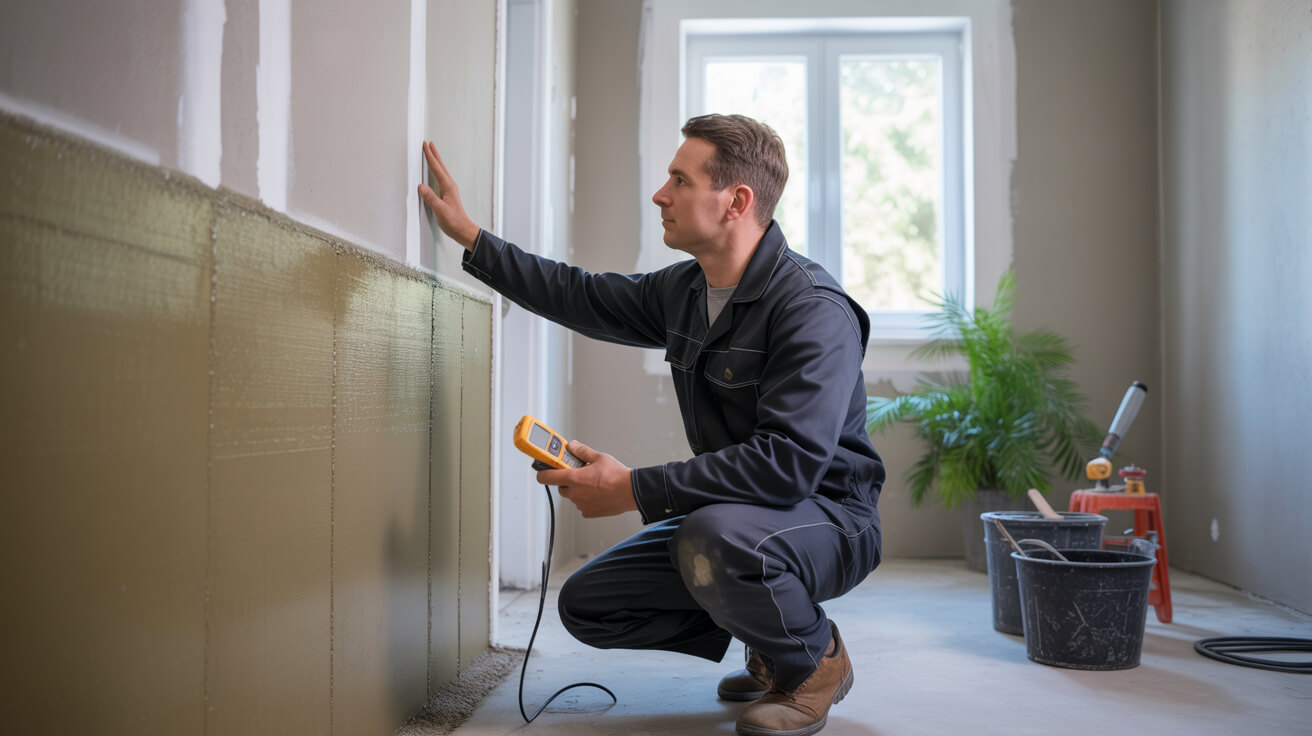
Damp proofing treatments must be allowed sufficient time to cure before subsequent construction tasks are undertaken. During the 7–14 day curing period, chemical reactions and physical changes convert the applied treatment into a durable barrier against moisture ingress in building structures. This process is critical for achieving long-term durability, ensuring that subsequent tasks such as re-plastering are carried out on a stable, moisture-free substrate. Various regulatory standards, including BS6576 and BS8102, have established this cure time as a benchmark to guide professional practice.
Etymology or Name Origin
The term “cure time” derives from material science and construction practices where “curing” describes the process by which chemical compounds solidify and acquire their final mechanical properties. Historically, early building materials such as lime mortars required a specified period during which hydration and carbonation reactions occurred naturally. With advancements in chemical engineering, damp proofing evolved to include synthetic polymers and chemical inhibitors that similarly require an incubation period to achieve a robust, moisture-resistant state. Over time, the standardised interval of 7–14 days became accepted among practitioners, providing a common framework for quality assurance and regulatory compliance across damp proofing methodologies.
Overview / Context
Damp proofing is integral to modern construction and refurbishment, serving as a safeguard against moisture penetration that can lead to structural deterioration, biological growth, and energy inefficiency. The cure time of 7–14 days represents a critical window during which treatments, such as chemical damp proof courses (DPC) and tanking systems, develop their full protective properties.
The curing process involves a succession of chemical reactions—predominantly polymerization, oxidation, and cross-linking—and physical processes, including water evaporation and moisture redistribution. Taken together, these changes transform a freshly applied treatment into a hardened, continuous barrier. The timeframe is delicately balanced: insufficient cure time risks incomplete reactions and subpar performance, while excessive delay may impact project schedules adversely. Consequently, industry guidelines stress precision in monitoring and adhering to this stipulated period, underscoring its relevance for both new constructions and retrofits.
In practice, cure time is influenced by multiple factors. Ambient temperature and humidity play a significant role: warmer, drier conditions typically accelerate the curing process whereas cooler, more humid environments might extend it. The condition of the substrate—its porosity, moisture content, and cleanliness—also critically affects how quickly the chemical reactions can reach completion. As research and technological advancements continue to refine our understanding, the accepted practice remains underpinned by a balance between empirical data and practical field performance.
History
The evolution of cure time standards in damp proofing reflects broader technological advancements and a growing understanding of material science within the construction industry. In the early eras of building technology, builders relied on natural materials, such as lime and clay, which exhibited extended curing periods that varied widely based on environmental conditions. Early observations established that a period of temporal stabilisation was necessary to allow these materials to harden and develop moisture resistance.
With the advent of chemically engineered damp proofing systems in the mid-20th century, a shift occurred towards more controlled and predictable curing processes. Manufacturers and researchers conducted extensive trials to determine the optimum periods for various formulations, eventually converging on the 7–14 day window as a practical and effective standard. This period was found to balance rapid construction timelines with the necessity for treatments to mature sufficiently to offer lasting protection.
Subsequent decades witnessed increasing standardisation through the development of and adherence to British Standards (BS6576 and BS8102). These standards codified the technical requirements for damp treatment, including precise recommendations for cure times, based on rigorous laboratory and field testing. The introduction of digital monitoring tools such as moisture metres and thermal imaging further solidified the importance of the cure phase, as these instruments provided quantitative feedback on the progression of the curing process, helping to validate the historical norm.
Today, the established 7–14 day period is considered a cornerstone of best practices in damp proofing. It reflects not only the maturation of chemical treatments but also an evolved understanding of how environmental variables, substrate properties, and application techniques interact. This history has informed both the practical application in the field and the development of regulatory frameworks that ensure reliable, high-quality performance.
Concept / Description
Cure time in damp proofing is defined as the duration required for treatment materials to fully solidify, develop their adhesive qualities, and achieve the intended moisture-resistant properties. This period is fundamental because it encompasses both the chemical stabilisation and physical drying of the treatment, processes that are essential for ensuring the longevity and effectiveness of the damp proofing system.
Chemical and Physical Mechanisms
During the cure time, several key mechanisms operate in tandem:
- Chemical Reaction Completion: Many damp proofing treatments are based on polymeric systems where monomers undergo polymerization to form long-chain polymers. These chemical reactions are sensitive to environmental conditions and require a specific period to reach completion. As polymer chains form and cross-link, the resultant matrix exhibits increased tensile strength and durability.
- Moisture Evaporation: Concurrent with chemical reactions, the evaporation of water from the applied treatment is critical. This process leads to the reduction of free moisture, allowing the treatment to harden and effectively bond with the substrate.
- Substrate Integration: The interaction between the treatment and the building material, including capillary action and surface absorption, is essential. A well-prepared surface facilitates uniform penetration and adhesion, thereby enhancing the overall effectiveness of the treatment.
- Physical Hardening: As the material cures, it transitions from a fluid or semi-fluid state to a solid state. This hardening process contributes to the formation of a continuous barrier that is resistant to physical and environmental stresses.
Theoretical Underpinnings
The conceptual framework of cure time is grounded in several scientific principles:
- Moisture Diffusion: The movement and gradual evaporation of moisture within the treatment follow diffusion kinetics. The rate of moisture loss is critical in determining how quickly the material reaches its final hardened state.
- Thermal Dynamics: Temperature variations influence the speed of chemical reactions and evaporation. thermal bridging between different materials in a building can either facilitate or hinder the curing process, depending on the associated heat transfer dynamics.
- Vapour Permeability: A key property measured in many damp proofing systems is vapour permeability, which reflects the material’s ability to allow moisture to pass through. This factor is particularly important when assessing how well a treatment will perform under varying environmental conditions.
- Chemical Kinetics: The rate at which polymerization and other chemical reactions occur is inherently dependent on the concentration of reactants and the presence of catalysts. By controlling the reaction environment, manufacturers can optimise the cure time to ensure consistency and reliability.
Functionality / Purpose / Applications
The primary purpose of establishing a standardised cure time is to ensure the effectiveness and durability of damp proofing treatments. A curing period of 7–14 days provides the necessary timeframe for the treatment to achieve its design properties, thereby reducing the risk of failure and subsequent remedial work.
Enhanced Treatment Durability
Ensuring an adequate cure time has several direct benefits:
- Optimal Adhesion: With sufficient curing, the treatment develops a strong adhesion to the substrate, forming an impermeable barrier that prevents moisture ingress.
- Chemical Maturity: Complete polymerization and stabilisation during the cure period guarantee that the treatment material will not degrade prematurely, securing long-term performance.
- Structural Stability: The process of curing contributes to improved bond strength between different layers of construction, ensuring that re-plastering and subsequent finishes adhere effectively.
Practical Applications
In both new constructions and refurbishments, cure time directly impacts the sequencing and scheduling of subsequent work. Applications include:
- New Build Installations: In modern construction, adhering to a defined cure period before undertaking additional finishing work ensures that the structure is protected from moisture-related issues from the outset.
- Heritage and Listed Buildings: When integrating modern damp proofing treatments in historic structures, careful attention to cure time helps harmonise innovative methods with traditional materials, preserving the building’s character while enhancing performance.
- Quality Control Processes: Contractors leverage detailed curing protocols as part of their quality assurance measures, ensuring that treatments meet the benchmarks specified by both manufacturers and regulatory bodies.
Long-term and Economic Impacts
Accurate cure time adherence minimises the risk of treatment failures, which can otherwise lead to costly rework and property devaluation. In addition, proper curing underpins warranty validity, which is a significant factor for both property owners and finance providers.
- Warranty Compliance: Many damp proofing warranties stipulate that the treatment must be allowed to cure for the full recommended period. Failure to do so may result in voided warranties and subsequent liability issues.
- Property Valuation: Effective damp proofing directly correlates with enhanced property integrity and marketability, contributing to sustainable asset value over time.
- Reduced Maintenance Costs: Long-term performance improvements reduce the frequency and cost of maintenance interventions, ultimately providing economic benefits to property owners.
Classifications / Types / Variants
Although the cure time of 7–14 days is widely accepted, the specific dynamics of the curing process can vary based on treatment methods and building materials. Understanding these variations can inform more precise applications tailored to individual contexts.
Treatment Method Variants
Different damp proofing techniques exhibit nuanced differences in their curing requirements:
- Chemical Damp Proof Courses (DPC): These treatments typically rely on polymer-based systems where the curing process is governed by chemical reactions. The 7–14 day period is critical for achieving full polymer network formation.
- Physical Barrier Systems: Unlike chemical treatments, physical damp proofing methods primarily rely on creating a mechanical barrier. Although these systems have curing requirements, they may differ in terms of water evaporation dynamics.
- Tanking Methods: tanking slurry applications, which involve creating a waterproof layer on substrates, depend heavily on the quality of surface preparation and the precise application of the slurry. Variations in the formulation can affect the curing time, particularly in high-moisture environments.
Material and Substrate Considerations
The substrate on which damp proofing treatments are applied plays a crucial role in determining cure time:
- Porous Materials: Building substrates such as brick and masonry, which tend to be highly porous, may absorb treatment chemicals differently, resulting in alterations of the expected curing period.
- Non-absorbent Materials: On substrates like concrete or rendered surfaces, the absorption rate is generally lower, which can, in some instances, reduce the effective cure time.
- Historic Structures: In heritage properties, traditional materials may interact differently with modern chemical treatments. In these cases, extended or adjusted cure times might be necessary to accommodate the unique properties of older building materials.
The classification of treatments and substrates facilitates a more rigorous approach to scheduling and quality control. By comparing the curing dynamics across various scenarios, practitioners can refine their protocols to achieve consistent, high-performing results.
Systems / Tools / Methodologies
Ensuring that the cure time is properly monitored and adhered to involves a combination of specialised systems, tools, and methodologies. These technological and procedural approaches support accurate assessments and help in anticipating potential deviations from the planned cure period.
Measurement and Monitoring Techniques
Moisture Metres:
Moisture metres are the primary tools used to assess the water content within treated substrates. They provide quantitative data by measuring the dielectric properties of the material, allowing practitioners to determine when the moisture level has stabilised to the desired threshold.
Thermal Imaging:
thermal cameras are used to capture temperature variations across surfaces. During the curing process, thermal imaging can reveal areas of uneven temperature distribution that might indicate incomplete curing or hidden moisture pockets. This approach is particularly useful in complex structures where direct measurements may be difficult.
Sensor Networks:
The integration of wireless moisture sensors and humidity loggers provides a continuous stream of data throughout the curing period. These systems allow for real-time monitoring, ensuring that the treatment develops uniformly and reaches full maturity before further work is undertaken.
Visual Inspections:
Manual inspections performed by qualified surveyors complement instrumental measurements. Visual assessments focus on identifying signs of incomplete curing, such as discoloration, surface irregularities, or unexpected textural changes, which might indicate a deviation from expected performance.
Methodological Guidelines
- Standardised Protocols:
Industry standards and best practices, such as those outlined in BS6576 and BS8102, provide a methodological framework for monitoring cure time. These protocols detail the procedures for pre-treatment inspection, application, curing, and post-treatment evaluation, ensuring that all critical parameters are addressed.
- Data Logging and Analysis:
Techniques that involve continuous data logging allow practitioners to document changes over time. Statistical analysis of moisture and temperature data helps in refining the treatment process, ensuring that each application is optimised according to real-world conditions.
- Predictive Modelling:
Emerging methodologies incorporate predictive algorithms that use initial environmental and material data to forecast cure timelines. By integrating these models with sensor data, practitioners can adjust on-site practices dynamically, ensuring adherence to the optimal cure period.
- Quality Assurance Checks:
Periodic inspections coordinated with data measurements ensure that the treatment adheres to the expected cure time. Re-inspection protocols are established at the conclusion of the curing period as a final quality assurance measure before moving to subsequent construction phases.
Stakeholders / Entities Involved
The processes surrounding cure time in damp proofing engage a diverse range of professionals, each with specific responsibilities and stakes in the final outcome. Coordination among these stakeholders ensures that treatments meet technical, regulatory, and practical requirements.
Homeowners and Property Owners
For homeowners, the effectiveness of a damp proofing treatment and its associated cure time directly impacts property value and living conditions. A properly cured treatment minimises moisture ingress, protects against mould growth, and enhances overall building durability. Homeowners benefit from reliable performance data and robust warranties that safeguard their investments.
Contractors and Builders
Contractors rely on accurate cure time protocols to schedule construction workflows efficiently. Ensuring that the curing process has completed before proceeding with subsequent tasks, such as re-plastering or finish work, is critical to avoiding costly delays and rework. Contractors use standardised measurement techniques and quality assurance protocols to ensure treatments meet industry benchmarks, reducing the risk of treatment failures and warranty claims.
Surveyors and Inspectors
Surveyors play a central role in evaluating the quality of damp proofing treatments and their compliance with regulatory standards. They assess moisture levels and treatment integrity during and after the cure period, providing official documentation that supports both warranty claims and housing compliance. Their work is critical in maintaining industry trust and ensuring that treatments are executed according to best practices.
Regulatory Bodies
Regulatory agencies establish the frameworks that mandate cure time protocols in damp proofing treatments. By enforcing standards such as BS6576, BS8102, and PAS2035, these bodies ensure public safety, building integrity, and compliance with health regulations. Their ongoing review of industry practices drives advances in treatment methodologies and monitoring technologies.
Industry Specialists and Service Providers
Specialist firms, such as Sussex Damp Experts, integrate advanced damp proofing treatments into their service offerings. By adhering to strict cure time standards and leveraging modern monitoring tools, these providers deliver enhanced service quality and reliability. Their expertise contributes to the continuous refinement of industry protocols and establishes benchmarks that influence both local and broader market practices.
Legal / Regulatory / Ethical Considerations
The curing process in damp proofing is subject to a comprehensive framework of regulations and ethical standards designed to ensure safety, quality, and accountability. These considerations are embedded in the operational protocols developed by industry leaders and regulatory bodies alike.
Regulatory Standards
- BS6576:
The BS6576 standard outlines the methods and requirements for the application of chemical damp proof courses, including specific instructions regarding curing periods. Adherence to this standard is fundamental for ensuring that treatments achieve the expected levels of durability.
- BS8102:
Focusing on waterproofing in basements and below-ground structures, BS8102 includes criteria for the application and curing of treatments in high-moisture environments. This standard guides practitioners on how to manage the unique challenges posed by substrates that are subject to hydrostatic pressure.
- PAS2035:
Particularly relevant in retrofit scenarios, PAS2035 provides comprehensive guidelines for the conservation and improvement of existing buildings. It addresses both the technical and procedural aspects of damp proofing, including the necessity of an appropriate cure time to ensure treatment efficacy in older or heritage structures.
- HHSRS:
The Housing Health and Safety Rating System (HHSRS) evaluates the risks associated with moisture and dampness in residential properties. A treatment that does not cure properly may lead to unresolved issues such as mould growth and structural instability, directly impacting hazard ratings and overall safety assessments.
Ethical and Contractual Considerations
- Warranty Validity:
The commitment to allowing a full cure time is central to maintaining the validity of treatment warranties. Ethical contracting practices require that property owners are fully informed about the necessary cure period before additional work is undertaken. This transparency is essential for building trust and ensuring that all parties understand the technical parameters that underpin successful damp proofing.
- Liability and Dispute Resolution:
Inadequate curing may result in technical failures that lead to property damage, financial loss, or legal disputes. By adhering to established curing standards, practitioners reduce the risk of liability, ensuring that there is a verifiable record of treatment quality that supports dispute resolution processes.
- Transparency in Communication:
Ethical practice mandates clarity in communicating the importance of cure time. All documentation and verbal communications with property owners and regulatory inspectors must clearly articulate the rationale for the 7–14 day period, avoiding ambiguous statements and ensuring that the process is fully understood by all stakeholders.
Performance Metrics / Data / Measurements
Monitoring and measuring cure time is critical to validating the success of damp proofing treatments. A range of performance metrics and methodologies are employed to ensure that the treatment reaches its full maturity before additional work is carried out.
Key Performance Indicators
- Moisture Content Readings:
The moisture content within the treated substrate is measured at intervals using calibrated moisture metres. Consistent readings that fall below a predetermined threshold indicate that the treatment has adequately cured.
- Thermal Imaging Data:
Thermal cameras capture temperature gradients across the treatment surface. Uniform thermal stability is a strong indicator that the curing process is complete. Variations may suggest trapped moisture or uneven chemical reactions.
- Environmental Monitoring:
Ambient conditions, including temperature, humidity, and ventilation, are continuously recorded during the cure period. These factors are integral to understanding the rate of moisture evaporation and chemical reaction kinetics, providing additional assurance that the treatment is progressing as expected.
- Sensor-based Data Logging:
Wireless sensor networks offer an advanced approach to real-time monitoring. Continuous logging of moisture, humidity, and temperature data provides an in-depth profile of the curing process, which can be analysed to determine when the treatment has achieved a stable, optimal state.
Data Analysis and Validation
- Statistical and Trend Analysis:
Collected data is subject to statistical analysis to confirm that moisture levels and thermal stability conform to industry benchmarks. Trend analysis over the cure period assists in identifying any deviations from expected patterns.
- Comparative Study Metrics:
Data obtained from various treatment projects are compared to establish benchmarks. These comparisons help in refining the recommended cure time and verifying that the treatment has reached the desired level of mechanical and chemical integrity.
- Predictive Modelling:
Advanced models, potentially incorporating Bayesian statistics and machine learning techniques, are used to predict the curing trajectory based on initial environmental and material data. This predictive capability allows practitioners to adjust schedules dynamically based on real-time data.
Challenges / Barriers / Limitations
Despite standardisation efforts, several challenges can affect the outcome of the curing process in damp proofing treatments. These challenges span environmental conditions, material variability, and practical considerations in field applications.
Operational Difficulties
- Environmental Variability:
Ambient temperature, humidity, and airflow can vary significantly between sites. Such fluctuations may extend or shorten the curing period and may necessitate adjustments in the planned cure time, posing challenges to uniform application across diverse conditions.
- Substrate Preparation:
The effectiveness of the curing process is highly dependent on the initial condition of the substrate. Inadequate cleaning or priming can result in uneven adhesion and partial curing, compromising the treatment’s overall performance.
Technical Limitations
- Measurement Uncertainty:
While advanced measurement tools provide valuable data, slight inaccuracies or sensor calibration issues can lead to misinterpretation of the curing status. This uncertainty can affect decision-making regarding when to proceed with subsequent construction phases.
- Material Heterogeneity:
Variability in building materials, such as differing porosities or moisture absorption properties, can influence cure time. Materials that are either overly absorbent or insufficiently porous may not interact uniformly with treatment chemicals, leading to localised failures.
- Incomplete Chemical Reactions:
Factors such as inconsistent mixing or suboptimal environmental conditions can prevent full chemical reaction from occurring. Incomplete reactions may leave the treatment partially active, increasing the risk of premature failure.
Economic and Social Constraints
- Cost Implications:
Extended curing times may lead to delays in construction schedules and increased labour costs. Such economic pressures may tempt stakeholders to shorten the cure period, potentially compromising treatment effectiveness.
- Project Scheduling Conflicts:
In fast-paced construction environments, adherence to a full cure time might conflict with project timelines. The pressure to expedite processes can lead to premature progression to subsequent steps, which may adversely affect treatment durability.
- Regulatory Compliance:
Maintaining strict adherence to prescribed cure times in all conditions can be challenging, especially when environmental factors are unpredictable. Failure to comply fully with regulatory standards can result in legal or financial repercussions.
Impact / Influence / Legacy
The adherence to a proper cure time has significant long-term implications for both individual properties and the broader construction industry. It informs best practices and fosters improved methods that benefit various stakeholders.
Structural and Economic Impact
- Enhanced Durability:
A properly cured damp proofing treatment significantly increases the long-term durability of building structures, reducing the likelihood of moisture-related deterioration over time.
- Property Value Preservation:
Effective damp treatment contributes to the structural integrity and overall condition of a building, which is directly correlated with the property’s market value. Properties that undergo thorough damp proofing with verified cure times tend to maintain higher valuations.
- Reduced Maintenance Costs:
When treatments are allowed to cure fully, the resulting barrier against moisture ingress is more robust, reducing the need for frequent maintenance or remedial interventions. This, in turn, lowers long-term repair costs and minimises disruptions to occupancy.
Standards and Best Practices
- Industry Standardisation:
The adoption of a 7–14 day cure time has been instrumental in standardising damp proofing practices. This consistency has driven the formulation of detailed regulatory documents and best practice guidelines that enhance overall treatment quality.
- Technological Advancements:
The need to monitor cure times accurately has spurred innovation in measurement and sensor technologies. The evolution of moisture metres, thermal imaging devices, and continuous sensor networks is largely attributable to the demand for reliable data during the curing process.
- Quality Assurance and Certification:
Rigorous adherence to cure time protocols is a cornerstone of certifications issued by industry bodies. Such certifications not only validate the treatment quality but also reinforce trust among property owners and regulatory inspectors.
Legacy in Professional Practice
- Case Studies and Field Data:
An extensive body of field data and case studies now underpins the current standard cure time. These documented experiences provide invaluable insights into the benefits and limitations of current practices, forming the basis for continuous improvement.
- Training and Education:
Specialised training programmes for damp proofing professionals emphasise the importance of cure time. By incorporating extensive documentation and practical fieldwork, these programmes ensure that upcoming practitioners understand the critical role of curing in treatment success.
- Sustainable Building Practices:
In the context of sustainable construction, ensuring that damp proofing treatments fully cure is paramount. Sustainable building practices benefit from more durable, reliable treatments that contribute to a building’s overall energy efficiency and occupant health over the long term.
Future Directions, Cultural Relevance, and Design Discourse
Emerging technologies, evolving regulatory frameworks, and sustainability trends are poised to further influence and refine damp proofing cure time protocols. These developments promise to expand the current understanding and practical execution of cure processes in the construction industry.
Technological Innovations
Advances in digital monitoring systems and sensor technologies are expected to substantially enhance the precision of cure time measurement. The incorporation of real-time data collection with machine learning algorithms will allow for adaptive adjustments to curing protocols based on immediate environmental and material conditions. Innovations such as integrated wireless sensor networks and predictive modelling are set to provide bespoke cure time recommendations that dynamically respond to site-specific challenges.
Regulatory Evolution
Ongoing refinements to building regulations and industry standards may influence future recommendations regarding cure time. As empirical data continues to accumulate, revisions to BS6576, BS8102, and PAS2035 could yield more nuanced guidelines that accommodate variations in regional climates and material technologies. Regulatory bodies might also incorporate digital certification methods, whereby real-time sensor data supports compliance audits, streamlining both approval processes and post-treatment verification.
Sustainability and Material Advancements
A significant focus of current research is on reducing the environmental impact of construction practices. Future developments in damp proofing are likely to involve eco-friendly materials and curing agents that not only perform effectively but also have lower ecological footprints. As sustainable practices gain prominence, the interplay between cure time and material sustainability will become an important area of study, potentially leading to protocols that reduce energy usage during the curing process while maintaining performance.
Cultural and Design Considerations
In historic and architecturally sensitive properties, balancing modern damp proofing treatments with heritage preservation remains a complex challenge. Future research may focus on integrating traditional materials with state-of-the-art treatment technologies, yielding methods that respect cultural heritage while delivering modern performance standards. Design discourse around damp proofing is likely to explore how contemporary interventions can be seamlessly integrated into historic fabric, preserving cultural identity while enhancing structural longevity.
Interdisciplinary Research and Collaboration
The future of damp proofing cure time research is expected to be increasingly interdisciplinary. Collaboration among chemists, material scientists, engineers, and data analysts will pave the way for a more comprehensive understanding of the factors influencing cure time. This holistic approach will drive the development of innovative treatment formulations and monitoring systems that can adapt to complex, real-world scenarios. By harnessing insights from multiple disciplines, the construction industry can anticipate more resilient and efficient treatment protocols.
Integration into Digital Workflows
The integration of cure time management into digital project management platforms is set to transform how construction projects are planned and executed. Software systems capable of integrating sensor data with project schedules will enable real-time adjustments to workflows, ensuring that subsequent tasks are scheduled only when treatments have fully cured. This digital transformation not only enhances project efficiency but also promotes greater transparency and accountability across all stages of construction.
Continuous Improvement in Best Practices
The legacy of established cure time protocols is not static. Continuous feedback from field data, rigorous testing, and iterative refinements based on new scientific insights will further enhance the quality of damp proofing treatments. Professional bodies and regulatory agencies are likely to update training materials and certification schemes to incorporate the latest advancements, ensuring that practitioners remain current with the most effective and reliable methods.
Cultural Impact and Evolving Narratives
The transformation of damp proofing practices, influenced by digital innovation and sustainability imperatives, reflects broader cultural shifts towards more responsible and resilient construction practices. The narrative surrounding cure time is evolving from a static requirement into a dynamic, data-driven process integral to safe and sustainable building maintenance. As public awareness of environmental issues grows, the emphasis on efficient, reliable damp proofing practices will continue to resonate, reinforcing the importance of compliance and continuous improvement.
| Key Technological Branches | Regulatory Trends | Sustainability Focus |
|---|---|---|
| Real-time Sensor Networks | Adaptive Standards in BS6576 & BS8102 | Eco-efficient damp proofing materials |
| Predictive Modelling for Cure Time | Digital Certification and Compliance | Reduced Environmental Impact of Treatments |
| Machine Learning-Based Data Analysis | Revisions Reflecting Field Data | Integration of Renewable Energy in Monitoring |
By integrating these emerging trends with established standards, the future of cure time in damp proofing stands as a testament to the construction industry’s capacity for innovation, adaptation, and sustained quality improvement.

