
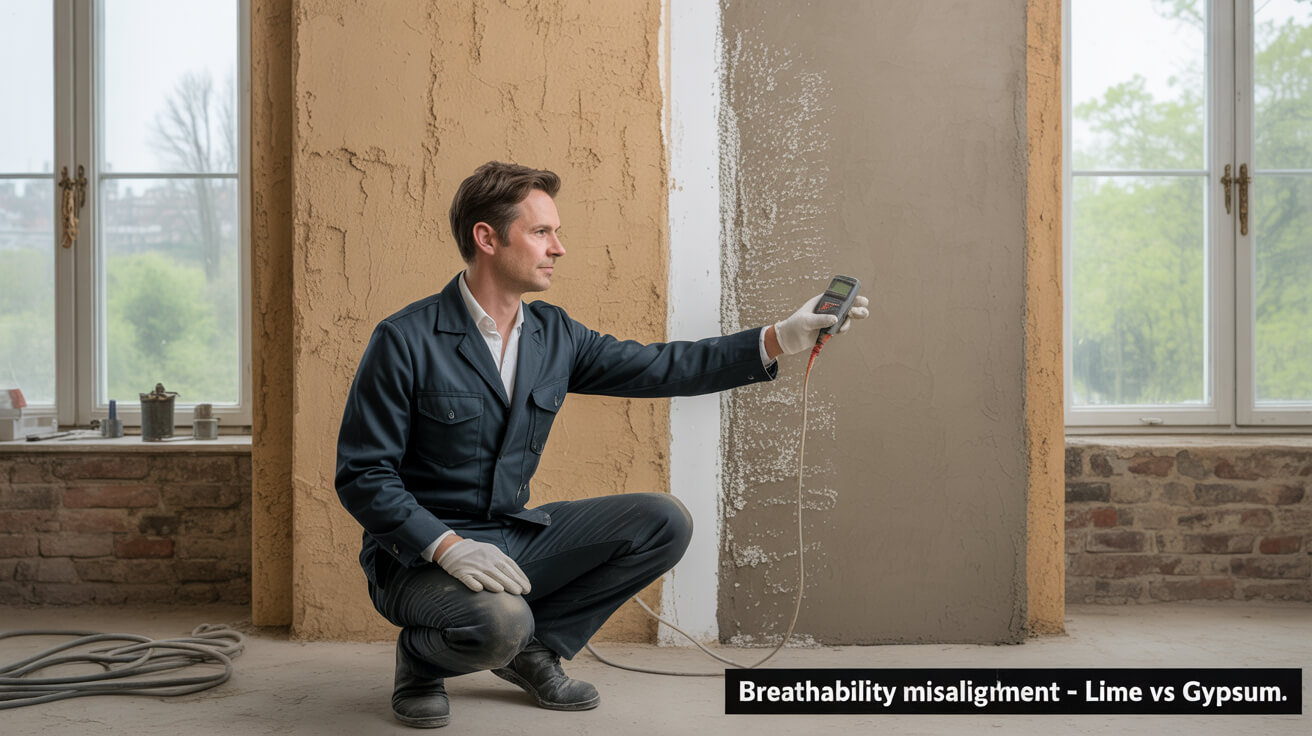
Breathability misalignment is critical in damp proofing because it influences how effectively a wall system manages internal moisture and outdoor humidity. Lime plasters typically allow for more natural vapour transmission due to their porous structure, whereas gypsum plasters often provide a denser finish that may trap moisture. Users seeking robust damp management, particularly in heritage or moisture-prone environments, must consider these differences when selecting materials.
Etymology or Name Origin
The term “lime plaster” originates from the long history of using burned limestone, which produces quicklime that, when mixed with water and aggregates, forms a plaster with natural breathability. Gypsum plaster, derived from the mineral gypsum, emerged during the industrial era when faster-setting and smoother finishes became desirable. The concept of “breathability misalignment” arose from observations that modern, denser plasters like gypsum may impede vapour transmission compared to traditional lime, creating potential issues in moisture management.
Overview / Context
Breathability in damp proofing encompasses the dynamic interaction between a material’s vapour permeability, moisture buffering capacity, and the overall management of moisture within building structures. Vapour permeability is measured by how easily water vapour passes through a material, while moisture buffering capacity refers to the material’s ability to absorb and later release moisture. Together, these properties determine whether a wall system can “breathe” sufficiently—preventing issues such as condensation, mould growth, and salt efflorescence.
In the context of damp proofing, the mismatch between the ideal level of breathability and the actual properties of a plaster can cause what is known as breathability misalignment. This misalignment becomes particularly significant in older or historically sensitive buildings, where traditional lime plasters have been employed for centuries to maintain a natural moisture balance. In contrast, modern constructions and renovations often favour gypsum for its smooth finish and ease of use, but this comes at the cost of reduced permeability.
The proper alignment of material properties is essential for maintaining structural integrity, reducing maintenance costs, and safeguarding the longevity of both historic and contemporary buildings. Meticulous consideration of the interplay between environmental conditions and material performance is a cornerstone of effective damp proofing strategies.
History
The evolution of damp proofing practices reflects a long trajectory of material science and construction techniques. Historically, lime plaster was the material of choice in most building practices, especially in regions where local limestone was abundant. Its natural permeability and ability to adapt to fluctuating moisture conditions made it ideal for porous masonry, common in traditional and heritage buildings.
With the turn of the industrial age came the rise of gypsum plaster. Its production was facilitated by advances in mining and manufacturing, and its properties—such as quick setting times and a smooth finish—made it attractive for modern construction. However, as building technology advanced, practitioners noted that gypsum’s denser composition could lead to issues in vapour transmission, particularly in structures originally designed for lime-based finishes.
Over time, as energy efficiency and environmental sustainability became more central in building design, a renewed interest in traditional materials like lime emerged. Regulatory initiatives and quality standards such as BS6576 and PAS2035 have further underscored the importance of material selection, leading to detailed investigations into breathability misalignment. Researchers and practitioners continue to compare the long-term performance of lime versus gypsum, driven by both conservation imperatives and modern efficiency demands.
Concept / Description
Breathability misalignment arises when there is an inconsistency between a plaster’s inherent capacity to manage moisture and the environmental demands placed on a building. It centres on two core properties: vapour permeability and moisture buffering capacity.
Physical and Chemical Principles
The fundamental mechanism of moisture movement in building materials is governed by capillary action—the process by which water is drawn into porous structures. Vapour transmission, quantified typically by a material’s μ-value, measures the rate at which water vapour passes through. lime plaster usually exhibits a high μ-value due to its open, interlocking crystals that grant it a porous microstructure. This allows for continuous moisture exchange between the inner layers of a building and its external environment.
In contrast, gypsum plaster is engineered to achieve a denser and more uniform surface. Its molecular structure limits the passage of water vapour, reducing the material’s ability to dissipate accumulated moisture. This lower vapour permeability can lead to condensation within wall assemblies, particularly in climates with high humidity or where rapid temperature fluctuations occur. Additionally, the moisture buffering capacity—the ability to store and then slowly release moisture—is typically greater in lime, owing to its chemical composition and porous architecture. Gypsum’s lower buffering capacity means it reacts more rapidly to moisture changes, sometimes too abruptly to allow for gradual drying.
Material Properties and Characteristics
Lime plaster is predominantly composed of slaked lime and aggregate, and it undergoes carbonation over time—reacting with atmospheric carbon dioxide to form calcium carbonate. This process results in a material that maintains a naturally textured surface with ample pores for moisture vapour transmission. Its high breathability is particularly suited to older masonry, where the building fabrics have been designed to work with materials that exchange moisture readily.
Gypsum plaster, on the other hand, is produced by heating gypsum to remove most of its water content, followed by rehydration during application. The resulting set plaster provides a smooth, durable finish that is attractive in contemporary architecture. However, the reduced porosity of gypsum limits its ability to buffer moisture effectively. Under conditions of persistent dampness or inadequate ventilation, gypsum can potentially trap moisture within the wall assembly, contributing to damp problems such as mould growth and salt efflorescence.
The contrasting properties of these two materials underscore the concept of breathability misalignment. When gypsum’s dense structure is used in environments that require high moisture exchange, the mismatch can lead to prolonged moisture retention, negatively affecting both thermal performance and structural durability.
Functionality / Purpose / Applications
Effective damp proofing hinges on the correct alignment of material properties with the needs of the building and its environmental context. The state of breathability misalignment determines whether a wall system can efficiently manage moisture, and by extension, whether it can prevent common issues such as condensation, mould, and structural decay.
Practical Implications
For builders and conservation specialists, understanding the differences between lime and gypsum plasters is essential. Lime’s excellent breathability facilitates gradual drying and moisture exchange, reducing the likelihood of sudden condensation events that can lead to salt deposition and subsequent flaking of surface finishes. Its ability to buffer moisture provides additional stability in fluctuating environmental conditions.
Gypsum’s denser composition, while beneficial in scenarios where a smooth, modern finish is required, necessitates that additional measures be taken to ensure adequate ventilation and moisture management. Where gypsum is used, it is often paired with improved insulation strategies and active moisture control systems, such as mechanical ventilation, to mitigate the risk of internal water vapour accumulation.
Applications in Building Contexts
The selection between lime and gypsum is influenced by the specific requirements of the building:
- Heritage and Historic Buildings: These structures often require materials that mirror the original construction techniques. Lime is favoured due to its compatibility with traditional masonry, its ability to maintain the necessary permeability, and its capacity to moderate the internal environment in a manner consistent with historical practices. Heritage conservation teams, such as those engaged by Sussex Damp Experts, frequently recommend lime treatments to preserve the authenticity and longevity of the building fabric.
- Modern Construction: In new builds, gypsum is often chosen for its rapid setting properties and the aesthetic appeal of a flawless finish. However, in cases where environmental conditions demand high moisture flexibility—such as in areas prone to significant humidity fluctuations—integrated systems employing both gypsum and complementary moisture control technologies may be required.
- Hybrid Systems: Increasingly, a hybrid approach is being adopted where gypsum may be used in conjunction with lime-based treatments. This strategy leverages the smooth surface finish of gypsum while incorporating lime treatment zones in areas that demand superior breathability.
Performance and Maintenance Considerations
The long-term performance of these materials is subject to various factors, including installation quality, environmental exposure, and maintenance practices. Regular moisture monitoring and diagnostic inspections are crucial, particularly in heritage and retrofit projects. Techniques such as thermal imaging, moisture metre analysis, and salt testing contribute to ongoing assessments of material performance and the early detection of misalignment issues.
The selection and application process is ideally supported by robust evaluation metrics. For instance, quantitative measurements of vapour transmission rates and moisture content help delineate when a material is operating within optimal parameters. Such metrics not only inform treatment choices but also assist in predicting maintenance cycles and anticipating repair needs.
Classifications / Types / Variants
Breathability misalignment can manifest in various forms depending on the degree of discrepancy between planned and actual moisture handling. This classification aids in diagnosing issues and tailoring intervention strategies.
Types of Damp Conditions
Buildings subject to different types of damp phenomena may exhibit varying impacts from material misalignment:
- Rising Damp: Typically caused by capillary action drawing water upwards through porous substrates, this condition is sensitive to the breathability of the applied plaster. Lime plasters, with their high permeability, are generally more effective in such environments.
- Penetrating Damp: Stemming from external water ingress, the choice of plaster affects the overall movement of moisture. A misalignment here can exacerbate permeation issues.
- Condensation Damp: Occurs when internal humidity condenses on cooler surfaces. The material’s ability to allow vapour transmission becomes critical in preventing such build-up.
- Hygroscopic Damp: This involves the absorption and release of moisture by salts within the wall, where the buffering capacity of the plaster plays a significant role.
Severity of Misalignment
The degree to which breathability is misaligned may be categorised as:
- Mild Misalignment: Characterised by minimal moisture retention, where surface-level dampness or slight discoloration might appear.
- Moderate Misalignment: Presents with visible signs of damp such as salt staining, peeling paint, and minor structural discomfort that requires remedial intervention.
- Severe Misalignment: Leads to significant internal condensation, mould proliferation, and eventual structural degradation, demanding comprehensive and sometimes invasive remediation.
Documenting these variants helps practitioners determine the appropriate intervention and monitor the effectiveness of applied treatments over time.
Systems / Tools / Methodologies
A variety of diagnostic tools and methodologies are employed to assess the performance of damp proofing materials and detect instances of misalignment in breathability.
Diagnostic Instruments
Modern damp proofing diagnostics encompass tools that provide both quantitative and qualitative analyses:
- Moisture Metres: Offer precise readings of water content within walls, crucial for assessing the extent of moisture intrusion.
- Thermal Imaging Cameras: Capture temperature anomalies that often correlate with underlying damp issues, revealing areas where moisture may be trapped.
- Hygrometers: Measure ambient relative humidity, aiding in the evaluation of the material’s performance in varying conditions.
- Salt Test Kits: Detect salt efflorescence—a common indicator of moisture problems—by analysing the salt content on plaster surfaces.
- Capillary Rise Tests: Provide insight into the rate at which moisture is drawn up through a material by simulating capillary action under controlled conditions.
Analytical Methodologies
Application of these tools is complemented by standardised testing methods which help assess and compare material properties:
- Vapour Transmission Rate Measurements: Determine how readily water vapour passes through a given material, expressed as a μ-value.
- Moisture Buffering Assessments: Evaluate the capacity of a material to absorb and gradually release moisture, mitigating rapid fluctuations.
- Thermal Bridging Analysis: Investigates the effect of thermal bridges in a wall assembly that can lead to localised condensation.
- Comparative Performance Testing: Directly contrasts the properties of lime and gypsum under similar environmental conditions to establish a performance baseline.
These diagnostic and analytical processes ensure that a comprehensive evaluation of breathability misalignment is made, forming the basis for material selection and treatment planning.
Stakeholders / Entities Involved
A wide spectrum of stakeholders interact with and are affected by the issues surrounding breathability misalignment in damp proofing. Each plays a distinct role in the selection, evaluation, and application of appropriate materials.
Key Groups
- Property Owners: Seek to maintain the value and longevity of their properties by ensuring proper damp management. Accurate diagnosis and effective treatment are crucial for preserving structural integrity.
- Building Contractors and Restoration Specialists: Responsible for the application of materials and implementation of damp proofing strategies. Their expertise in identifying and addressing misalignment can directly affect the outcome of a project.
- Surveyors and Moisture Specialists: Provide professional assessments using diagnostic tools. Their evaluations are critical when selecting appropriate treatment methods and ensuring compliance with building standards.
- Regulatory Authorities and Conservation Bodies: Establish guidelines and enforce standards that dictate the use of materials in both new construction and heritage projects. Compliance with frameworks such as BS6576 and PAS2035 is essential for legal and practical acceptance.
- Heritage Conservation Experts: Particularly relevant in historically significant buildings, they advocate for the use of traditional, breathable materials to preserve architectural integrity.
The coordinated efforts of these stakeholders contribute to a successful, balanced approach to damp proofing, ensuring that both modern efficiency and heritage preservation are achieved.
Legal / Regulatory / Ethical Considerations
Material selection in damp proofing is governed by an array of legal and regulatory frameworks formulated to preserve building integrity and occupant health. Standards such as BS6576 and PAS2035 specify the performance criteria for damp proofing systems, while regulations like the Housing Health and Safety Rating System (HHSRS) provide guidelines to ensure that buildings meet minimum health and safety standards.
In heritage buildings, legal requirements may also dictate the use of materials that are historically appropriate. Listed Building Consent can be a necessary condition before altering the original construction. Ethical considerations arise from the need to balance traditional methods with modern performance criteria, ensuring that interventions do not detract from the cultural and historical value of the property.
Regulatory compliance not only safeguards the building’s physical integrity but also plays a critical role in securing warranties and insurance agreements. This confluence of legal, regulatory, and ethical factors necessitates an informed approach wherein material performance is continuously monitored and validated against established standards.
Performance Metrics / Data / Measurements
The efficacy of damp proofing treatments and material performance is evaluated using a range of metrics and measurement techniques. These performance metrics provide the quantitative basis for determining how well a material manages moisture and maintains its intended properties over time.
| Metric | Description | Typical Range |
|---|---|---|
| Vapour Transmission Rate (μ-value) | Measures the rate at which water vapour passes through a material. | Higher values indicate greater permeability; lime plasters often excel in this area. |
| Moisture Content (%) | The percentage of water present within the material measured via moisture metres. | Aim for low to moderate values for effective damp proofing. |
| Thermal Efficiency Ratio | Assesses the combined thermal and moisture buffering performance. | Varies based on material composition and environmental conditions. |
| capillary rise Distance | Indicates how far water is drawn upward through the material over a set period. | Lower distances suggest better resistance to unwanted moisture movement. |
| Durability and Longevity Scores | Based on long-term observational studies and maintenance records, indicating material reliability. | Empirical value based on historical data. |
Consistent measurement of these indicators helps quantify breathability and guides decisions on remedial actions necessary to optimise damp proofing.
Challenges / Barriers / Limitations
Implementing perfect damp proofing solutions is offset by a range of technical and operational challenges. The inherent differences between lime and gypsum in terms of breathability often result in several barriers that practitioners must negotiate to achieve long-term performance.
Technical and Operational Challenges
- Moisture Entapment: Gypsum plasters, due to their lower vapour permeability, may trap moisture within wall assemblies if not paired with adequate ventilation systems.
- Installation Complexity: Lime plasters require precise application techniques and longer curing times, which can complicate installation in fast-paced construction environments.
- Material Variability: Differences in the quality and composition of both lime and gypsum materials can result in inconsistent performance across projects.
- Diagnostic Limitations: Inadequate or imprecise measurement methods may lead to misdiagnosis of the degree of misalignment, resulting in suboptimal treatment strategies.
Economic and Practical Barriers
- Cost Considerations: High-breathability materials like lime may involve greater initial labour costs and longer installation times, potentially impacting budgets.
- Retrofit Challenges: Incorporating traditional materials in modern renovation projects, particularly in heritage buildings, can require specialised skills and additional permissions, thereby increasing project complexity.
- Maintenance Requirements: Ongoing monitoring and periodic maintenance are necessary to ensure that the material continues to perform as intended, representing an operational burden for property owners.
Regulatory and Philosophical Debates
- Compliance Conflicts: Existing building codes and regulations sometimes do not fully account for the nuanced performance differences between traditional and modern materials, leading to conflicting guidance.
- Conservation Ethics: A debate persists regarding the extent to which modern materials, such as gypsum, can be used in historically significant buildings without compromising authenticity. This tension often underlies decisions in conservation projects, influencing material selection based on philosophical considerations.
Collectively, these challenges necessitate a balanced approach that integrates rigorous diagnostic practices, careful material selection, and an awareness of economic and regulatory constraints.
Impact / Influence / Legacy
The repercussions of material selection on breathability misalignment extend well beyond immediate performance issues. Over time, misaligned damp proofing treatments can have significant transformations on building integrity, occupant comfort, and economic value.
Structural and Environmental Impact
- Condensation and Corrosion: Improper moisture management can lead to persistent condensation, which in turn accelerates corrosion of metal elements and promotes biological growths such as mould and mildew. This deterioration adversely affects the structural components of a building.
- Energy Efficiency: Buildings that retain excess moisture often suffer from reduced thermal insulation properties, leading to increased energy consumption for heating and cooling.
- Long-Term Durability: Continuous exposure to damp conditions without effective moisture management may result in a reduction in the lifespan of building materials, necessitating more frequent repairs or substantial renovations.
Influence on Building Conservation Practices
- Heritage Preservation: In the context of historic buildings, the use of appropriate, breathable materials is paramount for preserving not only structural integrity but also the cultural and historical authenticity of the building fabric. The re-adoption of lime plaster in many heritage projects underscores the enduring relevance of traditional methods.
- Innovation in Construction: The evolving understanding of breathability misalignment has spurred innovations in both materials science and construction methodologies. Hybrid systems that integrate the best properties of lime and gypsum, along with advanced diagnostic technologies, are reshaping industry practices.
- Economic Implications: The long-term financial impact of inadequate damp proofing can be substantial, affecting property valuation, insurance premiums, and maintenance costs. As these factors become more central in decision-making processes, an informed material selection becomes a critical determinant of economic viability.
These influences contribute to the ongoing evolution of industry standards and have a lasting legacy on sustainable construction practices and building conservation strategies.
Future directions, cultural relevance, and design discourse
Advancements in material science, diagnostic technology, and regulatory frameworks continue to redefine the landscape of damp proofing. Emerging trends highlight a shift towards more sustainable construction practices and the integration of smart technologies designed to monitor and manage moisture in real time.
Technological Innovations
Recent developments in sensor technology and data analytics are transforming how the performance of damp proofing materials is monitored and evaluated. Smart sensor networks, integrated with systems for real-time data collection, enable continuous monitoring of moisture levels, facilitating early intervention when deviations from optimal performance are detected. In addition, advanced thermal imaging and infrared diagnostics are being refined to provide higher resolution insights into moisture distribution and identify problematic areas before visible damage occurs.
Research in composite materials is also paving the way for formulations that combine the desirable properties of both lime and gypsum. These hybrid systems promise enhanced durability, improved vapour transmission, and more effective moisture buffering, aligning with the increasing emphasis on energy efficiency and environmental sustainability. Such innovations may result in materials that not only meet regulatory standards but also exceed them, reducing the need for frequent maintenance and lowering long-term costs.
Regulatory Forecasts and Sustainability
As building codes continue to evolve, future regulatory frameworks are increasingly likely to integrate performance metrics derived from advanced diagnostic methods. Anticipated revisions in standards such as BS6576 and PAS2035 will likely demand even higher levels of material performance, particularly in terms of moisture management and energy efficiency. These shifts are driven in part by growing awareness of climate change and the need for sustainable construction practices.
Regulatory bodies and conservation organisations are also placing a greater emphasis on the environmental footprint of building materials. In this context, lime, with its natural and renewable properties, is experiencing renewed interest, particularly in heritage conservation projects. The push towards green building certifications and eco-friendly construction practices is expected to further influence material choices, promoting solutions that align with both performance and sustainability goals.
Cultural and Design Implications
The cultural significance of material choice in damp proofing extends beyond purely technical considerations. In heritage and conservation projects, material selection is as much a question of preserving architectural authenticity as it is of ensuring structural performance. The re-adoption of lime plaster in historical renovations is not merely a technical solution; it also represents a commitment to maintaining the cultural legacy of traditional building practices.
Design discourse in the field increasingly emphasises the collaboration between modern technology and historical methods. Architects, conservationists, and material scientists are engaging in dialogues that challenge traditional dichotomies, exploring ways to integrate the durability of modern materials with the breathable properties of traditional lime. This conversation is enriched by digital documentation, 3D modelling, and advanced simulation techniques that allow stakeholders to predict the long-term coherence between modern interventions and historical fabric.
Moreover, this evolving dialogue is reflective of broader societal shifts towards sustainability and environmental responsibility. As stakeholders in the built environment become more attuned to the ecological implications of construction practices, the emphasis on breathability misalignment serves as a microcosm for the intersection of technology, tradition, and sustainable design.
Future Research and Industry Trends
Looking ahead, the field of damp proofing is poised for significant innovation. Future research is likely to focus on:
- Enhanced Diagnostic Tools: The development of more sensitive and accurate measuring instruments to detect fine-grained variations in vapour permeability and moisture content.
- Hybrid Material Systems: Innovative composites that blend the advantageous properties of lime and gypsum, tailored to specific environmental conditions and construction types.
- Data-Driven Construction Practices: Increasing integration of big data and machine learning algorithms to predict material performance based on historical and real-time data, leading to more informed decision-making.
- Sustainable Material Innovations: A continued push towards eco-friendly and low-carbon materials that meet the dual demands of performance and environmental stewardship.
- Interdisciplinary Collaborations: Greater synergy between materials science, digital technologies, and heritage conservation will foster practices that respect traditional values while embracing modern innovations.
In parallel, as economic pressures and climate challenges intensify, the drive for cost-effective yet high-performing damp proofing solutions becomes even more critical. The legacy of improved damp proofing practices will be evident in reduced energy consumption, lowered maintenance costs, and a more resilient built environment. These advancements hold the promise of not only preserving the value and integrity of individual properties but also contributing to the broader cultural narrative of sustainable and responsible construction.

